Ridley
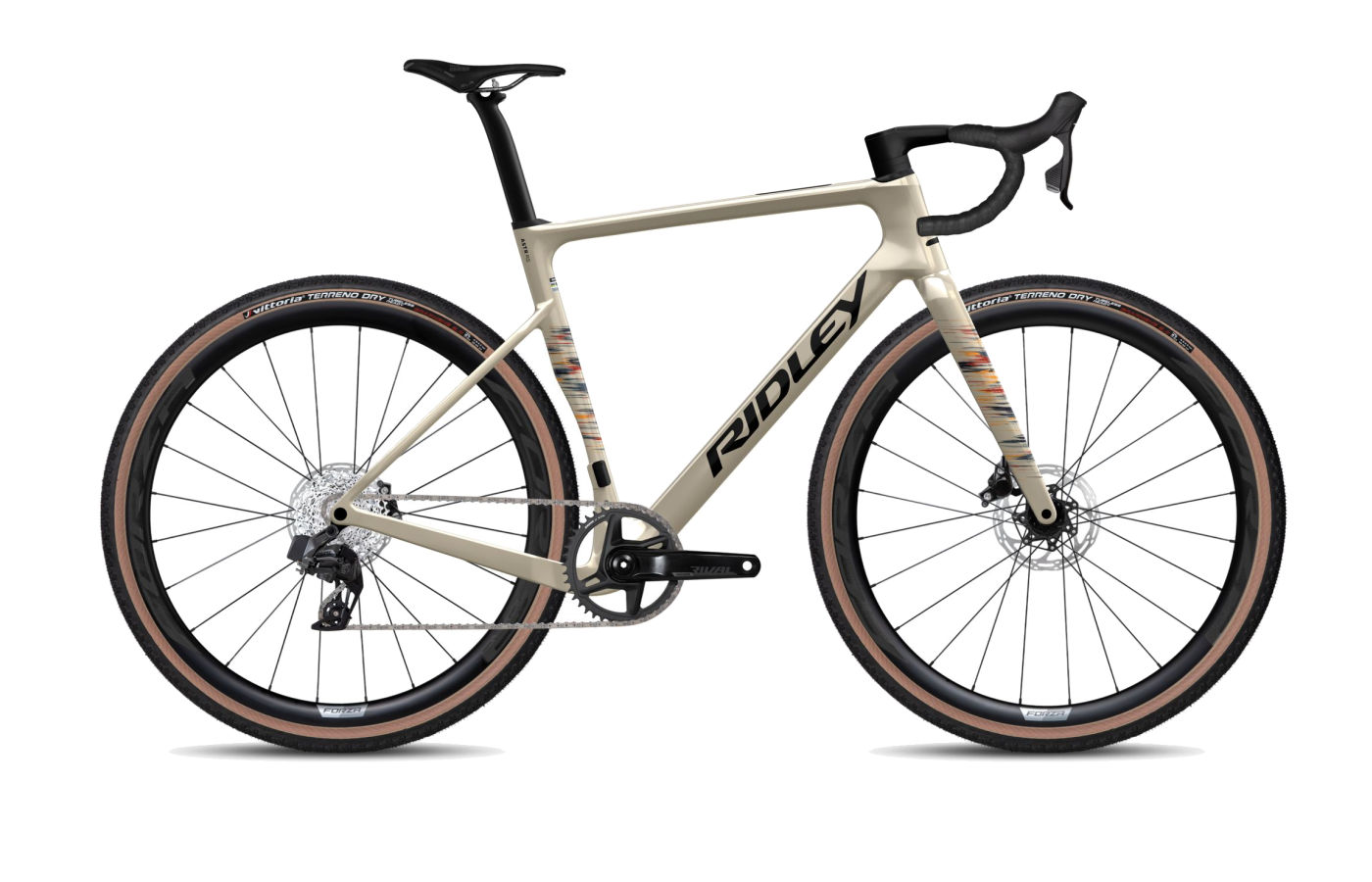
Astr RSSram Red XPLR 1x13
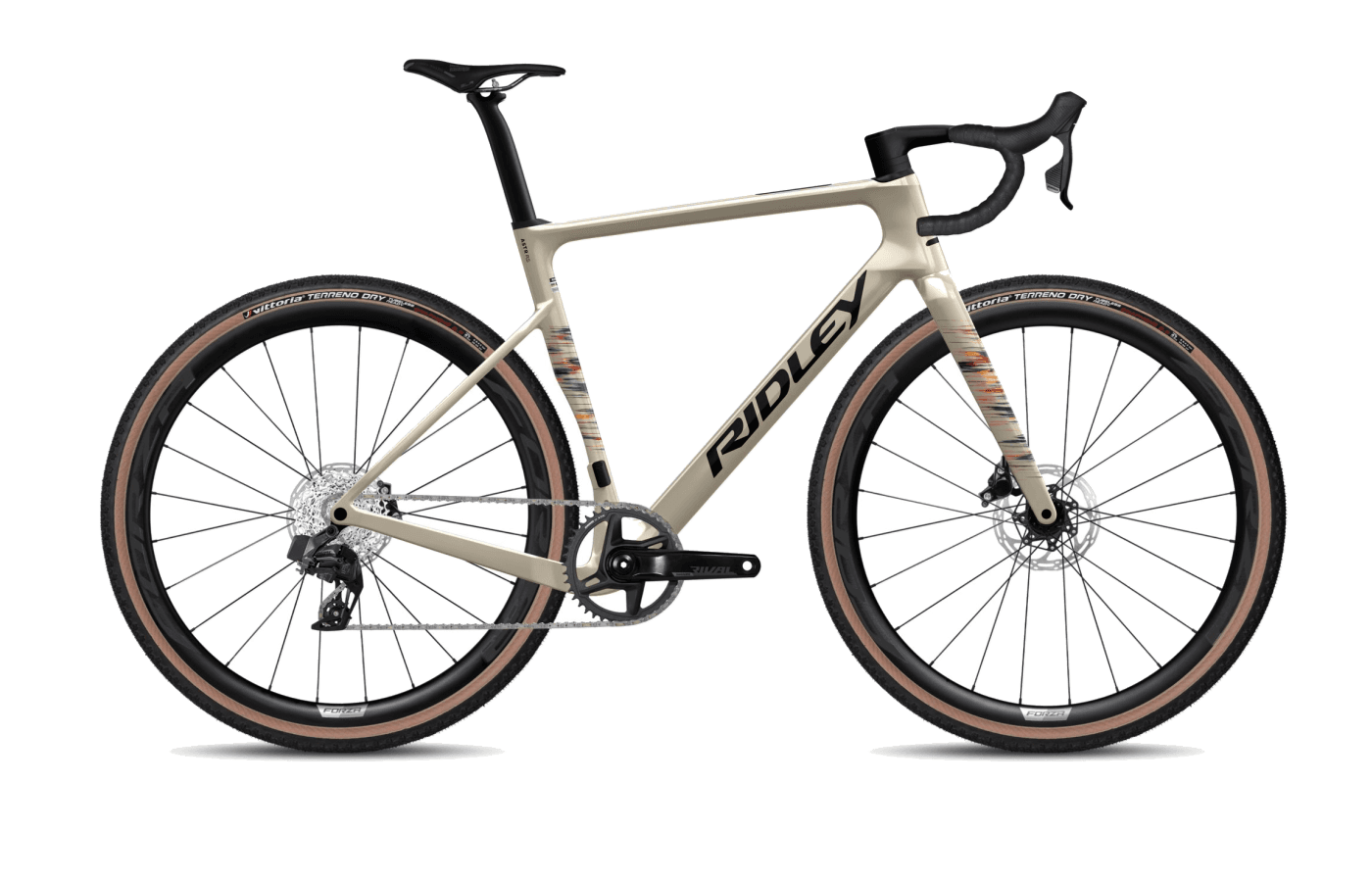
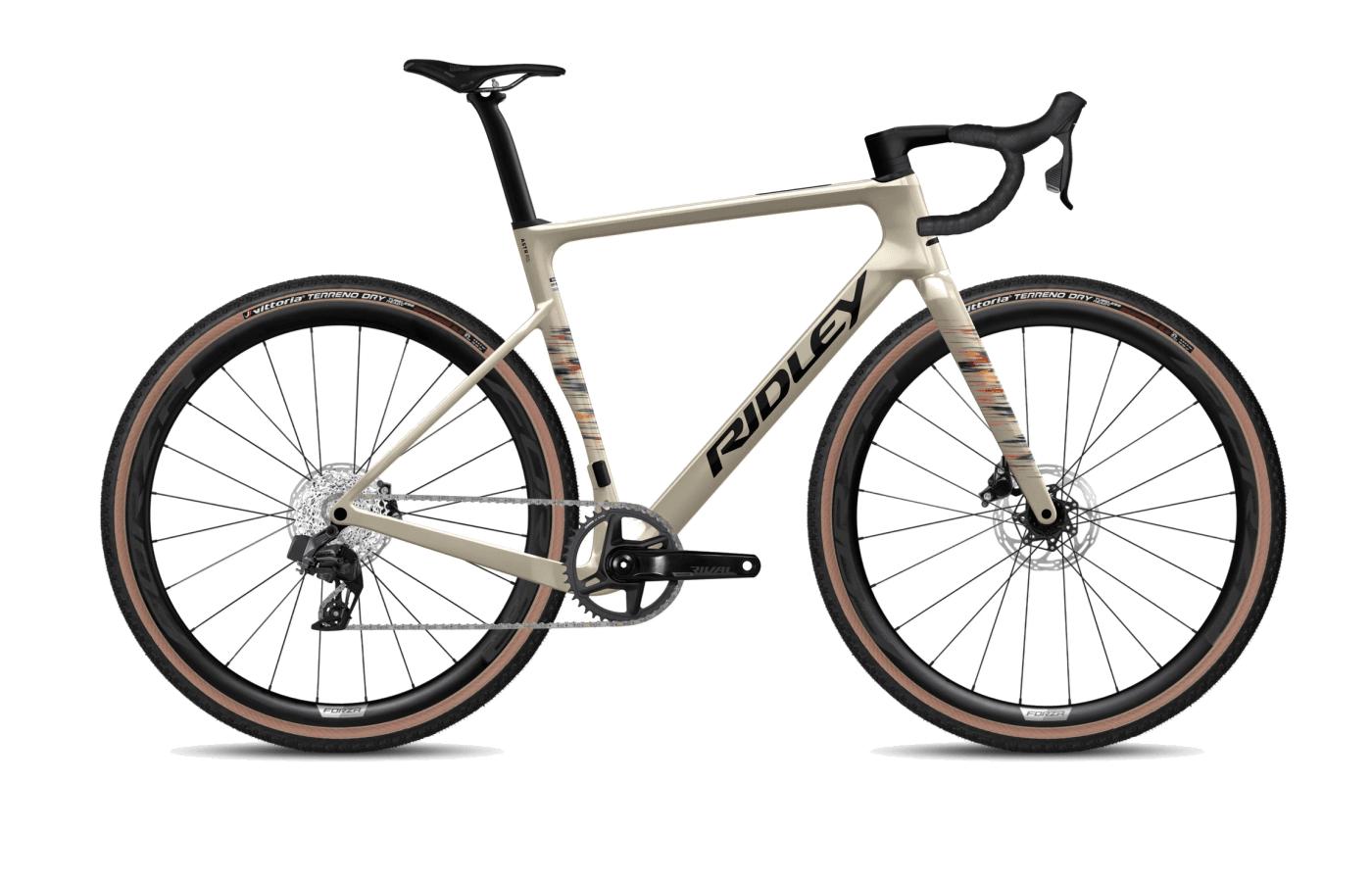
Introduced in late 2024, the Ridley Astr RS is a dedicated gravel racing platform built for the high speeds and rough courses of modern competition. Ridley positions it strictly as a race bike rather than an adventure rig, prioritizing aerodynamics, stability, and power transfer. The defining feature of the Astr RS is its massive tire clearance, accommodating up to 52mm rubber on 1x drivetrains or 47mm with a 2x setup. This allows racers to run high-volume tires for traction and fatigue management without sacrificing the aggressive posture of a race frame. The chassis draws aerodynamic cues from Ridley’s Falcn RS road bike, utilizing an integrated fork crown diffuser to manage airflow. Built around an 890-gram carbon frame, the platform relies on modern standards like a UDH rear derailleur hanger and a BB86 bottom bracket, and is compatible exclusively with electronic groupsets.
Spec sheet.
Every component shipped with this build.
Geometry & fit.
5 sizes published.
The Astr RS utilizes a performance-oriented geometry designed to balance high-speed stability with sharp steering. Ridley pairs a relatively steep 71.5-degree head tube angle on medium through extra-large sizes with short 425mm chainstays, maintaining a responsive rear center despite the massive tire clearance. To keep the bike tracking predictably over rough, fast courses, the wheelbase and top tube are slightly elongated compared to Ridley’s previous gravel models.
Rider posture is decidedly aggressive. A significantly shortened head tube pulls the rider into a low, aerodynamic position suited for racing. This forward-leaning fit is compounded by the Forza Nimbus Pro integrated cockpit equipped on all builds. The one-piece carbon bar features an extreme profile, measuring just 360mm wide at the hoods on most sizes to minimize frontal area, before flaring out to 400mm in the drops. This setup forces a narrow, aero-tucked stance on the flats while relying on the wider drops to provide necessary leverage when navigating steep or technical terrain.
Where the handlebar sits relative to the bottom bracket — the single most important fit pair.
01Fit geometry6 values
03Handling geometry5 values
Which size should I buy?
Slide your height to see the recommended size. GearWise's fit algorithm works from the published stack, reach, and ETT — the brand's own recommendation may differ.
→Calculated from GearWise's own stack / reach / ETT algorithm — the brand's size chart may recommend a different size, and a proper bike fit beats any calculator.
The lineup.
6 builds.
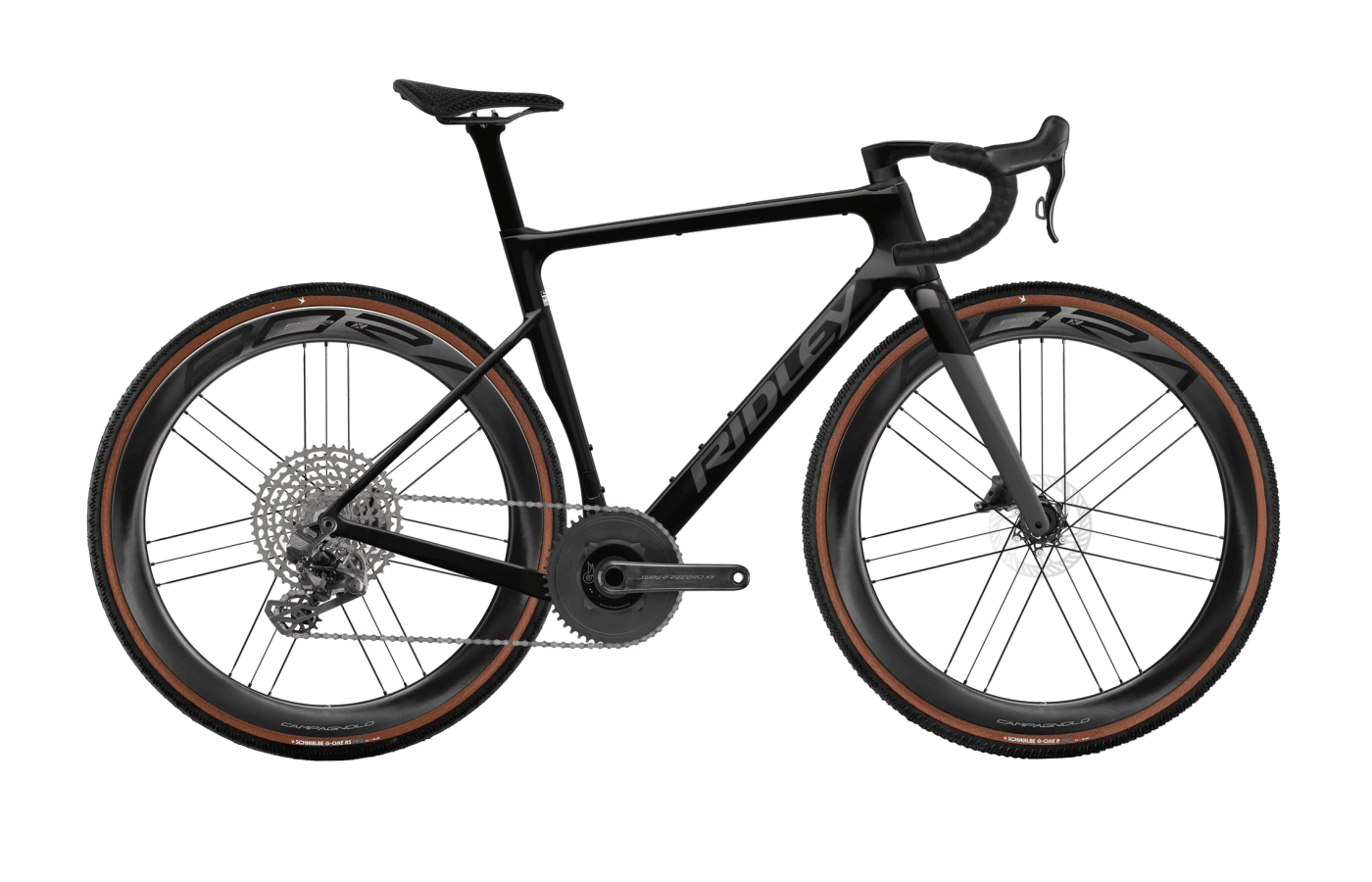
The Astr RS lineup is strictly premium, offering six electronic-only builds centered around the same Elite Series carbon frameset. The range spans the major component manufacturers, featuring 1x13 options from Campagnolo Super Record X and SRAM, alongside a 1x12 Classified Powershift build paired with SRAM Force AXS. For riders preferring a traditional double chainring, Ridley offers a Shimano GRX800 Di2 2x build, though utilizing the front derailleur mount reduces maximum tire clearance to 47mm.
Across the board, the supporting specification remains highly consistent. Every build rolls on DT Swiss GRC 1600 carbon wheels with a 42mm depth and 24mm internal width, wrapped in 45mm Vittoria Terreno T60 tires. Contact points are similarly uniform, featuring the integrated Forza Nimbus Pro carbon cockpit, a Forza Aero carbon seatpost, and a Selle Italia Novus Boost Superflow saddle. Because the wheelset, cockpit, and frame are identical across the ladder, the price differences between models are driven entirely by the chosen drivetrain and braking systems.
From the press.
1 review from the cycling press.
Reviewers characterize the Astr RS as a highly specialized machine that prioritizes speed and power transfer over inherent frame compliance. On the road, the rigid chassis "efficiently transfers power to the rear wheel" (Allez), resulting in immediate response under pedaling input. Because the frame itself offers minimal flex, testers note that vibration damping relies almost entirely on the high-volume tires.
At speed, the bike maintains momentum exceptionally well. The aerodynamic tube shapes and aggressive rider posture help the chassis slice through the wind, and testers report that once the bike accelerates, it "holds it efficiently" (Allez) across flat and rolling terrain. Handling is heavily influenced by tire choice. Equipped with 47mm tires, the bike delivers "stability and composure" (Allez) through loose corners and fast descents, though reviewers note that downsizing to narrower rubber revives a more agile feel.
The primary tradeoff noted by testers is the demanding nature of the cockpit. The narrow hoods optimize aerodynamics but require riders to actively shift their hands to the flared drops to find "plenty of control on technical descents" (Allez). Ultimately, reviewers view the Astr RS as an uncompromising race tool that rewards an assertive riding style.
Compared to.
Most-viewed comparisons.