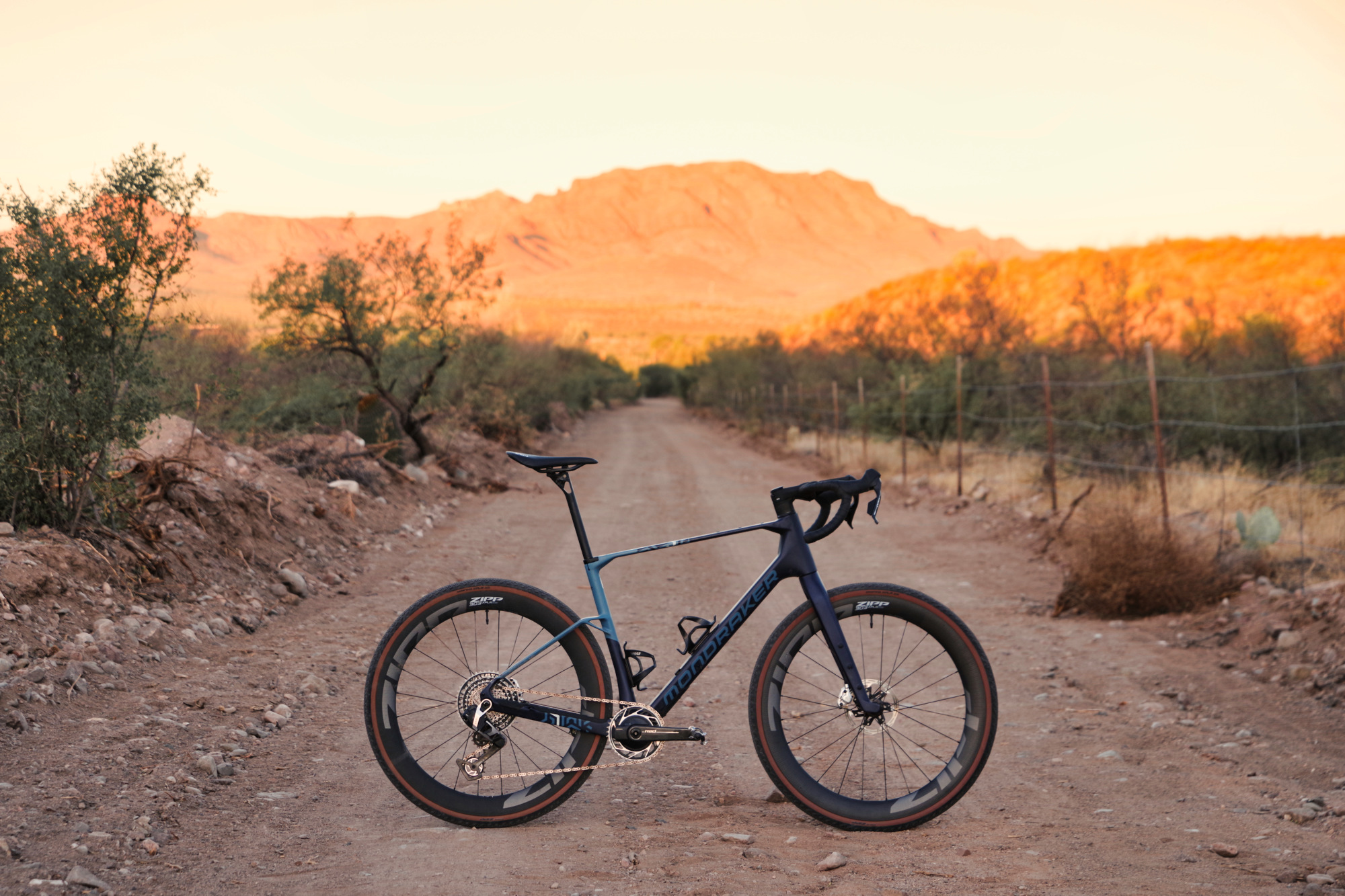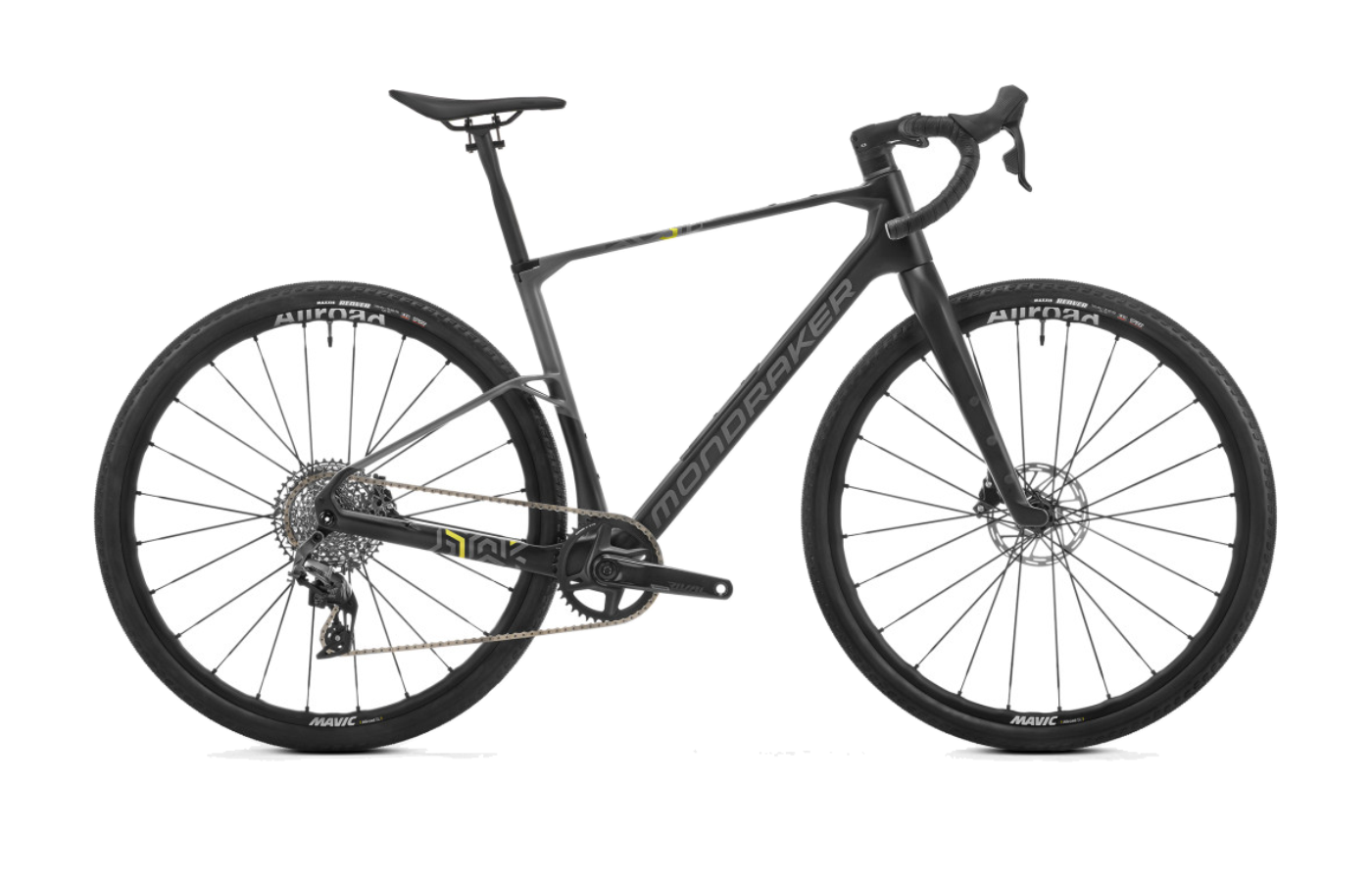
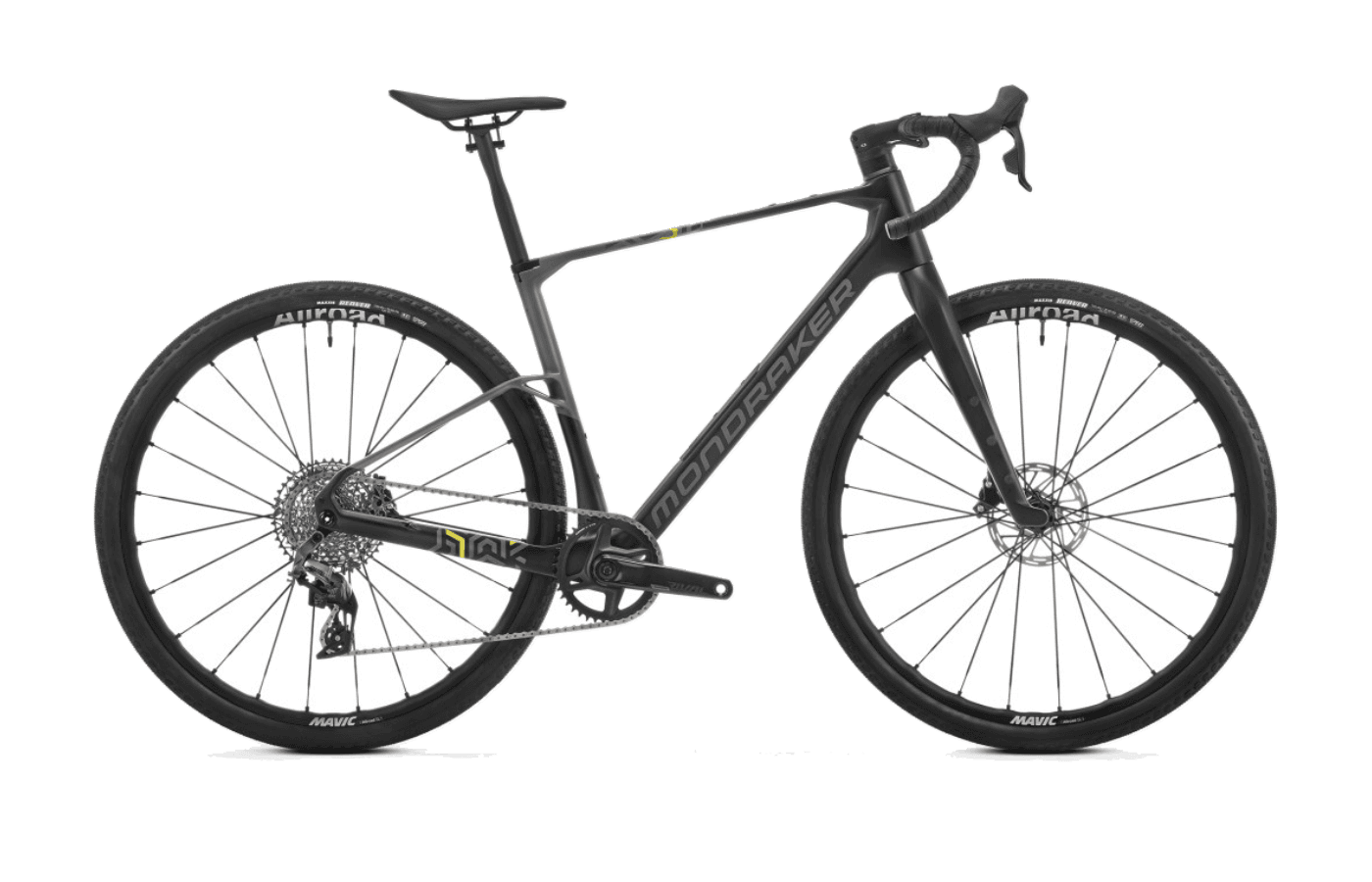
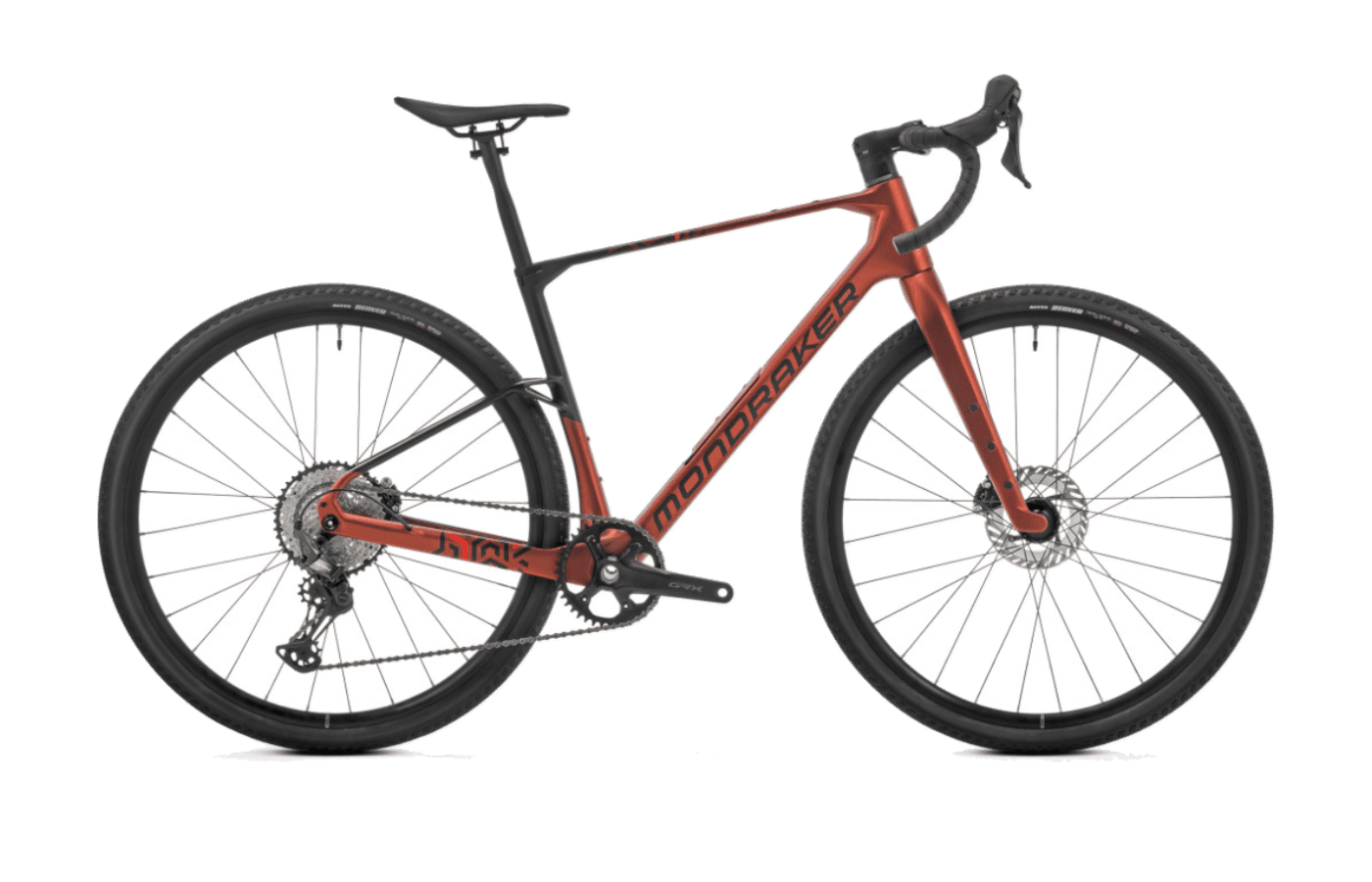
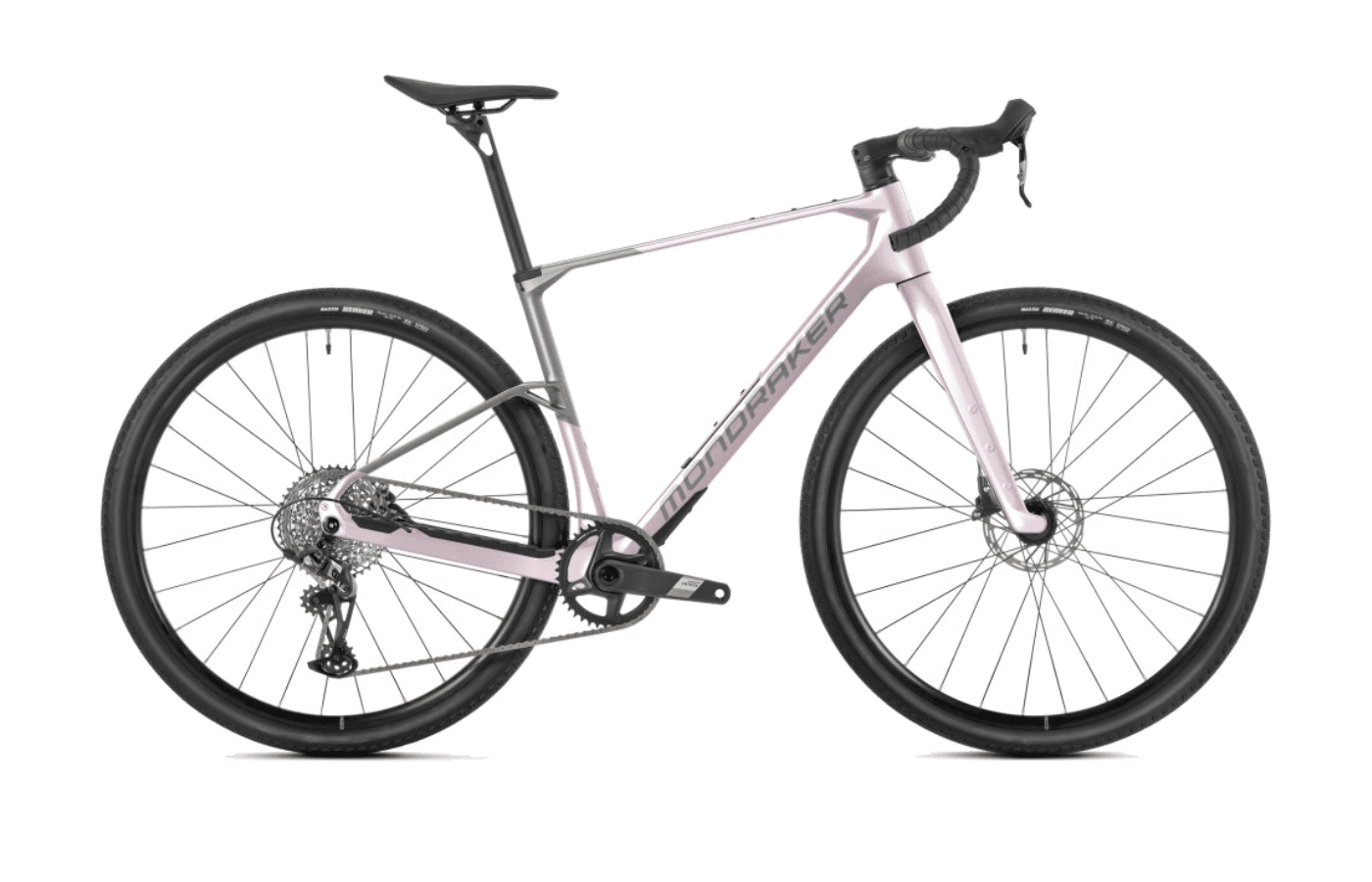
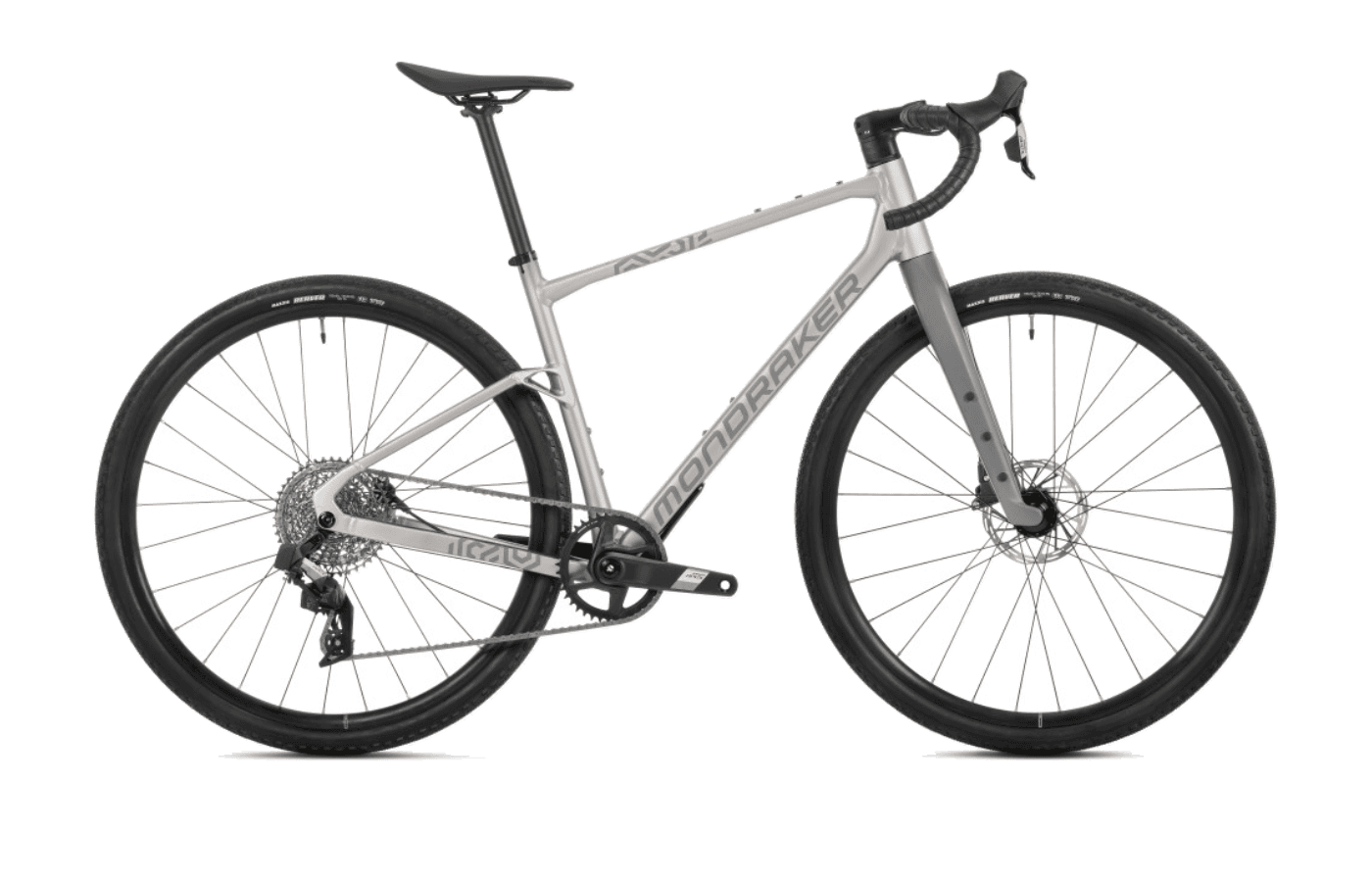
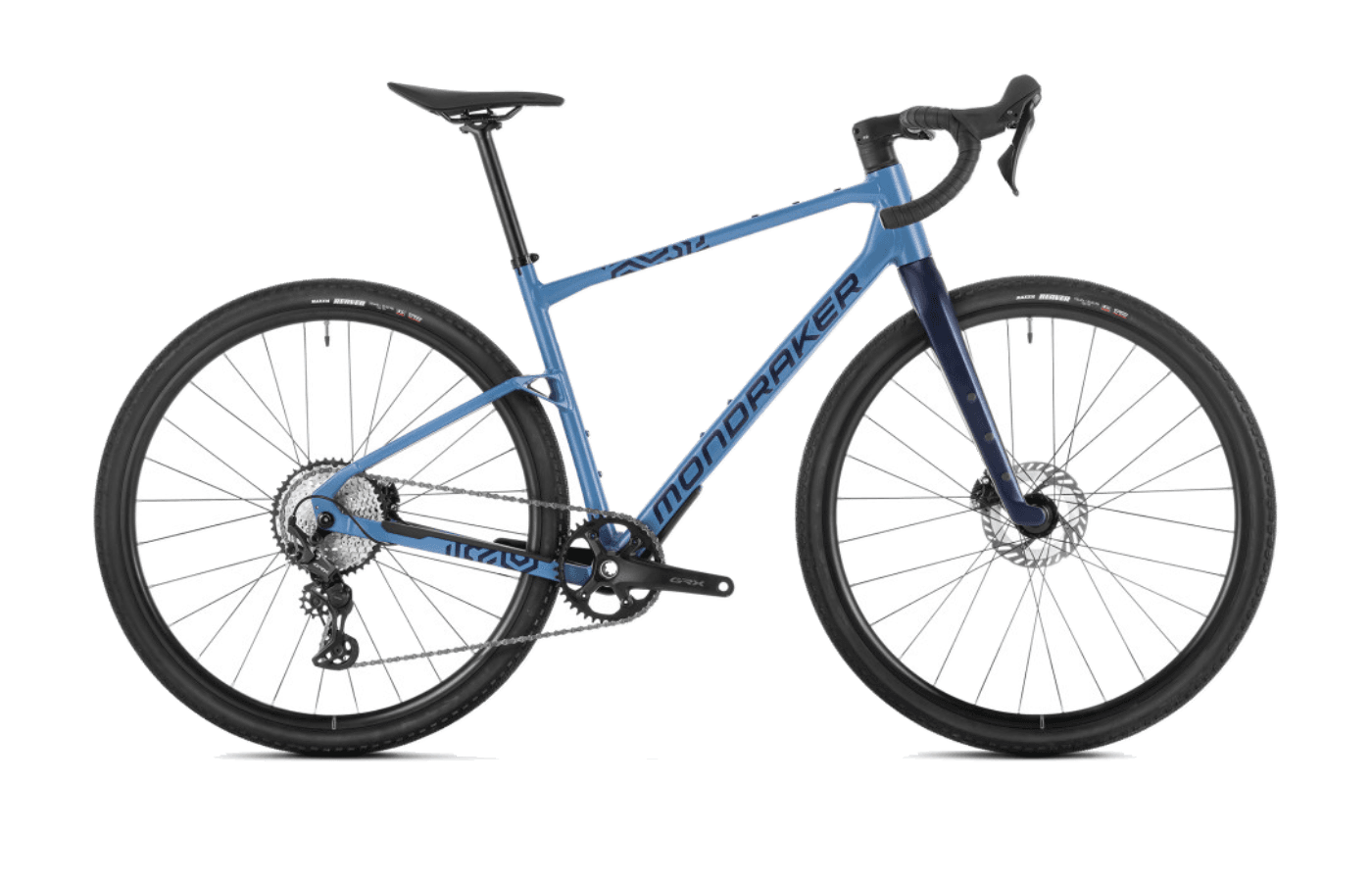
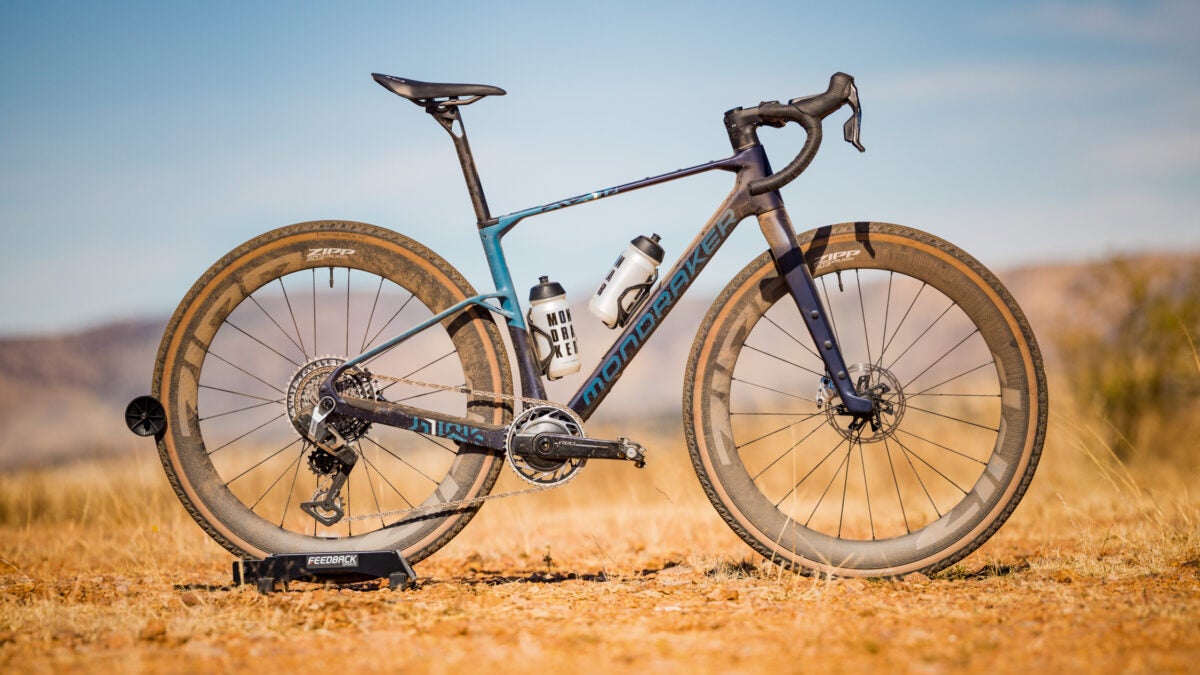
The Mondraker Arid Carbon marks the Spanish mountain bike brand’s first dedicated pedal-only gravel platform. Rather than mimicking the sharp, aerodynamic posture of road-adjacent gravel bikes, the Arid leans heavily into its off-road heritage. It is designed for riders who prioritize high-speed composure and rough-terrain capability over snappy acceleration or tarmac efficiency. Built around a single carbon frame tier shared across the entire lineup, the platform features distinctive dropped seatstays, integrated downtube storage, and clearance for 50mm tires. While Mondraker positions it as a versatile machine capable of racing, its true identity aligns closer to adventure riding, bikepacking, and tackling technical, choppy tracks where a mountain-bike-influenced approach pays dividends.
Where to get it.
2 retailers · size M.
Spec sheet.
Every component shipped with this build.
Geometry & fit.
5 sizes published.
Mondraker applies its signature mountain bike geometry philosophy to the Arid, resulting in a notably long and slack profile for a drop-bar bike. The frame pairs a relaxed 70-degree head tube angle with an extended reach, which is then offset by unusually short stems ranging from 60 to 90 millimeters. This combination pushes the front wheel further out, creating a long wheelbase that prioritizes straight-line tracking and downhill stability over quick, darting steering.
Rider posture leans toward an upright, centered stance rather than an aggressive aerodynamic tuck. The cockpit setup heavily influences the handling feel, utilizing wide handlebars with a 16-degree flare. While this width provides substantial leverage for navigating technical descents, riders transitioning from traditional road bikes may find the stance overly broad, and some testers noted it made achieving a narrow, aerodynamic position difficult. To help riders dial in this unconventional fit, Mondraker offers five frame sizes, including a dedicated medium-large option to bridge the common gap in the middle of the sizing run.
Where the handlebar sits relative to the bottom bracket — the single most important fit pair.
01Fit geometry5 values
02Component geometry4 values
03Handling geometry7 values
Which size should I buy?
Slide your height to see the recommended size. GearWise's fit algorithm works from the published stack, reach, and ETT — the brand's own recommendation may differ.
→Calculated from GearWise's own stack / reach / ETT algorithm — the brand's size chart may recommend a different size, and a proper bike fit beats any calculator.
The lineup.
8 builds, ranging $2,999 – $10,999.
The Arid lineup is structured around a single, high-quality carbon frame and fork, meaning the entry-level build shares the exact same chassis as the flagship model. The frame utilizes modern standards, including a threaded T47 bottom bracket, UDH compatibility, and headset-routed internal cables. It is designed strictly for 1x drivetrains.
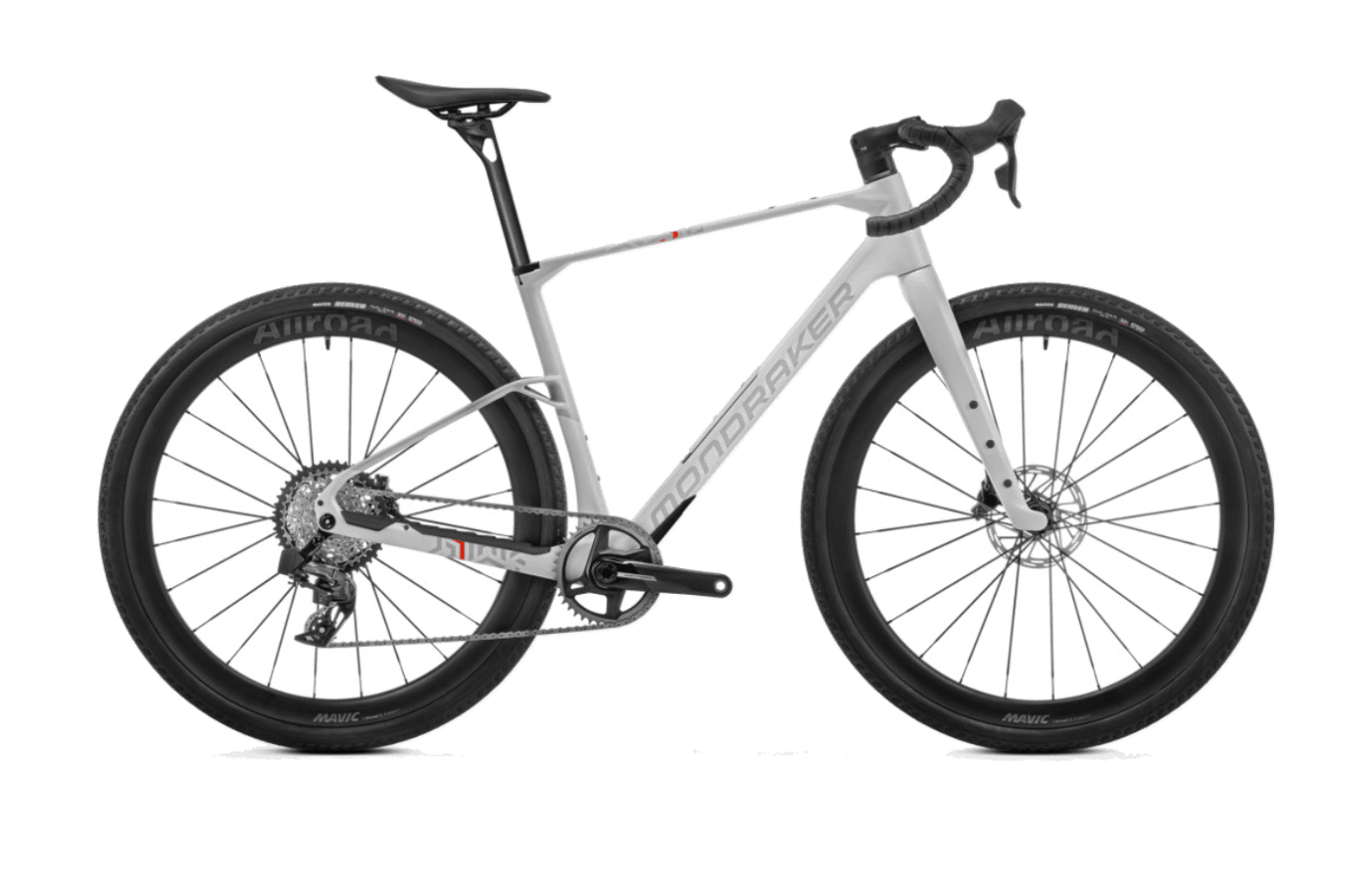
The build ladder spans four primary models. The base Carbon model offers mechanical Shimano GRX shifting and aluminum Mavic wheels, presenting a solid entry point for the platform. Moving up, the Carbon R switches to wireless SRAM Rival AXS. The value sweet spot for performance riders is arguably the Carbon RR, which upgrades to SRAM Force AXS—including a spindle-based power meter—and carbon Mavic wheels.
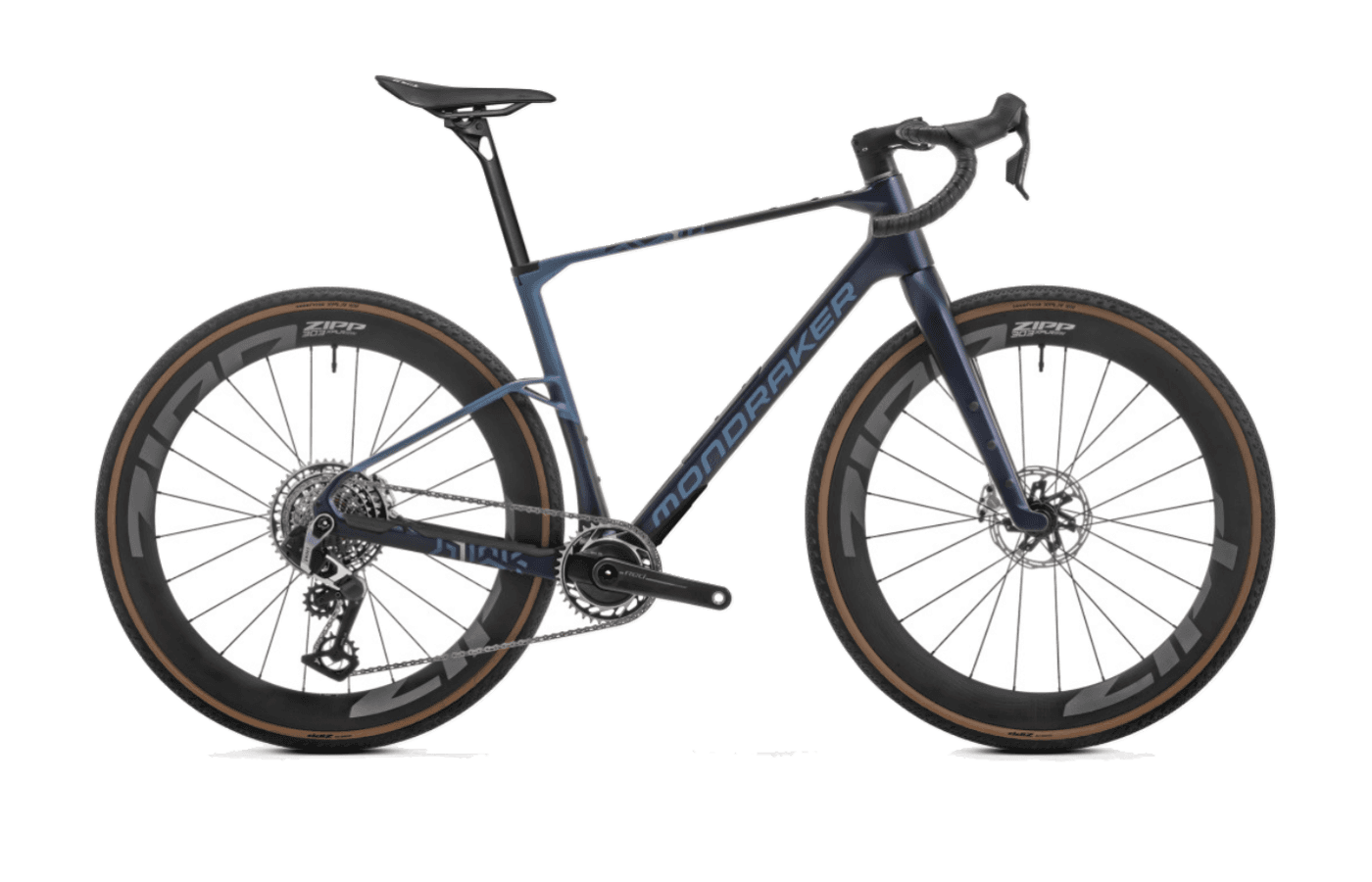
At the top, the Carbon RR SL features the 13-speed SRAM Red XPLR AXS group with a power meter and the polarizing Zipp 303 XPLR SW carbon wheels. While the flagship build showcases top-tier tech, the shared frame across all tiers makes the lower and mid-range models highly attractive for riders planning future upgrades. A standalone frameset is also available for custom builds.
From the press.
11 reviews from the cycling press.
Reviewers consistently praise the Arid Carbon for its exceptional stability and rear-end comfort on rough terrain, though they note it requires a specific riding style. The distinctive seatstay junction and cutout seatpost effectively damp vibrations, creating a ride that feels "superbly composed and comfortable" (Granfondo) when navigating choppy tracks and fast descents. Testers found that the bike excels at maintaining momentum over broken ground, with one noting that the "compliance of the handlebars and frame felt in-tune and balanced" (Theradavist).
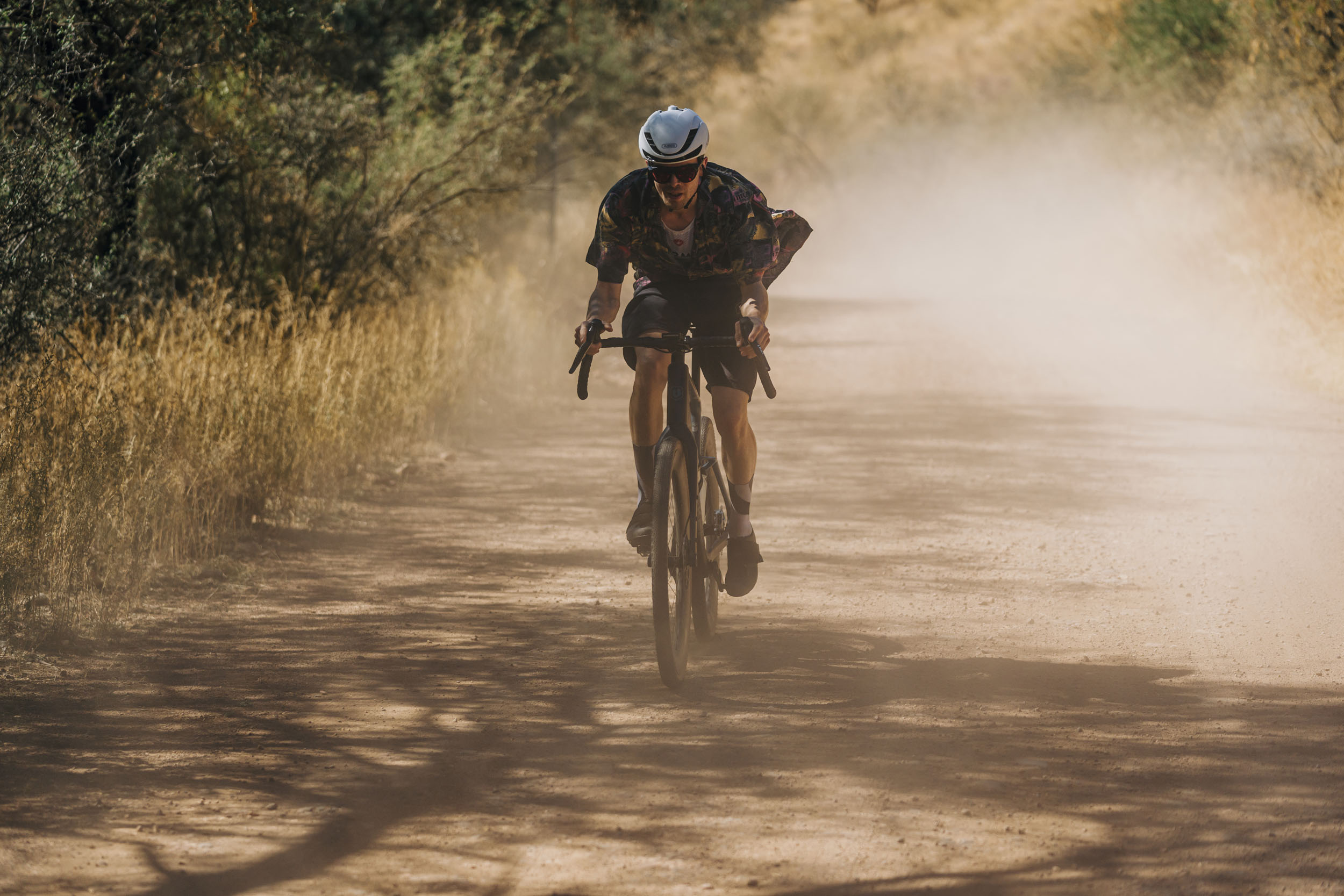
However, this planted nature comes with tradeoffs in low-speed agility and initial acceleration. Multiple reviewers observed that the bike feels "a touch too sluggish off the mark" (Granfondo) compared to lighter, steeper-angled gravel racers. Consequently, testers often concluded that it is "not your typical gravel race bike" (Velo), performing better when riders stay seated and grind through technical sections rather than attempting aggressive out-of-the-saddle sprints.
A few ergonomic and durability quirks also surfaced during testing. Several riders reported that the unusually wide seatstays occasionally brushed against their calves or heels while pedaling. Additionally, the ultra-wide Zipp 303 XPLR SW wheels specced on the flagship model drew criticism for leaving the tire sidewalls exposed, which resulted in a cracked rim for one reviewer during rocky testing (Theradavist).
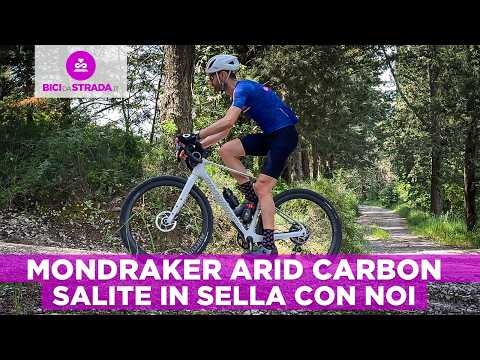
How does the Mondraker Arid Carbon go? We take you on the ...
Mondraker arid carbon rr
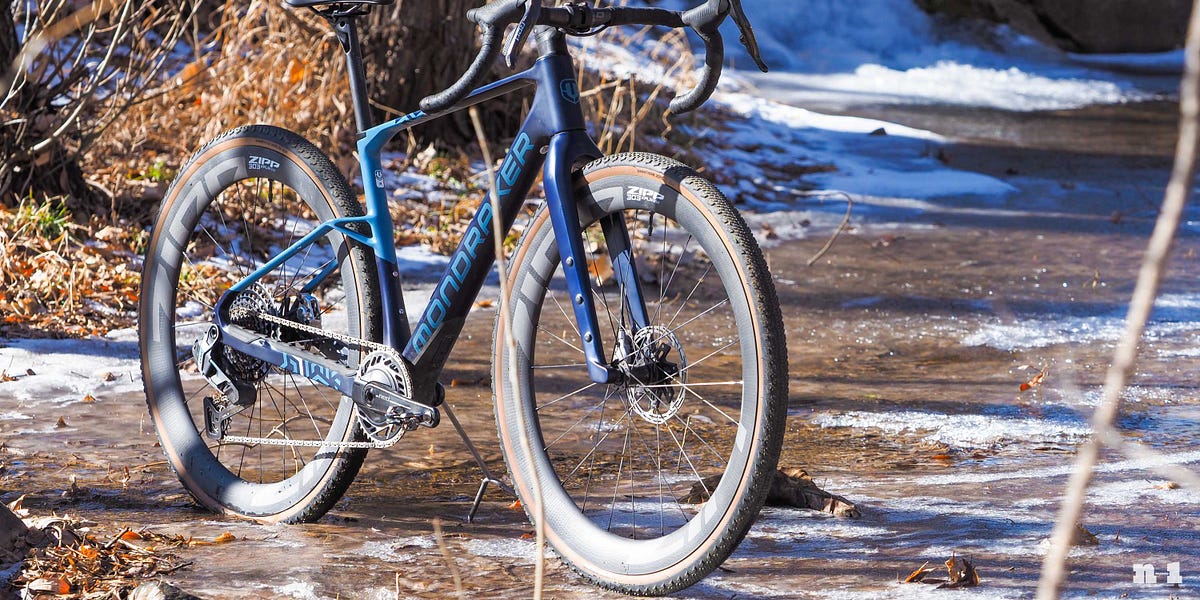
Mondraker Arid Carbon gravel bike review: Fashionably late
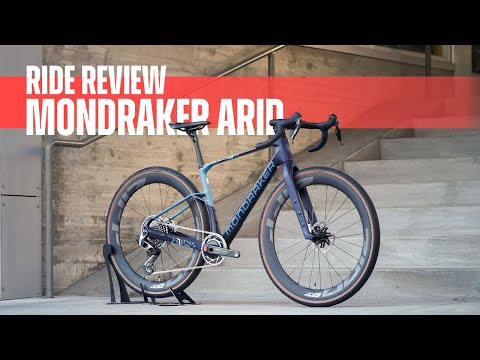
Mondraker Arid – First Ride Review | Contender Bicycles
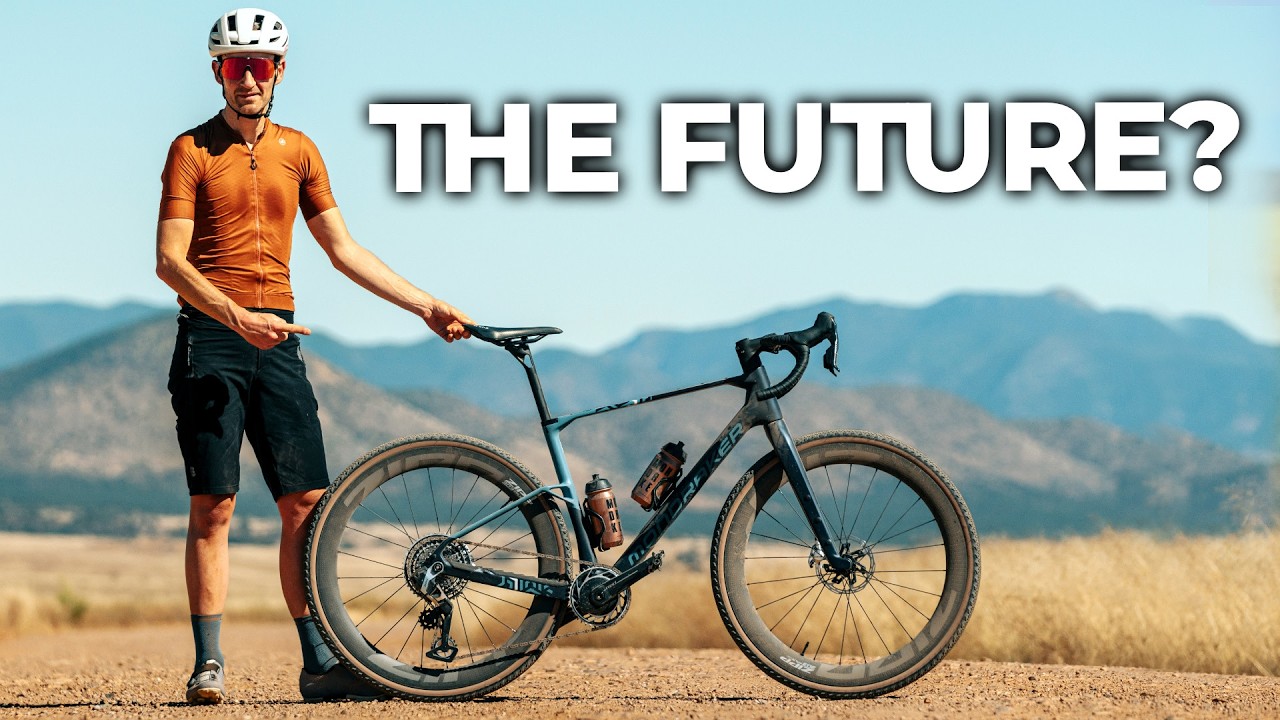
More Gravel Bikes Should be Like This One
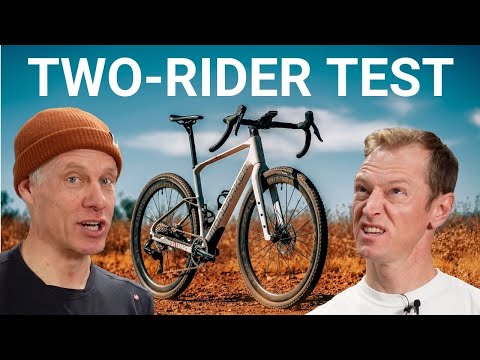
Mondraker Arid review: Weird or wonderful? Two gravel builds ...
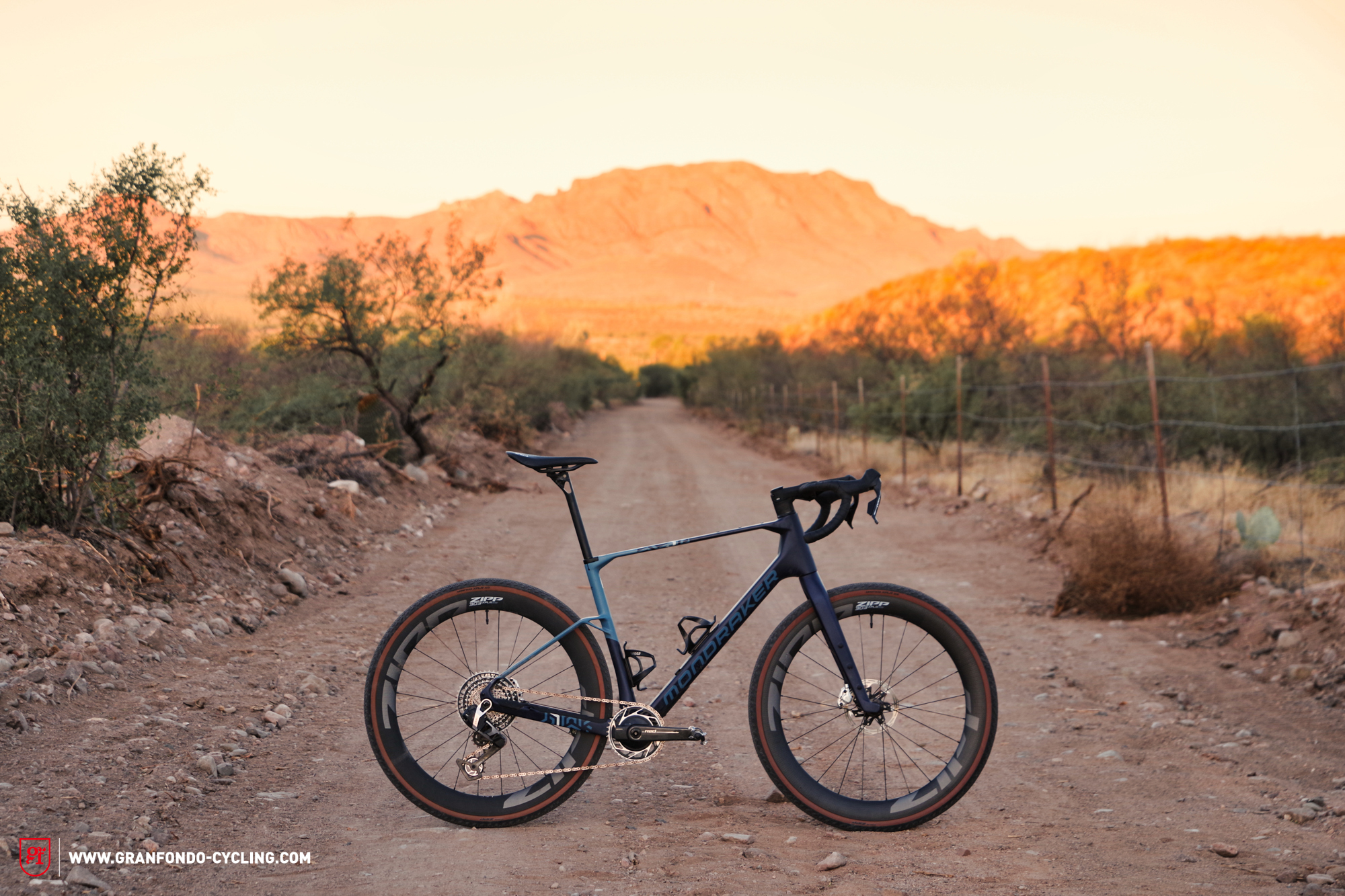
First Ride: MONDRAKER ARID CARBON 2025 – A gravel outlaw in the Mild-West
Review: The Mondraker Arid Isn’t a Race Bike and That’s Great

The Radavist
Mondraker Arid Carbon 2025