Scout
vsSentinel
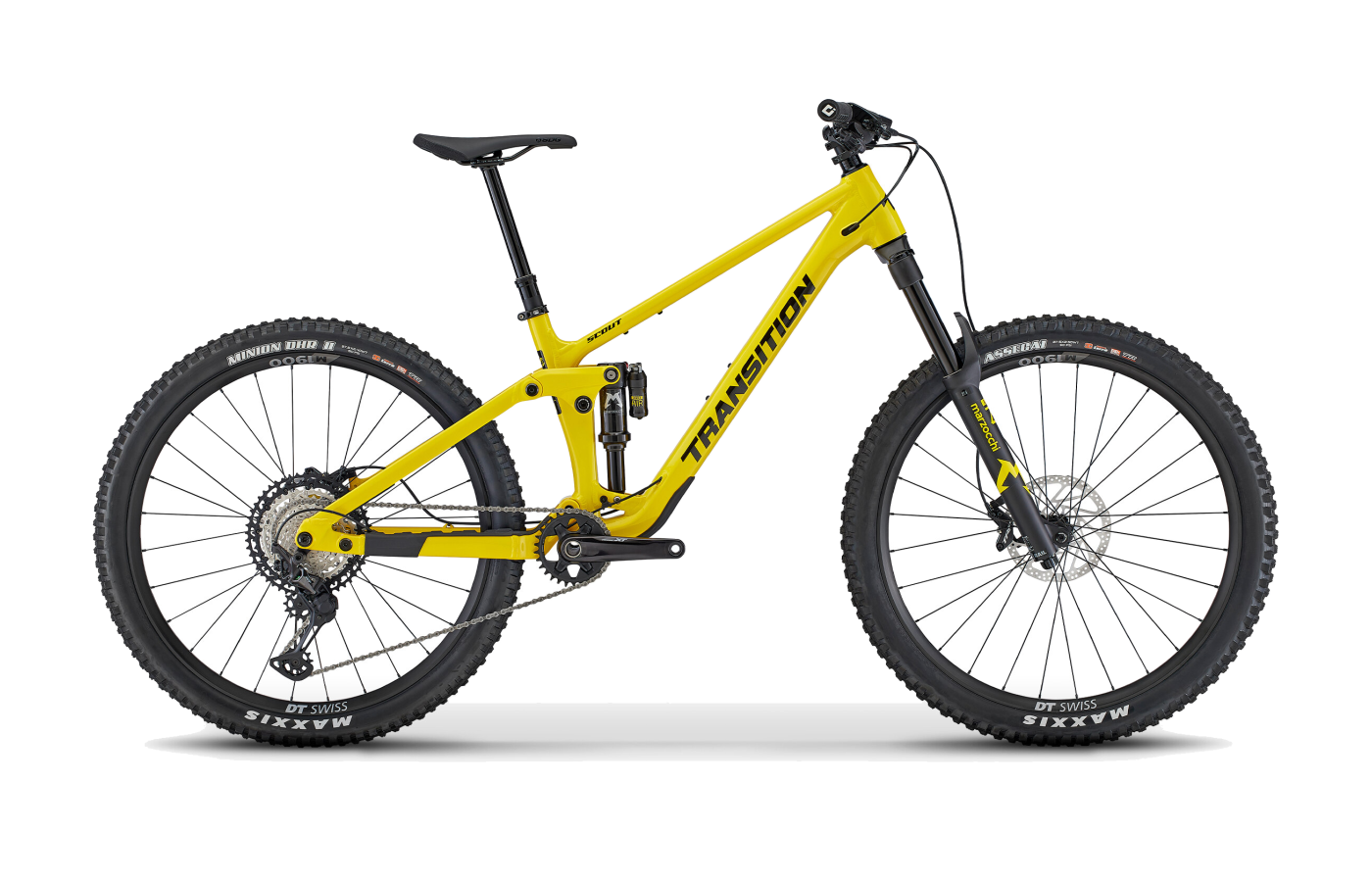
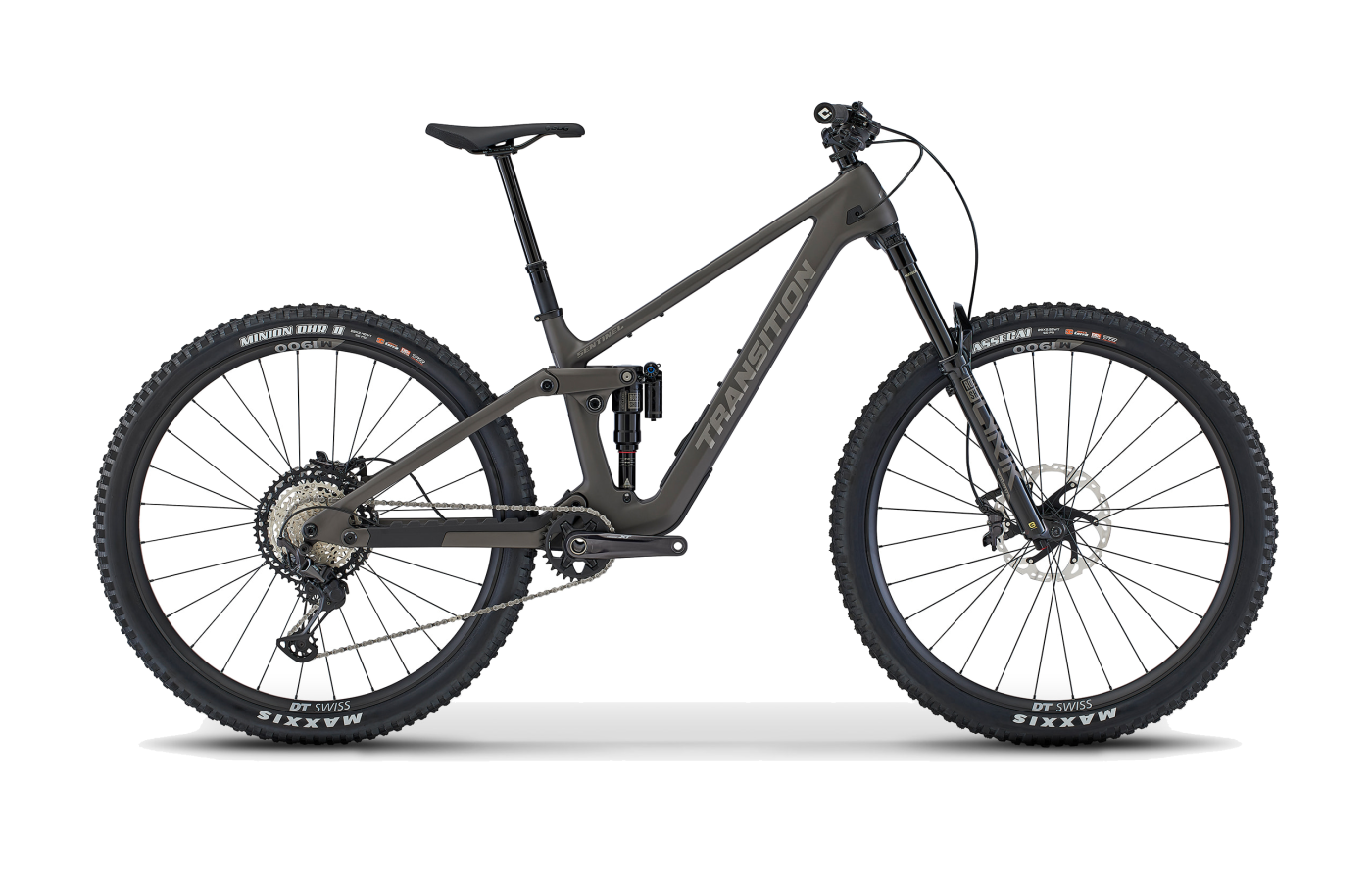
Same brand, same travel — two very different riders.
The Scout is a 27.5" specialist for smaller pilots. The Sentinel V3 is the full-size 29er one-bike-quiver.
Scout
- Tuned for lighter riders — revised rocker link keeps 150 mm of travel active under a 90-pound pilot instead of feeling oversprung.
- 27.5" agility — flickable, slalom-ish handling that 29ers can't replicate for smaller riders.
- Adult-grade componentry — TRP DH-R EVO brakes (with short-reach levers), Shimano XT, and DT Swiss wheels survive bike-park abuse.
- Heavy for a youth bike at 34 lb (XS) — climbing taxes lighter pilots.
- Only two builds and no carbon option — limited range for grown-up buyers.
Sentinel
- Sportier V3 character — steep 78.9° seat tube and one-piece rocker yield a poppy, energetic ride that climbs better than the V2.
- Six sizes, alloy or carbon — XS through XXL, $3,499 to $9,999, with mullet flip-chip and 65 mm-stroke option for 160 mm rear travel.
- Versatile geometry — size-specific chainstays (442 mm on MD, 448 mm on L+) keep the wheelbase balanced across the range.
- Stock RockShox Super Deluxe Ultimate tune is widely flagged as too lightly damped — aggressive riders may need a re-tune.
- Higher 350 mm bottom bracket clears desert ledges but feels less settled in high-lean berms.
Editor’s analysis
Both run 150 mm of GiddyUp out back. Everything else — wheel size, geometry, intent, build ladder — is built around a different rider.
On paper the Transition Scout and Transition Sentinel share more than they don't. Both are alloy 150 mm trail bikes from Bellingham. Both run the GiddyUp linkage, both share a 64-degree head tube angle, both ship with Maxxis Assegai/Minion DHR II EXO+ rubber and a UDH hanger. But spend any real time on the spec sheets and the philosophies pull apart almost immediately.
The Scout is a deliberately specialist tool. It rolls on 27.5-inch wheels, comes only in XS, SM, and MD, and uses a revised rocker link tuned for lighter pilots so the Marzocchi Z1/Bomber Air actually stays active under a 90- to 130-pound rider — the dead, oversprung feel that plagues most adult-tuned bikes when smaller riders climb on. There is no carbon option, and only two builds: Alloy Deore at $3,499 and Alloy XT at $4,299. Transition's pitch is narrow and clear — the pint-sized pinner who has outgrown a kids' bike and is sending bike-park lines on real componentry.
The Sentinel V3 is the opposite — a generalist. It runs 29-inch wheels (or mullet via flip-chip), six sizes from XS to XXL, alloy or carbon, and a build ladder that climbs from the same $3,499 Alloy Deore all the way to a $9,999 Carbon XTR Di2. The V3 update made it sportier than the V2 — steeper seat tube (78.9 degrees on MD), a one-piece rocker for stiffness, BOOM Box in-frame storage on carbon, and size-specific chainstays. Reviewers consistently call it a one-bike-quiver that handles a Tuesday lap and a chunky Moab epic with the same kit.
Put another way: the Scout is the bike you buy a fast 12-year-old who is already double-jumping the local jump line. The Sentinel is the bike you buy yourself when you want one mountain bike for everything from local loops to occasional bike park days. They're not really competing — they're solving different problems with the same suspension layout.
Where the builds differ.
Comparing our editor's-pick builds side-by-side. Winners highlighted row-by-row — lower price and weight, and the better-spec component, each mark a point.
Build variants & pricing
Both ladders share the same $3,499 Alloy Deore floor. The Scout stops at $4,299 (Alloy XT); the Sentinel keeps climbing through carbon up to $9,999.
Prices are current US MSRP. The Scout has no carbon option — it is alloy-only by design, aimed at riders who will outgrow it. The Sentinel's stock RockShox Super Deluxe Ultimate shock has been widely criticized for an under-damped factory tune; budget for a re-tune if you ride hard.
How they fit, how they steer.
Both at MD — the fit-picked size for a 5'8" rider on each. The Scout MD reaches further (460 vs 455 mm) but sits 17 mm lower in stack, with shorter 430 mm chainstays vs the Sentinel's 442 mm. The Sentinel's 78.9° seat tube is 1.7° steeper than the Scout's 77.2°, putting the rider more centered for climbs.
Which size should I buy?
Size recommendations based on stack, reach, and effective top tube. The Sentinel covers a much wider range (XS to XXL, 415–530 mm reach); the Scout tops out at MD.
→These are starting points. Flexibility, riding style, and preferred position all shift the answer — if you’re between sizes, a professional fit beats a chart.
What the magazines said.
Published reviews from trusted cycling outlets. Click through for the full write-up.
Which one should you buy?
If you're buying for a smaller or younger ripper who is sending real terrain, get the Scout. If you want one full-size 29er for everything from local trails to bike park days, get the Sentinel.
Scout
If you need a bike for a smaller or younger rider who has outgrown kids' geometry and is hitting real bike-park features, the Scout is the one platform that actually tunes its suspension for them. Adult-grade brakes, drivetrain, and wheels — built to survive the learning curve.
Sentinel
If you want a single 29er trail bike that scales from local laps to chunky technical epics to occasional bike park days — and you want the option of mullet, in-frame storage, and a build ladder from $3.5k to $10k — the Sentinel V3 is exactly what it markets itself as.
Questions buyers actually ask.
Short answers to the things we get emailed about most often.
01Are these actually competing bikes?
Not really — and that's the point of the comparison. They share a brand, a 64° head tube angle, 150 mm of rear travel, and the same GiddyUp linkage. But the Scout is a 27.5" platform deliberately built around lighter, smaller pilots (XS to MD only), and the Sentinel is a full-size 29er trail bike (XS to XXL). If you're a 5'8" adult, you can technically fit on either MD frame, but you're not the target rider for the Scout — its rocker link is tuned for someone 90–130 lb.
02Why does the Scout have a different rocker link?
Because most adult-tuned bikes feel dead under a light rider. When a 100-pound pilot climbs on a bike spec'd for a 170-pound adult, the suspension never moves into its sweet spot — it feels oversprung and harsh. Transition revised the Scout's rocker link specifically to lower the leverage curve so the 150 mm of rear travel actually stays active for smaller riders. Reviewers from Vital MTB confirmed that the bike retains a supple, supportive feel under its target weight rather than sitting on top of the suspension.
03What's the wheel-size difference and why does it matter?
The Scout runs 27.5" wheels front and rear across all sizes. The Sentinel V3 runs 29" front and rear on sizes S–XXL (XS gets dual 27.5"), and it's mullet-compatible via a flip-chip on every size.
For smaller riders, 27.5" wheels keep the bike proportional — a 29er front wheel on an XS or SM frame can crowd the cockpit and slow steering. For full-size adults, 29ers carry speed better through chunk and roll over obstacles more easily. The Sentinel's mullet option (set the flip-chip to High and run a 27.5" rear) drops the BB 6 mm and slacks the head tube to 63.6° — many reviewers preferred this configuration for its locked-in cornering feel.
04How do the geometry numbers compare on size MD?
Scout MD: 460 mm reach, 604 mm stack, 64° HTA, 77.2° STA, 430 mm chainstays, 1217 mm wheelbase.
Sentinel MD: 455 mm reach, 621 mm stack, 64° HTA, 78.9° STA, 442 mm chainstays, 1237 mm wheelbase.
The Scout reaches 5 mm further but sits 17 mm lower in stack — that's the smaller wheel and the youth-oriented stack. The Sentinel's seat tube is 1.7° steeper, putting the rider more forward and centered for technical climbs. Chainstays are 12 mm shorter on the Scout, which makes manuals and quick directional changes easier.
05Which has better tire clearance?
The Scout clears about 66 mm (roughly a 2.6" 27.5" tire). The Sentinel clears about 63.5 mm (roughly a 2.5" 29er tire). Several reviewers — including Pinkbike and Jessie-May Morgan — flagged the Sentinel's 29er rear tire clearance as tight, with only a few millimeters of mud space around a 2.4" Maxxis DHR II. If you ride in genuinely muddy terrain, plan for protective tape on the chainstays or downsize tires.
06Should I worry about the Sentinel's stock shock tune?
Multiple expert reviewers flagged it. Blister and Pinkbike both described the stock RockShox Super Deluxe Ultimate compression damping as bizarrely light, noting that the bike blows through its mid-stroke on square-edged hits even with the dial maxed. NSMB reported that bracketing the settings (closing all compression circuits) was "transformative." If you're a heavier or aggressive rider, budget for a custom re-tune or a shock swap — most testers said it unlocks the frame's full potential. Lighter or less-aggressive riders may not notice.
07Can adults realistically ride the Scout?
Yes — Vital MTB's reviewers noted that the Scout MD has been considered by adult riders for "slalom-ish" play-bike builds. The 460 mm reach on MD is in the trail-bike range, and 27.5" wheels keep it flickable. But two caveats: the bike is heavy at 34 lb for the XS (an MD will be similar), and the rear suspension is tuned for lighter riders, so a 180-pound adult will sit deeper in the travel than intended. As a third bike or a dedicated dual-slalom rig, sure. As a primary trail bike for an adult, the Sentinel is the right tool.
08What warranty do they come with?
Both come with Transition's lifetime frame warranty to the original owner against manufacturing defects. Transition is well-regarded for no-nonsense customer service and easy access to replacement bearings and hardware. Crash-replacement pricing is also available. The use of standard parts — UDH hanger, 73 mm threaded BB, 44/56 mm headset — keeps long-term maintenance straightforward at any shop.
Similar bikes
If your priorities don’t map cleanly onto either of these, one of these adjacent bikes probably fits better.
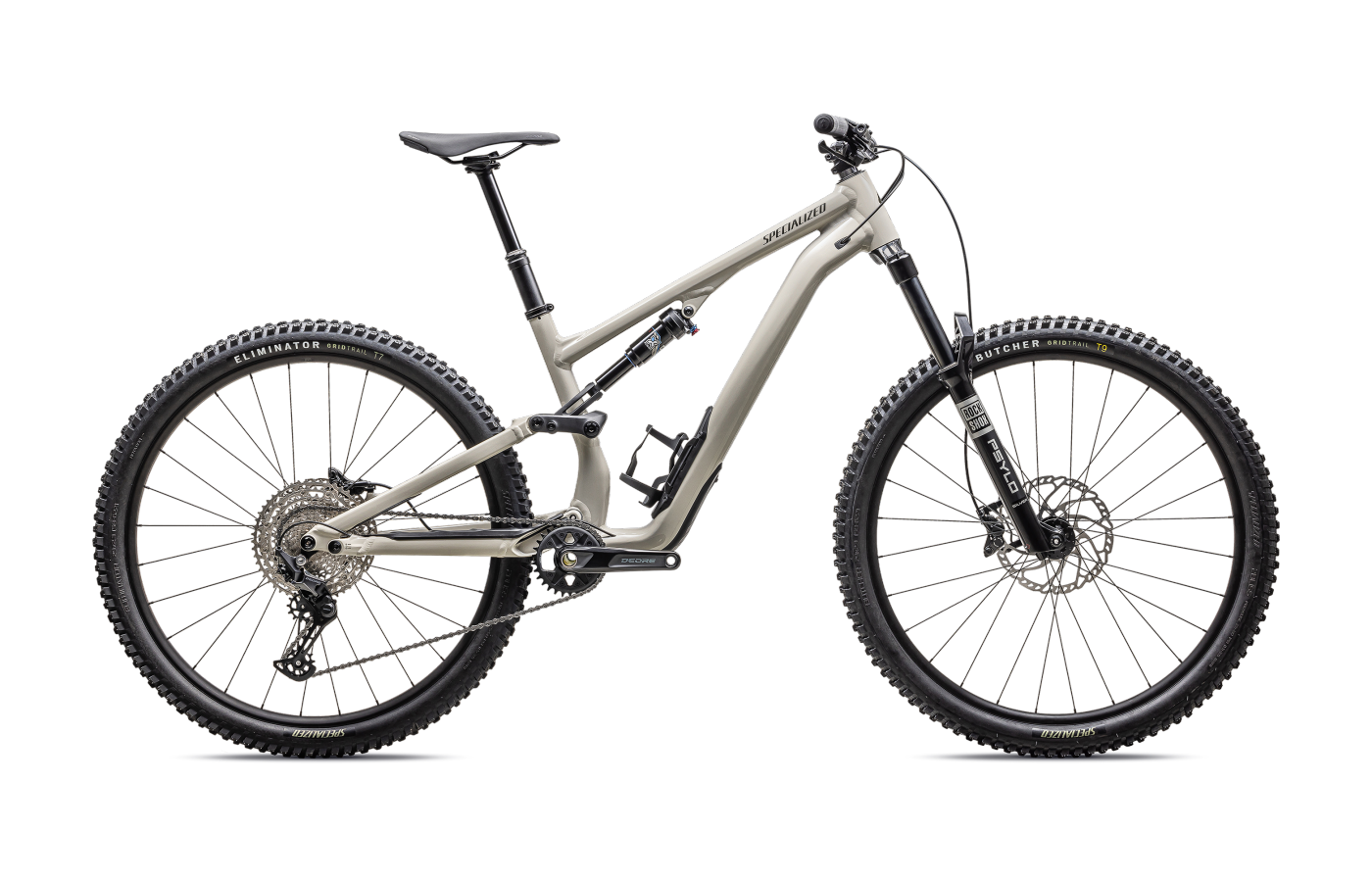
Stumpjumper
The Sentinel's most direct competitor — a 145/150 mm 29er all-rounder with the Genie shock for a more compliant feel. Reviewers noted the Stumpjumper 15 trades a touch of the Sentinel's pop for plusher mid-stroke.
Compare →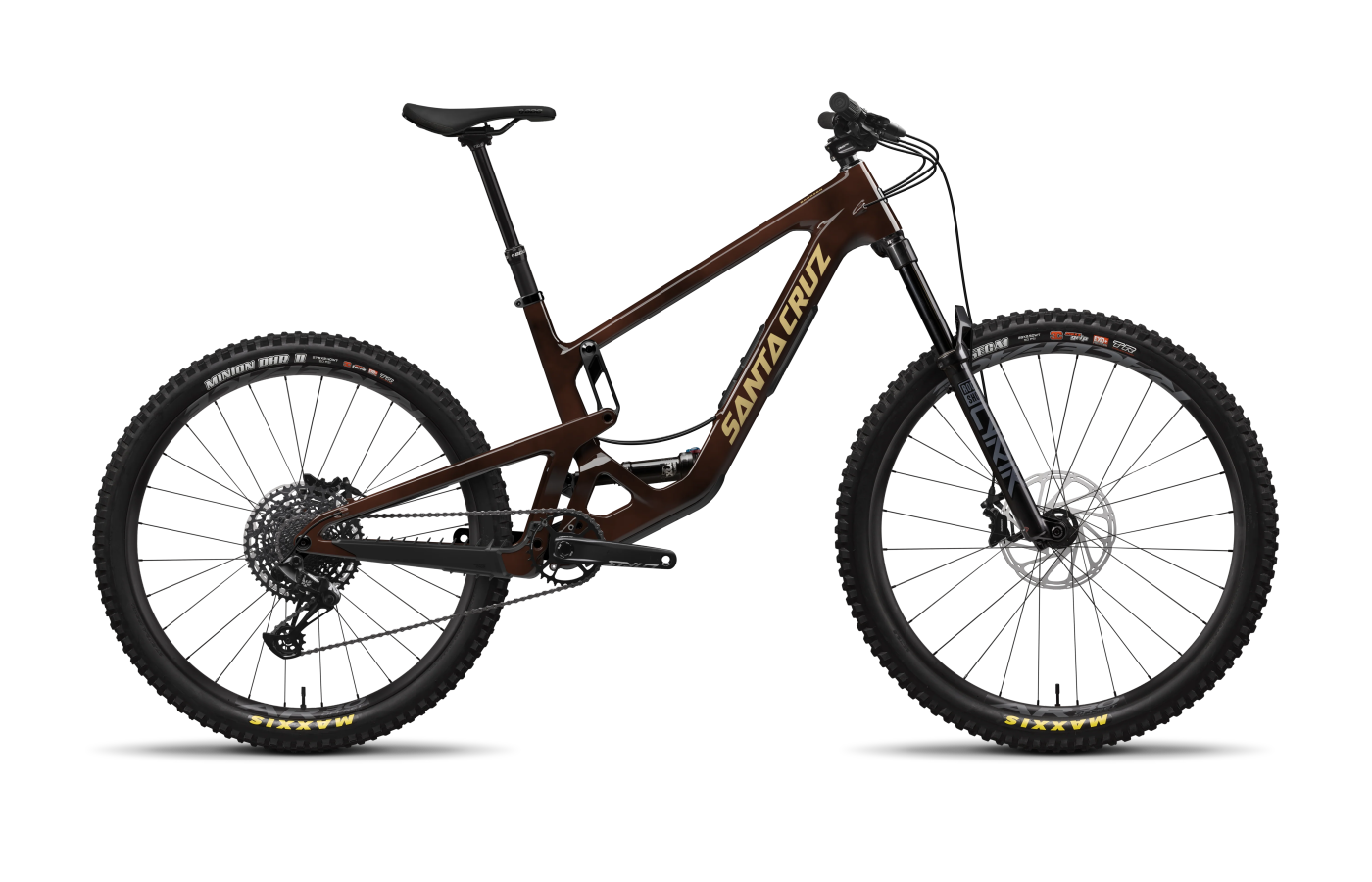
Bronson
Santa Cruz's dedicated mullet trail bike. Lower BB and a more locked-in cornering feel than the tall-riding Sentinel — a better pick if most of your riding is in flowy, machine-built berms.
Compare →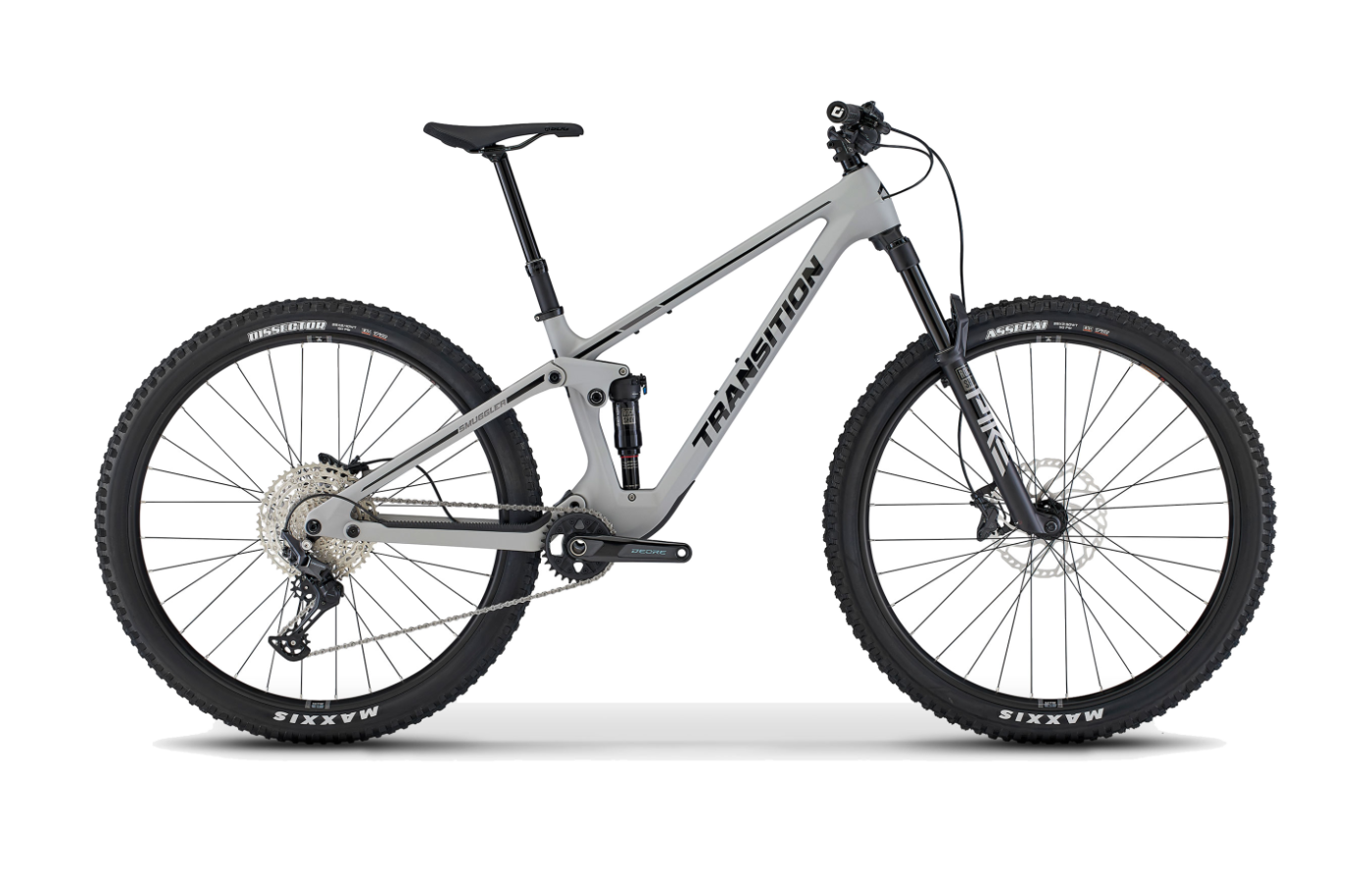
Smuggler
Transition's own shorter-travel option — same energetic GiddyUp character with less travel, less weight, and a more pedal-forward intent. The right call if 150 mm feels like more bike than your local trails need.
Compare →