Stumpjumper
vsIzzo
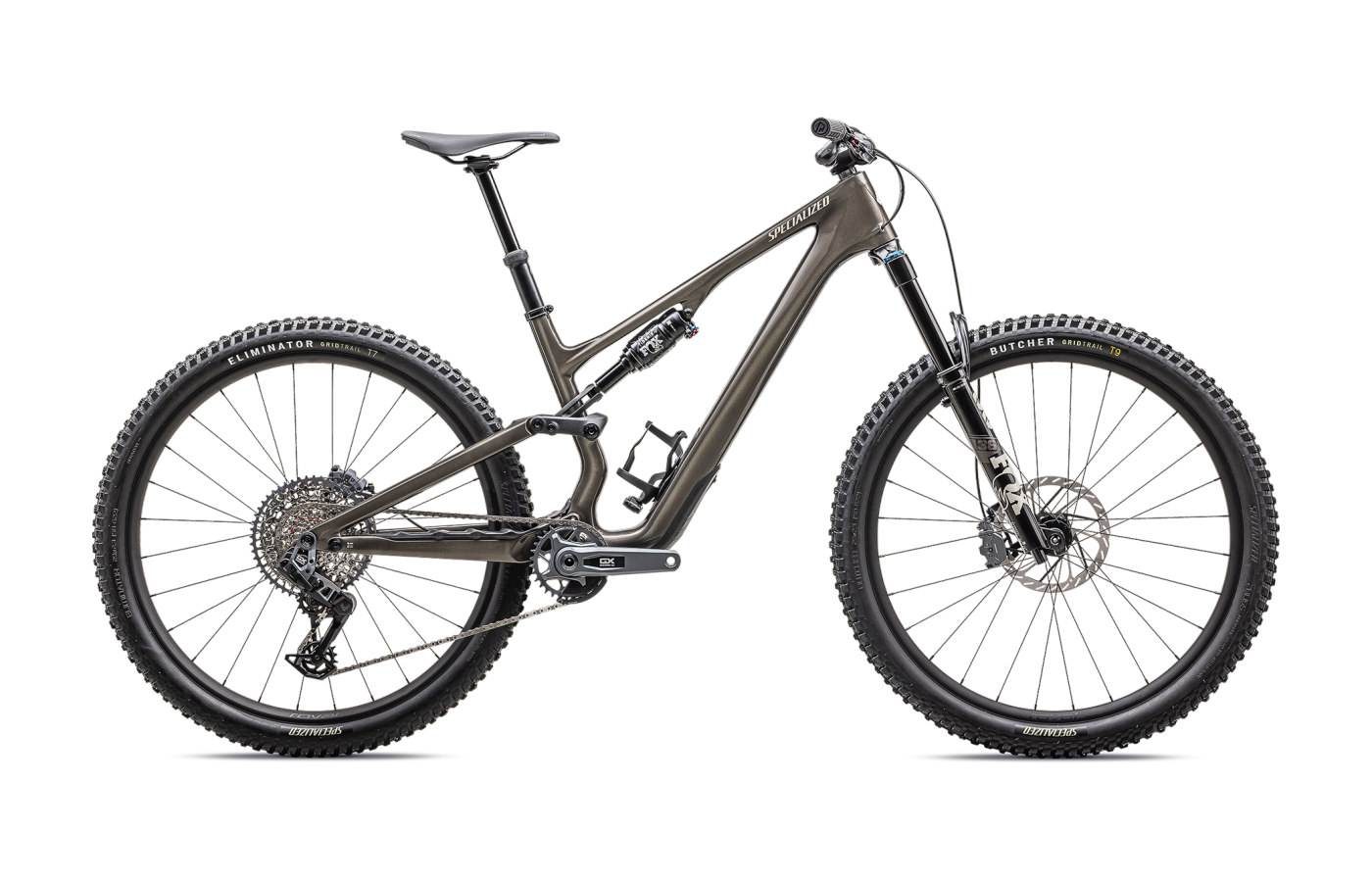
Two trail bikes, two very different mission statements.
The Stumpjumper 15 is a 145 mm do-everything quiver-killer. The Izzo is a 130 mm slalom tool that wants the trail to be fast, not steep.
Stumpjumper
- More travel, more terrain — 145 mm rear / 150 mm fork and a 64.5° HTA unlock steep, chunky descents the Izzo can't chase.
- GENIE shock is the real deal — supple for the first 70% of travel, ramps hard at the end; reviewers struggle to bottom it out.
- Adjustable geometry — three headset cups (63° / 64.5° / 65.5°) plus a flip-chip let one frame cover XC loop to bike park.
- Carbon frames are wireless-only — if you want Shimano mechanical, you're forced onto the heavier alloy.
- Price floor for a carbon build is $4,999, roughly double the cheapest Izzo carbon.
Izzo
- Direct-to-consumer pricing — top-spec carbon Core 3 CF at $4,499, ~25% below an equivalent-tier Stumpjumper.
- Sharper, faster on flow — 37% progression, 334 mm BB, and 432 mm chainstays make it carve corners and pump terrain.
- Honest trail weight — 14.20 kg on the Core 3 CF, lighter than Stumpjumper's carbon Expert.
- 130 mm travel and 65.7° HTA top out on steep, chunky descents well before the Stumpjumper does.
- No dealer network — sizing, service, and warranty are on you and the mail carrier.
Editor’s analysis
Both call themselves trail bikes. Only one of them is trying to replace your enduro rig — and it isn't the one from Germany.
On paper, the Specialized Stumpjumper and YT Izzo share a category and a wheel size. Spend five minutes with the geometry charts and the numbers pull them apart fast. The Stumpjumper gives you 145 mm of rear travel, a 150 mm fork, and a 64.5-degree head tube angle in the neutral headset cup. The Izzo has 130 mm out back, a 140 mm fork, and sits a full 1.2 degrees steeper at 65.7 degrees — more downcountry than trail, by modern standards.
The Stumpjumper's pitch is the GENIE shock. It's a dual-chamber air spring co-developed with Fox that keeps the first 70% of travel hyper-supple, then ramps hard to resist bottom-outs. Reviewers describe the rear wheel as "glued" on chatter and technical climbs, and note you can stop a huck-to-flat on it. Combined with adjustable headset cups and a flip-chip, it's a platform that reconfigures from weeknight group ride to bike-park shuttle without swapping frames.
The YT Izzo picks a narrower lane and sharpens it. Progression is a stiff ~37% — "J-curve" feel — so the 130 mm is taut off the top, punchy in the middle, and unwilling to use end travel casually. Short 432 mm chainstays and a low 334 mm bottom bracket make it carve. Reviewers land on words like "sprightly," "surgical," and "29er slalom bike." On chunky, high-speed descents, the Izzo reaches its limits noticeably sooner than the Stumpjumper.
Then there's price. Specialized Stumpjumper starts at $2,999 for a Deore-equipped alloy and climbs past $11,000 for the S-Works LTD. YT sells the Izzo entirely from $2,499 to $4,499 — four builds, all carbon front triangles. Put another way: the cheapest Izzo and the most expensive Izzo both cost less than a carbon Stumpjumper. If your decision is partly a budget decision, the Izzo buys dramatically more bike per dollar — at a real travel and geometry cost.
Where the builds differ.
Comparing our editor's-pick builds side-by-side. Winners highlighted row-by-row — lower price and weight, and the better-spec component, each mark a point.
Build variants & pricing
Stumpjumper spans $2,999 to $11,999 across nine builds; the Izzo is a tight four-build range from $2,499 to $4,499.
Prices are current US MSRP. The lineups don't overlap in tier: YT tops out at the Core 3 CF ($4,499, Öhlins, mechanical XT/SLX), which is still cheaper than the entry-level carbon Stumpjumper. We picked the Stumpjumper 15 Expert ($5,999) to keep the comparison on carbon and roughly close on price — but the real price delta between platforms is $1,500, and it tells you most of what you need to know.
How they fit, how they steer.
The Stumpjumper S3 and Izzo M are the fit-picked sizes for a 5'8" rider. Reach is within 5 mm, but the Stumpjumper sits 11 mm taller in stack, runs a 1.2° slacker head angle, and adds 3 mm of chainstay — a meaningfully more descent-biased stance than the Izzo's XC-adjacent geometry.
Which size should I buy?
Size recommendations based on stack, reach, and effective top tube. Specialized's S-sizing (S1–S6) scales reach independently of seat tube height; YT uses traditional S–XXL.
→These are starting points. Flexibility, riding style, and preferred position all shift the answer — if you’re between sizes, a professional fit beats a chart.
What the magazines said.
Published reviews from trusted cycling outlets. Click through for the full write-up.
Which one should you buy?
If you want one bike for everything from local loops to bike park laps, get the Stumpjumper. If you want a light, punchy carver at a direct-to-consumer price, get the Izzo.
Stumpjumper
If your weekends move between technical climbs, flowy descents, and the occasional bike-park lap, the Stumpjumper absorbs all of it. The GENIE shock, 145 mm of rear travel, and three-position adjustable head angle make it genuinely single-bike capable.
Izzo
If most of your riding is undulating, twisty, and fast — and budget matters — the Izzo punches hard. Taut, progressive suspension and short chainstays make it a slalom weapon. Skip it if your home trails point relentlessly down and get chunky.
Questions buyers actually ask.
Short answers to the things we get emailed about most often.
01How much more travel does the Stumpjumper give you?
15 mm in the rear and 10 mm up front. The Stumpjumper 15 runs 145 mm of rear travel and a 150 mm fork (160 mm on coil-shock builds). The YT Izzo has 130 mm rear and a 140 mm fork.
That's not a huge number on paper, but the bigger difference is how it's delivered. Reviewers consistently report the Stumpjumper's GENIE shock feels like more than 145 mm because of its supple first 70% and progressive end-stroke. The Izzo's 37% progression makes its 130 mm feel firm and rationed in comparison — great for pumping and jumping, less so for absorbing successive high-speed hits.
02Which climbs better?
Both climb well, for different reasons. The YT Izzo is the more efficient pedaling platform — reviewers repeatedly call it their favorite climber in its class, citing ~100% anti-squat, minimal pedal bob even with the shock fully open, and a 76.5° effective seat tube angle that sits the rider in a powerful, centered position.
The Stumpjumper climbs differently. Its GENIE shock stays supple, which generates huge rear-wheel traction on technical, rooty climbs where the Izzo's firmer rear might skip. Specialized claims 57% more traction, and reviewers back up the ground-hugging feel. For fire-road grinds, firm the climb switch; for technical pitches, it's arguably the better tool.
If "climbing" means fast tempo on smooth trails, Izzo. If it means scrambling up ledges and roots, Stumpjumper.
03How big is the price gap?
Big, and unavoidable. The YT Izzo range is $2,499 to $4,499 across four builds, all with carbon front triangles. The Specialized Stumpjumper 15 starts at $2,999 for an alloy Deore build and climbs to $11,999 for the S-Works LTD.
At the bottom, the cheapest Izzo undercuts the cheapest Stumpjumper. In the middle, the top-spec Izzo Core 3 CF ($4,499) is $1,500 cheaper than the carbon-frame Stumpjumper 15 Expert ($5,999) we picked for this comparison. At the top, nothing comparable — YT doesn't sell a $10k Izzo because the platform isn't trying to win a spec war. It's a direct-to-consumer value play.
04Is the YT Izzo capable enough for bike-park riding?
Not really, and that's not what it's for. Reviewers who rode it hard on steep, chunky terrain — Singletrackworld, MBR, Pinkbike — all agreed it reaches its limits well before modern 150 mm+ trail bikes do. The 65.7° head tube angle and 130 mm of travel put it in downcountry territory by today's standards; the firm, progressive rear end rewards precise line choice rather than plowing.
The Stumpjumper is the better bike-park tool in stock form — slacker, more travel, and adjustable headset cups that can push it to 63° for park shuttles. If your local riding is steep and rocky, the choice here isn't close.
05Can I use a Shimano mechanical drivetrain on either bike?
Yes on the Izzo, partially yes on the Stumpjumper. The top Izzo (Core 3 CF) ships with a Shimano XT shifter and SLX rear derailleur — full mechanical. Every Izzo build uses Shimano mechanical except the Core 4 CF, which runs XT Di2.
The Stumpjumper is more restrictive. All carbon frames are wireless-only — they lack the cable routing for mechanical rear derailleurs. If you want Shimano mechanical, you have to step down to the alloy 15 Comp Alloy or 15 Alloy, which comes with SLX or Deore respectively. That's a known controversy and cost us points when we built the comparison.
06How adjustable is the Stumpjumper's geometry?
Extensively. Three headset cups shift the head tube angle across 63° (Low), 64.5° (Mid), and 65.5° (High) — a 2.5° range that covers everything from bike-park slack to XC-adjacent neutral. A flip-chip on the rear suspension adjusts bottom bracket height by roughly 7 mm. And the frame is compatible with a mullet link if you want 27.5" out back.
The Izzo is much simpler: a single flip-chip with a subtle geometry shift, and no headset angle adjustment. If you value dialing in the bike for different trails or rider preferences, the Stumpjumper gives you significantly more to work with.
07Which one is lighter?
Closer than you'd expect. At the editor's-pick trim, the Stumpjumper 15 Expert (size S4, alloy wheels) weighs 14.47 kg, and the Izzo Core 3 CF (smallest size, claimed) weighs 14.20 kg — about 270 g apart.
At the top of each lineup, the S-Works Stumpjumper drops to 13.56 kg with carbon wheels, while the Izzo Core 4 CF claims 13.90 kg with DT Swiss XMC 1501 carbon wheels. Not a huge delta in either case — the Izzo is marginally lighter for its travel class, but neither is heavy for a modern carbon trail bike.
08What's the warranty and service situation?
Specialized offers a lifetime frame warranty and lifetime pivot bearing replacement to the original owner, backed by a dealer network you can walk into. If something goes wrong, there's a shop nearby. Reviews of their customer service have been responsive when frames develop issues.
YT sells direct to consumer — no dealer. Warranty terms are solid on paper (5 years on the frame), but all service and fit conversations happen by email and shipping box. If you're a confident home mechanic with a good local shop you already trust, not an issue. If you rely on the bike store for setup and service, it's a real difference.
Similar bikes
If your priorities don’t map cleanly onto either of these, one of these adjacent bikes probably fits better.
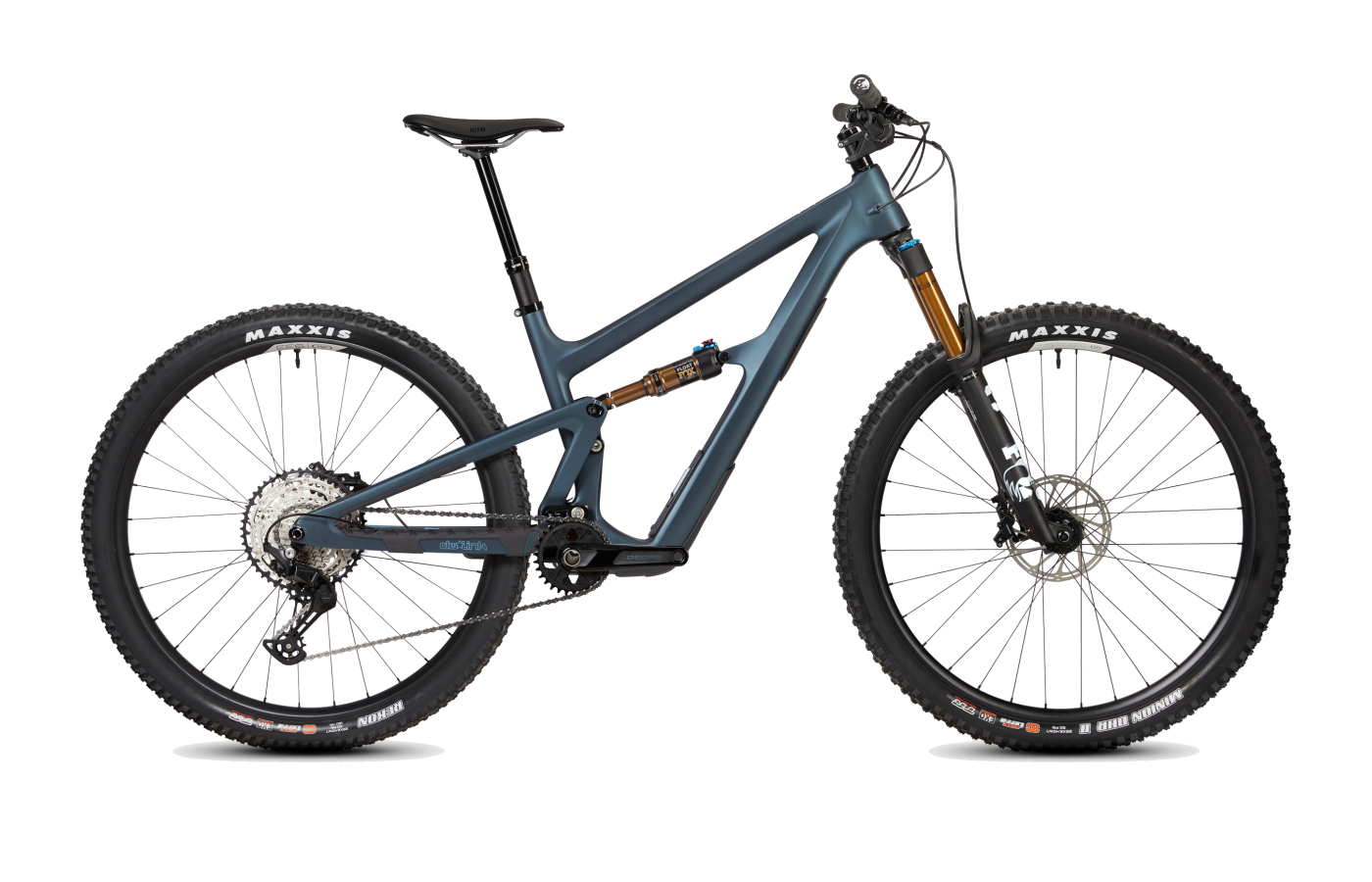
Ripley
The most direct cross-shop for the Izzo — similar pedaling efficiency with Ibis's DW-Link suspension, which some testers find more traction-rich than YT's progressive single-pivot-driven feel.
Compare →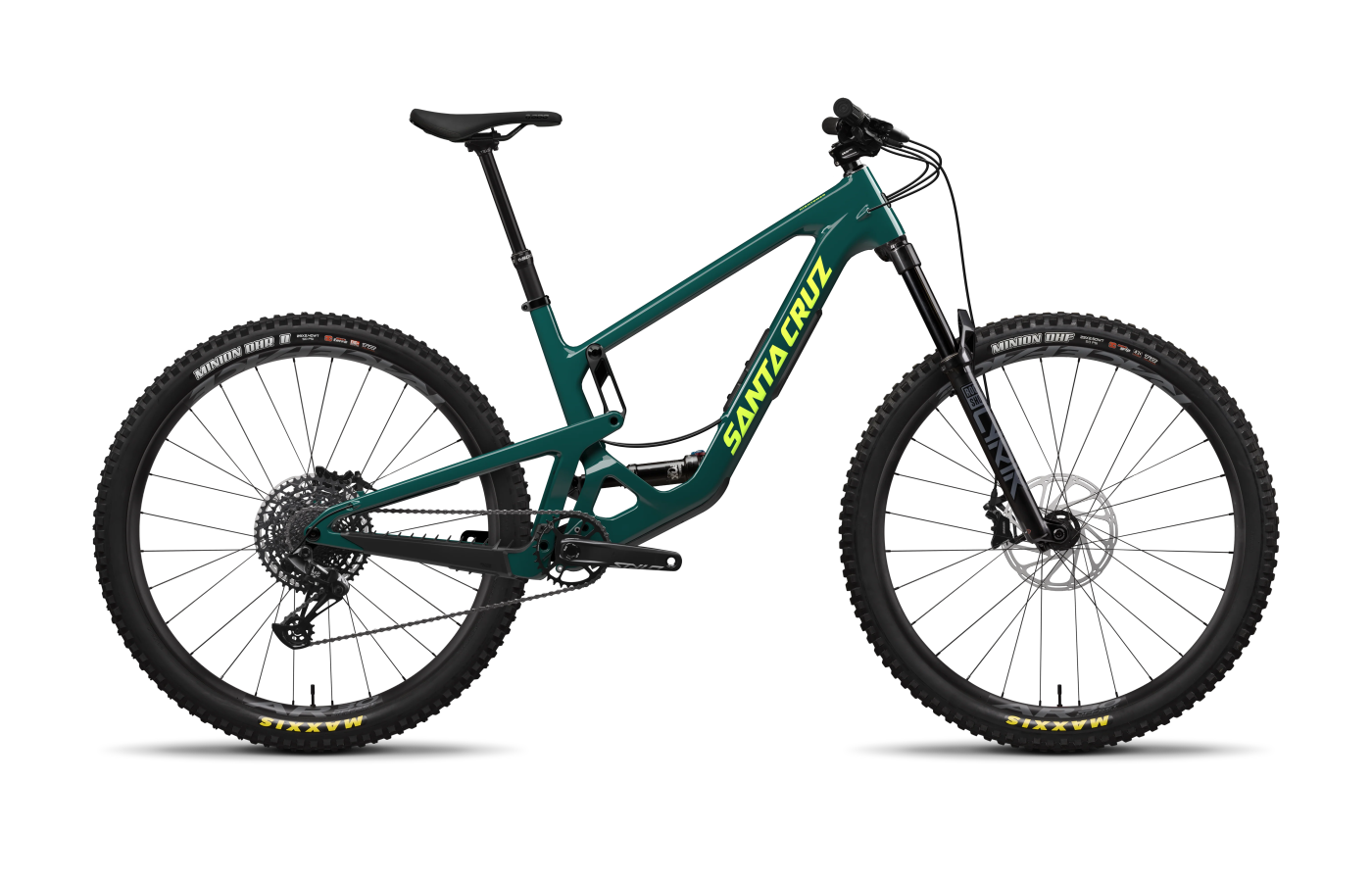
Hightower
The Stumpjumper's closest rival on travel (145 mm) and intent. More planted and less "poppy" than the GENIE-equipped Specialized — a quieter, more traditional trail bike for the same terrain.
Compare →
Fuel EX
Splits the difference between these two: more travel than the Izzo, a more conventional suspension feel than the Stumpjumper, and Trek's own brand of adjustable geometry for riders who want a do-everything platform without proprietary shock tech.
Compare →