Rockhopper
vsStumpjumper
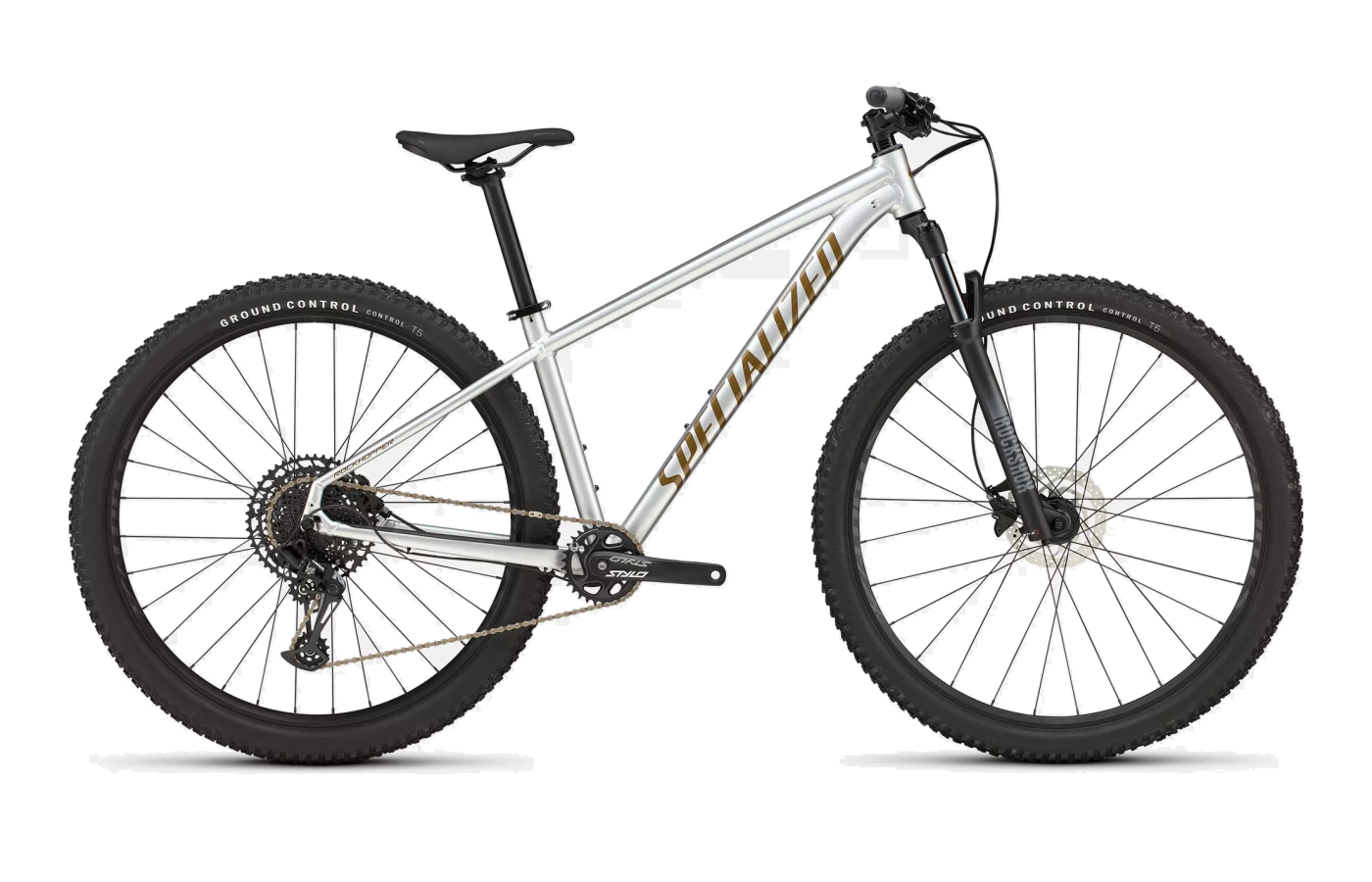
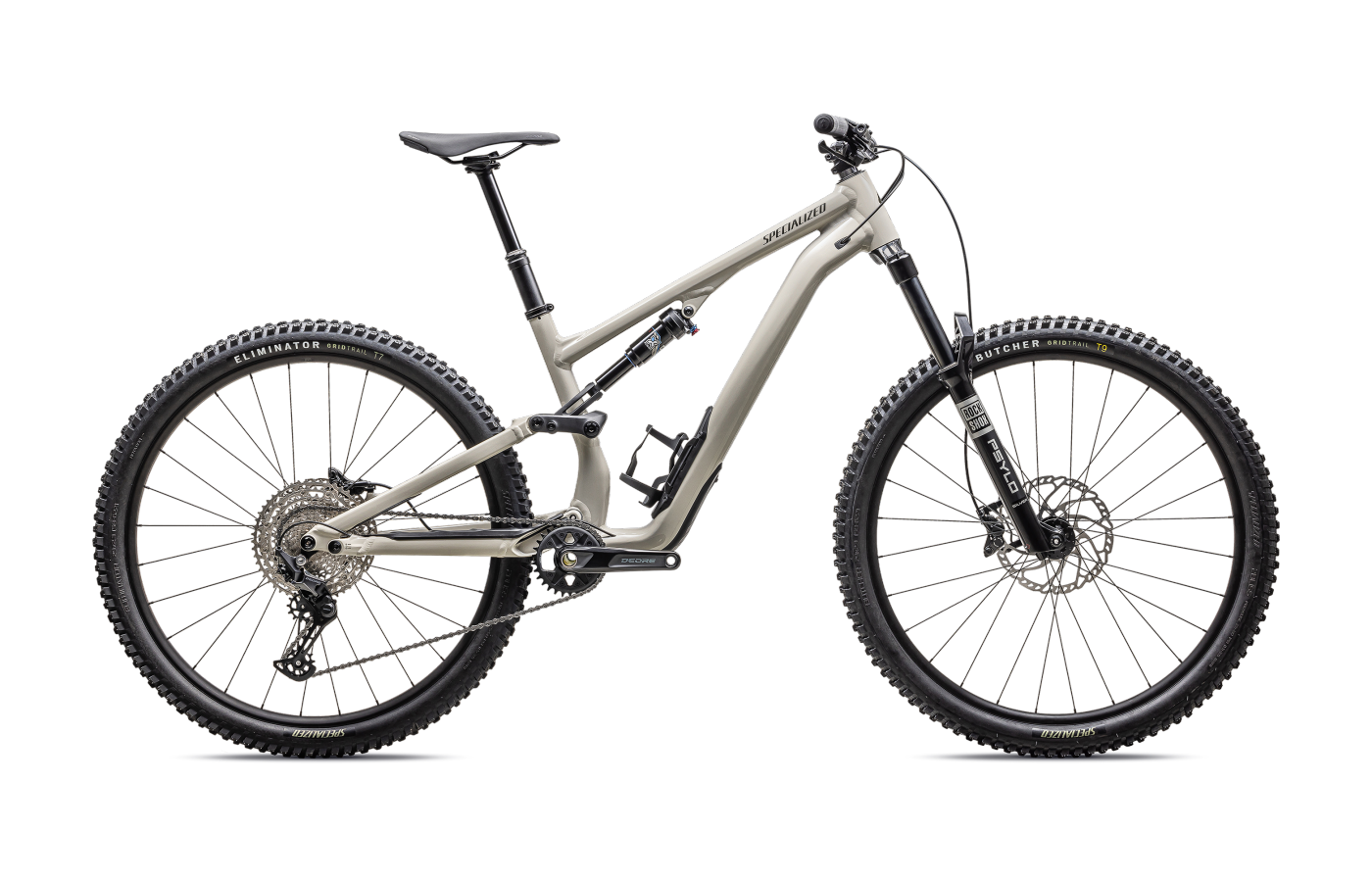
Two Specialized mountain bikes — but only one of them is built for the same trails.
The Rockhopper is a budget alloy hardtail for fire roads and groomed singletrack. The Stumpjumper 15 is a 145 mm full-suspension trail bike built to charge.
Rockhopper
- Cheapest way in — $649 starting, $1,299 for the top Expert build. The most accessible modern hardtail Specialized makes.
- Lightweight for the price — roughly 13 kg on the Expert build. Reviewers call it one of the best climbers in its bracket.
- RxTune size-specific suspension — fork travel and spring rate scale with frame size, so XS riders aren't fighting an oversized fork.
- Entry-level forks (RockShox Judy on the Expert; Suntour coils below) feel "agricultural" once trails get rough.
- 9 mm QR axles and a straight 1-1/8" head tube cap the long-term upgrade path — no Boost wheels, no modern tapered forks.
Stumpjumper
- Genuinely versatile — 145 mm rear / 150 mm front travel plus adjustable head angle and BB height covers everything from XC loops to bike-park days.
- GENIE shock — supple in the first 70%, ramps hard in the last 30%. Multiple reviewers said they couldn't bottom it out.
- SWAT downtube storage — in-frame tool/tube storage is a small thing that becomes essential once you've used it.
- Price floor of $2,999 (alloy/Deore) and $4,999 for the cheapest carbon — there's no budget option.
- Carbon frames are wireless-only (SRAM AXS Transmission), no mechanical drivetrain compatibility.
Editor’s analysis
These bikes share a brand and a category label, and almost nothing else. The real question is what kind of trail riding you actually do.
The Specialized Rockhopper is a hardtail. The Stumpjumper 15 is a full-suspension trail bike with 145 mm of rear travel and a 150 mm fork. That single fact drives almost every other difference — geometry, weight, capability, and a price floor that's more than 2x higher for the Stumpjumper. Lumping them together is a brand-loyalty exercise more than a comparison; for most riders, one of these is obviously the right tool.
The Rockhopper is what Specialized has been refining for forty years: a lightweight A1 alloy hardtail with conservative XC geometry — a 68.5° head angle, a 425 mm reach in size L, and an 80–100 mm coil or air fork (size-dependent). Reviewers consistently call the Elite and Expert builds "zippy," "snappy," and "one of the most efficient climbers in the budget hardtail category" at around 13 kg. It excels on green and blue trails, fire roads, NICA-style XC racing, and long mileage days. Push it onto chunky black-graded terrain and the short reach, narrow tires, and entry-level forks start to fight back.
The Stumpjumper 15 plays a completely different game. A 64.5° head angle, 450 mm reach in S3, and a 1213 mm wheelbase put the rider between the wheels rather than over the front. The proprietary Fox GENIE rear shock is the headline — a dual-chamber air spring that's "hyper-sensitive" through the first 70% of travel and then ramps up sharply to resist bottom-out, which reviewers across Pinkbike, Flow MTB, and Singletracks described as essentially eliminating harsh hits even on bike-park drops. Adjustable headset cups give three head-angle settings; a flip-chip changes BB height. It's a tunable, do-it-all trail platform.
Put bluntly: if your riding is moderate XC, gravel-adjacent, or you're new to the sport and want a quality entry point, the Rockhopper is the right answer and the Stumpjumper is wildly overbuilt. If you ride technical singletrack, drop into rougher descents, or want a bike that can handle bike-park days, the Rockhopper will hold you back and the Stumpjumper is the platform you actually want.
Where the builds differ.
Comparing our editor's-pick builds side-by-side. Winners highlighted row-by-row — lower price and weight, and the better-spec component, each mark a point.
Build variants & pricing
The Rockhopper is a sub-$1.5k hardtail line. The Stumpjumper 15 starts at $2,999 alloy and runs to $11,999 S-Works carbon — there's no overlap.
These platforms don't share a common drivetrain tier — the Rockhopper's range tops out below where the Stumpjumper's range begins. We've matched the editor's-pick column at the most accessible 12-speed build on each side (Rockhopper Expert with SRAM SX Eagle, Stumpjumper 15 Alloy with Shimano Deore). Expect the Stumpjumper to win nearly every spec row by virtue of the price gap, not the platform.
How they fit, how they steer.
Rockhopper L (29) vs Stumpjumper S3 — the fit-picked sizes for a 5'8" rider on each. The Stumpjumper is 4° slacker at the head tube (64.5° vs 68.5°), 25 mm longer in reach, and 85 mm longer in wheelbase. Different trail tools, different geometries.
Which size should I buy?
Rockhopper uses traditional XS–XXL labels with a wheel-size split (27.5 below M, 29 from M up). Stumpjumper uses S1–S6 sizing that's reach-driven and decoupled from rider height.
→These are starting points. Flexibility, riding style, and preferred position all shift the answer — if you’re between sizes, a professional fit beats a chart.
What the magazines said.
Published reviews from trusted cycling outlets. Click through for the full write-up.
Which one should you buy?
If you ride mostly green/blue singletrack, fire roads, and want a quality entry to the sport, get the Rockhopper. If you ride technical trails or want one bike for everything from XC to bike-park, get the Stumpjumper 15.
Rockhopper
If you're getting into mountain biking, racing NICA-style XC, or want a do-everything hardtail for fire roads, gravel detours, and groomed singletrack — this is the smart pick. The Expert build at $1,299 gets you a 1x12 drivetrain, an air fork, and a 13 kg bike that climbs like it costs more.
Stumpjumper
If your home trails involve rocks, roots, drops, or you want a bike that can handle the occasional bike-park day, the Stumpjumper 15 is one of the most adaptable trail platforms on the market. The GENIE shock and adjustable geometry let it cover ground from XC pace to enduro-light without changing bikes.
Questions buyers actually ask.
Short answers to the things we get emailed about most often.
01Are these actually comparable bikes?
Not really, and that's worth saying out loud. The Rockhopper is a sub-$1,300 alloy hardtail with 80–100 mm of front travel and no rear suspension. The Stumpjumper 15 starts at $2,999 and runs to $11,999, with 145 mm rear and 150 mm front travel. They share a brand and a category label ("mountain bike") but they're built for different trails, different riders, and different budgets.
The useful question isn't "which is better" — it's "which kind of riding do you actually do?"
02Can the Rockhopper handle real trail riding?
On green and blue trails, yes — and it's a great bike for that. Multiple reviewers (BikeRadar, Bike Perfect, MBR) called the Elite and Expert builds excellent climbers and "mile-munchers" for moderate singletrack.
On black-graded technical terrain, the limits show up fast. The 80–100 mm fork (size-dependent) is described as "agricultural," the QR axles flex under load, and the short 425 mm reach (size L) puts you over the front on steep descents. Reviewers consistently flagged these as confidence limiters once trails got rough.
03What does the Stumpjumper's GENIE shock actually do?
The GENIE is a Fox-built rear shock developed with Specialized that uses two air chambers instead of one. The larger outer chamber gives the first ~70% of travel a supple, almost coil-like feel for traction and small-bump compliance. A "GENIE band" then closes off that outer chamber for the last ~30%, ramping up progression sharply to resist bottom-out.
Reviewers across Flow MTB, Pinkbike, and Singletracks reported they essentially couldn't bottom the bike out on normal trail riding, even on drops. You can also add additional bands to firm up the mid-stroke if you want a more supportive, "sportier" feel.
04How much does the build difference matter for the spec comparison?
A lot. Our editor's picks here are the Rockhopper Expert at $1,299 and the Stumpjumper 15 Alloy at $2,999 — both are entry-level 12-speed builds, but the price gap is more than 2x. The Stumpjumper will win nearly every spec row (better fork, better wheels, dropper post stock, full suspension), but that reflects the price difference, not a head-to-head platform contest.
If you're considering both at all, you're really deciding between hardtail and full-suspension, not between two evenly-matched bikes.
05Is the Rockhopper's lack of Boost / tapered head tube a real problem?
It depends on your plans. If you want a bike to ride mostly stock for a few seasons and then replace, no — the Rockhopper will be a fine, reliable bike that whole time.
If you want to upgrade the fork or wheelset over time as your skills grow, yes — the 9 mm QR axles (135 mm rear, 100 mm front) and straight 1-1/8" head tube rule out almost every modern aftermarket fork and wheelset. Reviewers at Bike Perfect and Off.road.cc called this out specifically as a long-term limitation.
06Why is the cheapest Stumpjumper 15 so much heavier than the Rockhopper Expert?
The Stumpjumper 15 Alloy at $2,999 weighs roughly 16.6 kg. The Rockhopper Expert at $1,299 weighs about 13.1 kg. That's a 3.5 kg gap.
Most of it comes from the rear suspension system (linkage, shock, pivots, longer rear triangle), the burlier 150 mm fork, the dropper post, larger 2.3" tires, and a heavier alloy frame designed to handle harder hits. Pinkbike specifically called the alloy Stumpy frame "egregious" at 9.5 lb for the bare frameset. Carbon Stumpjumpers shed roughly 1.5–2 kg but cost $5,000+ more.
07What are good alternatives in each direction?
If you like the Rockhopper but want to upgrade: the Specialized Chisel is a lighter, more modern XC hardtail built around current standards (Boost, tapered head tube), or a cross-shop to the Trek Marlin gives you a direct rival at a similar price.
If you like the Stumpjumper 15 but want to spend less: the Ibis Ripmo AF is a 147 mm-rear / 160 mm-front alloy trail bike that delivers similar capability at a more accessible price. The Santa Cruz Hightower is a more composed, less lively alternative if you ride a lot of high-speed rough terrain.
08Which has better long-term resale value?
Both Specialized models hold value reasonably well thanks to brand recognition and dealer networks. The Stumpjumper 15 carbon builds will hold value better in absolute dollars but depreciate by a similar percentage as the Rockhopper. The Rockhopper's alloy frame and entry-level components mean it's easier to find used at a steep discount, but it also means lower resale ceiling.
Both come with Specialized's lifetime frame warranty to the original owner, which transfers some buyer confidence to the used market.
Similar bikes
If your priorities don’t map cleanly onto either of these, one of these adjacent bikes probably fits better.
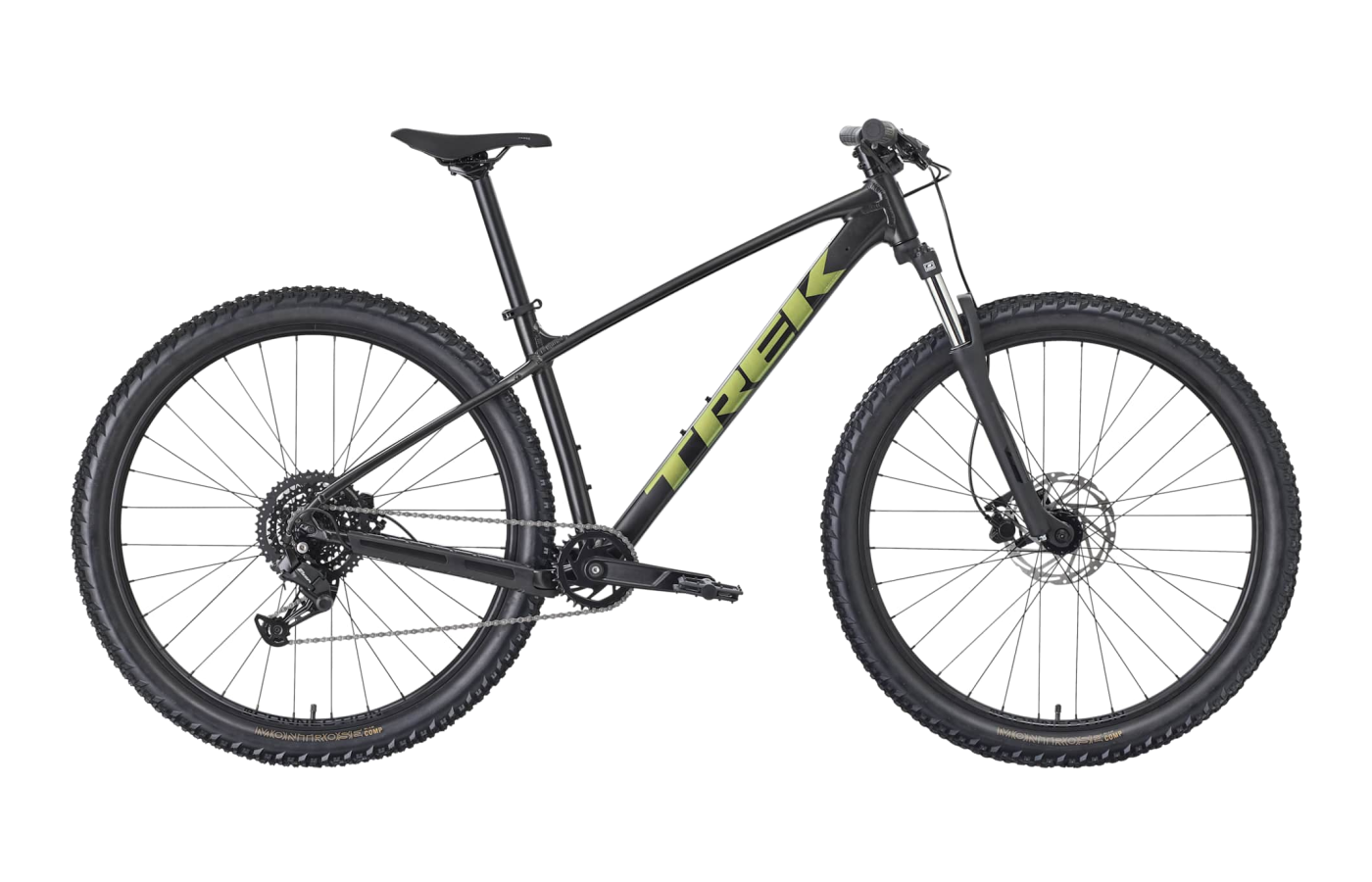
Marlin
The direct rival to the Rockhopper — Trek's entry-level XC hardtail, similar price band, broadly similar build philosophy. Worth cross-shopping if you're at a Trek dealer.
Compare →
Ripmo AF
Stumpjumper-class capability (147 mm rear / 160 mm front travel) at a notably lower price. The alloy Ripmo is one of the best value full-suspension trail bikes on the market — worth a serious look if the carbon Stumpy's price stings.
Compare →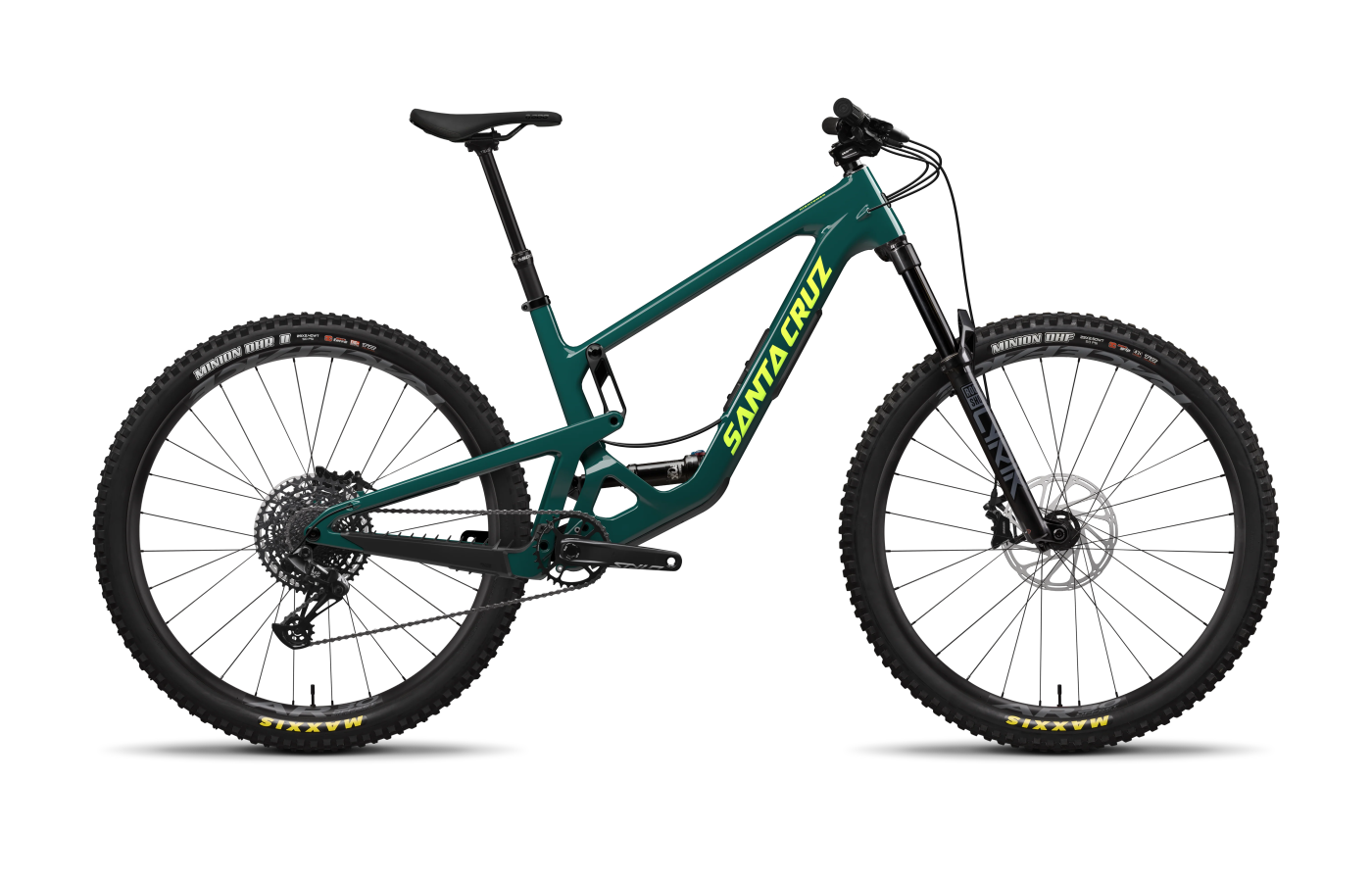
Hightower
Slacker, longer, and more composed at high speed than the Stumpjumper 15. Less playful, more planted — the right call if your trails are steep, rough, and fast rather than flowy.
Compare →