Epic
vsRockhopper
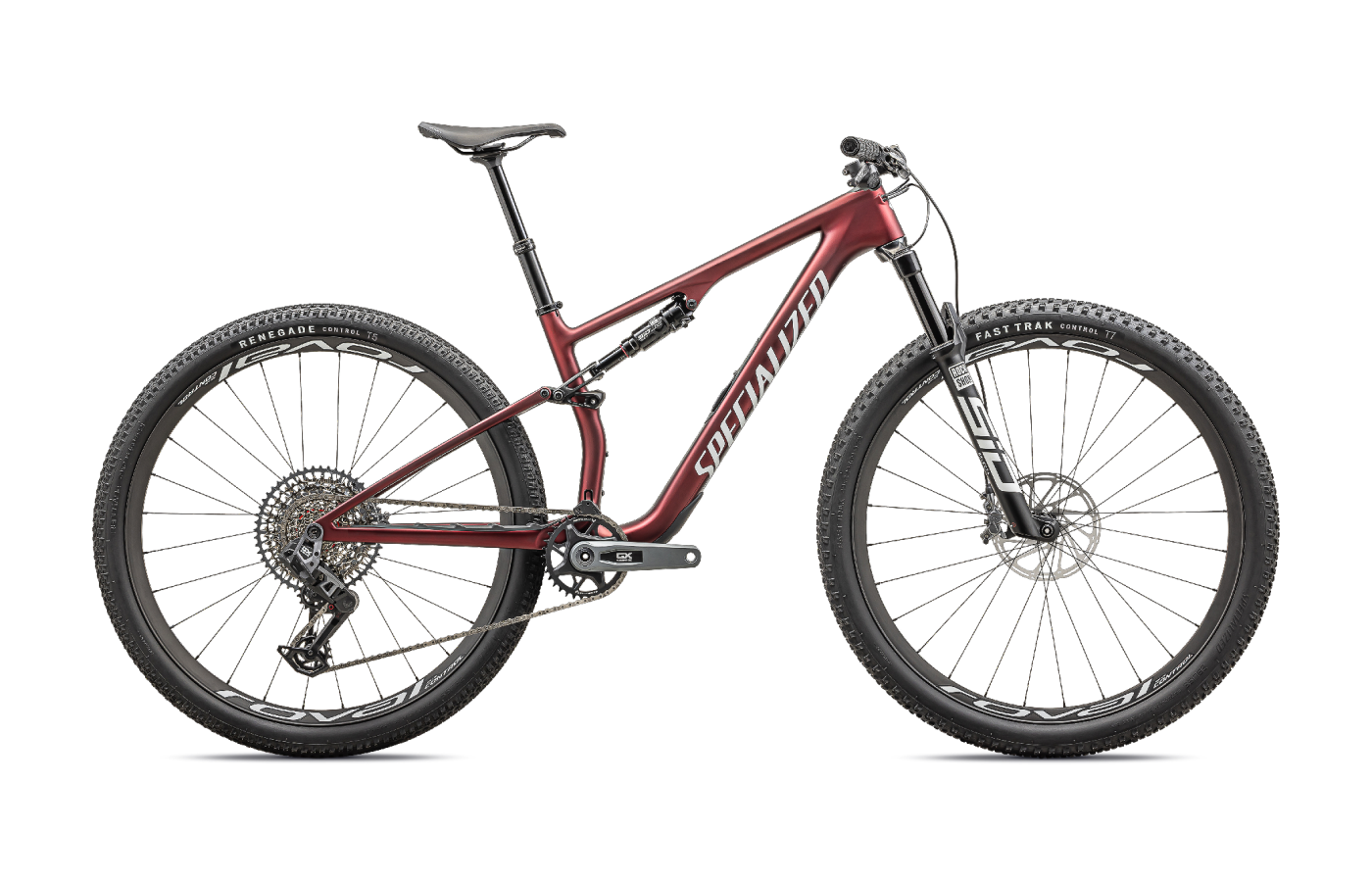
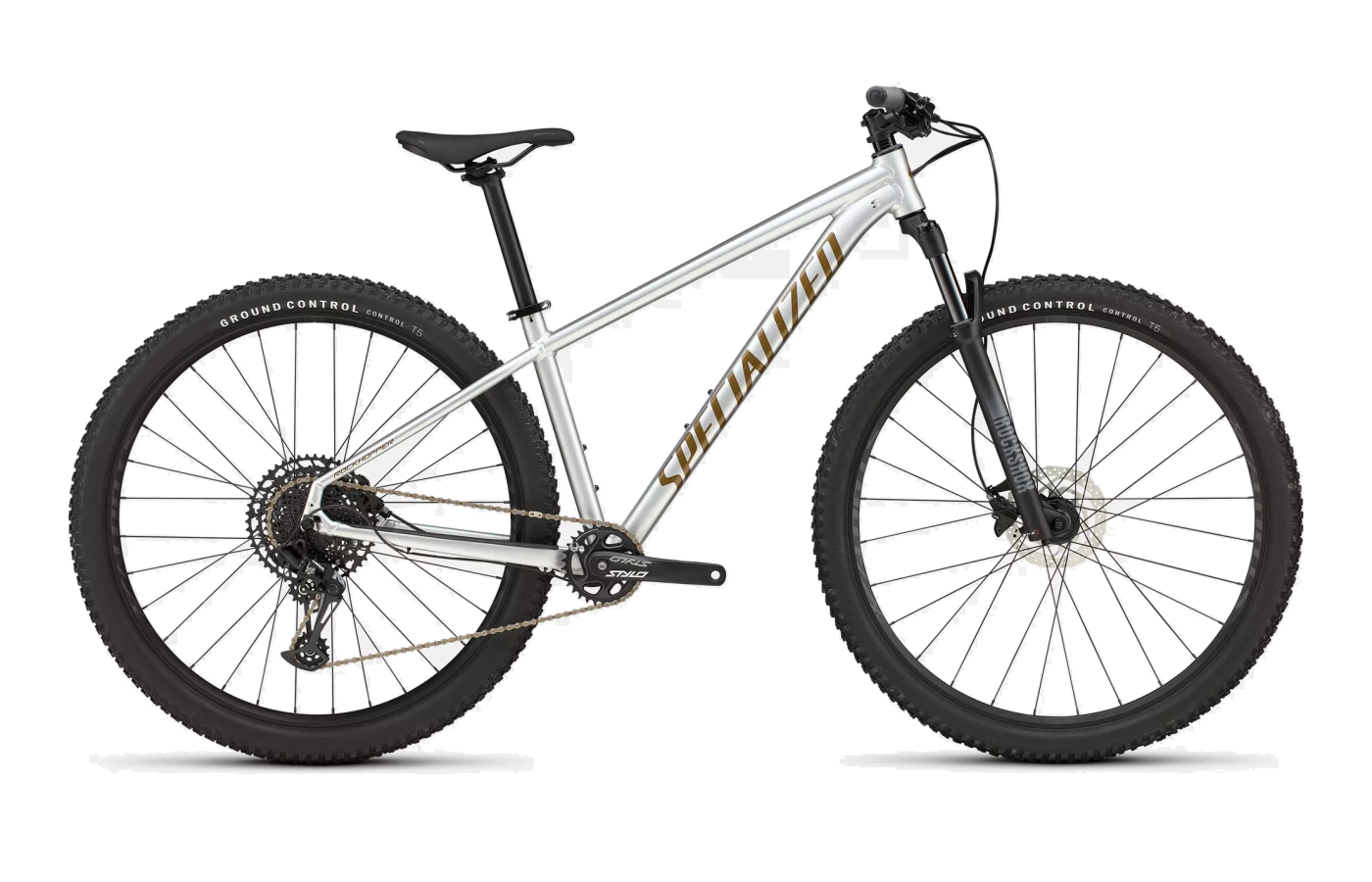
Same brand, same category, different sport.
The Epic 8 is a carbon World Cup race weapon starting at $4,499. The Rockhopper is an alloy gateway hardtail topping out at $1,299.
Epic
- Race-grade suspension — 120 mm of RockShox SID with the custom 'Magic Middle' tune, the same hardware whether you spend $6.5k or $15k.
- Genuinely slack XC geometry — 65.9° head angle and 1,179 mm wheelbase (M) descend like a short-travel trail bike, not an XC whippet.
- Modern frame standards — FACT carbon, threaded BB, Boost spacing, SWAT downtube storage, UDH-compatible dropout.
- Entry price is $4,499 — there's no cheap way in.
- S-Works electronics (Flight Attendant, AXS, TyreWiz) demand battery-charging discipline.
Rockhopper
- Sub-$1,300 entry point across nine builds — by far the most accessible way into Specialized's mountain lineup.
- Best-in-class brakes — Shimano MT200 hydraulic discs on the upper trims, repeatedly called 'best-in-class' by reviewers at this price.
- Light alloy frame — around 13 kg on the Expert, lighter than most rivals at the same price.
- Straight 1-1/8" head tube and 9 mm QR axles severely limit fork and wheel upgrade paths.
- Entry-level forks (Suntour XCM/XCE coil on lower trims, RockShox Judy on upper) get overwhelmed on technical descents.
Editor’s analysis
This isn't a comparison so much as a mirror of how far Specialized's mountain catalog stretches — one badge, two completely different price floors.
On paper both are 'cross-country' bikes from Specialized with 29-inch wheels and Fast Trak rubber. In practice the Epic 8 starts at $4,499 — three and a half times the price of the priciest Rockhopper at $1,299. The Epic is full-carbon, full-suspension, and aimed at racers who measure podium gaps in seconds. The Rockhopper is butted-aluminum, hardtail-only, and aimed at the rider who's still working out whether they like dirt at all.
The Specialized Epic 8 is what happens when a brand pours two decades of XC race learnings into one frame. It's 120 mm of travel front and rear, a 65.9-degree head angle (genuinely slack for XC), and a 'Magic Middle' shock tune that resists pedal bob until a real impact pops the valve open. Reviewers call it 'outrageously stable' on descents and a 'PR-destroying' multiplier on climbs. The S-Works gets electronic Flight Attendant suspension and a $14,999 sticker; the Expert at $6,499 keeps the same frame and tune for less than half the price, and is universally cited as the sweet spot.
The Specialized Rockhopper plays a totally different game — it's the bike a shop puts a new rider on so they can spend a season figuring out whether they want to buy something like an Epic. The A1 alloy frame is well-built and surprisingly light (around 13 kg on the Expert), the geometry is conservative-but-modern (68.5-degree head angle, 425 mm reach in size L), and the upper trims add air-sprung RockShox Judy forks and 1x12 SRAM Eagle. It thrives on flowing blue-graded singletrack and gets nervous when the trail steepens — exactly the trade-off you'd expect at this price.
Put another way: the Epic 8 is the bike you graduate to after years on something like the Rockhopper. The Rockhopper is the bike that earns the right to want an Epic. Picking between them isn't really a choice — it's a question about where you are in the sport.
Where the builds differ.
Comparing our editor's-pick builds side-by-side. Winners highlighted row-by-row — lower price and weight, and the better-spec component, each mark a point.
Build variants & pricing
Two non-overlapping lineups: the Rockhopper covers $649–$1,299, the Epic 8 covers $4,499–$14,999. There is no shared price point.
Editor's picks here are the Epic 8 Expert at $6,499 (the cheapest Expert build, universally cited as the platform's sweet spot) and the Rockhopper Expert at $1,299 (the top trim, with the air-sprung Judy fork and 1x12 SRAM). The price and component-tier gap between them is real and informative — these are different products for different riders, not different trims of the same product.
How they fit, how they steer.
Different sizing conventions, same fit-picked rider. The Epic M sits with a 65.9° head angle, 450 mm reach, and a 1,179 mm wheelbase — radically slacker and longer than the Rockhopper L - 29 at 68.5° / 425 mm / 1,128 mm. The Epic also runs 5 mm shorter chainstays (435 vs 440 mm) for a sharper rear end.
Which size should I buy?
Recommendations are based on stack, reach, and effective top tube. The Rockhopper splits sizes by wheel diameter (27.5" on the smallest frames, 29" on M and up); the Epic is 29" only across the size run.
→These are starting points. Flexibility, riding style, and preferred position all shift the answer — if you’re between sizes, a professional fit beats a chart.
What the magazines said.
Published reviews from trusted cycling outlets. Click through for the full write-up.
Which one should you buy?
If you're racing or chasing PRs on technical XC terrain, get the Epic 8. If you're new to mountain biking or you ride mostly mellow singletrack, get the Rockhopper.
Epic
If you're entering marathon races, hunting Strava KOMs, or you already own a hardtail and want a full-suspension upgrade that can descend, the Epic 8 is the benchmark. The Expert at $6,499 gets you the same frame, suspension tune, and Roval carbon wheels as the S-Works for less than half the price.
Rockhopper
If you're getting into mountain biking, riding mellow singletrack and greenways, or you want a lightweight commuter that can also handle a weekend trail ride, the Rockhopper is one of the most refined budget hardtails on the market. Just don't ask it to descend anything steep or rocky.
Questions buyers actually ask.
Short answers to the things we get emailed about most often.
01Why does the Epic 8 cost more than three times what the Rockhopper costs?
Almost everything is different. The Epic 8 uses Specialized's FACT 11m or 12m carbon (the S-Works frame alone retails as a $6,000 frameset) with 120 mm of front and rear suspension on RockShox SID/SIDLuxe units that retail in the $1,500+ range together. The Rockhopper uses A1 butted aluminum with an 80–100 mm Suntour or RockShox Judy fork — the entire Rockhopper Expert costs less than just the Epic's fork.
You're paying for the frame, the suspension, the carbon wheels, and the wireless 12-speed drivetrain. Whether that's worth it depends on what you're going to do with the bike.
02Is the Epic 8 a beginner bike?
Not really. The geometry is modern enough that a beginner could ride it without issue — slack head angle, low bottom bracket, stable wheelbase — but you'd be spending $4,500+ on race-tuned suspension, carbon wheels, and a wireless drivetrain that a beginner won't extract value from for a season or two.
If you're new to the sport, the Rockhopper (or the Specialized Chisel for a thru-axle upgrade path) is a smarter starting point. The Epic 8 makes the most sense after you know what you want.
03Can the Rockhopper handle a real trail?
Blue-graded singletrack, yes. Anything steeper or rockier, the bike's limits show fast. Reviewers consistently note that the RockShox Judy fork on the Expert (the best fork in the Rockhopper range) becomes 'uncontrollable over repeated large hits' and that the conservative 68.5° head angle and short reach get nervous on steep descents.
The Rockhopper is excellent on mellow singletrack, gravel paths, greenways, and as a learning platform. It is not a trail bike.
04How much can I upgrade the Rockhopper later?
Less than you'd hope. The frame uses a straight 1-1/8" head tube (no tapered steerer) and 9 mm quick-release axles front and rear (no Boost). That rules out almost every modern aftermarket fork and most current wheelsets.
You can swap brakes, drivetrain, dropper post, bars, stem, and tires without issue. But if you want to upgrade the suspension or wheels meaningfully, you're better off selling the Rockhopper and buying something with modern standards — the Specialized Chisel is a common next step for exactly this reason.
05What's the 'Magic Middle' on the Epic 8?
It's Specialized's name for the middle of three positions on the RockShox SIDLuxe rear shock — a custom-tuned digressive compression mode that sits between fully open and fully locked out. The valve provides a firm pedaling platform that resists rider-induced bob, then 'pops open' when it hits a real trail impact.
Reviewers across the board call it the defining feature of the Epic 8's ride. Specialized claims 20% less pedal bob and 12% more bump absorption than the previous Epic EVO. It's available on every Epic 8 trim from the $4,499 Comp up to the $14,999 S-Works — the tune is the same, only the lockout actuation differs (cable TwistLoc on most builds, electronic Flight Attendant on the S-Works).
06Do I need the S-Works Epic, or is the Expert enough?
For nearly everyone, the Epic 8 Expert at $6,499 is enough. It uses the FACT 11m frame instead of the S-Works' lighter 12m (about 170 g heavier, per reviewers), but it gets the same suspension hardware, the same 'Magic Middle' tune, the same Roval Control carbon wheels, and a wireless SRAM GX Eagle AXS drivetrain.
The S-Works adds the Flight Attendant electronic suspension, a Quarq power meter, the lighter 12m frame, and AXS POD Ultimate controls — for an extra $8,500. Worth it if you race at the World Cup level. Hard to justify otherwise.
07Are these wheel sizes the same?
Mostly. The Epic 8 is 29-inch only across all five sizes (XS through XL). The Rockhopper is mixed — XS and S are 27.5", and there are both 27.5" and 29" options in M, with L through XXL on 29" only.
If you're a smaller rider on the Rockhopper, you'll likely end up on 27.5". On the Epic, you're on 29" regardless of frame size.
08Can I race the Rockhopper?
Yes — many NICA high-school racers and citizen-class XC racers do exactly that. It's light for the price (about 13 kg on the Expert), the geometry is decent, and the gearing is wide-range. You won't be competitive at the elite level on flowing or technical courses against carbon full-sus bikes, but for grassroots racing or your first season testing the discipline, the Rockhopper Expert is plenty.
When you start finishing top-10 and want to win, the Epic 8 (or its hardtail sibling, the Epic World Cup) is the natural next step.
Similar bikes
If your priorities don’t map cleanly onto either of these, one of these adjacent bikes probably fits better.
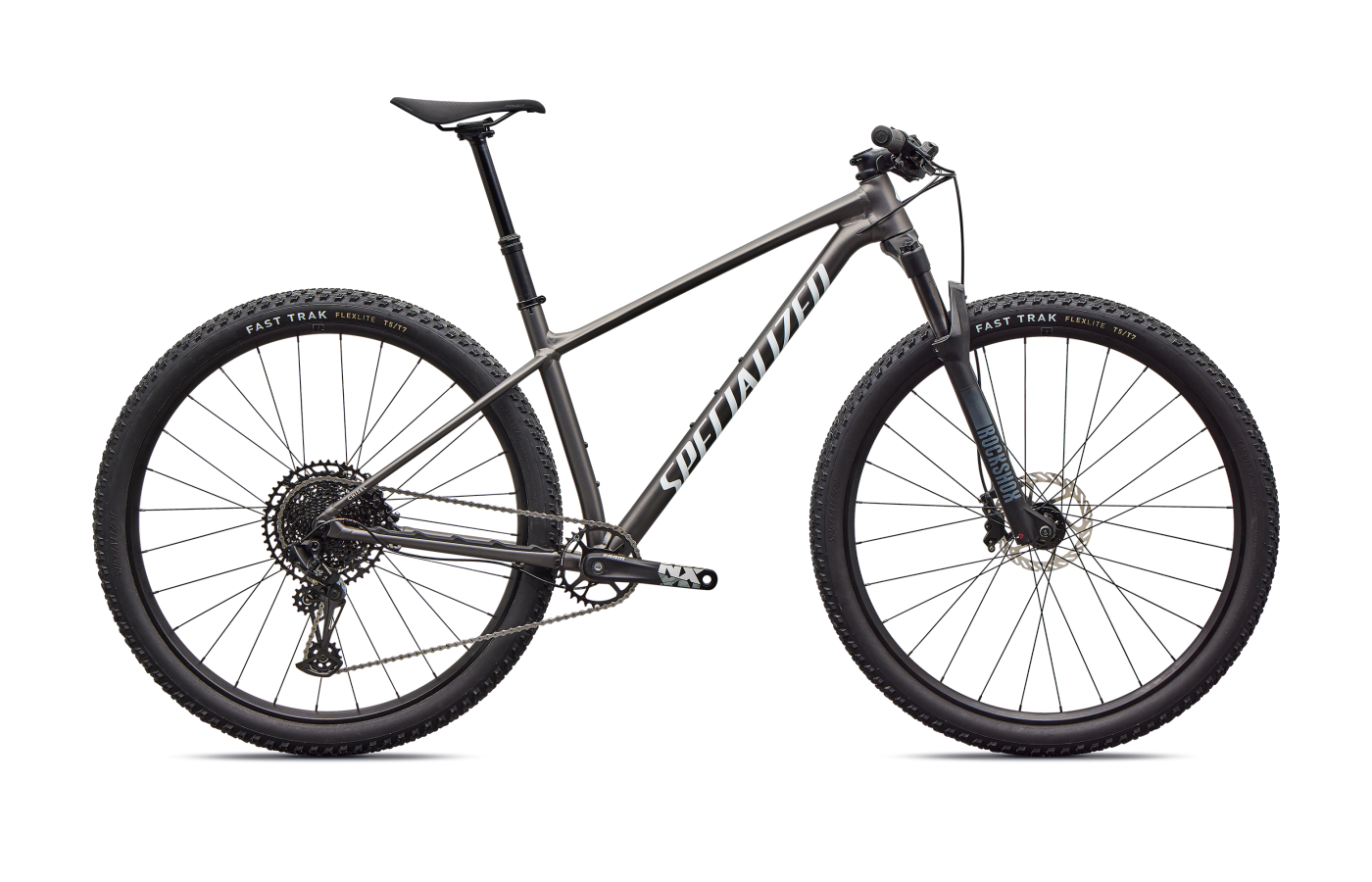
Chisel
If you like the Rockhopper's hardtail simplicity but want to eventually upgrade fork and wheels, the Chisel adds tapered head tube and Boost thru-axles for not much more money. The natural step up from a Rockhopper that you've outgrown.
Compare →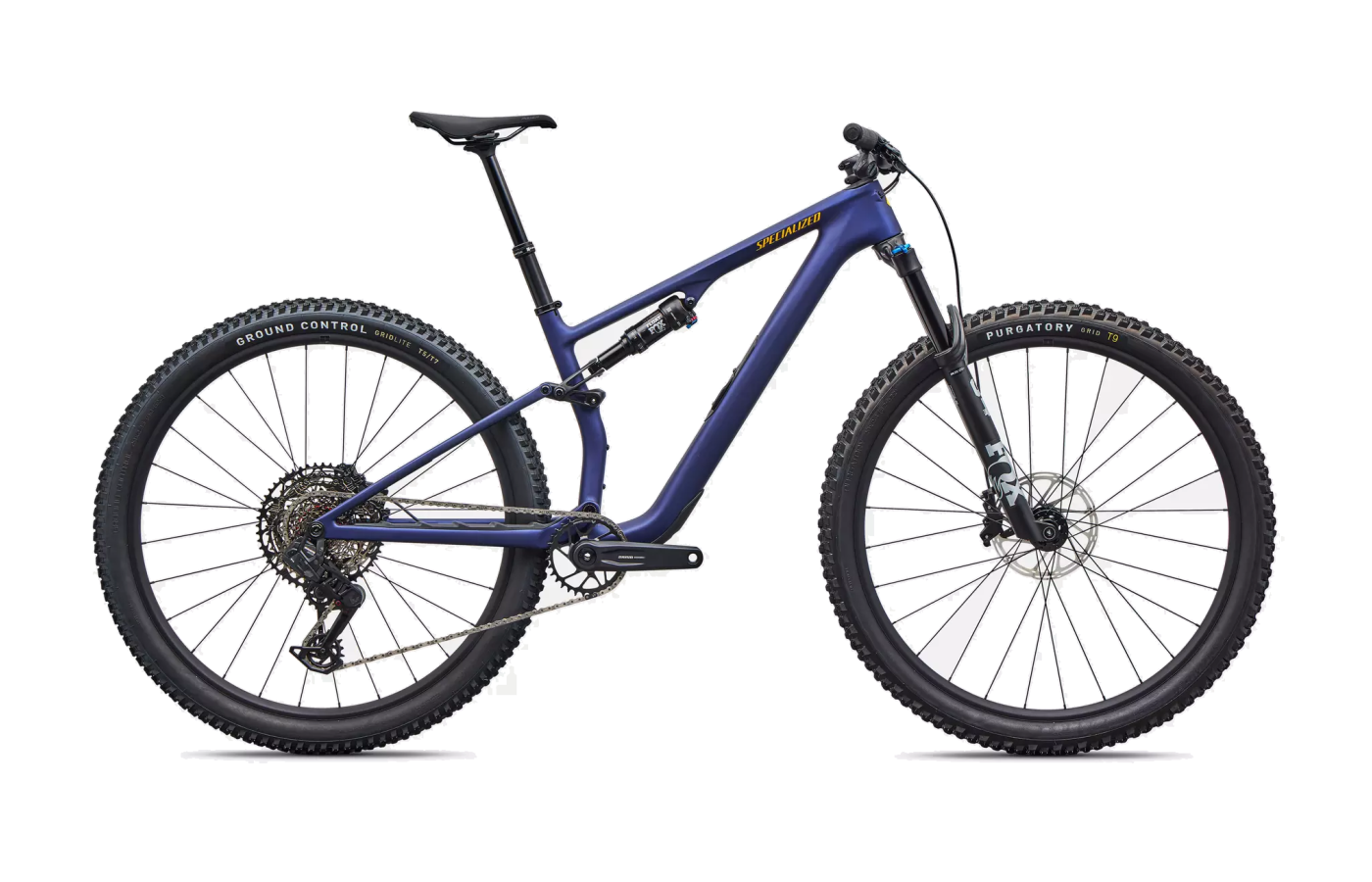
Epic Evo
Same Epic frame, beefed up — 130 mm fork, knobbier tires, no remote lockout. For riders who want the Epic's geometry and frame but ride trail more than they race, and would rather have a 'do-everything' short-travel bike than a sharpened race tool.
Compare →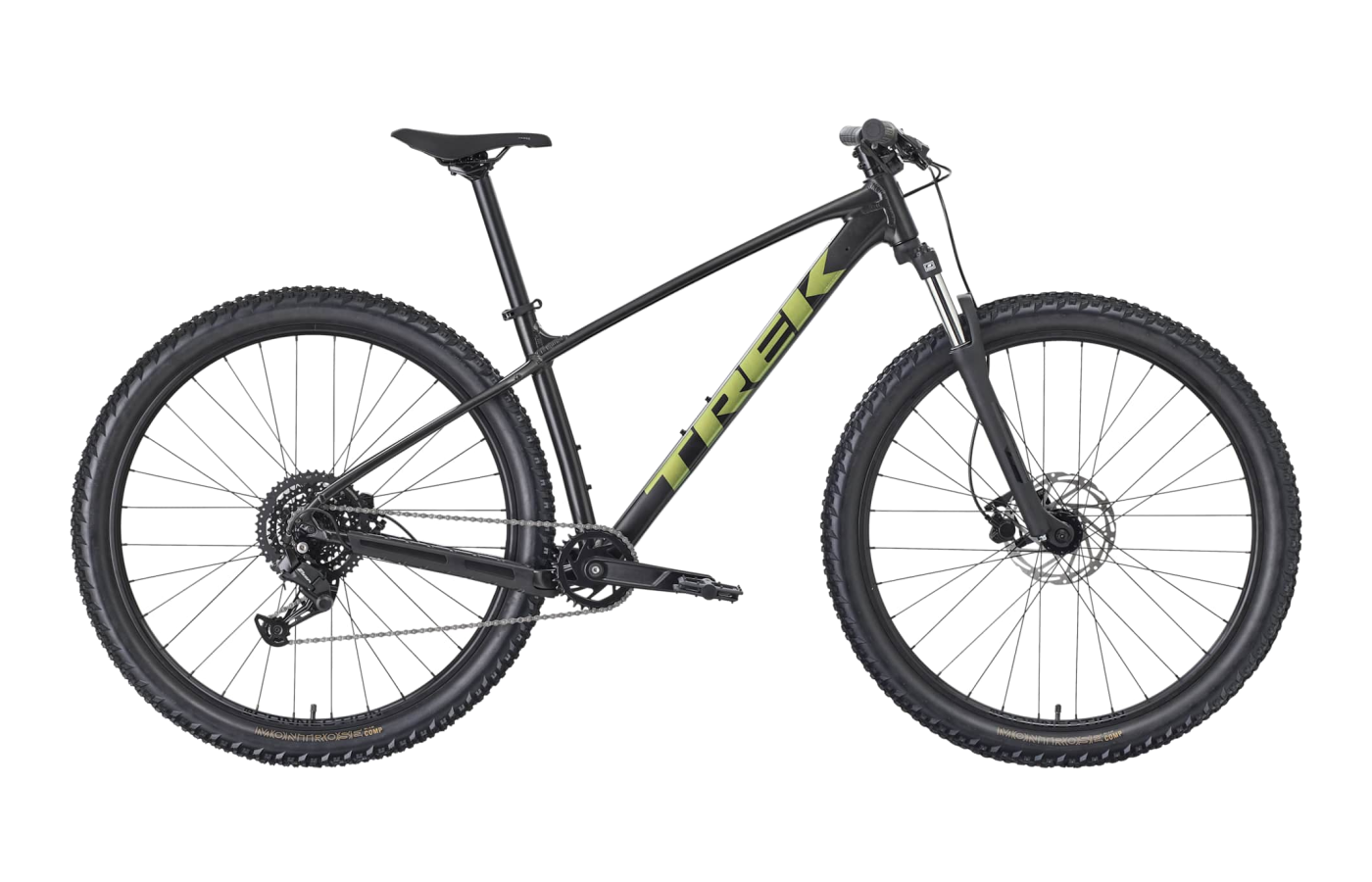
Marlin
The Rockhopper's most direct rival — Trek's entry-level alloy hardtail, often spec'd with slightly more aggressive geometry and (on upper trims) thru-axles, addressing the Rockhopper's biggest upgrade-path gripes.
Compare →