Enduro
vsSB165
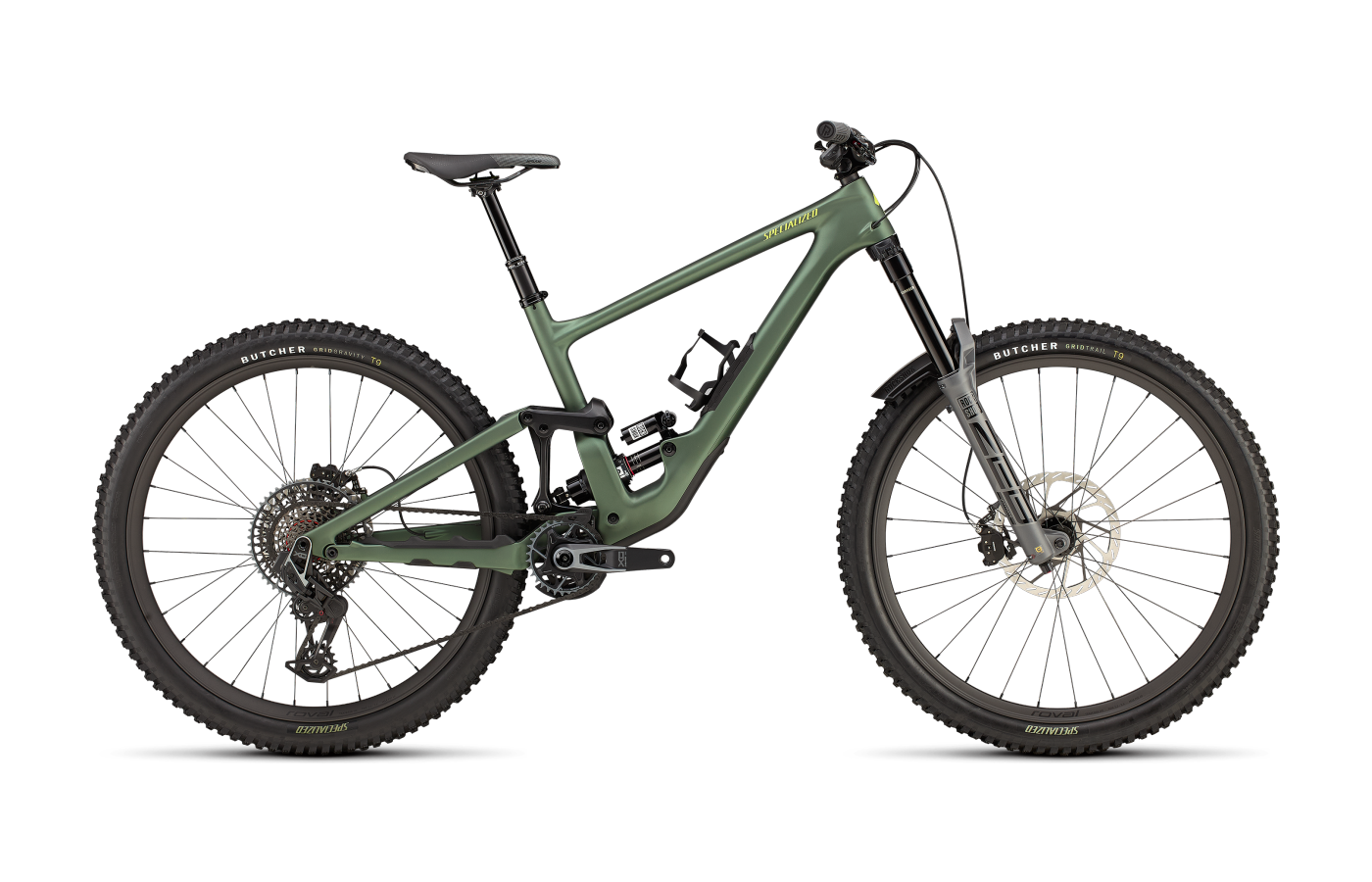
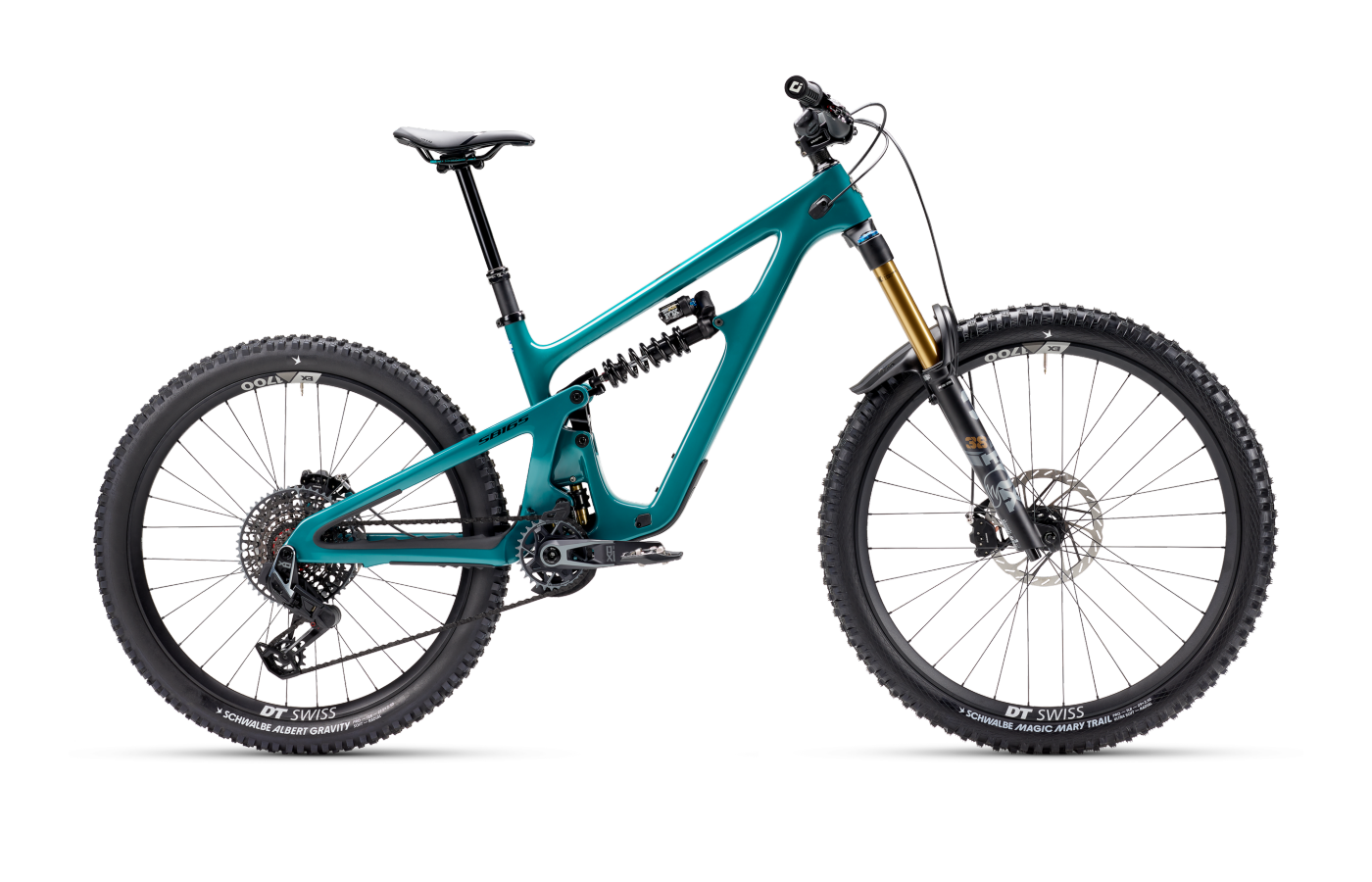
Two 170mm bruisers, two ways down the mountain.
The Enduro is a 29er steamroller built to plow at race pace. The SB165 is a coil-sprung mullet built to slash, slap, and send.
Enduro
- Demo-derived suspension — rearward axle path and 40% more anti-squat, the closest thing to a DH bike with one crown.
- SWAT downtube storage lets you ditch the hip pack on all-day rides — universally praised in reviews.
- Lower entry price — $4,999 Comp build undercuts every SB165 by at least $1,400.
- Ground-hugging character feels 'boring' or sluggish on mellow, flatter trails.
- Only two complete builds offered — narrow lineup vs. the SB165's four.
SB165
- Coil shock standard on every build — even the $6,400 C2 gets the Fox Factory DHX2.
- Mullet agility — 27.5-inch rear and 437mm chainstays make it 'easy to manual' and 'eager for airtime'.
- Size-specific chainstays (434mm S, 437mm L) preserve balanced handling across the size range.
- Stock EXO+ tires are universally panned — plan a DoubleDown/DH upgrade on day one.
- Low 345mm BB invites pedal strikes on technical climbs.
Editor’s analysis
Both bikes have 170mm forks, both are gravity-first carbon platforms — but one is a racing tool and the other is a freeride toy.
The Specialized Enduro borrows its rear linkage from the Demo downhill bike: 170mm of FSR Horst-link travel, a rearward axle path, and a 40% bump in anti-squat over the previous generation. Reviewers consistently call it a 'mini-DH bike' that 'calms the chaos' — a quiet, planted, momentum-carrying machine on full 29-inch wheels that 'just doesn't slow down' on the rough stuff. It rewards riders who want to stop braking and let the suspension work.
The Yeti SB165 takes the opposite read on the same problem. It runs a 29-inch front and a 27.5-inch rear, 165mm out back, and ships every build — even the entry-level $6,400 C2 — with a Fox Factory DHX2 coil shock. Yeti dropped the leverage progressivity to 22% to suit that coil, giving a buttery initial stroke with a hard ramp in the final 45mm. The mullet rear end and 437mm chainstays make it 'flickable' in a way the Enduro is not — testers describe it as steered 'with the hips' rather than the feet.
Geometry tells the same story. The Enduro is 64.3° at the head tube and a planted 442mm at the chainstay, every size. The SB165 is a degree slacker (63.5°) up front but with shorter, size-specific stays (434mm at M, 437mm at L). The SB165 sits 5mm lower at the BB (345mm), which reviewers say corners brilliantly but punishes you with pedal strikes on chunky uphills. The Enduro's 76° effective seat angle is a touch slacker than Yeti's 76.9° — neither is ultra-steep by 2024 standards, and taller riders on both will likely slide saddles forward.
Put another way: pick the Specialized Enduro if you race the clock and want the bike to go faster than you do. Pick the Yeti SB165 if you treat every root as a jump and would rather have fun than win the stage.
Where the builds differ.
Comparing our editor's-pick builds side-by-side. Winners highlighted row-by-row — lower price and weight, and the better-spec component, each mark a point.
Build variants & pricing
Yeti spans $6,400–$9,500 across four builds; Specialized offers just two, $4,999 and $8,499.
Prices are current US MSRP. The Enduro lineup is unusually narrow — there's no mid-tier between the SLX-equipped Comp and the X0 AXS Pro. The SB165 fills that gap with two C-series builds that share the same suspension hardware as the flagship.
How they fit, how they steer.
Enduro S2 vs. SB165 M — the fit-picked sizes for each platform's shortest comparable frame. Reach is close (437mm vs. 460mm), but the SB165 is a degree slacker at the head (63.5° vs. 64.3°) and runs shorter chainstays.
Which size should I buy?
Sizes are picked by reach, stack, and effective top tube; Specialized's S-sizing decouples seat tube from frame size, so the S2 fits a wider rider range than a traditional 'small'.
→These are starting points. Flexibility, riding style, and preferred position all shift the answer — if you’re between sizes, a professional fit beats a chart.
What the magazines said.
Published reviews from trusted cycling outlets. Click through for the full write-up.
Which one should you buy?
If you race the clock on long, rough descents, get the Enduro. If you live for park laps and freeride lines, get the SB165.
Enduro
If your weekend is a backcountry epic with 5,000 feet of descending and you want to stay off the brakes through every rock garden, the Enduro is the sharper tool. The Demo-derived suspension and full 29-inch wheels make it the faster bike when speed is the only metric.
SB165
If your idea of a good day is bike-park laps, side hits, and slashing every berm into a roost, the SB165's mullet geometry and coil shock deliver the playful, slappy character the Enduro doesn't even try for. It's the better bike when fun beats lap times.
Questions buyers actually ask.
Short answers to the things we get emailed about most often.
01How much travel do they have?
Specialized Enduro: 170mm front and rear, full 29-inch wheels.
Yeti SB165: 170mm front, 165mm rear — and it's a mullet (29" front, 27.5" rear). Despite the matching fork travel, the SB165 is officially Yeti-approved for forks up to 190mm and even a dual-crown, provided axle-to-crown stays at or below 607mm.
02Which climbs better?
Both surprised reviewers given their travel and weight, but the Enduro has the slight edge in efficiency. Specialized's 40% bump in anti-squat lets it pedal 'crisply' even with the shock open, and Pinkbike called it 'the first Specialized FSR ever made that can genuinely be ridden uphill without requiring a lockout.'
The SB165's Switch Infinity platform sits at roughly 110% anti-squat at sag — quiet under power, but the 345mm bottom bracket leads to frequent pedal strikes on chunky climbs, and the slack 63.5° head angle invites front-wheel lift on steep switchbacks. Both have ~76° effective seat tube angles; neither is ultra-steep.
03Which is more playful in the air?
The Yeti SB165, by a clear margin. The 27.5-inch rear wheel, shorter (437mm L) chainstays, and lower BB make it 'easy to manual' and 'eager for airtime,' as reviewers put it. It's steered 'with the hips,' which is shorthand for: you can break the rear loose and slap it around.
The Enduro is the opposite — it 'wants to stay as close to the ground as possible rather than soaring into the air,' and reviewers consistently note it takes 'more effort to pop up and over obstacles.' Both bikes can be jumped; only one of them wants to be.
04Why does every Yeti come with a coil shock?
It's a deliberate platform choice. Yeti tuned the SB165's leverage curve specifically for a coil — 22% progressivity, down from 27.5% on the previous generation — with a buttery first two-thirds and a hard ramp in the final 45mm. The Fox Factory DHX2 ships on every build, including the $6,400 C2.
The Enduro defaults to air shocks across both stock builds (RockShox Vivid Ultimate on the Pro, Vivid Select Plus on the Comp), but reviewers have praised the frame's compatibility with coils — Specialized themselves noted the leverage curve was designed with that option in mind.
05What's wrong with the stock tires on the SB165?
Yeti shipped early SB165s with Maxxis EXO+ casings, which reviewers across Pinkbike, NSMB, and Bike Rumor universally panned as too thin for a 165mm freeride bike — flats within minutes of rocky terrain were common. Yeti has since updated the spec to a heavier DoubleDown casing in the rear, but most reviewers still recommend an immediate upgrade to DH-casing tires or rim inserts as a 'day one' modification.
The Enduro ships with Specialized Butcher GRID Trail / GRID Gravity casings, which drew similar criticism on the lower-tier builds — riders pushing the bike hard typically swap to BLCK DMND or equivalent.
06How adjustable are the geometry settings?
Enduro: Has a flip-chip giving High and Low settings — High puts the head tube angle at 64.3°, Low drops it to 63.9°. Most reviewers preferred High for the broader versatility and reduced pedal strikes.
SB165: No flip-chip — the geometry is fixed at 63.5° head angle, 76.9° seat tube angle, and 345mm BB. Yeti's view is that the mullet platform is already dialed; if you want to change the character, swap the fork or shock instead.
07What about long-term durability?
Enduro earlier 2020–2021 frames had a known headset cracking issue that Specialized addressed in 2022+ frames; the brand's warranty turnaround is widely praised. The 14 suspension bearings will need replacement over time and 'isn't going to be cheap.'
SB165's Switch Infinity slider needs lubrication every 40 hours via the integrated grease ports — non-negotiable. Current-gen hardware uses improved seals and floating collet axles, and reviewers report 'trouble-free' service when maintenance is kept up. Both frames now use threaded BBs and UDH derailleur hangers.
08Which holds up better in the bike park?
Both are bike-park capable, but the SB165 is the more natural fit. Yeti explicitly approves it for dual-crown forks up to 607mm axle-to-crown, and reviewers describe the coil shock and mullet rear end as ideal for sustained lapping where 'fatigue had fully set in.' It's described as forgiving when you're 'not feeling 100%.'
The Enduro absolutely handles park duty — Pinkbike called it 'basically a DH bike without a dual crown fork' — but its longer chainstays and full 29-inch rear are tuned more for outright speed than for slashing turns and side hits.
Similar bikes
If your priorities don’t map cleanly onto either of these, one of these adjacent bikes probably fits better.
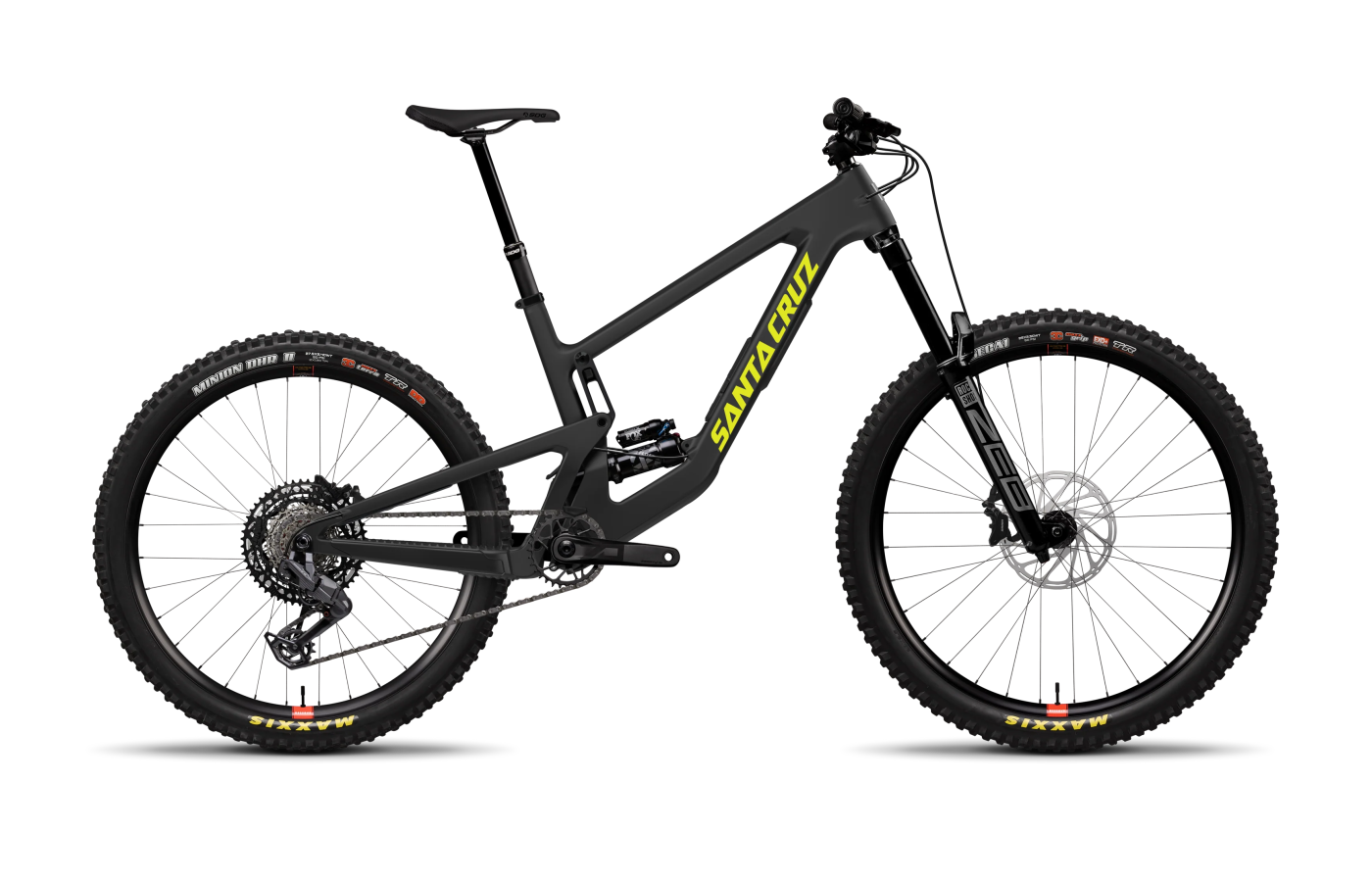
Nomad
Santa Cruz's mullet bruiser — VPP suspension and a similar play-focused mission to the SB165, but feels a touch more planted and less 'slashy' than the Yeti. Worth a look if you like the mixed-wheel format but want a slightly steadier rear end.
Compare →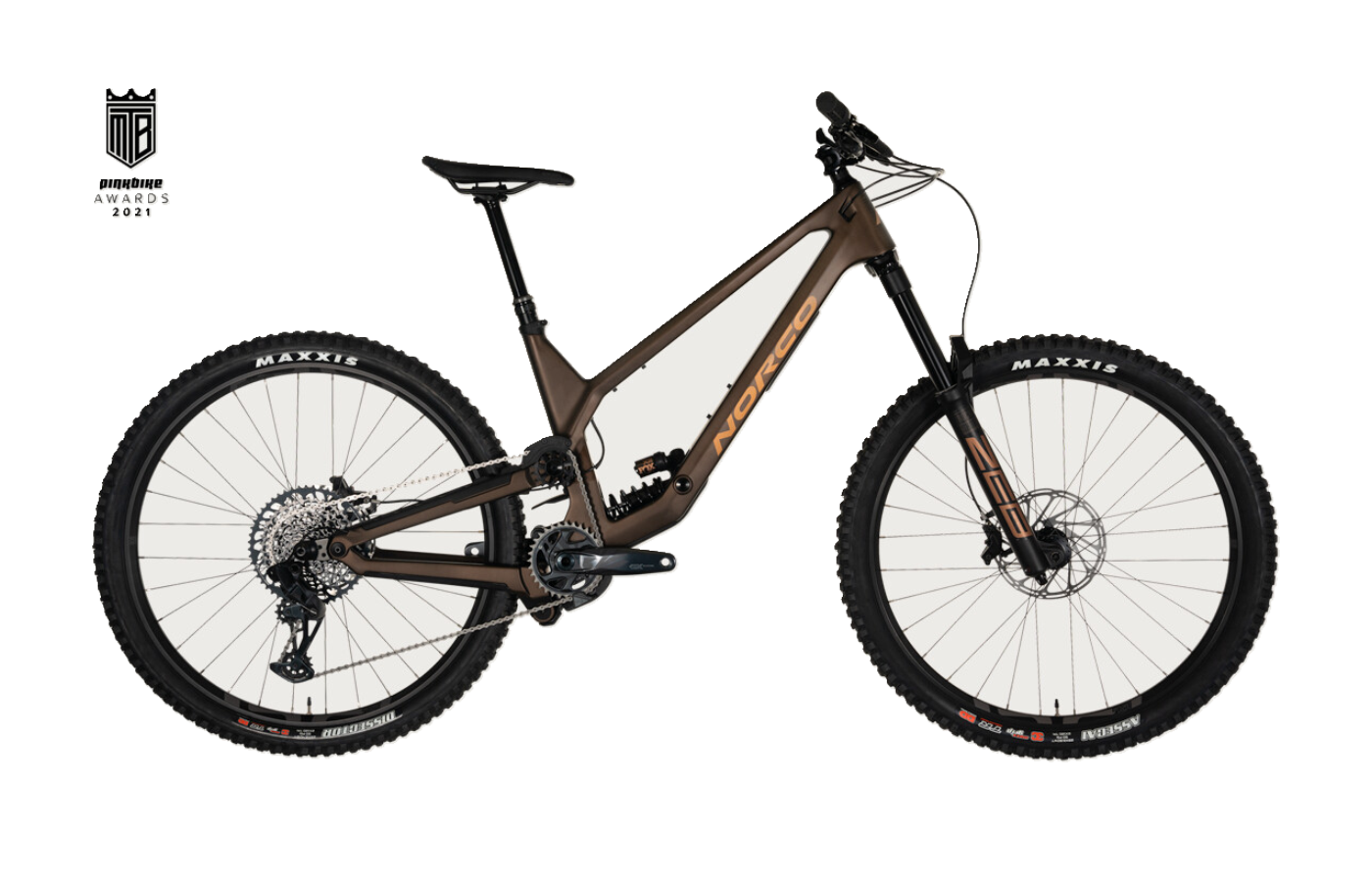
Range
If the Enduro isn't enough plow for you, Norco's high-pivot Range carries even more momentum through square-edged hits. The trade: it's heavier and harder to pedal back up.
Compare →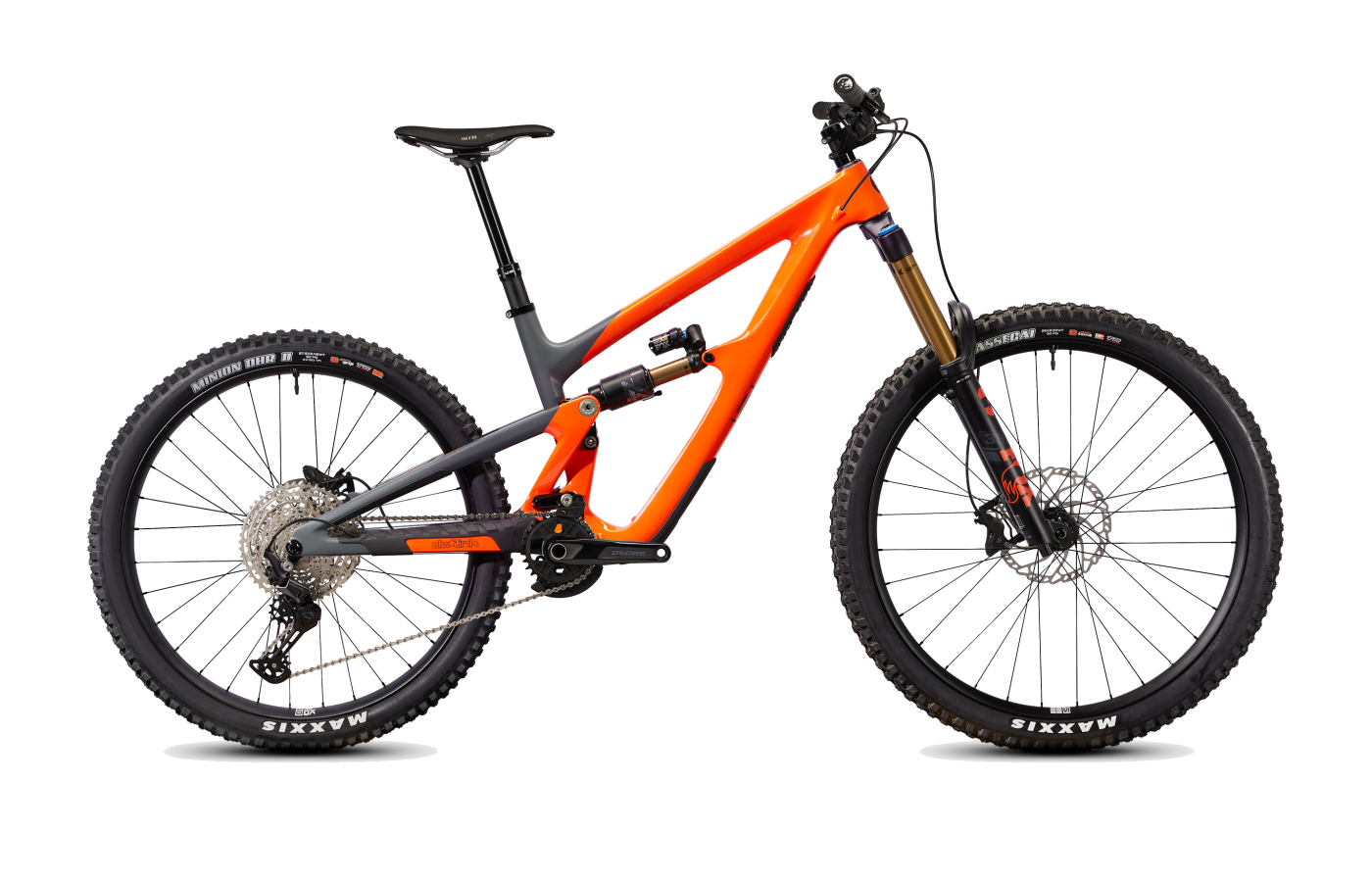
HD6
Mixed-wheel agility like the SB165, but air-sprung and noticeably lighter on the pedals. The HD6 is the choice if you want a coil-bike feel without committing to the climbing penalty.
Compare →