Crux
vsRoubaix
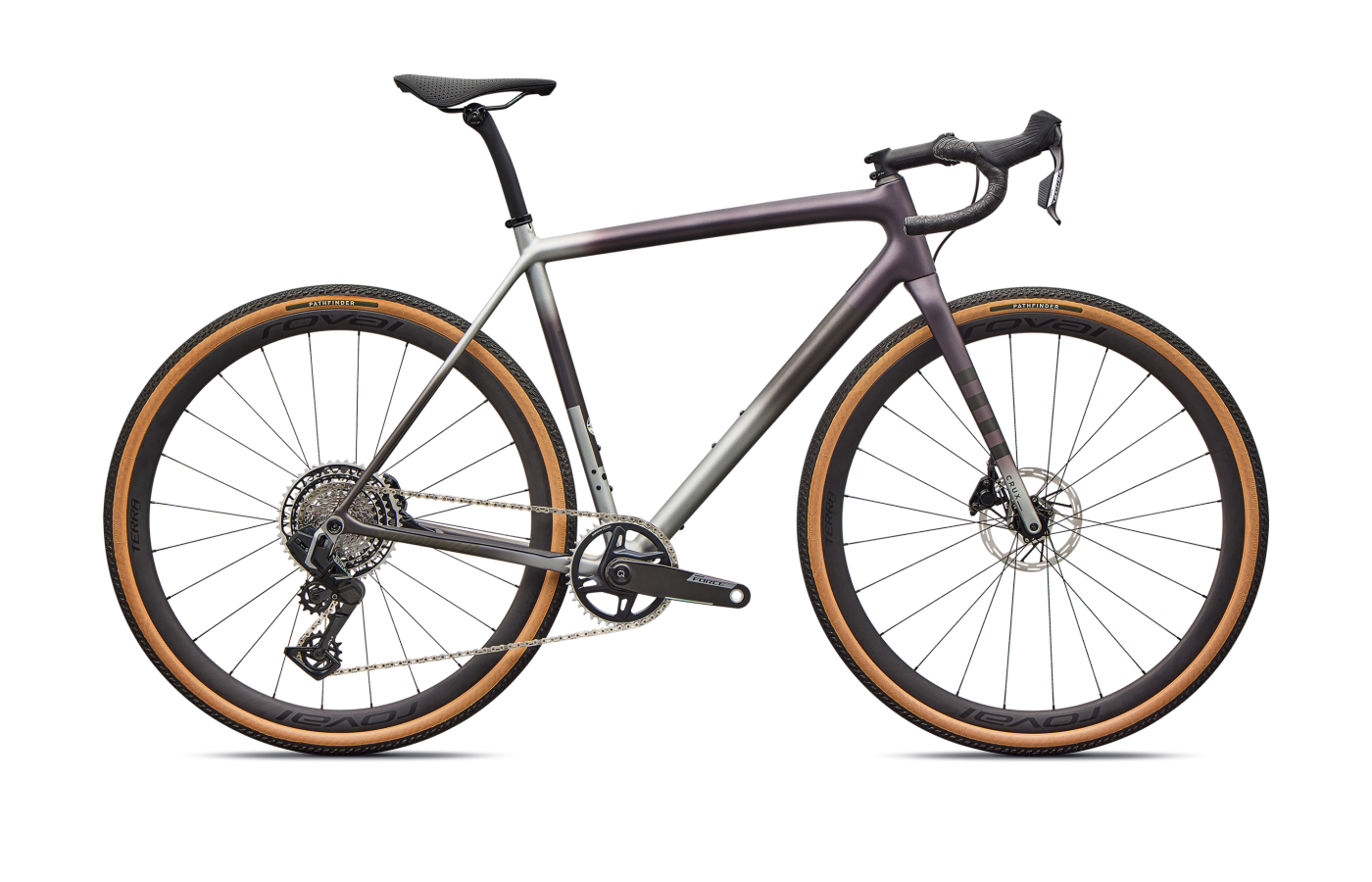
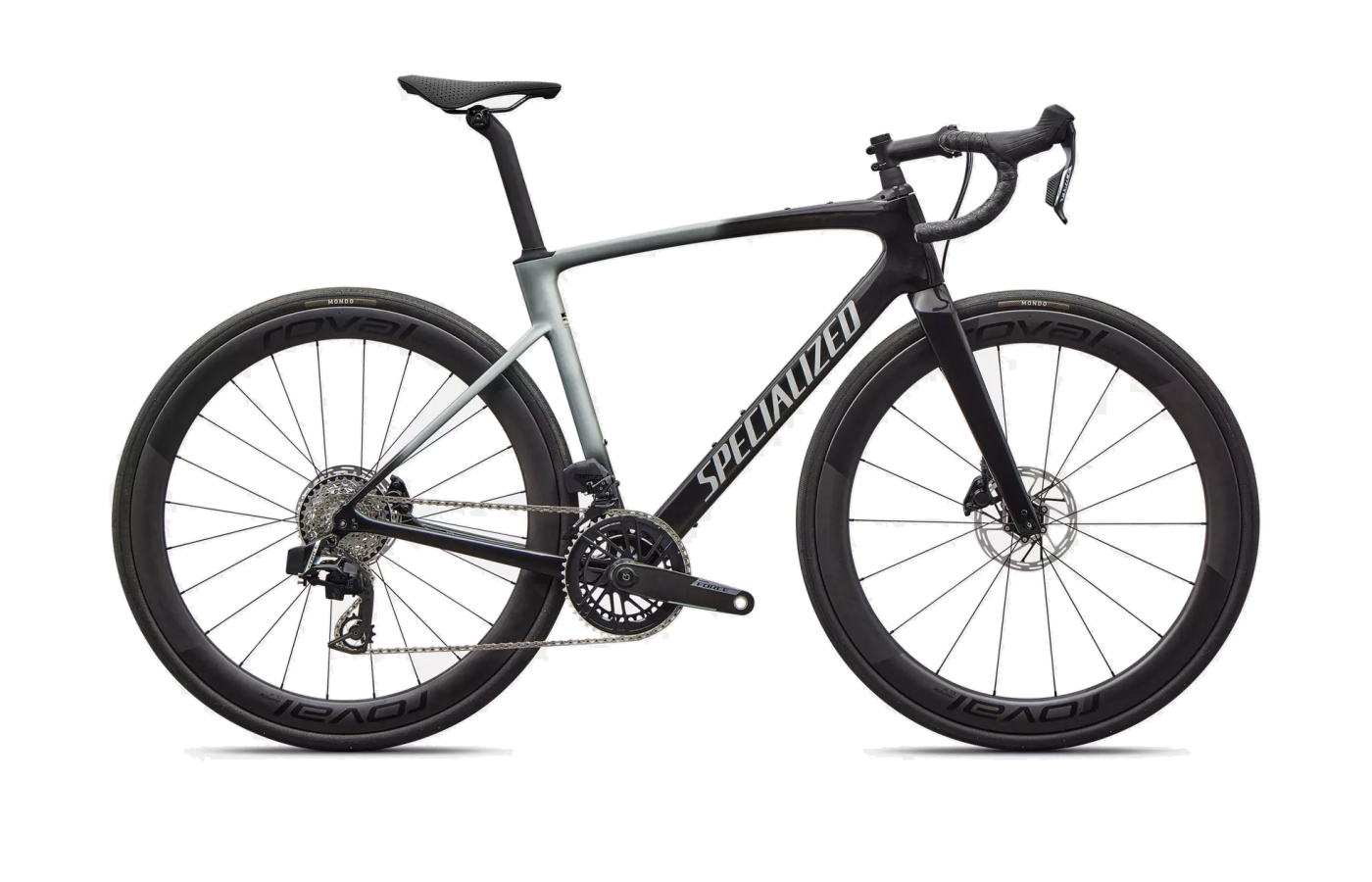
Same brand, opposite missions.
The Crux strips everything off to chase gravel-race watts. The Roubaix bolts comfort tech onto a road bike so you can ride rougher, longer.
Crux
- Featherweight for the category — FACT 10R frame at ~825 g, complete bikes from 7.64 kg. Climbs like a road bike.
- 47 mm tire clearance — genuinely capable off-road and swaps to 32s for road duty without drama.
- No proprietary parts — threaded BSA BB, round 27.2 mm seatpost, two-piece alloy cockpit. Maintenance is trivial.
- No built-in compliance — rough gravel punishes the hands and demands precise line choice.
- Minimal mounts. No fenders, no rack, only a third bottle cage — it's not a touring platform.
Roubaix
- Future Shock 3.0 — 20 mm of front-end travel, reviewers consistently call it "game-changing" on rough pavement.
- 40 mm measured tire clearance — enough to credibly poach light gravel with the right tire swap.
- Full-range lineup from $2,799 — the Tiagra SL8 and 105 Sport builds are real budget entry points the Crux can't match on carbon.
- Future Shock adds roughly 200 g and a tall front end you can't slam — not a climber's bike.
- Pavé seatpost clamp is finicky; reviewers report dropped expander bolts and a "split personality" feel front-to-rear on smooth roads.
Editor’s analysis
One is a 725-gram frame that dares you to pick a better line. The other is a road bike with 20 mm of front-end suspension that makes line choice almost irrelevant.
The Crux and the Roubaix share a dealer floor and almost nothing else. Specialized built the Crux on Aethos DNA — round tubes, no integration, no hidden dampers — and dropped the claimed S-Works frame to 725 g, with the FACT 10R Pro/Expert frames coming in around 825 g. The Roubaix SL8 went the opposite way: Future Shock 3.0 at the front with 20 mm of axial travel, a D-shaped Pavé seatpost at the back with a claimed 18 mm of flex, and mudguard and top-tube mounts for the rest of the year.
Tire clearance tells the story in one number. The Specialized Crux swallows 700x47c (or 650bx2.1"); the Specialized Roubaix tops out at 38 mm officially, with reviewers measuring up to 40 mm on wide rims. That's enough to poach the Crux's easier days — hardpack, canal paths, white roads — but the Roubaix is still a road bike with a gravel side hustle, not the other way around.
Geometry at size 54 puts the philosophies on paper. The Roubaix stacks 585 mm vs the Crux's 560 — a full 25 mm taller front end — while reach on the Crux is 7 mm longer (388 vs 381). The Crux's head tube angle is 71.5° with 67 mm of trail and 425 mm chainstays; the Roubaix is 72.3° with 61 mm of trail and 420 mm stays. Net effect: the Crux sits the rider lower and longer with slightly more rudder for loose surfaces, the Roubaix puts them upright and planted with quicker steering geometry that the Future Shock settles down at speed.
Think of it this way. The Crux is the bike you buy when gravel is the point and the occasional road ride is a bonus. The Roubaix is the bike you buy when pavement is the point and the occasional fire road is a bonus. The 7-mm tire-clearance gap is only the beginning — the suspension, the stack, and the mounts all pull these two further apart than the spec sheet suggests.
Where the builds differ.
Comparing our editor's-pick builds side-by-side. Winners highlighted row-by-row — lower price and weight, and the better-spec component, each mark a point.
Build variants & pricing
Both platforms span a wide range — Crux $2,799 to $11,999, Roubaix $2,799 to $12,499 — with the Roubaix offering more budget carbon builds.
Prices are current US MSRP. The Crux lineup is 1x-only (SRAM XPLR or Shimano GRX 1x); the Roubaix stays 2x across every build. If you want a front derailleur for close-ratio road gearing, only one of these bikes offers it.
How they fit, how they steer.
Both at size 54 for a 5'8" rider. The Roubaix sits 25 mm taller at the front (585 vs 560 stack) and 7 mm shorter in reach (381 vs 388) — a meaningfully more upright cockpit before the Hover bar adds another 15 mm of rise.
Which size should I buy?
Size ranges overlap through the middle; the Crux extends further down to a 49, the Roubaix further up to a 61.
→These are starting points. Flexibility, riding style, and preferred position all shift the answer — if you’re between sizes, a professional fit beats a chart.
What the magazines said.
Published reviews from trusted cycling outlets. Click through for the full write-up.
Which one should you buy?
If most of your miles are gravel with occasional road, get the Crux. If most of your miles are rough road with occasional gravel, get the Roubaix.
Crux
If you line up at gravel races, mix in cyclocross, or just ride dirt fast and want the lightest, most responsive carbon frame Specialized sells, the Crux is the answer. It demands precise line choice — but rewards it with a ride reviewers compare to a road bike on big tires.
Roubaix
If your roads are broken, your rides are long, and your priority is finishing a century without aches rather than winning a race, the Roubaix's Future Shock and 40 mm clearance do real work. Mudguard mounts and a top-tube bag mount make it a legitimate year-round machine.
Questions buyers actually ask.
Short answers to the things we get emailed about most often.
01Which one should I buy if I want one bike for road and gravel?
Depends on the mix. If you'll ride more than 40–50% dirt, the Crux is closer to a true do-it-all — it's light enough to hang on fast road rides and has 47 mm clearance for real off-road.
If you're mostly on pavement with occasional rough roads or light fire road, the Roubaix SL8 is the better pick. Its 40 mm measured tire clearance handles genuine gravel, and the Future Shock makes chip-seal and broken tarmac feel like glass. The Crux will beat you up on pavement that the Roubaix smooths out.
02How much does the Future Shock actually weigh?
Cycling Weekly notes the Future Shock system adds roughly 200 g over a rigid front end. That's a real penalty on climbs — especially stacked against a Crux, whose FACT 10R frame starts around 825 g vs the Roubaix FACT 10R's claimed 950 g.
For an everyday-comparable build, a Crux Pro comes in at 7.64 kg (16 lb 13 oz) vs the Roubaix SL8 Pro at 7.87 kg (17 lb 5 oz). It's noticeable but not disqualifying — the Roubaix is designed for comfort over long days, not for winning KOMs.
03Can the Roubaix replace a gravel bike?
For light gravel and rough roads, yes. The measured 40 mm tire clearance and the suspension systems mean the Roubaix will handle canal paths, hardpack, and white roads without complaint. Reviewers at Cycling Weekly and Road.cc specifically praised it as capable of light gravel duty.
For chunky gravel, gravel races, or cyclocross, no. The Crux has 47 mm clearance, a lower, longer, more aggressive fit, and the geometry to handle loose surfaces at speed. Ask the Roubaix to do Crux work and you'll feel the bottom bracket and the fender bridge before you feel the tires give up.
04Can the Crux replace a road bike?
Close. Swap the stock Pathfinder 40s for something in the 28–32 mm range and the Crux rolls competitively with dedicated road bikes — it's what Velo called "the most road-capable gravel bike" they'd ridden. The frame is lighter than many pure climbers.
What you give up: the low, aero front end of a Tarmac or Aethos, and tight 2x close-ratio road gearing. The Crux is 1x-only across every build, so cadence hunters may notice the gear jumps on long flat rides.
05Why would anyone pay for the Future Shock if the Pavé seatpost is already compliant?
Most of the road buzz you feel on a long ride comes through the hands, not the saddle. The Pavé seatpost flexes a claimed 18 mm rearward and does a lot for the saddle end, but hand numbness and shoulder fatigue on a six-hour ride are front-end problems.
The Future Shock isolates the rider from high-frequency chatter and square-edged hits through the bars. Reviewers consistently describe the pairing as "vacuumed to the asphalt." That said, multiple reviewers also flag a "split personality" on smooth roads — front feels plusher than rear — which evens out once the surface gets rough.
06Is the Crux comfortable on long rides?
On smooth pavement or hardpack gravel with 38–40 mm tires run at lower pressures, yes — reviewers call the 27.2 mm Roval Alpinist seatpost notably flexy and the high-volume tires do most of the work.
On rough gravel, roots, or chunky singletrack, it gets harsher. Cycling Weekly noted hand fatigue through the thin fork on long rough rides, and Cycling News called out early onset of the "under-biked" feeling on anything above moderate terrain. If your rides spend real time on rough ground, the Roubaix is the more honest answer.
07What's the tire clearance gap, really?
Crux: 700x47c or 650bx2.1" — fits knobby race tires and plus-sized 650b setups.
Roubaix SL8: 38 mm officially, up to 40 mm measured on wide internal rims. 35 mm with full mudguards installed.
The 7 mm gap matters most at the loose/rough end. A 40 mm slick on the Roubaix is great for broken tarmac and packed dirt. A 45–47 mm treaded tire on the Crux is what lets it compete in actual gravel races.
08Which is better for bikepacking or touring?
Neither is ideal, but the Roubaix is closer. It has mudguard eyelets, top tube bag mounts, and a third bottle cage mount — features the Crux deliberately omits in the name of weight.
The Crux has essentially no frame-bag mounting real estate beyond a third bottle cage on some builds. For serious bikepacking, Specialized's own Diverge (or a more touring-focused platform) is the honest answer. These are both race-adjacent platforms — the Crux for gravel racing, the Roubaix for fast endurance road.
Similar bikes
If your priorities don’t map cleanly onto either of these, one of these adjacent bikes probably fits better.
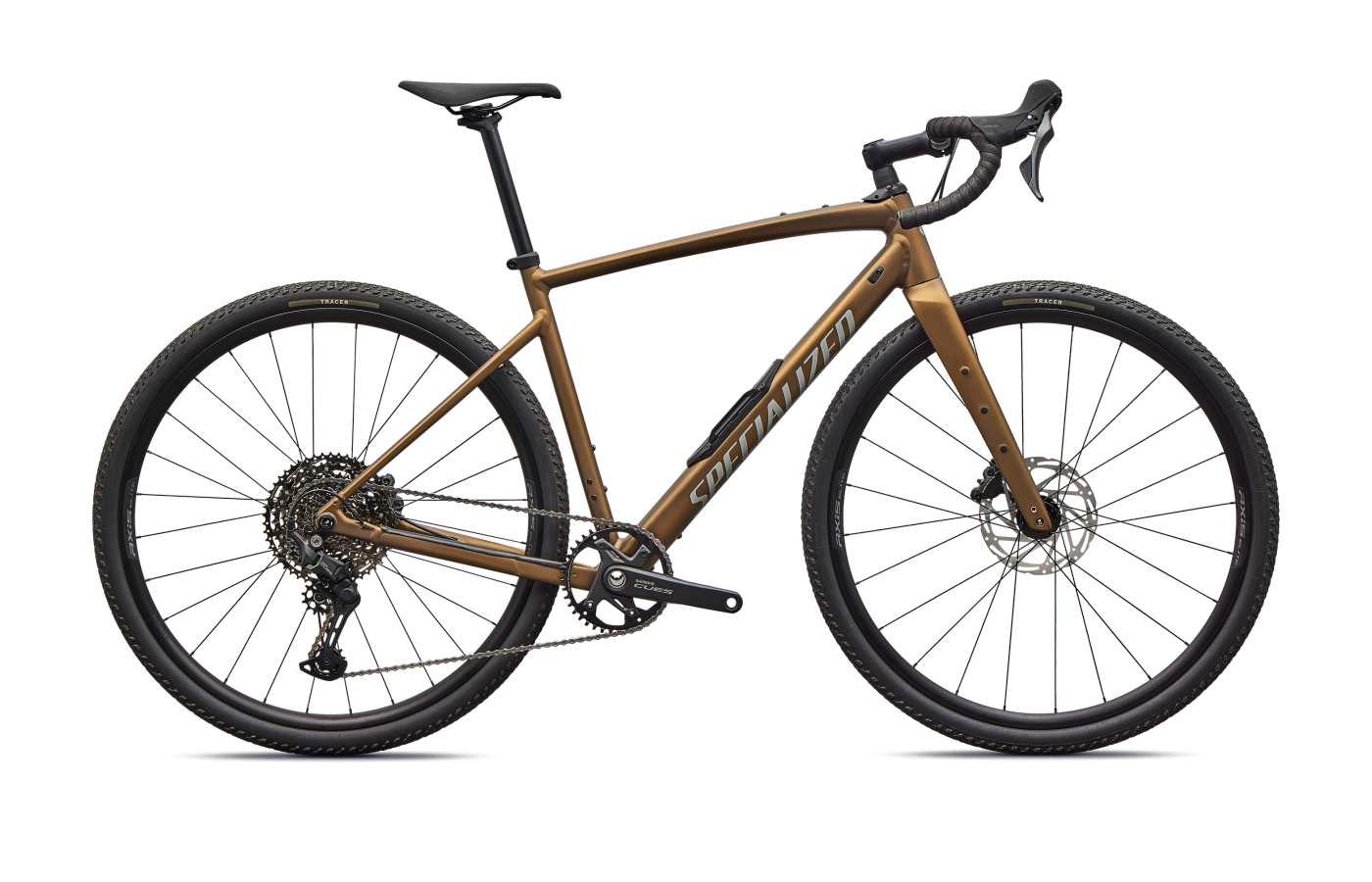
Diverge
If the Roubaix is too road-biased and the Crux too spartan, the Diverge splits the difference with a Future Shock front end, 47 mm clearance, and real bikepacking mounts. The actual do-everything pick in Specialized's lineup.
Compare →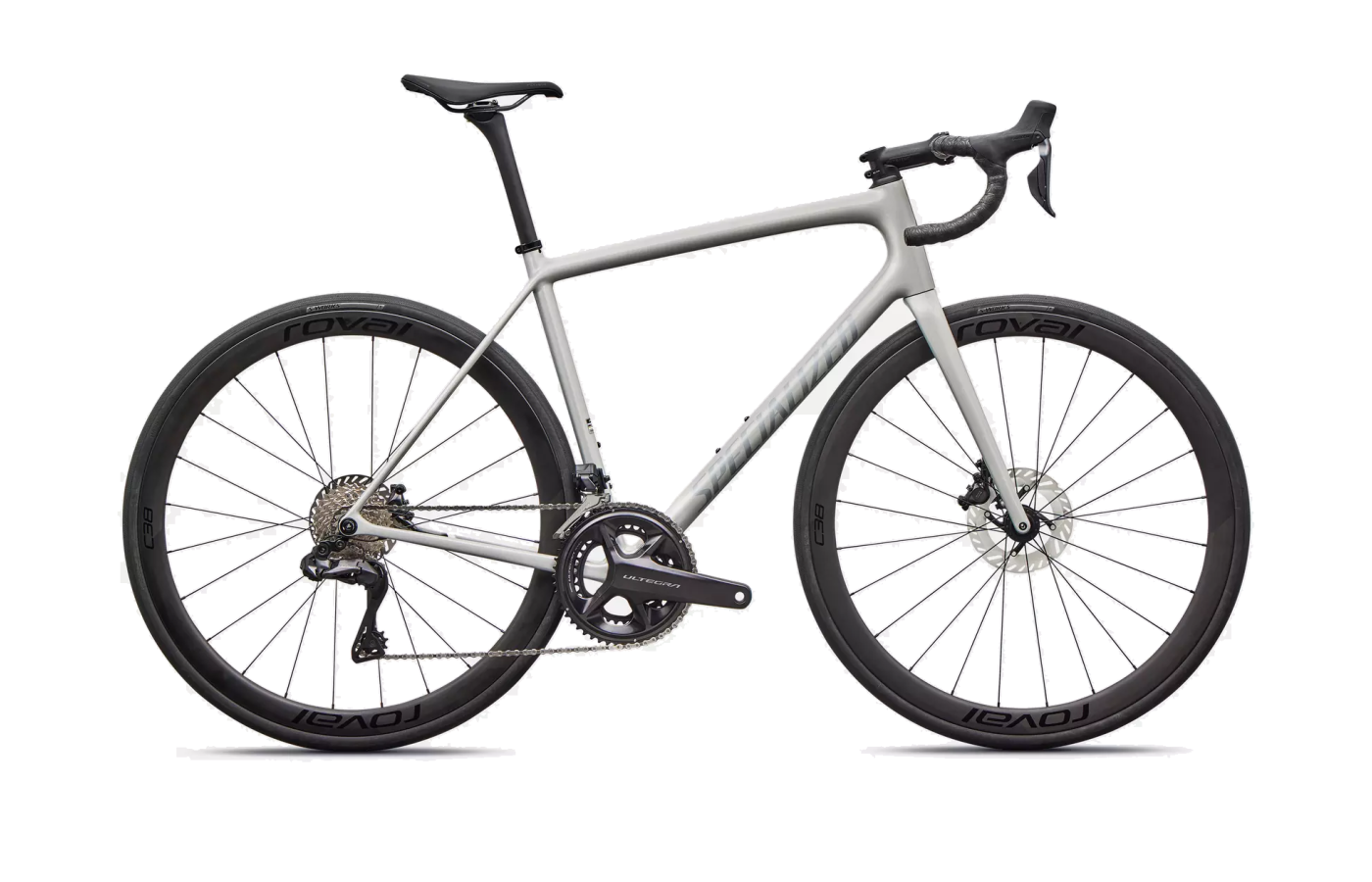
Aethos
The Crux's road-only sibling — same Aethos-derived round-tube frame philosophy, none of the gravel compromises. A 5.9 kg classical climber for riders who never plan to leave pavement.
Compare →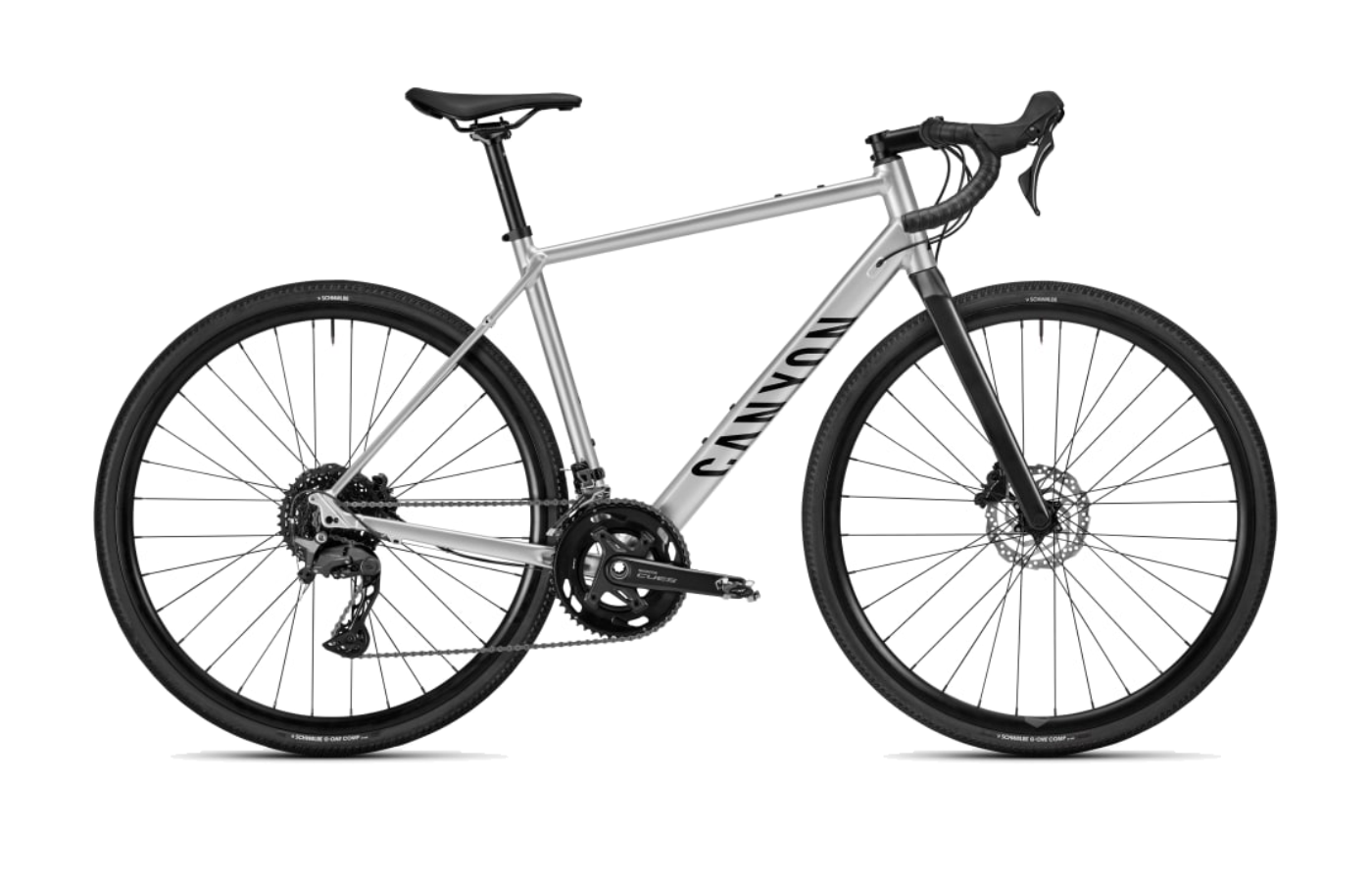
Endurace
A direct Roubaix alternative at direct-to-consumer pricing. Endurance geometry and seatpost-flex compliance in place of mechanical suspension — meaningfully cheaper, at the cost of no dealer network and no test rides.
Compare →