Aethos
vsRoubaix
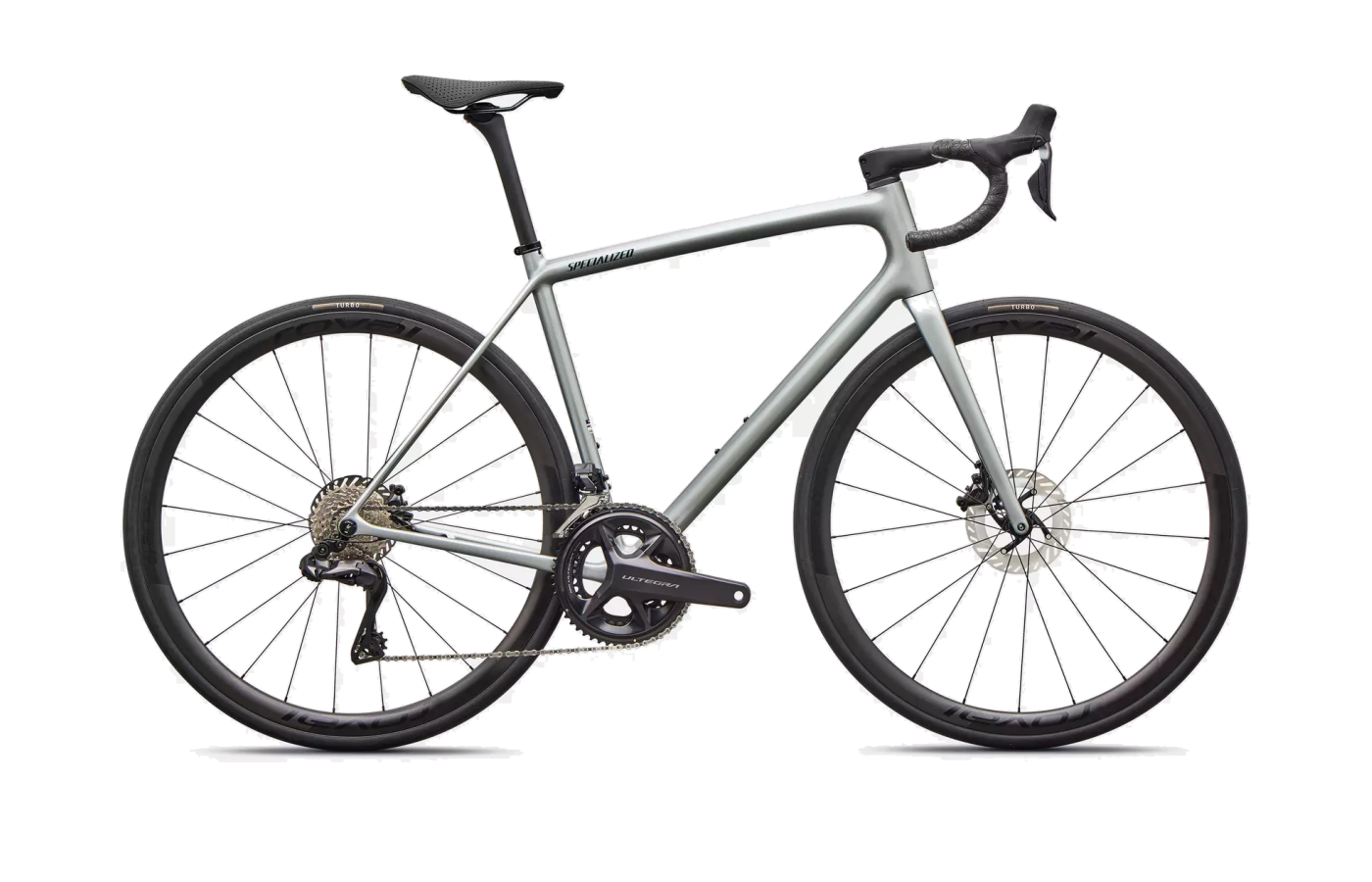
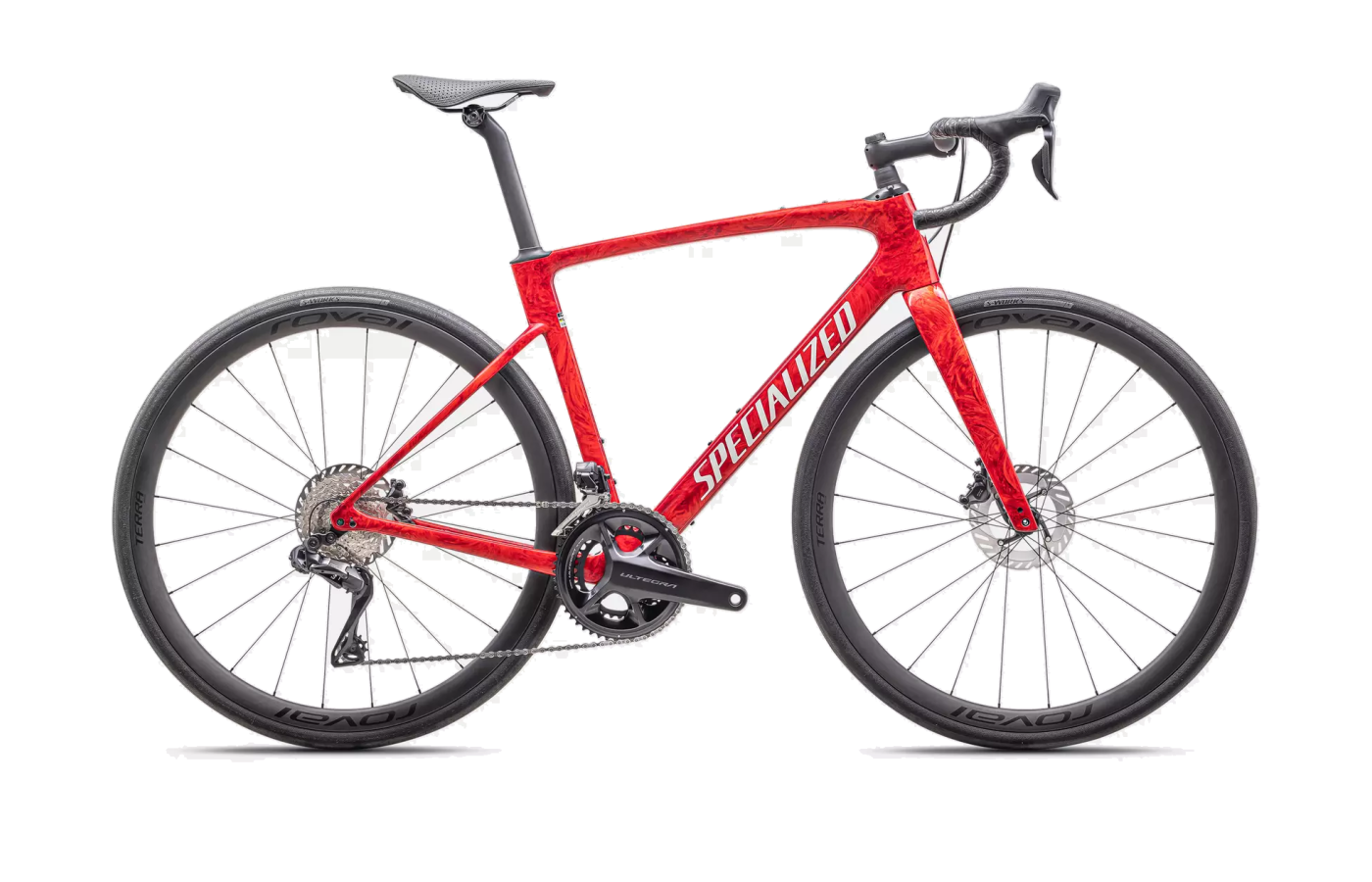
Two Specializeds, two definitions of comfort.
The Aethos chases comfort through lightness and frame compliance. The Roubaix engineers it in with active front suspension and 38 mm tires.
Aethos
- Climbing weight — 6.05 kg at S-Works, 6.71 kg in Pro trim, among the lightest production frames at any price.
- Sharper geometry — 26 mm lower stack, 6 mm shorter trail, and 10 mm shorter chainstays at size 54.
- Pure ride feel — Flow State carbon delivers what reviewers call a 'magic carpet' without any moving suspension parts.
- Stock 28 mm tires on a 35 mm-clearance frame — most reviewers recommend a 30-32 mm swap day one.
- Shallow round tubes give up real watts to headwinds and on long flats — this isn't an aero bike.
Roubaix
- Future Shock 3.x suspension — 20 mm of head-tube travel that reviewers call 'game-changing' on rough roads.
- Wider tire clearance — 38 mm rated, with 32 mm Mondo Endurance tires standard, and mudguard mounts.
- Broader build range — starts at $2,799 with Tiagra and scales to $12,499 S-Works, where the Aethos floor is $6,599.
- Significantly heavier — the Pro tips 7.87 kg vs the Aethos Pro's 6.71 kg.
- Tall stack (585 mm at size 54) puts you in a noticeably more upright position than a race bike.
Editor’s analysis
Same brand, same Specialized FACT carbon, opposite answers to the question — what does a comfortable road bike feel like?
Both bikes wear the same blue logo and share the same threaded BB, UDH, and FACT carbon DNA. From there, they diverge so completely that calling them rivals almost misses the point. The Aethos is the round-tubed climber with no aero pretensions and no shock cartridge. The Roubaix is the endurance platform built around 20 mm of head-tube suspension travel and clearance for 38 mm rubber.
The Aethos picks comfort through subtraction — a 595 g S-Works frame, shallow 33 mm Alpinist wheels, and the Flow State carbon layup that reviewers (Granfondo, Cycling News) describe as a magic-carpet ride without any moving parts. At 6.71 kg in Pro trim, it dances on climbs the way a ti bike does, which is the comparison Velo actually used. The catch: stock 28 mm tires on a frame cleared for 35 mm, and shallow round tubes that bleed momentum into headwinds.
The Roubaix picks comfort through addition — Future Shock 3.x in the head tube, the Pavé seatpost flexing 18 mm at the rear, 32 mm tires as standard, and a stack 26 mm taller than the Aethos at size 54. Reviewers (Cycling Weekly, Escape Collective) call the suspension "game-changing" on broken tarmac. The trade is weight and a 26 mm taller front end that puts you in a different posture entirely.
Put another way: the Aethos is the bike for someone whose roads are good and whose climbs are long. The Roubaix is the bike for someone whose roads are bad and whose days are long. They're not really competing for the same buyer — they're competing for different rides.
Where the builds differ.
Comparing our editor's-pick builds side-by-side. Winners highlighted row-by-row — lower price and weight, and the better-spec component, each mark a point.
Build variants & pricing
Both bikes scale to ~$13k S-Works trim. The Roubaix opens the door at $2,799 with Tiagra; the Aethos doesn't sell below $6,599.
Prices are current US MSRP. The Aethos exists only in FACT 10r and 12r carbon — there's no alloy or entry-tier version. If your budget is under $6k, the Roubaix is the only Specialized in this conversation.
How they fit, how they steer.
Both at size 54. The Roubaix sits 26 mm taller at the stack and runs 6 mm more trail with 10 mm longer chainstays — every number points to stability over agility. The Aethos is the sharper bike on paper.
Which size should I buy?
Size recommendations based on stack, reach, and effective top tube. Both ranges overlap in the middle; the Roubaix extends one size larger (61) and one smaller (44).
→These are starting points. Flexibility, riding style, and preferred position all shift the answer — if you’re between sizes, a professional fit beats a chart.
What the magazines said.
Published reviews from trusted cycling outlets. Click through for the full write-up.
Which one should you buy?
If your roads are smooth and your climbs are long, get the Aethos. If your roads are rough or your days are long, get the Roubaix.
Aethos
If you ride for the feeling of a sub-7 kg bike accelerating up a switchback, and your routes are mostly paved, the Aethos delivers a ride quality that no amount of suspension can replicate. Plan to swap the 28 mm tires for 30s.
Roubaix
If your rides regularly cross broken tarmac, chip-seal, or light gravel, and you care more about how you feel at hour six than how you feel on the first climb — the Future Shock and 32 mm tires earn their weight back many times over.
Questions buyers actually ask.
Short answers to the things we get emailed about most often.
01Which one climbs better?
The Aethos, by a clear margin. In equivalent Pro trim, the Aethos comes in around 6.71 kg vs 7.87 kg for the Roubaix Pro — a 1.16 kg gap. That's nearly 2% of a 70 kg rider's system weight, which translates to roughly 20-30 seconds on a 30-minute climb at threshold.
The Aethos also sits 26 mm lower at the front end and runs 10 mm shorter chainstays, both of which encourage out-of-saddle attacks. Reviewers (Granfondo, Velo) consistently call out the Aethos's "explosive acceleration" and a desire to drop back, then sprint to catch the group on every climb.
02Which is more comfortable on rough roads?
The Roubaix, decisively. Its Future Shock 3.x system gives you 20 mm of axial travel in the head tube, and the Pavé seatpost flexes a claimed 18 mm rearward at the saddle. Reviewers (Cycling Weekly, Escape Collective) describe the result as "game-changing" on broken tarmac.
The Aethos relies on frame compliance and tire volume alone. It's a comfortable bike by lightweight-bike standards — but it's not in the same conversation as a suspension-equipped endurance platform on chip-seal or pavé.
03What are the actual tire clearances?
Aethos 2: 35 mm officially. Ships with 28 mm S-Works Turbo TLR tires, which most reviewers (Cycling News, Road.cc) call too narrow for the frame's capability — a 30-32 mm swap is the consensus first upgrade.
Roubaix SL8: 38 mm officially (some testers measured up to 40 mm). Ships with 32 mm Mondo Endurance TLR tires, which often measure ~34 mm on the wide Roval rims. The frame also carries mudguard mounts, useful for year-round use.
04Are these bikes actually that different?
Yes. They share Specialized's FACT carbon, threaded BB, UDH, and brand DNA — but the geometry, suspension, weight, and intended use cases diverge sharply.
At size 54, the Roubaix's stack is 26 mm taller (585 mm vs 559 mm), trail is 6 mm longer (61 mm vs 55 mm), and chainstays are 10 mm longer (420 mm vs 410 mm). The Roubaix adds Future Shock and a Pavé seatpost that the Aethos doesn't have. Pro builds differ by over a kilogram. Same brand, very different bikes.
05Can the Roubaix handle light gravel?
Yes — and it's one of the headline upgrades of the SL8 generation. The 38 mm clearance, Future Shock front end, and stable geometry make the Roubaix genuinely capable on hardpack, light gravel, and farm roads. Multiple reviewers (Road.cc, Cycling Weekly) noted that the SL8 "doubles up as a light gravel bike."
The Aethos can technically run 35 mm tires too, but without suspension and with a more aggressive position, it's a less natural fit for sustained off-pavement riding.
06Which has the better build value at the same price?
The lineups don't overlap cleanly because the Roubaix sells from $2,799 and the Aethos doesn't appear until $6,599. At similar Pro-tier price points, the Aethos Pro ($8,499) and Roubaix Pro ($7,499/$8,299) are both FACT 10r with Ultegra Di2 or Force AXS — comparable component value.
If budget is the deciding factor below $6k, the Roubaix is the only option here — the Aethos simply doesn't have an entry tier.
07How does the Aethos compare to the Tarmac SL8?
The Aethos is Specialized's lightweight, ride-feel-first counterpoint to the Tarmac's all-rounder race brief. Reviewers (Granfondo) directly note the Aethos feels "slightly twitchier" and "less composed at higher speeds" than the Tarmac in flat-out sprints — the Tarmac is the more versatile do-everything race bike, while the Aethos is the dedicated climber.
If you want one bike for climbs, sprints, and gravel side-trips, the Tarmac is closer to that brief than either bike on this page.
08Does the Future Shock require special maintenance?
Some, but Specialized has refined it heavily for the SL8 generation. The 3.0 cartridge has improved seals and sealing boots, and spring swaps can be done in minutes without removing the unit (Velo). Specialized covers the cartridge with a separate two-year warranty and commits to producing replacement Future Shocks for five years after the platform is discontinued (Escape Collective).
Reviewers do note the headset preload uses a proprietary tool, and the seatpost expander bolt at the rear has been called "finicky" — minor, but worth knowing.
Similar bikes
If your priorities don’t map cleanly onto either of these, one of these adjacent bikes probably fits better.
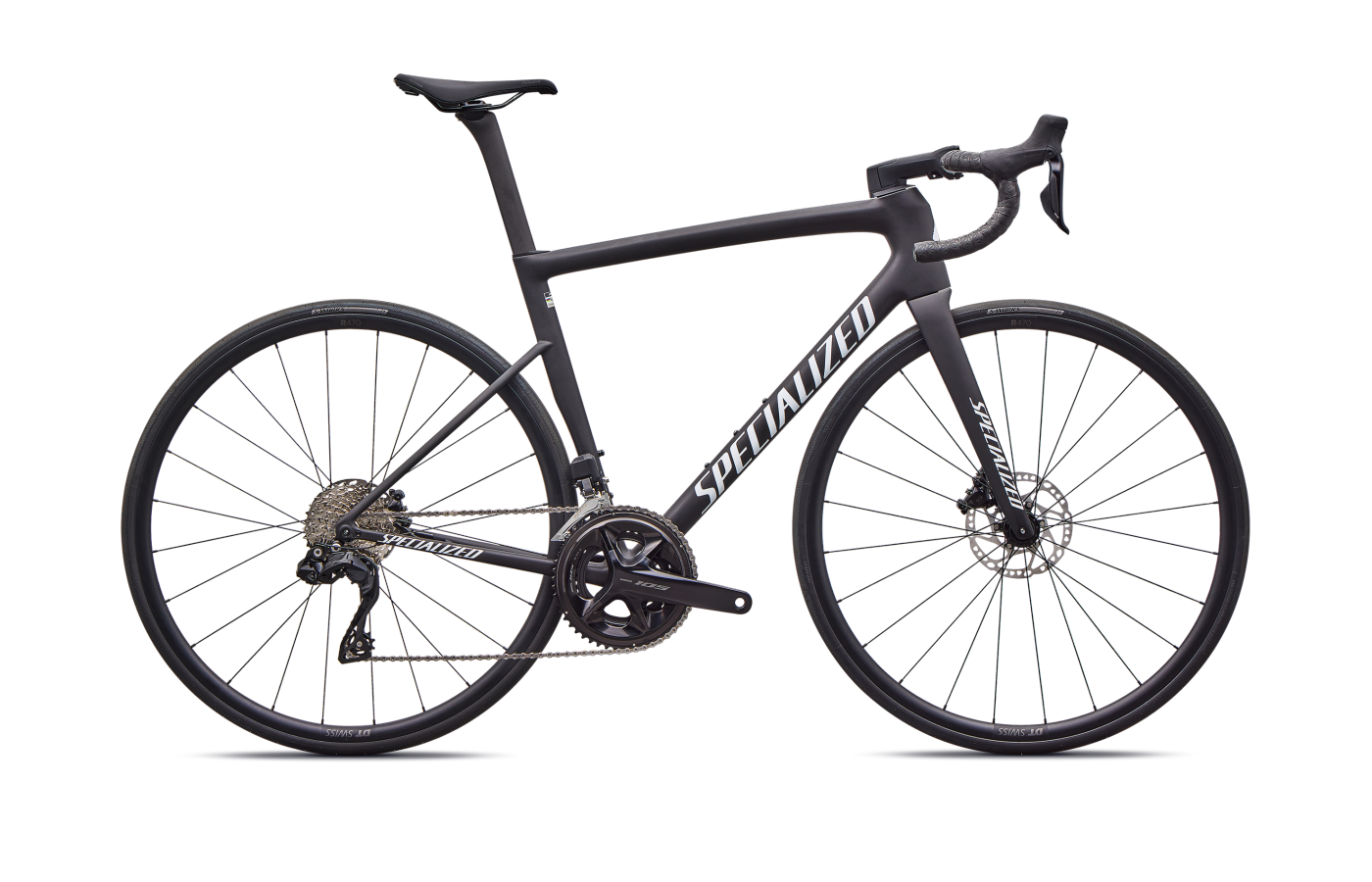
Tarmac
Specialized's flagship Tarmac SL8 splits the difference — the do-everything race bike that's lighter than the Roubaix and more aero than the Aethos. If you want one bike instead of choosing between these two, this is it.
Compare →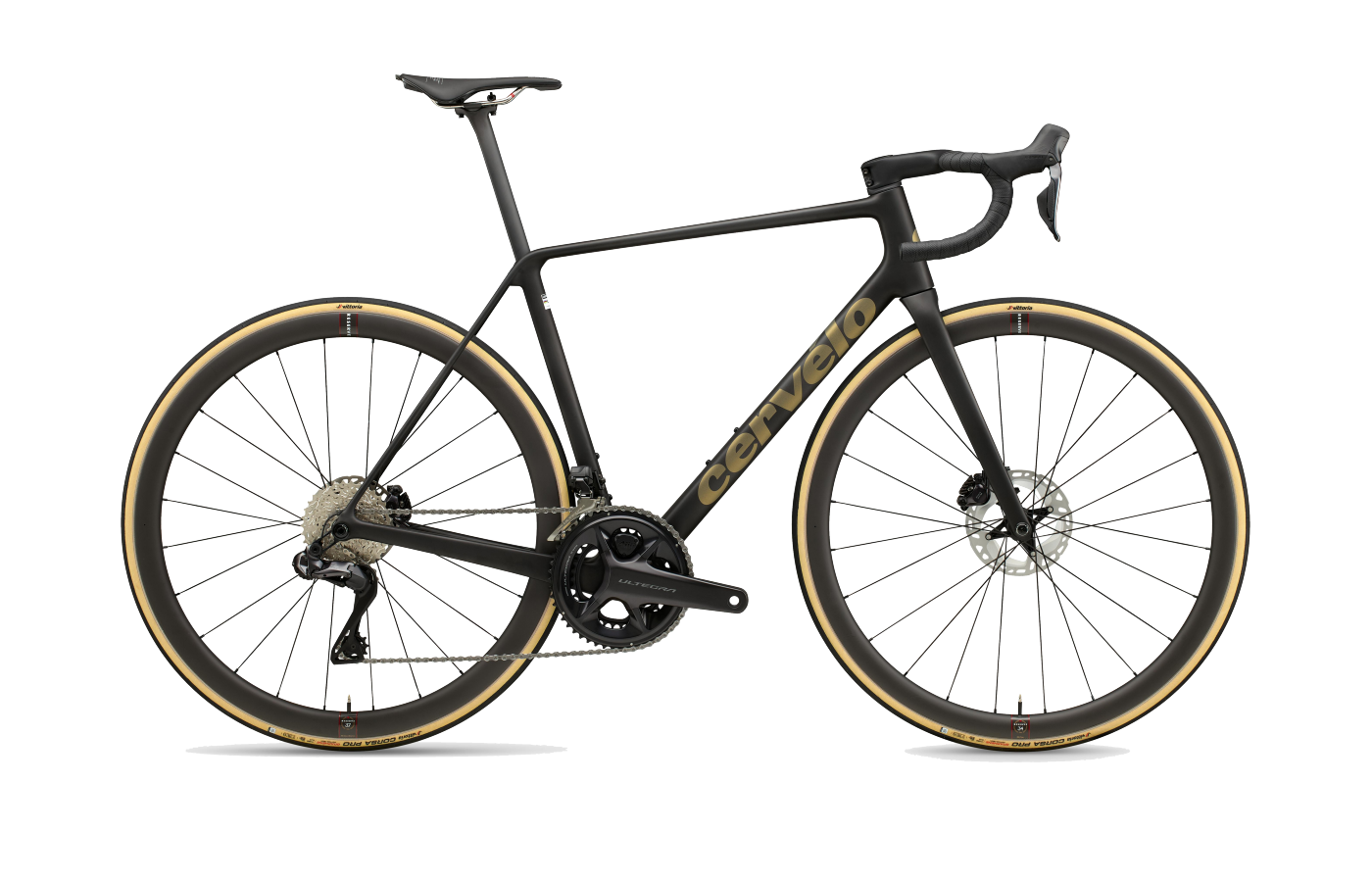
R5
If the Aethos's lightweight-purist pitch hits, the Cervelo R5 is its closest direct rival — another sub-7 kg climber that targets ride feel over watts. Reviewers cross-reference these two constantly.
Compare →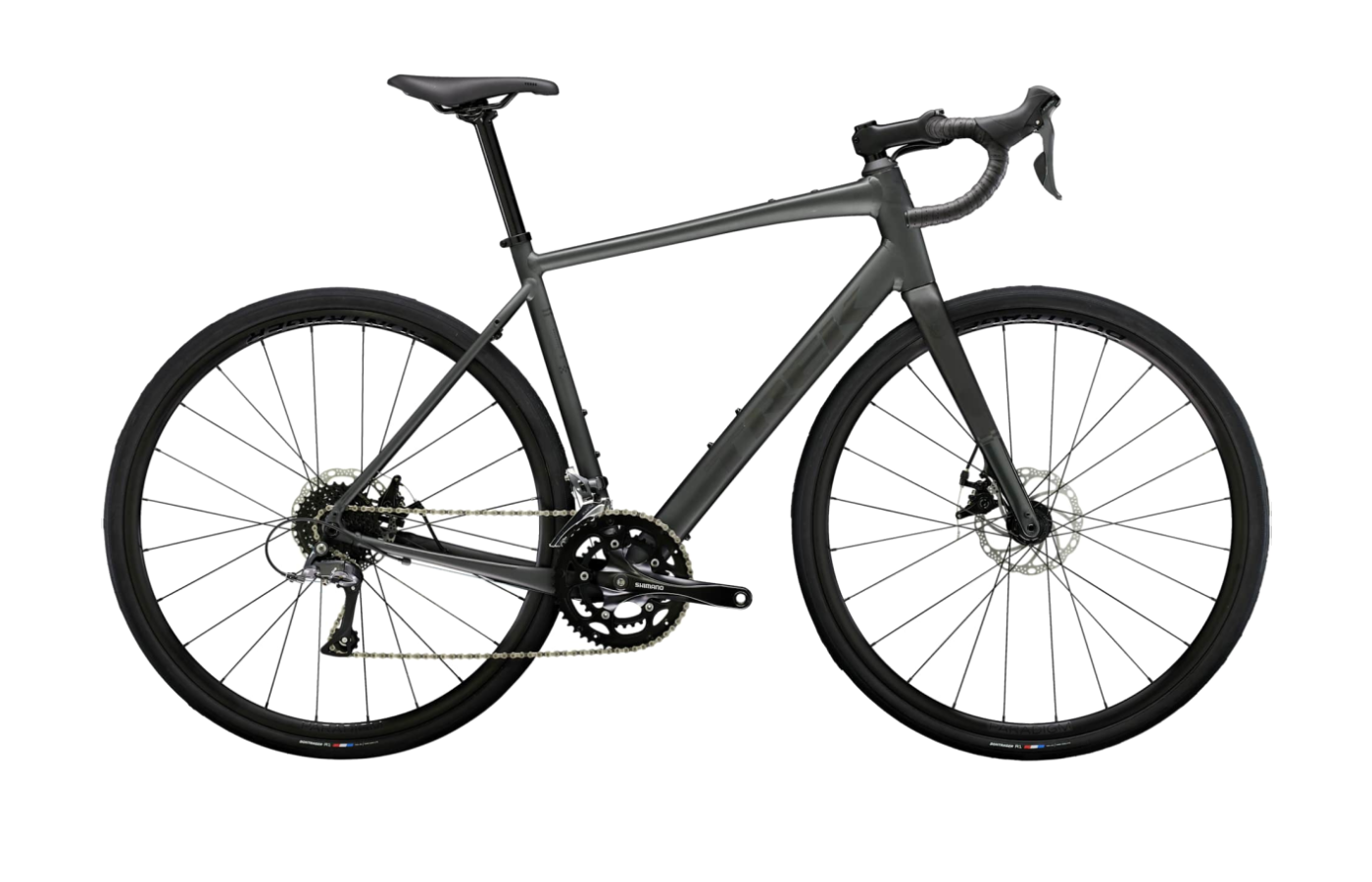
Domane
Trek's endurance equivalent to the Roubaix, with IsoSpeed decoupler compliance instead of an active head-tube shock. Different mechanism, similar mission — long-day comfort over varied roads.
Compare →