Spearfish
vsChisel
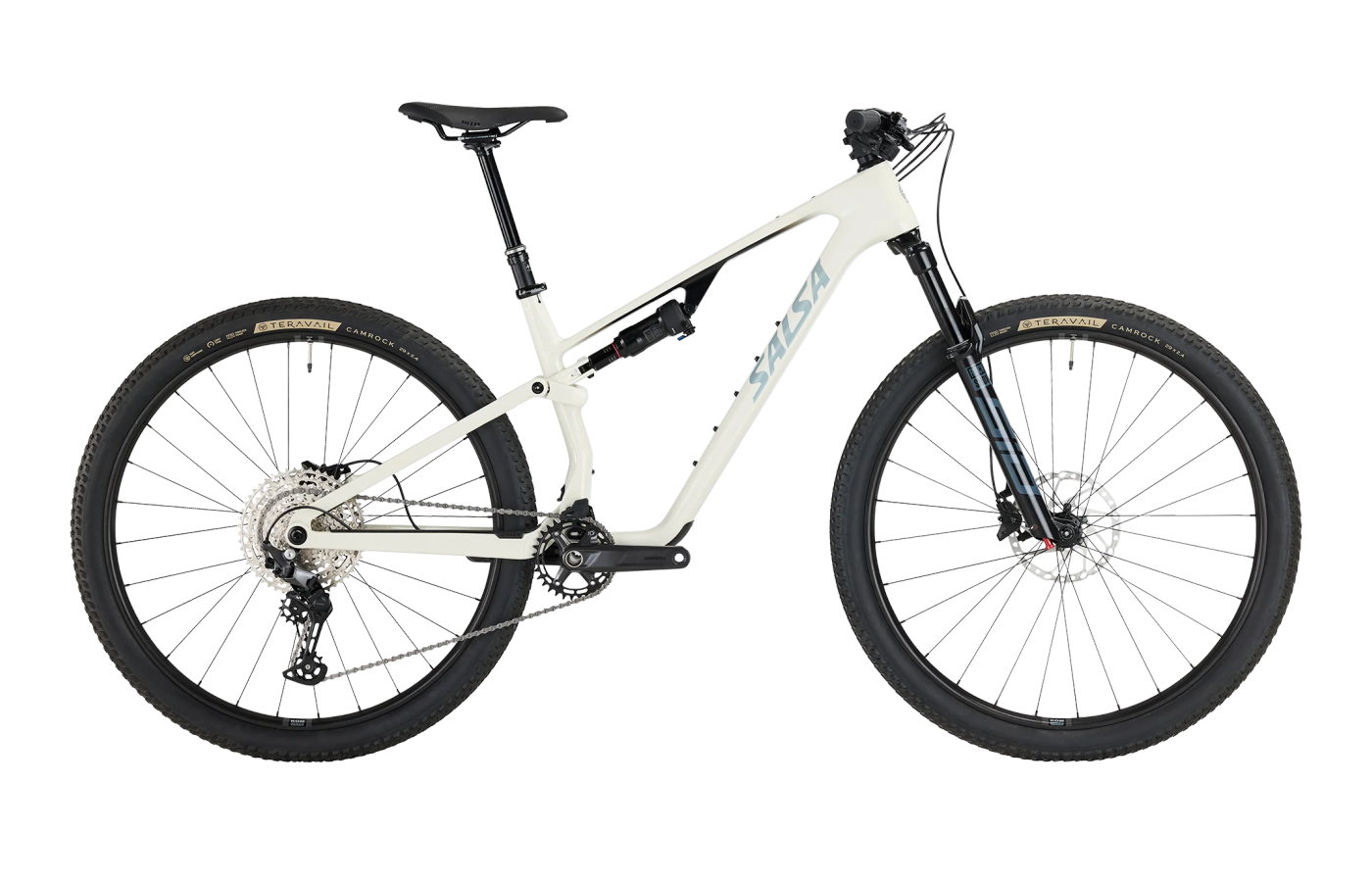
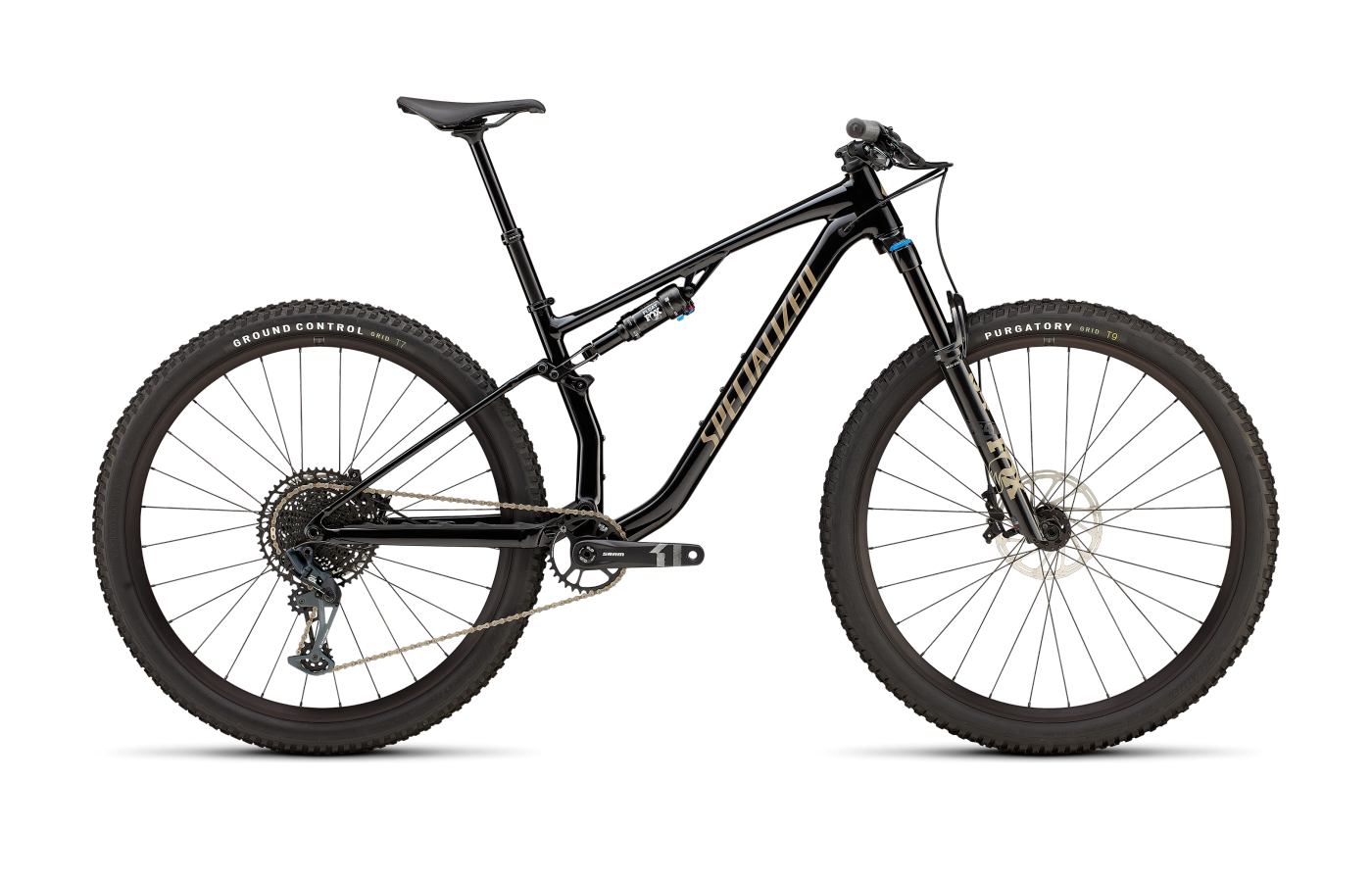
Two takes on the modern XC bike, two budgets.
The Spearfish is a carbon downcountry rocket built for long days and rowdy descents. The Chisel is a smartweld alloy XC racer that delivers Epic 8 geometry at a third of the price.
Spearfish
- Split Pivot suspension — efficient enough that reviewers ran the shock open on climbs and still set personal bests.
- Modern downcountry geometry — 66.3 degree HTA and 470 mm reach (M) keep it composed on descents most XC bikes flinch at.
- Bikepacking-ready frame with up to three bottle mounts and top tube bosses — a real long-day platform.
- Carbon-only lineup starts at $3,999 — no budget entry point on the new V4 frame.
- Stock Teravail Camrock tires are fast-rolling but flagged as light on bite in loose or wet conditions.
Chisel
- Smartweld alloy frame — Specialized claims 2,720 g for a medium, only 500–750 g over comparable carbon frames at half the price.
- Epic 8 geometry on a budget — the same 110 mm flex-stay layout and progressive XC numbers as the carbon flagship.
- Mechanic-friendly build — threaded BSA bottom bracket, traditional cable routing, no headset cable nonsense.
- Stock wheels use a Shimano HG freehub, blocking high-end SRAM XD and XDR cassette upgrades without a hub or wheel swap.
- 110 mm of rear travel and a firm RX tune get harsh on high-frequency chatter — this is a momentum machine, not a plush trail bike.
Editor’s analysis
On paper they're both 110–120 mm full-suspension XC bikes — but one is built around a Dave Weagle linkage and a $3,500 frameset, and the other is a single-pivot flex-stay alloy frame engineered to undercut its own carbon sibling by thousands.
The Salsa Spearfish and Specialized Chisel are both pitched at the modern cross-country rider, but they sit in completely different parts of the market. The Spearfish is carbon-only, starts at $3,999 for the Deore build, and tops out near $11,000 with Flight Attendant electronic suspension. The Chisel is alloy-only, starts at $1,899 for a hardtail, and the priciest full-suspension Comp EVO closes the lineup at $3,599 — less than the Spearfish's cheapest carbon build.
The Spearfish's defining feature is Dave Weagle's Split Pivot suspension. Reviewers across Bikepacking, Pinkbike, and Bike Rumor praised it for isolating braking and pedaling forces — the bike climbs hard with the shock open, and Bike Rumor's Jeremy Benson knocked over three minutes off a personal best on a familiar climb. With 120 mm front and rear, a 66.3 degree head tube angle, and a 77.3 degree seat tube angle, it's the bike for riders who want to chase Strava KOMs in the morning and bikepack the same trail in the afternoon.
The Chisel takes a different route to the same neighborhood. It uses Specialized's D'Aluisio Smartweld M5 alloy frame (claimed 2,720 g, medium) with a single-pivot flex-stay — the same suspension architecture as the carbon Epic 8, only with 110 mm of rear travel instead of 120 mm. The geometry sits a half-degree steeper at the head tube (67 degrees) and 1.8 degrees slacker at the seat (75.5 degrees). Reviewers at Nminus1bikes and The Radavist call it a "convincing facsimile" of the Epic 8 — the same poppy, momentum-machine feel without the carbon price.
Put another way: the Spearfish is the bike you buy when you want one capable, do-it-all carbon XC rig and your budget starts at $4,000. The Chisel is the bike you buy when you want race-ready geometry on an alloy frame and your budget tops out at $3,600 — and you're happy to upgrade the wheels and brakes over time.
Where the builds differ.
Comparing our editor's-pick builds side-by-side. Winners highlighted row-by-row — lower price and weight, and the better-spec component, each mark a point.
Build variants & pricing
The Spearfish lineup runs from $3,999 (carbon Deore) to $10,999 (XO Transmission Flight Attendant). The Chisel runs from $1,899 (hardtail) to $3,599 (Comp EVO).
The two platforms barely overlap on price — the cheapest new Spearfish C is more expensive than the priciest Chisel. We picked the Chisel Comp EVO (Fox 34, 130 mm fork) and the Spearfish C Deore 12 to keep the comparison in mechanical-drivetrain territory, but the Chisel is alloy and the Spearfish is carbon. That's a real platform difference, not a footnote to hide.
How they fit, how they steer.
Salsa sizes a touch differently — the Small Spearfish lines up against the Medium Chisel for a 5'8" rider. At those sizes, the Spearfish runs a 66.3 degree head angle and 77.3 degree seat angle versus the Chisel's 67 and 75.5 — slacker up front, steeper at the seat, more downcountry posture overall.
Which size should I buy?
Size recommendations based on stack, reach, and effective top tube. Both ranges cover XS through XL; the Spearfish runs longer reach in the middle sizes, while the Chisel sits lower and shorter.
→These are starting points. Flexibility, riding style, and preferred position all shift the answer — if you’re between sizes, a professional fit beats a chart.
What the magazines said.
Published reviews from trusted cycling outlets. Click through for the full write-up.
Which one should you buy?
If you want one carbon bike for long days, bikepacking, and rowdy descents, get the Spearfish. If you want race-ready XC geometry on a tight budget, get the Chisel.
Spearfish
Endurance racers, bikepackers, and riders who want a single XC bike that can climb with urgency and descend like a short-travel trail bike. The Split Pivot suspension and 120/120 travel make it a true do-everything platform — at a true do-everything price.
Chisel
NICA athletes, weekend XC racers, and aggressive trail riders who want Epic 8 geometry without the carbon premium. The Comp EVO especially — with its Fox 34, 130 mm fork, and Purgatory T9 tires — is a "radical little rally bike" for under $3,600.
Questions buyers actually ask.
Short answers to the things we get emailed about most often.
01Which has more suspension travel?
The Salsa Spearfish — 120 mm front and 120 mm rear across the lineup. The Specialized Chisel runs 110 mm rear and 120 mm front on the standard Comp build, with the Comp EVO bumping the fork to 130 mm.
The 10 mm rear-travel difference matters less than the suspension design. The Spearfish's Split Pivot is widely praised for keeping the wheel active under braking and pedaling, while the Chisel's flex-stay single pivot prioritizes pedaling efficiency over small-bump compliance.
02Is the Chisel really comparable to a carbon XC bike?
Reviewers think so. Nminus1bikes called the Chisel Comp EVO a "convincing facsimile" of the carbon Epic 8 Evo, noting it's only about 500–750 g heavier in the frame. Specialized's D'Aluisio Smartweld construction uses hydroformed tubes with overlapping ends and a one-piece seat tube/bottom bracket assembly — closer to monocoque carbon construction than traditional alloy welding.
The ride character is described by Bicycling and The Radavist as poppy, accurate, and "deceptively light" — qualities usually reserved for carbon XC bikes.
03Which is the better climber?
Both climb very well, but they get there differently. The Spearfish's 77.3 degree seat tube angle places the rider far forward over the bottom bracket, and the Split Pivot suspension stays high in its travel under power. Bike Rumor's reviewer set personal-best climbing times on it.
The Chisel's 75.5 degree seat tube is more relaxed, and its 110 mm flex-stay rear end is firm and supportive enough that most reviewers leave the shock open on fire roads. It's a momentum machine — fast on rolling terrain, less specialized for very steep, technical climbs.
For sustained, steep climbing, the Spearfish's geometry has the edge. For fast XC racing on rolling courses, the Chisel is competitive.
04Can I bikepack on either of these?
The Spearfish is purpose-built for it. The frame has up to three bottle mounts, top tube bosses for feed bags or a computer, and threaded mounts throughout. Bikepacking.com and Salsa's marketing both lean hard into the adventure use case.
The Chisel has a large alloy front triangle that fits two big bottles, but it's not specifically designed as a bikepacking bike. It works fine for shorter overnighters and can carry frame bags, but it lacks the mount density of the Spearfish.
05What about wheel and freehub upgrades?
Spearfish builds use WTB hubs with SRAM XD freehubs (or HG on the lowest tiers) — straightforward to upgrade as you wish. The Deluxe builds ship with WTB CZR carbon wheels stock.
Chisel builds use Specialized alloy hubs with Shimano HG-style freehubs across most of the lineup. That's been flagged by Bikepacking.com, The Radavist, and Nminus1bikes as a real upgrade hurdle — moving to a SRAM XD cassette typically means a new freehub body or a new rear wheel. Plan for it if you intend to upgrade the drivetrain.
06Is the Chisel's flex-stay rear end durable?
Reviewers expect so. Specialized has used flex-stay layouts on the carbon Epic line for years, and The Radavist noted that aluminum flex stays on similar bikes have lasted over a decade. Specialized limits the Chisel's rear travel to 110 mm specifically to keep the alloy stays inside their fatigue envelope — the kinematics are tuned around the material, not against it.
Specialized backs the frame with a lifetime warranty to the original owner.
07How much do the editor's pick builds weigh?
The Spearfish C Deore 12 ($3,999) is listed at 29 lb 13 oz — fully built with a Shimano Deore 12-speed drivetrain, RockShox SID fork, and WTB KOM Team alloy wheels.
The Chisel Comp EVO ($3,599) is listed at 13.53 kg (29 lb 13 oz) in size MD — fully built with SRAM GX Eagle, a 130 mm Fox 34 Performance Elite fork, and Specialized hookless alloy wheels. They're essentially identical at the scale, despite the platform differences.
08Which is better for a NICA racer or first XC race bike?
The Chisel — almost entirely on price. The Comp ($3,499) and Comp EVO ($3,599) deliver progressive XC geometry, a SID or Fox 34 fork, and the same single-pivot flex-stay layout as the flagship Epic 8 for less than half the cost of a comparable carbon bike. The Radavist noted you could buy four Chisel Comps for the price of one S-Works Epic 8.
The Spearfish is the better long-haul, do-everything bike, but for pure race-day duty on a budget, the Chisel is hard to argue with.
Similar bikes
If your priorities don’t map cleanly onto either of these, one of these adjacent bikes probably fits better.
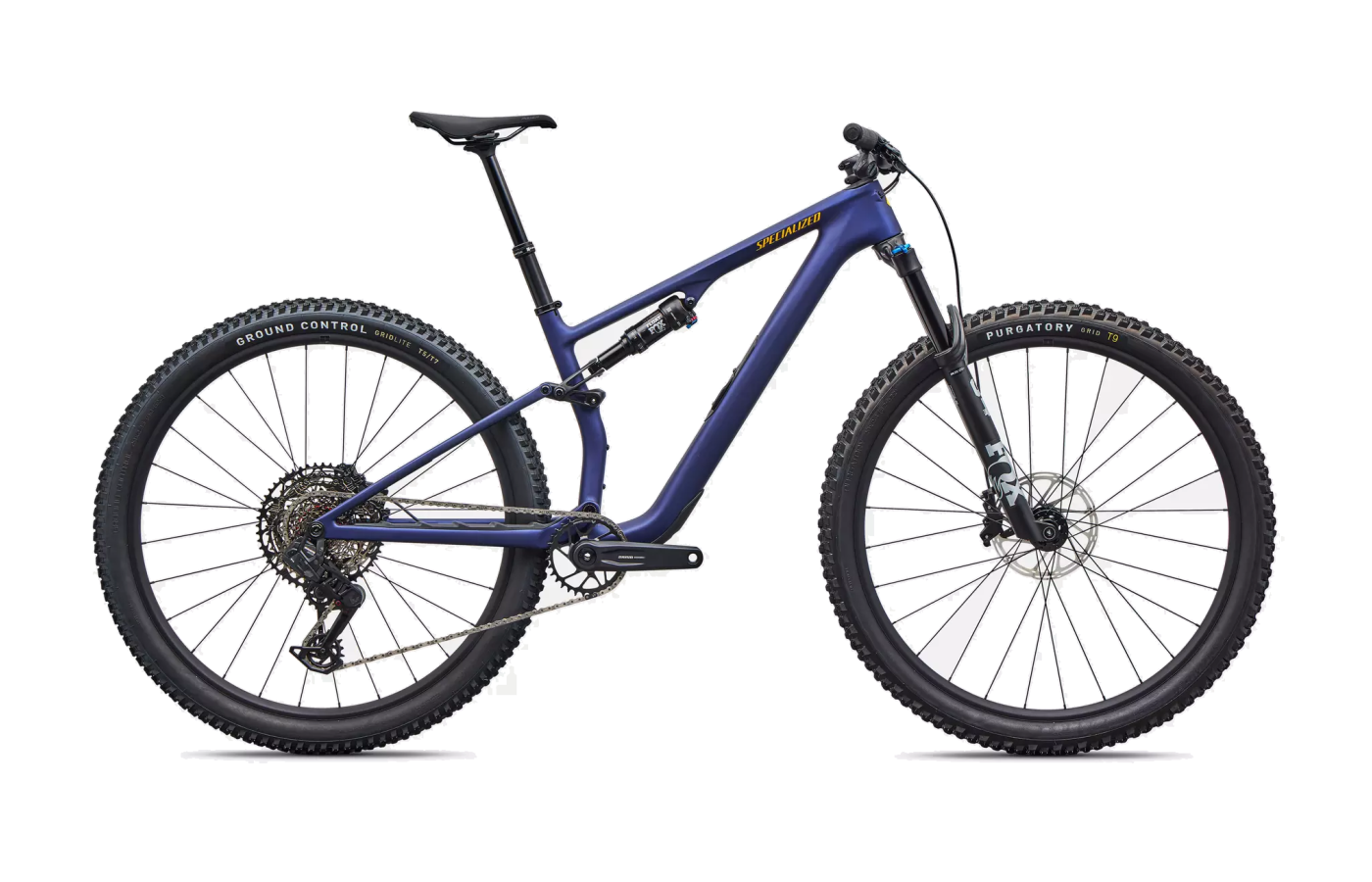
Epic Evo
The carbon middle ground between these two. Same downcountry travel and geometry as the Spearfish, same flex-stay architecture as the Chisel, but it's a Specialized carbon frame priced between the two — a real apples-to-apples carbon take on the Chisel's chassis.
Compare →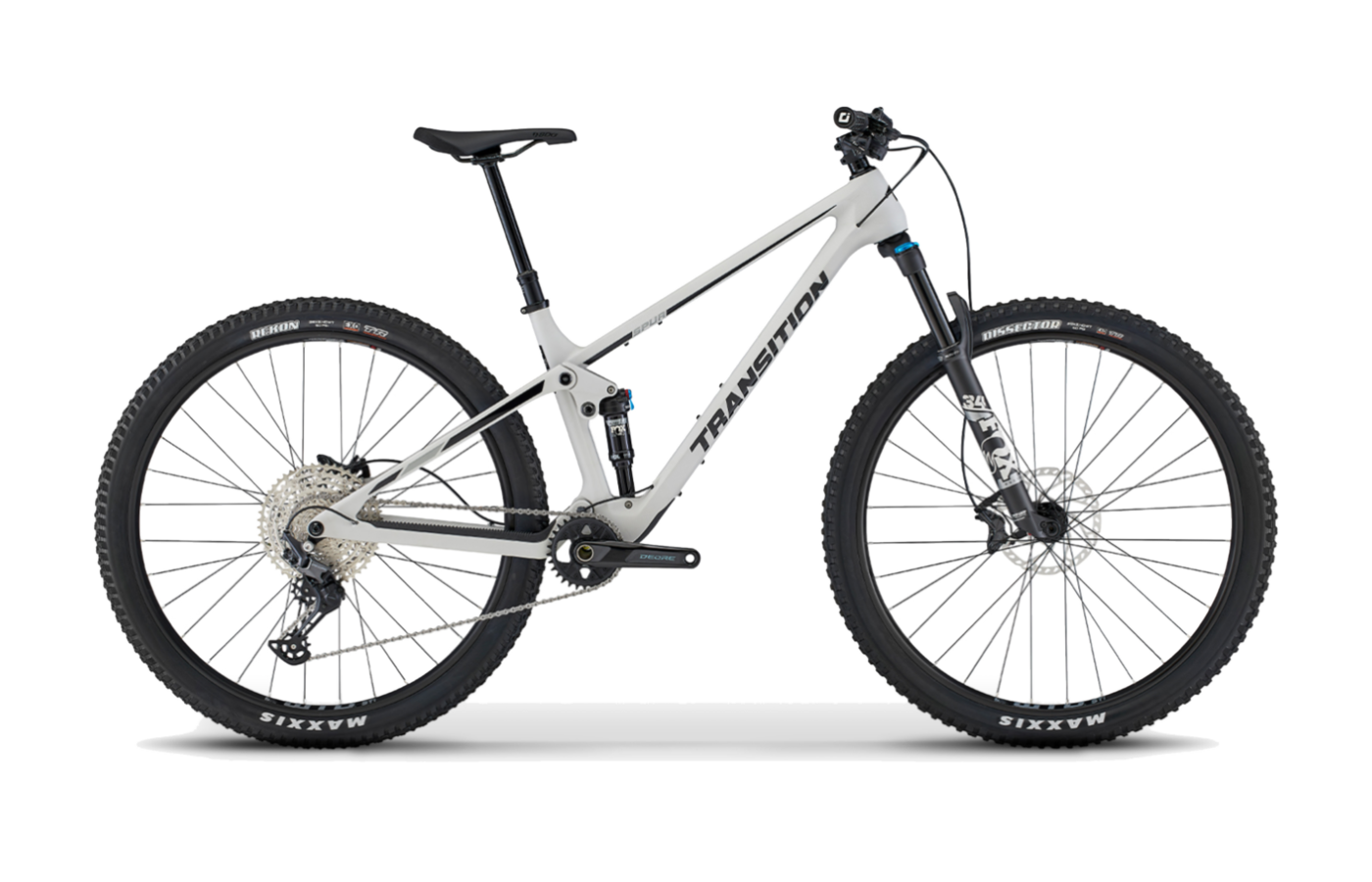
Spur
Often cross-shopped with the Spearfish — a 120 mm carbon downcountry bike with a similar climbing-up, sending-down personality. The Spur leans a little more toward descending playfulness; the Spearfish leans a little more toward all-day endurance.
Compare →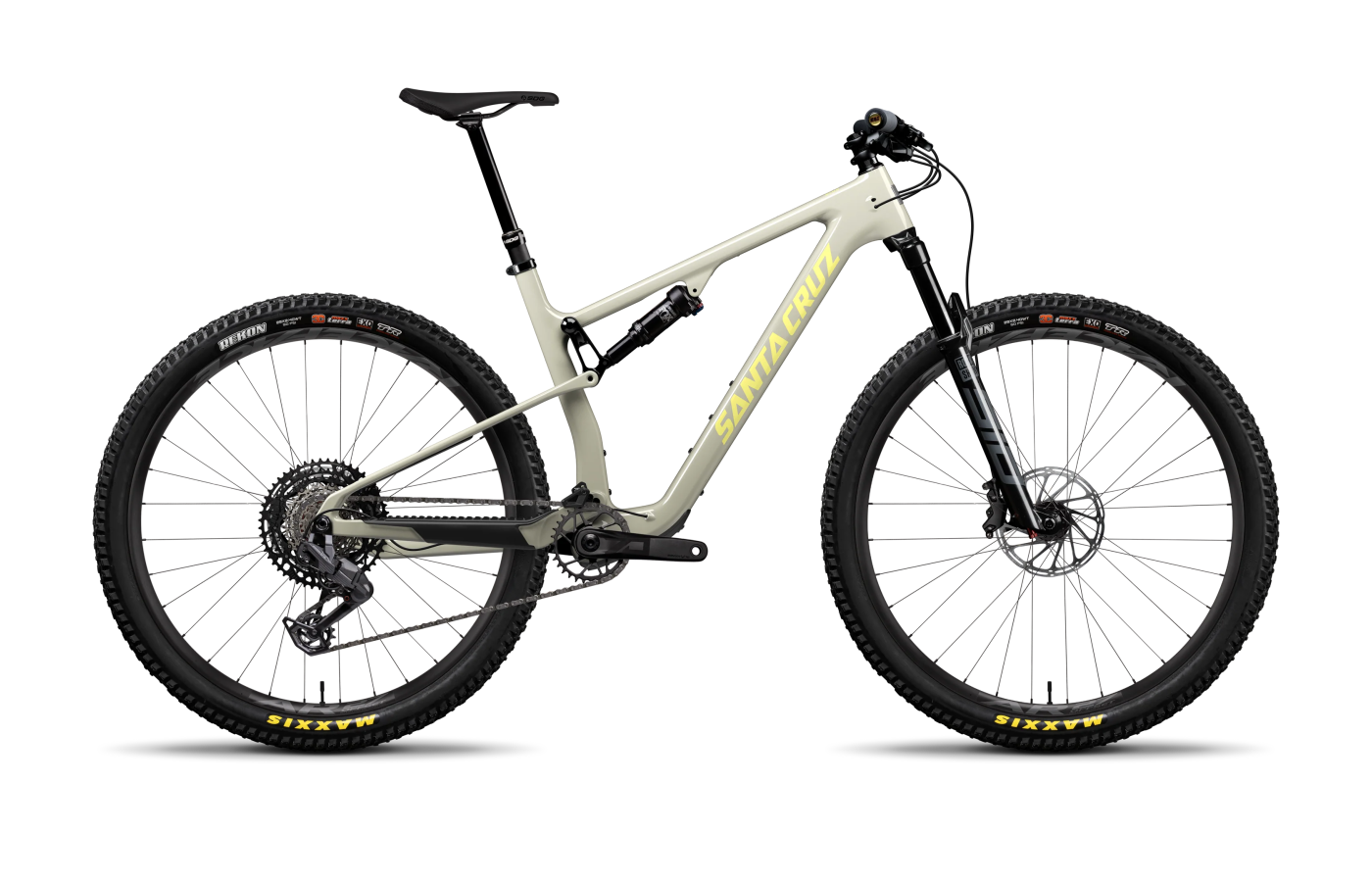
Blur
A pure XC race bike — lighter and more efficient than either of these, with VPP suspension and Santa Cruz's bombproof finish. The right pick if you want race-day weight and don't need the extra travel or trail capability.
Compare →