Journeyer
vsVaya
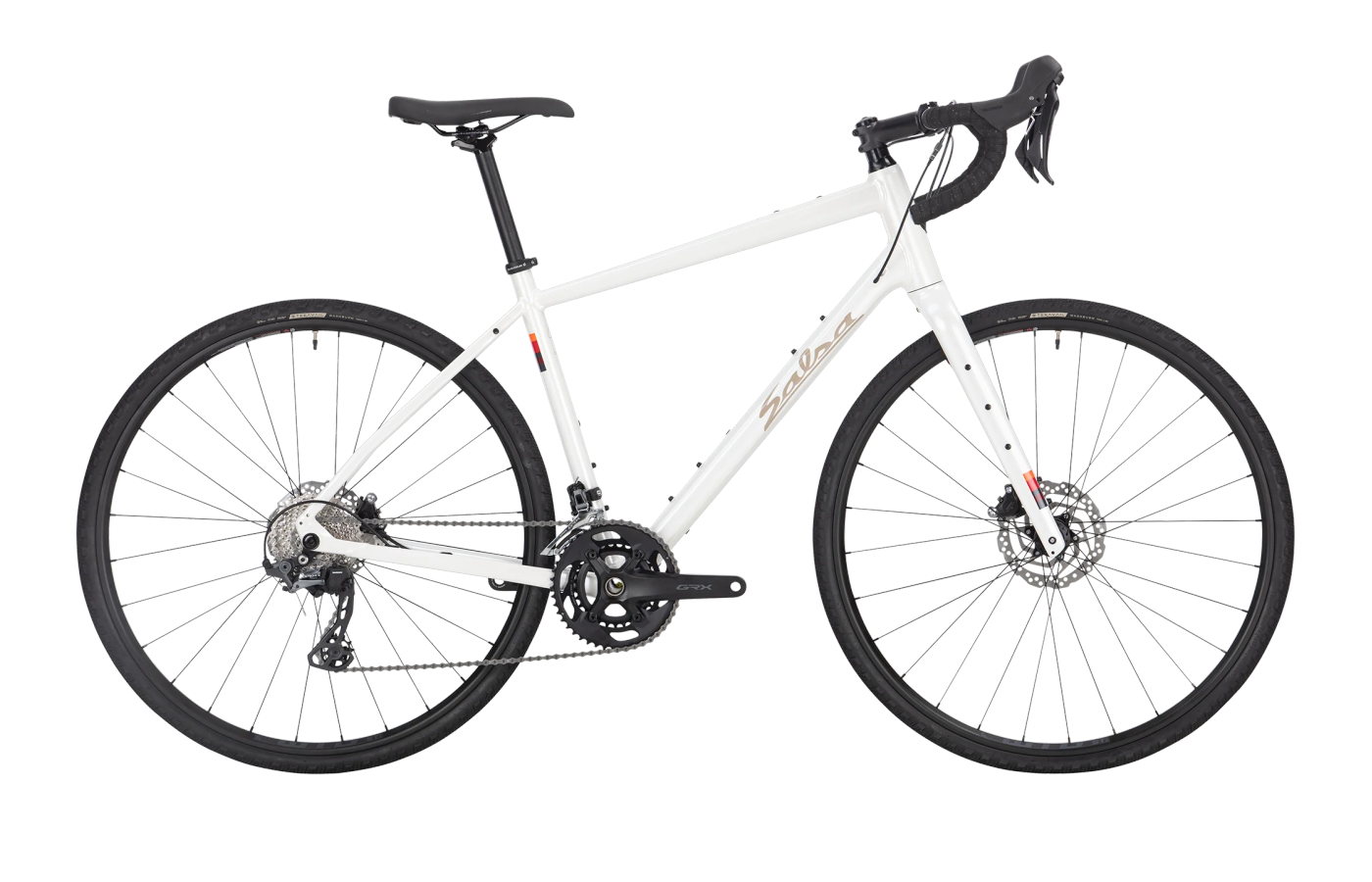
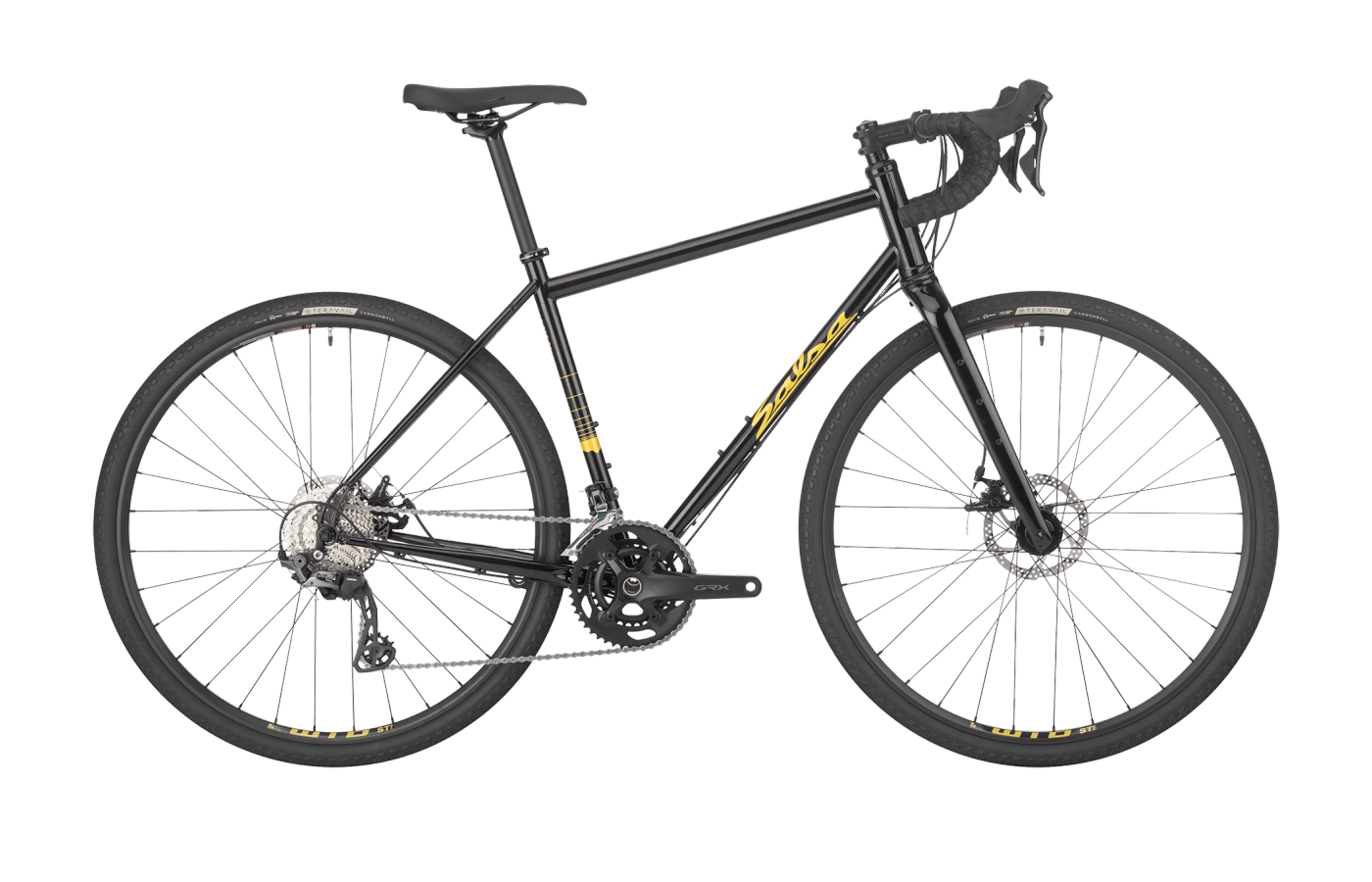
Two adventure bikes, two materials.
The Journeyer is the modern aluminum workhorse with a build for every budget. The Vaya is the steel classicist — one build, one philosophy.
Journeyer
- Build range from $629 to $2,499 — a configuration for almost every budget and bar style.
- 50 mm tire clearance (700c) or 55 mm (650b) — meaningfully more than the Vaya's 45 mm cap.
- Carbon Waxwing fork from the $1,344 build up — quietens the front end and saves weight up high.
- Long wheelbase and slack head angle understeer in fast sweeping corners — Velo and Road.cc both note it.
- Aluminum frame can't quite match steel for that long-haul vibration-damping ride feel.
Vaya
- Triple-butted CroMoly frame — the "smooth and buttery" ride that aluminum and carbon don't replicate.
- More upright fit — at size 57, stack is 628 mm and reach is 372 mm, friendlier for unhurried touring posture.
- Stable under load — reviewer carried 22 lb of bikepacking gear with no twitch or flop.
- Mechanical TRP Spyre-C brakes on a $2,749 bike when the cheaper Journeyer GRX 600 ships hydraulic.
- One build, take it or leave it — no flat-bar, no 650b, no carbon-fork-and-thru-axle option.
Editor’s analysis
Same brand, same gravel-touring intent — but a 6061 frame and a CroMoly frame don't ride the same way, and Salsa knows it.
The Salsa Journeyer and Salsa Vaya share a parking lot — both rigid, both drop-bar, both built around mounts and clearance and an unhurried geometry. Sit them side by side and the differences are material first, philosophy second. The Journeyer is heat-treated 6061-T6 aluminum with a Waxwing carbon fork on most builds. The Vaya is triple-butted CroMoly steel front to rear, only sold one way, and roughly twice the price of the cheapest Journeyer.
The Journeyer is the catalog. Fifteen builds from $629 (Altus flat-bar) to $2,499 (GRX 610 1x12), 700c or 650b, drop or flat, mechanical or hydraulic — there's a configuration for almost any rider, almost any budget. The geometry is unmistakably touring-leaning: a slack 69.5-degree head tube, a 1051 mm wheelbase at 55, 440 mm chainstays, and clearance for a 50 mm tire. Reviewers across Velo, Road.cc, and Cycling Weekly land in the same place — stable, planted, willing to be loaded, slow to corner sharply. "The Happy Bike," Velo called it.
The Vaya is the answer to a narrower question. Steel frame, steel ride feel — "smooth and buttery," the way reviewers reach for when carbon and aluminum both feel busy underneath them. The geometry is actually steeper and shorter than the Journeyer (71.5-degree head angle, 1053 mm wheelbase at 57, 450 mm chainstays), so it sits the rider more upright but corners with a more conventional gravel feel. Tire clearance caps at 45 mm. There is exactly one build: the $2,749 GRX 600, with a 105/GRX mix and TRP Spyre-C mechanical disc brakes — a spec choice that draws fair criticism for a $2,700 bike.
Put another way: the Journeyer is what Salsa builds when the goal is to put more riders on gravel bikes. The Vaya is what Salsa builds for the rider who already knows they want steel and is willing to pay the premium and accept the spec compromises that come with it.
Where the builds differ.
Comparing our editor's-pick builds side-by-side. Winners highlighted row-by-row — lower price and weight, and the better-spec component, each mark a point.
Build variants & pricing
The Journeyer scales from $629 (flat-bar Altus) to $2,499 (GRX 610 1x12). The Vaya is sold as one build only — the $2,749 GRX 600.
Prices are current US MSRP. The editor's-pick comparison pits the Journeyer GRX 600 700c ($1,344) against the Vaya GRX 600 ($2,749) — same Shimano GRX 600 2x11 drivetrain on both, but the Vaya's steel frame, carbon fork, and brand of brakes differ. The roughly $1,400 gap is essentially the steel-frame premium plus the smaller production run.
How they fit, how they steer.
Compared at the fit-picked sizes for a 5'8" rider. The Vaya 57 stacks 58 mm taller and reaches just 4 mm shorter — a meaningfully more upright cockpit. Head tube angle is 2 degrees steeper on the Vaya (71.5 vs 69.5), so the front end is faster to turn despite the relaxed posture.
Which size should I buy?
Both ranges cover roughly 49–60 cm but use different size labels and different stack/reach progressions — pick by stack and reach against your fit, not by the cm number.
→These are starting points. Flexibility, riding style, and preferred position all shift the answer — if you’re between sizes, a professional fit beats a chart.
What the magazines said.
Published reviews from trusted cycling outlets. Click through for the full write-up.
Which one should you buy?
If you want range, options, and modern hydraulic brakes for the money, get the Journeyer. If you specifically want a steel ride feel and you're willing to pay for it, get the Vaya.
Journeyer
If you're picking your first real gravel bike, building a budget commuter that can also bikepack, or just want the option to size into 50 mm tires and a dropper post later — this is the easier yes. The build range alone makes it the more flexible platform.
Vaya
If you've ridden steel and you know you want it, the Vaya delivers the long-haul vibration damping that aluminum doesn't. Best for unhurried touring, light bikepacking, and riders who plan to keep the same frame for a decade and upgrade parts around it.
Questions buyers actually ask.
Short answers to the things we get emailed about most often.
01Which one rides smoother on rough roads?
The Vaya, by most reviewer accounts. The triple-butted CroMoly steel frame is repeatedly called "smooth and buttery," and one reviewer called it visibly different from a carbon comparison bike on the same ride. The Journeyer is no slouch — its aluminum frame plus the Waxwing carbon fork on mid-tier builds gets praised for being "surprisingly comfortable" — but steel still wins on raw vibration damping.
The gap shrinks if you put 47 mm 650b tires on the Journeyer, which it accepts and the Vaya cannot.
02Why is the Vaya so much more expensive than the Journeyer?
Two reasons. First, the steel frame: triple-butted CroMoly is more expensive to manufacture than 6061 aluminum at this scale, and the Vaya is sold in much smaller volumes than the 15-build Journeyer range, so there's less manufacturing leverage.
Second, you're not really comparing equivalent specs. The $2,749 Vaya GRX 600 ships with mechanical TRP Spyre-C disc brakes, while the $1,344 Journeyer GRX 600 700c at half the price ships with hydraulic Shimano GRX brakes. The premium is for the frame material, not the components.
03Can I run the same tire size on both?
Up to a point. Both fit a 38 mm 700c tire (the Vaya's stock spec). The Journeyer clears up to 50 mm on 700c or 55 mm on 650b per Salsa, opening real adventure-tire territory. The Vaya caps at 45 mm, which is plenty for hardpack and most groomed gravel but not for chunkier mixed terrain.
If maximum tire flexibility matters to you, the Journeyer is the only choice between these two.
04Which has better mounts for bikepacking and racks?
Both are well-mounted Salsas, but the Journeyer is slightly more loaded out. It has triple mounts on the fork, plus top-tube, downtube, and rear-rack mounts, and internal routing prepped for a dropper post.
The Vaya carries the standard fork, frame, and rack mounts but skips the top-tube bag mounts and routes cables externally along the bottom of the downtube — fine for traditional touring, slightly less flexible for modern bikepacking-bag setups.
05How does the geometry actually feel different?
At the fit-picked sizes (Journeyer 55 / Vaya 57), the Vaya sits the rider more upright — 58 mm more stack and 4 mm less reach. But the Journeyer has a slacker head angle (69.5 vs 71.5 degrees) and a longer wheelbase, so it tracks straighter at speed and on loose terrain.
In practice: the Vaya feels more like a traditional touring bike — upright, conventional steering. The Journeyer feels more like a modern adventure bike — laid-back front end, harder to corner sharply but nearly impossible to upset.
06Which is the better commuter?
Either works, but for different reasons. The Journeyer's flat-bar Altus at $629 or the flat-bar Deore at $1,299 are the obvious commute pick — upright, mountain-bike-style controls, 38–45 mm tires, and a price that doesn't hurt to lock outside.
The Vaya is a more comfortable commute on rough city streets — the steel ride absorbs potholes that pummel you on aluminum — but at $2,749 it's a lot of bike to leave at a rack. It makes more sense as a one-bike-quiver where commuting is just part of what it does.
07Which holds up better long-term?
Both should last decades with normal care. Steel (Vaya) is famously repairable — a competent frame builder can fix a cracked or dented tube — and shrugs off cosmetic damage that would cost an aluminum frame structurally.
Aluminum (Journeyer) is more vulnerable to fatigue cracks at high mileage and isn't easily repaired, but the heat-treated 6061-T6 used here is a well-proven recipe and reviewers report no early failures. The bigger long-term concern on the Journeyer is the chunky exposed seatpost on small frames — one reviewer flagged seat-cluster stress for taller riders running lots of post extension.
08If I want a Salsa with the Vaya's steel feel but more modern brakes, what should I look at?
Look at the Salsa Fargo if you're leaning toward bikepacking and rougher terrain — it's a steel adventure platform with bigger tires and more aggressive geometry. For a faster, more modern gravel-race steel bike, Salsa doesn't really make a direct sibling — most of their go-fast bikes (Warbird, Cutthroat) are carbon. Outside Salsa, the Kona Rove is the closest steel-frame alternative at a similar price-and-mission point.
Similar bikes
If your priorities don’t map cleanly onto either of these, one of these adjacent bikes probably fits better.
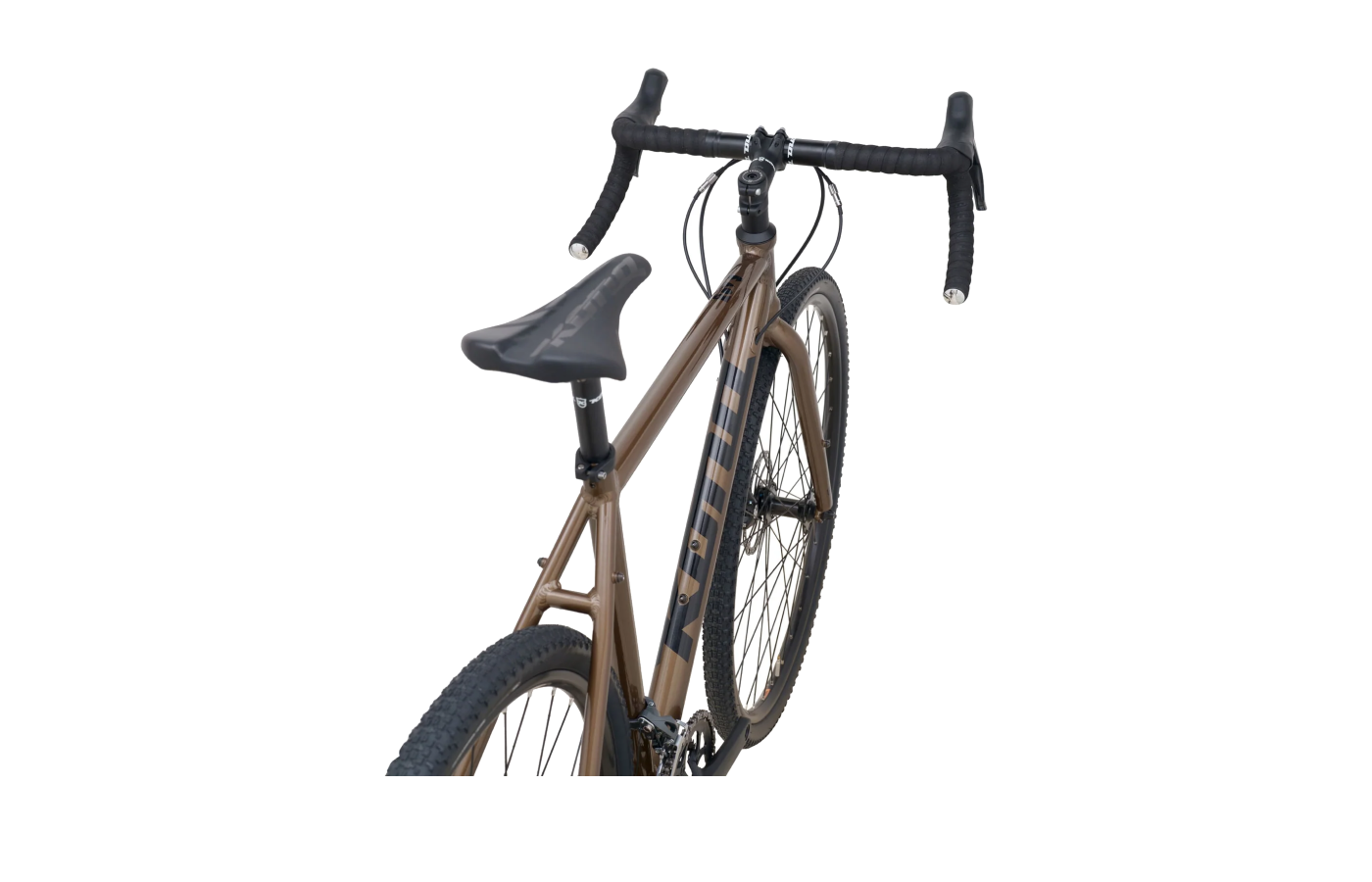
Rove
The most direct steel-frame alternative to the Vaya — Kona's all-road tourer with a similar comfort-first character and a long history with bikepackers. Worth a look if the Vaya's spec-for-price ratio gives you pause.
Compare →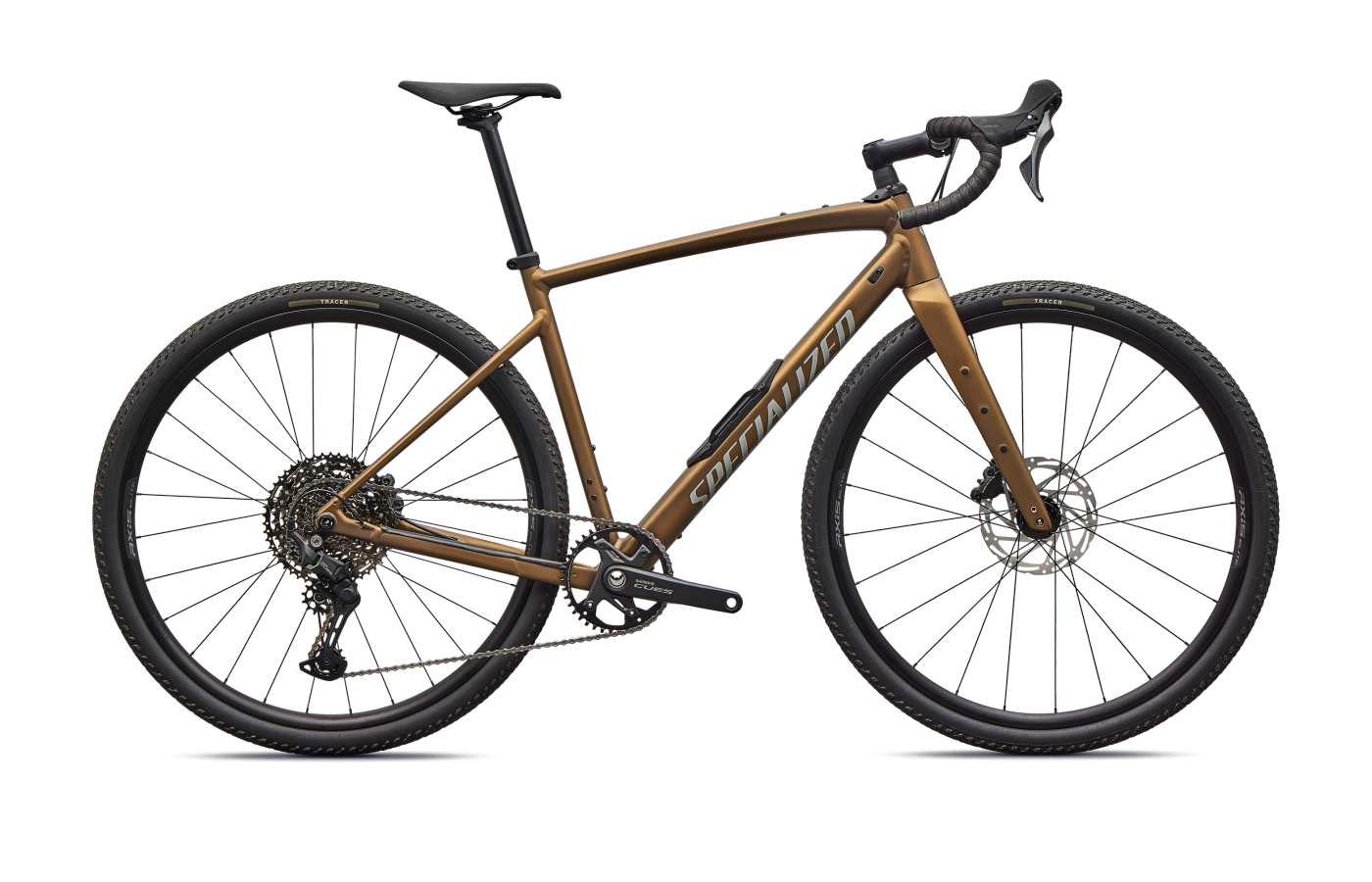
Diverge
Specialized's modern adventure-gravel benchmark — Future Shock front-end damping, generous tire clearance, and a build range from alloy to S-Works. The natural Journeyer cross-shop for riders willing to spend more for a higher-spec aluminum or carbon platform.
Compare →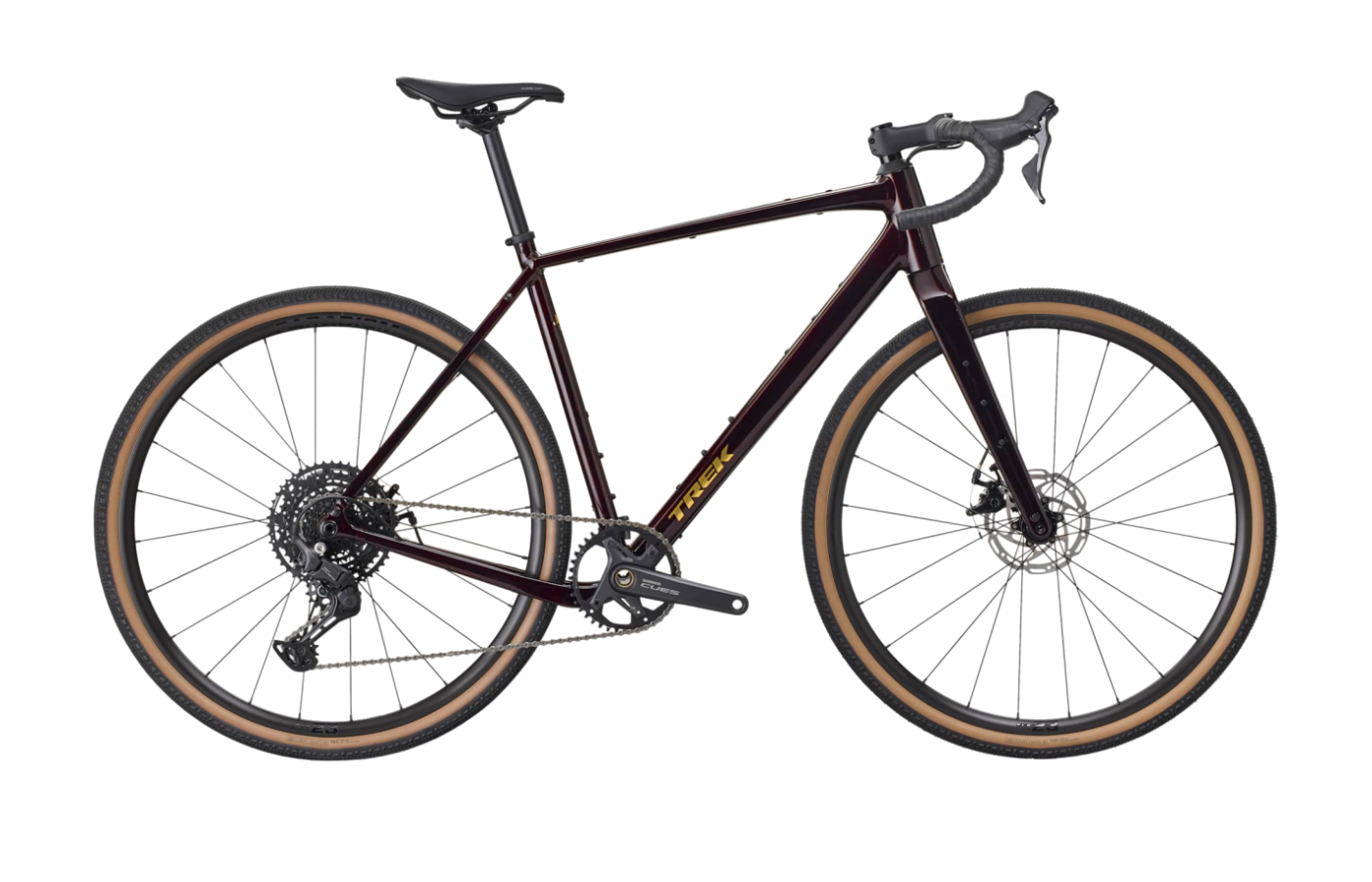
Checkpoint
Trek's wide-range gravel platform, available in both aluminum (ALR) and carbon (SL/SLR) — like the Journeyer in build breadth, but with the IsoSpeed decoupler on carbon models softening rear-end chatter on long days.
Compare →