Horsethief
vsStumpjumper
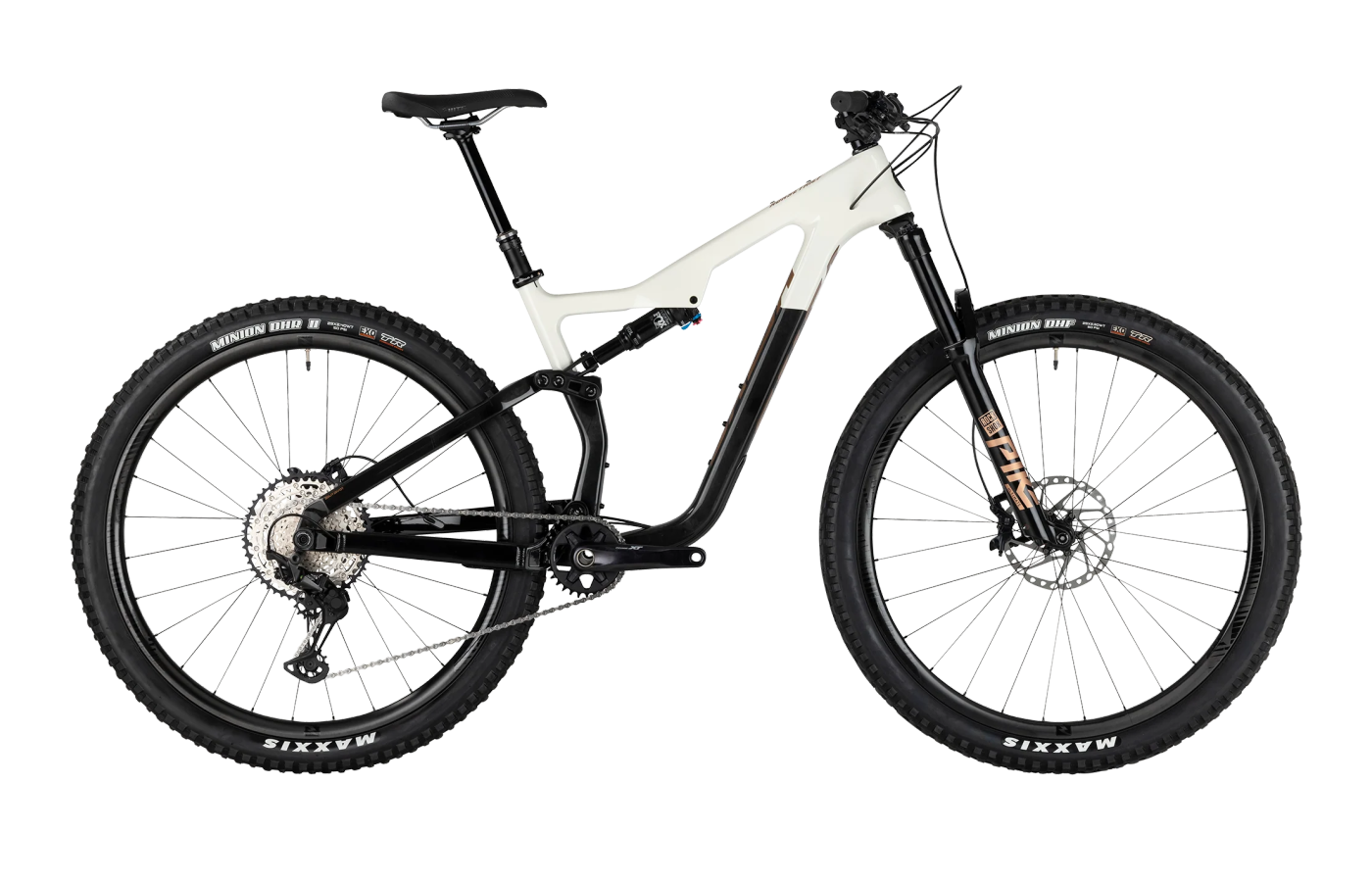
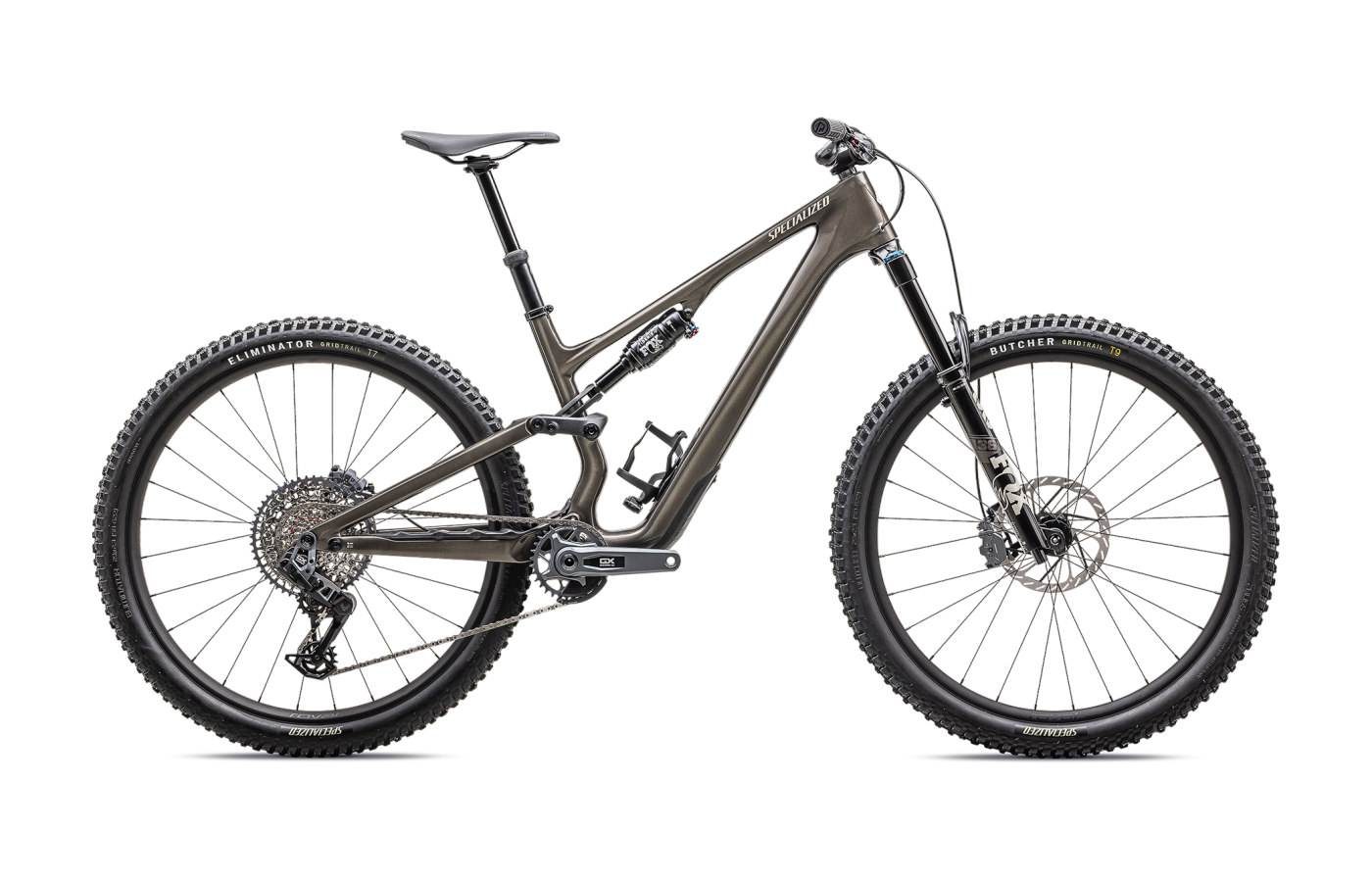
Two trail 29ers, two trail philosophies.
The Horsethief is the mild-mannered all-day companion. The Stumpjumper 15 is the adjustable do-everything bike that swings from trail to almost-enduro.
Horsethief
- All-day comfort — supple Split Pivot rear, upright seated position, and dual bottle mounts on every size make it the easy pick for long days.
- Honest price ladder — the lineup runs from a $1,999 Deore alloy to a $4,499 carbon XT, so carbon is attainable without $7k-plus ambition.
- Shimano-friendly — every build runs mechanical Shimano (Deore / SLX / XT), no wireless-only carbon gotchas.
- Conservative geometry — 66.8° head tube and 73.4° seat tube feel dated next to modern trail bikes.
- 120 mm rear travel limits how hard you can push it before the bike signals it's out of its lane.
Stumpjumper
- Best-in-class adjustability — headset cup and flip chip let you swing between 63° and 65.5° HTA to match the trails.
- GENIE rear shock — plush for 70% of travel, steeply progressive at the end, so it's quiet on chatter and composed on drops.
- Modern trail geometry — 64.5° HTA (mid), 77° seat tube, 145 mm rear travel land squarely in the 2025 trail-enduro sweet spot.
- Carbon frames are wireless-only — no mechanical shifting option unless you go alloy.
- Top-end pricing is steep; the S-Works hits $11,999 and even the Expert is $5,999.
Editor’s analysis
Both bikes call themselves trail 29ers. Spend five minutes with the geometry sheets and it's obvious they've been aimed at very different riders.
On paper, they look adjacent: 29-inch wheels, mid-travel, four-bar-derivative suspension, pitched at the rider who wants one bike for everything. But the Specialized Stumpjumper runs 145 mm of rear travel behind a 150 mm fork, sits on a 64.5-degree head tube angle, and carries a 77-degree effective seat angle. The Salsa Horsethief runs 120 mm out back, 140 mm up front, a 66.8-degree head tube, and a 73.4-degree seat tube. That's not a rounding-error difference — that's two different decades of trail-bike design logic sitting next to each other.
The Horsethief is a comfortable, predictable 29er in the mold reviewers keep calling "mild-mannered" and "even-tempered" — Split Pivot suspension that reviewers praise for small-bump compliance and efficient seated pedaling, a roomy-but-upright cockpit, and real Salsa touches like dual bottle mounts on every size (even Small) and a top-tube bag mount. OutdoorGearLab flagged the geometry as "conservative by today's standards," which is fair — but that conservatism is the entire point. This is the bike you reach for when the ride is six hours long and the goal is to still like riding at the end of it.
The Stumpjumper 15 is pitched at a louder rider. Specialized merged the old Stumpy and Stumpy EVO into a single platform with an adjustable headset cup (63° / 64.5° / 65.5°), a flip chip, and the GENIE rear shock — a dual-chamber air spring that runs coil-plush for the first 70% of travel, then ramps hard to stop bottom-outs on drops and jumps. Reviewers across Flow, Enduro MTB, and The Loam Wolf call it one of the most versatile trail platforms on the market: plush enough to be tour-worthy, progressive enough to survive a bike park lap. You pay for it — the price floor is $2,999 for alloy, the carbon Pro is $7,999 — but what you get is adjustability most competitors can't match.
Put another way: the Salsa Horsethief is the bike you buy when your weekends are long and your trails are rolling. The Specialized Stumpjumper is the bike you buy when you want one rig that can swap character between trail mode and enduro mode and you're willing to spend an afternoon tuning volume bands to get there.
Where the builds differ.
Comparing our editor's-pick builds side-by-side. Winners highlighted row-by-row — lower price and weight, and the better-spec component, each mark a point.
Build variants & pricing
The Horsethief starts at $1,999 and tops out at $4,499. The Stumpjumper starts at $2,999 and scales to $11,999 — the top half of its range has no Salsa equivalent.
Prices are current US MSRP. We've picked the Horsethief C XT (Salsa's carbon flagship, Shimano XT) and the Stumpjumper 15 Expert (SRAM GX AXS, FACT 11m carbon) as the editor's-pick comparison. They're both one-down-from-flagship within their own ecosystems and the closest carbon-on-carbon match the two lineups offer.
How they fit, how they steer.
Horsethief Medium vs Stumpjumper S3 — the fit-picked sizes for a 5'8" rider on each bike. The Stumpjumper sits 18 mm longer in reach, 2.3 degrees slacker at the head tube (64.5° vs 66.8°), and 3.6 degrees steeper at the seat tube (77° vs 73.4°). Wheelbase is 49 mm longer.
Which size should I buy?
Size recommendations based on stack, reach, and effective top tube. Note Salsa uses traditional S/M/L/XL; Specialized uses S1–S6 based on rider fit, not stack height.
→These are starting points. Flexibility, riding style, and preferred position all shift the answer — if you’re between sizes, a professional fit beats a chart.
What the magazines said.
Published reviews from trusted cycling outlets. Click through for the full write-up.
Which one should you buy?
If you want a comfortable, Shimano-friendly trail 29er for long rolling days, get the Horsethief. If you want a highly adjustable modern trail bike that can credibly do enduro, get the Stumpjumper 15.
Horsethief
If your riding is rolling singletrack, sustained climbs, and all-day adventures where comfort and dual bottle mounts matter more than slack head-angle bravado — this is the better bike. It's approachable, predictable, and happy at moderate speeds.
Stumpjumper
If you want one bike that can be dialed into a mellow trail 29er, then re-set into a 160 mm-fork, slack-headset enduro sled for a bike-park weekend — the Stumpjumper 15's geometry and GENIE shock make that switch more plausible than anything else in the category.
Questions buyers actually ask.
Short answers to the things we get emailed about most often.
01How much travel does each bike have?
Salsa Horsethief: 120 mm rear / 140 mm fork, across the entire lineup.
Specialized Stumpjumper 15: 145 mm rear / 150 mm fork on most builds. Coil-equipped builds (15 Alloy Coil, 15) ship with a 160 mm fork. Size S1 gets a slightly shorter 140 mm fork and a 210×52.5 shock.
That's a 25 mm rear-travel gap and a 10–20 mm front-travel gap. It's meaningful on bigger hits but barely noticeable on flow trails.
02Which climbs better?
The two bikes climb differently enough that "better" depends on the climb.
The Horsethief pedals with less apparent bob when seated and carries a slacker 73.4° seat tube angle, which puts the rider further back. OutdoorGearLab called it "agreeable and respectable" at climbing but noted the seat angle "certainly doesn't line the rider up for the most efficient power transfer." It climbs best seated and steady.
The Stumpjumper 15's 77° effective seat angle (76.5° on larger sizes) puts the rider directly over the bottom bracket, and the GENIE shock's supple initial stroke generates standout traction on technical, root-strewn climbs. Specialized claims 57% more climbing traction vs the outgoing bike. The trade-off: reviewers note the active suspension can feel slightly "wallowing" on smooth fire-road efforts unless you flip the climb switch.
03What's the real difference in geometry at the compared sizes?
At Horsethief Medium vs Stumpjumper S3, the numbers tell the story:
Head tube angle: 66.8° (Horsethief) vs 64.5° (Stumpjumper, mid setting) — the Stumpjumper is 2.3° slacker.
Reach: 432 mm vs 450 mm — Stumpjumper is 18 mm longer.
Seat tube angle: 73.4° vs 77° — Stumpjumper is 3.6° steeper.
Wheelbase: 1164 mm vs 1213 mm — Stumpjumper is 49 mm longer.
The Stumpjumper is a modern long-slack-steep trail bike. The Horsethief is an older-school 29er — still a good bike, but visibly a generation older in geometry logic.
04Can I use mechanical shifting on both?
Not on both. Horsethief builds are all mechanical Shimano — Deore, SLX, or XT — so mechanical shifters and derailleurs are the native setup.
Stumpjumper 15 carbon frames are wireless/electronic-only. There's no cable stop or internal routing for a mechanical derailleur. If you want mechanical shifting on a Stumpjumper 15, you need the alloy frame — it retains cable routing and is typically specced with Shimano SLX or Deore.
05What's the GENIE shock and should I care?
The GENIE is Specialized's custom Fox air shock with a dual-chamber air spring. For the first 70% of travel it uses a large outer air sleeve, giving a supple, near-coil feel with exceptional small-bump compliance. After 70%, a "GENIE band" closes off the outer chamber, drastically reducing effective air volume and making the last 30% of the stroke highly progressive.
In practice: the bike feels planted and plush on chattery terrain, but resists bottoming on drops and jumps. You can also add tuning bands to firm up the mid-stroke.
It's genuinely innovative, and reviewers mostly love it. The counter-case: it's proprietary. Some riders (and a lot of Pinkbike commenters) are skeptical about long-term service availability. Specialized says the shock uses mostly standard Fox internals and can be serviced by any Fox-certified facility.
If you prefer to run a standard Fox DPX2 or X2 or a coil, the frame accepts any 210×55 mm shock.
06Which is the better value?
For pure value within the lineup, the Horsethief C SLX at $3,299 is the sweet spot — carbon frame, Shimano SLX, and a RockShox Pike Select+ fork for a thousand dollars less than the C XT flagship.
On the Stumpjumper side, reviewers (Enduro MTB, BikeRadar) repeatedly call out the 15 Pro at $7,999 as the value pick: near-S-Works spec and performance for $3,000 less than the S-Works.
But those two numbers — $3,299 vs $7,999 — tell you the real story. The Horsethief is fundamentally a more affordable platform. If your budget ceiling is $4,000, the Horsethief is the only real option. If you have $6k+ to spend and want the adjustable modern geometry, the Stumpjumper Expert is where to land.
07How big is the tire clearance difference?
The Horsethief V3 clears up to roughly 61 mm (2.4") out back — it's specced with a Maxxis DHF 2.5" / DHR II 2.4" combo on most builds.
The Stumpjumper 15 ships with 2.3" Butcher/Eliminator tires on 30 mm internal rims but accepts wider. Most reviewers mention running 2.4"–2.5" aggressive casings with no issue.
Neither bike is the limiting factor here — both comfortably fit modern trail and light-enduro tires. If you're regularly bashing rocks, both reviewers (for the Stumpjumper) and Horsethief owners recommend upgrading to GRID Gravity or Maxxis DoubleDown casings regardless of frame.
08Which has better long-term support?
Specialized offers a lifetime frame warranty, lifetime pivot bearing replacement for the original owner, and a lifetime Roval wheel warranty. Dealer network is extensive in North America and Europe.
Salsa (owned by QBP) offers a lifetime frame warranty to the original owner on all full-suspension frames and has a strong IBD network in the US. Crash-replacement pricing is available through dealers.
Both are solid. Specialized has a larger dealer footprint and more dedicated service center presence; Salsa's network is smaller but generally enthusiast-friendly. If remote-area serviceability matters, Specialized wins on sheer dealer count.
Similar bikes
If your priorities don’t map cleanly onto either of these, one of these adjacent bikes probably fits better.

Fuel EX
Trek's direct do-it-all trail 29er, with adjustable geometry via the Mino Link and similar 140 mm travel. The IsoStrut-style single-shock layout and clean cable routing make it the tidiest-looking competitor in this class.
Compare →
Ripmo AF
Ibis's aluminum Ripmo delivers 147 mm of DW-link travel and some of the most composed descending in the segment for well under Stumpjumper money. If you want a plush, downhill-capable trail bike without the carbon tax, this is the obvious counter.
Compare →Jeffsy
YT's direct-to-consumer Jeffsy gets you modern long-slack-steep geometry and aggressive spec for meaningfully less than the Stumpjumper. The catch: no dealer support, no demos — it's the price you pay for the price you get.
Compare →