Cutthroat
vsVaya
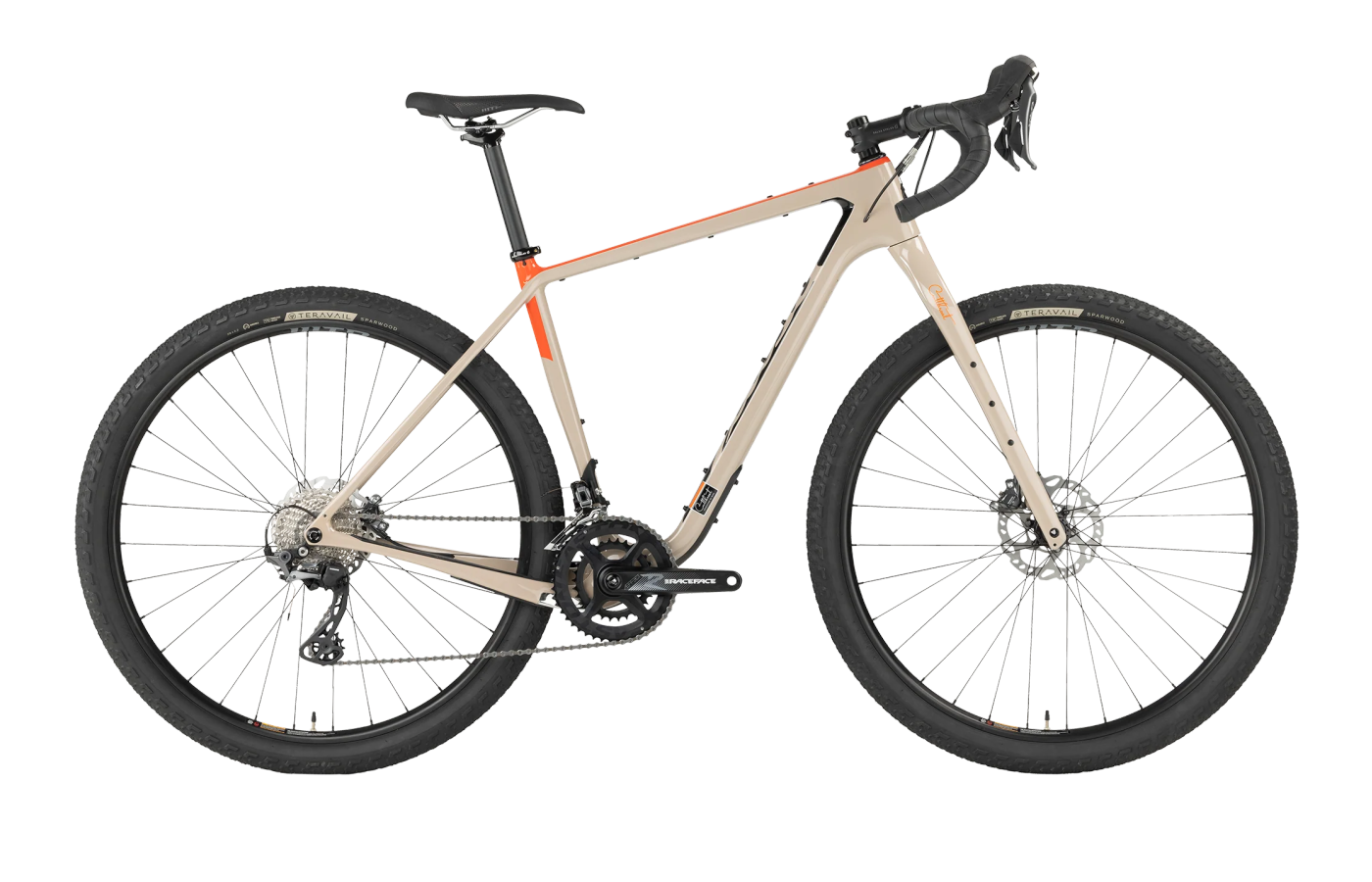
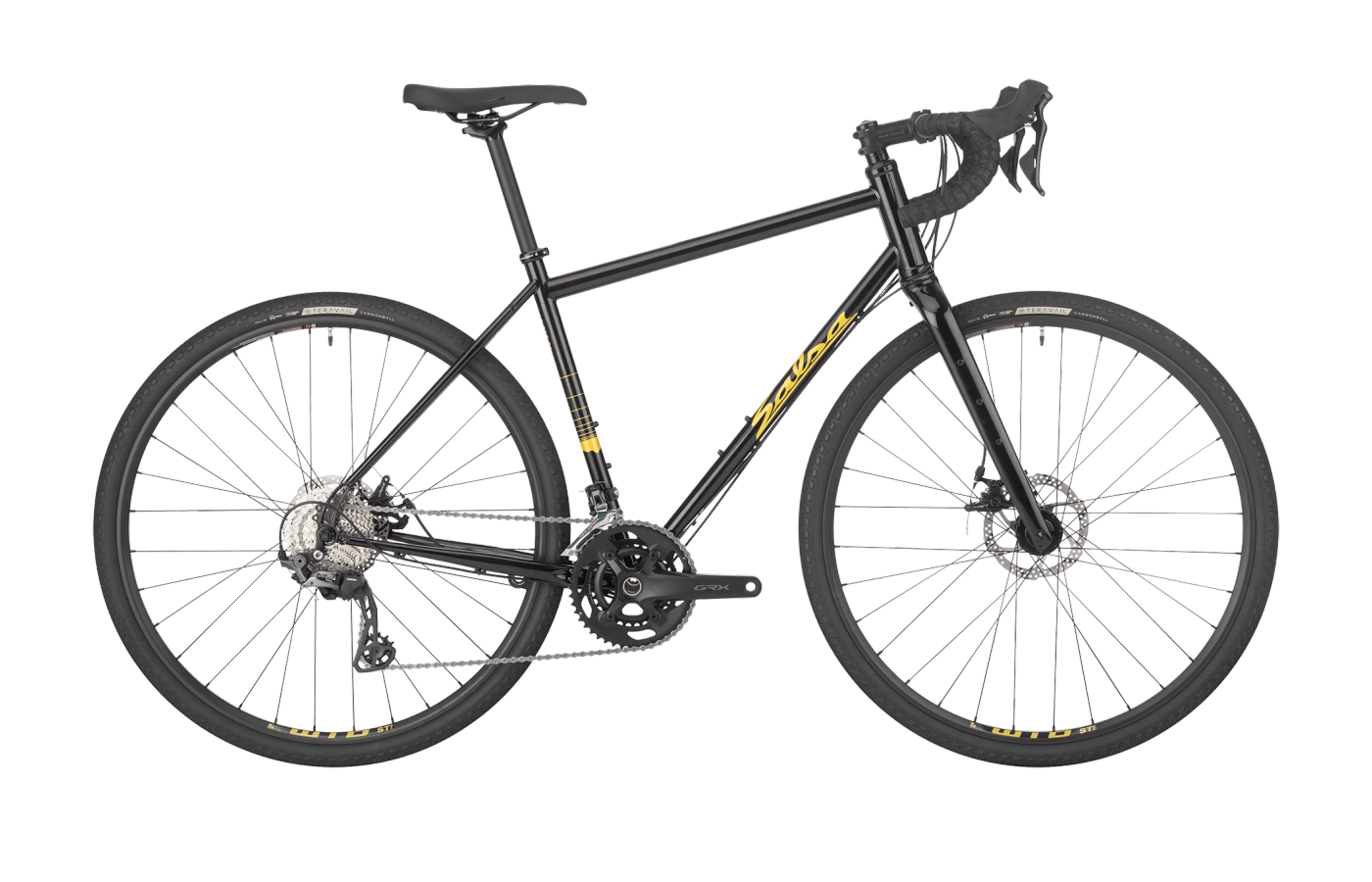
Same brand, opposite answers to 'what is adventure?'
The Cutthroat is a carbon drop-bar mountain bike built for the Tour Divide. The Vaya is a steel tourer built for the commute, the coffee shop, and the light bikepack.
Cutthroat
- Drop-bar MTB capability — 29 x 2.4" clearance, 483 mm a-c fork suspension-corrected for a 100 mm 29er upgrade.
- Proven ultra-endurance platform — purpose-built for the Tour Divide with Class 5 VRS damping and a 32%-more-compliant V2 fork.
- 20+ cargo mounts including three-pack mounts on each fork leg and a direct-mount frame bag that bolts on strap-free.
- Floor price $3,499 — nearly double the Vaya's MSRP.
- Press-fit BB92 bottom bracket draws persistent criticism for creak potential, though most reviewers on test didn't experience it.
Vaya
- Steel compliance, cheaper — triple-butted CroMoly delivers a "smooth and buttery" ride at $2,749, $750 under the cheapest complete Cutthroat.
- All-day touring geometry — 72.5° seat tube angle and tall 628 mm stack (size 57) keep the upper body relaxed on 50+ mile days.
- Loaded composure — reviewer reported the Vaya "took in stride" 22 lb of bikepacking gear without feeling vague.
- Tire clearance caps at 45 mm and rims are narrow (WTB ST i19) — not a rough-trail bike.
- Mechanical TRP Spyre-C brakes require more lever effort than the hydraulic discs on every current Cutthroat build.
Editor’s analysis
Both wear the Salsa badge. Only one is trying to win a 2,700-mile race.
The Salsa Cutthroat and Salsa Vaya look like cousins on a website grid — drop bars, dirt-ready tires, Cowchipper/Cowbell cockpit — and share almost nothing under the paint. The Cutthroat is a high-modulus carbon frame designed around a 29-inch mountain bike wheel, with a 483 mm axle-to-crown fork that's suspension-corrected for a 100 mm travel 29er. The Vaya is triple-butted CroMoly steel on 700c wheels with a rigid Waxwing fork and 38 mm tires. They're aimed at two different riders who happen to like the same brand.
The Cutthroat's geometry gives away the intent. A 69-degree head tube angle, a 1,090 mm wheelbase at size 56, and clearance for 29 x 2.4" rubber — these aren't gravel-bike numbers, they're drop-bar XC numbers. Reviewers keep reaching for the same line: "the mountain biker's road bike." It's engineered to stay planted while you bomb fist-size rocks on day eight of the Tour Divide with four bottles and a frame bag strapped on. Comfort comes from Salsa's Class 5 VRS — thin outward-curving seatstays, inward-flexing chainstays — plus a V2 fork Salsa claims is 32% more compliant than the V1.
The Vaya is calmer and simpler. 71.5-degree head tube angle at size 57, 1,053 mm wheelbase, 38 mm Teravail Cannonball tires on narrow WTB ST i19 rims. It's designed to soak up a 50-mile mixed-surface day without complaint and carry 20+ pounds of bikepacking kit without feeling vague. Steel does the compliance work the Cutthroat asks carbon to do, and does it for $2,749 — roughly $750 less than the cheapest complete Cutthroat. The one review in the context captures it: "smooth and buttery," "not the most responsive bike out there, but it's quick enough from the start-line for what I need."
Put another way: the Cutthroat wants to go fast on terrain that scares most gravel bikes. The Vaya wants to go comfortably on terrain most gravel bikes already handle. If the word "adventure" means a 4,000 km self-supported race for you, one bike is the obvious answer. If it means a loaded S24O to the state park and a wet Tuesday commute, it's the other.
Where the builds differ.
Comparing our editor's-pick builds side-by-side. Winners highlighted row-by-row — lower price and weight, and the better-spec component, each mark a point.
Build variants & pricing
Vaya is sold as a single GRX 600 build at $2,749. The Cutthroat spans five builds from $3,499 (GRX 810 2x) to $7,999 (Force XO AXS Transmission).
Prices are current US MSRP. Because the Vaya exists at only one spec, we've picked the Cutthroat's nearest tier-match — the GRX 810 2x — for the spec table. It's a real $750 gap at the lowest shared tier, which is information about the platforms, not noise: a carbon MTB-gravel frame costs more to build than a steel tourer.
How they fit, how they steer.
Cutthroat at 56, Vaya at 57 — the fit-picked sizes for each bike. The Vaya sits 8.5 mm taller and 13 mm shorter in reach with a 2.5° steeper head tube and a 1.75° slacker seat tube; the Cutthroat's wheelbase is 37 mm longer and it runs 5 mm shorter chainstays. One bike is pitched forward for power, the other pitched back for cruising.
Which size should I buy?
Size recommendations based on stack, reach, and effective top tube. The Cutthroat runs in even cm steps (52/54/56/58/60); the Vaya mixes metric jumps (49.5/52/54/55/57/59.5). Don't try to read across the label numbers — look at the stack/reach.
→These are starting points. Flexibility, riding style, and preferred position all shift the answer — if you’re between sizes, a professional fit beats a chart.
What the magazines said.
Published reviews from trusted cycling outlets. Click through for the full write-up.
Which one should you buy?
If your rides measure in hundreds of miles and fire-road climbs, get the Cutthroat. If they measure in hours and you want one bike for commute plus weekend gravel, get the Vaya.
Cutthroat
If you're planning the Tour Divide, a Baja Divide, or anything where the route has more hike-a-bike than tarmac, this is the bike. The 29 x 2.4" clearance and suspension-corrected fork mean you can keep upgrading toward a fully rigid XC rig without outgrowing the frame.
Vaya
If your riding is commute-plus-rail-trail plus the occasional overnighter, the Vaya is hard to beat at $2,749. Steel compliance, relaxed fit, and a gear range built for a loaded climb rather than a singletrack descent.
Questions buyers actually ask.
Short answers to the things we get emailed about most often.
01Can the Vaya do what the Cutthroat does?
Not really. The Vaya maxes out at a 45 mm tire on WTB ST i19 rims (19 mm internal), and its geometry and clearance are built around smoother gravel and pavement. The Cutthroat fits 29 x 2.4" tires, has 445 mm MTB-length chainstays, and is stable enough for chunky B roads and mild singletrack.
If your idea of adventure involves rocks bigger than a fist, the Vaya will protest and the Cutthroat won't notice.
02Can the Cutthroat do what the Vaya does?
Yes — but it's overkill, and it costs more. The Cutthroat's entry price is $3,499 vs. the Vaya's $2,749, and you'd be paying for 29er MTB clearance, VRS damping, and a suspension-corrected fork you're not using on your morning commute.
If you'll never load it for a multi-day race and never take it beyond smooth gravel, the Vaya's steel ride and simpler spec are the better match.
03How much tire can each fit?
Cutthroat: 29 x 2.4" officially (61 mm). Some reviewers report the V2 fork will physically clear up to 2.8".
Vaya: 45 mm officially. Stock tire is a 38 mm Teravail Cannonball on a 19 mm internal rim, so bigger tires are possible but the narrow rims limit how wide you'd want to go before the tire profile turns lightbulb-shaped.
04Steel vs. carbon — which rides smoother?
Different kinds of smooth. The Vaya's triple-butted CroMoly frame is "smooth and buttery" in the classic steel sense — it takes the edge off road chatter and small impacts through material compliance.
The Cutthroat does it through engineering: Class 5 VRS seat- and chainstays that flex like leaf springs, plus a V2 fork Salsa claims is 32% more compliant than the V1. On rough gravel the Cutthroat is measurably calmer because it's engineered for that terrain; on a chip-seal commute the Vaya matches it for less money.
05Can I fit a suspension fork on the Cutthroat?
Yes — it's one of the platform's deliberate features. The stock Cutthroat Carbon Deluxe V2 fork has a 483 mm axle-to-crown length, which matches the sagged a-c of a 100 mm travel 29er fork (e.g., a Fox 32 SC or RockShox SID). Swapping to suspension won't distort the geometry.
The Vaya is not suspension-corrected. Its Waxwing steel fork is purpose-built for this frame and isn't intended to be swapped for travel.
06Which has better brakes?
The Cutthroat, across the board. Every current Cutthroat build uses hydraulic disc brakes — Shimano GRX hydraulics on the GRX-equipped builds and SRAM AXS hydraulic calipers on the Rival/Apex/Force builds.
The Vaya ships with TRP Spyre-C mechanical discs. They're reliable and easy to service in the field — a genuine bikepacking argument — but lever effort and modulation are meaningfully behind a hydraulic system.
07Which is a better platform to upgrade over time?
The Cutthroat, if you're willing to spend. The frame scales from a $3,499 GRX 810 2x build up to a $7,999 Force XO AXS Transmission build, and the 20+ mounts, 29er MTB clearance, and suspension correction mean there's a long upgrade path — new wheels, a dropper, eventually a suspension fork.
The Vaya is sold as a single complete bike. The steel frame is durable and the external cable routing is genuinely easier to service, but it's not sold as a frameset — the platform is "ride this bike," not "build your dream bike."
08Which is the better first 'one-bike' quiver?
Depends on what the other bike would have been. If you already own a road bike and want one dirt-capable companion for everything rough, the Cutthroat is the one-quiver answer — it'll do gravel, bikepacking, singletrack, and loaded touring.
If you don't own anything yet and want a single bike for commute, paved group rides, rail trails, and weekend credit-card tours, the Vaya is more versatile day-to-day and you'll never feel the Cutthroat's extra capability on the streets you actually ride.
Similar bikes
If your priorities don’t map cleanly onto either of these, one of these adjacent bikes probably fits better.

Fargo
The Salsa Fargo is the Cutthroat's steel sibling — same adventure-gravel intent, same Salsa cargo philosophy, but in CroMoly with a slightly more relaxed posture. Pick the Fargo if you love the Cutthroat's ethos but want steel compliance and a friendlier price.
Compare →
Sutra
The Kona Sutra is the dedicated steel tourer the Vaya flirts with being — racks, fenders, bar-end shifters, the whole world-tour package. If you want the Vaya's character dialed harder toward loaded multi-week travel, the Sutra is the one.
Compare →
Checkpoint
The Trek Checkpoint splits the difference — a modern carbon gravel bike with IsoSpeed compliance, generous mounts, and a geometry that's less aggressive than the Cutthroat and more capable than the Vaya. A good answer for riders who want one bike and don't love either extreme.
Compare →