Terrel
vsStigmata
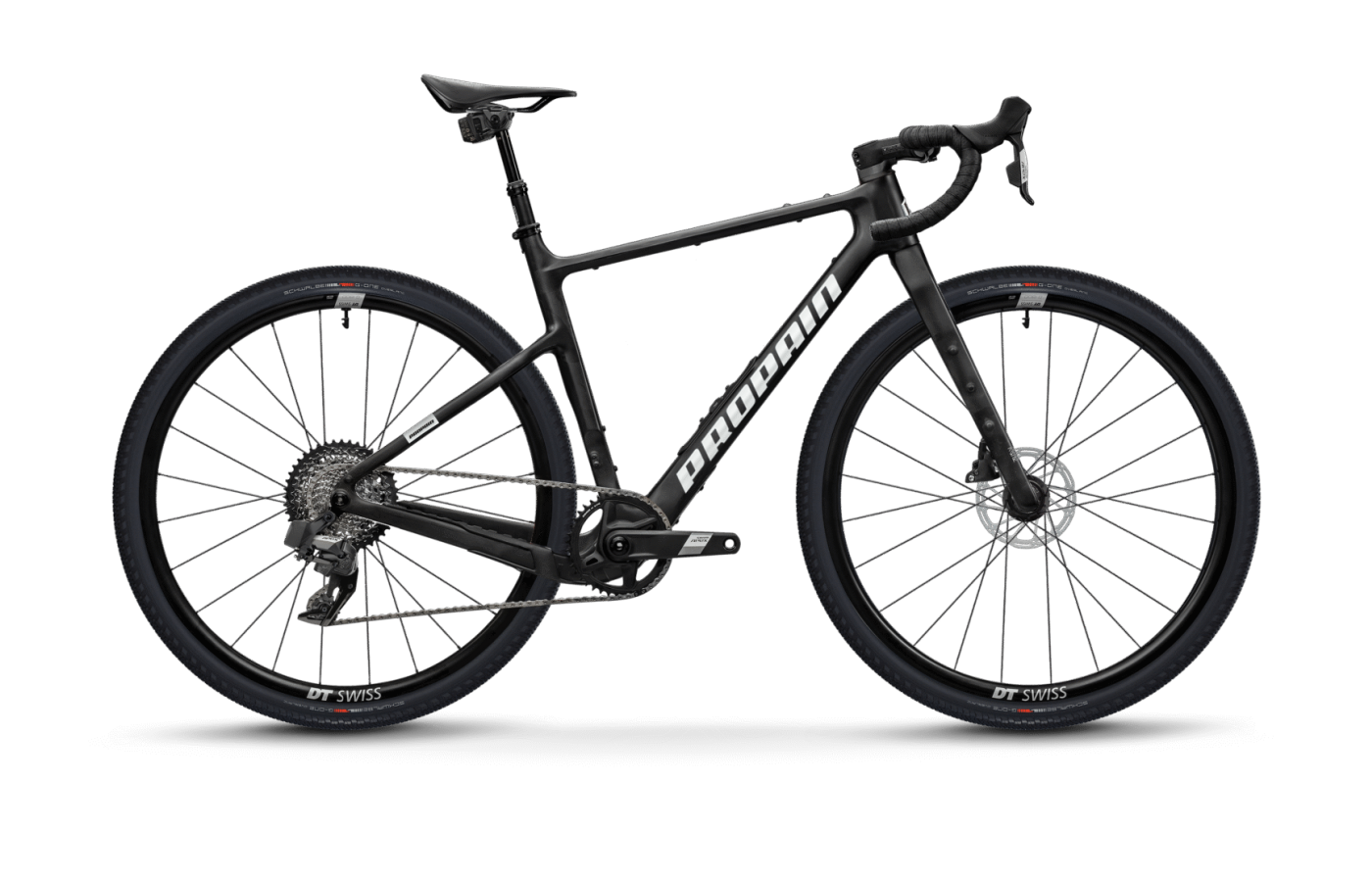
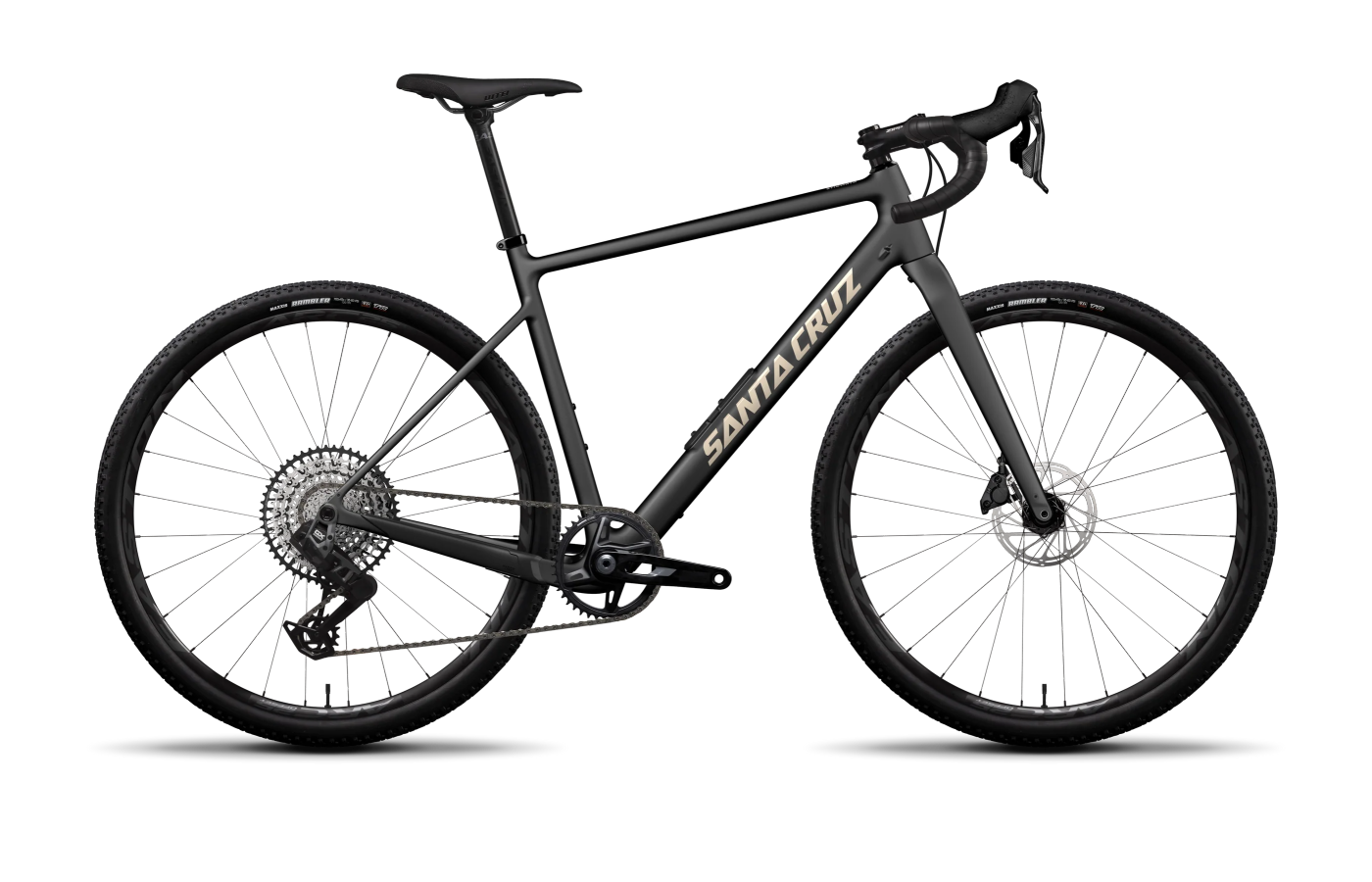
Two MTB-bred gravel bikes, two angles on the same idea.
The Propain Terrel is a hardtail mountain biker's first drop bar, built around a configurator. The Stigmata is the gravel bike Santa Cruz built once they stopped pretending it was a cyclocross race rig.
Terrel
- Best-in-class configurability — pick your fork (rigid or suspension), wheels, drivetrain, dropper, and bar at checkout.
- Direct-to-consumer pricing starts at $2,899 for a full carbon frame with mechanical Apex — undercuts most carbon competition.
- Suspension-corrected geometry from day one — bolt on a suspension fork later without breaking the handling.
- Stock DT Swiss G1800 alloy wheels are heavy enough that reviewers call out dampened acceleration.
- Only two factory builds before configuration — no "one down from flagship" upgrade path within the lineup.
Stigmata
- Engineered frame compliance — Santa Cruz cut lateral and BB stiffness 10–12% vs. Gen 3 specifically to soften the ride.
- Mechanic-friendly standards throughout — threaded BSA bottom bracket, 27.2 mm round seatpost, UDH, no headset-routed cables.
- Lifetime frame and Reserve wheel warranty — same coverage Santa Cruz puts on its mountain bikes.
- $4,149 entry price for a mechanical build — value-shoppers will get more spec elsewhere.
- Frame is roughly 120 g heavier than Gen 3 and 9–9.5 kg complete in suspension trim — this is not a sub-8 kg race bike.
Editor’s analysis
Same instinct — borrow from mountain biking, point the front end at things gravel bikes shouldn't ride. Different execution: one is a configurable trail bike with drop bars, the other is a finished one.
Both brands have mountain bike DNA in the marketing copy and on the bike. The Propain Terrel runs a 70.5° head tube angle in size M, 435 mm chainstays, suspension-corrected geometry for an optional fork, and clearance for a 50 mm tire. The Santa Cruz Stigmata 4 sits 1° slacker (69.5°), keeps its chainstays a touch shorter at 423 mm, and matches the 50 mm clearance. Both ship with internal downtube storage. Both are carbon. Both want to be your underbiking weapon.
Where they split is in how you buy the bike. The Propain Terrel is sold through a configurator — pick your fork (rigid or RockShox suspension), wheels, drivetrain, dropper, bar shape — and ships built to your spec. The whole range is two carbon trims ($2,899 mechanical Apex, $3,999 Apex/GX AXS Mullet) before customization. The Stigmata is sold the way Santa Cruz sells everything: five fixed builds from $4,149 (Apex mechanical) to $7,549 (Force AXS Rudy with a 40 mm suspension fork). Apples-to-apples on out-the-door electronic-shifting carbon, the Terrel undercuts the Stigmata's Rival AXS by about $1,050 — and lets you mullet it from the start.
Ride-feel reviews land in roughly the same place. Reviewers describe the Propain Terrel as stable, MTB-confident, deliberately not explosive — Granfondo calls it "solid but not explosive," with the rigid carbon fork transmitting a notable amount of trail chatter. Acceleration is held back by the stock DT Swiss G1800 alloy wheels. The Santa Cruz Stigmata is also stable and confidence-inspiring, but Santa Cruz deliberately dropped frame stiffness 10–12% versus the Gen 3 Stigmata, so the chassis itself takes the edge off. With a Reverb dropper and a 40 mm RockShox Rudy fork, multiple reviewers describe the Stigmata as a "trail surfer" that brakes later and tracks better in chunder than any rigid gravel bike has a right to.
Put another way: the Propain Terrel asks you to spec your way into a trail-capable gravel rig. The Santa Cruz Stigmata is one Santa Cruz already built. If you like configurators, value, and the idea that an aluminum-wheel base bike is the start of a project, Propain. If you'd rather hand over more money for a finished bike with a lifetime frame warranty, Santa Cruz.
Where the builds differ.
Comparing our editor's-pick builds side-by-side. Winners highlighted row-by-row — lower price and weight, and the better-spec component, each mark a point.
Build variants & pricing
Two factory builds on the Propain (configurable from there); five fixed builds on the Stigmata, $4,149 to $7,549.
The lineups don't overlap cleanly. Propain's $3,999 Apex/GX AXS Mullet is the top factory build but pairs Apex shifters with a GX rear — the closest Stigmata is the $5,049 Rival AXS, which is one drivetrain tier up but still mid-range AXS. The Stigmata Force AXS RSV Rudy ($7,549) has no equivalent in the Terrel range without configuring up.
How they fit, how they steer.
Sized for the same rider on each bike. The Propain Terrel XS sits 14 mm shorter in stack and 8 mm shorter in reach than the Stigmata SM, with a noticeably steeper 74.3° seat tube angle and a 69.5° head angle that matches the Stigmata exactly at this size. Wheelbase is within 6 mm.
Which size should I buy?
The Stigmata runs six sizes (XS through XXL) versus five on the Terrel — Stigmata extends both shorter and taller at the ends of the range.
→These are starting points. Flexibility, riding style, and preferred position all shift the answer — if you’re between sizes, a professional fit beats a chart.
What the magazines said.
Published reviews from trusted cycling outlets. Click through for the full write-up.
Which one should you buy?
If you want to build the bike yourself and pay less, get the Propain Terrel. If you want a finished bike with a lifetime warranty and a softer carbon ride, get the Santa Cruz Stigmata.
Terrel
Buy the Propain Terrel if you want a carbon frame for under $4,000, you have opinions about your build kit, and you'd rather spec a mullet drivetrain or suspension fork at checkout than pay for components you'll swap. Particularly strong for mountain bikers crossing into drop bars who want the geometry to feel familiar.
Stigmata
Buy the Santa Cruz Stigmata if you want one finished bike for hard, technical gravel and the occasional singletrack day, you value mechanic-friendly standards (threaded BB, round seatpost, no headset-routed cables), and a lifetime frame warranty matters to you. Especially good if you'll eventually hang a 40 mm suspension fork on the front.
Questions buyers actually ask.
Short answers to the things we get emailed about most often.
01Which has more tire clearance?
Both clear 50 mm officially. The Propain Terrel ships stock with 50 mm Schwalbe G-One Overlands on the Signature Spec builds — a true measurement of the spec sheet. The Stigmata 4 also officially clears 50 mm in 1x configurations, though stock builds come with 45 mm Maxxis Ramblers.
If you're choosing on tire clearance alone, it's a tie.
02Can I run a suspension fork on either?
Yes — both are explicitly suspension-corrected for a 40 mm travel gravel fork like the RockShox Rudy XPLR.
The difference is at purchase: Propain's configurator lets you order the Terrel with a suspension fork from day one. Santa Cruz only offers two of its five Stigmata builds (Rival 1x AXS Rudy at $5,049 and Force 1x AXS RSV Rudy at $7,549) with the fork pre-installed; the others require a separate fork purchase later.
03How do the geometries compare for off-road handling?
Closer than you'd expect, with one important difference. At their fit-picked sizes, both run a 69.5° head tube angle — exact match. The Stigmata has slightly shorter chainstays (423 mm vs. 435 mm on the Terrel), making it a touch more agile in tight corners. The Terrel runs a longer wheelbase at most sizes, biasing slightly toward straight-line stability.
In practice both are stable, MTB-leaning gravel bikes — neither will feel twitchy.
04Why is the Propain so much cheaper?
Direct-to-consumer. Propain sells from its own website without dealer markup, the same model Canyon and YT use. The carbon frame, the manufacturing, and the basic component spec are competitive — what you save is the dealer margin.
The trade is no in-person test ride, no local shop relationship, and you're responsible for final assembly out of the box (or finding a shop that'll do it for you).
05How serviceable are these for a home mechanic?
The Stigmata is a standout for home maintenance. Threaded 68 mm BSA bottom bracket, 27.2 mm round seatpost with an external collar, UDH derailleur hanger, and crucially — internal cables are routed through the side of the head tube, not through the headset. Stem and bar swaps don't require a brake bleed.
The Propain Terrel also uses a T47 threaded bottom bracket and UDH, and the cable routing is described as semi-internal but not headset-routed. Both are well above average for modern carbon gravel bikes; the Stigmata edges it on standardization.
06Which is better for bikepacking?
Both have downtube storage hatches with included tool wallets. The Propain Terrel has more dedicated bag mounts on the frame, fork, and downtube — Just Ride Bikes counted four bolts for a frame bag plus a third bottle cage mount on the downtube.
The Stigmata doesn't have rack mounts and relies on strap-on bags. Reviewers note one quirk on the Terrel: a Just Ride Bikes friend reported water entering the frame after a hard rain, with Propain disputing the report. Worth checking the drainage holes if you ride wet.
07What about climbing performance?
Neither is a climber's bike. Both are 9 kg+ in their suspension-equipped trim, both run upright positions, and both have slack head angles that can wander on steep, slow technical climbs.
The Propain Terrel has a steep 73.5° seat angle that reviewers called efficient for seated efforts. The Stigmata runs a 74° seat angle — slightly steeper still. On long fire-road climbs they're comparable; on steep punchy stuff a lighter race bike will leave both behind.
08What's the warranty difference?
Santa Cruz offers a lifetime warranty on the Stigmata frame and a separate lifetime warranty on Reserve carbon wheels — the same coverage they put on their mountain bikes. Propain's stated warranty period is shorter and is filed via their direct-to-consumer support channel.
If long-term frame coverage is a priority, the Stigmata wins this specific category outright.
Similar bikes
If your priorities don’t map cleanly onto either of these, one of these adjacent bikes probably fits better.
Szepter
Another direct-to-consumer take on progressive gravel — often shipped with a suspension fork and dropper from the factory. The closest spiritual sibling to both bikes here, with maximum off-road bias and DTC pricing.
Compare →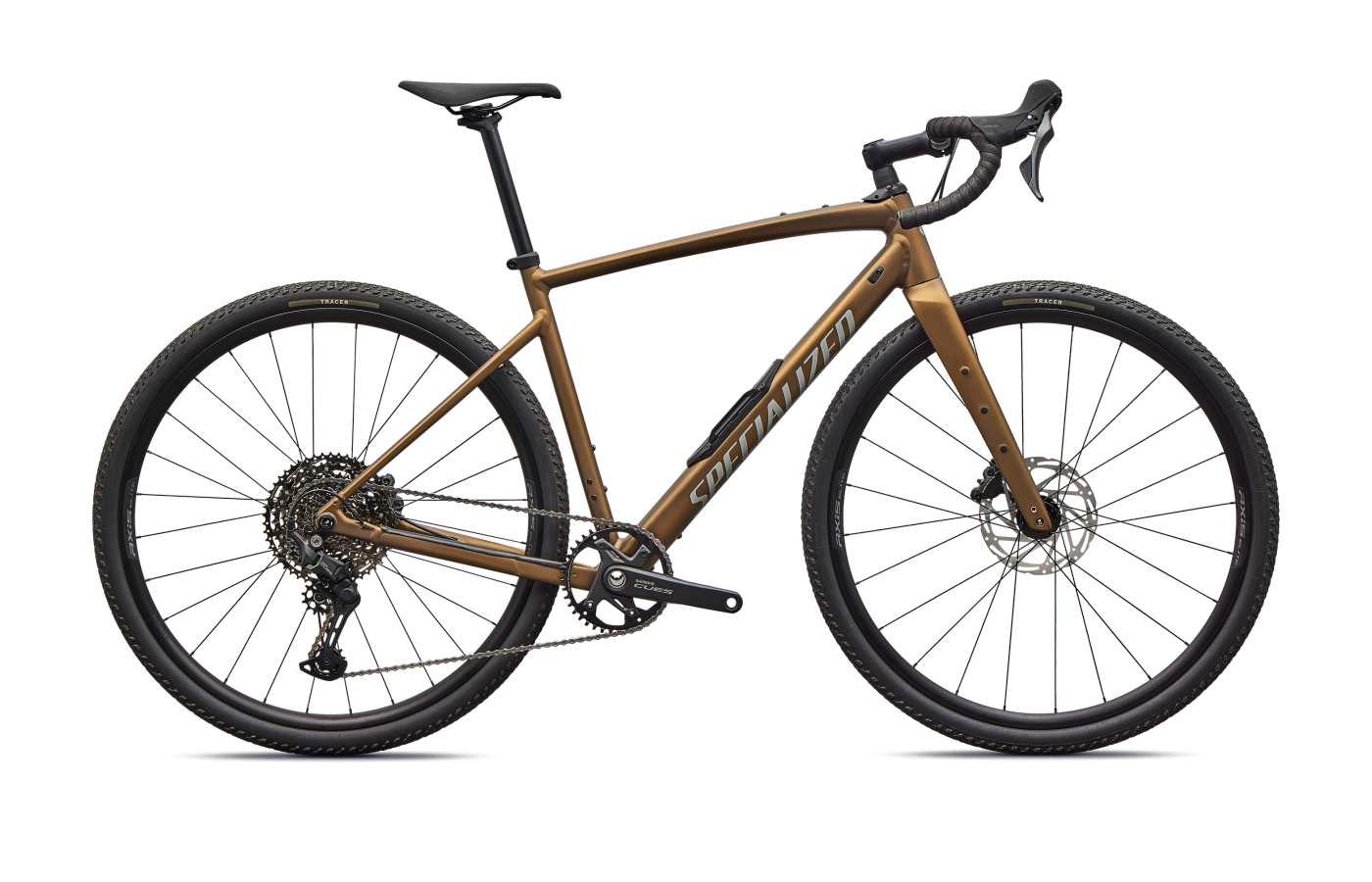
Diverge
If you like the Stigmata's compliance idea but want a different mechanism, the Specialized Diverge uses the Future Shock head-tube damper for 20 mm of travel without a suspension fork. Same 50 mm-class clearance, slightly less aggressive geometry.
Compare →Grizl
The most direct alternative to the Propain Terrel — same DTC value pitch, even more bag mounts and bikepacking utility, more traditional gravel geometry without the steep MTB-influence at the front end.
Compare →