Hugene
vsJeffsy
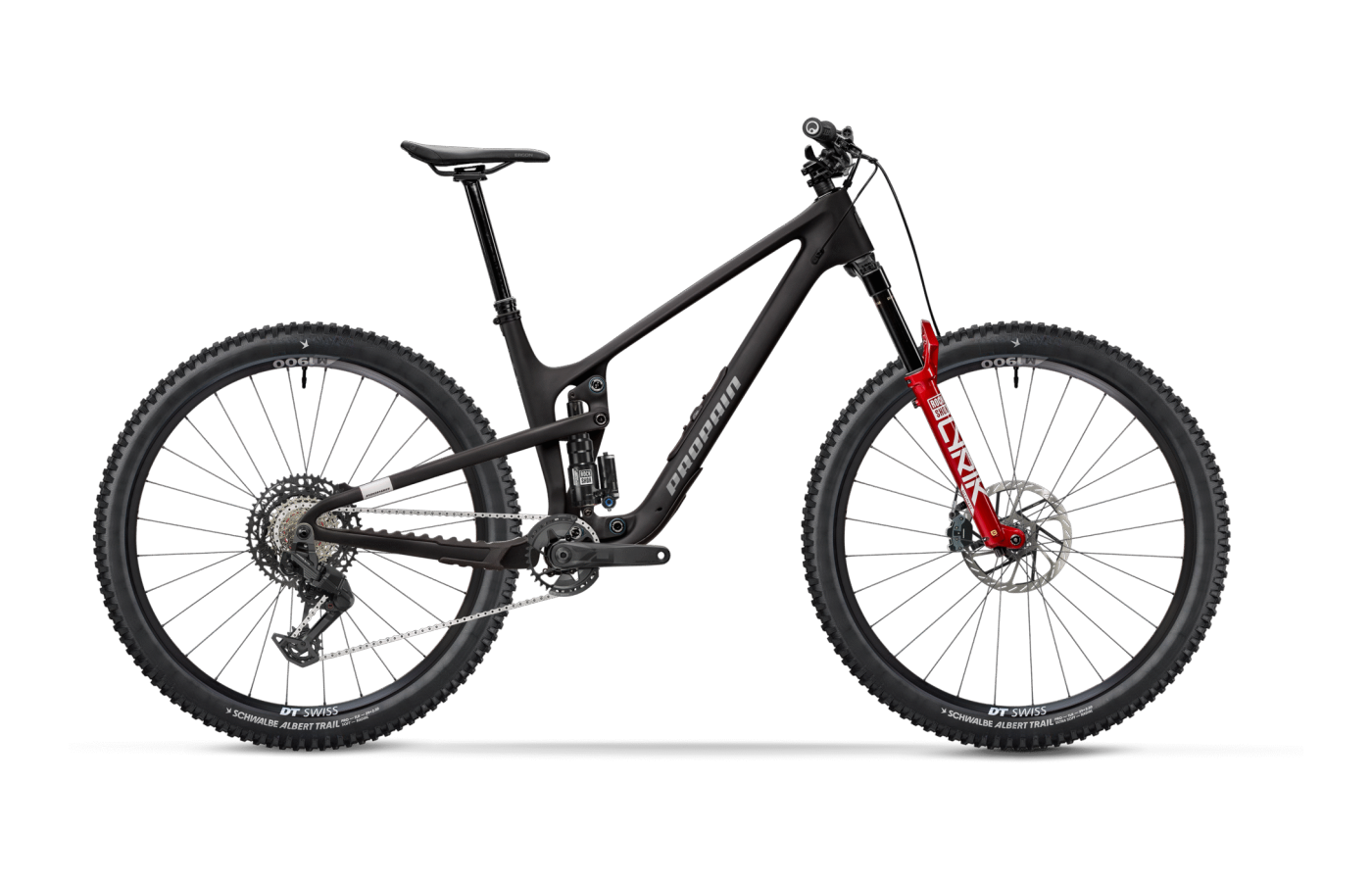
Two short-travel trail bikes, two ride personalities.
The Propain Hugene is a 130/140 mm carbon ripper built to pop, pump, and punch above its weight. The YT Jeffsy is a 145/150 mm all-mountain generalist tuned to swallow chatter and stay calm.
Hugene
- Lively, poppy ride — high anti-squat and a progressive kinematic make it pump terrain for free speed.
- Modern, stretched geometry — 64.8 degree head angle and 445 mm chainstays balance stability with agility.
- Deep configurator — Propain's online builder lets you swap suspension, drivetrain, brakes, and wheels to dial in the exact bike.
- Only two pre-set builds in the US lineup (Signature Spec 1 at $3,999, Signature Spec 2 at $5,299) — narrower out-of-the-box choice than YT.
- Rear suspension reaches its limits on sustained rough descents; not a mini-enduro despite the burly tire spec.
Jeffsy
- Composed at speed — supple V4L initial stroke and a quiet chassis blur trail chatter into a soft hum.
- Wide build range — six builds from $2,999 (Core 1 AL) to $6,299 (Core 4 CF), including both alloy and carbon options.
- Integrated STASH downtube storage on the carbon Core 3, 4 builds — well-sealed and rattle-free per multiple reviews.
- Can feel skittish at the absolute limit on steep, fast terrain — some reviewers wished for a slacker head angle than 65 degrees.
- Heavier in the same trim — the Core 3 CF is 15.8 kg vs the Hugene's roughly 14.5–15 kg in comparable builds.
Editor’s analysis
Same direct-to-consumer playbook, same money, similar wheels and forks — but the bikes underneath have opposite trail manners.
On paper these two land in the same DTC mid-travel bracket. Both run carbon mainframes, both ship the budget tier of SRAM's T-Type Transmission at $5,299, and both lean on a RockShox Lyrik Ultimate up front with a Super Deluxe Ultimate out back. Spend any time reading the reviews, though, and the design intent diverges almost immediately.
The Propain Hugene is the unapologetic short-travel specialist. Propain actually cut travel for this generation — 130 mm rear and 140 mm front, down 10 mm at each end from the previous Hugene — and chose a high-anti-squat, solidly progressive Pro10 kinematic to match. The result is a bike reviewers call "snappy," "carvalicious," and eager to launch off every kicker. It rewards an active rider and pumps speed out of flow trails. The trade-off shows up on sustained chunder: the rear can feel "juddery" and "not particularly forgiving" once the trail gets genuinely rough.
The YT Jeffsy plays a different game. It carries 145 mm rear and a 150 mm fork, runs a softer initial stroke on the V4L linkage, and reviewers consistently describe the chassis as "pillowy," "isolated," and "quiet" — bumps blur into a constant hum rather than discrete hits. The 65 degree head angle and short 437 mm chainstays (sizes S–L) keep it nimble in tight corners, but the Jeffsy will out-descend the Hugene when the trail turns relentless. The cost is a bike that takes more rider input to feel "poppy," and one that needs the climb switch on smooth fire roads to stop wallowing.
Put another way: the Hugene is the bike you buy when most of your trails are flowy, jumpy, and pedal-heavy and you want to feel every input back. The Jeffsy is the bike you buy when you want one rig that can pedal up an 8,000 vert day, then survive a bike-park lap on the way down.
Where the builds differ.
Comparing our editor's-pick builds side-by-side. Winners highlighted row-by-row — lower price and weight, and the better-spec component, each mark a point.
Build variants & pricing
Both editor's picks land at exactly $5,299 with carbon frames, a Lyrik Ultimate fork, and Super Deluxe Ultimate shock — the cleanest apples-to-apples row on the page.
Prices are current US MSRP from each brand's direct site. The Jeffsy lineup runs deeper at the budget end with two alloy builds starting at $2,999 and $3,699; Propain only offers two pre-configured builds in the US, but the configurator opens up extensive component substitution from the $3,999 Signature Spec 1 baseline.
How they fit, how they steer.
Both at size M — the fit-picked size for a 5'8" rider on each. The Hugene runs 1 mm more reach (458 vs 455) and 1 mm more stack (621 vs 620), a slacker 64.8 degree head angle vs 65 degrees, and 8 mm longer chainstays (445 vs 437). On paper the Hugene is the slightly more stable, longer-wheelbase chassis; the Jeffsy is the tighter, quicker-turning one.
Which size should I buy?
Size recommendations use stack, reach, and effective top tube. The Jeffsy reaches further on the top end with XL and XXL frames; the Hugene tops out at XL.
→These are starting points. Flexibility, riding style, and preferred position all shift the answer — if you’re between sizes, a professional fit beats a chart.
What the magazines said.
Published reviews from trusted cycling outlets. Click through for the full write-up.
Which one should you buy?
If you want a poppy short-travel specialist for flow trails and pedal-heavy rides, get the Hugene. If you want one bike that climbs all day and still survives the gnar, get the Jeffsy.
Hugene
If your trails reward pumping, jumping, and railing berms more than they punish you with sustained chunder, the Hugene's lively suspension and snappy kinematic will make you faster without you realizing it. The configurator is also the best in the segment if you actually want to spec the bike yourself.
Jeffsy
If you want one bike for everything from 8,000-vert epics to bike-park laps to light enduro, the Jeffsy's calmer chassis, deeper travel, and broader build ladder make it the safer all-rounder. The supple suspension also flatters less-aggressive riders on chunky descents.
Questions buyers actually ask.
Short answers to the things we get emailed about most often.
01Which is faster on flowy trails?
The Propain Hugene, in most cases. Reviewers consistently describe its Pro10 suspension as "snappy," "poppy," and quick to generate speed by pumping rollers and berms — the high anti-squat (well above 100% across most of the travel) and progressive leverage curve are tuned for an active rider who wants the bike to respond to inputs.
The Jeffsy can be tuned for a similar feel by adding volume spacers and a few clicks of low-speed compression, but stock it sits softer in its travel and asks more of the rider to extract that pop.
02Which descends better on rough, sustained terrain?
The YT Jeffsy. With 145 mm rear and a 150 mm fork — 15 mm and 10 mm more than the Hugene at each end — and a more supple initial stroke, the Jeffsy is consistently described as "pillowy," "isolated," and quiet on chunky descents. Pinkbike, Bike Perfect, and The Radavist all noted how the chassis muffles trail chatter into a continuous hum.
The Hugene is praised for punching above its weight, but the same reviews flag that its rear suspension is "not particularly forgiving when things get rough" and that the frame can feel stiff on long, abusive descents — it's not a mini-enduro and isn't trying to be.
03Which climbs better?
Both climb well, but in different ways. The Hugene's high-anti-squat Pro10 platform feels firm and efficient under power — most reviewers said they didn't reach for a climb switch even on long fire-road grinds. The trade-off is some pedal feedback and a slightly less planted feel on bumpy seated climbs.
The Jeffsy's V4L is more active and traction-focused on technical climbs (the steep ~78 degree effective seat tube angle keeps you centered), but reviewers like Bike Perfect noted it sits deeper in its travel on smooth surfaces and benefits from the climb switch on fire roads.
The Jeffsy is also heavier — 15.8 kg for the Core 3 CF vs roughly 14.5–15 kg for the Hugene Signature Spec 2 — which favors the Hugene on long sustained climbs.
04How do the editor's-pick builds compare on spec?
Closely. Both editor's picks land at exactly $5,299, both run a carbon mainframe, both use a RockShox Lyrik Ultimate fork and Super Deluxe Ultimate shock, and both ship the budget tier of SRAM's T-Type Transmission (Eagle 70 on the Hugene, S1000 on the Jeffsy — both cable-actuated, both T-Type compatible).
The main differences: the Hugene rolls on DT Swiss M 1900 wheels, the Jeffsy on Crankbrothers Synthesis Enduro Alloy, which several reviewers credited for the Jeffsy's compliant feel. Tires also differ — the Jeffsy ships an aggressive Maxxis Minion DHF/DHR II combo with EXO+ casing, the Hugene a Schwalbe Radial setup.
05What size should I buy at 5'8" / 173 cm?
Size M on both bikes, per our fit algorithm. The reach numbers are essentially identical at size M (458 mm Hugene, 455 mm Jeffsy), as is the stack (621 vs 620 mm).
The Hugene runs the same 445 mm chainstay across all sizes; the Jeffsy uses size-specific stays (437 mm on S–L, 442 mm on XL–XXL), which keeps the front-to-rear balance more consistent across the size range. If you're between sizes, the Jeffsy's flip chip also gives you a small geometry adjustment lever the Hugene doesn't offer.
06Carbon or alloy — and does it matter?
On the Hugene, you don't have a choice — it's carbon-only (claimed 2.8 kg frame for size M). Propain's pitch is that the carbon layup is what enables the relatively light, lively feel given the progressive kinematic.
The Jeffsy lineup splits: Core 1 and Core 2 are alloy ($2,999 and $3,699), Core 3 / Core 4 / Core 3 AL exist in both materials. Reviewers actually flagged a couple of points in favor of the alloy Jeffsys: a threaded BSA bottom bracket (vs Press-Fit on carbon) and a finish that's less prone to scuffing than the matte black carbon. If long-term maintenance simplicity matters, the alloy Jeffsy is a credible pick.
07Are the rear travel figures comparable?
Not quite. The Hugene runs 130 mm rear / 140 mm front, while the Jeffsy runs 145 mm rear / 150 mm front — so the Jeffsy carries 15 mm more travel out back and 10 mm more up front.
That said, both bikes are widely described as punching above their travel: the Hugene because of its progressive ramp-up that resists bottom-out, the Jeffsy because of its pillowy initial stroke that uses the travel it has very effectively. The Hugene's effective working envelope is closer to a 140 mm bike than a 130 mm one for most riders; the Jeffsy's leans toward the longer-travel end of the trail bracket.
08How is direct-to-consumer ownership on these brands?
Both are mature DTC operators. YT has expanded with "YT Mill" service centers in the UK and US that significantly reduced the historical "overseas warranty" anxiety, per Off-Road.cc. The bikes ship with a five-year frame warranty and an in-box "Me First" toolkit (torque wrench, shock pump, assembly tools).
Propain's differentiator is its configurator — you can swap suspension, drivetrain, brakes, wheels, and cosmetics before the bike ships, which means fewer immediate aftermarket purchases. Both brands sell direct only; neither has US dealer demos in most markets, so you're committing without a test ride.
Similar bikes
If your priorities don’t map cleanly onto either of these, one of these adjacent bikes probably fits better.
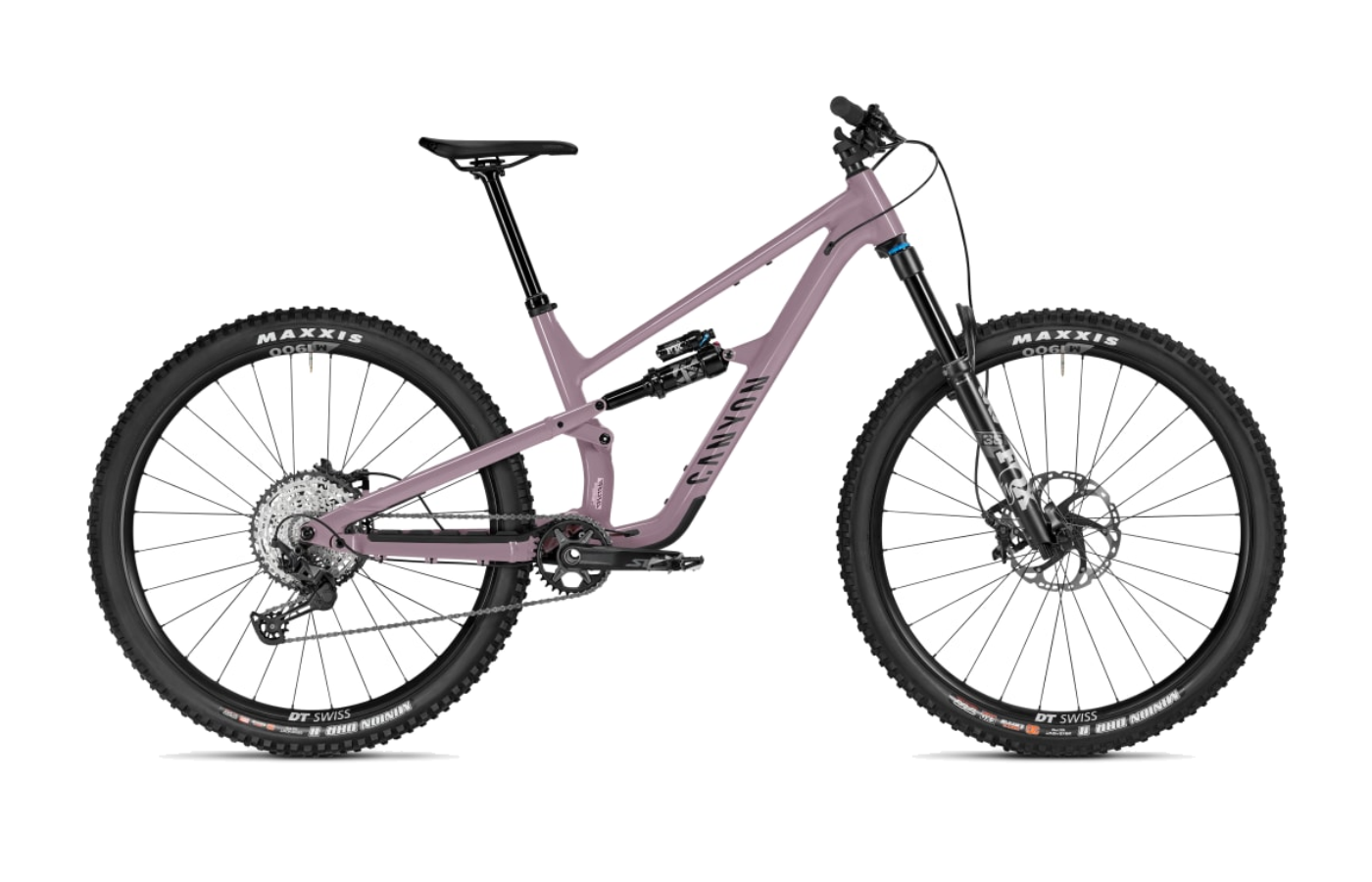
Spectral
The Jeffsy's most direct DTC rival — same all-mountain travel bracket, similar value proposition, and Canyon's frame storage and integrated dropper come standard. Worth cross-shopping if the Jeffsy build you want is sold out.
Compare →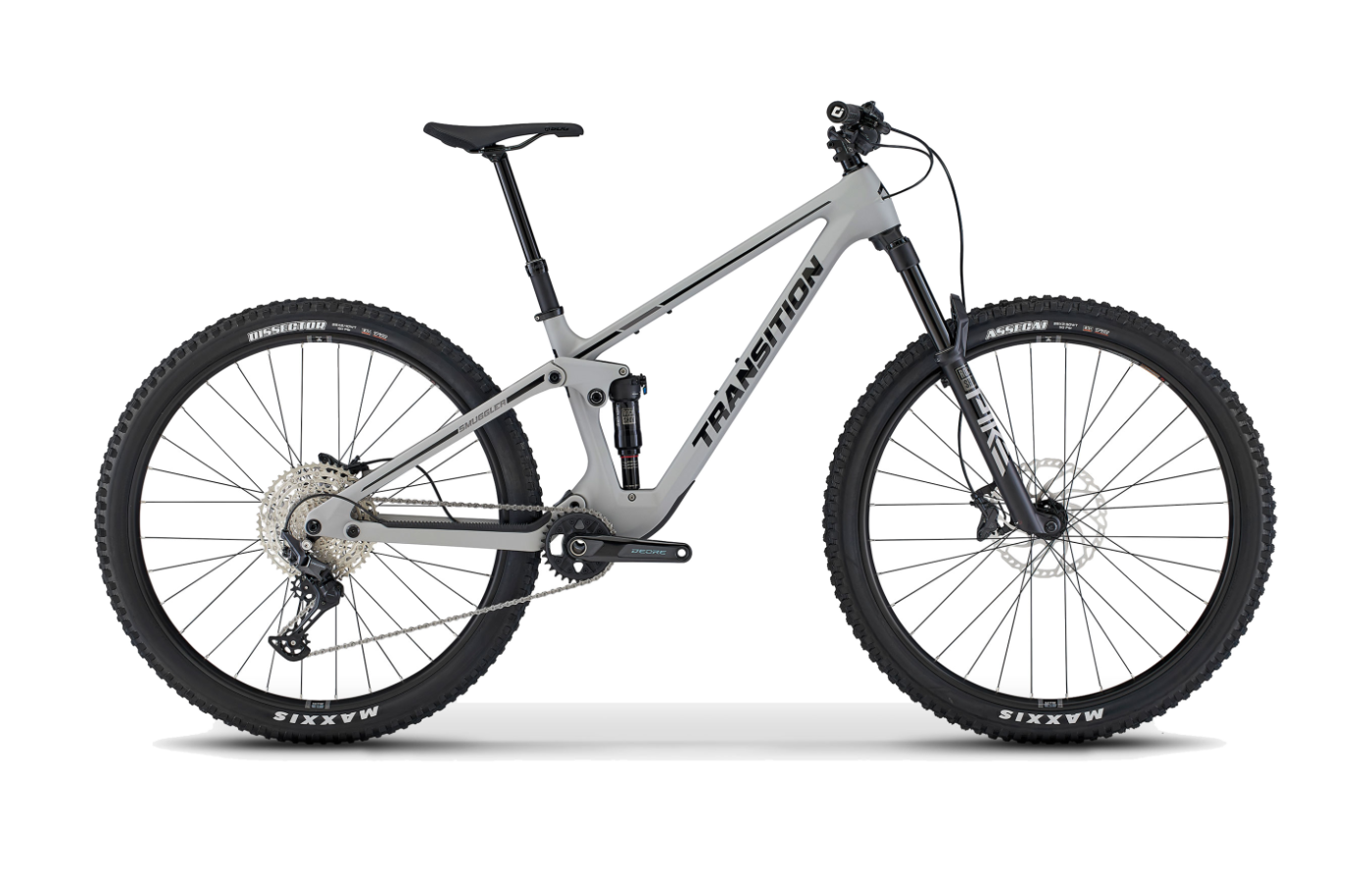
Smuggler
Specifically name-checked by NSMB's Hugene reviewer as the prior benchmark for a 130 mm "punch-above-its-weight" trail bike. If the Hugene's poppy character is what attracts you, the Smuggler is the alloy alternative worth a look.
Compare →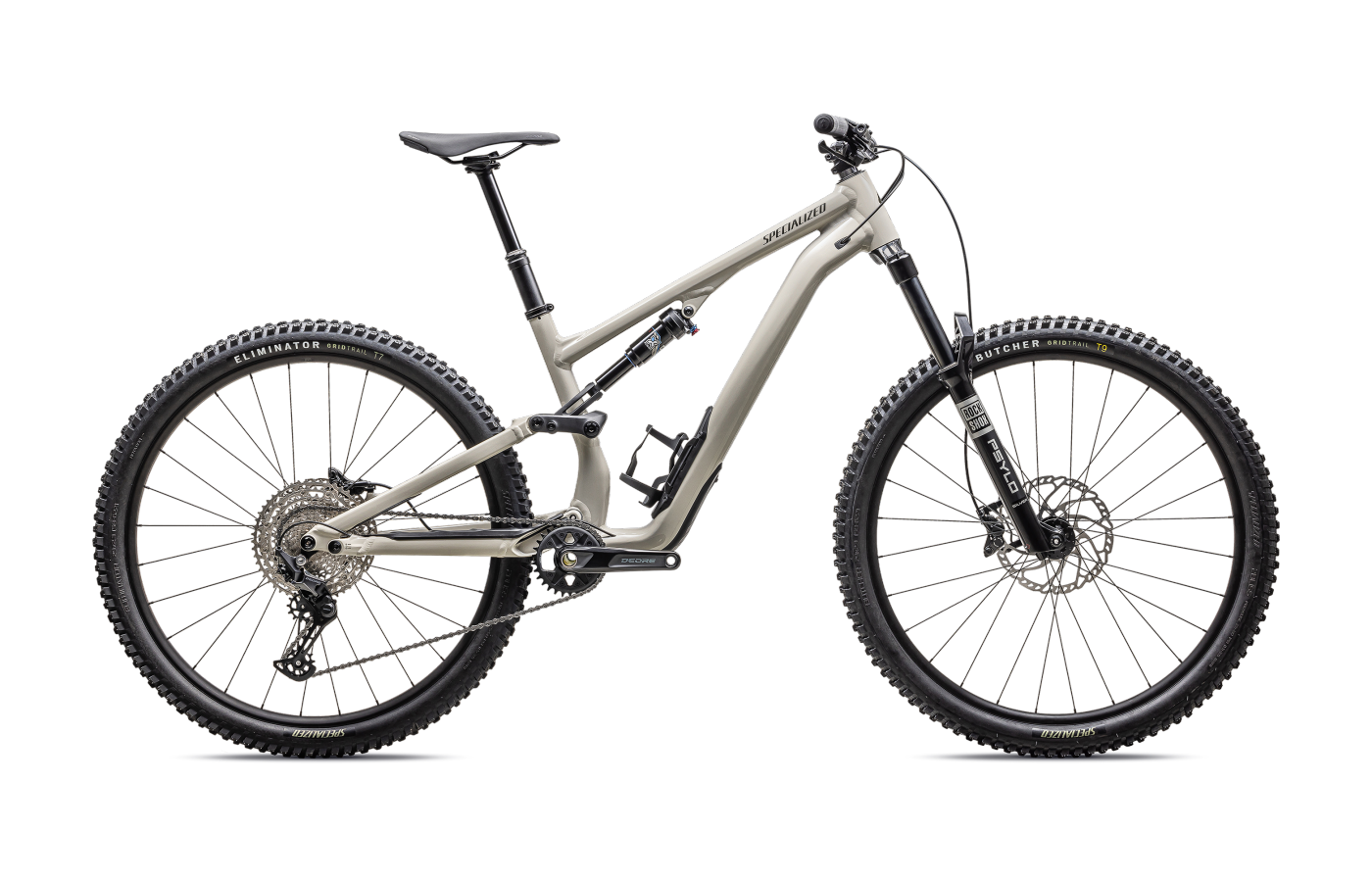
Stumpjumper
The dealer-network all-rounder — versatile geometry, balanced ride, and Specialized's SWAT downtube storage. Pick this over the YT or Propain if you want a local shop relationship and a demo before you buy.
Compare →