Switchblade
vsRascal
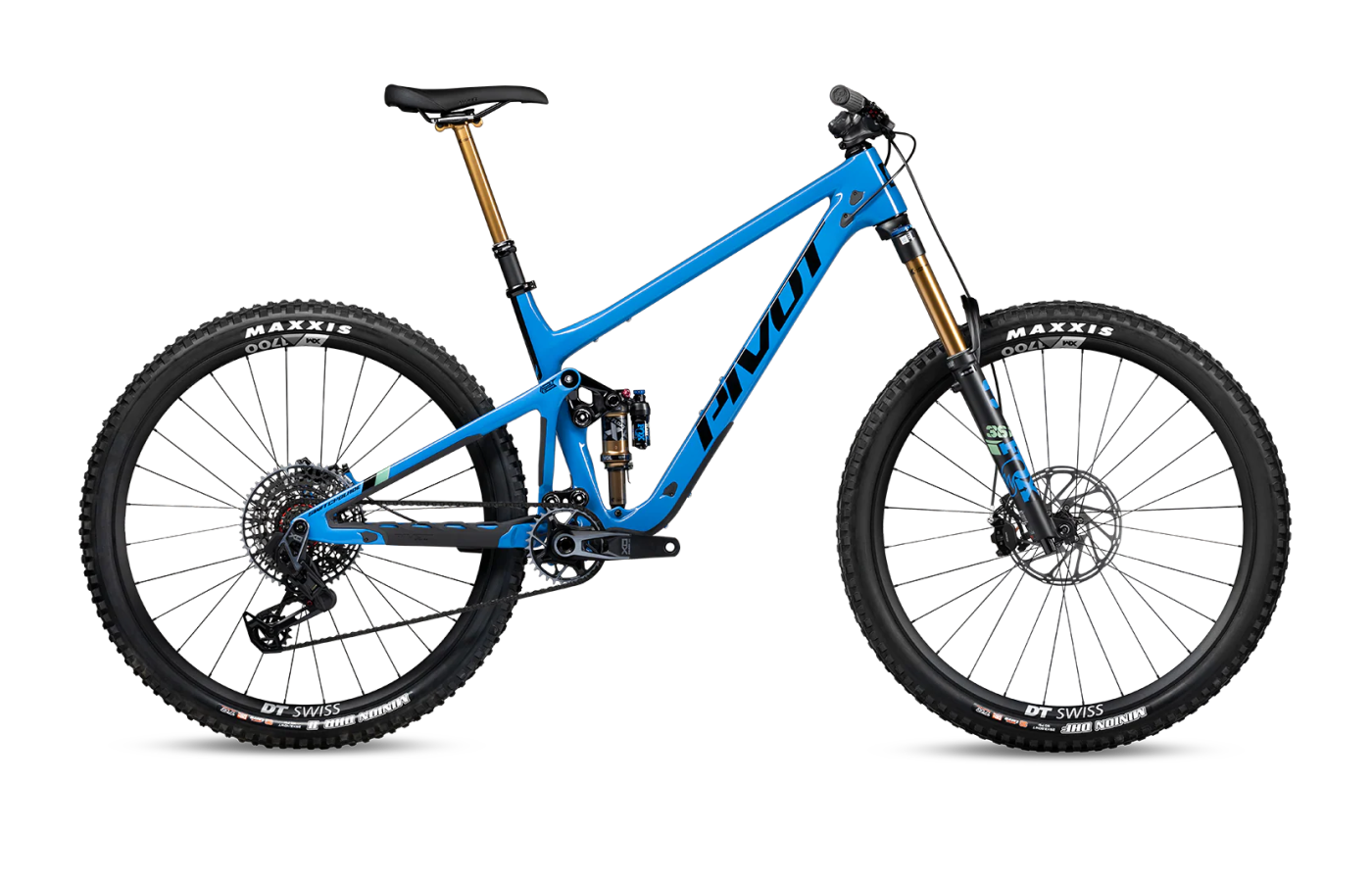
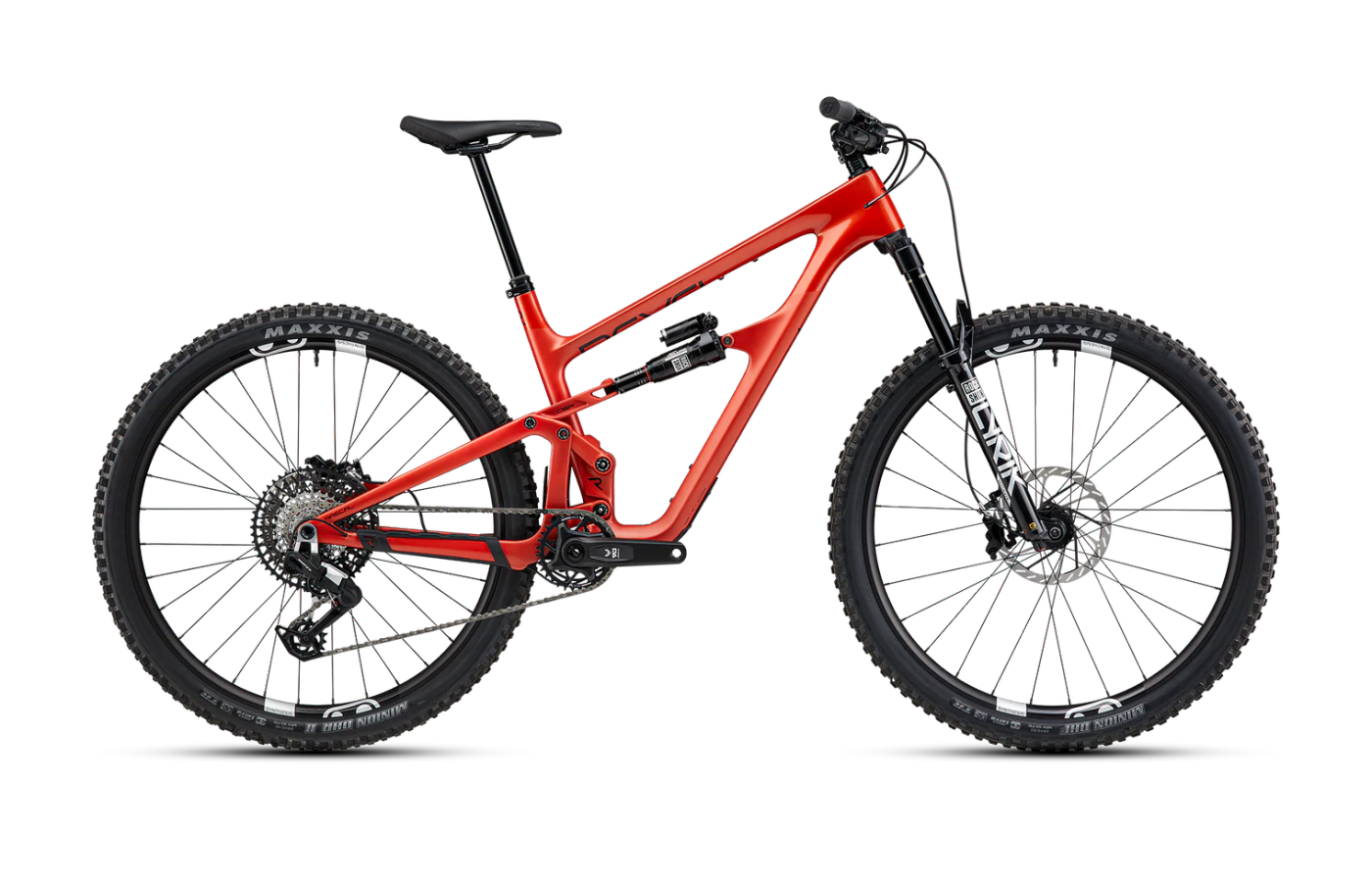
Two trail bikes, two attitudes.
The Switchblade is the planted, do-everything trail bike that creeps toward enduro. The Rascal is the lighter, livelier whippet that rewards an active rider.
Switchblade
- More travel, more capability — 142 mm rear and a 160 mm fork put the Switchblade closer to a light enduro bike than the Rascal.
- Composed at speed — the V3's longer lower link and rearward axle path soak square edges that unsettle shorter-travel rivals.
- Frame quality is a benchmark — size-specific layups, tidy routing, 10-year warranty, and Pivot's QC reputation all justify the premium.
- Price floor is roughly $1,500 above the Rascal, with the X0 build $3,800 more.
- Press-fit BB and SuperBoost+ 12x157 rear hub limit aftermarket wheel and BB swaps — recurring service-day complaints in reviews.
Rascal
- CBF suspension climbs exceptionally well — anti-squat near 140% off the top means the climb switch is essentially decorative.
- Lighter and snappier — 13.5 kg on the X0 build (size L) versus the Switchblade's ~14.2 kg.
- Threaded BB and standard 148 Boost rear — easier service and broader wheel compatibility than the Switchblade.
- Only 130 mm rear travel and tight rear-center geometry — gets nervous when speeds and trail roughness climb.
- Revel ceased operations in 2024; warranty and proprietary frame parts are no longer supported by the manufacturer.
Editor’s analysis
This is a fight between more bike and less bike — and the right answer depends entirely on how hard you ride the descents.
On paper the Pivot Switchblade and Revel Rascal sit in the same 130-142 mm trail bracket. But Pivot bumped the V3 toward enduro — 142 mm rear, a 160 mm fork, a 65.2 degree head angle — while Revel kept the Rascal V2 honest at 130 mm rear, 140 mm fork, and a barely steeper 65.5 degrees. Same category on the spec sheet, two different tools in your hand.
The Switchblade is the heavier, more capable one. Pivot ported the longer lower link from the Firebird enduro bike, which moves the axle path rearward and gives the rear wheel more time to absorb square edges. Reviewers across Singletracks, Vital, and Bicycling described it as noticeably calmer at speed than the V2 — "point-and-shoot" is the recurring phrase. The penalty is price: the cheapest Switchblade is $6,499, and the X0 Transmission build with Fox Factory suspension lands at $8,999.
The Rascal goes the opposite direction. CBF dual-link suspension that pedals so well most reviewers admitted they never touched the climb switch. A 20% stiffer rear end with 150-200 g taken out of the frame. 436 mm chainstays held constant across every size, which makes a Medium feel snappy under your feet but leaves XL and XXL riders complaining about a rearward weight bias. Pinkbike, Blister, and NSMB all flagged the stock setup as "twitchy" on fast, chunky terrain — this isn't a bike you plow on, it's one you steer.
Then there's the elephant. Revel ceased operations in 2024, so any Rascal you buy now comes from liquidation inventory with no factory warranty and no path to proprietary spares. That's been pricing the Rascal aggressively below its Pivot, Yeti, and Ibis peers — but it's also a real long-term cost that doesn't show up on the price tag.
Where the builds differ.
Comparing our editor's-pick builds side-by-side. Winners highlighted row-by-row — lower price and weight, and the better-spec component, each mark a point.
Build variants & pricing
Both lineups span four to six builds. Pivot starts at $6,499 and tops out near $11,800; Revel sits in a tight $4,999-$5,199 band on liquidation pricing.
Prices are current US MSRP. The Pivot Pro X0 ($8,999) and Revel X0 Transmission Kit ($5,199) are both wireless X0 AXS builds with premium suspension — the closest apples-to-apples comparison across the two lineups, despite the $3,800 platform price gap. Note that Revel ceased operations in 2024; current availability is liquidation inventory only.
How they fit, how they steer.
Different sizing conventions, same fit-picked frame for a 5'8" rider. The Switchblade SM sits 17 mm taller in stack and 11 mm shorter in reach than the Rascal Medium — Pivot pushes you upright and central, Revel stretches you out.
Which size should I buy?
Size recommendations based on stack, reach, and effective top tube. The Rascal's range extends further at the tall end with a true XXL (528 mm reach) for riders up to 6'8".
→These are starting points. Flexibility, riding style, and preferred position all shift the answer — if you’re between sizes, a professional fit beats a chart.
What the magazines said.
Published reviews from trusted cycling outlets. Click through for the full write-up.
Which one should you buy?
If you ride bike park laps and want one bike that descends like a junior enduro rig, get the Switchblade. If you climb a lot and earn your descents on flow trails, get the Rascal.
Switchblade
If your weekends include bike-park laps, chunky natural descents, and the occasional light enduro race — and you want something that still pedals home — the Switchblade V3 is the right tool. The travel and frame quality justify the price ceiling. You're paying for the descent.
Rascal
If most of your riding is climbing fire roads to flowy descents, weaving tight singletrack, and dancing through corners rather than plowing them — the Rascal's CBF suspension and lower weight are hard to beat. Just understand the warranty risk before you buy.
Questions buyers actually ask.
Short answers to the things we get emailed about most often.
01Which is faster downhill?
The Pivot Switchblade, on rough or fast terrain. The 12 mm of extra rear travel, 20 mm longer fork, and the V3's revised kinematics (longer lower link, more rearward axle path) all add composure when the trail gets chunky. Singletracks and Vital both described it as "calmer at speed" than the previous Switchblade, which already out-descended the Rascal class.
On smooth, flowy descents the gap shrinks substantially — the Rascal generates speed through pumps and pops better than the heavier Pivot, so a skilled rider can match or beat the Switchblade on a tame trail.
02Which climbs better?
The Revel Rascal, comfortably. CBF suspension produces high anti-squat (around 140% off the top per Revel and confirmed by Pinkbike, Blister, and Nminus1) so the bike pedals firmly without needing the climb switch. Multiple reviewers said they ran 35% sag and still didn't feel the need for it.
The Rascal also weighs roughly 700 g less in equivalent X0 trim — about 13.5 kg vs ~14.2 kg for the Switchblade — and that shows up immediately on long fire-road climbs. The Switchblade pedals well by enduro standards, but it's not in the same category.
03How much travel do they actually have?
Pivot Switchblade: 142 mm rear with a 160 mm fork. Pivot calls this an all-mountain trail bike, but it's effectively a short-travel enduro.
Revel Rascal: 130 mm rear with a 140 mm fork. This is a true mid-travel trail bike — closer in spirit to a Yeti SB120 or Ibis Ripley than to the Switchblade.
04What's the deal with Revel shutting down?
Revel Bikes ceased operations in 2024. The Rascals still on shop floors and DTC inventory are real bikes that work — but the manufacturer warranty is no longer enforceable and proprietary frame hardware (links, pivot bearings sized to Revel's hardware, custom protectors) is no longer being produced.
Third-party support may emerge — Canfield, who designed the CBF suspension, is one possibility — but nothing is guaranteed. The upside is steep liquidation discounts. The downside is genuine long-term ownership risk. Factor both in.
05Are they both 29ers?
Pivot Switchblade: 29" front and rear stock, but the frame has a flip chip and is mullet-compatible — you can run a 27.5" rear wheel without geometry going haywire. Reviewers running mullet recommended swapping to 165 or 170 mm cranks to avoid pedal strikes from the lowered BB.
Revel Rascal V2: 29" only. No mullet flip chip.
06What's the rear hub spacing — can I swap wheels easily?
Pivot Switchblade: SuperBoost+ 12x157 mm. This gives Pivot more chainline and stiffness flexibility, but it limits aftermarket wheel options and makes wheel-swapping between bikes a hassle. A frequent complaint in Pinkbike and Blister reviews.
Revel Rascal: Standard Boost 12x148 mm. Wheel swaps are trivial — most modern MTB wheels will fit.
07Which has the better build at the X0 / mid-tier price point?
Closer than the price gap suggests. The Pivot Pro X0 Eagle Transmission at $8,999 ships with Fox Factory 36 / Float X suspension and DT Swiss XM1700 alloy wheels. The Revel X0 Transmission Kit at $5,199 gets RockShox Lyrik Ultimate / Super Deluxe Ultimate and DT Swiss XMC 1501 carbon wheels.
Dollar-for-dollar the Rascal X0 build wins on raw parts — carbon wheels included and a $3,800 saving. The Switchblade premium is the chassis, the suspension brand preference, and Pivot's longer warranty/QC reputation.
08Are short chainstays really a problem on the Rascal?
Only on the largest frames. Revel held chainstay length at 436 mm across every size from Small to XXL. That's fine on Small and Medium — and great for tight cornering — but on XL (498 mm reach) and XXL (528 mm reach) the back end feels noticeably short relative to the front.
Multiple reviewers (Pinkbike, Blister) flagged it: tall riders end up with a rearward weight bias that requires active forward weighting on steep climbs and unsettles the front in steep, loose terrain. Smaller riders won't notice.
Similar bikes
If your priorities don’t map cleanly onto either of these, one of these adjacent bikes probably fits better.
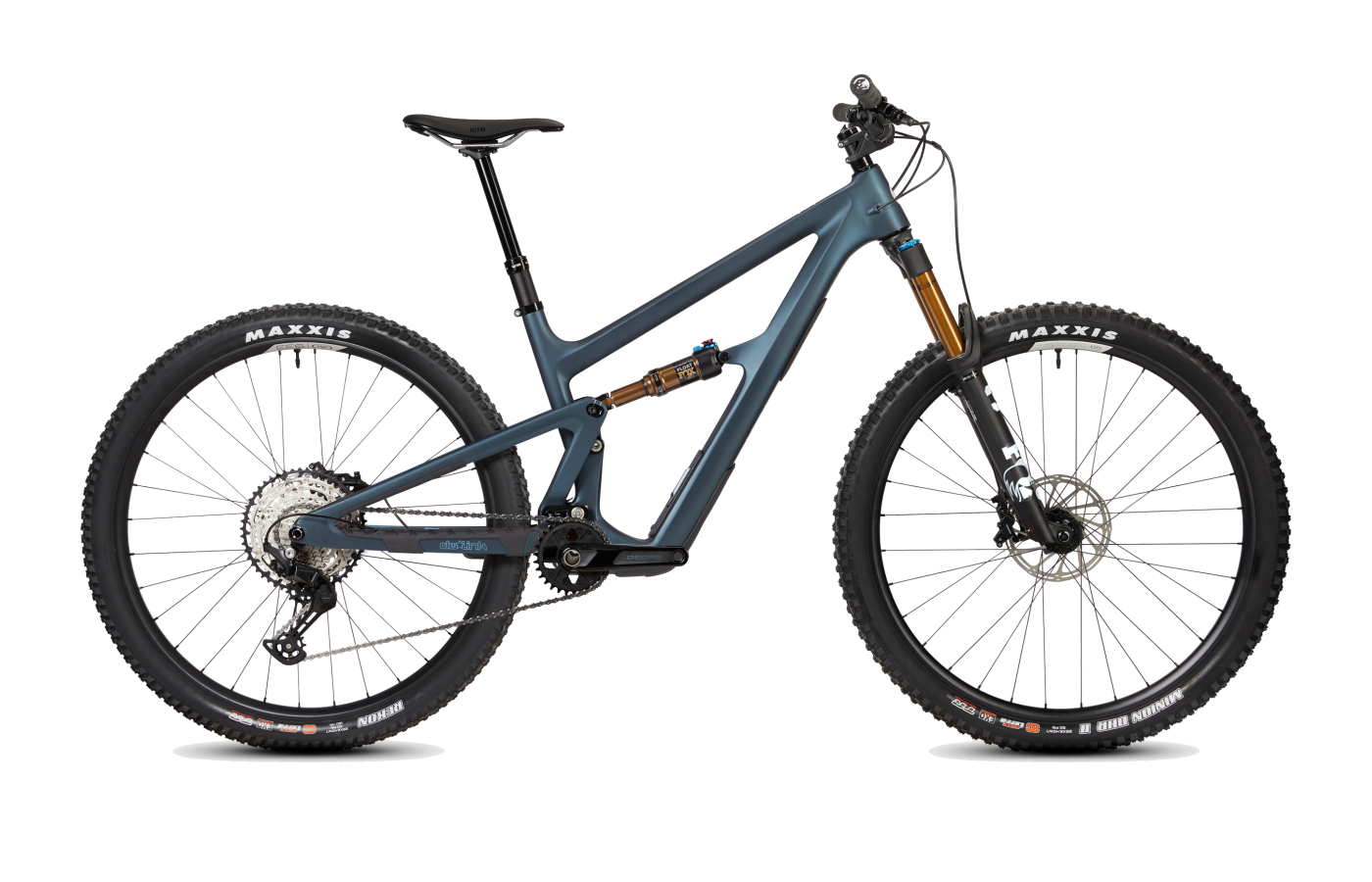
Ripley
Another DW-Link bike with the climbing efficiency reputation — slightly less travel than either of these, but a similar playful feel and a healthier company behind the warranty than the Rascal.
Compare →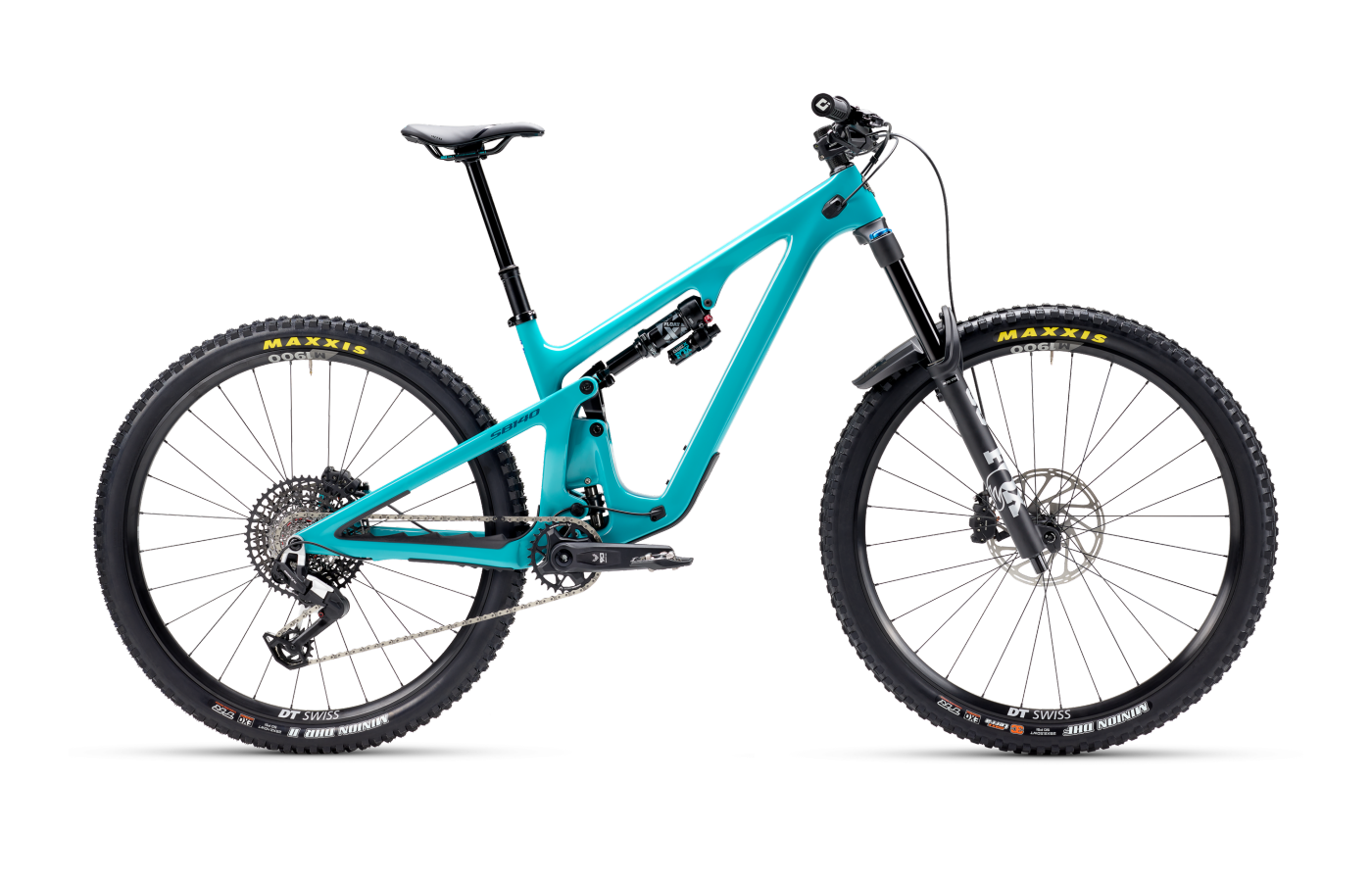
SB140
Yeti's all-mountain answer in the Switchblade's bracket — Switch Infinity suspension, comparable travel numbers, slightly more aggressive geometry. The natural cross-shop if the Pivot price ceiling is too high but you still want a premium-brand chassis.
Compare →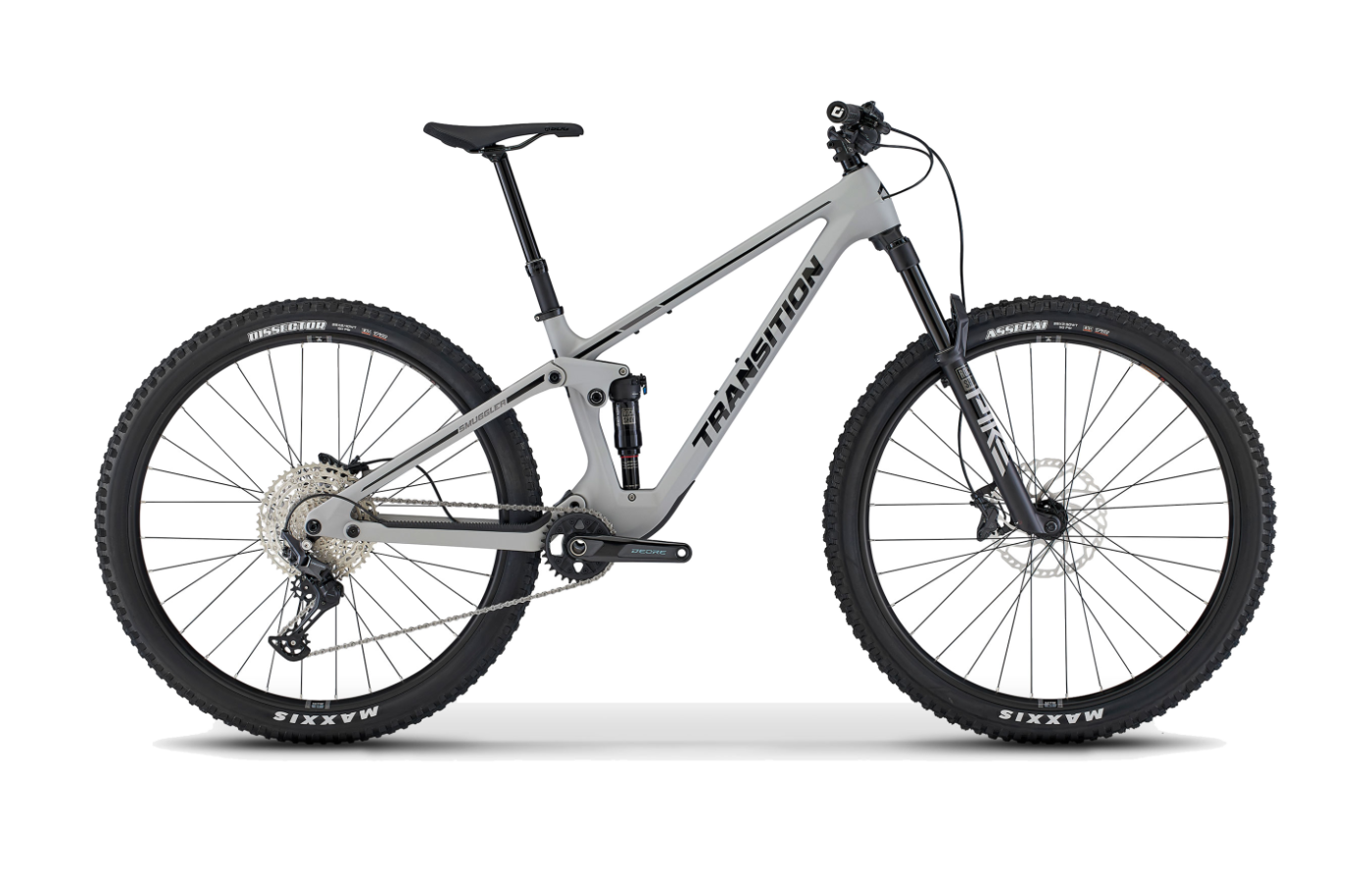
Smuggler
Transition's short-travel trail bike with a longer, slacker geometry than the Rascal. If you like the Rascal's intent but want more high-speed composure, this is the obvious shortlist add.
Compare →