F-Podium
vsEpic
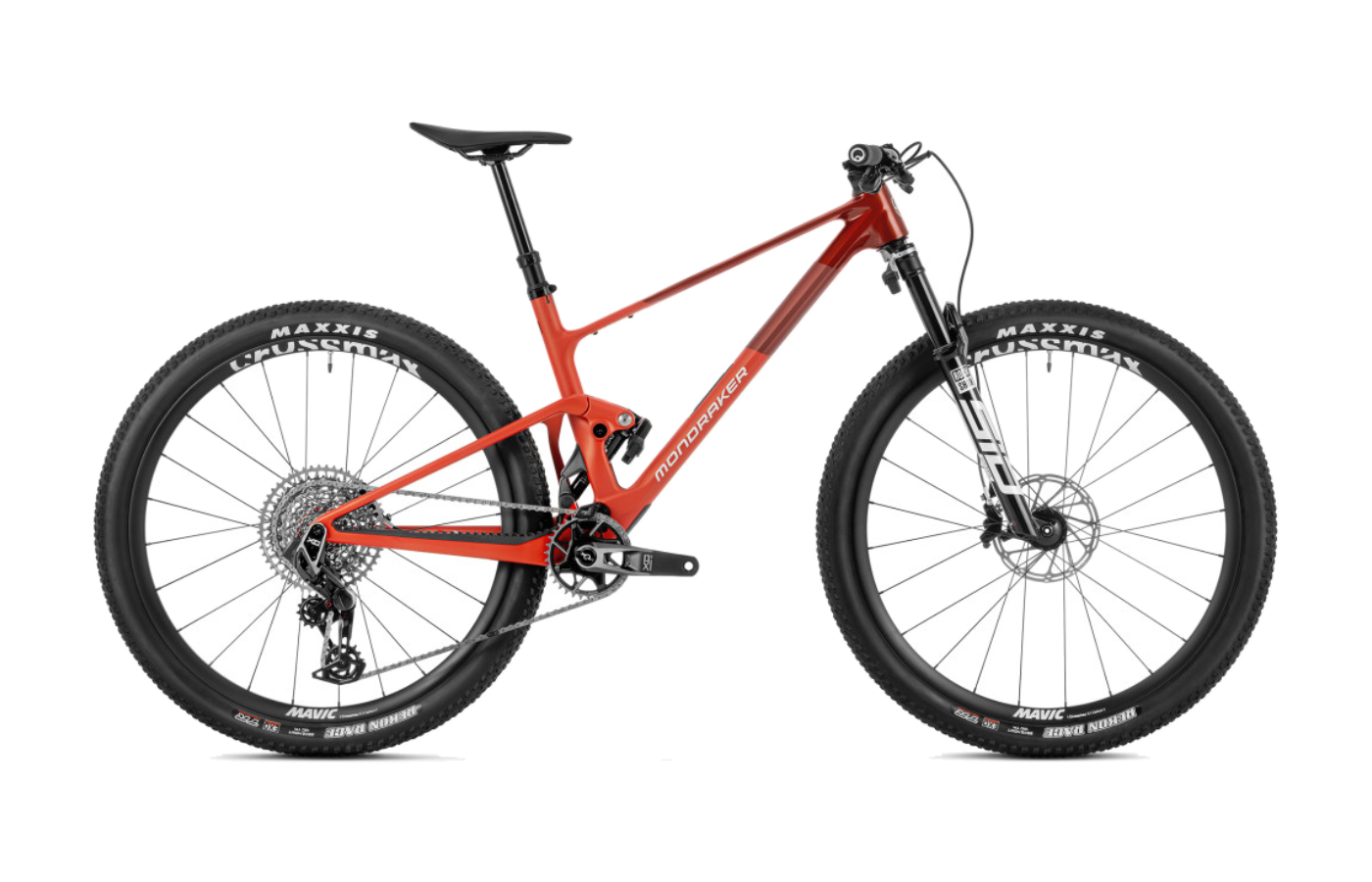
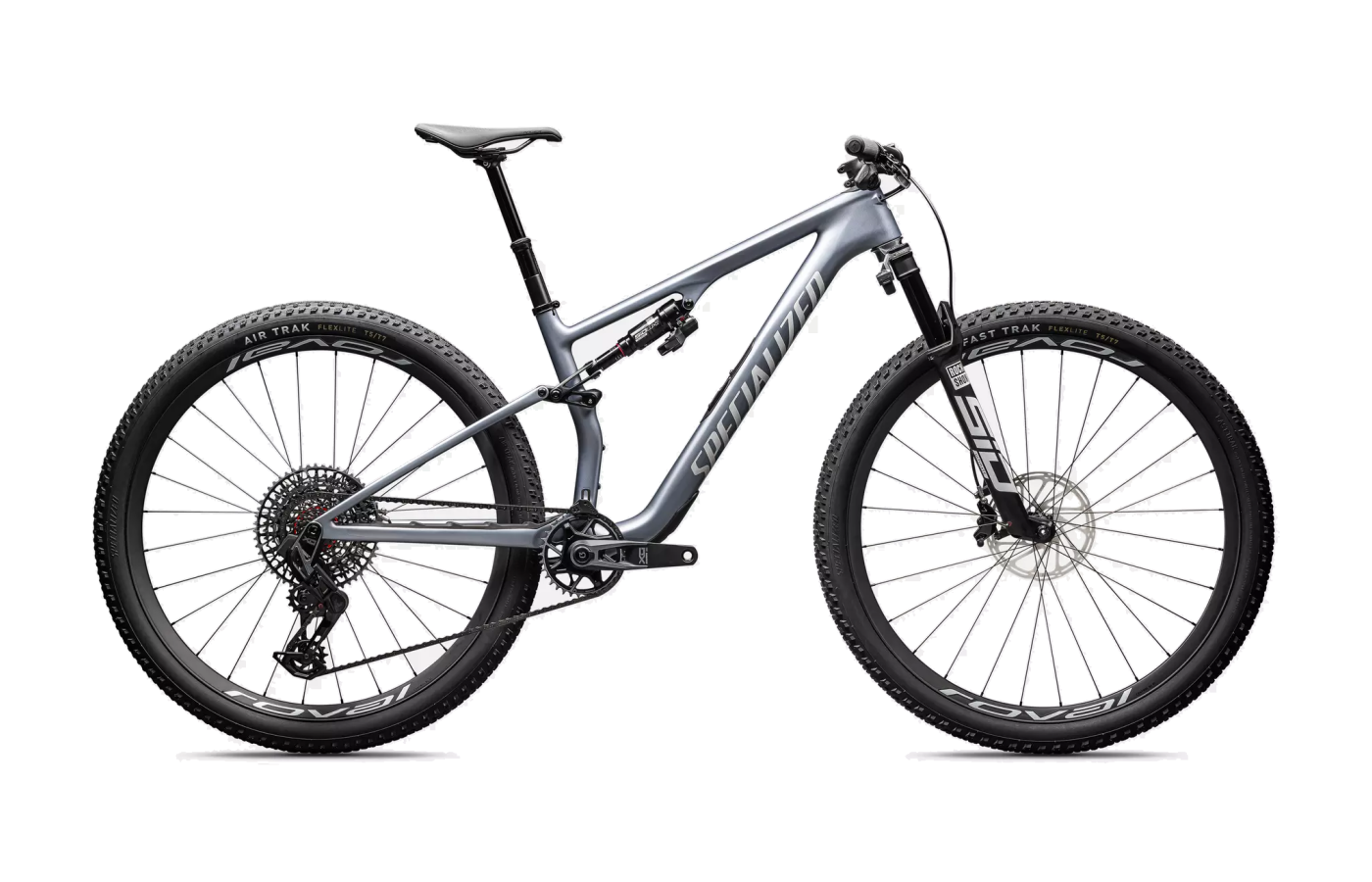
Two 120 mm XC race bikes, two suspension religions.
The F-Podium is the multi-link holdout in a flex-stay world. The Epic 8 is Specialized's bet that smart electronics beat extra pivots.
F-Podium
- Best-in-class traction — the fully articulated Zero linkage hooks up on technical climbs in a way flex-stay XC bikes don't.
- Same flagship frame top-to-bottom — every F-Podium gets the Stealth Air Full Carbon chassis, so a base-model rider can upgrade into a World Cup bike.
- 25-year frame warranty — one of the longest in the segment and a real argument at resale.
- Pedal bob in fully open mode — the three-position remote isn't optional.
- Fox damping reads "a touch harsh" on sustained chatter compared to the Epic's RockShox tune.
Epic
- Magic Middle shock tune — the digressive RockShox SIDLuxe pedals like a hardtail and breaks open instantly on impact, no thinking required.
- Trail-bike geometry in an XC weight — 65.9° HTA, 75.5° STA, and a 326 mm BB make it descend like a longer-travel bike.
- SWAT downtube storage — integrated tool/tube space that no other top-shelf XC bike offers.
- Flex-stay rear can "hang" momentarily on square-edged hits compared to multi-link bikes.
- S-Works build piles on batteries (Flight Attendant, AXS, power meter, TyreWiz) — pre-ride charging is a real chore.
Editor’s analysis
Same travel band, same race brief — but the way each bike turns rider input into forward speed could not be more different.
On paper, the Mondraker F-Podium and Specialized Epic 8 are kissing cousins: both modern XC race platforms with 120 mm forks, 435 mm chainstays, and full-carbon frames that have podiumed on the World Cup circuit in the last two seasons. Spend an hour reading reviews and the philosophies pull apart fast. The F-Podium runs 110 mm of rear travel through Mondraker's twin-link Zero Suspension System — a fully bearing-supported design that bucks the flex-stay trend almost every other XC brand has converged on. The Epic 8 runs 120 mm rear off a flex-stay single pivot, with a custom "Magic Middle" digressive shock tune that's the headline feature reviewers can't stop praising.
The F-Podium leans into mechanical sophistication. Reviewers describe "tremendous sensitivity" off the top, traction that "few XC bikes can boast," and a rear end that hooks up on technical climbs whether you're seated or out of the saddle. The trade-off is honest: in fully open mode the bike bobs, so the three-position remote lockout isn't optional — it's the bike. The middle position gets used a lot. Set up right, the F-Podium descends like it has more travel than 110 mm should allow, with composed bottom-out resistance on drops and steeps.
The Specialized Epic takes the opposite tack: do less thinking, go faster. The Magic Middle tune holds the bike high in its travel under pedaling but "pops open" on impact, and Specialized claims 20% less pedal bob than the previous Epic EVO with 12% more bump absorption. On the S-Works trim, Flight Attendant electronically swaps damping modes in milliseconds based on fork, shock, and power-meter data. Geometry pushes further trail than the F-Podium too — a 65.9-degree head angle (vs. 66.5), a 75.5-degree seat angle (vs. 72.9), and a 326 mm bottom bracket (vs. 335) — earning it labels like "featherweight trail bike" and "slalom-like" in corners.
Put another way: the Specialized Epic is the bike for the rider who wants the suspension to disappear. The Mondraker F-Podium is the bike for the rider who wants to feel exactly what the suspension is doing — and is willing to flick a remote to make it behave.
Where the builds differ.
Comparing our editor's-pick builds side-by-side. Winners highlighted row-by-row — lower price and weight, and the better-spec component, each mark a point.
Build variants & pricing
Both range across roughly $8k. Mondraker keeps things mechanical across the lineup; Specialized swings hard into AXS Transmission and Flight Attendant at the top.
Prices are current US MSRP. The Mondraker F-Podium lineup is mechanical-only — there's no factory electronic option. The Epic 8's S-Works ($14,999) and Pro ($10,999) ship with wireless AXS Transmission, and only the S-Works gets RockShox Flight Attendant.
How they fit, how they steer.
Both at size M — the fit-picked size for a 5'8" rider on each bike. The Epic sits 0.6° slacker up front (65.9° vs 66.5°), 2.6° steeper at the seat (75.5° vs 72.9°), and 9 mm lower at the BB. Same 435 mm chainstays, virtually identical wheelbase. Reach is nearly even (450 vs 455 mm).
Which size should I buy?
Size recommendations from stack, reach, and effective top tube. Both ranges overlap closely through M and L; the Epic adds an XS at the small end.
→These are starting points. Flexibility, riding style, and preferred position all shift the answer — if you’re between sizes, a professional fit beats a chart.
What the magazines said.
Published reviews from trusted cycling outlets. Click through for the full write-up.
Which one should you buy?
If you want a hyper-active rear end and unmatched climbing traction, get the F-Podium. If you want trail-bike geometry, set-and-forget pedaling, and class-leading downhill composure, get the Epic.
F-Podium
If you race technical XC or marathon courses where climbing traction wins seconds, and you don't mind working a remote lockout to manage the suspension's mood, the F-Podium rewards engaged riders. The Zero linkage hooks up where flex-stay bikes spin out.
Epic
If you want a 120 mm bike that pedals like a hardtail and descends like a short-travel trail bike — and you'd rather the suspension think for you than the other way around — the Epic 8 is the modern benchmark. The Magic Middle tune is the headline; the geometry is the dark horse.
Questions buyers actually ask.
Short answers to the things we get emailed about most often.
01Which has more rear travel?
The Specialized Epic 8, with 120 mm of rear travel matched to its 120 mm fork. The Mondraker F-Podium runs 110 mm rear paired with a 120 mm fork — slightly more aggressive on the front than the back.
In ride feel, the gap is smaller than the spec sheet suggests. Multiple reviewers say the F-Podium's Zero Suspension makes 110 mm "feel like more," while the Epic's Magic Middle tune holds the bike high in its travel under pedaling, so it doesn't feel especially plush until impact.
02Which suspension design is better?
Different, not better. The F-Podium's Zero Suspension is a twin-link, fully bearing-supported design — more pivots, more weight (about half a pound according to one reviewer), but precise kinematics and exceptional traction. Reviewers consistently single out climbing grip as a class-leader.
The Epic 8's flex-stay single pivot uses controlled flex in the rear triangle in place of a pivot. Lighter and simpler, but reviewers note it can briefly "hang" on square-edged hits. Where the Epic wins back ground is the custom RockShox Magic Middle shock tune, which gives a remarkably firm pedaling platform that opens up under impact.
03Which climbs better?
The F-Podium wins on technical, traction-limited climbs — multiple reviewers describe the Zero linkage as "hooking up" where other XC bikes spin out. On smooth fire-road climbs, the Epic is more efficient thanks to the Magic Middle tune and the much steeper 75.5° seat angle (vs. 72.9° on the Mondraker), which puts the rider directly over the pedals.
The Epic is also lighter at every comparable price point — the 8 Pro comes in around 10.82 kg (23 lb 14 oz) versus roughly 11.69 kg (25 lb 12 oz) for the F-Podium RR — which compounds on long sustained ascents.
04Which descends better?
The Epic 8, in most reviewers' eyes — "outrageously stable," "slalom-like" cornering, and "featherweight trail bike" all show up in writeups. Its 65.9° head angle, 326 mm bottom bracket, and longer 1179 mm wheelbase add up to a bike that rewards aggressive lines.
The F-Podium is no slouch — its Forward Geometry and 66.5° HTA give it real composure on steep terrain — but riders looking for the sharpest descender in the XC race category usually land on the Epic.
05Do I have to use the remote lockout on the F-Podium?
Functionally, yes. The F-Podium's Zero linkage is sensitive enough that fully open mode shows noticeable pedal bob, especially with imperfect pedaling. The three-position remote — open / middle / locked — is described by reviewers as "indispensable," with the middle position singled out as "epic for chewing up vertical on gravel paths or trails."
The Epic 8 has lockout options too (TwistLoc on Expert/Comp, Flight Attendant on S-Works), but the Magic Middle tune is firm enough that many riders leave it in the default mode and forget about it.
06What's the warranty situation?
Mondraker offers a 25-year frame warranty to the original owner — one of the longest in the bike industry, and a frequently cited "killer argument" for the F-Podium in reviews.
Specialized offers a lifetime frame warranty to the original owner against manufacturing defects. Both brands offer crash-replacement programs at reduced pricing.
07Is the Epic 8 S-Works worth the extra money over the Pro?
For most riders, no. The S-Works ($14,999) gets you the lighter FACT 12m carbon frame, RockShox Flight Attendant electronic suspension, and the SRAM XX SL Eagle AXS drivetrain. Reviewers consistently call out the Epic 8 Expert ($7,199) and 8 Pro ($10,999) as the value picks — the Pro is the highest non-flagship build, with X0 AXS Transmission and the same custom Magic Middle shock tune as the S-Works.
Flight Attendant is a genuine performance edge for racers, but it's the kind of edge that makes sense at the top of the sport, not at the back of a Saturday group ride.
08Can either of these handle real trail riding?
Both can — they're the most capable XC race bikes on the market right now. The Epic 8 is closer to a true short-travel trail bike thanks to its slacker head angle and lower BB; multiple reviewers compared it to a downcountry rig in everything but weight.
If trail capability is the priority, look at the Specialized Epic Evo (same Epic frame, 130 mm fork, beefier parts, rear shock retuned) or the more enduro-leaning end of the F-Podium's competitor set. Neither bike here is meant for chunky technical descending day-in, day-out.
Similar bikes
If your priorities don’t map cleanly onto either of these, one of these adjacent bikes probably fits better.
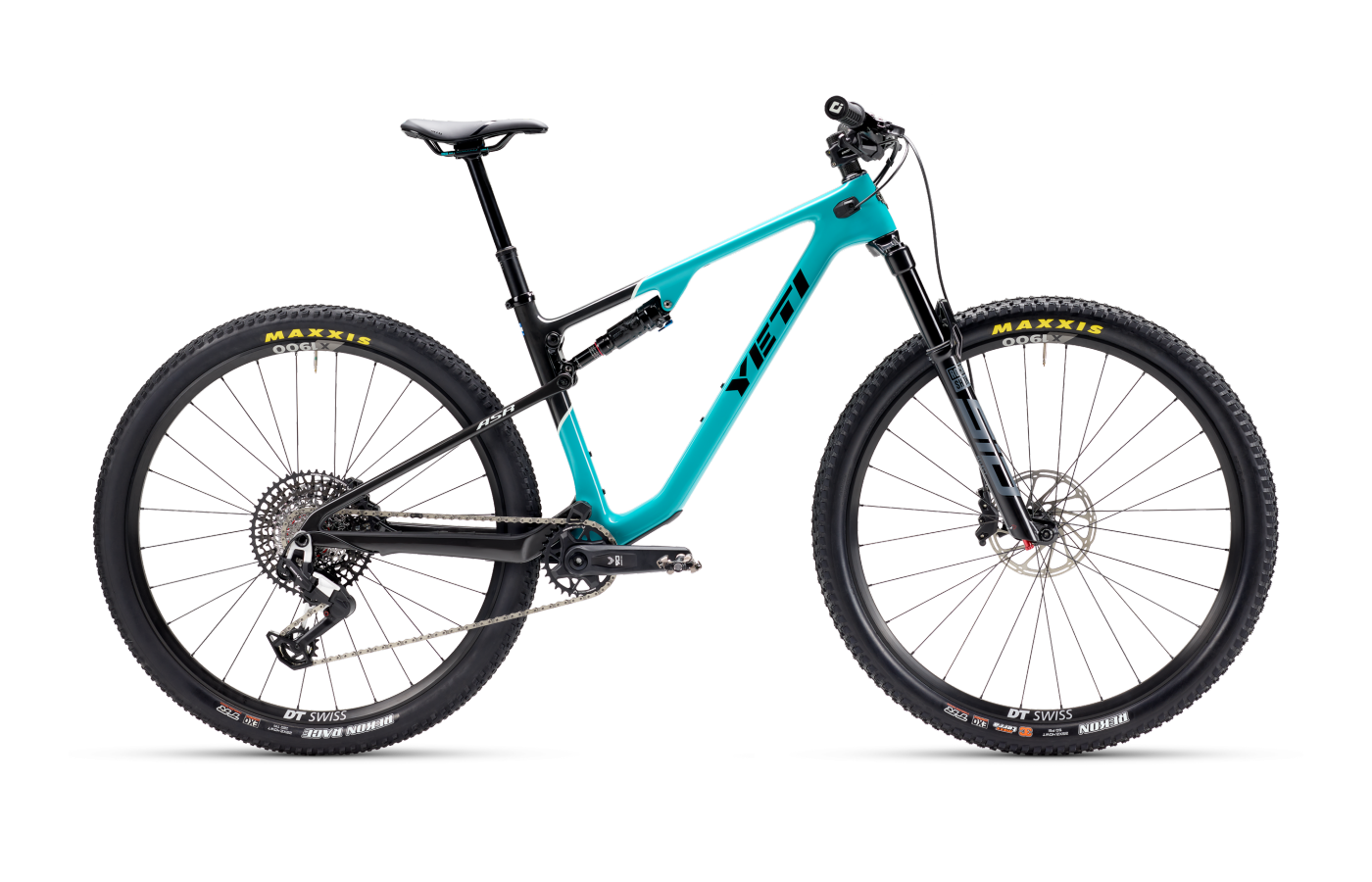
ASR
The Yeti ASR is the flex-stay XC bike that gets named alongside both of these in nearly every comparison test. Slightly firmer suspension feel than the Epic, and a more conservative geometry than the F-Podium — the bike for the rider who wants a sharper, more traditional race feel.
Compare →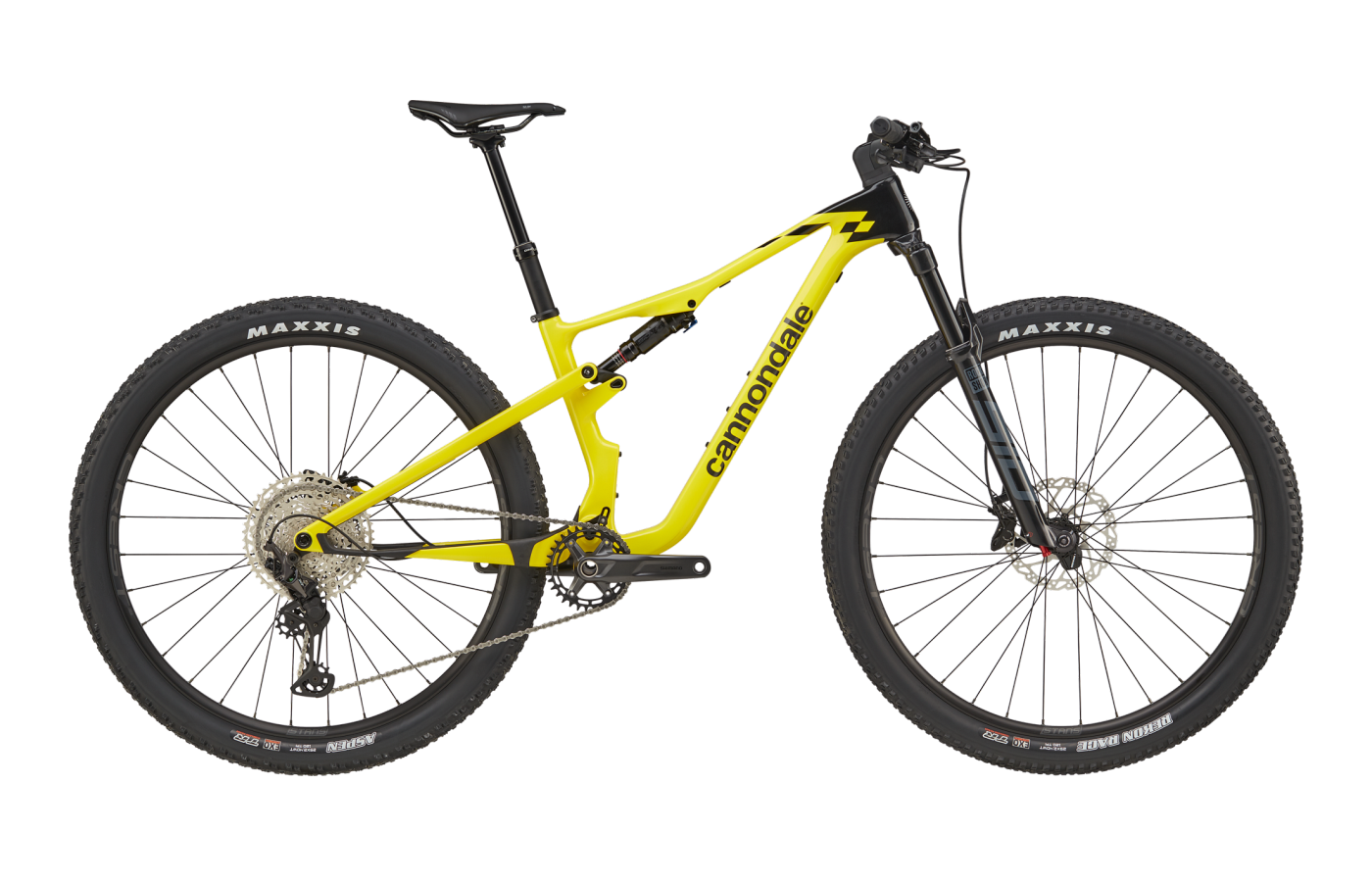
Scalpel
Cannondale's Scalpel runs the same 120 mm flex-stay XC playbook as the Epic, but pairs it with the single-leg Lefty Ocho fork. Reviewers love the Lefty's needle-bearing smoothness; you'll either love the look or you won't.
Compare →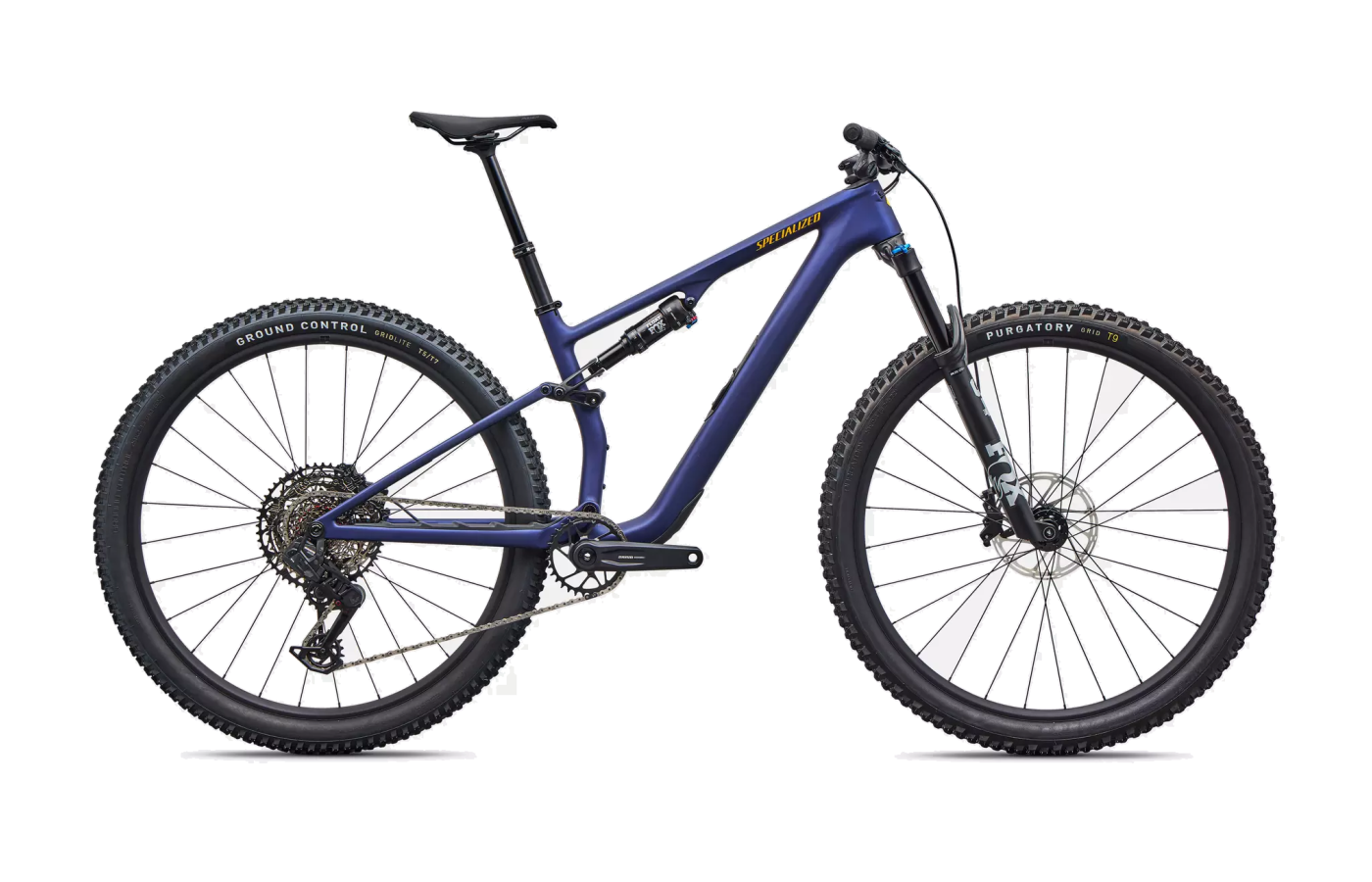
Epic Evo
Same frame as the Epic 8, but with a 130 mm fork and beefier build kit. The Epic Evo is what you buy when you like the Epic's geometry but want the suspension and tires to push further into trail-bike territory.
Compare →