Rove
vsSutra
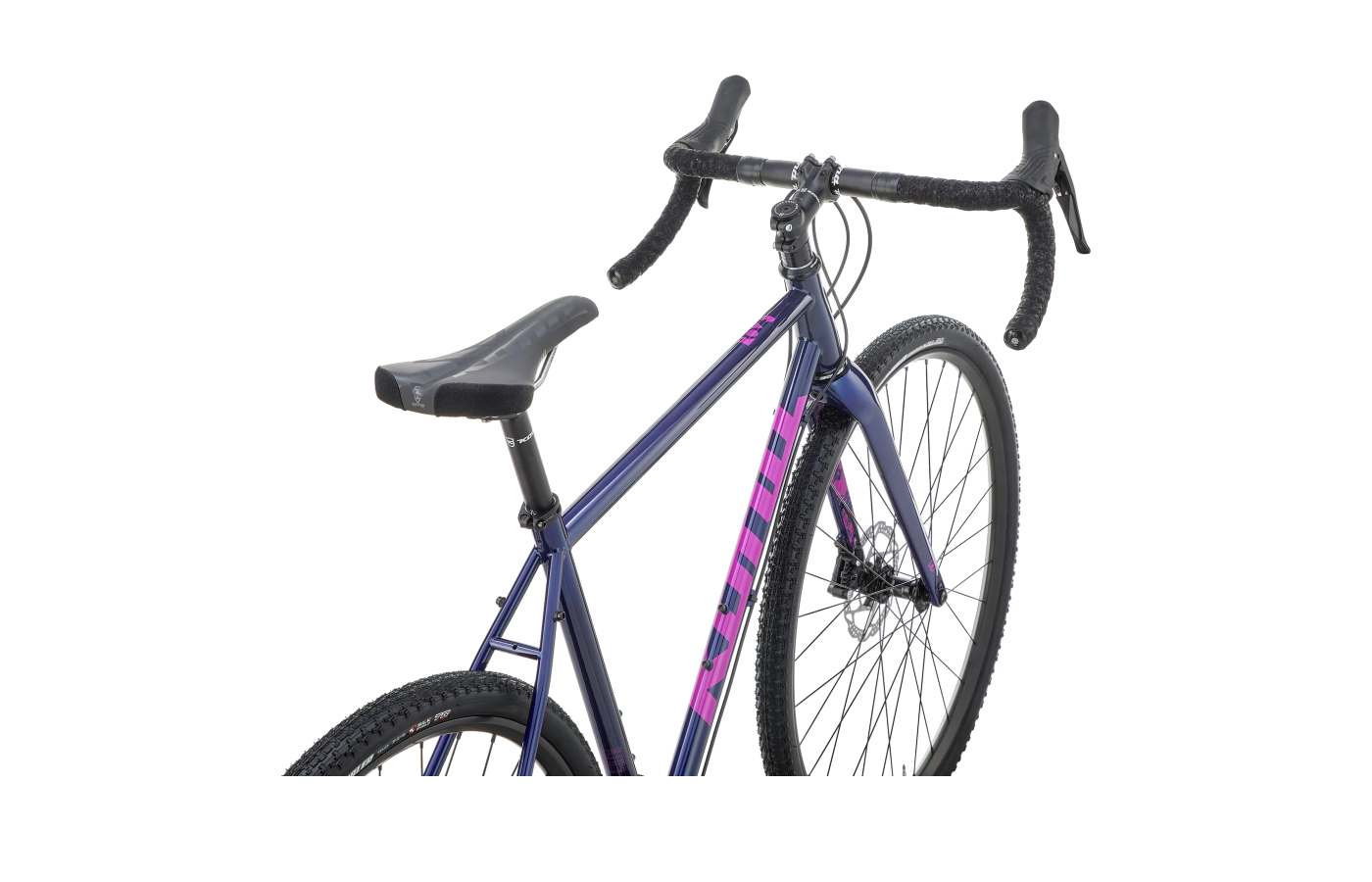
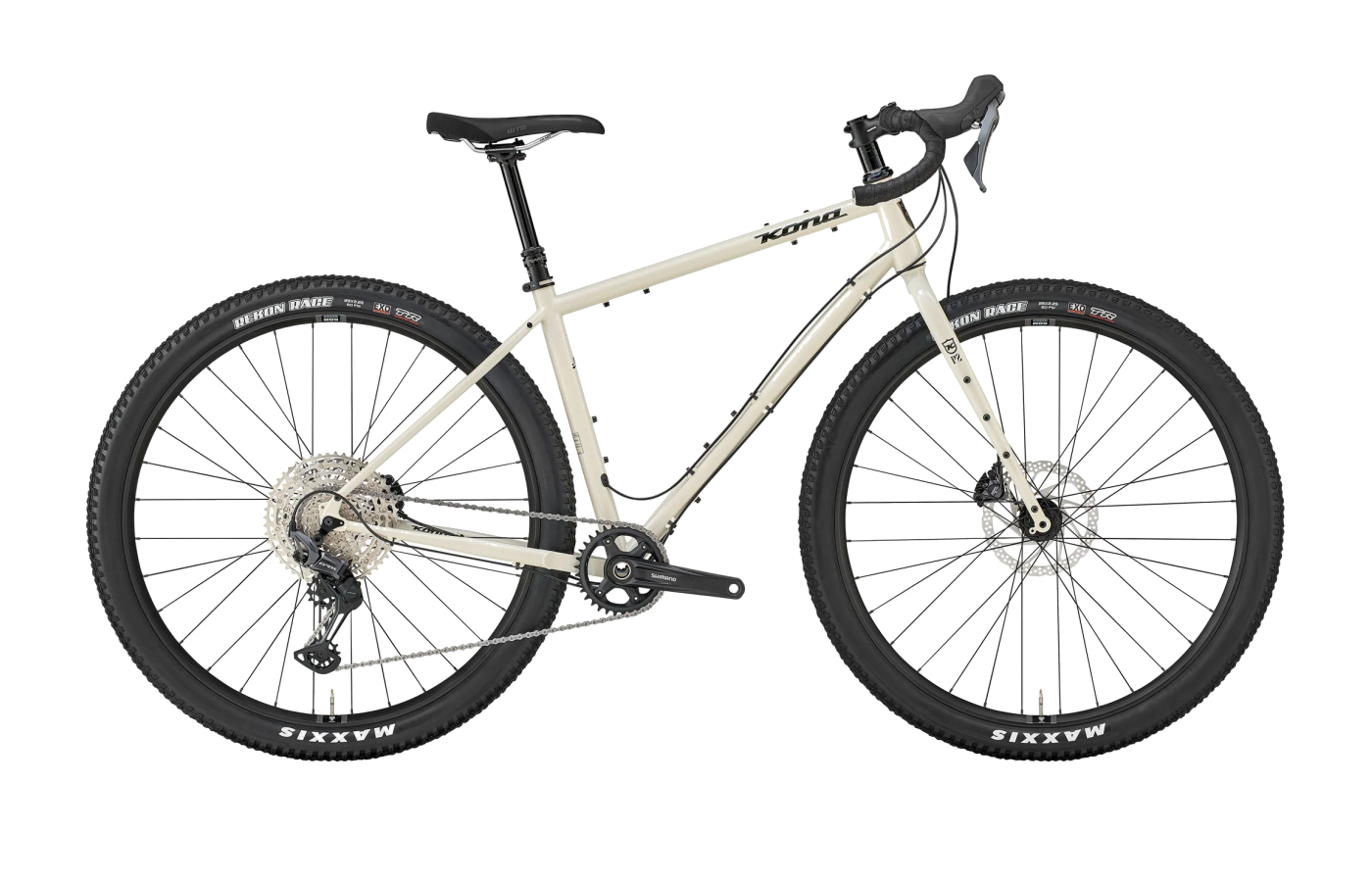
Two steel Konas, two kinds of far from home.
The Rove is a gravel bike that tours. The Sutra is a tourer that handles gravel. Same frame material, different center of gravity.
Rove
- Wider build range — six trims from $949 to $2,899, including a sub-$1k aluminum entry. The Sutra starts at $1,599.
- Livelier on unloaded rides — steeper 71° head angle, 435 mm chainstays, and 1036 mm wheelbase (size 52) make it the more engaging bike when you're not hauling gear.
- Carbon fork on the top builds — trims vibration and ~400 g off the front end, a rare upgrade in this price bracket.
- 42 mm tire clearance caps your adventure ambitions — no 2.0"+ tires, no real singletrack.
- Reviewers note the frame can feel "stiffer than I'd normally prefer" when unloaded (Bikepacking.com) — the stability dividend only shows up with bags on.
Sutra
- Massive tire clearance — fits up to 58 mm or 29x2.25", letting the top LTD run full MTB rubber for loaded gravel and light singletrack.
- Touring spec out of the box — Brooks B17 saddle, Tubus front rack, fenders, and seven bottle/cargo mounts on the standard trim. Ready to tour, not a platform that might.
- Rock-solid loaded handling — 70.5° HTA, 445 mm chainstays, 1047 mm wheelbase (size 50) create the "planted" feel reviewers consistently flag as the bike's defining trait.
- 32 lb complete weight and slacker geometry make it "a little dull" (Bikepacking.com) when unloaded and hustling for a coffee ride.
- Only three builds and a $1,599 floor — no budget aluminum entry, no race-ready gravel trim.
Editor’s analysis
Both are chromoly. Both take racks. Both cost $2,899 at the top. But one is built to be light and lively, and the other is built to carry your life across a continent.
The Kona Rove and the Kona Sutra share a family tree, a tube material, and a price ceiling — and almost nothing else about how they ride. The Rove is Kona's gravel-adventure platform: six builds from $949 up, carbon fork on the top two, 650b or 700c, designed to be the capable everyday bike that happens to be willing to go bikepacking. The Sutra is Kona's touring bike, full stop. Three builds, all with a steel fork, all built for loaded miles over weeks, not hours.
The clearest tell is tire clearance. The Rove maxes at 42 mm — broad for a modern gravel bike, narrow by adventure standards. The Sutra clears up to 58 mm (the top LTD ships with 29x2.25" Maxxis Rekon Race rubber straight from the factory). That's not a tweak, that's a different bike: the Sutra is shooting at chunky dirt roads and light singletrack with a full rear kit; the Rove is shooting at fast gravel, mixed-surface commutes, and the Sunday long ride.
Geometry follows the tires. Compared in their fit-picked sizes (Rove 52, Sutra 50), the Sutra sits a full 0.5 degrees slacker up front (70.5° vs 71°), runs 10 mm longer chainstays (445 vs 435), and stretches the wheelbase by 11 mm. The Rove is the one you throw at corners. The Sutra is the one that holds a line with 15 kg of panniers hanging off the back and doesn't flinch — reviewers at Bikepacking.com noted it "sails along better with some additional weight."
Put another way: the Rove is the bike you buy when you want one gravel bike and you'll occasionally overnight on it. The Sutra is the bike you buy when the overnight is the point — when the bike is luggage more than it is sport. Both are steel, both are comfortable, both will outlast most things you bolt to them. But they're not substitutes for each other.
Where the builds differ.
Comparing our editor's-pick builds side-by-side. Winners highlighted row-by-row — lower price and weight, and the better-spec component, each mark a point.
Build variants & pricing
The top LTD trims meet at $2,899 with Shimano GRX 12-speed — the clearest apples-to-apples in the range. Below that, the Rove scales down much further than the Sutra does.
Prices are current US MSRP. The Rove runs from $949 (aluminum Claris) to $2,899; the Sutra only spans $1,599 to $2,899, with no sub-$1,500 entry point. If you want the cheapest way into a Kona steel frame, that's the $1,399 Rove Base — not anything in the Sutra line.
How they fit, how they steer.
Rove 52 against Sutra 50 — the fit-picked sizes for each bike's geometry. Stacks match at 570 mm; the Sutra is 3 mm shorter in reach, 0.5° slacker at the head, and rides on 10 mm longer chainstays. The Rove wants to turn; the Sutra wants to cruise.
Which size should I buy?
Size recommendations based on stack, reach, and effective top tube. Both ranges cover 48–58; the Sutra runs noticeably taller at every size thanks to its touring stack figures.
→These are starting points. Flexibility, riding style, and preferred position all shift the answer — if you’re between sizes, a professional fit beats a chart.
What the magazines said.
Published reviews from trusted cycling outlets. Click through for the full write-up.
Which one should you buy?
If you want one bike for gravel, commuting, and the occasional overnight, get the Rove. If the bike is the trip, get the Sutra.
Rove
If you want a capable, comfortable steel gravel bike for fast dirt, mixed-surface commutes, and the odd S24O — and you want a build range that starts under $1k — the Rove is the broader platform. Lively unloaded, stable enough when packed.
Sutra
If you're planning the cross-country trip, the six-week continental ride, or the bikepacking route with heavy luggage and rough roads — the Sutra is built to haul. Brooks saddle, 2.25" tire clearance, steel fork, and the most stable geometry in the lineup.
Questions buyers actually ask.
Short answers to the things we get emailed about most often.
01Which has more tire clearance?
The Sutra, by a wide margin — 58 mm (or 29x2.25") vs 42 mm on the Rove. The Sutra LTD even ships stock with 29x2.25" Maxxis Rekon Race tires, which is MTB territory.
The Rove's 42 mm cap is fine for modern gravel tires and most mixed-surface riding, but you won't fit a true 2.0"+ tire in there. If your planned routes include chunky fire roads, root-crossed forest tracks, or light singletrack, the Sutra's clearance is the more honest match.
02Which is faster on pavement and fast gravel?
The Rove. It's lighter (around 11.1 kg for the LTD vs ~14.5 kg for the Sutra), has a steeper 71° head tube angle, shorter 435 mm chainstays, and a shorter 1036 mm wheelbase at size 52. All of that translates to quicker acceleration and more engaging cornering.
Reviewers consistently describe the Sutra as "a little dull" when unloaded and a "mile-eater" rather than a sprinter. The Sutra makes up ground by carrying a load better than almost anything at its price — but if your rides are unloaded and quick, the Rove is the one you'll enjoy more.
03Can the Rove tour?
Yes — and people do it often. The Rove has plenty of rack and bottle mounts (three-pack mounts on each fork blade on the LTD's carbon fork), takes a full touring kit, and is praised specifically for becoming "notably more fun to ride while bikepacking" (Bikepacking.com) under load.
The trade-offs versus the Sutra are the narrower tires (42 mm max), the lighter-duty steel fork on sub-LTD builds, and the lack of touring-specific stock gear like the Brooks saddle and front rack. For credit-card touring or S24O trips on mixed gravel, the Rove is a great tool. For multi-month loaded travel on rougher roads, the Sutra is the purpose-built option.
04Which has a wider gear range?
The top Sutra LTD (36sh), by a large margin. It pairs a 34T chainring with a 10–51T Deore cassette for a huge climbing ratio (34/51 = 0.67) — intentional for loaded climbs on rough terrain.
The Rove LTD (36SH) runs a 2x Shimano GRX setup with 46/30T chainrings and an 11–34T cassette. The low end (30/34 = 0.88) is still reasonable for most gravel loads, and the 2x tightens the step between gears for pavement and fast gravel. Different tools: the Sutra is built around "make the steepest loaded climb possible," the Rove around "keep cadence across varied terrain."
05Does the Sutra really come with a Brooks saddle and a front rack?
Yes, stock. The Sutra's touring identity isn't a marketing angle — it's in the box. The complete bike includes a Brooks B17 leather saddle with matching Brooks microfiber bar tape, a Tubus Tara low-rider front rack, and front/rear fenders.
These aren't trivial additions. The Brooks alone is around $150 retail; the Tubus rack is roughly $130. Together with the fenders they represent hundreds of dollars of touring-specific gear that most "gravel" bikes require as aftermarket purchases. It's a meaningful part of the Sutra's value story.
06Which is more comfortable over long distances?
Both are comfortable — both are butted chromoly steel with relaxed geometry — but they get there differently. The Rove is praised for being "plush and comfortable even on harsh, badly maintained roads" (GearJunkie), and its 650b option with wide Maxxis Ramblers adds real cushioning on rough gravel.
The Sutra's comfort is more about posture than vibration damping: higher stack at equivalent sizes (591 mm at size 52 vs the Rove's 570 mm), a slacker head angle, and a longer wheelbase put you in a more upright, less loaded-shoulder position for 8+ hour days. Reviewers explicitly call out its ability to do "full days" without fatigue. For sub-3-hour rides, either works; for anything over a full day, the Sutra's touring posture pays off.
07How do the top builds really differ at $2,899?
Both top LTDs cost $2,899 and run Shimano GRX 12-speed — but the drivetrains and forks diverge.
Rove LTD (36SH): GRX 2x with 46/30T crankset, carbon fork, 700x40c Maxxis Rambler tires, WTB KOM i23 rims. Built for mixed-surface speed.
Sutra LTD (36sh): GRX 1x with 34T crankset and 10–51T Deore cassette, steel fork, 29x2.25" Maxxis Rekon Race tires, WTB KOM i27 2.0 rims. Built for loaded, off-road touring.
The carbon-vs-steel fork is the fork that says it all: weight savings and vibration damping on the Rove, more mounts and bombproof durability on the Sutra.
08Which holds up better long-term?
Both are butted chromoly with a well-earned reputation for durability — reviewers at multiple outlets describe them as "worry-free" and "built to last ten years or more."
A few durability notes from the reviews: the Sutra's external cable routing is specifically called out as a maintenance advantage for touring (no fishing cables through frames on the side of the road). The Sutra's rear fender is flagged as "not robust enough" for off-road use and is often swapped. The Rove's threaded BB cups are praised as "robust" and cheaply replaceable. Neither bike has a widely-reported reliability issue — they're both the kind of steel frame you buy once.
Similar bikes
If your priorities don’t map cleanly onto either of these, one of these adjacent bikes probably fits better.
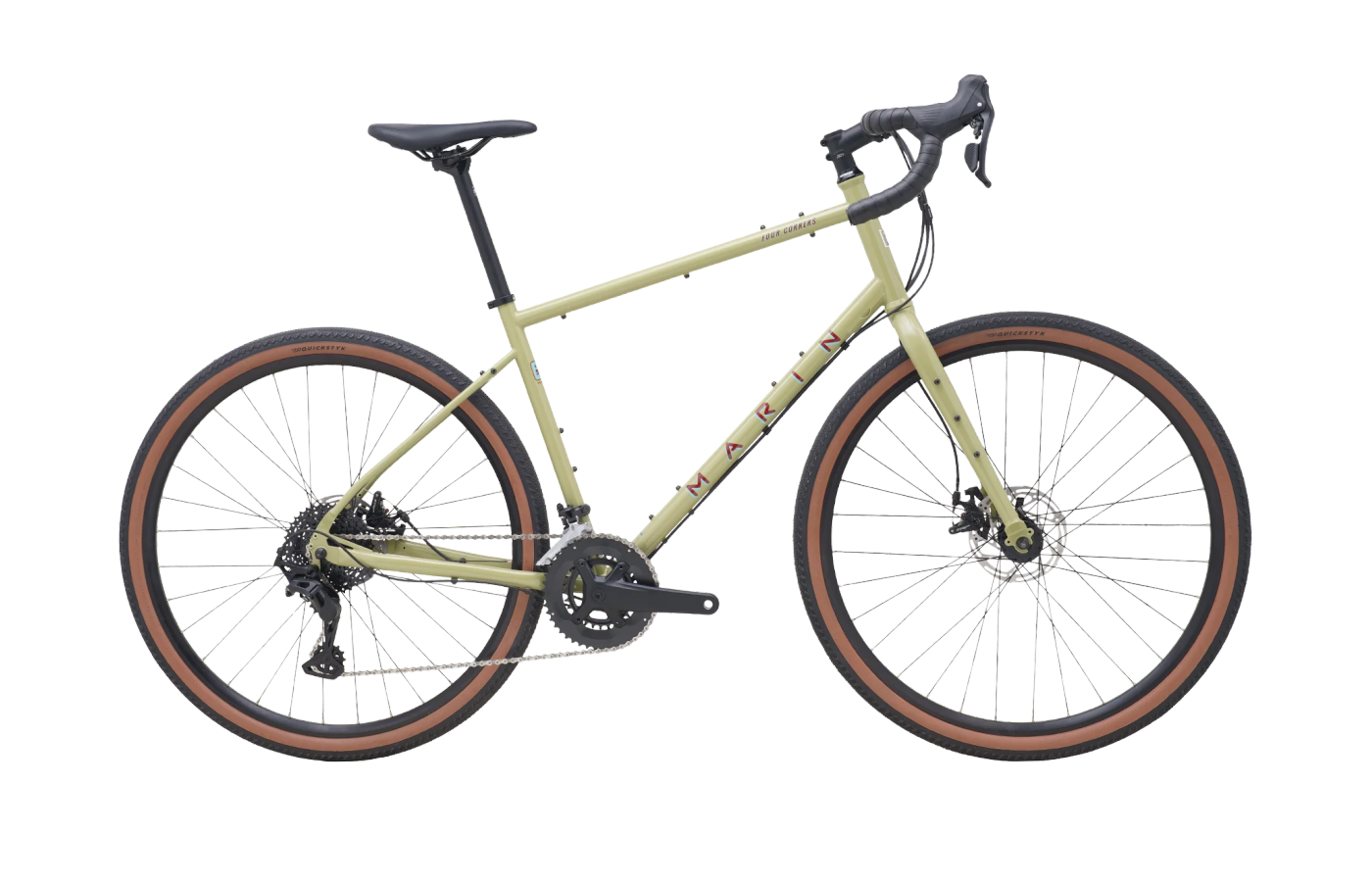
Four Corners
Another chromoly touring-gravel option at a competitive price — splits the difference between the Rove's gravel lean and the Sutra's tourist-first spec. Worth a look if you want steel and mounts without either Kona's price ceiling.
Compare →
Fargo
If the Sutra's appeal is loaded off-road touring, the Salsa Fargo takes that idea further — it's a drop-bar mountain bike with 29" tire clearance built explicitly for the chunkiest bikepacking routes. More capable off-road, less happy on pavement.
Compare →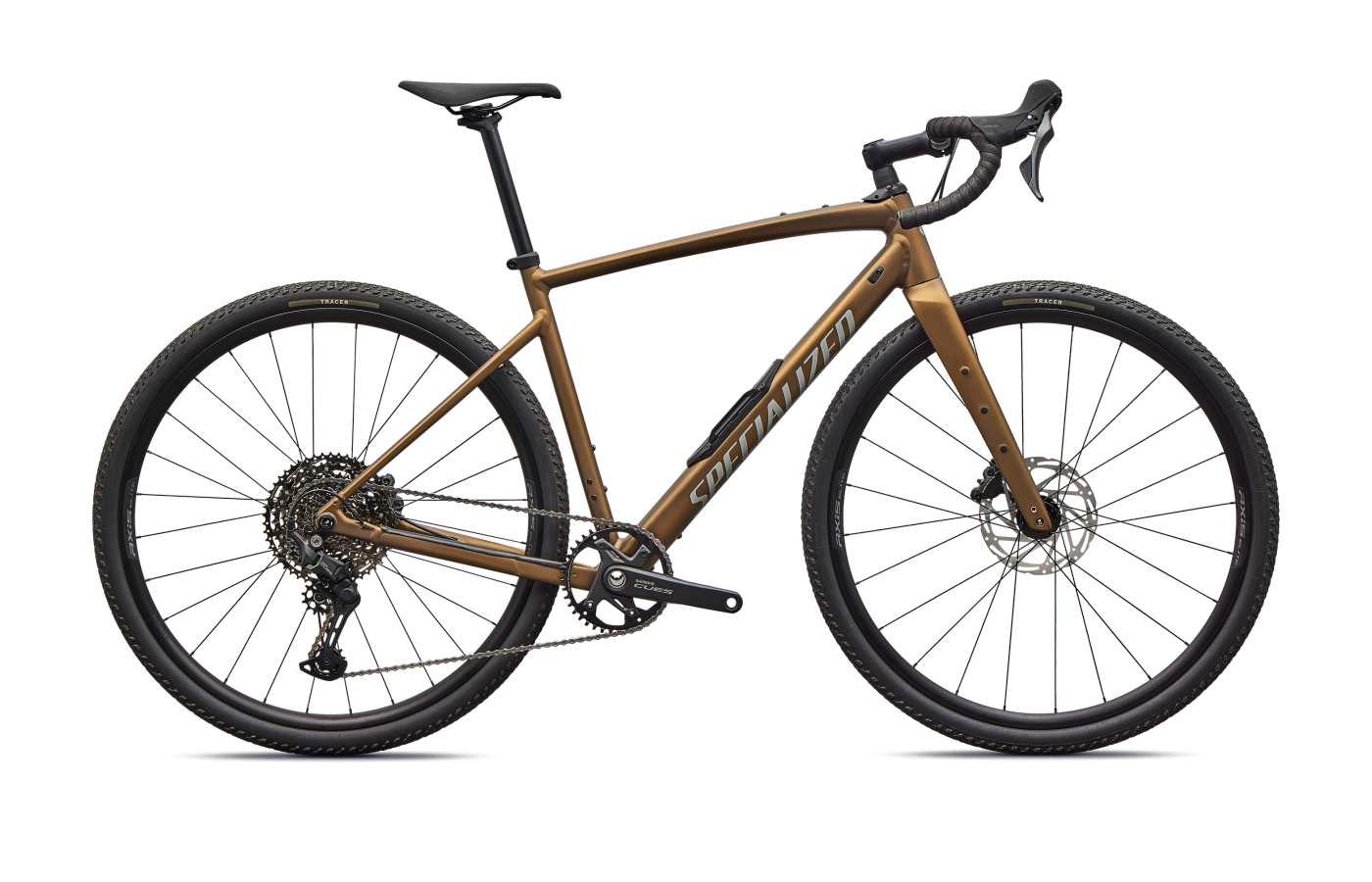
Diverge
If the Rove's strengths (lively unloaded gravel riding, mixed-surface commutes) are what you actually want, the Specialized Diverge is the more modern, performance-leaning play — carbon frame options, Future Shock front suspension on higher trims, and a racier posture.
Compare →