Rove
vsVaya
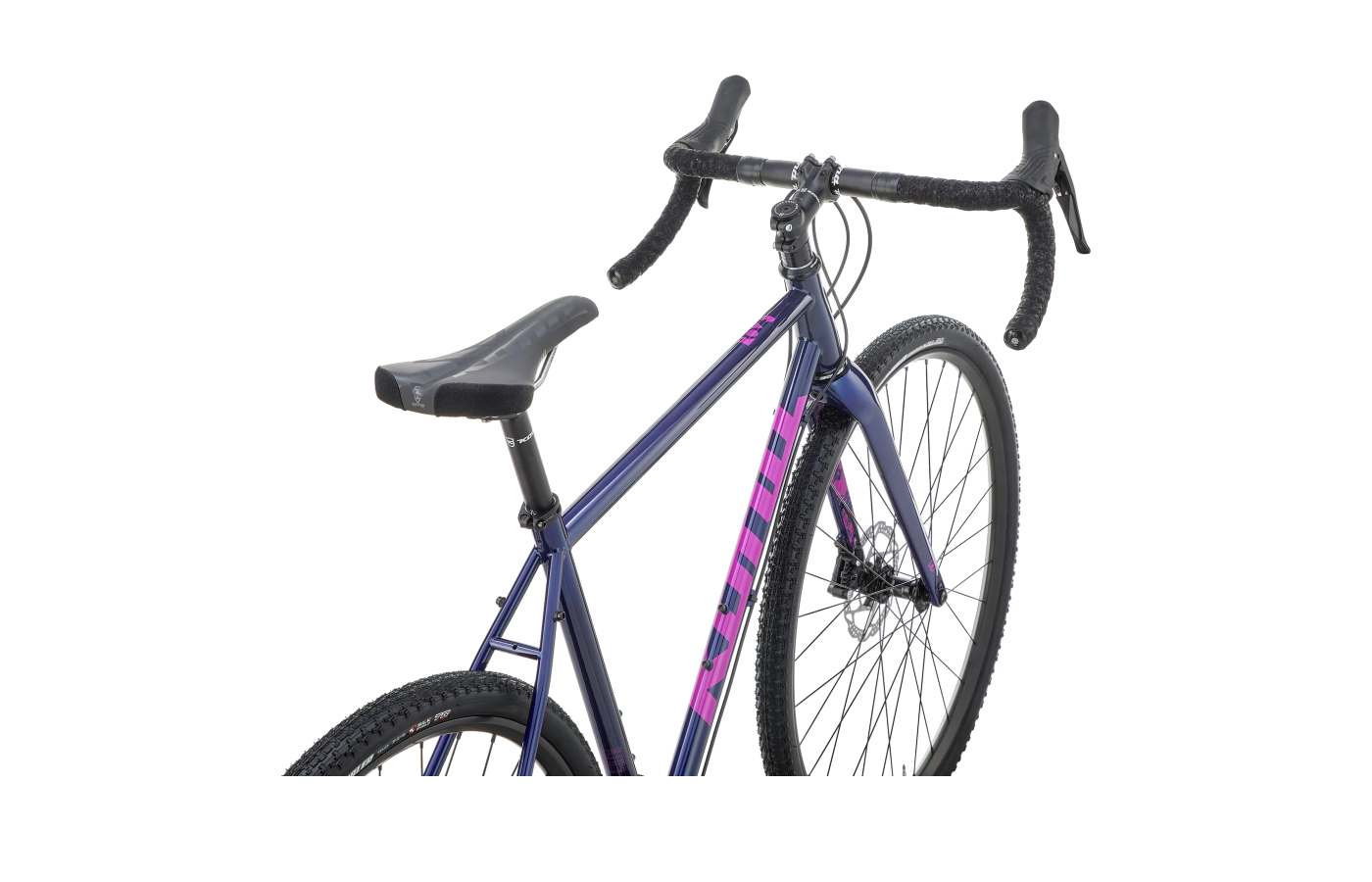
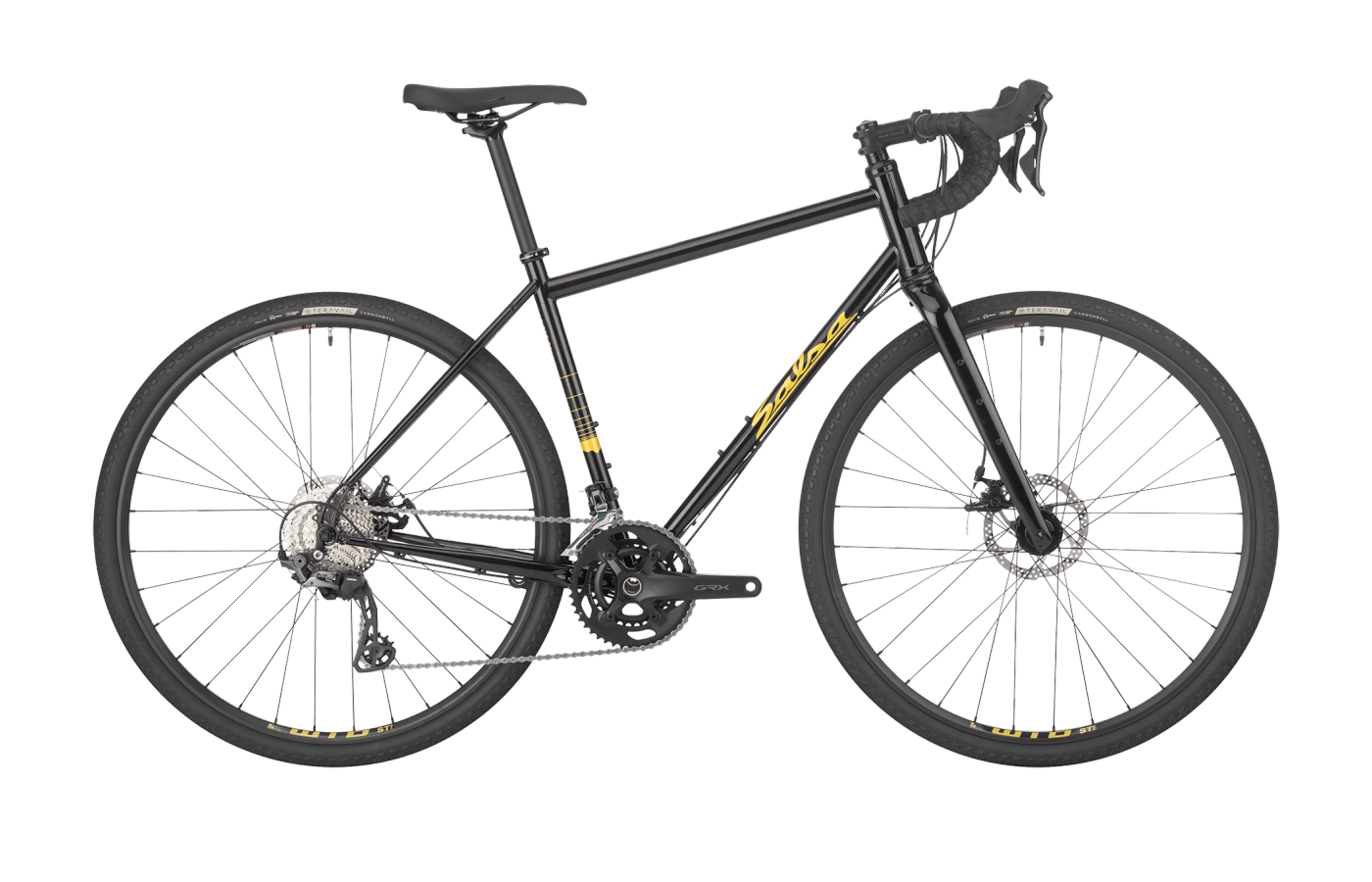
Two steel adventure bikes, two flavors of all-day.
The Kona Rove is the do-everything steel gravel platform with a build for every budget. The Salsa Vaya is the dedicated long-haul tourer, sold one way.
Rove
- Six builds, $949 to $2,899 — the broadest steel-gravel ladder going, with a credible spec at every rung.
- Carbon fork on the LTD — most direct competitors at this price still ship steel forks.
- 650b option across most of the range for riders who want fat-tire compliance without changing wheel size.
- 42 mm tire clearance is generous for gravel but trails the Vaya's 45 mm.
- Frame stiffness reads "unyielding" to lighter unloaded riders, per Bikepacking.com — only really comes alive once loaded.
Vaya
- Shimano 105/GRX 2x11 hydraulic spec is uncomplicated, well-sorted, and ready to tour out of the box.
- Triple-butted CroMoly with 450 mm chainstays — stable under heavy loads, even with 22 lb of bikepacking gear.
- 45 mm tire clearance — more room than the Rove for genuinely rough mixed-terrain touring.
- One build, one price — no cheaper entry point if $2,749 is over budget.
- Heavy at 25 lb (size 55) and intentionally not sporty; the relaxed geometry won't reward riders who like to hammer.
Editor’s analysis
Same frame material, same broad mission — but one bike spans $1,950 of build options and the other comes in a single, deliberate spec.
The Kona Rove and Salsa Vaya both start from the same place: triple- or double-butted chromoly steel, drop bars, room for a frame bag, mounts for everything. Reviewers describe both rides in the same vocabulary — "smooth," "buttery," "composed under load." If you tested them back-to-back on smooth tarmac without numbers in front of you, you'd be hard-pressed to call a winner on ride quality alone.
The lineups tell a different story. The Kona Rove ships in six builds from a $949 Claris-equipped AL alloy version up to a $2,899 GRX 12-speed LTD with a full carbon fork. That breadth is the platform's main pitch — there's a Rove for someone choosing their first drop-bar bike and a Rove for someone who already has a carbon road bike at home. The Salsa Vaya, by contrast, comes in exactly one build at $2,749: Shimano GRX 600 hydraulic 2x11, steel Salsa Waxwing fork, 700c WTB ST i19 wheels with 38 mm Teravail Cannonballs. One configuration, one decision.
Geometry-wise the two diverge in interesting ways. At our fit-picked sizes — Rove 52, Vaya 57cm — the Vaya is the longer, more relaxed bike: 450 mm chainstays vs. the Rove's 435 mm, a 1,053 mm wheelbase vs. 1,036 mm. The Rove sits a touch steeper at 71 degrees vs. 71.5, but its shorter rear end and tighter wheelbase give it the more responsive demeanor that Bikepacking.com flagged as "a bit plodding" unloaded but "notably more fun" once strapped down. The Vaya leans the other direction — relaxed and steady, even before the gear goes on.
Tire clearance also splits them: the Kona Rove takes up to 42 mm, the Salsa Vaya 45 mm. Both run capably on chunkier gravel, but the Vaya gives you more room for genuine mixed-terrain touring. The Rove counters with 650b options across most of its range, which is its own answer to the same comfort-and-traction question.
Where the builds differ.
Comparing our editor's-pick builds side-by-side. Winners highlighted row-by-row — lower price and weight, and the better-spec component, each mark a point.
Build variants & pricing
The Kona Rove ranges from a $949 Claris alloy commuter to a $2,899 GRX 12-speed LTD. The Salsa Vaya is sold in exactly one configuration at $2,749.
Prices are current US MSRP. The Vaya's GRX 600 build is the only spec Salsa offers — a Rival or 105 alternative doesn't exist on this platform. If the $2,749 entry point doesn't fit your budget, the Kona Rove is effectively your only option here.
How they fit, how they steer.
Compared at Rove 52 and Vaya 57cm — the fit-picked sizes for a 5'8" rider on each bike. The Vaya is the longer, more relaxed frame: 450 mm chainstays vs. the Rove's 435 mm, and a 1,053 mm wheelbase vs. 1,036 mm.
Which size should I buy?
Size recommendations are based on stack, reach, and effective top tube. Salsa's sizes use cm labels; Kona's use a numeric scale — both are picking the same rider's frame.
→These are starting points. Flexibility, riding style, and preferred position all shift the answer — if you’re between sizes, a professional fit beats a chart.
What the magazines said.
Published reviews from trusted cycling outlets. Click through for the full write-up.
Which one should you buy?
If you want one steel bike that scales with your budget and ambitions, get the Kona Rove. If you want a single, deliberate, tour-ready setup with no decisions to make, get the Salsa Vaya.
Rove
If you want a steel adventure bike that can commute on weekdays, hit gravel on weekends, and load up for a bikepacking overnighter — and you'd like to choose your component tier rather than have it chosen for you — the Rove is the platform with the deepest range. The LTD trim earns the pick here on Shimano-GRX parity with the Vaya.
Vaya
If your primary use is loaded touring or multi-day bikepacking and you'd rather not sift through six trim levels, the Vaya's single GRX-equipped spec is unusually focused. Long chainstays, 45 mm clearance, and a frame that's been refined around one mission make it the more deliberate tool.
Questions buyers actually ask.
Short answers to the things we get emailed about most often.
01Which is more comfortable on long rides?
Both are very close. Reviewers describe both frames in nearly identical language — "smooth," "buttery," "plush" — and the chromoly tubing on each does a similar job of damping road buzz.
If there's a tiebreaker, the Salsa Vaya's longer 450 mm chainstays and longer wheelbase give it a slightly more settled ride at the back of the bike, which matters more on multi-hour days. The Kona Rove counters with its 650b tire option on most builds, which adds compliance from the tire side instead of the frame side.
02What's the maximum tire clearance?
Kona Rove: 42 mm officially. Most builds ship with 650x47c or 700x40c Maxxis Ramblers, depending on frame size.
Salsa Vaya: 45 mm officially, with stock Teravail Cannonballs in 700x38c.
Neither is a mountain bike, but the Vaya's extra 3 mm of clearance gives it a touch more headroom for chunkier mixed-terrain touring.
03How do the drivetrains compare on the editor's-pick builds?
Both editor's picks use Shimano hydraulic disc brakes and 2x mid-tier road/gravel groupsets — that's the parity that makes the comparison fair.
The Kona Rove LTD (36SH) at $2,899 runs Shimano GRX 12-speed with a 46/30T chainring setup. The Salsa Vaya at $2,749 runs Shimano 105 shifters paired with GRX RX810 rear and GRX RX600 front derailleurs in an 11-speed 2x11 configuration with a 46/30T crank.
Both give you a wide gravel-friendly gear range. The Rove is one cog richer; the Vaya's 105 levers are a touch nicer in the hand.
04Can I tour or bikepack on either bike?
Yes, both are explicitly built for it. Both frames carry mounts for racks, fenders, three bottle cages, and (on most builds) fork-leg cargo cages.
Bikepacking.com loaded the Kona Rove LTD for multi-day trips and noted that the frame's stiffness — which reads as harsh unloaded — "became notably more fun to ride while bikepacking," maintaining a "well-mannered feel at speed."
The Salsa Vaya was reviewed with 22 lb of gear on a bikepacking trip and "took it in stride," with the longer rear-center and relaxed geometry contributing to the loaded-stability feel.
05Is the Vaya's single build a problem?
It depends. If $2,749 fits your budget and you wanted a 105-class hydraulic 2x build anyway, the Vaya removes a lot of decision-making — there's nothing to compare against itself.
If you'd prefer to start with a sub-$1,500 bike and upgrade over time, or if you specifically want SRAM 1x or Microshift, the Kona Rove is your only option here. The Rove's six trims span $949 to $2,899; the Vaya is sold one way.
06How do they handle when not loaded?
The Kona Rove is the more dynamic of the two unloaded — Road.cc found it "a lot more nimble than its 11.1 kg weight would have you believe" and rewarding when kicked out of the saddle. Bikepacking.com had the opposite read, calling it "a bit plodding when trying to sprint up to speed," so it depends what you're comparing it to.
The Salsa Vaya is unambiguously the steadier, less responsive bike: "not the most responsive bike out there, but quick enough from the start-line for what I need," per the long-term reviewer. Its 450 mm chainstays and longer wheelbase trade snap for stability.
07Does either come with hydraulic brakes at every price point?
No. The Kona Rove uses hydraulic disc brakes only on its top two builds (LTD and LTD 36SH); the DL, Base, and AL 700 builds run mechanical disc brakes (Tektro or similar). Mechanical discs are easier to service in the field but require more lever effort.
The Salsa Vaya's single build is hydraulic across the board, since it's only sold at the $2,749 GRX trim.
08What do the wheel sizes mean for the ride?
The Kona Rove offers 650b on most build/size combinations — a smaller-diameter wheel that pairs with a fatter ~47c tire to deliver a noticeably plusher, more compliant ride at the cost of some rolling efficiency. The LTD (36SH) and AL 700 builds use 700c instead.
The Salsa Vaya is 700c-only, with stock 38 mm Teravail Cannonballs. That's the more traditional all-road choice — slightly faster on smooth surfaces, slightly less cushy on broken ones.
Similar bikes
If your priorities don’t map cleanly onto either of these, one of these adjacent bikes probably fits better.
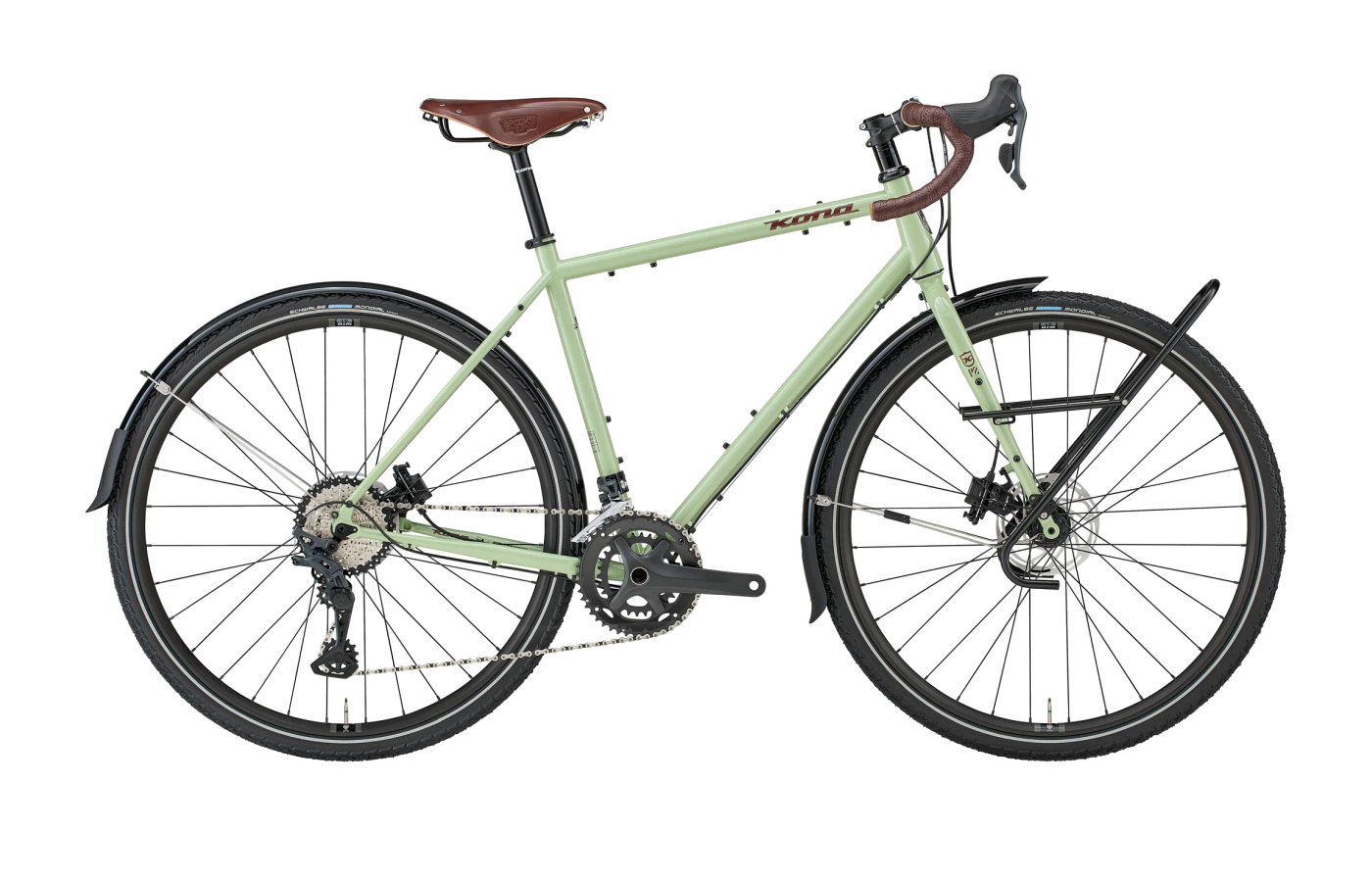
Sutra
Kona's dedicated touring bike — same steel ethos as the Rove, but built around heavy loads, fenders, and racks as standard rather than as add-ons. The pick if your real plan is loaded multi-week touring rather than weekend gravel.
Compare →
Fargo
Salsa's other steel adventure bike, but oriented around 29er wheels and mountain-bike-derived geometry. Pick the Fargo if your routes get rougher than the Vaya's 45 mm clearance is comfortable with.
Compare →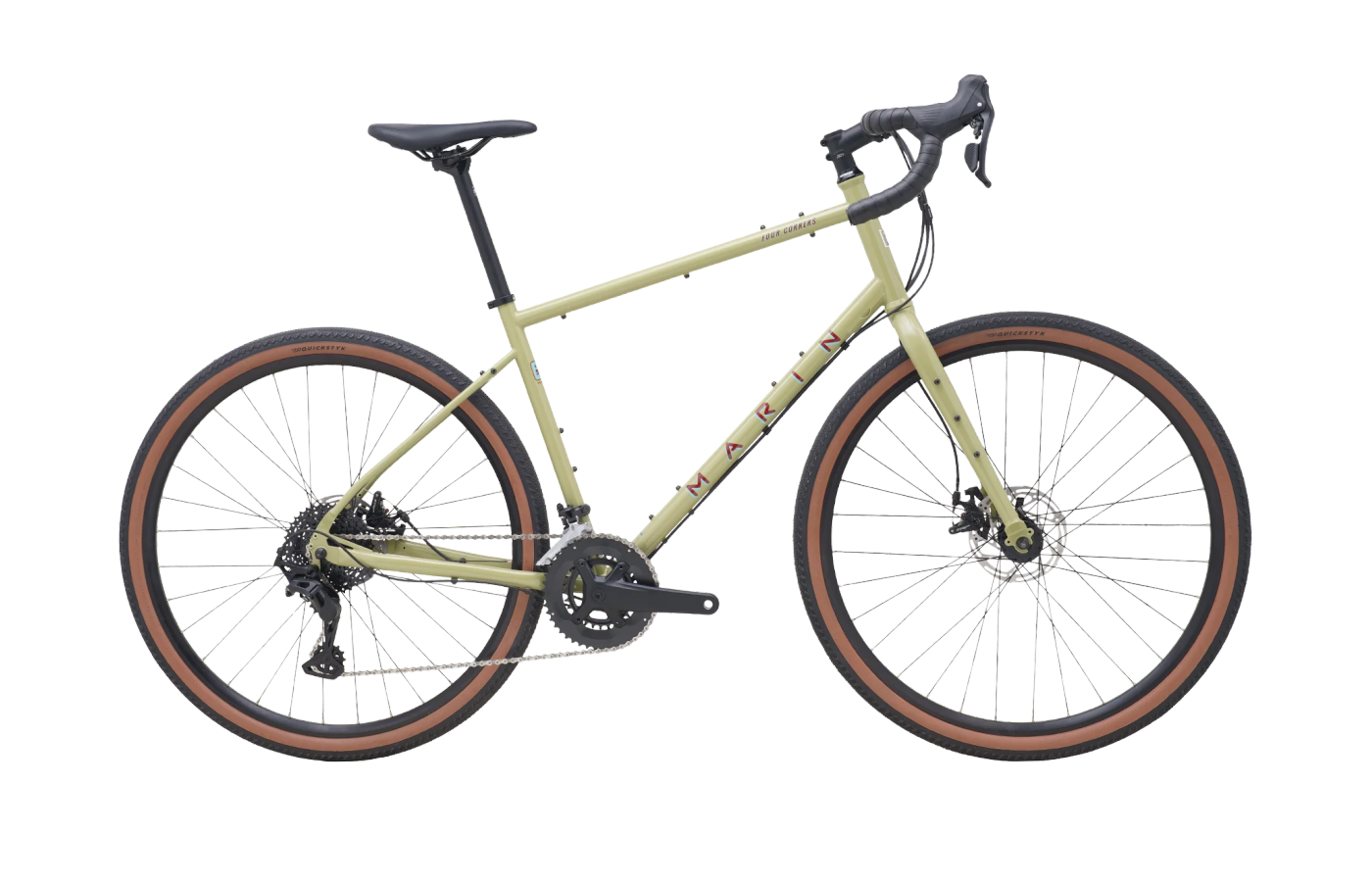
Four Corners
A steel touring/gravel bike with a similar mounts-everywhere mission, typically priced below both the Rove LTD and the Vaya. If value-per-dollar is the deciding factor and you can live without a brand-name groupset, it's worth a look.
Compare →