Libre
vsSutra
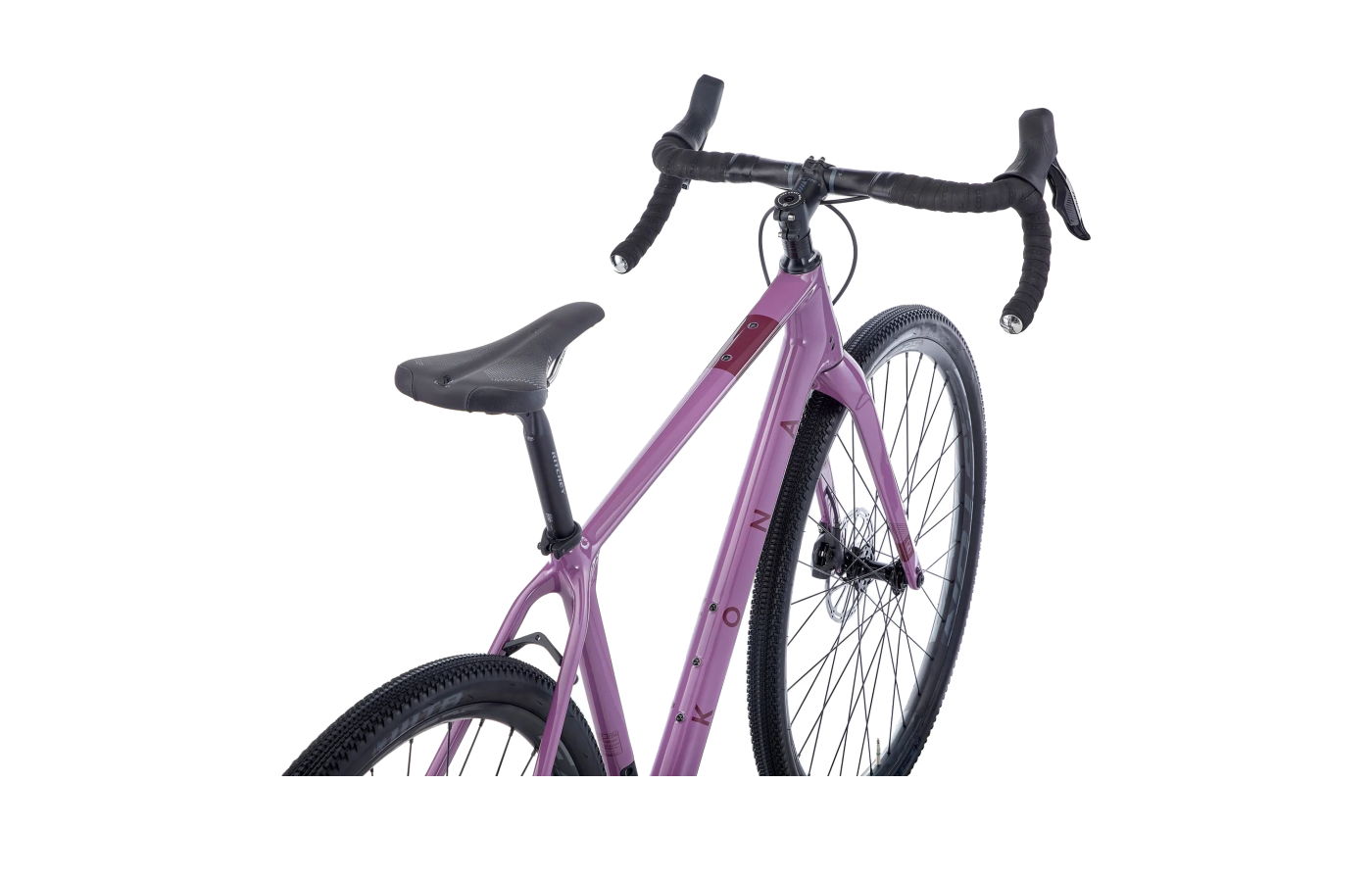
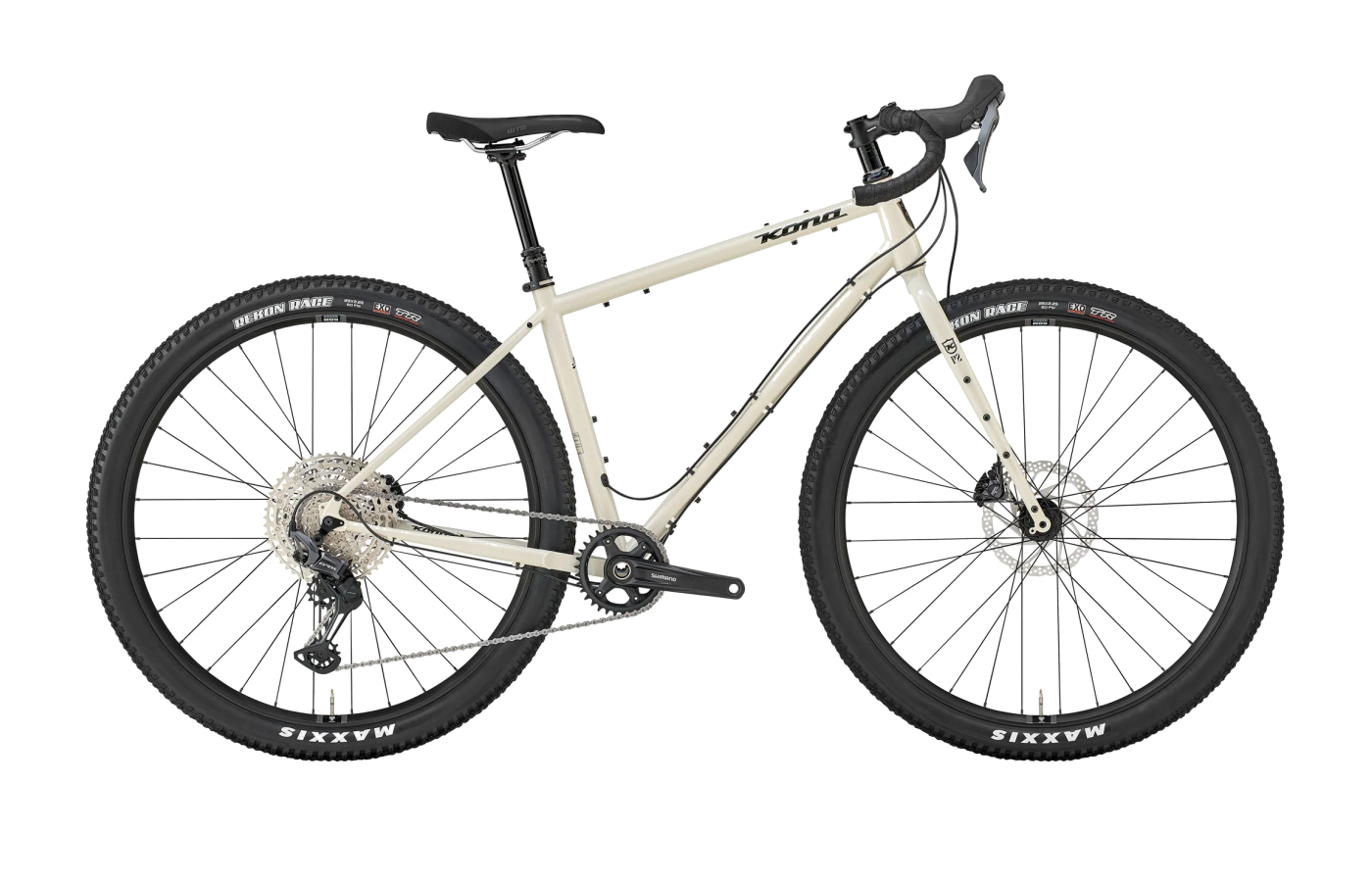
Same brand, opposite ends of the drop bar.
The Libre G2 is Kona's race-leaning carbon gravel bike. The Sutra is its steel touring workhorse — built to carry gear, not chase KOMs.
Libre
- Wireless electronic shifting at $4,399 — SRAM Apex AXS XPLR is a real perk at this price point.
- Race-leaning geometry — shorter 435 mm chainstays and a steeper seat angle for snappy climbs and acceleration.
- Carbon frame with modern features — UDH, dropper-compatible 27.2 mm seatpost, fully guided internal routing.
- 45 mm tire clearance with fenders (50 mm without) — narrower than most adventure-focused rivals.
- Stock Easton ARC 25 wheels are durable but not light; reviewers flagged them as an upgrade target.
Sutra
- Steel touring frame with seven main-triangle mounts, three-pack fork mounts, and rack/fender bosses everywhere.
- Up to 29x2.25 tire clearance on the LTD trims — full mountain-bike rubber on a drop-bar bike.
- $1,599 starting price — the Standard build with Microshift Sword undercuts almost every modern gravel bike.
- Heavy by gravel standards — around 32 lb in size 58 — and not designed to feel snappy.
- Mechanical shifting only across the lineup; no electronic option even on the top LTD.
Editor’s analysis
One Kona is sharpening into a gravel racer. The other is happy being the same loaded touring rig it has always been.
The Libre G2 and the Sutra wear the same head badge and almost nothing else. The Libre is Kona's modern carbon gravel platform — wireless electronic shifting, 435 mm chainstays, a steeper seat angle, and a frame built around going faster. The Sutra is chromoly steel, mechanically shifted, and shipped with a Brooks B17 saddle and a Tubus Tara front rack at the lowest two trims. The brand sells them to two different riders.
On geometry, the bikes look closer than they ride. Both run a 70.5-degree head tube angle. But the Kona Libre at size 50 has a 565 mm stack and 385 mm reach against the Kona Sutra's 570 mm stack and 380 mm reach — slightly lower and longer on the Libre, and that's before you account for the 10 mm shorter chainstays (435 vs 445 mm). The Libre wants to be ridden in the drops; the Sutra wants you upright with a coffee stop on the way home.
Then there's the price gap. The Libre CR with SRAM Apex AXS XPLR sits at $4,399. The Sutra tops out at $2,899 for the LTD with Shimano GRX 1x and 29x2.25 mountain bike tires, and starts at $1,599 with Microshift Sword. So you're not just choosing a ride character — you're choosing a budget bracket. The Sutra is the cheapest way into a credible loaded-touring rig in 2025; the Libre is the cheapest way into a wireless carbon gravel race bike with Kona's badge on it.
Put another way: if your dream ride is a 168-mile bikepacking weekend at threshold pace, the Libre is the pick. If your dream ride is the Pacific Coast over six weeks with four panniers, it's the Sutra. There is almost no overlap in between.
Where the builds differ.
Comparing our editor's-pick builds side-by-side. Winners highlighted row-by-row — lower price and weight, and the better-spec component, each mark a point.
Build variants & pricing
The Libre comes in two builds — carbon CR with wireless shifting, or aluminum Base. The Sutra spans three steel builds, all mechanical, topping out at the LTD with mountain-bike tires.
Prices are current US MSRP. The two platforms barely overlap on price: the Libre starts at $2,099 and tops out at $4,399, while the Sutra runs $1,599 to $2,899. There is no carbon Sutra and no electronic Libre below $4,399.
How they fit, how they steer.
Both at size 50. The Libre sits 5 mm lower in stack with 5 mm more reach — a more stretched, lower position. The Sutra runs 10 mm longer chainstays (445 vs 435 mm), which dampens snap but plants the bike when loaded.
Which size should I buy?
Size recommendations are based on stack, reach, and effective top tube. Both bikes use the same numerical size labels and overlap closely across the range.
→These are starting points. Flexibility, riding style, and preferred position all shift the answer — if you’re between sizes, a professional fit beats a chart.
What the magazines said.
Published reviews from trusted cycling outlets. Click through for the full write-up.
Which one should you buy?
If you want to race or rip gravel, get the Libre. If you want to load four panniers and cross a continent, get the Sutra.
Libre
If your gravel calendar has start lines on it and your weekend rides chase Strava segments, the Libre G2 is the pick. Wireless shifting at $4,399, snappier geometry, and a carbon frame that reviewers consistently call "fast, playful, and fun." Light bikepacking still works; loaded touring is not what it's for.
Sutra
If most of your riding involves panniers, multi-day routes, or a daily commute that doubles as bike infrastructure, the Sutra is built for you. Steel frame, full mounts, mechanical drivetrain you can fix anywhere, and LTD-trim tire clearance up to 2.25 inches. Slow to accelerate, but happy to keep going forever.
Questions buyers actually ask.
Short answers to the things we get emailed about most often.
01Which bike is faster?
The Kona Libre G2, by a wide margin. It's a carbon-framed gravel race bike with shorter chainstays, a steeper seat angle, and a stretched-out cockpit — built for acceleration and climbing efficiency. Reviewers consistently describe it as "fast, playful, and fun as hell" and "eager for sprints and climbs."
The Sutra is a steel touring rig that weighs roughly 32 lb in size 58. Reviewers note it can feel "a little dull" off the line, though it holds momentum well once rolling. It's not trying to be quick.
02What's the maximum tire clearance on each?
Kona Libre G2: 45 mm with fenders, up to 50 mm without. The CR ships with WTB Vulpine 700x45c tires, and reviewers noted some have run 48 mm tires successfully.
Kona Sutra: roughly 50 mm officially on the standard build; the LTD trims ship with 29x2.25 (effectively ~57 mm) Maxxis Rekon Race tires from the factory. Some owners have squeezed even larger 650b tires in. The Sutra wins this category outright.
03Why does the Libre cost so much more?
Three reasons: carbon frame, wireless electronic shifting, and a more performance-focused build kit. The Libre CR at $4,399 gets you SRAM Apex AXS XPLR — wireless 1x12 — plus a Kona Carbon frame with UDH and a dropper-compatible seatpost.
The Sutra LTD at $2,899 uses chromoly steel and a mechanical Shimano GRX 1x drivetrain. The frame is heavier and the components are simpler, but mechanical shifting is also more field-serviceable for long tours far from a shop.
04Can either bike handle bikepacking?
Both can — but they target different bikepacking styles.
The Libre G2 has top tube bag mounts, two main-triangle bottle mounts, and one under-the-downtube mount. One reviewer ran a 168-mile bikepacking trip on it and called it a "comfortable platform over two big days out." Light, fast bikepacking is squarely in scope.
The Sutra is built for it. Seven main-triangle mounts, three-pack fork mounts on both fork blades, plus rack and fender bosses. The Standard and LTD builds even ship with a Brooks B17 saddle and Tubus Tara low-rider front rack stock — touring-ready out of the box.
05Is the Sutra still relevant in a world of carbon gravel bikes?
Yes, for one specific buyer: the rider who actually tours on their bike. Carbon gravel bikes optimize for ride-and-return weekends with a hydration pack. The Sutra optimizes for weeks on the road with full panniers, which is a different problem.
Its steel frame is more repairable, its mechanical drivetrain works without batteries, and Bikepacking.com noted the steel frame "will outlast many of the flashier carbon and even titanium bikes." If your bike needs to keep working in rural Kyrgyzstan, the Sutra is the tool.
06Do either come in an electronic-shift build under $4,000?
No. The Libre CR is the only electronic build in either lineup at $4,399. The aluminum Libre Base ($2,099) uses Shimano Cues mechanical, and every Sutra build is mechanical — Shimano GRX 1x on the LTD (36sh), SRAM Rival 1 on the LTD, and Microshift Sword on the Standard.
If wireless shifting under $4,000 is a hard requirement, neither bike fits.
07Which has better climbing performance?
The Libre G2, decisively. Multiple reviewers called it "eager to go up" and "frothing" on punchy climbs, attributing this to the carbon frame, steeper seat angle, and shorter chainstays that put the rider more centered over the bottom bracket.
The Sutra will climb anything — its low gearing was praised even on "20 percent ramps" while loaded — but the 32 lb weight means you're paying for it. Geared-down and patient climbs, not punchy attacks.
08What's the warranty story on each?
Both come with lifetime frame warranties to the original owner against manufacturing defects, plus 1 year on the complete bicycle. Kona's warranty terms are the same across both platforms.
One caveat from the Libre review at CX Magazine: Kona will void the warranty if a suspension fork is paired with the Libre CR — the geometry is not suspension-corrected, unlike Kona's Ouroboros gravel bike.
Similar bikes
If your priorities don’t map cleanly onto either of these, one of these adjacent bikes probably fits better.
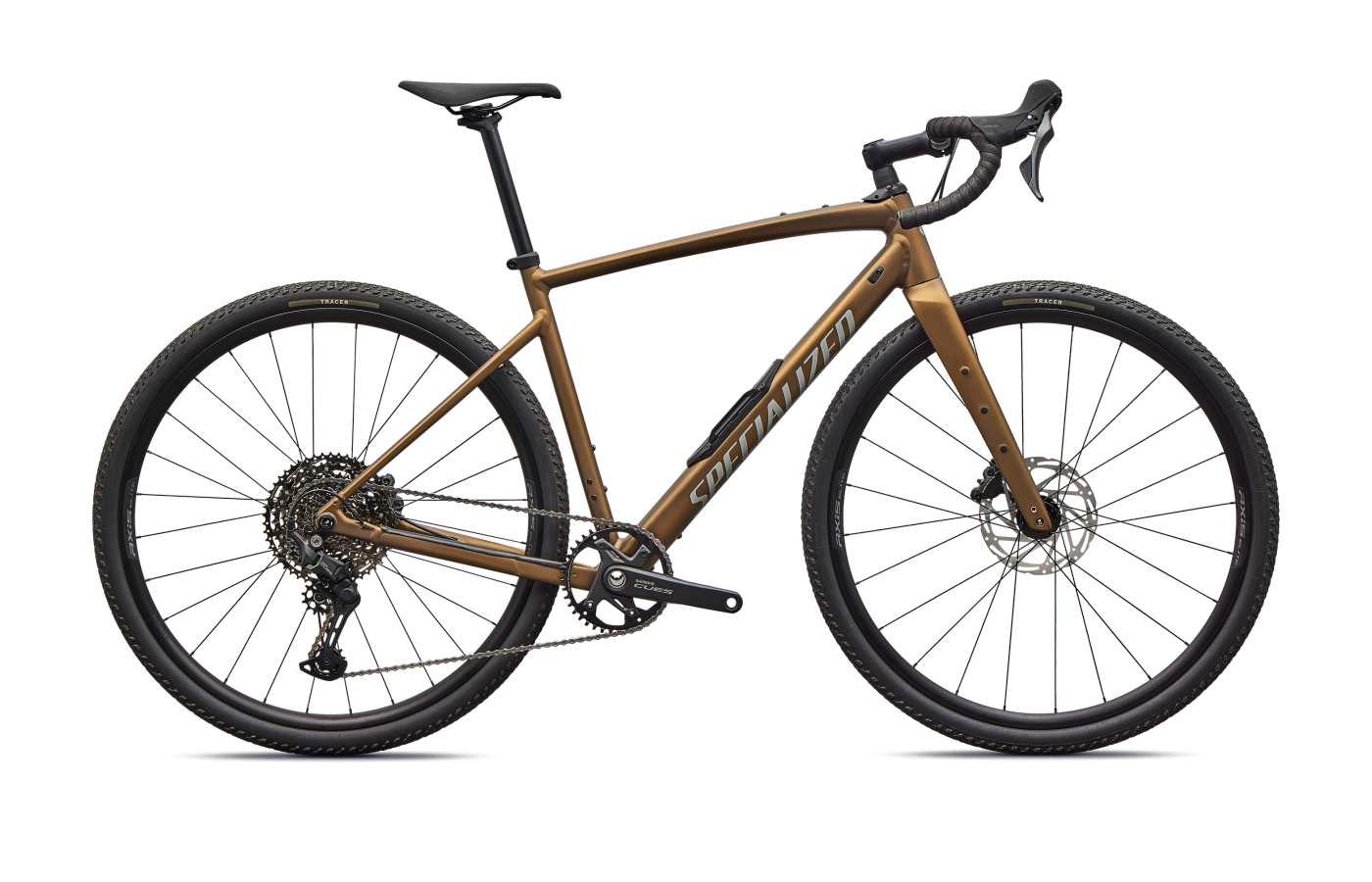
Diverge
The mainstream alternative to the Libre — Specialized's carbon gravel platform with the Future Shock front suspension and Diverge-style versatility. Slightly more endurance-leaning, with a wider build range than Kona offers.
Compare →Grizl
Canyon's direct-to-consumer carbon gravel bike — typically 25–35% cheaper than equivalently-specced rivals. Slightly more aggressive than the Libre, with similar performance ambitions.
Compare →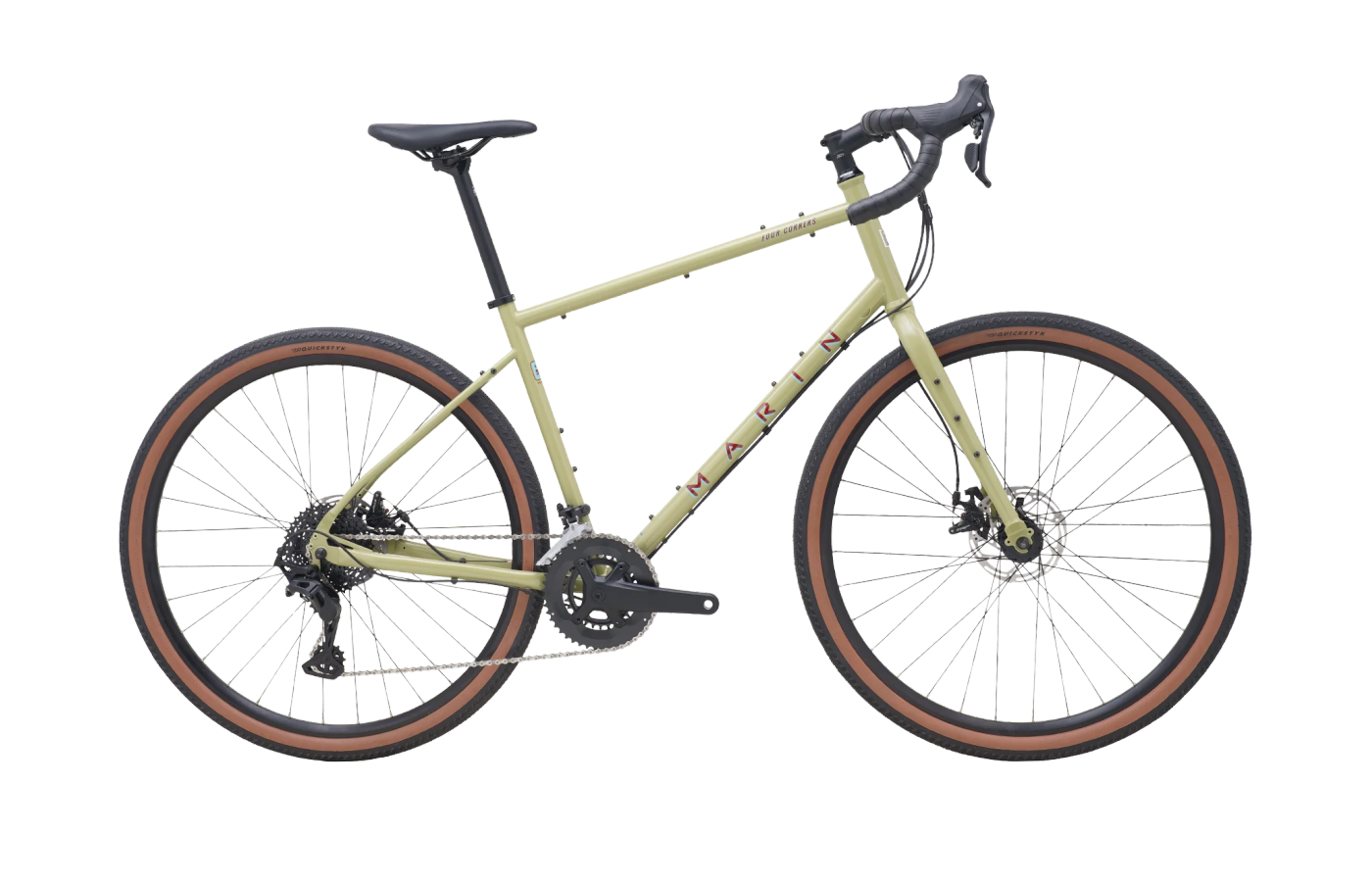
Four Corners
Marin's classic steel touring rig — a direct philosophical sibling to the Sutra at a comparable price. Same mounts-everywhere approach, similar load-carrying focus, often cheaper depending on spec.
Compare →