O2
vsONE
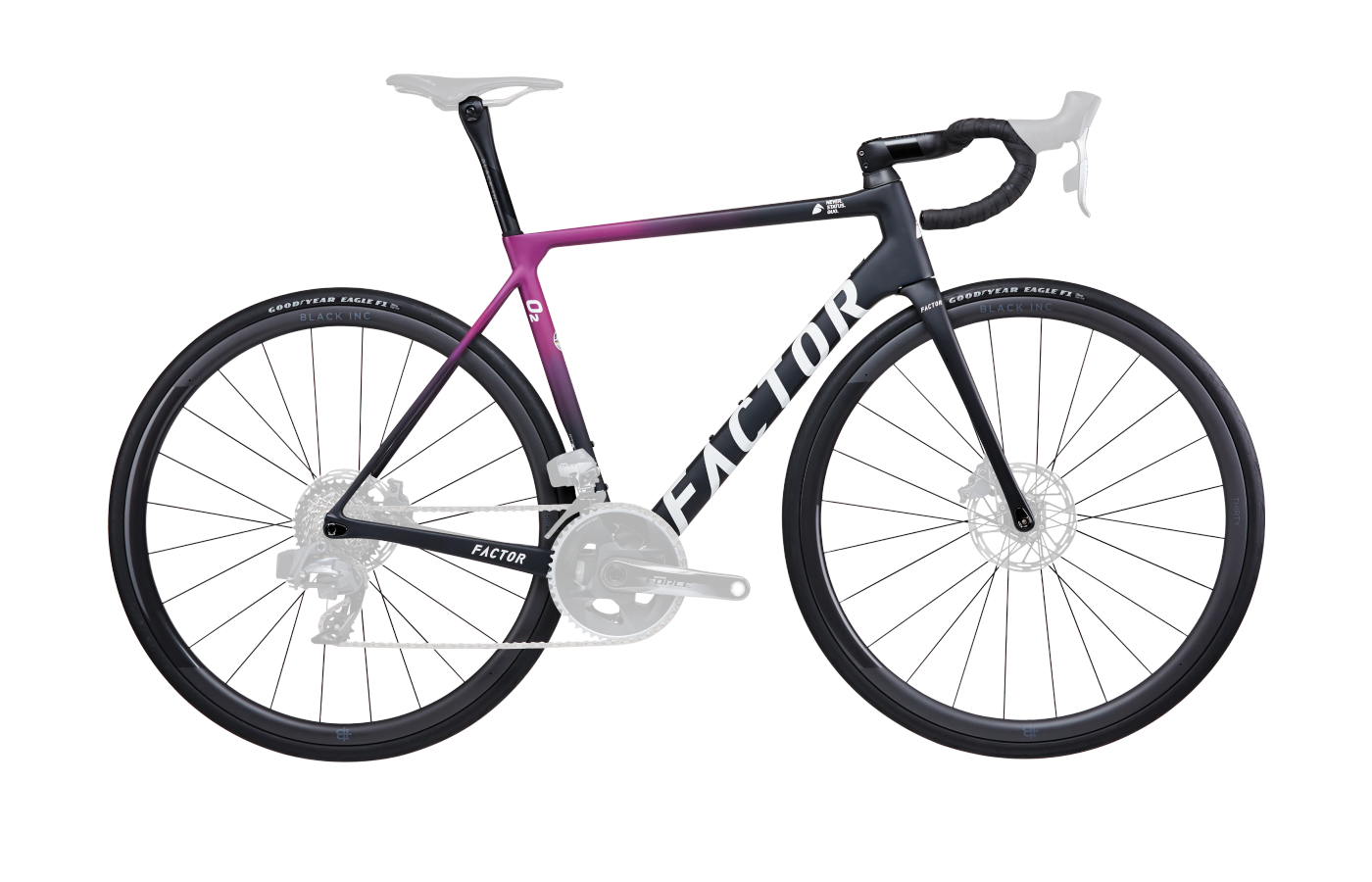
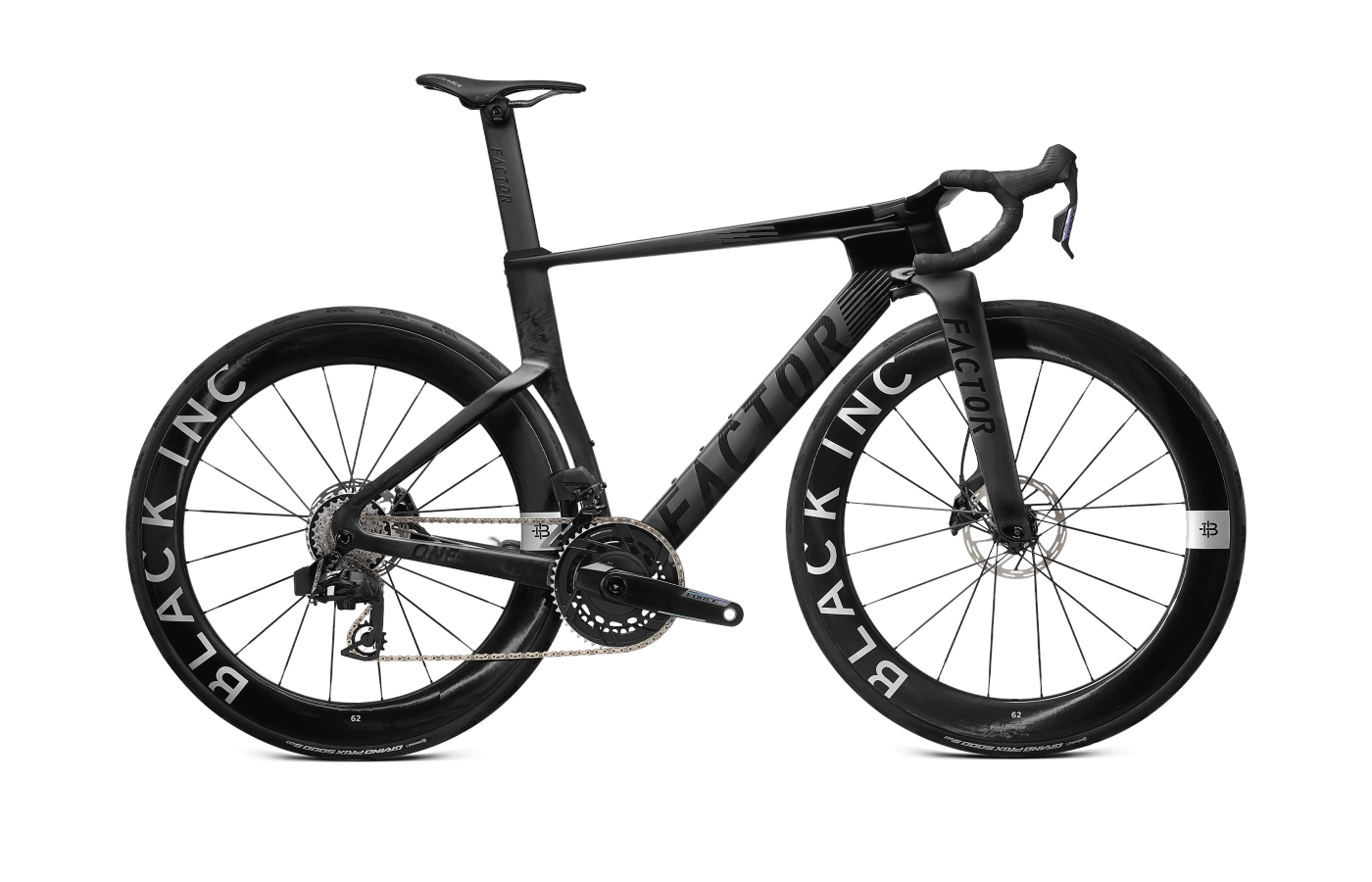
One brand, two answers to what fast means.
The O2 is Factor's classical featherweight climber. The ONE is the brand's UCI-barely-legal aero moonshot.
O2
- Uphill weapon — reviewers call it one of the best-climbing frames on the market with "no real rivals" in the climbing domain.
- Lighter complete builds — Force AXS hits ~6.9 kg, top spec drops to ~6.2 kg, giving a clear seconds-per-climb advantage.
- Cheaper entry — $8,199 for the Ultegra Di2 build vs. $11,999 for the ONE's lowest rung.
- Firm ride from a stiff frame and integrated seatpost — reviewers warn it "concedes little or nothing to ride comfort."
- 30 mm tire clearance limits rougher road use; the ONE fits a 34.
ONE
- Fastest UCI-legal aero claim — wind-tunnel data shows ~2 W advantage at 40 km/h over the next-quickest aero bike tested.
- Progressive race geometry — 76° seat tube and lower BB let riders hold an aggressive, forward position without excessive stem or saddle hacks.
- Wider 34 mm tire clearance — unusually generous for an aero bike, giving real options on rougher tarmac.
- $3,800+ price premium at the entry tier and ~650 g heavier than the O2 on climbs.
- Stock Black Inc SIXTY TWO wheels are criticized by multiple reviewers for crosswind handling.
Editor’s analysis
Same badge, opposite philosophies — weight versus watts, and the gap between them is wider than most brands dare to let their own lineup stretch.
The Factor O2 and the Factor ONE occupy the same catalog page and almost no other common ground. The O2 is a refined traditional climbing race bike — round tubes, a shallow 28|33 wheelset, and an 885g frame that gets a full build down near 6.9 kg with Force. It's the bike for the rider who measures their routes in vertical meters and wants every gram to work.
The ONE is the other extreme. Factor calls it the fastest UCI-legal road bike, and Cycling News' wind-tunnel data backs it: 61.5 W at 40 km/h, the lowest CdA in their test, a two-watt margin over the next competitor. Velo's reviewer weighed one at 7.54 kg for a 54 cm — a kilogram heavier than a loaded O2 — with a wide-stance bayonet fork, deeply profiled tubes, and a proprietary integrated cockpit that mounts directly to the fork crown.
Geometry tells the same story. In size 54, the O2 runs a 73.0° seat tube and a 384 mm reach — classic race fit. The Factor ONE in size 54 steps the seat tube to 76.0°, stretches reach to 404 mm, and drops the bottom bracket further. That's not a tweak; that's a different riding position designed for the forward, aggressive fit Factor says modern pros have migrated to. Reviewers describe the resulting ride as quick-in, stable-through — not twitchy — once you commit to the aero posture.
Where this lands: the O2 is the bike for a rider who climbs more than they sprint and wants something that disappears underneath them. The ONE is for the crit racer, the breakaway specialist, or the triathlete who lives above 35 km/h and is willing to trade climbing weight, budget, and compatibility for real aero gains on flat and rolling terrain.
Where the builds differ.
Comparing our editor's-pick builds side-by-side. Winners highlighted row-by-row — lower price and weight, and the better-spec component, each mark a point.
Build variants & pricing
Same four-tier Shimano/SRAM ladder on the O2; the ONE adds a Campagnolo Super Record 13s flagship. Neither platform sells a mechanical or sub-$8k build.
Prices are current US MSRP. The O2 starts at $8,199 and tops out at $10,299; the ONE starts at $11,999 and reaches $14,499 with Super Record. No entry-level Rival or 105 builds exist on either side.
How they fit, how they steer.
Both at size 54. Stacks match at 542 mm, but the ONE adds 20 mm of reach (404 vs 384) and runs a 76° seat tube — 3° steeper than the O2's 73°. Chainstays are 1 mm shorter on the ONE; trail is near-identical at ~58 mm.
Which size should I buy?
Size recommendations are based on stack, reach, and effective top tube. The O2 runs one size smaller (49 cm) and the ONE one size smaller (47 cm) at the bottom; both top out at 58.
→These are starting points. Flexibility, riding style, and preferred position all shift the answer — if you’re between sizes, a professional fit beats a chart.
What the magazines said.
Published reviews from trusted cycling outlets. Click through for the full write-up.
Which one should you buy?
If you climb more than you sprint, get the O2. If you live above 35 km/h on flat to rolling terrain, the ONE is the rocket.
O2
Pick the O2 if your rides are measured in vertical meters and you want a frame that feels feather-light beneath you. It's the cheaper bike, the lighter bike, and the better tool for ascending — with the trade-off of a firm ride and sharp handling that demands an engaged rider.
ONE
Pick the ONE if most of your riding is flat or rolling and you're chasing watts saved, not grams. The progressive geometry is genuinely novel, the straight-line speed is independently verified, and it sits at or near the top of every aero bike list — with a price floor and stock wheel choice to match.
Questions buyers actually ask.
Short answers to the things we get emailed about most often.
01Which is faster on flat roads?
The Factor ONE, by a measurable and independently verified margin. Cycling News' wind-tunnel testing put the ONE at the lowest CdA in their field (0.0747, requiring 61.5 W at 40 km/h), roughly two watts ahead of the next-best aero bike tested. Velo's reviewer described a "floating" sensation above 25 mph (45 km/h) and an "endless tailwind" feel above 30 mph.
The O2 is a round-tube climbing platform with a shallow 28|33 wheelset — it is competitive on rolling terrain but was never designed to win a flat TT.
02Which climbs better?
The Factor O2, clearly. Reviewers call it "one of the absolute best bikes one can have" for climbing, with "no real rivals" in the segment. The top-tier O2 reportedly weighs around 6.2 kg, and the Force AXS build comes in near 6.9 kg.
The ONE, by contrast, weighs ~7.54 kg in a 54 cm size (Velo's measured weight). That's roughly 650 g more — about 1% of a 70 kg rider's system weight, enough to feel on any sustained climb. Velo's reviewer was surprised the ONE climbed as well as it did for an aero bike, but nobody picks it for uphill work.
03What's the maximum tire clearance?
Factor O2: 30 mm. Fine for smooth tarmac and chip-seal; not a gravel or Roubaix-ready frame.
Factor ONE: 34 mm — unusually generous for a dedicated aero bike. Real-world measured clearance with 30 mm tubeless tires is commonly reported in reviews.
Neither bike is a gravel bike. If you want rougher-road capability, look at Factor's own Ostro VAM or a dedicated all-road platform.
04How does the geometry actually differ?
In size 54, both bikes share a 542 mm stack, so bar height is similar. But the ONE adds 20 mm of reach (404 vs 384) and runs a much steeper seat tube (76.0° vs 73.0°). That 3° seat-tube difference is the headline: the ONE puts the rider further over the bottom bracket in a forward, aggressive position, while the O2 runs a classical, more upright race fit.
Head tube angles are within 0.2° (73.3° vs 73.1°), trail is within a millimeter (~58 mm both), and chainstays are nearly identical (405 vs 406 mm). Handling character is similar; fit philosophy is not.
05Are the integrated cockpits compatible or swappable?
Factor O2 uses the Black Inc Integrated Barstem, which offers multiple stem lengths and bar widths. Standard for an integrated setup — changes mean buying a new unit and a partial re-bleed.
Factor ONE uses the new Factor Integrated Barstem, which mounts directly to the fork crown. It ships in a single 380 mm bar width (for aero) with five reach options and high-rise alternatives — narrow by road-bike standards. If you ride a 40 cm or wider bar today, the ONE's cockpit will feel cramped.
The two cockpits are not cross-compatible.
06Is mechanical shifting an option on either?
No. Every build of both bikes uses electronic shifting — Shimano Di2, SRAM AXS, or (on the ONE only) Campagnolo Super Record 13s wireless. Neither frame is routed for mechanical cable-shift drivetrains, so if you want a 105 mechanical or Campagnolo cable build, these are not the bikes.
07Why is the ONE so much more expensive than the O2?
The ONE starts at $11,999 (Shimano Ultegra Di2) — $3,800 more than the O2's entry build at $8,199. The premium reflects the ONE's newer platform, more exotic materials (TeXtreme and pitch-based carbon vs. the O2's Toray pan-based layup), deeper Black Inc SIXTY TWO wheels, and the radical integrated cockpit. Every build also comes with the proprietary Wide Stance Fork and the progressive geometry package.
Both ranges top out around $14k (Super Record 13s on the ONE, SRAM Red w/ Power Meter on the O2), but the O2 gives you more bike for fewer dollars if climbing performance is the goal.
08Crosswinds — should I worry about the ONE's wheels?
Multiple reviewers flagged the stock Black Inc SIXTY TWO wheels as the weak spot. NERO Cycling called them "dated" and said they "suck" in crosswinds; Velo reported the bike getting "pushed around in crosswinds more than I'd normally expect." Bicycling was more forgiving, describing crosswind behavior as "smooth and well-controlled."
For the O2, the shallower Black Inc 28|33 profile is generally reported as stable in side winds. If you ride in an open, windy area and buy the ONE, budget mentally for a wheel upgrade.
Similar bikes
If your priorities don’t map cleanly onto either of these, one of these adjacent bikes probably fits better.
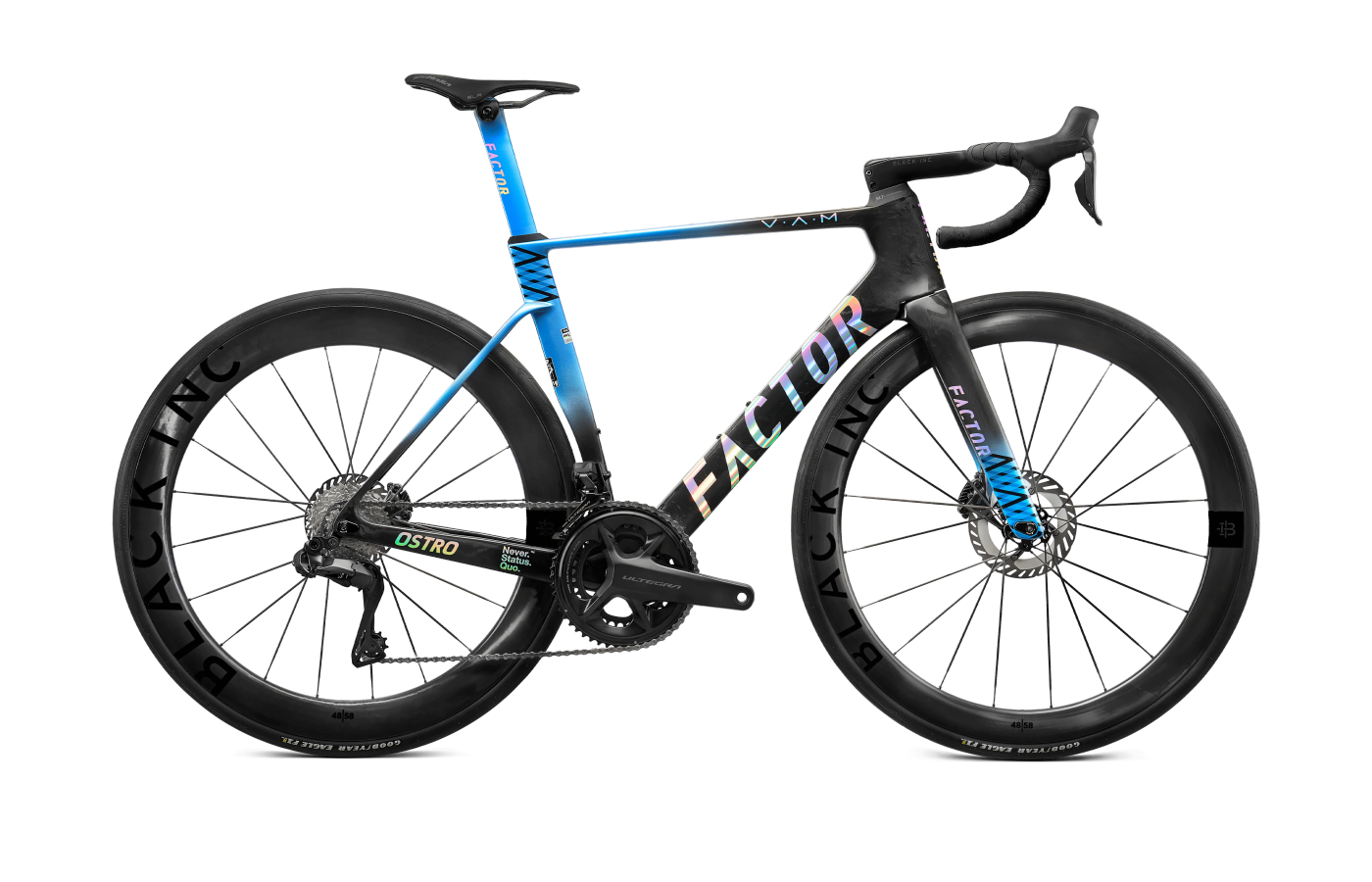
Ostro VAM
Factor's own middle path — the Ostro VAM is the do-it-all aero-climber that sits between the O2 and the ONE. If you want one Factor instead of two, this is the bike.
Compare →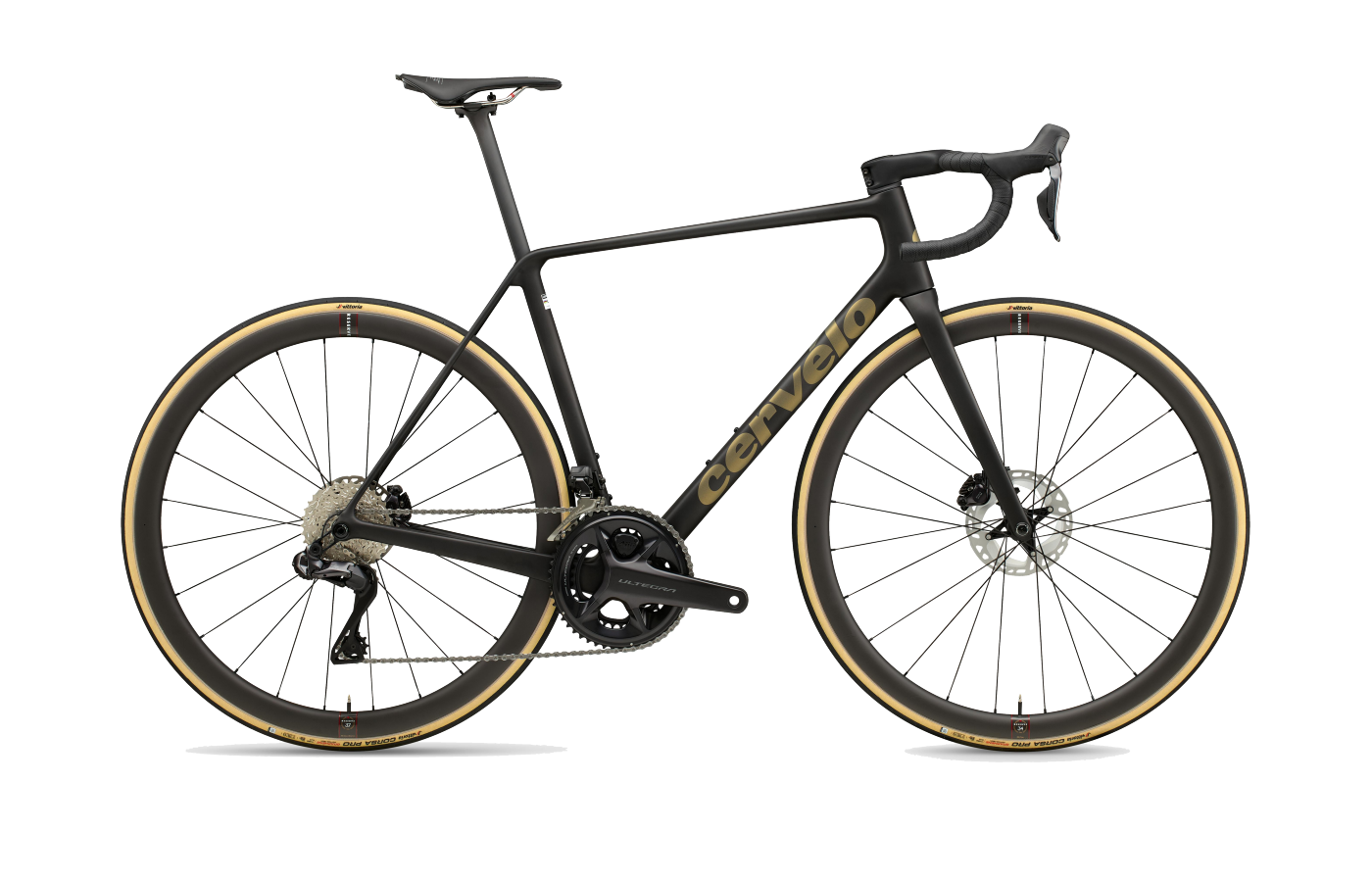
R5
Cervelo's lightweight race platform — a direct rival to the O2 on climbs, with similar all-around race intent and a comparable price ceiling.
Compare →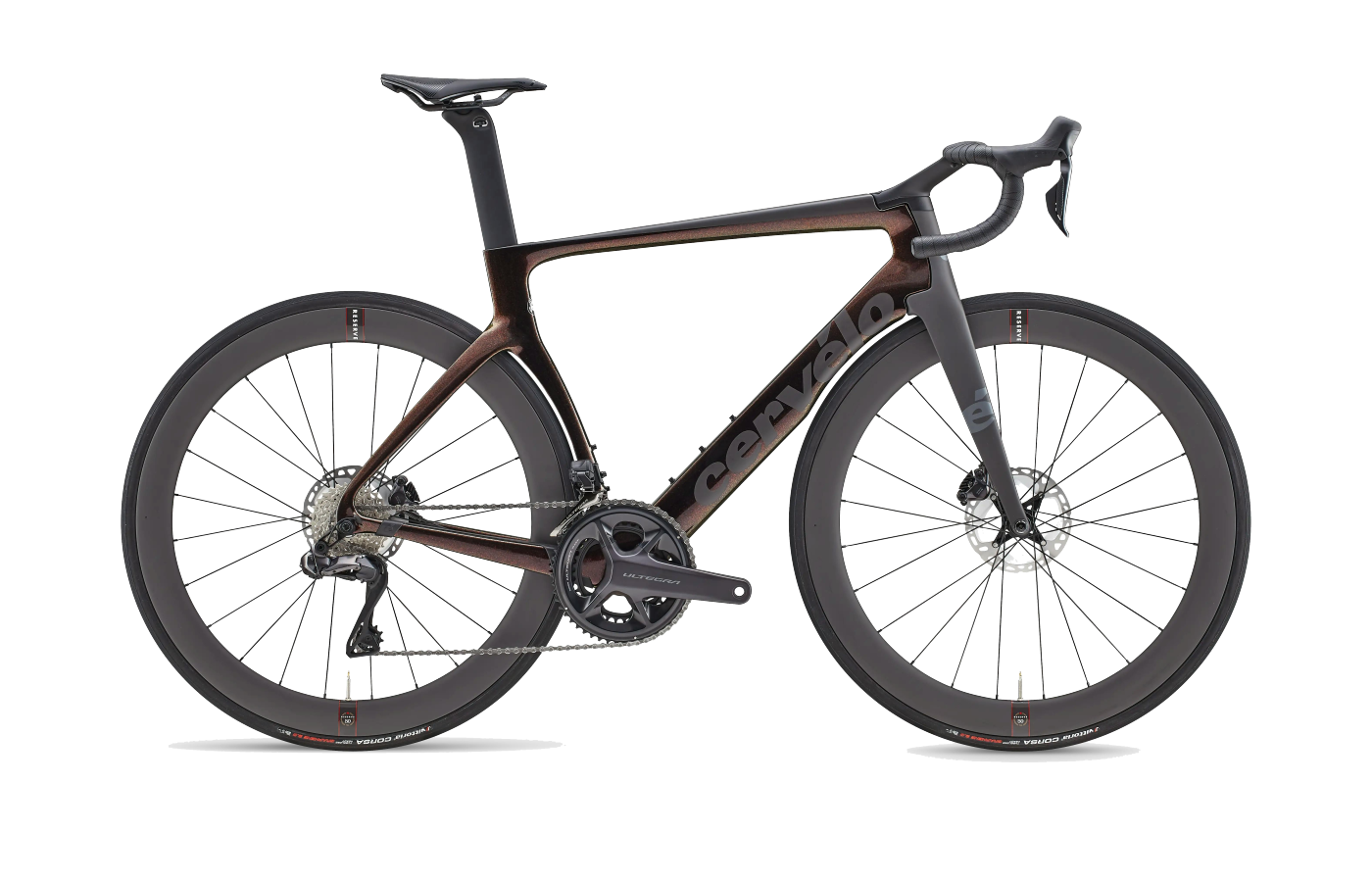
S5
The benchmark aero superbike and the bike Factor explicitly targets with the ONE — wind-tunnel testing in reviews put the two within measurement error of each other.
Compare →