Offering
vsSentinel
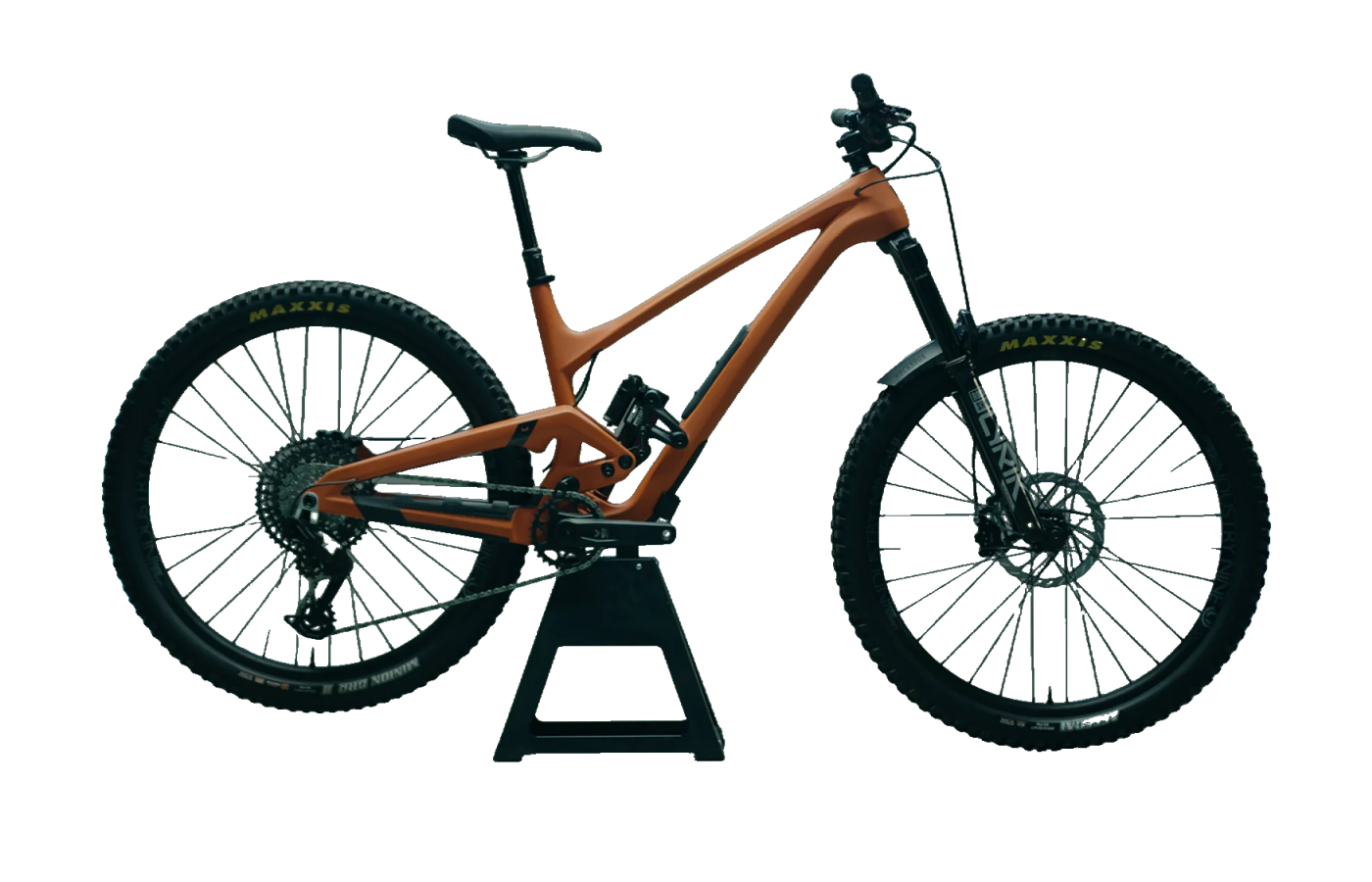
Two 150 mm trail bikes, two completely different temperaments.
The Evil Offering V4 is a poppy jib machine that demands an active rider. The Transition Sentinel V3 is the do-it-all platform with twice the build range.
Offering
- Genuinely poppy — the Delta-link's trampoline point makes airtime trivial off any feature, big or small.
- Stiff, snappy chassis rewards driving hard into corners and pumping compressions for free speed.
- Switched to standard 148 mm Boost — wheel compatibility is finally normal, no more SuperBoost lock-in.
- Carbon-only with a $6,699 floor — no budget entry point exists.
- Less composed when ridden defensively through chunder; demands an offensive style.
Sentinel
- Versatile by design — flip-chip and 65 mm-stroke shock option turn one frame into a 150 mm trail bike or a 160 mm mini-enduro sled.
- Nine builds from $3,499 to $9,999 — the deepest price ladder in the category, in alloy or carbon.
- Composed at speed — longer wheelbase, size-specific chainstays, and a one-piece rocker make it freight-train stable.
- Stock Super Deluxe Ultimate shock tune is widely criticized as too light — most aggressive riders end up re-tuning or swapping.
- 350 mm static BB feels tall in fast berms; some reviewers prefer the mullet "High" setting to lock it in.
Editor’s analysis
Same travel, same fork, same wheel size, same head angle within half a degree — and yet, one of these bikes wants to leave the ground and the other wants to stay on it.
On the spec sheet, the Evil Offering and Transition Sentinel look like fraternal twins. Both run 151 mm of rear travel out back paired with a 160 mm fork, both spin 29" wheels, both anchor the rider with a 79°-ish effective seat tube angle, and both sit within 1 mm on stack and 4 mm on reach in their fit-picked sizes. If you bought either bike blindfolded, the geometry chart wouldn't tell you which one you got.
The ride feel absolutely would. The Evil Offering is what reviewers across the board call a "jib machine" — a bike with a distinct trampoline point in the Delta-link suspension that loads up and launches off anything that even resembles a lip. Combined with shorter 435 mm chainstays and a stiff rear end, it rewards a rider who wants to pump, jib, and air every feature. The flip side, in the words of Freehub: "most definitely not a 'plow' bike." Get defensive in a rough rooty section and the Offering feels less composed than its peers — it would rather you jumped over the chunder than rolled through it.
The Transition Sentinel sits at the other end of the trail-bike personality spectrum. The V3's revised GiddyUp kinematics provide more mid-stroke support, the new one-piece rocker stiffens the chassis, and size-specific 442 mm chainstays (on size MD) lengthen the wheelbase by 7 mm versus the Offering. The result, per multiple expert reviews, is a more grounded, composed, freight-train feel — though several testers (Blister and Pinkbike most prominently) flagged the stock RockShox Super Deluxe Ultimate's compression tune as too light, with most riders happier after a re-tune or shock swap.
The other big divider is range. The Offering is carbon-only and starts at $6,699. The Sentinel goes from a $3,499 Alloy Deore to a $9,999 Carbon XTR Di2 — nine builds, two frame materials, and a flip-chip for mullet conversion. If you're the type who values one perfect build, Evil keeps it simple. If you want a chassis you can buy on a budget, upgrade over time, and reconfigure as your riding evolves, the Sentinel's lineup is hard to match in this category.
Where the builds differ.
Comparing our editor's-pick builds side-by-side. Winners highlighted row-by-row — lower price and weight, and the better-spec component, each mark a point.
Build variants & pricing
The Sentinel offers nine builds across alloy and carbon from $3,499 up; the Offering is carbon-only across three builds from $6,699 up.
Prices are current US MSRP. Both X0 AXS Transmission builds land at $7,999, but the Evil pairs RockShox Lyrik Ultimate / Super Deluxe Ultimate with Industry Nine DH 1/1 alloy wheels, while Transition specs Fox Factory 36 GRIP X2 / Float X Factory with DT Swiss alloy wheels — different suspension philosophies at the same price.
How they fit, how they steer.
Compared at Medium / MD. Stack and reach are within 4 mm; the Sentinel's 442 mm chainstays are 7 mm longer than the Offering's 435 mm, contributing to a 7 mm longer wheelbase and a more planted feel at speed.
Which size should I buy?
Size recommendations are based on stack, reach, and effective top tube length. The Sentinel's size run is wider (XS through XXL) than the Offering (Small through X-Large).
→These are starting points. Flexibility, riding style, and preferred position all shift the answer — if you’re between sizes, a professional fit beats a chart.
What the magazines said.
Published reviews from trusted cycling outlets. Click through for the full write-up.
Which one should you buy?
If you live for airtime and pumping every feature, get the Evil Offering. If you want one bike for everything from local loops to bike park days, get the Transition Sentinel.
Offering
If your idea of a great descent is treating every root, lip, and roller as a launchpad — and you're committed enough to ride offensively rather than just hold on — the Offering rewards you with a poppy, engaged feel few bikes match. Bring the right attitude or you'll wish you'd bought something more forgiving.
Sentinel
If you want one frame that can pedal up technical climbs, plow rough descents, and reconfigure as a mullet or 160 mm mini-enduro when you outgrow it — the Sentinel is the most adaptable bike in the segment. Budget for a shock re-tune if you ride aggressively.
Questions buyers actually ask.
Short answers to the things we get emailed about most often.
01Which is more playful?
The Evil Offering, clearly. Reviewers across Freehub and others consistently describe it as a "jib machine" with a distinct trampoline point in its Delta-link suspension that makes loading up and launching off small lips effortless. The 435 mm chainstays are 7 mm shorter than the Sentinel's, which makes manuals and quick direction changes more intuitive.
The Sentinel V3 is sportier and poppier than its V2 predecessor — testers used words like "BMX-ish" — but its mid-stroke support and longer wheelbase still bias it toward composure over pure pop.
02Which is more capable in rough, rowdy terrain?
The Transition Sentinel, provided the rear shock is dialed. Its longer 442 mm chainstays (size MD), longer wheelbase, and supportive GiddyUp kinematics give it a freight-train feel through chunder. The Offering, by Evil's own framing, "is most definitely not a 'plow' bike" — it'd rather jump over rough sections than absorb them.
The big caveat: multiple expert reviewers (Blister, Pinkbike, NSMB) describe the Sentinel's stock RockShox Super Deluxe Ultimate compression tune as "bizarrely light," causing the bike to blow through its mid-stroke. A custom re-tune or shock swap is widely recommended for aggressive riders.
03How do the geometries actually compare?
Surprisingly close on the headline numbers. Both run a head tube angle around 64° (the Offering is 64.7° in High, 64.2° in Low; the Sentinel is a fixed 64°). Both put the rider in an upright climbing position with steep ~79° seat tube angles.
The meaningful differences: the Sentinel's chainstays are 7 mm longer at size MD (442 vs 435), its wheelbase is 7 mm longer (1237 vs 1230), and Transition uses size-specific chainstays that grow to 448 mm on Large/XL. The Offering has a fixed 435 mm rear-center across all sizes.
04Carbon-only vs. carbon-and-alloy — does it matter?
Yes, in two ways. First, price floor: the Sentinel starts at $3,499 in alloy; the Offering starts at $6,699 in carbon. If your budget is under $5k, the Offering isn't an option.
Second, storage and weight: the Sentinel's carbon frames include the BOOM Box in-frame storage; the alloy frames don't. Transition lists the carbon frame at 7.41 lb (3.36 kg) versus 9.91 lb (4.50 kg) for alloy — a 2.5 lb gap that translates roughly to the same gap on the complete bike.
05Can I run a mullet (mixed-wheel) setup on either?
Sentinel: yes. Transition designed the V3 with mullet compatibility built in, and the flip-chip in the High position lowers the BB by 6 mm and slacks the head tube to 63.6° to compensate for the smaller rear wheel. Multiple reviewers (Blister, Awesome MTB) called this the bike's handling sweet spot.
Offering: Evil hasn't built mullet support into the V4. The bike is a 29er-only platform — running a 27.5" rear wheel without geometry compensation isn't recommended.
06Which one climbs better?
Slight edge to the Sentinel for general efficiency, with caveats. The V3's revised GiddyUp kinematics provide more mid-stroke support, and Bicycling noted it "rides lighter than the scale suggests." Both bikes use steep effective seat tube angles (Offering 79° in High, Sentinel 78.7°-78.9°) for a comfortable, centered seated climbing position.
The Offering, by Evil's own admission, doesn't lock out fully even with the compression lever closed — Evil prioritized climbing traction over hardtail-like efficiency. That makes it grippier on technical ascents but less efficient on long fire-road grinds.
07How are tire clearance and wheel spacing?
Tire clearance: Offering ~61 mm, Sentinel ~63.5 mm. Both fit the stock 2.5" Maxxis Assegai front and 2.4" Minion DHR II rear comfortably, though Pinkbike flagged the Sentinel's clearance as tight in muddy conditions.
Rear spacing: both run standard 148 mm Boost on the V4/V3. The Offering specifically dropped SuperBoost 157 mm spacing for V4, which is good news for wheel compatibility and future upgrades.
08What about long-term ownership and warranty?
Both brands offer a lifetime frame warranty and use standard, mechanic-friendly parts — 73 mm threaded BBs, SRAM UDH, no proprietary headset standards. Both are easy to live with from a maintenance standpoint.
Transition has a particularly strong reputation for customer service and offers crash-replacement to second-hand owners, which is rare in the industry. Evil's V4 frame includes thoughtful durability touches (a small fender to keep rocks out of the linkage, a redesigned cable clamp to eliminate rattle).
Similar bikes
If your priorities don’t map cleanly onto either of these, one of these adjacent bikes probably fits better.
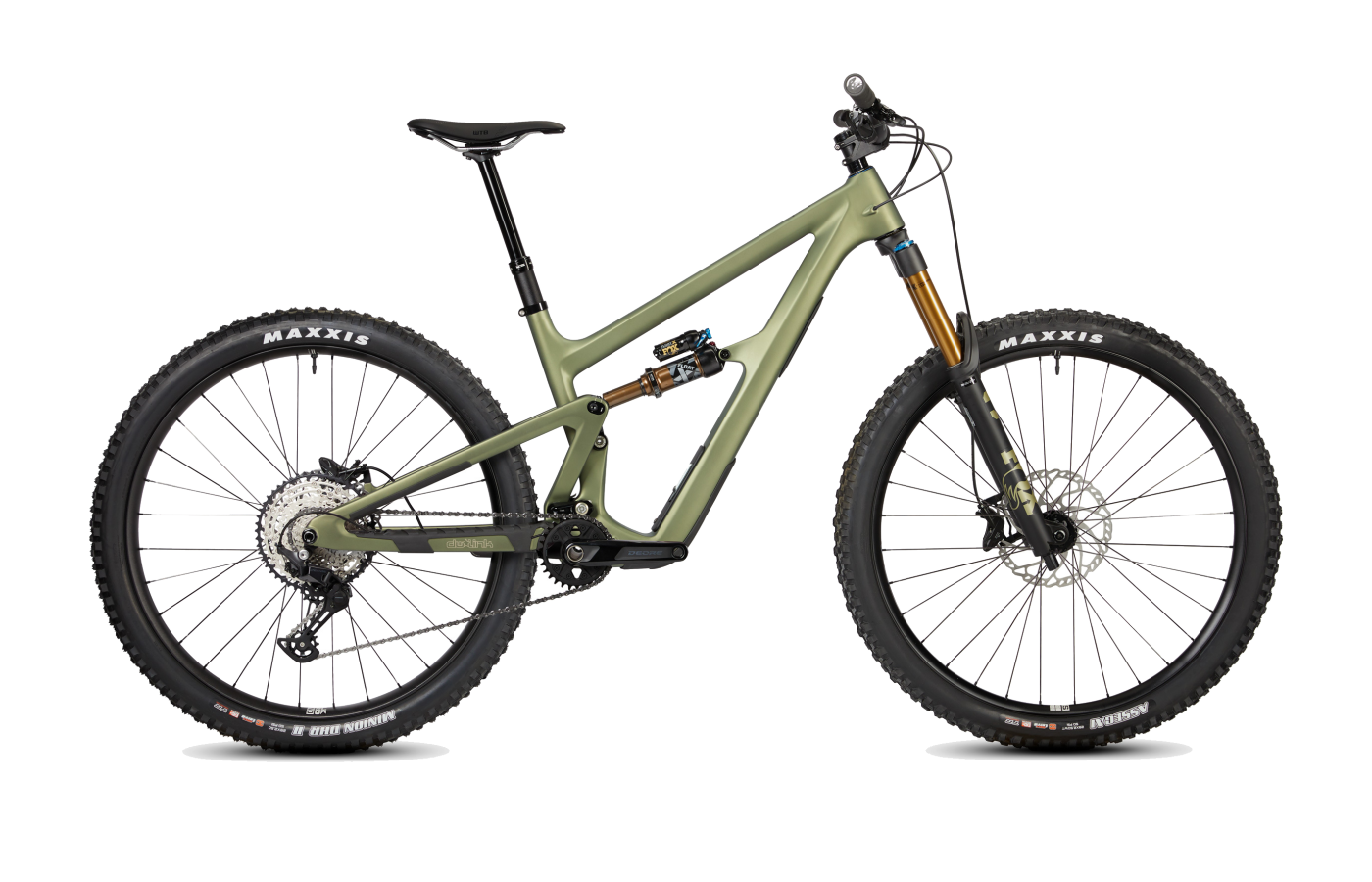
Ripmo
The efficiency play — the Ibis Ripmo's DW-link is widely regarded as the most efficient pedaling platform in the segment. If climbing matters to you as much as descending, the Ripmo deserves a serious look.
Compare →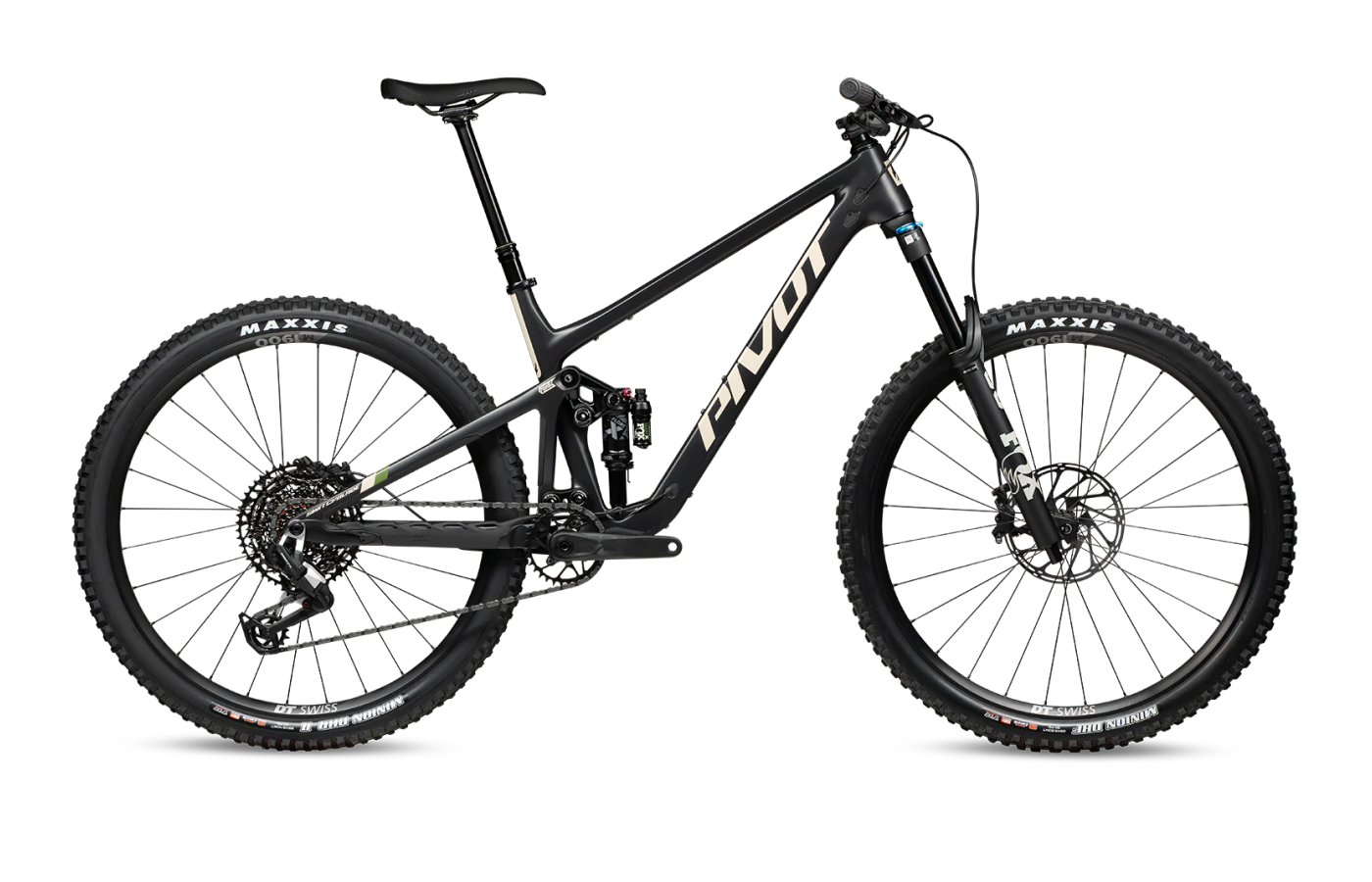
Switchblade
Pivot's take on the all-mountain bike with their dw6 link. Lively at the pedals, more refined-feeling than the Sentinel, and a step pricier than either of these — for riders who want a boutique build straight from the showroom.
Compare →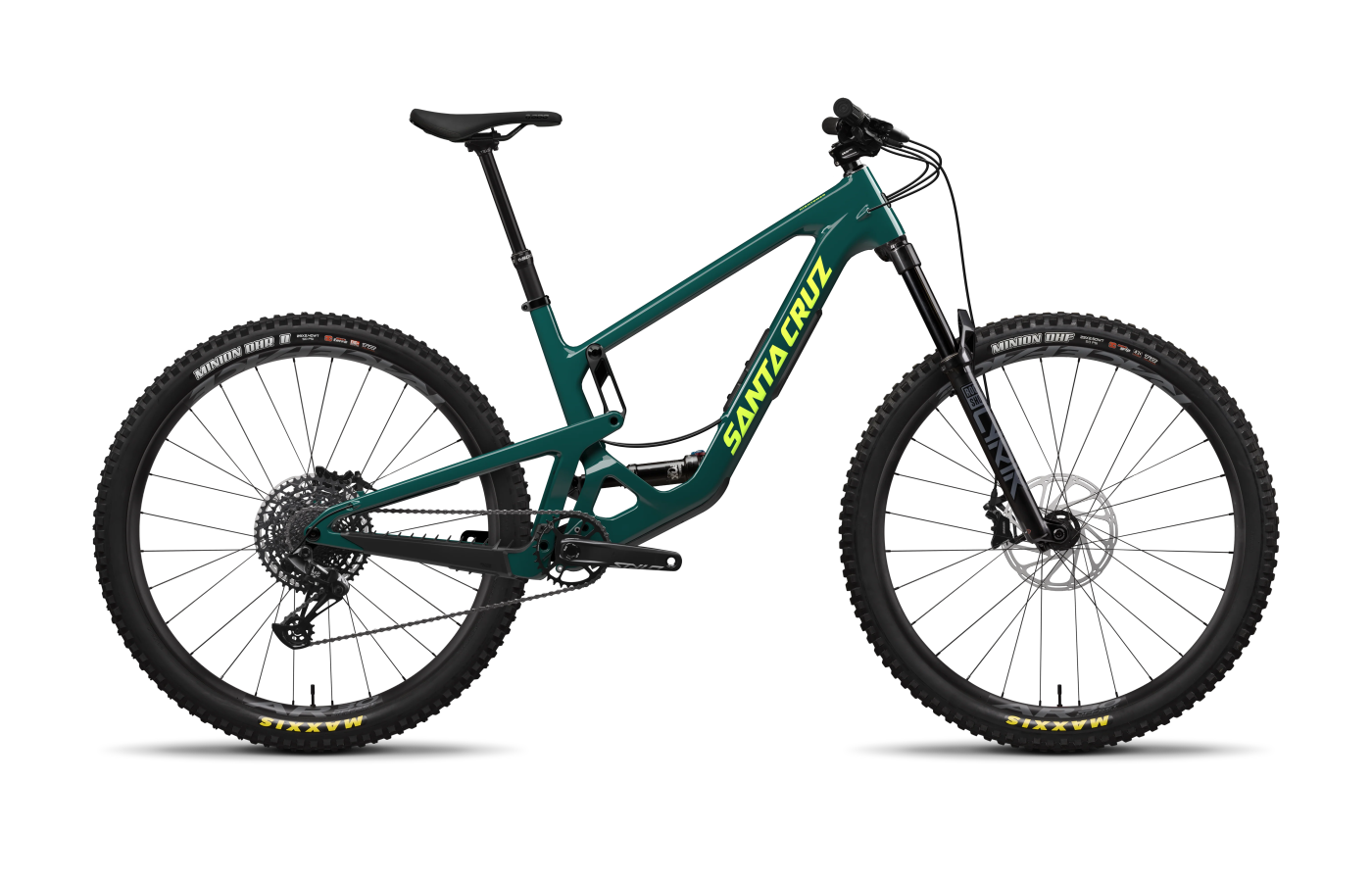
Hightower
The Santa Cruz Hightower is the balanced 29er trail benchmark — VPP suspension, refined at every contact point. Not as poppy as the Offering, not as adaptable as the Sentinel, but harder to fault than either.
Compare →