Y1Rs
vsDogma F
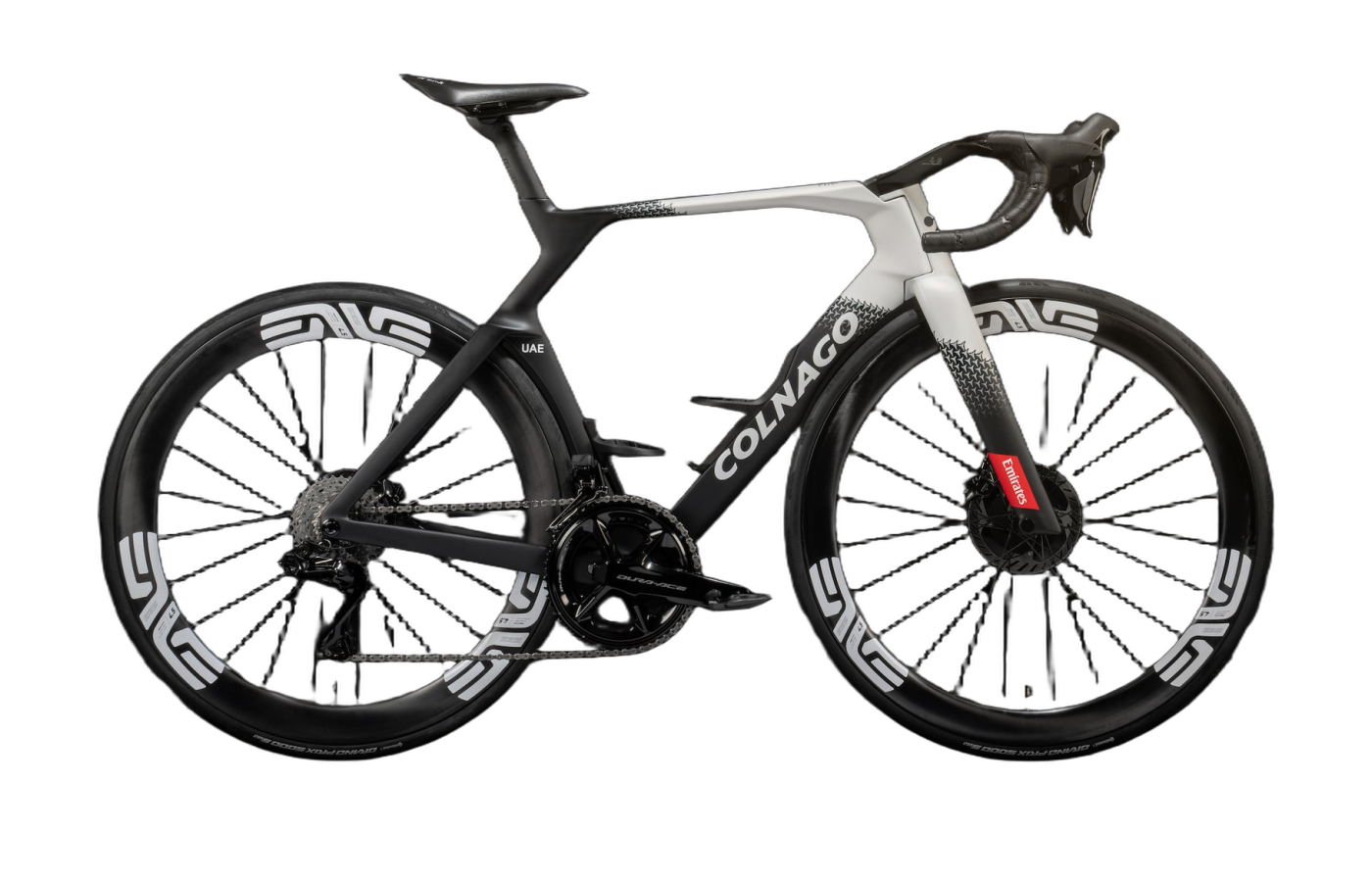
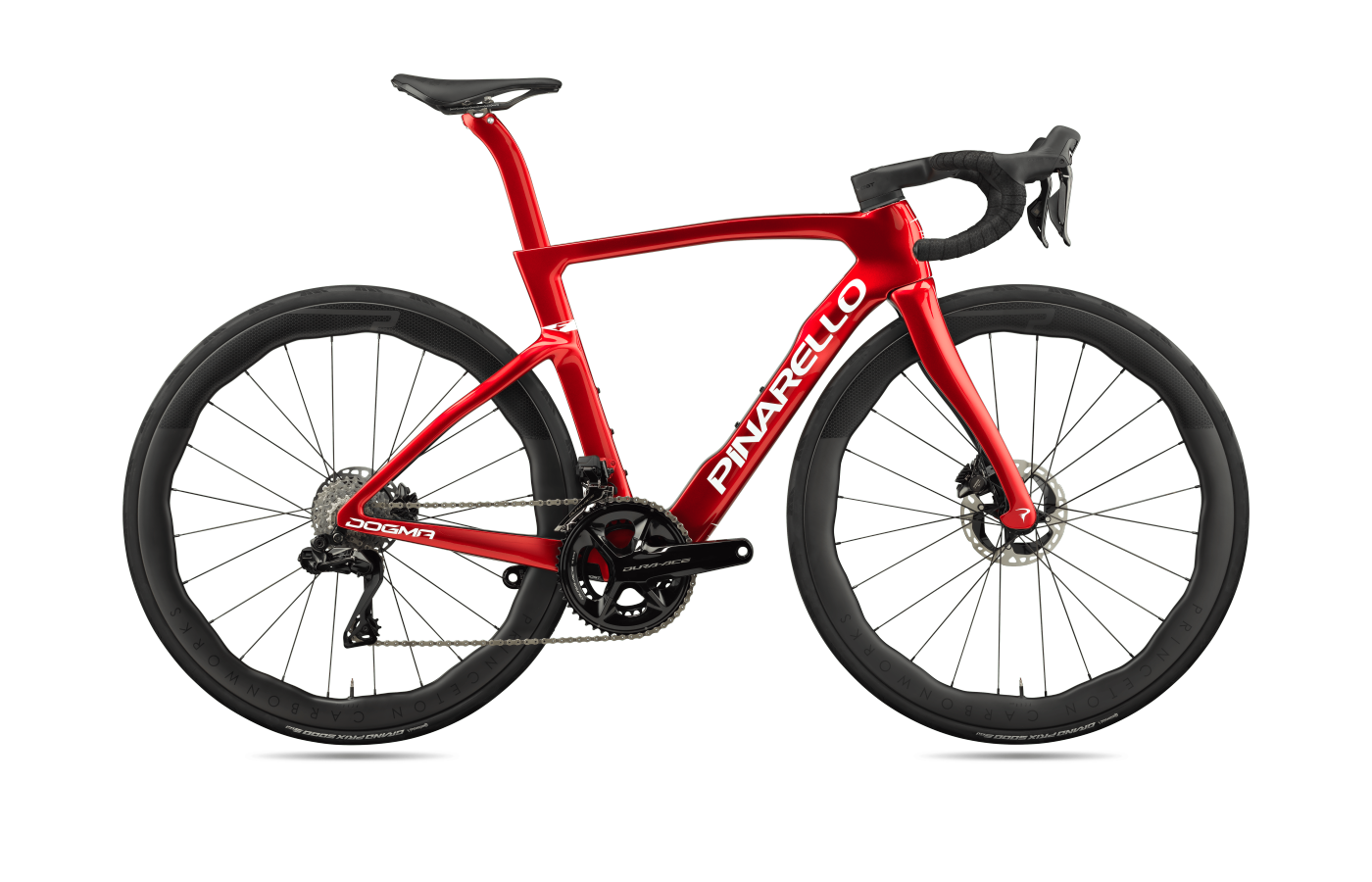
Two Italian flagships, two ideas of fast.
The Y1Rs is Colnago's wind-tunnel gamble for Pogačar. The Dogma F is Pinarello's ruthlessly stiff all-round race bike for Ineos.
Y1Rs
- Headline aero performance — wind-tunnel data among the fastest road bikes Cyclingnews has ever measured.
- Improved agility for a Colnago — half-degree steeper HTA and shorter front-center than the V-series make it the sharpest-handling Colnago in years.
- 32 mm tire clearance — marginally wider than the Dogma F, useful headroom for rougher surfaces.
- Front-end stiffness disconnect: reviewers report 'noodly' bayonet fork under hard sprints and one 'unnerving speed wobble' under braking.
- Quality-control issues unforgivable at $17k+: missing Di2 grommet, headset screws Colnago itself recommends loosening with a torch.
Dogma F
- Lighter at equivalent build — 6.77 kg (size 53, Dura-Ace) vs. the Y1Rs at 7.2 kg, a real ~430 g advantage.
- Class-leading handling — the 47 mm fork rake gets near-universal praise for being 'planted' on descents and quick at low speed.
- Eleven frame sizes — from 425 to 600, with a 16-permutation MOST cockpit. The most thorough fit range on a stock superbike.
- Stiffness can feel jarring on imperfect roads — multiple reviewers flag vibration through the hands on rough surfaces.
- Tire clearance caps at 30 mm — the narrowest in the segment vs. 32 mm Tarmac SL8 or 34 mm Cervélo S5.
Editor’s analysis
These are pro-team superbikes first and consumer products second — the question isn't which is better, it's which kind of pro you'd rather pretend to be.
Both bikes live at the absolute top of the Italian race-bike pyramid. Both are pushing $16,000+ for a Dura-Ace build, both ship without a power meter at that price, and both are designed around a single WorldTour team's needs — UAE for the Colnago Y1Rs, Ineos Grenadiers for the Pinarello Dogma F. From the outside they look like rivals. Spend any time in the reviews and the philosophies split sharply.
The Colnago Y1Rs is a version-1.0 aero experiment — Colnago's first proper aero bike since 2017. The bayonet fork, the Y-shaped CC.Y1 cockpit, the cantilevered seatpost: every line is in service of drag. Wind-tunnel data backs it up — Cyclingnews measured 276.78 W at 40 km/h with rider, putting it among the fastest road bikes ever tested. But the same reviewers flag a 'disconnect' between a stiff rear triangle and a front end that goes 'noodly' under hard sprints, and a list of consumer-unfriendly quirks (missing Di2 grommet, headset screws that need a torch to loosen) that read like a bike built for a team mechanic, not a customer.
The Pinarello Dogma F takes the opposite approach. It's an evolutionary refresh of a platform Ineos has been racing for years — same swooping asymmetric tubes, just a new Toray M40X carbon layup and a fork-rake bump from 43 mm to 47 mm. The result is a bike reviewers call 'one of the stiffest I've ever ridden,' with handling that feels 'planted' on descents and 'whip-sharp' through low-speed corners. It's a polished tool. It's also $1,350 cheaper and 430 g lighter at the editor's-pick build than the Colnago — and on paper, it looks like the better-built object.
Put another way: the Colnago Y1Rs is the bike you buy for the sensation of being on Pogačar's race bike — radical silhouette, headline aero numbers, all the cost of admission to the 2025 superbike conversation. The Pinarello Dogma F is the bike you buy when you've done this before and want a finished, race-tested platform with eleven sizes and zero question marks about quality control.
Where the builds differ.
Comparing our editor's-pick builds side-by-side. Winners highlighted row-by-row — lower price and weight, and the better-spec component, each mark a point.
Build variants & pricing
Both platforms are flagship-only — no Ultegra, no 105, no entry build on either side. Pricing sits within $1,500 of itself across every spec.
Prices are current US MSRP. Both brands skip a power meter at the Dura-Ace tier — you'll add $700–$1,500 for a Quarq or 4iiii crank to match what the pros actually race. Stock Colnago builds also tend to ship with lower-tier Vision wheels; the ENVE SES upgrade is a separate spec line.
How they fit, how they steer.
Colnago size M paired with Pinarello 510 — the fit-picked sizes for a 5'8" rider. The Y1Rs sits 11 mm lower in the front (540 mm stack vs. 551 mm) on a near-identical reach, with a slightly steeper seat tube angle. The Dogma F is the more upright fit; the Y1Rs is the more aggressive one.
Which size should I buy?
Pinarello offers eleven sizes — the broadest stock superbike range we've seen — versus Colnago's four. If you sit between sizes, the Dogma F has more chance of catching your fit cleanly.
→These are starting points. Flexibility, riding style, and preferred position all shift the answer — if you’re between sizes, a professional fit beats a chart.
What the magazines said.
Published reviews from trusted cycling outlets. Click through for the full write-up.
Which one should you buy?
If you want the radical wind-tunnel halo bike and don't mind the quirks, get the Y1Rs. If you want the polished, race-proven platform with better fit options, get the Dogma F.
Y1Rs
If you spend most of your riding tucked on flat or rolling roads, want the same silhouette Pogačar wins Tours on, and are willing to live with consumer-unfriendly quirks for the sake of the aero numbers, the Y1Rs is the bike. Just budget for the wheel upgrade.
Dogma F
If you want a finished, race-tested superbike that climbs, descends, and sprints with equal composure — and you value handling precision and a fit range you can actually dial in — the Dogma F is the more complete tool. It's also lighter and cheaper at the same build tier.
Questions buyers actually ask.
Short answers to the things we get emailed about most often.
01Which is faster on flat roads?
On wind-tunnel numbers alone, the Colnago Y1Rs. Cyclingnews measured a CdA of 0.3363 m² with rider at 40 km/h, requiring roughly 277 W to hold pace — placing it among the fastest road bikes ever tested. Pinarello's claimed CdA reduction on the new Dogma F is just 0.2%, an improvement they wouldn't even quantify in watts.
In practice, with comparable wheels the gap is real but small. GCN measured the Y1Rs at about 0.2 km/h faster than Colnago's own V5Rs at 400 W; the delta to the Dogma F is in a similar range. You'll feel it in a TT or breakaway, not on the group ride.
02Which climbs better?
The Pinarello Dogma F. At the editor's-pick Dura-Ace build, the Dogma F is 6.77 kg (size 53) versus 7.2 kg (size M) on the Y1Rs — about 430 g lighter, and reviewers consistently describe it 'flying' uphill.
GCN estimated that at Pogačar's pace on Alpe d'Huez, the lighter V5Rs would be roughly 20 seconds faster than the Y1Rs over the climb; the Dogma F is in similar weight territory. The Y1Rs' weight, plus a front end some reviewers call 'noodly' under high loads, makes it the less natural climber.
03What's the maximum tire clearance?
Colnago Y1Rs: 32 mm officially. Some reviewers suggest the bike would 'do better with the 30 mm tyre clearance maxed out,' implying it benefits from running closer to the limit on rougher surfaces.
Pinarello Dogma F: 30 mm officially per BikeRadar's measurement (Pinarello's marketing claims 32 mm; reviewers found 30 mm in practice). It's the narrowest clearance in the modern aero/race segment — the Tarmac SL8 takes 32 mm, the Cervélo S5 takes 34 mm.
Neither is a gravel bike. For rough roads or chip-seal, the Y1Rs has a marginal but real advantage.
04Do these bikes come with a power meter?
No — neither does at the Dura-Ace build, despite both pushing $16,000+. This is one of the most-criticized omissions in reviews of both platforms; one Y1Rs review called it 'criminal' at the price.
Budget another $700–$1,500 for an aftermarket option (Quarq, 4iiii, Power2Max, Favero pedals) to match what the pros actually race on. Both frames use standard crank interfaces, so any spider- or pedal-based meter bolts on without issue.
05How serviceable are the integrated cockpits?
The Colnago CC.Y1 is a Y-shaped one-piece bar/stem with full internal routing through the bayonet fork. It's aerodynamically aggressive but reviewers note the wider center portion can hit the rider's thighs in the saddle. Hose service requires partial disassembly. Adjusting bar width or stem length means a new unit.
The MOST Talon Ultra Fast on the Dogma F is also one-piece but ships in 16 length/width permutations, which is unusual. You're more likely to land a fit straight off the order form. Both cockpits route hoses internally through proprietary headsets, so neither is a quick swap.
06Are there any known build-quality issues?
On the Colnago Y1Rs, yes — and they're well-documented. Reviewers reported a missing grommet at the chainstay Di2 exit port (one tester used electrical tape), a cantilevered seatpost that creaks if the cut isn't perfect, and a headset set screw that one tester needed a torch to remove — a procedure Colnago itself reportedly recommends. These are not failures you expect at $17k.
The Pinarello Dogma F has fewer flags. The 2025 model downgraded the headset bearing from CeramicSpeed SLT to a sealed aluminum unit, which BikeRadar criticized given how complex it is to swap a headset on an integrated-routing bike. But there's nothing on the Dogma F's level approaching the Y1Rs' assembly issues.
07How does fit range compare?
Not close. Colnago offers four sizes on the Y1Rs (XS, S, M, L). Pinarello offers eleven on the Dogma F (425 through 600 mm), plus 16 cockpit length/width combinations.
If you're between standard sizes — too tall for one, too small for the next — the Dogma F has dramatically better odds of catching your fit without compromise. For most riders in the middle of the bell curve, both will work. At the extremes of either height or proportion, Pinarello has the answer Colnago doesn't.
08Which holds its value better?
Limited resale data on both — these are low-volume halo bikes, not high-turnover platforms. Italian heritage bikes (Colnago, Pinarello) have historically depreciated more slowly than Asian-manufactured rivals, partly because of brand exclusivity and partly because production runs are small.
The Y1Rs is so new that resale tracking is essentially nonexistent. The Dogma F has multiple generations of resale precedent and tends to hold value well in the 25–35% depreciation range over three years for top builds. Either way: if resale matters, buy used a season or two in.
Similar bikes
If your priorities don’t map cleanly onto either of these, one of these adjacent bikes probably fits better.
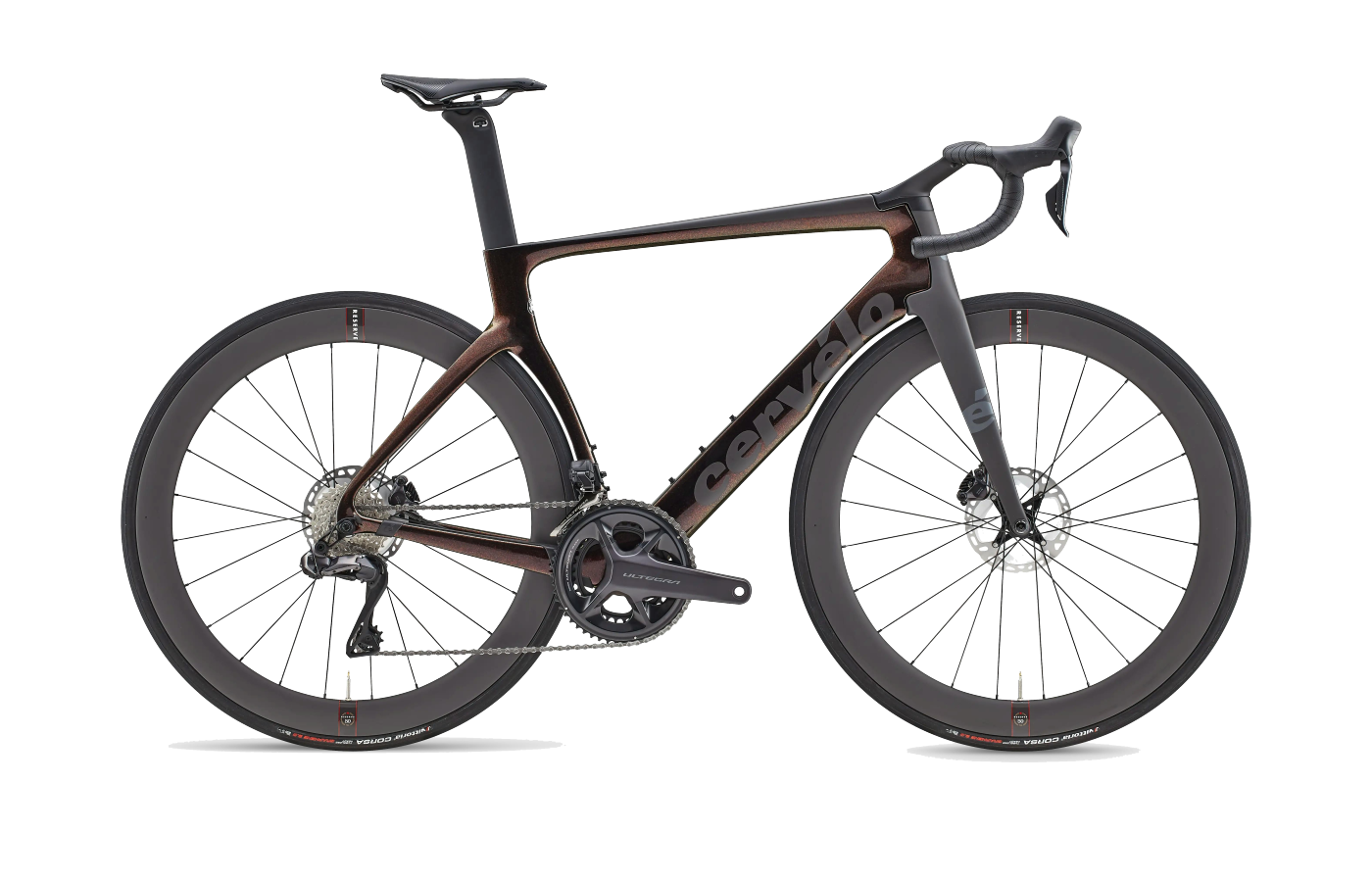
S5
The Colnago's most direct wind-tunnel rival — and a notably stiffer, more 'business-first' sprint platform than the Y1Rs. Reviewers comparing them directly call the S5 the unwavering one and the Colnago the 'breakaway bike.'
Compare →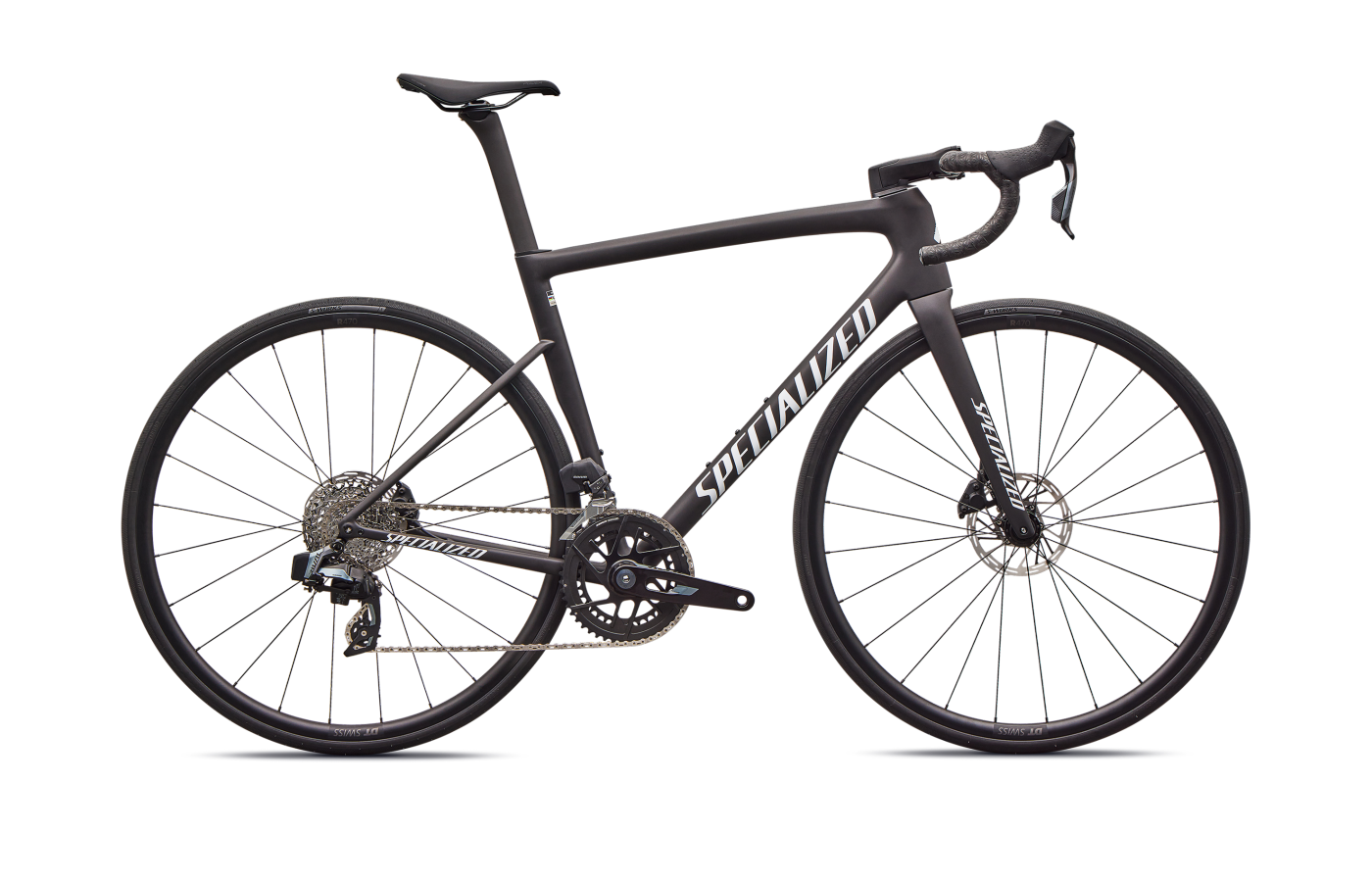
Tarmac
The all-rounder benchmark — lighter than both Italians, takes wider tires, and starts thousands of dollars cheaper. If you want one bike that climbs, sprints, and survives a gravel shortcut, this is still it.
Compare →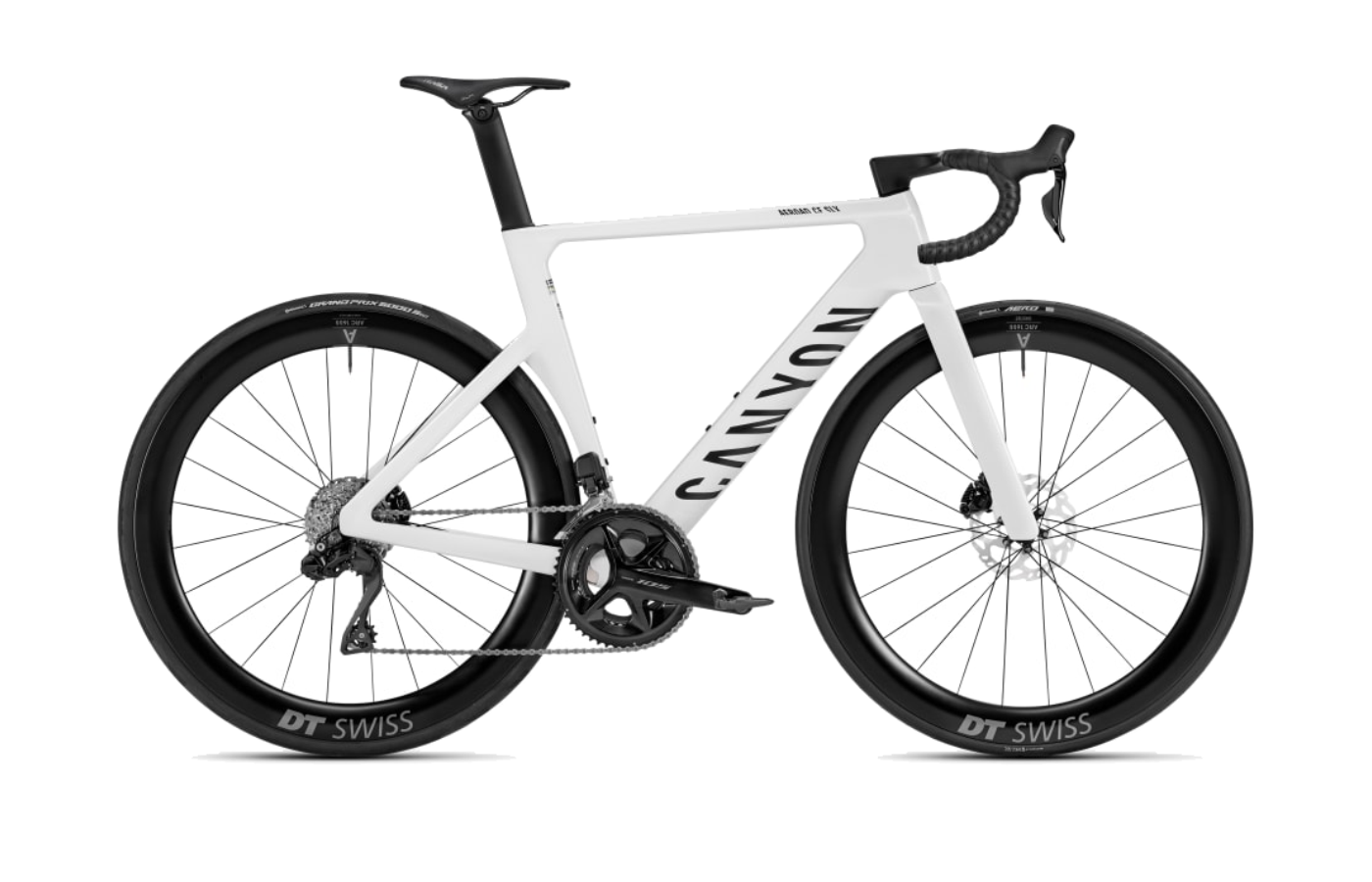
Aeroad
Same aero-flagship philosophy as the Dogma F at roughly 30% less money — direct-to-consumer means no dealer and no demos, but the spec sheet matches WorldTour bikes pound-for-pound.
Compare →