S5
vsY1Rs
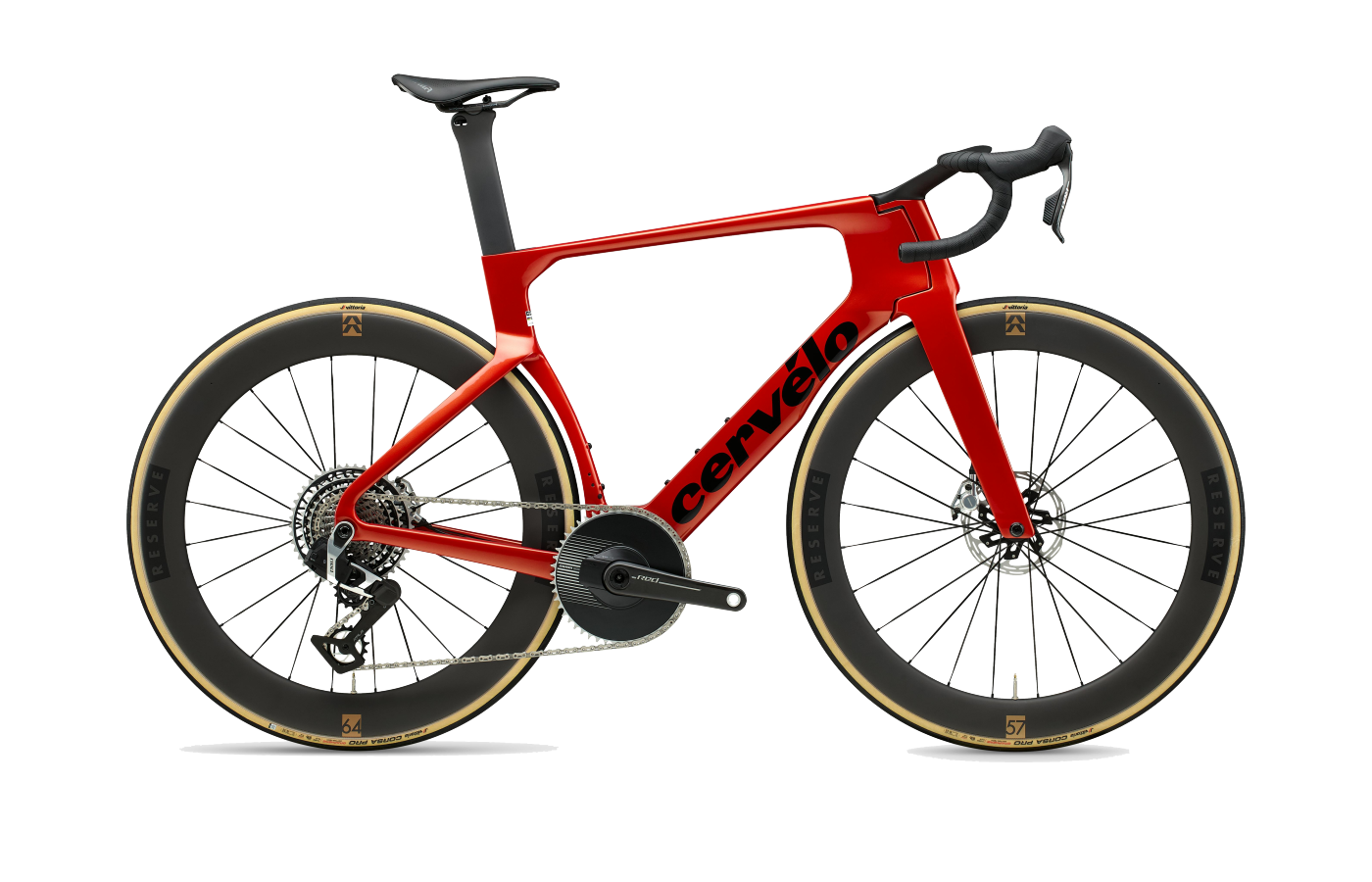
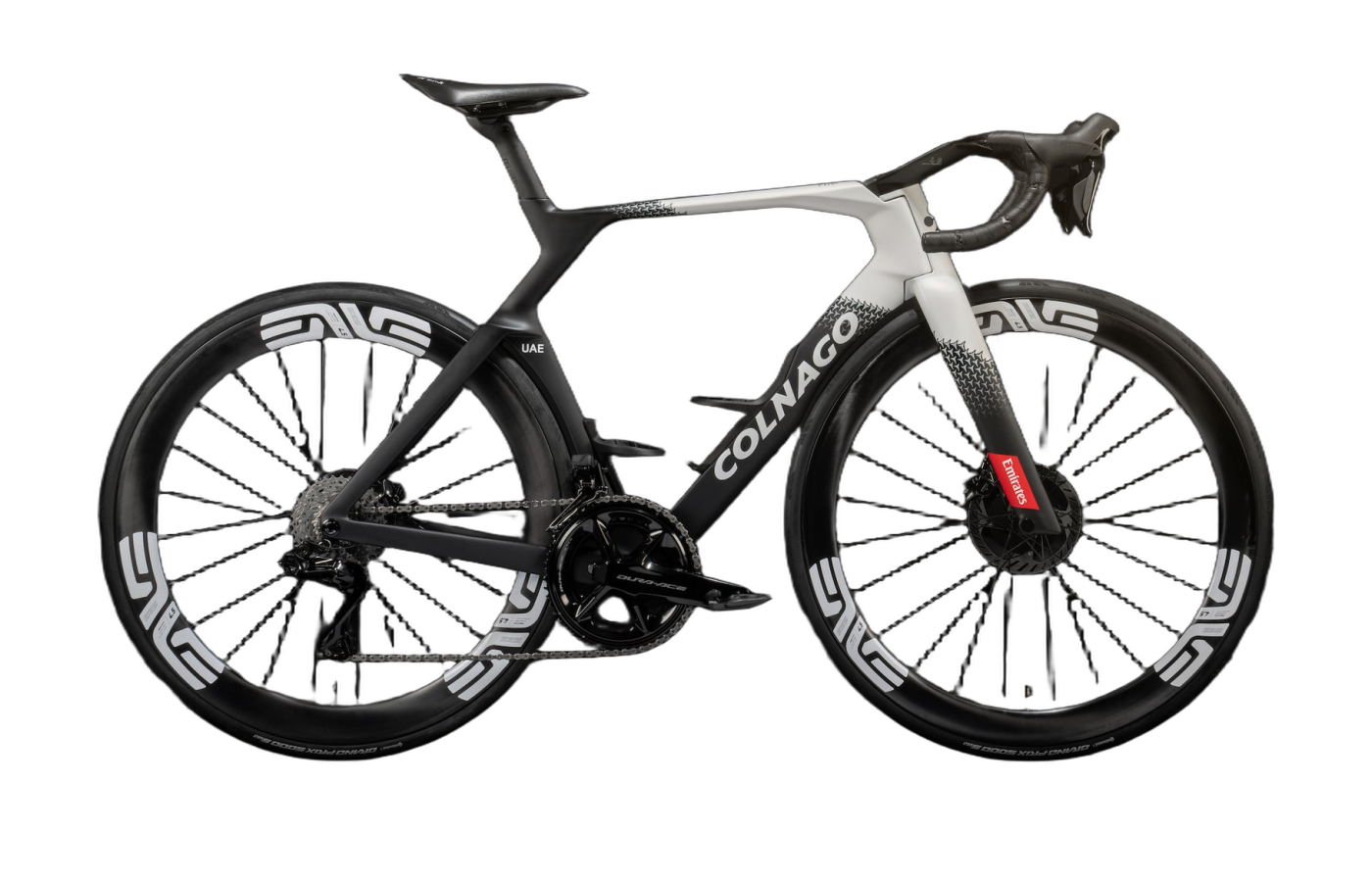
Two aero superbikes, two very different price tags.
The S5 is the polished system bike that already conquers Grand Tours. The Y1Rs is Colnago's radical bayonet-fork prototype, built around one rider in particular.
S5
- Cheapest entry to a flagship aero platform at $10,100 — roughly $6k below the Colnago's floor for the same component tier.
- Wider tire clearance (34 mm) plus 29 mm Vittoria Corsa Pros stock, which reviewers credit for unexpectedly compliant ride quality.
- Most refined integration in the segment — the HB19 one-piece bar, integrated computer mount, and Reserve 57|64 wheelset all designed as one system.
- Proprietary BBright bottom bracket houses the Di2 battery and is a documented service hassle.
- Stiffness can read as harsh below 30 km/h; reviewers note it "lacks snap at slower speeds."
Y1Rs
- WorldTour-proven aero — Cyclingnews wind-tunnel data slots it just behind the S5 in CdA, with a strong sailing effect at yaw.
- Sharpest Colnago handling to date — steeper HTA, lower-trail fork, and shorter front-center than any V-series before it.
- Halo status — Pogacar's race bike, in your garage. There is no other aero bike that owns this much pro mindshare.
- Dura-Ace builds ship without a power meter at a $17k price point — a near-universal complaint from reviewers.
- Front-end and bottom-bracket flex described as "sub par" and "noodly" in sprint efforts; not a sprinter's bike.
Editor’s analysis
Both are pro-tested aero machines — but only one of them is actually meant for you to buy.
On the spec sheet, the Cervelo S5 and Colnago Y1Rs land in the same WorldTour aero-road bracket. Both run flagship wireless groupsets, both ship with deep carbon wheels, both have piled up Grand Tour stage wins in the last two seasons. Spend any time in the reviews, though, and the philosophies pull apart fast — the S5 is a finished system, the Y1Rs is a prototype that escaped.
The Cervelo S5 is the iterative play. Cervelo refined the existing platform — 124 g lighter, a claimed 6.3 watts faster than the outgoing model, a one-piece HB19 cockpit, and the co-developed Reserve 57|64 wheelset that reviewers credit for both the aero gain and the surprising compliance. Cyclingnews's wind tunnel called it the fastest bike they had ever tested at 40 km/h. It is also the cheapest way into a flagship aero platform here by a wide margin: $10,100 to start.
The Colnago Y1Rs is the opposite move. It is Colnago's first proper aero bike since 2017, with a bayonet fork, a cantilevered seatpost, a Y-shaped one-piece cockpit, and an opening price of $16,250. Reviewers love what it does on flat, sweeping descents and breakaways — Will Jones at Cyclingnews calls the handling "better than any Colnago I have ridden" — and consistently flag the front end as the weak link. The bayonet join feels under-reinforced under sprint loads, the bottom bracket reads as "a noodle" next to the S5, and a Dura-Ace build ships without a power meter. The bike is genuinely fast. It is also, by near-universal consensus, a pro-team tool sold to consumers.
Put another way: the Cervelo S5 is the bike you buy because you want the fastest mainstream aero platform on the road. The Colnago Y1Rs is the bike you buy because Tadej Pogacar rides one and you have $17k to spend on agreeing with him.
Where the builds differ.
Comparing our editor's-pick builds side-by-side. Winners highlighted row-by-row — lower price and weight, and the better-spec component, each mark a point.
Build variants & pricing
The S5 spans roughly $4,400 of range across five builds. The Y1Rs has three builds, all flagship-tier, and starts $6,150 above the S5's entry point.
Prices are current US MSRP. The Y1Rs offers no mid-tier (Force/Ultegra) build — if your budget is below $16k, the comparison effectively ends. SRAM Red builds were chosen on both sides for drivetrain parity in the spec table.
How they fit, how they steer.
Size 54 S5 vs size M Y1Rs — the fit-picked frames for the same rider. Stack and reach are within 2 mm, but the Y1Rs runs 1.9 mm more trail, 3 mm longer chainstays, and a 1-degree steeper seat tube — a more stretched, more stable-on-paper but "jittery" in practice front end.
Which size should I buy?
Size recommendations based on stack, reach, and effective top tube. The S5 offers six sizes (48 to 61); the Y1Rs has just four (XS to L), with bigger jumps between them.
→These are starting points. Flexibility, riding style, and preferred position all shift the answer — if you’re between sizes, a professional fit beats a chart.
What the magazines said.
Published reviews from trusted cycling outlets. Click through for the full write-up.
Which one should you buy?
If you want the best-engineered aero road bike on the market, get the S5. If you want Pogacar's bike and money is not the question, get the Y1Rs.
S5
If you want a flagship aero platform that has been refined into something usable — fast on the flat, surprisingly comfortable on long days, and engineered as a complete system from frame to wheels — the S5 is the benchmark in this segment, and the cheapest way into it.
Y1Rs
If you race seated on the flat, ride sustained breakaways, or simply want the bike Pogacar rides — and the $17k floor and missing power meter on the Dura-Ace build do not bother you — the Y1Rs delivers the WorldTour halo and a real aero platform behind it.
Questions buyers actually ask.
Short answers to the things we get emailed about most often.
01Which is faster on flat roads?
Both are top-tier. Cyclingnews's wind tunnel rated the new S5 the fastest bike they had ever tested with a rider on board at 40 km/h, saving roughly 27.6 watts versus their baseline. The Y1Rs landed just behind in the same comparison set, with a CdA of 0.3363 m^2 at 40 km/h and a strong sailing effect at higher yaw.
In real-world terms, both will feel like the wind has dropped. If a measurable edge in a controlled test matters to you, the S5 is currently the faster published number.
02Which climbs better?
Neither is a climbing bike, but the Cervelo S5 holds a small edge. A size 56 S5 lands in the 7.17-7.44 kg range across reviews; the Y1Rs comes in around 7.4-7.7 kg in equivalent trim with deep wheels.
GCN estimated the lighter Colnago V5Rs would be roughly 20 seconds faster than the Y1Rs up Alpe d'Huez at Pogacar's wattage — so even Colnago's own lineup has a faster climber. If you do real mountains regularly, look at the Tarmac SL8 or a dedicated climbing bike instead.
03What's the maximum tire clearance?
Cervelo S5: 34 mm officially. The S5 ships with 29 mm Vittoria Corsa Pros on wide-internal Reserve rims, and reviewers credit that combination for the bike's surprising compliance.
Colnago Y1Rs: 32 mm officially. One Cyclingnews reviewer called the road feel "jittery" and suggested it would benefit from running closer to the maximum.
Neither is anywhere near a gravel bike. Both are race tires on race frames.
04Does the Y1Rs come with a power meter?
Not on every build. SRAM Red AXS builds include the Quarq spider-based power meter as part of the groupset. The Shimano Dura-Ace Di2 build, however, does not include one at the $17,100 price — a point reviewers across Cyclingnews and Velo flagged as a major value miss for a bike at this tier.
The Cervelo S5's SRAM Red and Force AXS builds both include the SRAM power meter as standard.
05How does the Y1Rs handle compared to the S5?
Differently, and reviewers disagree on which is better. The S5 is consistently described as "planted" and "glued to the road" at high speed, with sharp but predictable steering — Cyclingnews called it a "rocket ship."
The Y1Rs is sharper at turn-in (steeper HTA, shorter front-center) and more agile, and reviewers love it on flowy, sighted descents. On twisty blind corners, multiple testers reported less composure than the S5, including one "unnerving proto-speed wobble under hard braking" tied to the bayonet fork.
06How serviceable are the integrated cockpits?
The Cervelo HB19 is a one-piece bar with fully internal routing. The new generation is noticeably easier to service than the previous S5 — easier headset and bar access — and Cervelo offers a 60-day cockpit-swap policy if the spec'd bar size is wrong for your fit.
The Colnago CC.Y1 is also one-piece, with a Y-shaped center section. Reviewers reported that the wider center bar can hit the rider's thighs in some positions, and the integrated out-front computer mount was called "flimsy" by Velo for larger head units like the Garmin 1040.
07What's the price gap, and is it justified?
The S5 starts at $10,100 (Ultegra Di2) and tops out at $14,500 (Red AXS or Red XPLR). The Y1Rs starts at $16,250 (SRAM Red AXS) and tops out at $17,100 (Dura-Ace Di2 or Super Record WRL).
In other words, the cheapest Y1Rs costs more than the most expensive S5 — for a slower published wind-tunnel number, no power meter on the Dura-Ace build, and a frame multiple reviewers describe as less stiff at the front. Reviewers were near-unanimous that the Y1Rs is bought for what it represents, not for value.
08Are both compatible with mechanical shifting?
No. Both frames are wireless and electronic only, with no provision for mechanical cable runs or external derailleur stops. If you want Shimano 105 mechanical or Campagnolo cable shift, neither of these bikes is in scope.
Similar bikes
If your priorities don’t map cleanly onto either of these, one of these adjacent bikes probably fits better.
Tarmac
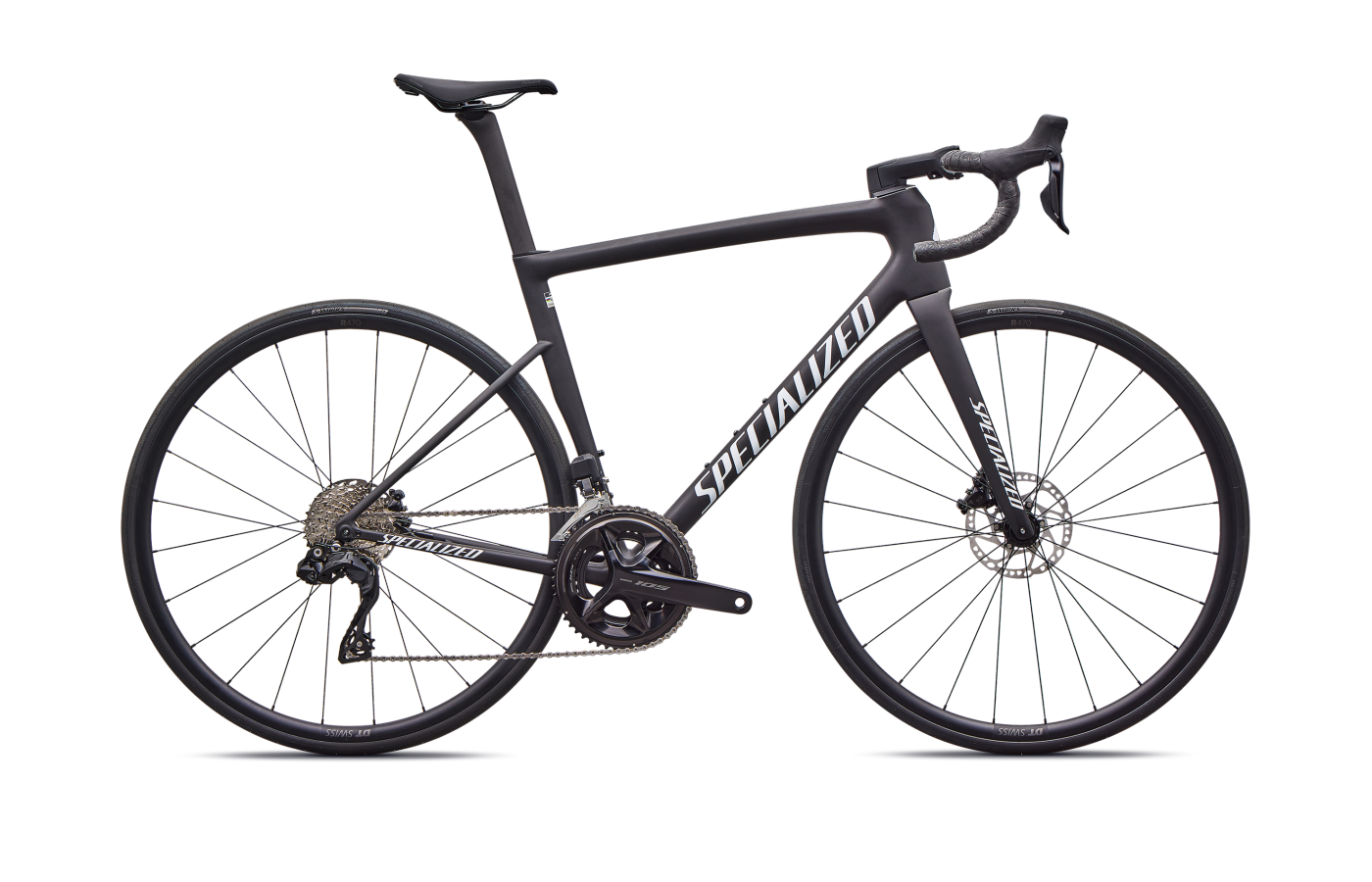
The Specialized Tarmac SL8 if you want a flagship that climbs as well as it sprints — lighter than either of these and nearly as aero, with a build range that starts thousands cheaper. The right pick if your weekend rides actually go up.
Compare →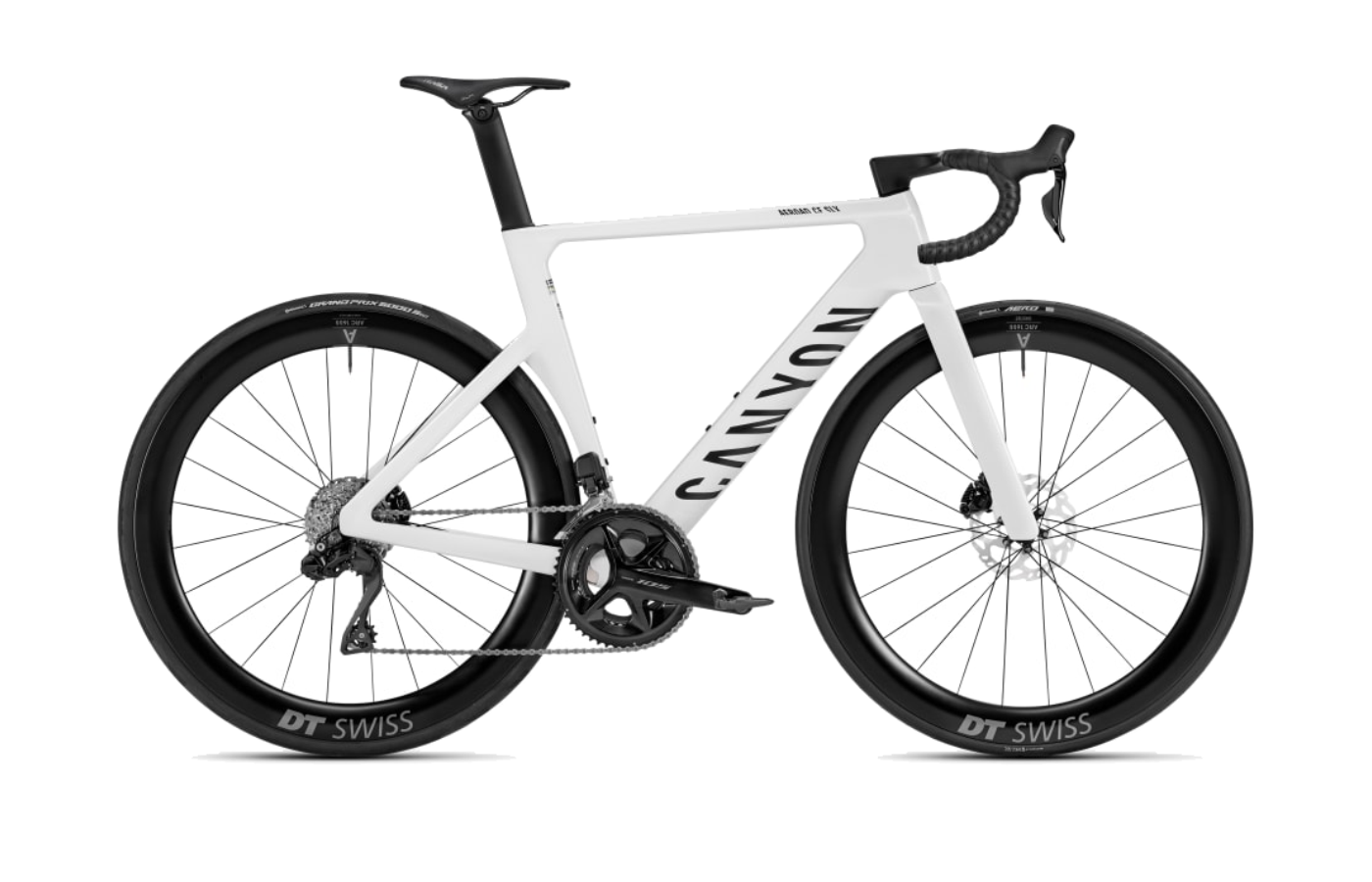
Aeroad
The Canyon Aeroad runs the same aero-flagship playbook as the S5 at roughly 30% less money — the catch is direct-to-consumer, no local dealer, and no demos. The value pick if you already know your fit.
Compare →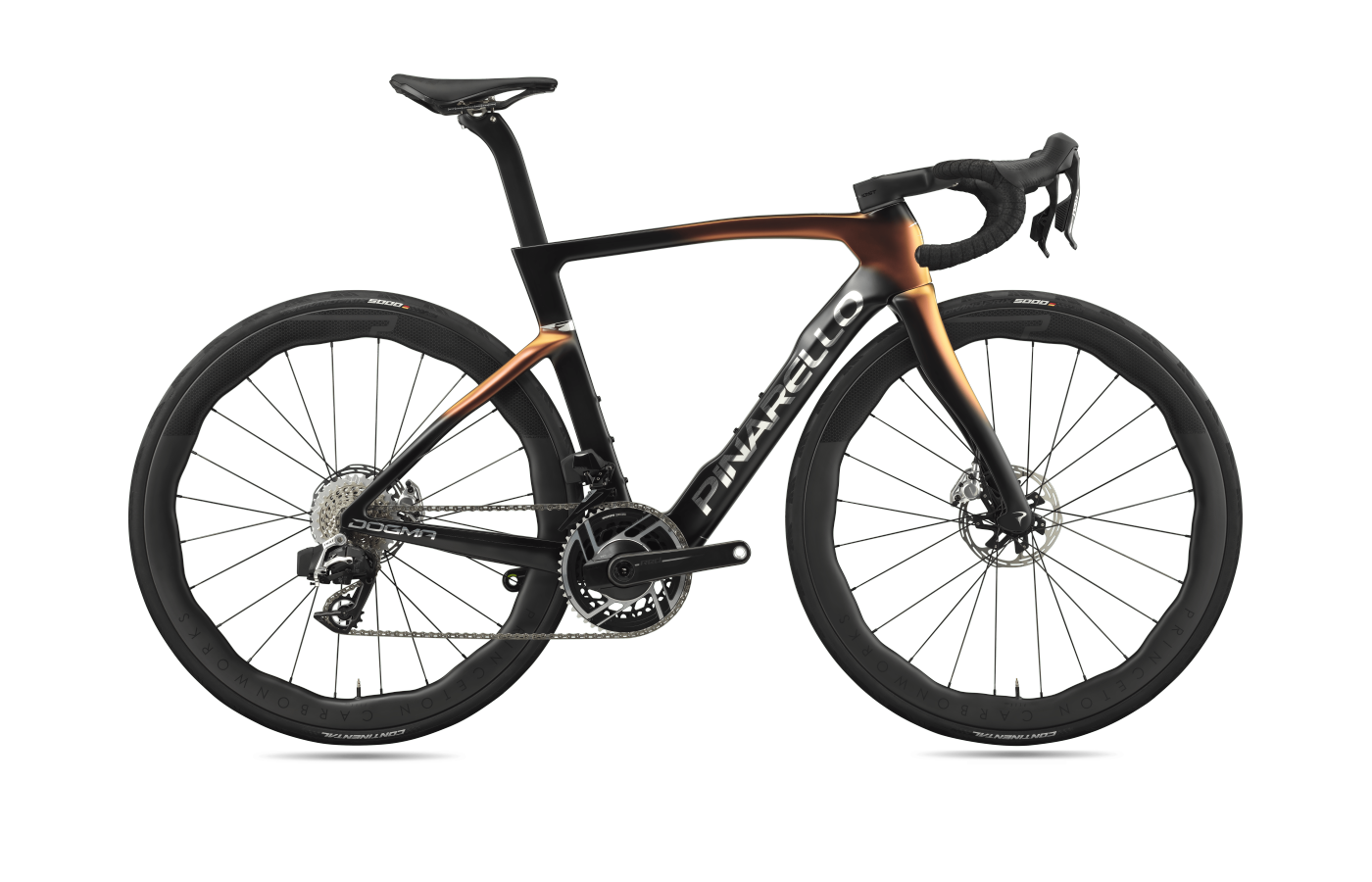
Dogma F
The Pinarello Dogma F is the other premium Italian, with a more cohesive front end and better all-round composure than the Y1Rs. The pick if the prestige matters but you also want the bike to handle properly under braking.
Compare →