R5
vsTarmac
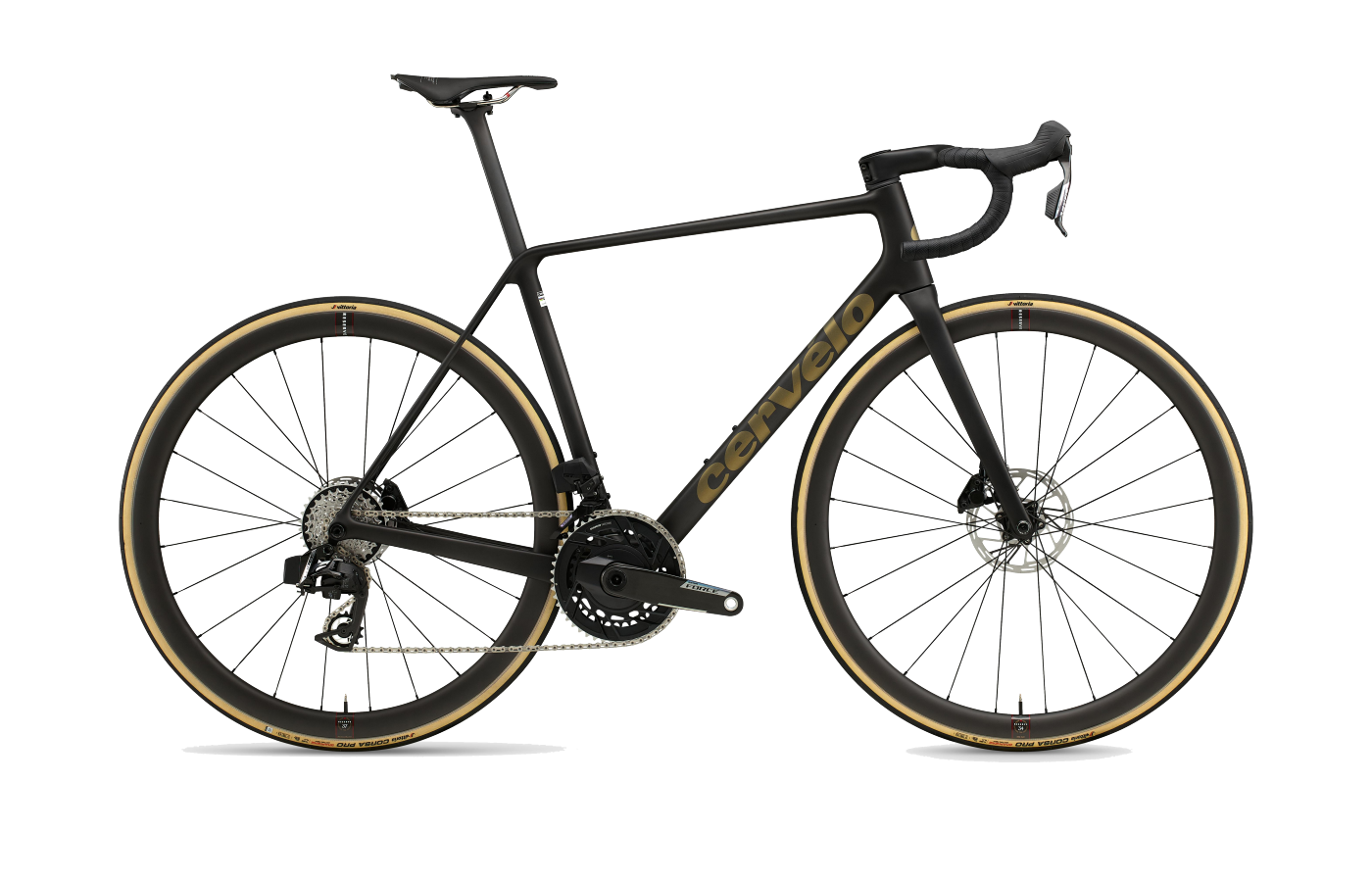
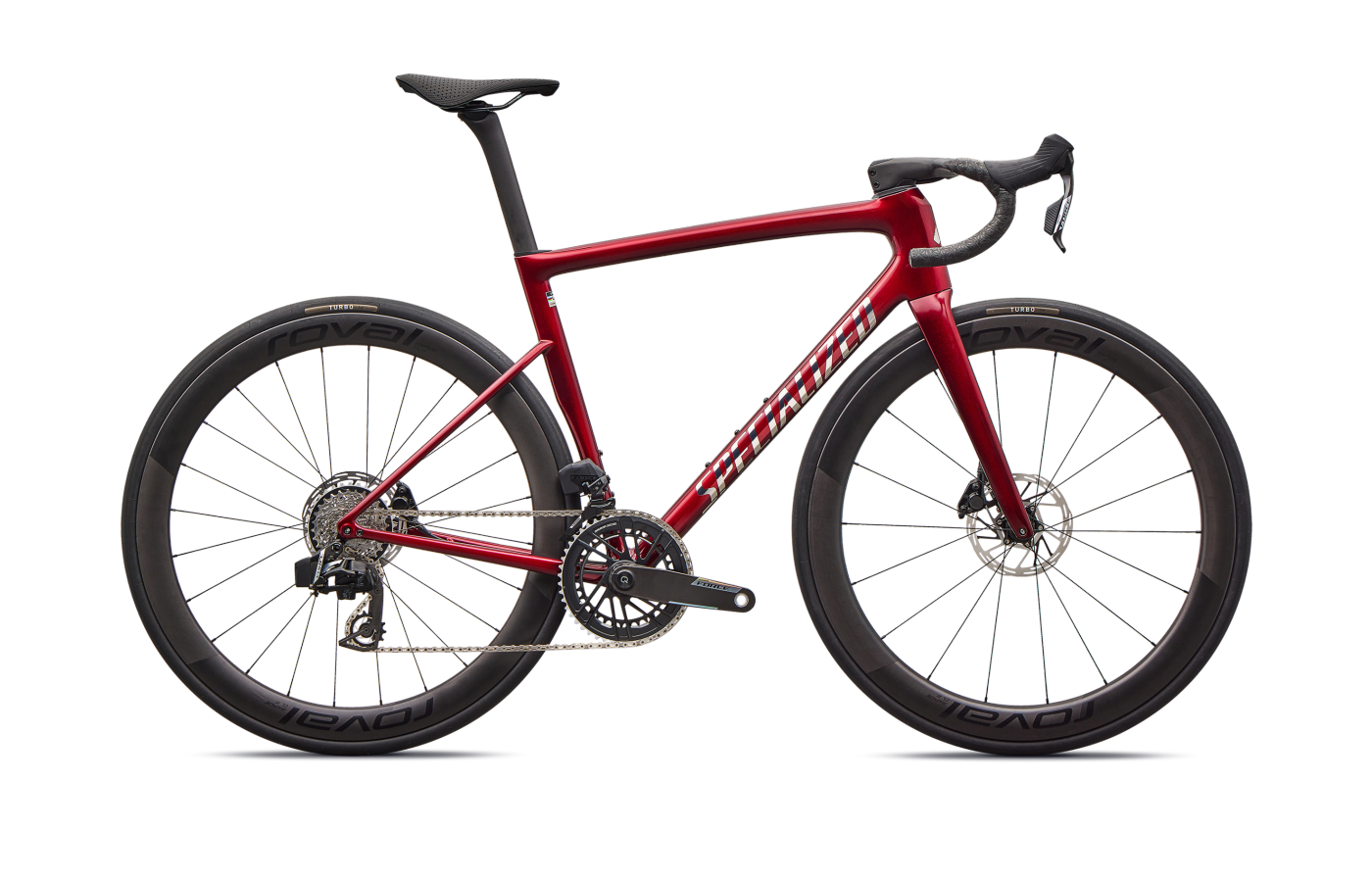
A pure climber meets a do-everything race bike.
The Cervelo R5 is a sub-6 kg col-crusher with one job. The Specialized Tarmac is the all-rounder you race, train, and ride centuries on.
R5
- Sub-6 kg complete-bike weight in Red AXS trim — a genuine col-crusher that pros and amateurs both feel uphill.
- Power meter on every build — 4iiii on Shimano, Quarq on SRAM. Removes a $500–$800 immediate upgrade.
- 34 mm tire clearance is 2 mm more than the Tarmac, opening rougher pavement and chip-seal without changing bikes.
- No build under $10,100 — Cervelo doesn't offer a Rival or 105 R5.
- Not a flat-road rocket — reviewers note it doesn't carry speed like the S5 or aero peers.
Tarmac
- Budget entry point at $4,699 for the SL8 Comp — the cheapest way into a current pro-level race platform.
- Genuine aero credentials — ~209 W at 45 km/h, within a few watts of dedicated aero bikes like the Cervélo S5.
- Twelve builds across $4.7k–$13.5k — Rival to Red, Ultegra to Dura-Ace, alloy bar to integrated cockpit. Pick your tier.
- Narrower 32 mm tire clearance limits rougher-road excursions versus the R5.
- Integrated Roval Rapide cockpit on Pro and S-Works builds is expensive to swap if your fit is off.
Editor’s analysis
The R5 picks a fight with gravity. The Tarmac picks every fight at once — and somehow keeps winning.
Cervelo built the new R5 around a single number: 5.97 kg in size 56 with SRAM Red AXS. Reviewers across Bicycling, Granfondo, and Cyclist call it a mountain goat — a 657 g painted frame, a 13% stiffer bottom bracket, and a feathery acceleration that makes hard gradients feel a half-step easier. There's a 2-watt aero gain from the new HB18 cockpit, but no one buys this bike for the flats. It's a climbing tool, sharpened.
The Specialized Tarmac took the opposite path. Specialized killed the aero Venge and the lightweight Aethos and merged their DNA into one chassis — Speed Sniffer head tube, Aethos-rounded rear end, and a claimed 16.6-second-per-40 km gain over the SL7 at 45 km/h. The S-Works lands at ~6.7 kg; the FACT 10r Pro and Expert builds sit closer to 7.25 kg. It is, by Cervelo's own admission, only ~4 watts behind the dedicated S5 in the tunnel.
On the road the philosophies show. The Cervelo R5 wants you to attack ramps; reviewers note the front wheel lifting under hard accelerations. It runs a 73-degree head tube, 57.3 mm trail, and a notably longer 1024 mm-class wheelbase in the larger sizes — composed for descents, not twitchy. The Specialized Tarmac SL8 is the more locked-in descender, with an evolving HTA across sizes (73° at 54, climbing to 73.5° and 74° on bigger frames), 5–8 mm of trail less than the R5 in middle sizes, and a tighter 978 mm wheelbase at size 54 — built for criterium-pack direction changes.
Tire clearance matters here. The Cervelo R5 takes 34 mm, the Specialized Tarmac stops at 32 mm — a small gap on paper, a real one if you mix in chip-seal or light gravel. Both ship with 26 mm Vittoria or S-Works Turbo tires that nearly every reviewer calls too narrow. Plan to swap to 28–30 mm rubber on day one of either bike.
Where the builds differ.
Comparing our editor's-pick builds side-by-side. Winners highlighted row-by-row — lower price and weight, and the better-spec component, each mark a point.
Build variants & pricing
The Tarmac spans $4,699 to $13,499 across twelve builds. The Cervelo R5 spans $10,100 to $14,400 across five — all of them flagship-tier groupsets.
Prices are current US MSRP. Editor's picks are tier-matched on SRAM Force AXS to make this an apples-to-apples comparison. Note that the R5 Force AXS is $1,750 more than the Tarmac SL8 Pro Force AXS — that gap is the cost of Cervelo's flagship-only frame strategy, not a spec difference.
How they fit, how they steer.
Both at size 54 — the fit-picked size for a 5'8" rider on each platform. Stack lands within 1 mm (R5: 544.6 mm, Tarmac: 544 mm), reach within 1 mm (R5: 383.3 mm, Tarmac: 384 mm). Identical 73° head tube angle, identical 410 mm chainstays. The R5 carries 0.7 mm less trail; the Tarmac is marginally tighter on wheelbase.
Which size should I buy?
Both ranges overlap closely in the middle of the lineup; the Tarmac extends further at the small end (44 cm vs Cervelo's 48).
→These are starting points. Flexibility, riding style, and preferred position all shift the answer — if you’re between sizes, a professional fit beats a chart.
What the magazines said.
Published reviews from trusted cycling outlets. Click through for the full write-up.
Which one should you buy?
If most of your riding is mountainous and you weigh grams, get the Cervelo R5. If you want one bike for everything from crits to centuries, get the Specialized Tarmac.
R5
If your weeks revolve around vertical meters — alpine sportives, hill-climb TTs, 4,000 m climbing days — the R5's sub-6 kg complete weight and stiffened bottom bracket buy you genuine, measurable time on long ascents. You're paying a premium for a focused tool, and you'll feel it.
Tarmac
If you want one road bike for crits, group rides, weekend climbs, the occasional century, and the rare gravel shortcut, the Tarmac SL8 is the benchmark — and the only one of these two with a sub-$5k entry point. Lighter than most aero bikes, faster than most lightweights.
Questions buyers actually ask.
Short answers to the things we get emailed about most often.
01Which bike climbs better?
The Cervelo R5, clearly. The R5 dips below 6 kg in its top builds — Granfondo measured 5.97 kg in size 56 with Red AXS — while a comparably-spec'd S-Works Tarmac lands around 6.6–6.8 kg. That's roughly 700–800 g, or about 1% of system weight for a 70 kg rider, which translates to ~10 seconds saved on a 30-minute climb.
Reviewers across Bicycling, Granfondo, and Competitive Cyclist describe the R5 as a 'mountain goat' with a 'ghostly quality' on steep ramps. The Tarmac is no slouch uphill — it's a fine climber by aero-bike standards — but if your riding lives in the mountains, the R5 is the sharper tool.
02Which is faster on flat roads?
The Specialized Tarmac, at meaningful speeds. External wind-tunnel testing puts the Tarmac SL8 at roughly 209 W at 45 km/h — within a few watts of dedicated aero bikes like the Cervelo S5. The R5 picked up about 2 watts from its new HB18 cockpit, but Cervelo openly positions it as a climbing bike, not a flat-road weapon.
Multiple R5 reviewers note it 'doesn't retain speed' the way the S5 does. If most of your riding is flat or rolling and you race above 35 km/h, the Tarmac wins this category. Cervelo would tell you to look at the S5 instead.
03What's the maximum tire clearance on each?
Cervelo R5: 34 mm officially. The frame is designed around 29 mm tires, and reviewers consistently recommend running 28–30 mm rubber for real-world riding.
Specialized Tarmac SL8: 32 mm officially. Most riders fit a true 30 mm tire comfortably, and a 28 mm setup is the sweet spot.
Neither is a gravel bike — for anything rougher than chip-seal, look at a Roubaix, Caledonia, or a dedicated gravel rig like the Áspero-5.
04Are the editor's-pick builds really comparable?
Yes — both are SRAM Force AXS E1 with power meters. The R5 Force AXS is $10,250; the Tarmac SL8 Pro Force AXS is $8,499. Same electronic 12-speed drivetrain, similar wheel depth (Reserve 34|37 TA on the Cervelo, Roval Rapide CL III on the Tarmac), one-piece carbon cockpit on both.
The ~$1,750 gap reflects Cervelo's frame strategy — the R5 only sells in one carbon grade, while the Tarmac SL8 Pro uses Specialized's FACT 10r (one tier down from the S-Works' FACT 12r). It is not a like-for-like frame comparison at this price; it is the closest tier-match the two lineups offer.
05Why does the R5 start so much higher?
Cervelo simply doesn't sell a budget R5. The cheapest build is the Ultegra Di2 at $10,100, and there's no Rival, 105, or alloy version anywhere in the lineup — every R5 ships on the same flagship frame with a power meter, integrated cockpit, and Reserve carbon wheels.
The Tarmac, by contrast, runs from a $4,699 SL8 Comp (SRAM Rival AXS, alloy bar, FACT 10r frame) up to a $13,499 S-Works. If you want a sub-$10k carbon race bike from one of these two brands, the Tarmac is your only option.
06Do both come with a power meter?
Yes, every build of both bikes ships with a power meter. The R5 includes a 4iiii Precision Pro on Shimano builds and a Quarq spider-based meter on SRAM builds. The Tarmac SL8 Pro and S-Works ship with 4iiii or Quarq depending on drivetrain; the Expert and Comp builds also include a Quarq with SRAM-equipped variants.
For budget-conscious shoppers, this is a meaningful $500–$800 saving versus an aftermarket installation.
07How serviceable are the integrated cockpits?
The Cervélo HB18 is a one-piece carbon bar/stem. Cervelo offers a free 30-day cockpit exchange to dial in width and stem length — a genuinely useful policy that takes some sting out of the integrated-cockpit gamble.
The Roval Rapide cockpit on the Tarmac SL8 Pro and S-Works is similarly one-piece and integrated, with the same caveat: changing stem length post-purchase is an expensive aftermarket swap (reviewers cite ~$450–$600 plus labor). The lower Tarmac tiers (Expert and Comp) ship with a two-piece alloy bar and stem, which is less aero but cheaper and far more adjustable.
If fit certainty matters and you can't demo, the R5's exchange policy is a real advantage.
08What warranty do they come with?
Both frames carry a lifetime frame warranty to the original owner against manufacturing defects. Specialized and Cervelo both offer crash-replacement pricing (typically 40–60% off a new frame) for crash-damaged bikes. Component warranties follow the manufacturer (Shimano, SRAM, Reserve, Roval) — generally 2 years on drivetrain electronics and wheels.
Similar bikes
If your priorities don’t map cleanly onto either of these, one of these adjacent bikes probably fits better.
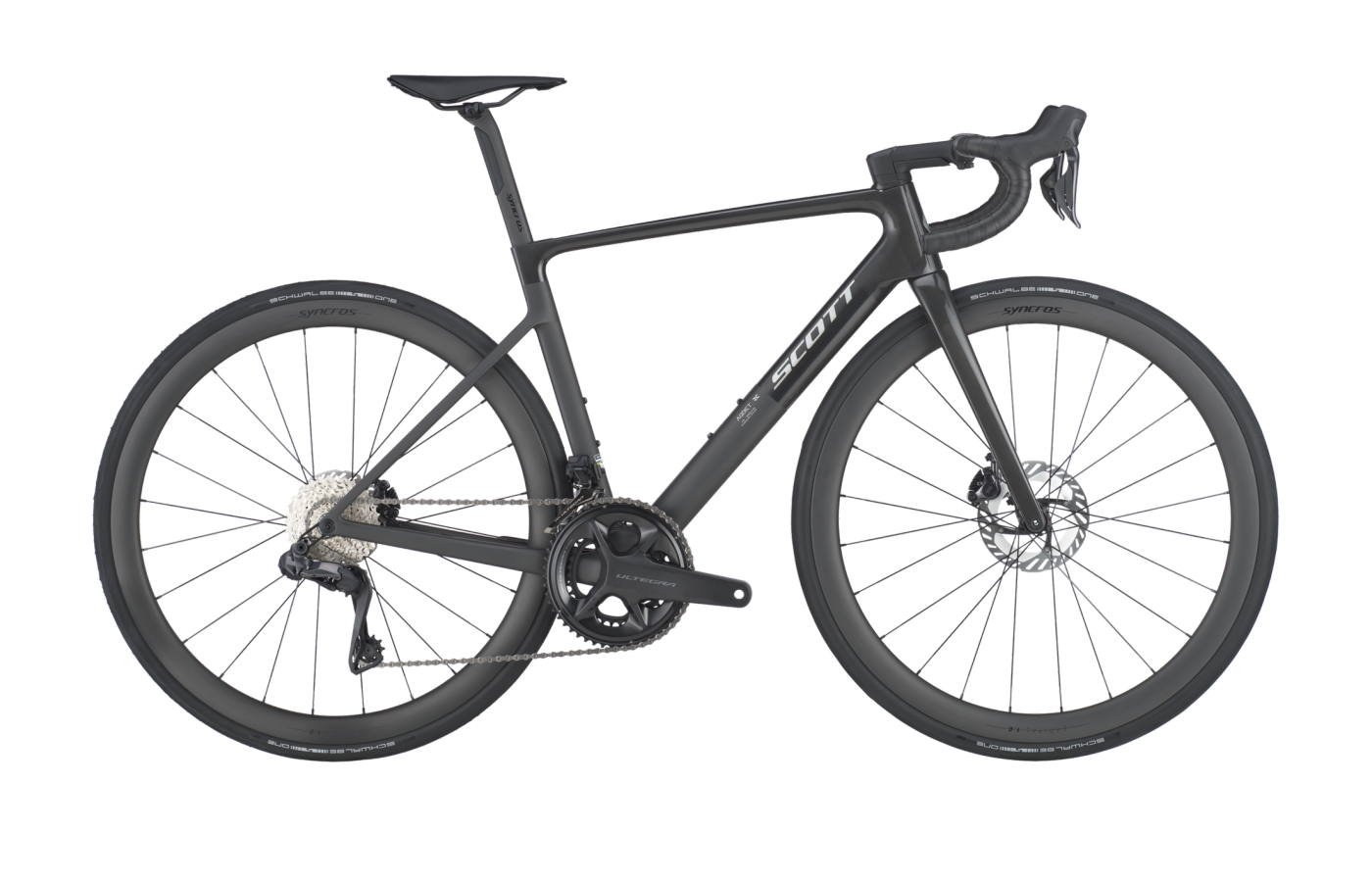
Addict RC
The only mainstream rival that genuinely matches the R5 on weight — a sub-6 kg build is achievable, with slightly more aggressive aero shaping than the Cervelo. If you want a pure climber but find the R5's pricing brutal, the Scott Addict RC is the cross-shop.
Compare →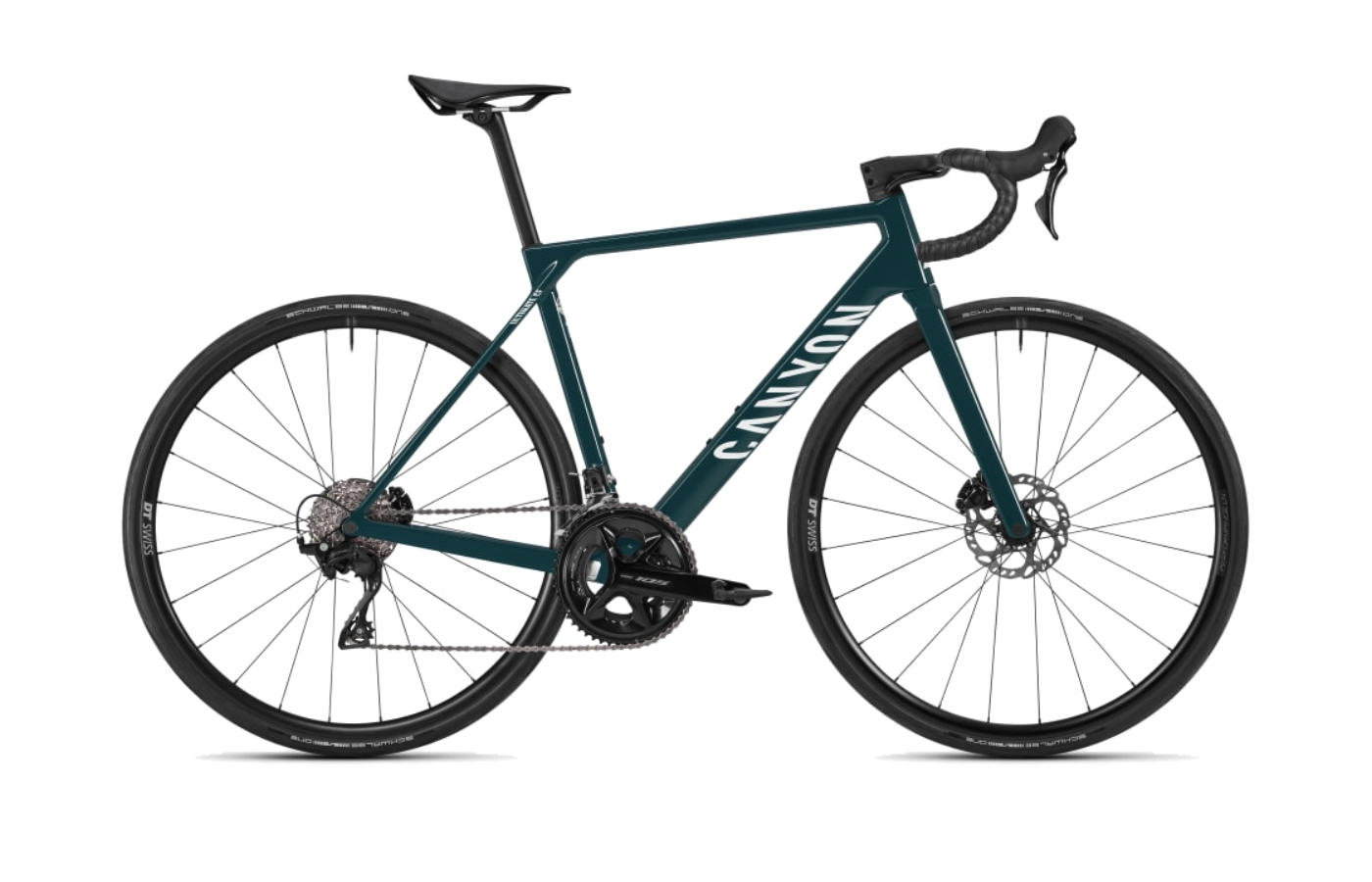
Ultimate
A direct all-rounder alternative to the Tarmac at noticeably lower money. Similar Speed-Sniffer-style integration, similar weight, similar aero — the catch is direct-to-consumer fit risk and no local dealer.
Compare →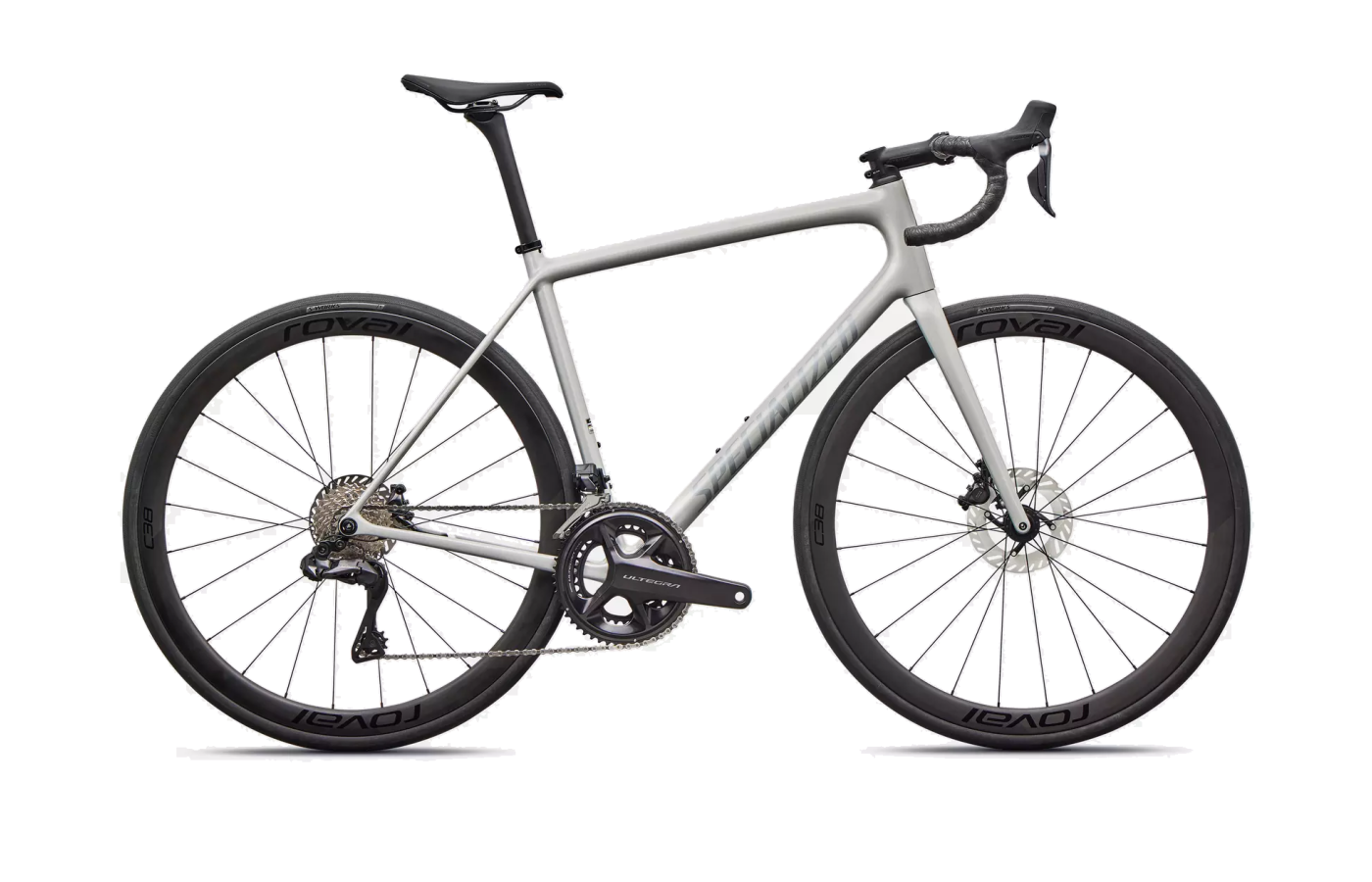
Aethos
If you love the R5's 5.9 kg climbing-bike feel but hate integrated cables and slammed race geometry, the Specialized Aethos is the alternative — round tubes, exposed cables, classical proportions, and a frame as light as the Cervelo's.
Compare →