R5
vsS5
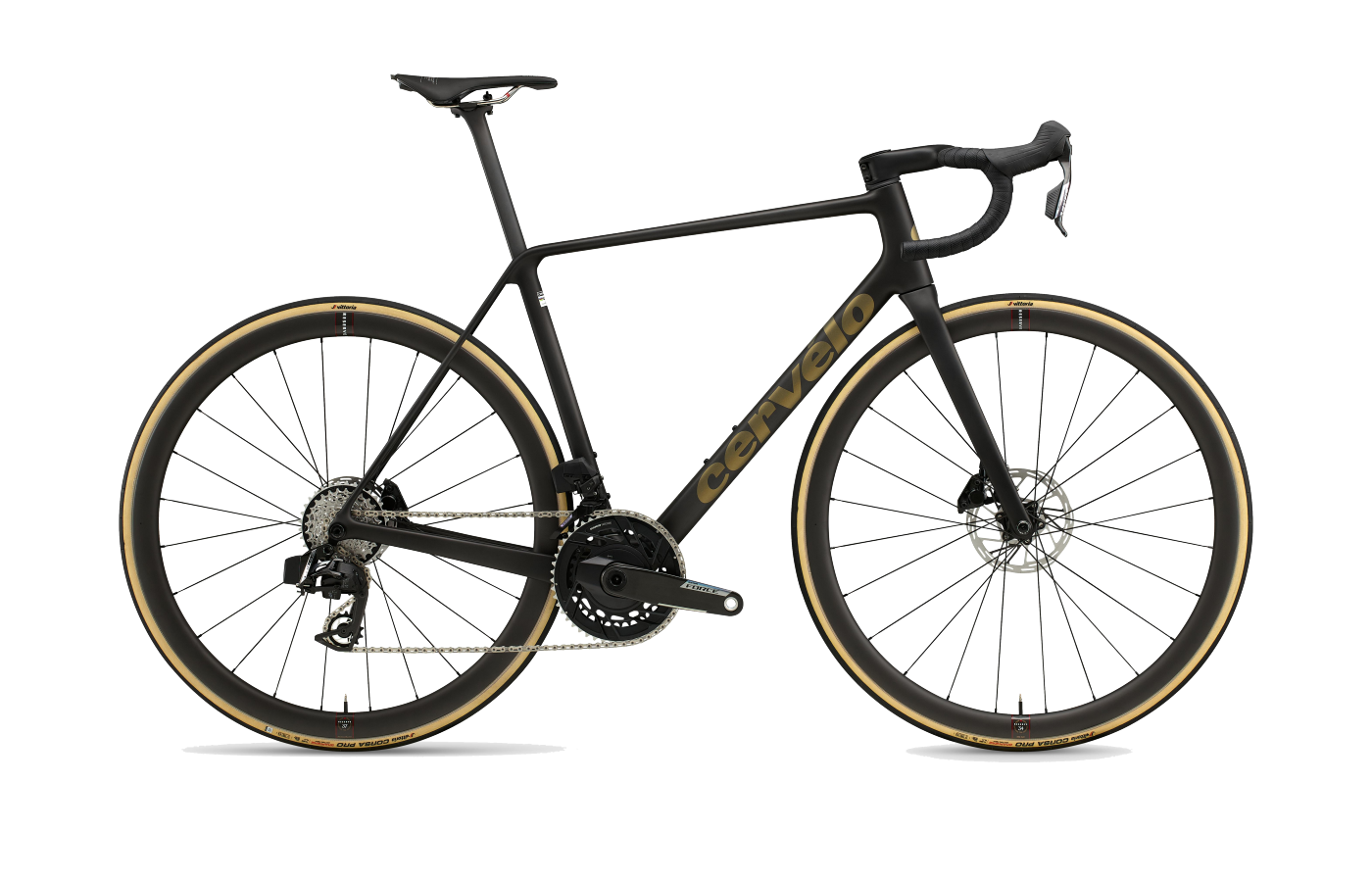
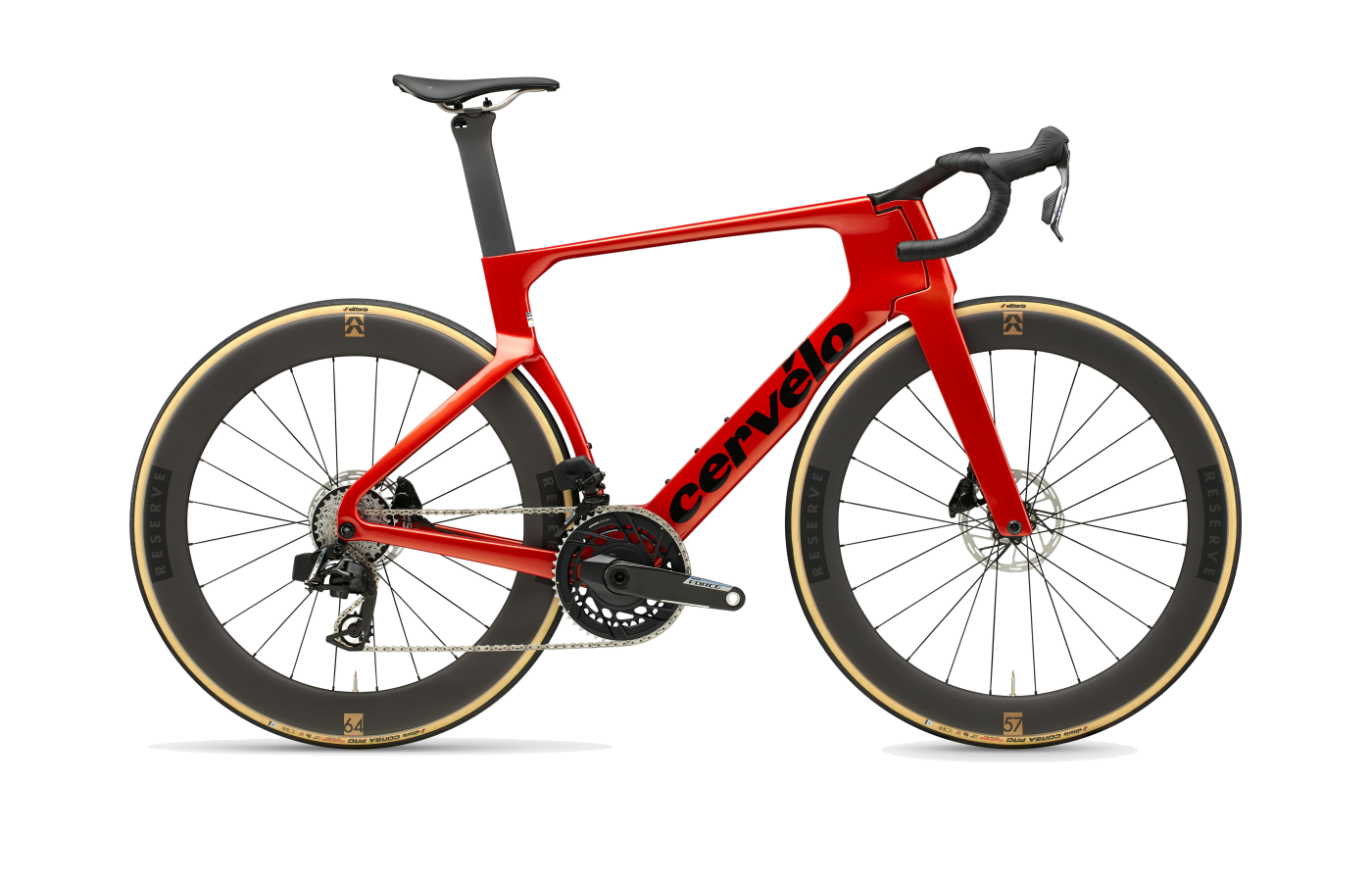
Same brand. Same price. Opposite job.
The R5 is Cervélo's sub-6 kg climbing scalpel. The S5 is the wind-tunnel weapon Visma rides on the flats. One Canadian house, two completely different bets.
R5
- Sub-6 kg in a complete build — 5.97 kg measured for the SRAM Red AXS; the R5 frame is around 657 g painted in size 56.
- 13% stiffer bottom bracket than the previous R5 — power transfer reviewers describe as 'instantaneous' on climbs.
- 34 mm tire clearance on a pure climbing frame — room to run 28 or 30 mm rubber for real-world comfort once you ditch the stock 26s.
- Stock 26 mm tires are needlessly narrow — plan on swapping to 28 or 30 mm.
- Doesn't hold flat-road speed like an aero bike — the shallow Reserve 34|37 wheels prioritize climbing over cruising.
S5
- Fastest in its category at 40 km/h — Cycling News' wind-tunnel test recorded a 27.57 W saving over their baseline aero bike.
- Co-developed Reserve 57|64 wheels shaped with the frame for clean airflow — Cervélo claims the wheelset alone is worth 3 watts.
- Genuinely planted in crosswinds — reviewers repeatedly call out its composure where deep-section rivals get twitchy.
- Roughly 1.2 kg heavier than the R5 in matched builds — climbs cost more.
- BBright press-fit bottom bracket complicates Di2 battery service and home maintenance.
Editor’s analysis
Cervélo built two race bikes that ride next to each other in the team truck — and almost nothing else about them is the same.
Look at the fork first. The R5 wears a conventional all-carbon tapered fork with round-ish legs and a normal steerer. The S5 still uses Cervélo's bayonet fork — the V-stem cantilevered out front, the deeper head tube, the bare-knuckle commitment to slipperiness. Same brand, same designers, two completely different airflow philosophies.
Then look at the scale. Reviewers pulled the new R5 down to 5.97 kg in a SRAM Red build (Granfondo's tested figure), with the painted size-56 frame at 657 g and the fork at 302 g. The S5 in equivalent trim lands around 7.17–7.44 kg, by Granfondo's measurement. That's roughly a 1.2 kg gap between two bikes from the same brand, in the same size, at nearly the same price — a more honest summary of the brief than any spec sheet.
Geometry is the fake-out. At size 54 the stacks are 2.6 mm apart, reach within a millimeter, both 73° head angles. A pro can swap from the S5 on a flat stage to the R5 in the mountains without touching their fit — that's by design. The handling differences live in the details: the S5's chainstays are 5 mm shorter (405 vs 410), trail is 1.7 mm tighter (55.6 vs 57.3), wheelbase 3 mm shorter. Subtle on paper, sharper in the corners.
Tire clearance is identical at 34 mm, but the stock specs tell you what each bike is for. The Cervelo R5 ships 26 mm Vittoria Corsa Pro Speed tires — a deliberate choice to hit the lightest-possible scale weight, and a choice nearly every reviewer flagged as needlessly narrow for everyday riding. The Cervelo S5 ships 29 mm Vittoria Corsa Pro on wider Reserve 57|64 rims that measure those tires closer to 30 mm. The R5 is built to be weighed; the S5 is built to be ridden fast.
Where the builds differ.
Comparing our editor's-pick builds side-by-side. Winners highlighted row-by-row — lower price and weight, and the better-spec component, each mark a point.
Build variants & pricing
Tier-matched picks: both Force AXS, both $10,250, both with stock dual-sided power meters. The lineups mirror each other almost exactly.
Prices are current US MSRP. Both ranges run from $10,100 (Ultegra Di2) to $14,400–14,500 (SRAM Red AXS / Red XPLR / Dura-Ace Di2). Cervélo doesn't sell either platform below $10k — there is no Rival or 105 entry point.
How they fit, how they steer.
Same size on both sides. Stack and reach are within 3 mm — Cervélo aligned the fits on purpose so pros can switch between the two without re-tuning. The S5 is the sharper bike: 1.7 mm less trail, 5 mm shorter chainstays, 3 mm shorter wheelbase.
Which size should I buy?
Size recommendations based on stack, reach, and effective top tube. Both ranges run 48 through 61 with nearly identical breakpoints.
→These are starting points. Flexibility, riding style, and preferred position all shift the answer — if you’re between sizes, a professional fit beats a chart.
What the magazines said.
Published reviews from trusted cycling outlets. Click through for the full write-up.
Which one should you buy?
If your roads go up, get the R5. If your roads stay flat and you want to be fast on them, get the S5.
R5
Pick the Cervelo R5 if your weekly ride includes real elevation and you care more about how a bike feels at the bottom of a switchback than how it holds 45 km/h on the flats. Reviewers describe it as 'ghostly' and 'a mountain goat' — and at 5.97 kg complete, those words are earned.
S5
Pick the Cervelo S5 if most of your riding is rolling or flat, you race or chase Strava segments, and you want a bike that holds its speed without you having to feed it. Visma rides it on every stage type for a reason — and a wind-tunnel-measured 27.57 W advantage at 40 km/h shows up on the road.
Questions buyers actually ask.
Short answers to the things we get emailed about most often.
01Which is faster on flat roads?
The Cervélo S5, by a meaningful margin. Cycling News ran the new S5 in a wind tunnel and recorded a 27.57 W saving over their baseline at 40 km/h with a rider on board. Cervélo's own claim is that the 2025 S5 is 6.3 watts faster than the outgoing model.
The Cervélo R5 picked up some aero work — the new HB18 cockpit is worth roughly 2 watts versus the prior R5 — but it makes no pretense of competing with a bayonet-fork aero frame on the flats. Reviewers consistently note the R5 'doesn't retain speed in the same way' as a dedicated aero bike.
02Which one climbs better?
The Cervélo R5, by a clear margin. Independent measurements put the SRAM Red AXS R5 at 5.97 kg complete (Granfondo) — well under the UCI's 6.8 kg minimum and roughly 1.2 kg lighter than the equivalent S5, which Granfondo measured in the 7.17–7.44 kg range.
On a 30-minute climb at threshold for a 70 kg rider, that's somewhere in the neighborhood of 30–60 seconds, depending on gradient. The R5 also gets a claimed 13% stiffer bottom bracket, which reviewers describe as 'instantaneous' under power.
03What's the maximum tire clearance?
Both frames are officially rated to 34 mm. In practice the Cervelo R5 ships with 26 mm Vittoria Corsa Pro Speed tires (a deliberate weight choice, and one most reviewers recommend immediately upgrading to 28 or 30 mm). The Cervelo S5 ships 29 mm Vittoria Corsa Pro on wider Reserve 57|64 rims, which actually measure closer to 30 mm on-bike.
Neither is a gravel bike. For anything rougher than chip seal, look at the Áspero-5 or a true endurance frame.
04Are the fits really the same on both bikes?
Within a few millimeters, yes. At size 54 the R5 has a stack of 544.6 mm and reach of 383.3 mm; the S5 is 542 mm stack and 384 mm reach. Head tube angle is 73° on both. That's a deliberate Cervélo decision so that a pro on Visma-Lease a Bike can swap from the S5 on a flat stage to the R5 in the mountains without re-fitting.
Where the bikes diverge is underneath the rider: the S5 has 5 mm shorter chainstays (405 vs 410), 1.7 mm less trail (55.6 vs 57.3), and a 3 mm shorter wheelbase. Same cockpit position; sharper handling on the S5.
05Do both come with power meters?
Yes — every complete R5 and every complete S5 ships with a dual-sided power meter stock. Shimano builds get a 4iiii Precision Pro on both crank arms; SRAM builds get a Quarq spider-based meter. That's a value worth roughly $1,000 you'd otherwise spend after the fact, and it's consistent across both ranges from the Ultegra Di2 builds up through Red AXS.
06How serviceable are the integrated cockpits?
The R5 uses the HB18 one-piece carbon cockpit; the S5 uses the HB19. Both are one-piece bar/stem units that limit post-purchase fit changes. Cervélo mitigates this with a 30-day no-charge cockpit exchange on the R5 and a 60-day exchange on the S5 — useful if your initial guess on bar width or stem length turns out wrong.
Day-to-day maintenance favors the S5: reviewers note its front-end is 'considerably simpler to maintain than its predecessor' thanks to easier headset access. The S5's BBright press-fit bottom bracket, however, also houses the Di2 battery — and reviewers consistently call it a hassle for home mechanics.
07Why does Visma-Lease a Bike use the S5 even on mountain stages?
Because at WorldTour speeds, the S5's aero advantage often pays back its weight penalty even on climbs that aren't extreme. A pro holding 380+ watts on a 6% gradient is already moving fast enough that drag matters.
When the gradient gets truly steep — high-mountain summit finishes, sustained 8–10% — the team switches to the R5. That's exactly the line: at a typical amateur climbing pace below 20 km/h, weight wins easily, which is why the R5 is the better choice for most non-pro riders who climb regularly.
08Is there a 1x option on either?
Yes — both top out with a SRAM Red XPLR AXS 1x build at $14,400 (R5) and $14,500 (S5). Cervélo claims roughly 2 watts of aero saving from removing the front derailleur on the S5. The 10–46T XPLR cassette gives wide range, but reviewers note the gear jumps at the top end can feel gappy for fine-cadence work — a real consideration if you're a cadence-sensitive rider on rolling terrain.
For anyone who's never run 1x on the road, neither of these is the place to start. The 2x Force AXS or Ultegra Di2 builds are the safer pick.
Similar bikes
If your priorities don’t map cleanly onto either of these, one of these adjacent bikes probably fits better.
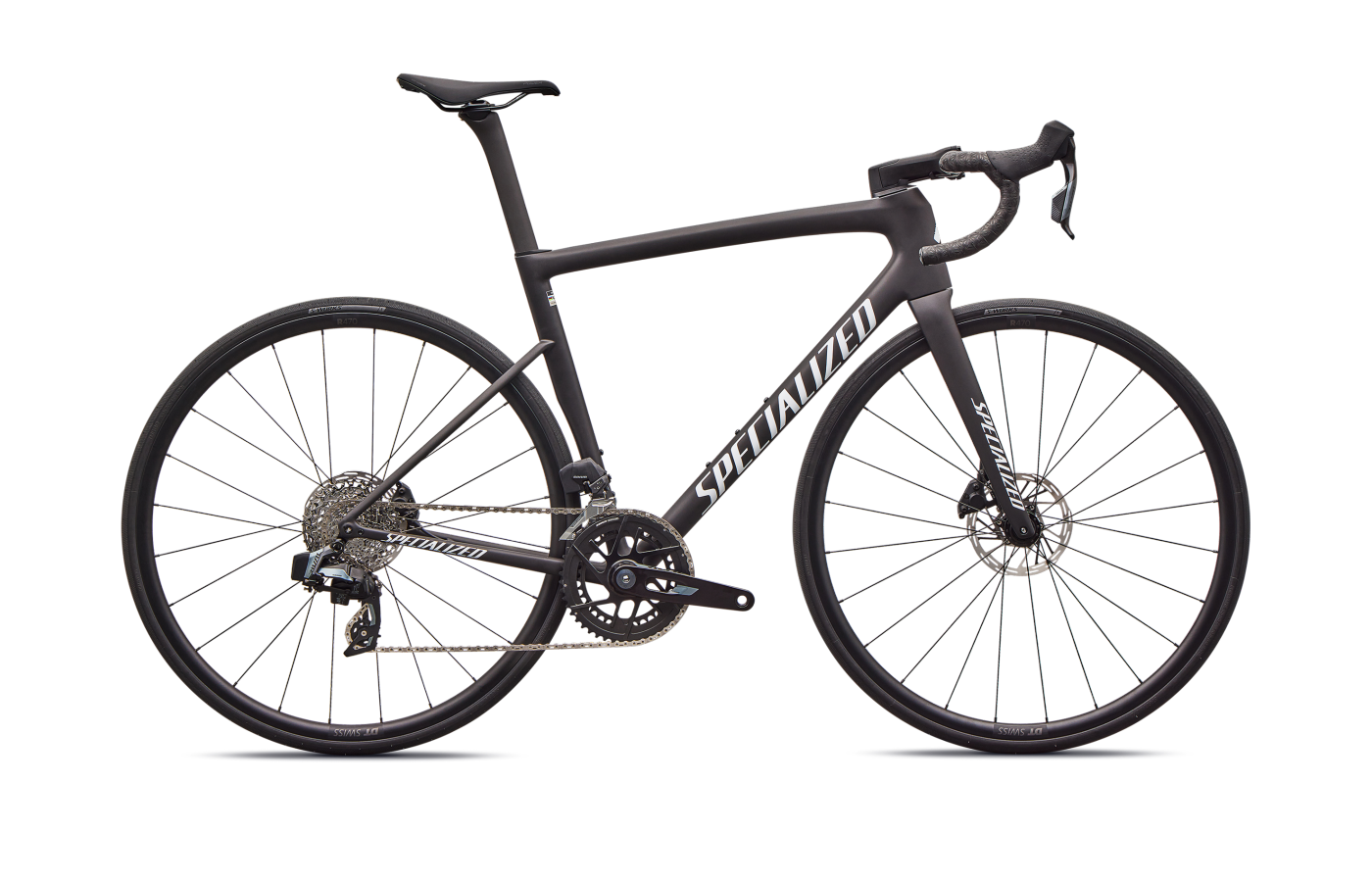
Tarmac
The middle path — Specialized's Tarmac aims to be both light and aero, splitting the difference Cervélo refuses to split. Doesn't reach the R5's sub-6 kg or the S5's wind-tunnel numbers, but it does both jobs reasonably on one bike.
Compare →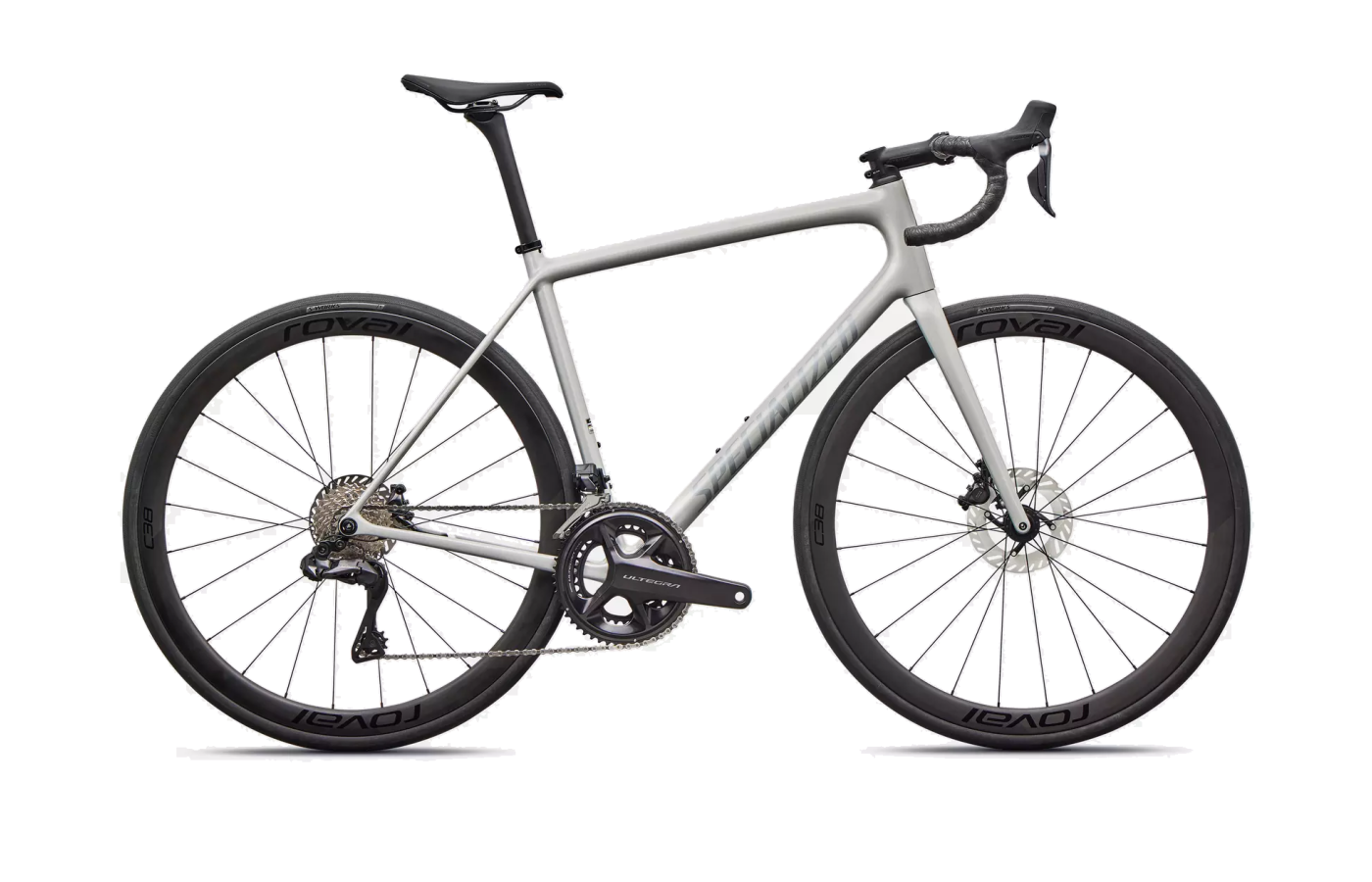
Aethos
The Specialized Aethos is the anti-aero play — round tubes, no integration, weight-weenie territory at sub-6 kg. If you're drawn to the R5 because it's light and not because it's a Cervélo, look here too.
Compare →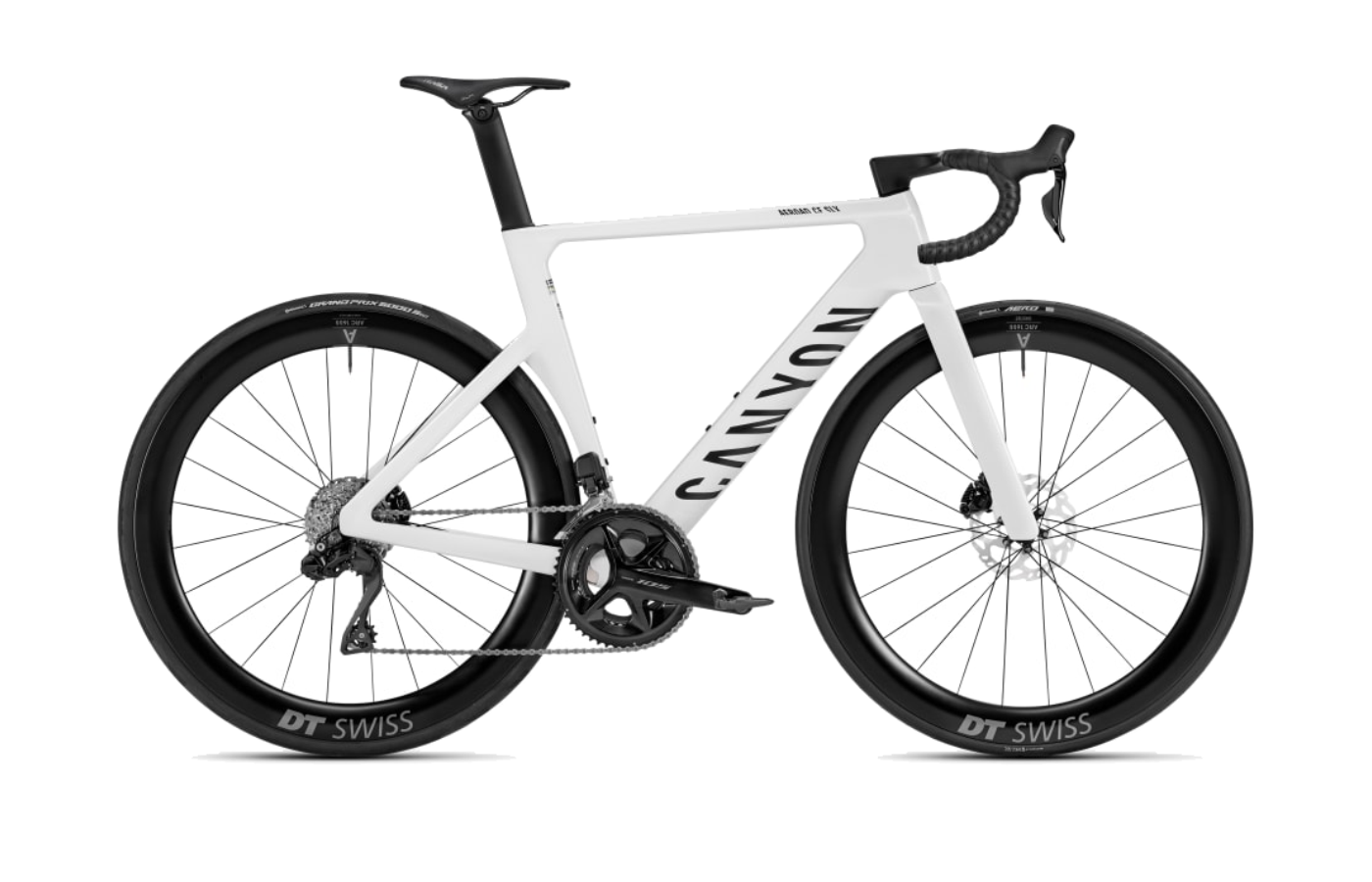
Aeroad
Canyon's Aeroad is the most direct S5 rival in the segment — same aero-flagship philosophy, same planted feel, often at meaningfully less money. Direct-to-consumer, so no dealer demos.
Compare →