Aspero-5
vsS5
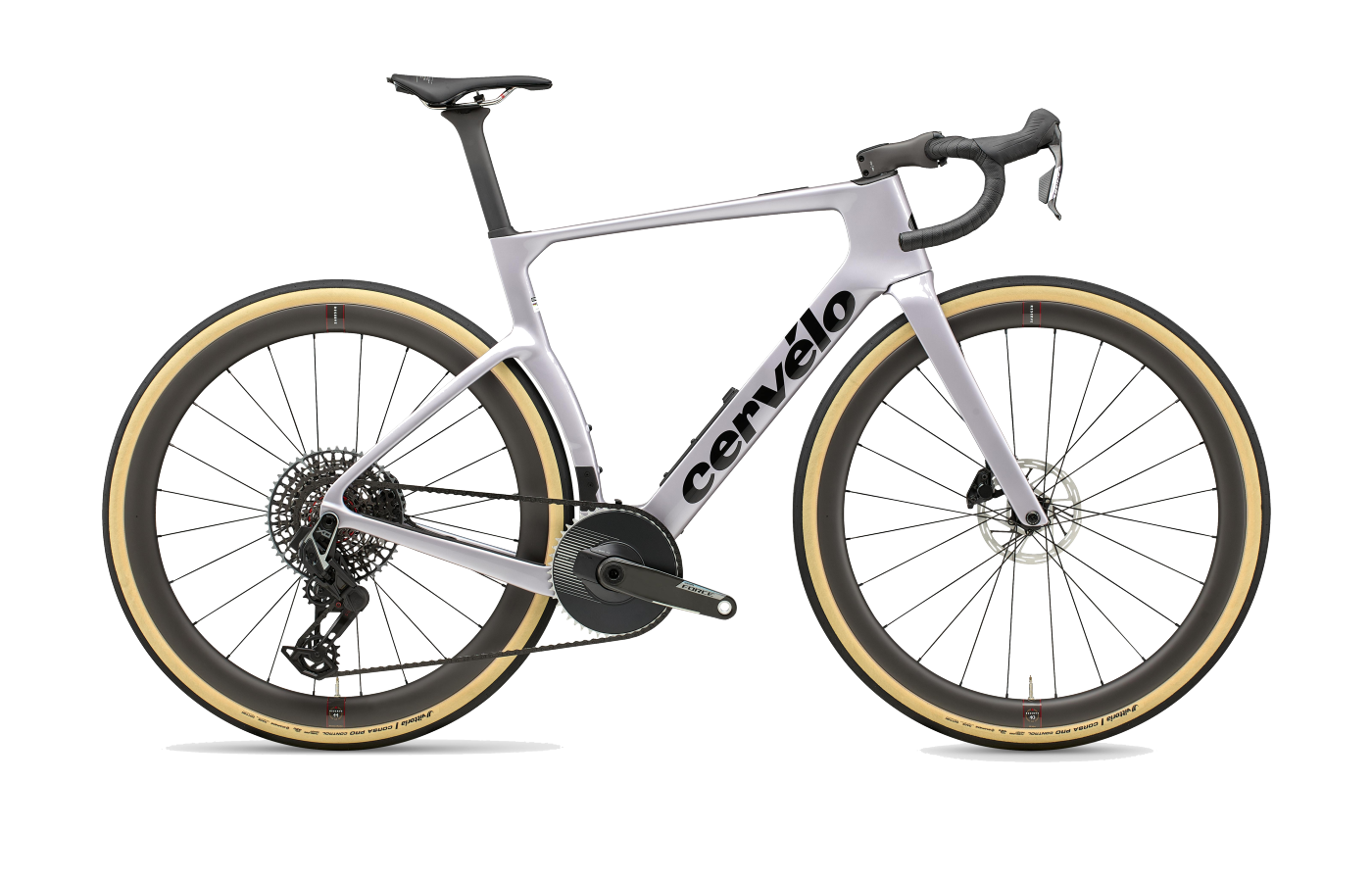
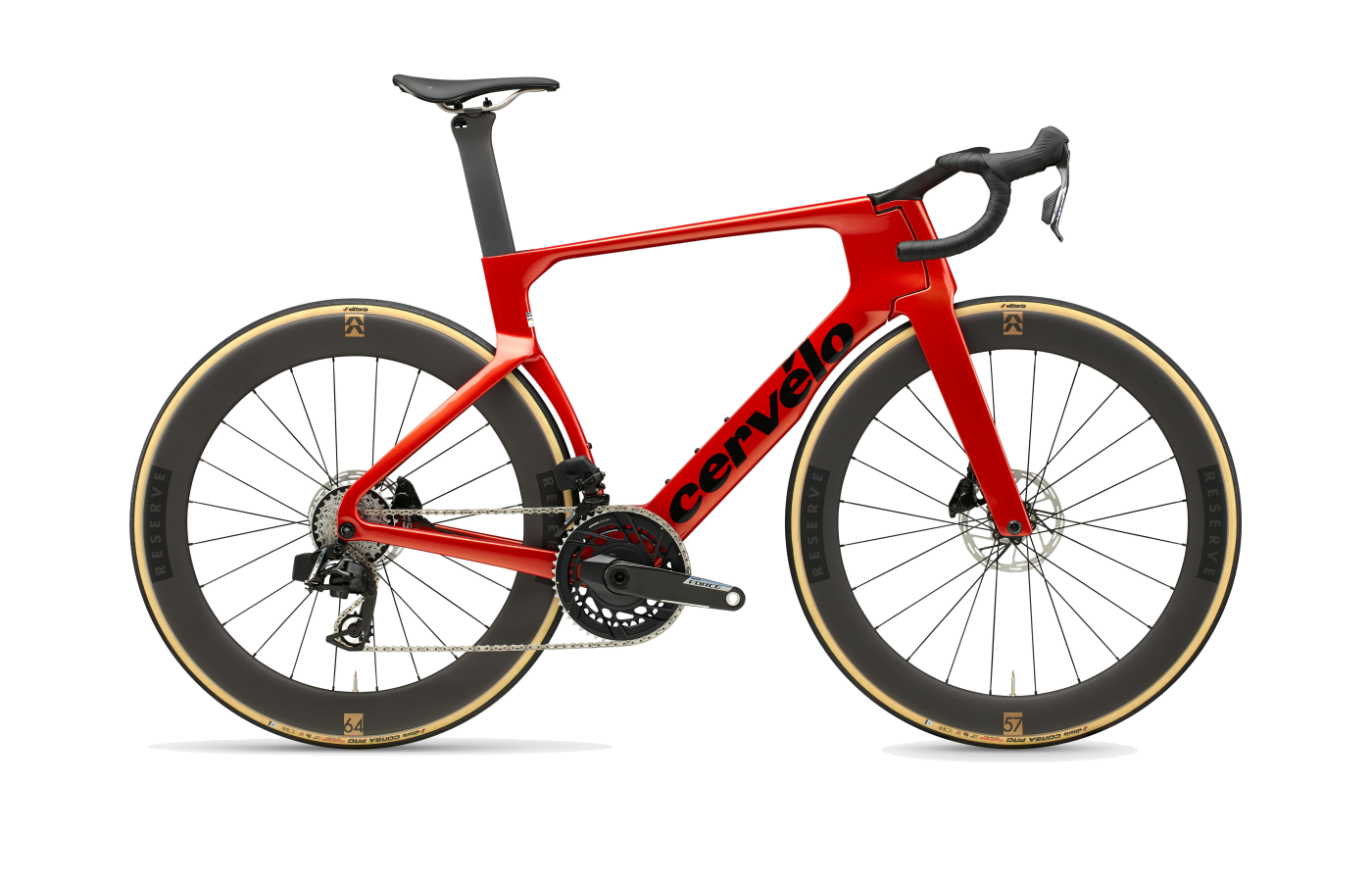
Same wind tunnel, different surfaces.
The Cervelo Aspero-5 stretches S5 aero thinking over 45 mm of tire clearance. The S5 is the pure-tarmac original.
Aspero-5
- True dual-purpose drop-bar bike — fast on tarmac, fast on hard-packed gravel, with one wheel swap.
- Aero where it matters for gravel — Cervelo claims 34 watts faster than the next-quickest gravel race bike.
- Wider tire ceiling at 45 mm — enough for fast races on most US gravel surfaces.
- Stiff frame and 45 mm clearance both become limits on muddy or technical gravel.
- Stock 42 mm slicks are quick on dry dirt, sketchy on anything wet.
S5
- Wind-tunnel proven fastest — Cycling News measured 27.57 W saved at 40 km/h vs. baseline.
- Sharper race geometry — 73-degree HTA and 405 mm chainstays make sprints and high-speed corners immediate.
- Fully integrated system — co-developed Reserve 57/64TA wheels, HB19 one-piece cockpit, frame all designed together.
- 34 mm tire ceiling boxes you in to pavement and the smoothest chip-seal.
- Press-fit BBright bottom bracket is a known maintenance hassle, especially with the Di2 battery in there.
Editor’s analysis
These bikes share a parent, a paint room, and an obsession with watts saved — but they answer two completely different questions about what fast means.
Walk the two side by side and the family resemblance is loud — deep head tube, wheel-hugging seat tube, the same bayonet-fork visual language. Cervelo openly built the Aspero-5 around S5 DNA, and the spec sheet shows it: identical brand of carbon ambition, just pointed at gravel instead of tarmac. Where they diverge is everything underneath — tires, geometry, drivetrain philosophy, and the ride character those choices produce.
The Cervelo Aspero-5 is the gravel race bike that refuses to act like one. It runs 422.5 mm chainstays (short for the category), a 71.6-degree head tube angle that BikeRadar called "close to road bikes," and slick 42 mm Vittoria Corsa Pro Control tires straight from the factory. Cervelo's pitch — 34 watts faster than the next-fastest gravel bike — is conditional on dry, hard-packed surfaces. Push it into mud or chunky singletrack and the 45 mm clearance and stiff frame become limits; multiple reviewers said it "jolts and jars" once the surface gets technical.
The Cervelo S5 is the more honest about what it is. It's an aero road race bike, full stop — Cycling News's wind tunnel called it the fastest bike they've ever measured at 40 km/h, saving 27.57 watts versus their baseline. Geometry is sharper (73-degree HTA at size 54, 405 mm chainstays, 1.4 degrees and 17.5 mm tighter than the Aspero), the cockpit is a one-piece HB19, and the tire ceiling is 34 mm. There is no pretense of versatility. There is also no apology for it.
The price gap tells the truth too. The Aspero-5 starts at $8,850 and tops at $12,650; the S5 starts at $10,100 and tops at $14,500. If you're crossing one bike off the list, it's because of what kind of riding you actually do — not because one is better. Live on dirt forest roads and the Aspero is the only one that makes sense. Live on the group ride and the Wednesday-night crit, and the S5's aero numbers are real and the gravel clearance you'd never use is dead weight.
Where the builds differ.
Comparing our editor's-pick builds side-by-side. Winners highlighted row-by-row — lower price and weight, and the better-spec component, each mark a point.
Build variants & pricing
Both lineups are SRAM-heavy and start above $8.5k. The Aspero-5 only ships in three builds; the S5 has five, including Dura-Ace and a 1x XPLR top spec.
Editor's picks are the SRAM Force AXS builds on each side — same drivetrain tier, same brand, so the spec table compares like for like. Cervelo does not offer an entry-level mechanical or 105 build on either platform; if that matters, look further down the catalog at Caledonia or Soloist.
How they fit, how they steer.
Both at size 54 — the fit-picked size for a 5'8" rider on each. The Aspero-5 sits 8 mm taller in stack and runs 17.5 mm longer chainstays plus a 1.4-degree slacker head tube; the S5's 73-degree HTA and shorter wheelbase are pure aero-road sharpness.
Which size should I buy?
Both ranges run 48–61 with similar stack/reach progressions; the Aspero-5 is a touch taller at every size to clear larger tires.
→These are starting points. Flexibility, riding style, and preferred position all shift the answer — if you’re between sizes, a professional fit beats a chart.
What the magazines said.
Published reviews from trusted cycling outlets. Click through for the full write-up.
Which one should you buy?
If your fast rides are on dirt or mixed surfaces, get the Aspero-5. If they're on pavement and timed, get the S5.
Aspero-5
If you sign up for SBT GRVL, BWR, or any event where the surface is hard-packed and the speeds are road-like, the Aspero-5 is the fastest tool for the job. It also moonlights surprisingly well as a road bike with a 32 mm tire swap, which is part of the value math.
S5
If most of your riding is paved, you race or ride above 35 km/h, and aerodynamic efficiency is the deciding factor, the S5 is the benchmark. It's one of the fastest production frames on sale; the trade-off is zero versatility outside of pavement.
Questions buyers actually ask.
Short answers to the things we get emailed about most often.
01Can I use the Aspero-5 as a road bike?
Yes — better than most gravel bikes can. Geometry is close enough to a road bike (71.6-degree HTA, 422.5 mm chainstays, sporty fit) that BikeRadar and Cycling Weekly both called it a credible all-road option, with Cycling Weekly going as far as questioning the relevance of the all-road category. Drop in a set of 30–32 mm road tires and it'll keep up with most road bikes on the group ride.
What you give up vs. the S5: aero efficiency above 35 km/h, the integrated cockpit, and roughly 1+ kg of system weight.
02Can I put gravel tires on the S5?
No, not in any meaningful way. Cervelo's official tire clearance is 34 mm, and one Velo reviewer called even 32 mm "tiny" in real-world fitment. There is no version of this bike that takes 38 mm gravel rubber — the seat tube and chainstays simply aren't shaped for it.
If you want the S5's aero character on mixed surfaces, the Aspero-5 is Cervelo's answer to that question. They built it on purpose.
03How much faster is the S5 on pavement?
Cycling News's wind tunnel testing measured the S5 saving 27.57 watts at 40 km/h versus their baseline reference bike, calling it the fastest bike they'd tested. Cervelo's own published number versus the previous S5 is 6.3 watts.
The Aspero-5 has its own aero claim — 34 W faster than the next-quickest gravel bike — but those gains are measured against gravel-bike baselines that include things like flared bars and external cables. Watt for watt on pure pavement, the S5 is meaningfully faster.
04Why are both editor's picks the SRAM Force AXS builds?
To make the spec comparison apples-to-apples. The Aspero-5's Force AXS 1 ($9,000) and the S5's Force AXS ($10,250) sit at the same drivetrain tier (one down from Red), both use SRAM electronic shifting, and both ride on Reserve carbon wheels. That keeps the comparison about platforms — frame, geometry, intent — instead of about whether you bought the Dura-Ace build or the GRX one.
There's still a $1,250 platform price gap at this tier, which is informative content, not something to hide.
05Why does the Aspero-5 ship with a 1x drivetrain?
Cervelo built the Aspero-5 around a mullet drivetrain: a 48T aero road chainring up front (Wolf Tooth on the Shimano build) paired with a SRAM XX SL Eagle 10-52T MTB cassette in back. The point is range — high enough top-end for a 40 km/h paceline, low enough granny gear for steep gravel grunts.
Reviewers like Competitive Cyclist were sold on the range; it's a setup that genuinely works for the way US gravel races trend. Some riders will still prefer 2x for tighter cadence steps; both Aspero-5 builds are 1x mullet only.
06What's the weight difference?
Aspero-5: Flow Mountain Bike weighed their test bike at 8.75 kg; Velo measured a size 51 Red AXS at 7.85 kg. Reasonable expectation for a size 54 Force AXS build is around 8.5 kg.
S5: Granfondo weighed a size 56 at 7.44 kg. The Force AXS build will sit slightly heavier than that — call it ~7.8 kg — because of the DT Swiss 240 hubs (vs. 180 ceramic on Red).
So the S5 is roughly 700 g lighter at the editor's-pick tier, mostly from gravel-spec tires, longer chainstays, and the heavier-duty Aspero-5 layup.
07How serviceable is each cockpit?
The Aspero-5 uses a 2-piece carbon setup — Cervélo ST31 stem and HB16 bar with a 31.8 mm clamp. You can change bar width, stem length, or angle without re-routing hoses, which is a real advantage over fully integrated systems and one of the more praised details in the Aspero-5 reviews.
The S5 uses the 1-piece HB19 carbon cockpit. Adjusting bar width or stem length means buying a new unit — though Cervelo offers a 60-day swap window at no charge for first-fit issues, which mitigates the inflexibility somewhat.
08Which is harder to live with day-to-day?
The S5's BBright press-fit bottom bracket is the most-cited maintenance friction point on either bike. The Di2 battery lives in there, so battery service requires accessing the BB — multiple reviewers (Velo, Bicycling Australia) called it a hassle.
The Aspero-5's main day-to-day quirk is the tight rear-tire clearance — Cycling Magazine warned about mud abrading the frame inside the cutout, and Flow saw dirt collecting at the seat tube and bottom bracket on damp rides. Frame protection in that zone is a real consideration if you ride in wet conditions.
Similar bikes
If your priorities don’t map cleanly onto either of these, one of these adjacent bikes probably fits better.
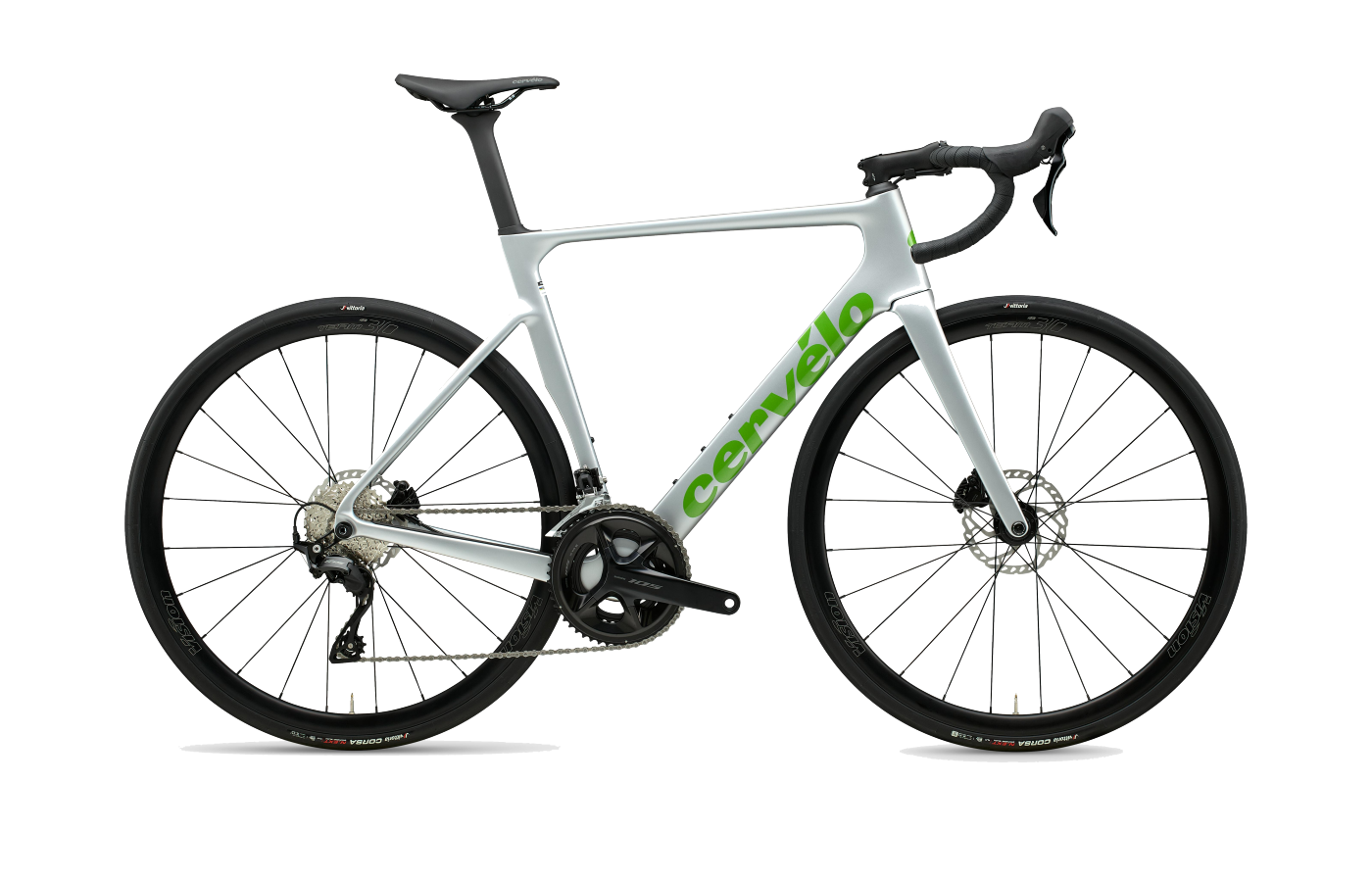
Soloist
Cervelo's own middle ground — the Cervelo Soloist sits between the S5 and the climbing-oriented R5, with road-race geometry, a more conventional 2-piece cockpit, and easier-to-live-with internals. If the S5's aero stretch and BBright bother you but you still want a Cervelo road bike, this is it.
Compare →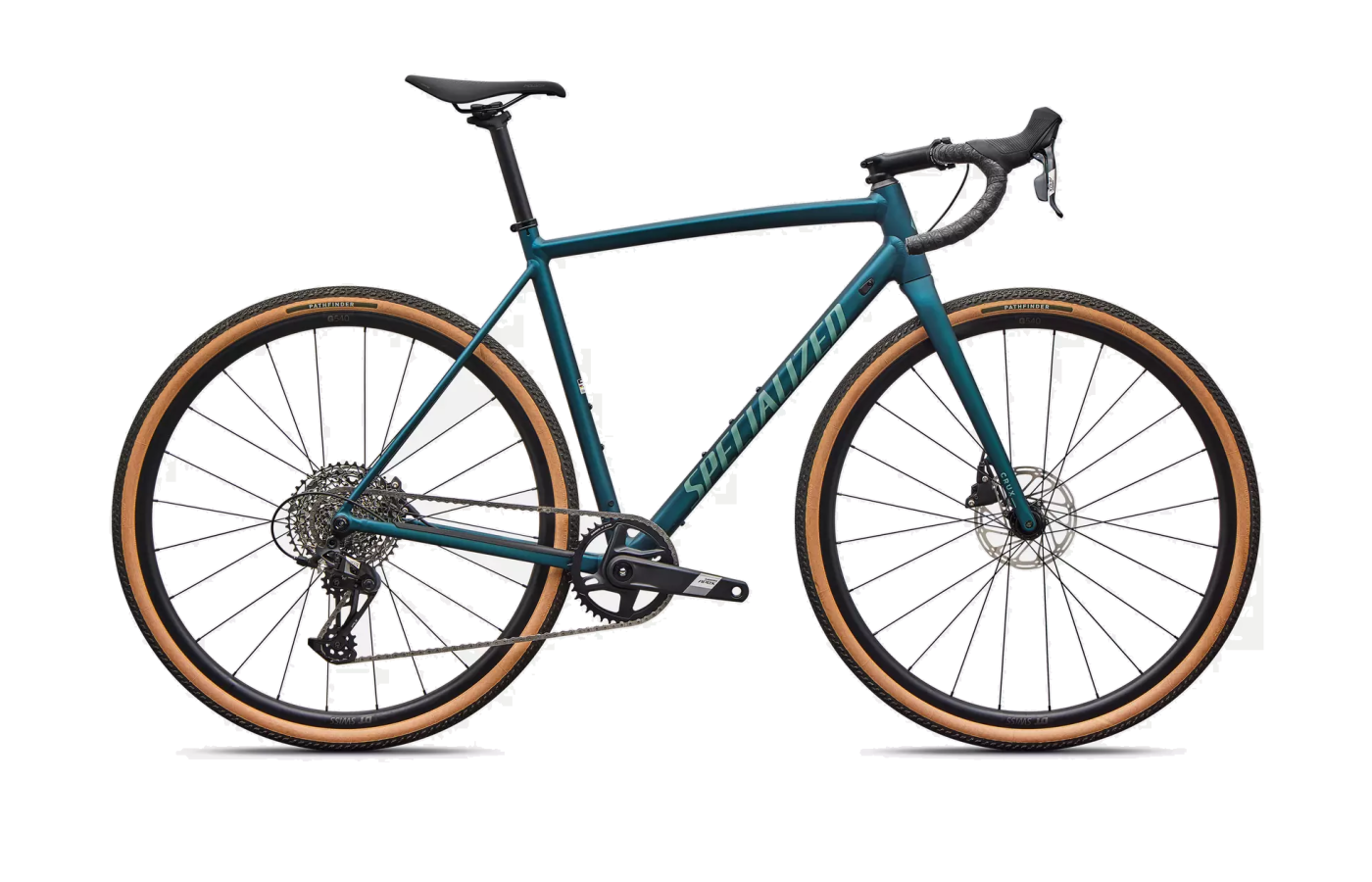
Crux
Lighter, more compliant, and clears wider tires — the Specialized Crux is the answer for riders who find the Aspero-5 too stiff and too narrowly focused. Closer to true adventure gravel; not as fast on hard-packed surfaces.
Compare →
Caledonia
If the Aspero-5's all-road silhouette appeals but you'll never actually leave the pavement, the Cervelo Caledonia is the more comfortable, dealer-friendlier sibling. Wider tire window than the S5, more relaxed fit, much less aggressive.
Compare →