Neuron
vsSpectral 125
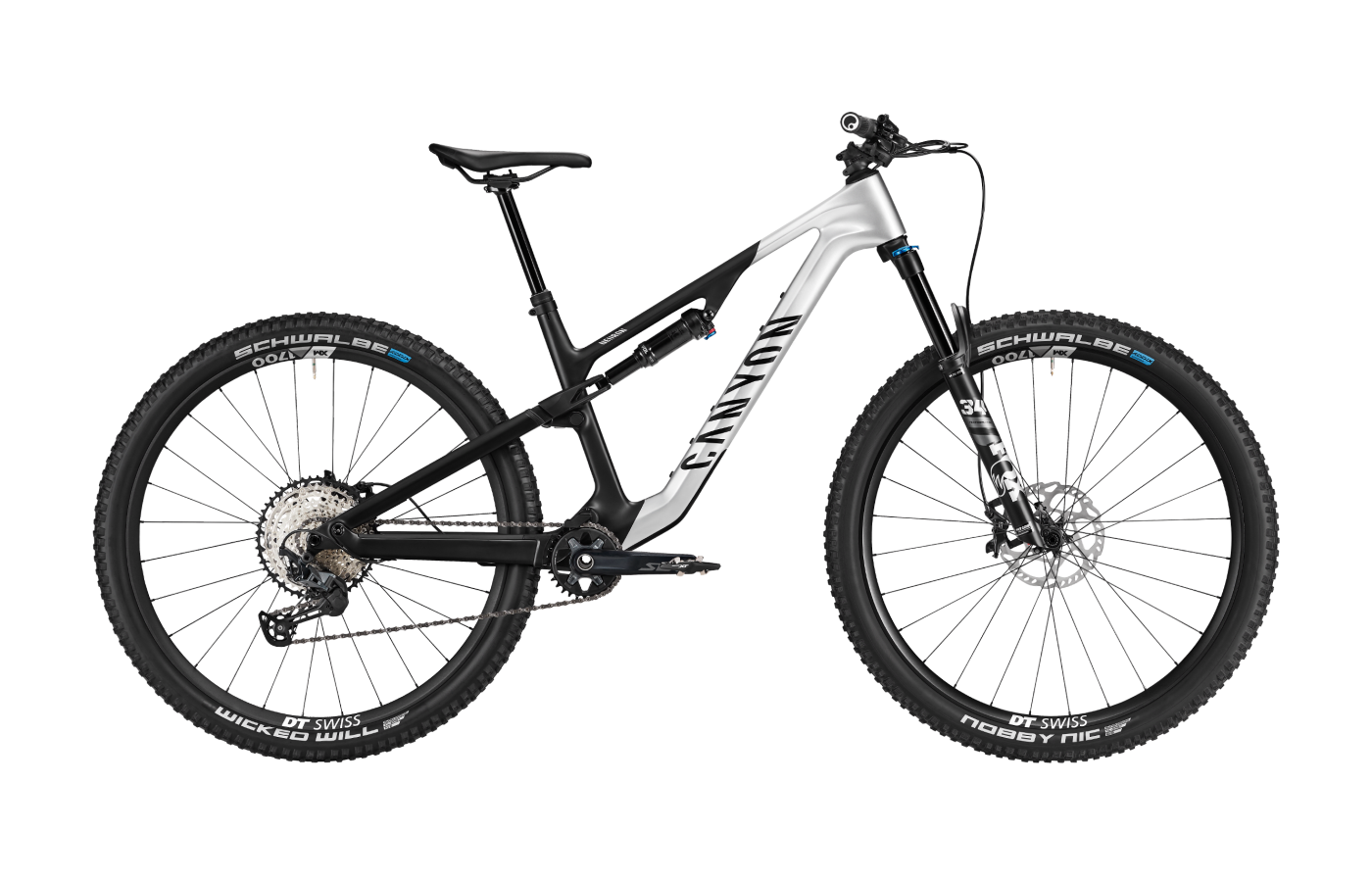
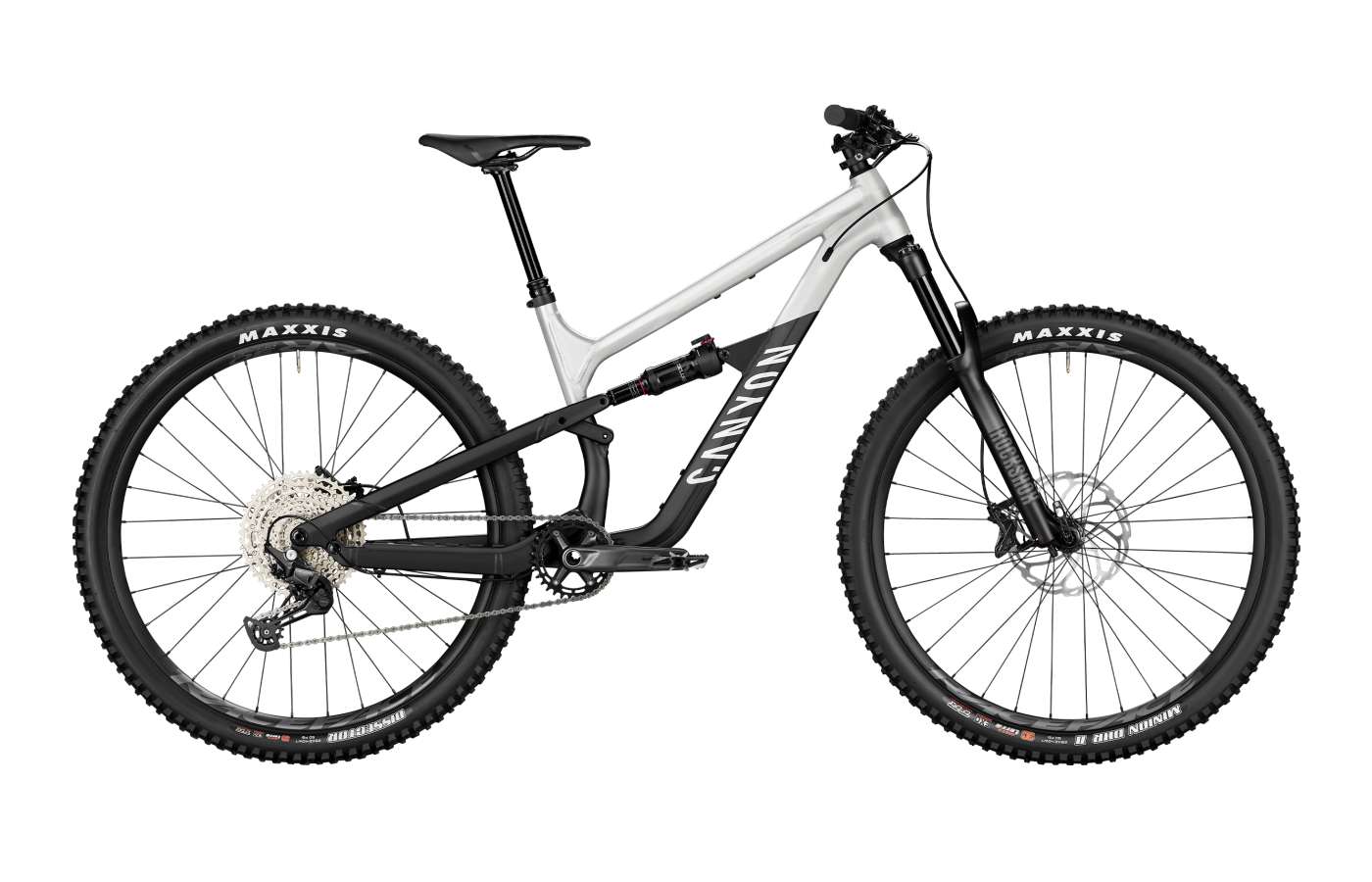
Same brand, same 140 mm fork — two completely different bikes.
The Neuron is the versatile trail all-rounder. The Spectral 125 takes enduro geometry and shrinks the rear travel for maximum pop.
Neuron
- Versatile all-rounder — the 66-degree HTA and 130 mm rear travel handle XC loops and most trail riding without punishing you on long days.
- Efficient pedaling — minimal bob and a 76-degree seat angle keep the front planted on technical climbs, no climb switch needed.
- Broad build range from $1,699 alloy to $4,399 carbon AXS — a price point for every budget tier.
- Gets bullied on rocky, high-frequency terrain — stiff rims and firm stock tires transmit chatter.
- Category 3 strength rating means it isn't built for the same abuse as the Spectral 125.
Spectral 125
- Enduro-grade geometry — a 64-degree HTA and 460 mm M reach deliver downhill confidence most 125 mm bikes can't match.
- Playful and poppy — progressive Triple Phase rear end and short 437 mm chainstays reward pumping, jumping, and aggressive cornering.
- Category 4 strength — rated for the same abuse as Canyon's long-travel enduro bikes, despite the trail travel numbers.
- Firm, chatter-prone ride — not the bike for long backcountry days or mellow singletrack.
- Single build in the US lineup ($2,099 alloy Deore) — no mid or high-spec carbon options currently listed here.
Editor’s analysis
One is the VW Golf of trail bikes. The other is a travel-shrunk enduro sled that demands you ride it with intent.
Both bikes run 140 mm forks and live in Canyon's 29" trail category, but that's where the overlap ends. The Canyon Neuron packs 130 mm of rear travel, a 66-degree head angle, and a Category 3 chassis. The Canyon Spectral 125 drops to 125 mm out back, slackens to 64 degrees, and meets Canyon's Category 4 enduro strength rating. Five millimeters of travel looks like nothing on paper. On the trail, these bikes barely share a zip code.
The Canyon Neuron is pitched as the peppy, versatile trail bike for riders stepping up from XC — fast, efficient, comfortable on long missions. A 76-degree seat angle and generous stack keep you upright for hours of seated climbing, and the Triple Phase rear end pedals cleanly with minimal bob. Reviewers consistently flag it as "calmer and more stable at speed" than the old Neuron while staying "sharper and more purposeful on smoother and flowier singletrack" than the Spectral 125. If one bike is covering everything from XC loops to rowdy trail days, it's this one.
The Canyon Spectral 125 is the opposite personality in the same category. A 64-degree head angle, 460 mm reach on size M, and short 437 mm chainstays give it enduro-bike proportions with short-travel snap. The suspension runs high anti-squat and progressive ramp-up — poppy off lips, supportive through berms, uncompromising on square-edge hits. Reviewers repeatedly describe it as "a small bike to get rowdy on," more playful than a full enduro rig but with the geometry to back up aggressive line choices. The tradeoff is comfort: the chassis and firm tune transmit chatter, and fatigue arrives faster.
Put plainly: the Canyon Neuron is for covering ground comfortably. The Canyon Spectral 125 is for attacking familiar trails and making them feel bigger. Pick the first if you ride four-hour loops on mixed terrain. Pick the second if you already own a bigger bike and want a second one that rewards hooliganism on home trails.
Where the builds differ.
Comparing our editor's-pick builds side-by-side. Winners highlighted row-by-row — lower price and weight, and the better-spec component, each mark a point.
Build variants & pricing
The Neuron spans four builds from $1,699 alloy to $4,399 carbon AXS. The Spectral 125 is sold in the US as a single $2,099 alloy Deore build.
The build comparison table pits the Neuron CF 8 Shimano SLX ($3,199) against the Spectral 125 AL 5 Deore ($2,099) — the closest tier match available in our US catalog, though the Neuron jumps to a carbon frame at this price and the Spectral stays in alloy. Higher-spec Spectral 125 CF builds (Fox 36, SRAM GX, carbon chassis) are widely reviewed in Europe but aren't currently listed in the US lineup we track.
How they fit, how they steer.
Both at size M — the fit-picked size for a 5'8" rider on each bike. The Spectral 125 is 27 mm longer in wheelbase, 5 mm longer in reach, 2 degrees slacker at the head tube, and 3 mm shorter in the chainstays. The Neuron sits 4 mm taller in stack — more upright, more neutral at lower speeds.
Which size should I buy?
Size recommendations based on stack, reach, and effective top tube. The Neuron offers XS–XL; the Spectral 125 runs S–XL.
→These are starting points. Flexibility, riding style, and preferred position all shift the answer — if you’re between sizes, a professional fit beats a chart.
What the magazines said.
Published reviews from trusted cycling outlets. Click through for the full write-up.
Which one should you buy?
If you'll ride one bike on everything from XC loops to trail days, get the Neuron. If you already have an enduro bike and want a second one that makes your home trails feel bigger, get the Spectral 125.
Neuron
If your typical ride is a four-hour mission across mixed terrain — fire roads, singletrack, a few rowdy descents, more climbing than descending — the Neuron is the smarter tool. It's lighter on its feet, kinder on long days, and covers ground efficiently without punishing you for the privilege.
Spectral 125
If you already have a big bike and want something short-travel that still lets you charge — or you live near trails where the descents are steep but not massive — the Spectral 125 rewards assertive riding with pop, cornering confidence, and Category 4 durability. The tradeoff is a firmer ride that demands you stay switched on.
Questions buyers actually ask.
Short answers to the things we get emailed about most often.
01Which one climbs better?
The Canyon Neuron, clearly. A 66-degree head angle (vs. 64 on the Spectral 125) keeps the front wheel planted on steep switchbacks, and the lighter overall build — particularly on the carbon CF 8 variants — means less mass to haul uphill. Reviewers consistently describe the Neuron as "peppy and enthusiastic" on climbs with minimal pedal bob.
The Spectral 125 pedals efficiently too (high anti-squat, firm platform), but its slacker front end makes slow, technical uphill switchbacks feel floppy, and the heavier, burlier chassis costs you energy on long ascents.
02Which one is more capable descending?
The Canyon Spectral 125 by a wide margin, despite having 5 mm less rear travel. The combination of a 64-degree head angle, 460 mm reach on size M, and Category 4 frame strength means you can point it down things most trail bikes would flinch at.
Reviewers universally flag its "pitbull-like stance" and ability to "rail high-speed turns." The Neuron descends well for a versatile trail bike, but it isn't trying to play in the same gravity bracket — push it hard through rough terrain and it can get "bullied" by chatter.
03What's the rear travel difference, and does it matter?
The Neuron runs 130 mm rear / 140 mm front. The Spectral 125 runs 125 mm rear / 140 mm front. That 5 mm delta at the rear is effectively noise — nobody feels 5 mm of travel directly.
What actually differs is the tune and geometry wrapped around that travel. The Spectral 125's rear end is firmer and more progressive, designed to pop and resist bottom-out on hard hits. The Neuron's is more linear and sensitive, designed to track the ground on technical climbs. The travel number is the footnote; the tune is the story.
04How different is the geometry, really?
Significantly, even though they share a trail-bike label. On size M:
- Head angle: Neuron 66° / Spectral 125 64° — 2 degrees slacker on the Spectral
- Reach: Neuron 455 mm / Spectral 125 460 mm
- Wheelbase: Neuron 1203 mm / Spectral 125 1230 mm — 27 mm longer
- Chainstays: Neuron 440 mm / Spectral 125 437 mm
- Seat tube angle: Neuron 76° / Spectral 125 76.5°
The Spectral 125's numbers read like a short-travel enduro bike. The Neuron's read like a modern, friendly trail bike.
05Why is the Spectral 125 only sold as one build in the US?
Canyon's US catalog currently lists a single Spectral 125 AL 5 at $2,099 — alloy frame, RockShox 35 Gold RL fork, Shimano Deore mechanical drivetrain. Carbon CF 8 and CF 9 builds with Fox 36 forks, SRAM GX AXS, and the Triple Phase carbon chassis exist in Canyon's European lineup and are widely reviewed, but those configurations aren't in the US direct-sale catalog we track.
If you want a higher-spec Spectral 125 in the States, the used market is your friend. The Neuron, by contrast, spans four US builds from $1,699 to $4,399.
06Which frame is more durable?
The Canyon Spectral 125 is rated to Canyon's Category 4 strength standard — the same rating as their long-travel Spectral and Strive enduro bikes. Reviewers consistently praise its robust construction, replaceable alloy pivot threads, and enduro-grade chassis.
The Neuron is a Category 3 bike — plenty strong for trail duty, but not certified for the same abuse. If you ride rough terrain aggressively, that distinction matters. If you don't, it's a spec-sheet detail you'll never cash in.
07Can I fit a longer-travel fork on either?
The Neuron frame is strength-tested for up to a 150 mm travel fork, giving it some upgrade headroom for riders who want more descending capability without buying a new frame. It also has clearance for a piggyback shock.
The Spectral 125 ships at 140 mm and wasn't designed for significant fork over-forking — it's already running enduro-bike geometry, and pushing the front higher would steepen the seat angle and raise the bottom bracket in ways that compromise its character.
08Which should a first-time full-suspension buyer pick?
The Canyon Neuron, without question. It's more forgiving, more versatile, and the build range scales from $1,699 (alloy, entry-level) to $4,399 (carbon AXS) — so there's a price point that matches almost any budget.
The Spectral 125 is a specialist's tool. Reviewers repeatedly frame it as a "quiver killer" or "second bike" for riders who already know what they want, prize trail feedback over comfort, and can handle a bike that demands active, precise input. Buying it as a first full-suspension is betting you'll enjoy its personality — and not everyone does.
Similar bikes
If your priorities don’t map cleanly onto either of these, one of these adjacent bikes probably fits better.

Optic
The bike that pioneered the short-travel-aggressive-geometry formula. Ride character overlaps heavily with the Spectral 125 — rowdy for its travel, but with a slightly more refined chassis feel.
Compare →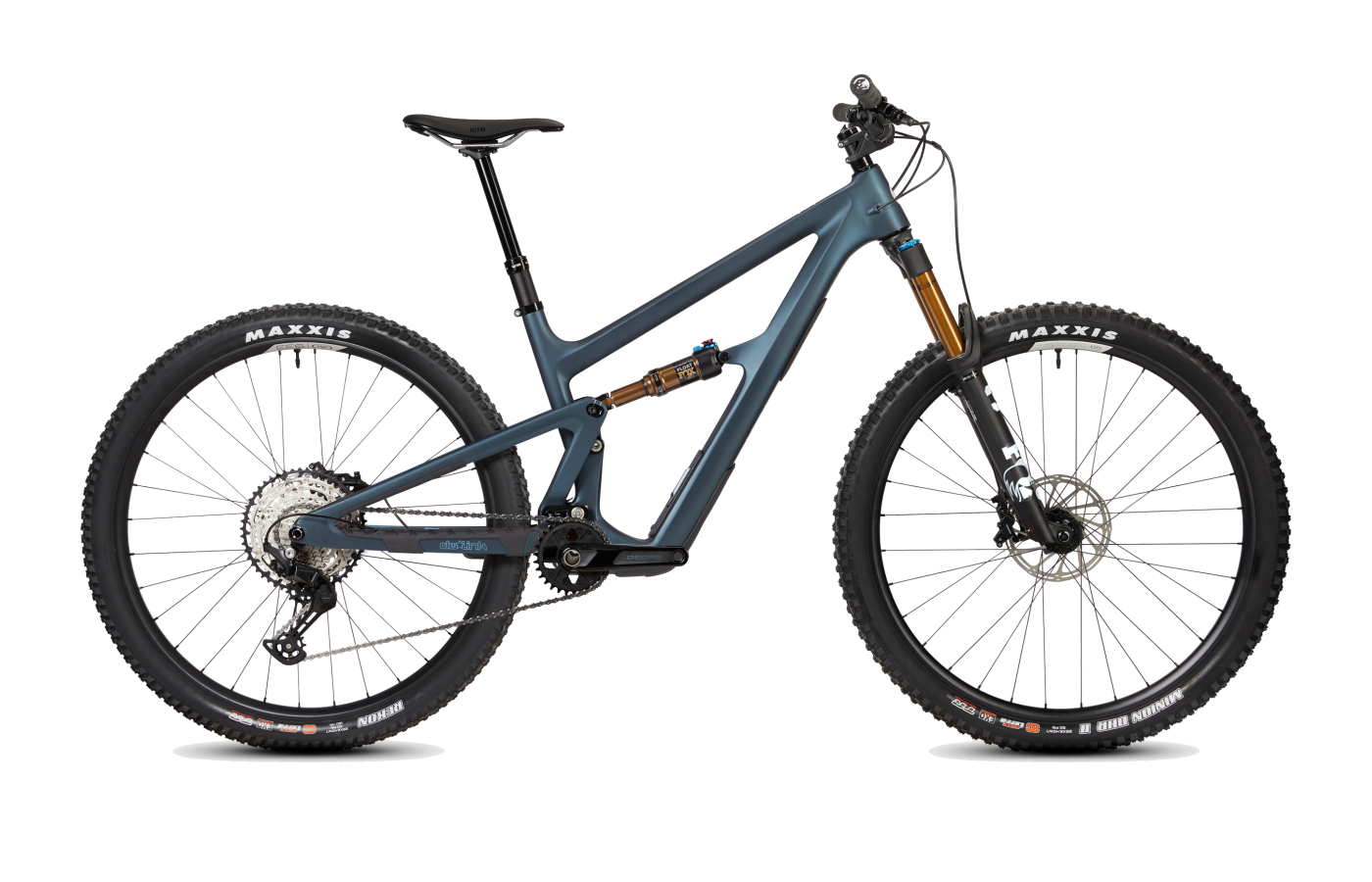
Ripley
A benchmark for efficient, long-day trail riding. Plusher and more sophisticated under pedaling than either Canyon — the pick if you want something Neuron-shaped but a clear step up in pedigree.
Compare →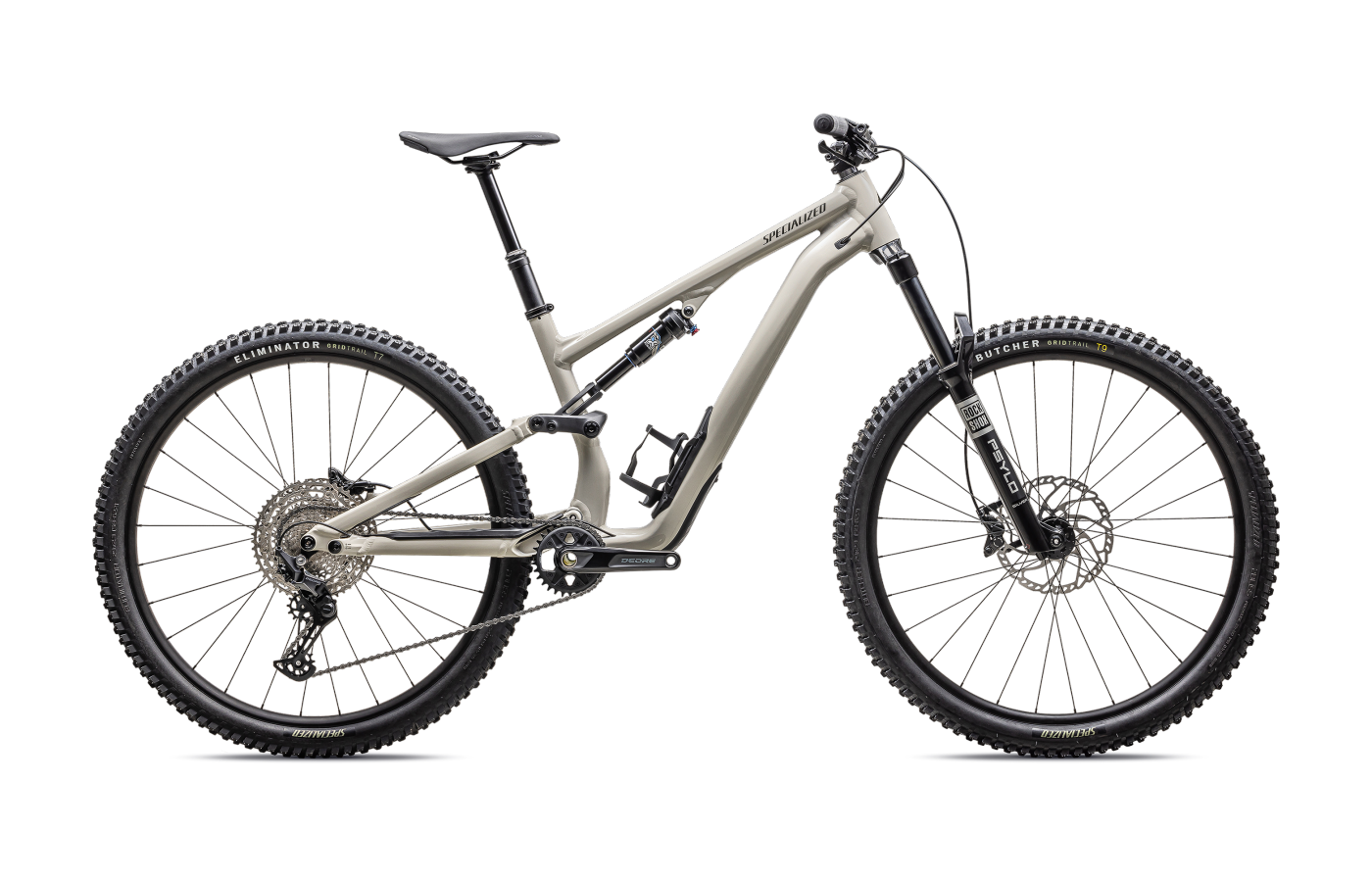
Stumpjumper
The mid-point between these two Canyons. More compliant frame feel than the stiff Spectral 125, more descending chops than the Neuron — at a Specialized-dealer premium over the direct-to-consumer pricing.
Compare →