Aeroad
vsDogma F
Same race brief, opposite business models.
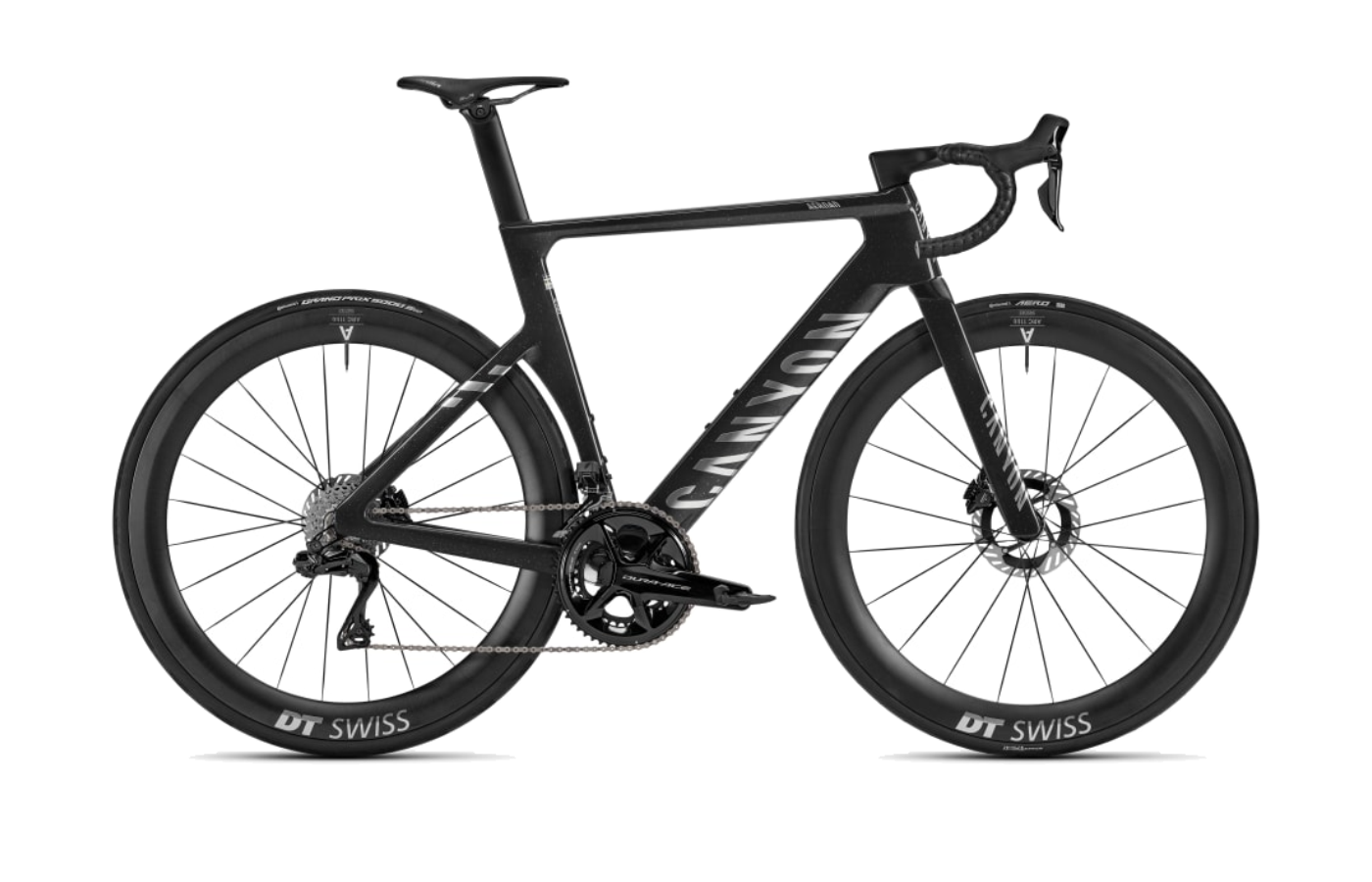
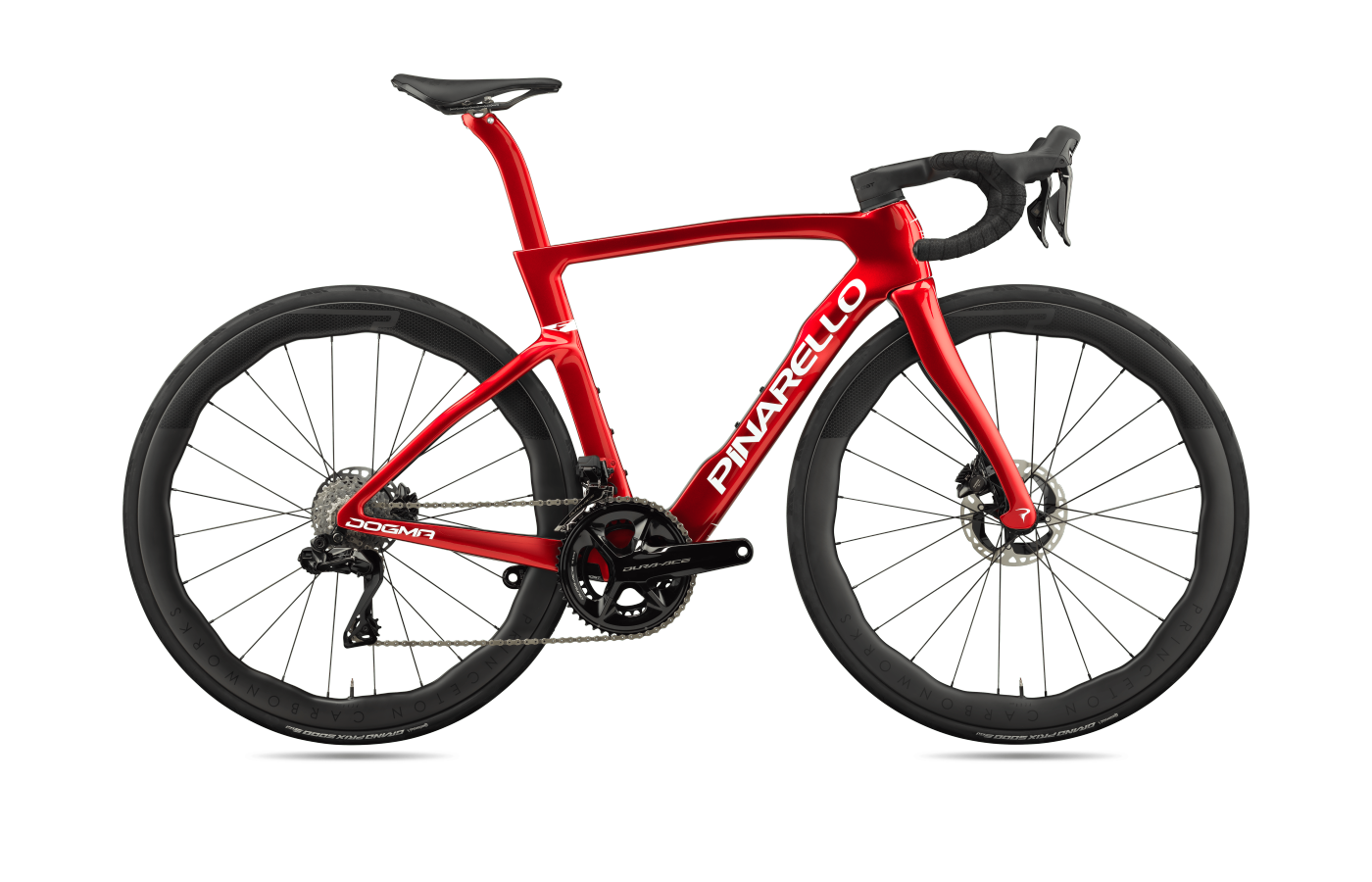
The Aeroad is the direct-to-consumer aero bike that undercuts the field by thousands. The Dogma F is the WorldTour heirloom that doesn't pretend to.
Aeroad
- Dramatically cheaper — the Dura-Ace Di2 flagship is $5,251 less than the Pinarello equivalent.
- Wider tire clearance at 32 mm vs the Dogma's 30 mm, with eight build options spanning $5,099 to $10,999.
- Easier to live with — unified T25 bolts, a T25 bit hidden in the thru-axle, and a modular cockpit that swaps drops without re-bleeding hoses.
- Direct-to-consumer means no local dealer, no demo, no in-shop fit before you buy.
- Stem length and aero drops aren't customizable at order — they're aftermarket extras.
Dogma F
- Best-in-class descending — the new 47 mm fork rake blends sharp low-speed turn-in with composed high-speed stability.
- Uncompromising stiffness — reviewers describe "no whiff of flex anywhere" through the bottom bracket and head tube.
- 11-size range with 28 cockpit permutations — the most fit options of any superbike at this level.
- $15,750 entry point with no mid-tier or budget builds in the lineup.
- 30 mm tire clearance trails most modern rivals (32 mm Tarmac SL8, 34 mm S5).
Editor’s analysis
Both bikes win the same races. Only one of them asks you to fund a brand legacy to ride it.
On paper the Canyon Aeroad and Pinarello Dogma F sit in the same bracket: full aero-influenced race frames, integrated cockpits, deep carbon wheels, top-tier electronic groupsets, and a roster of WorldTour stage wins. Mathieu van der Poel hammers the Aeroad through cobbles; Ineos Grenadiers descend the Dogma F at 40+ mph. Both are designed for the same ride: flat out, in the drops, on the rivet.
But the Pinarello Dogma F is a $15,750 bike, full stop. There are exactly two builds in the catalog — Dura-Ace Di2 or SRAM Red eTap AXS — and they cost the same. The Canyon Aeroad spans $5,099 to $10,999 across eight builds, with a Dura-Ace Di2 flagship that lands $5,251 below the cheapest Dogma F. That isn't a marketing comparison; it's the same groupset, the same carbon frame tier, and a five-grand gap. The trade is no dealer, no demo ride, and a cardboard box on your porch.
The ride character splits along familiar aero-vs-all-rounder lines. The Dogma F is the stiffer bike — reviewers reach for words like "no whiff of flex anywhere at all" and "a touch jarring" on rough roads. Its new 47 mm fork rake (up from 43 mm) is a clever piece of geometry: it sharpens low-speed steering while lengthening the wheelbase for descending stability, and it earns near-universal praise as one of the best-handling bikes on the market. Tire clearance maxes at 30 mm, which is on the tight end of the modern road bracket.
The Aeroad is the more livable race bike of the two. It's still firm — "don't buy this bike if you want comfort," warned one reviewer — but its 32 mm tire clearance, adjustable Pace Bar cockpit, and unified T25 bolt standard make it the easier bike to live with day to day. It climbs about 200 g heavier than a Tarmac SL8 and isn't quite as nimble at low speed as the lighter Canyon Ultimate, but in its element above 30 km/h it does what an aero bike is supposed to do — drag you forward.
Where the builds differ.
Comparing our editor's-pick builds side-by-side. Winners highlighted row-by-row — lower price and weight, and the better-spec component, each mark a point.
Build variants & pricing
Eight Aeroad builds spanning ~$6k of range. The Dogma F has two builds at one price.
Pinarello sells the Dogma F at exactly one price point — $15,750 — in either Shimano Dura-Ace Di2 or SRAM Red eTap AXS trim. There is no Ultegra, 105, Force, or Rival build of the Dogma F. The editor's-pick comparison here is flagship-vs-flagship by necessity, and the $5,251 gap is real.
How they fit, how they steer.
The Aeroad in size S sits 12 mm lower at the stack with 4.7 mm more reach than the Dogma F at 510 — a more aggressive race fit. Head tube angles are identical at 72.8 degrees; the Pinarello's 47 mm fork rake (vs Canyon's standard rake) shortens trail for sharper low-speed steering.
Which size should I buy?
The Dogma F offers 11 sizes against the Aeroad's 7 — useful at the size extremes if you fall between Canyon's S/M or M/L jumps.
→These are starting points. Flexibility, riding style, and preferred position all shift the answer — if you’re between sizes, a professional fit beats a chart.
What the magazines said.
Published reviews from trusted cycling outlets. Click through for the full write-up.
Which one should you buy?
If you want WorldTour-level aero performance without the WorldTour price tag, get the Aeroad. If brand prestige, descending pedigree, and bespoke fit options matter as much as the ride, get the Dogma F.
Aeroad
If you want flagship-tier carbon, electronic Dura-Ace, deep carbon wheels, and a power meter for under $11,000 — the Aeroad gets there with $5,000 to spare. The trade is no dealer relationship and no in-shop fit, but for a buyer who already knows their size, it's the most bike-per-dollar at this performance level.
Dogma F
If your riding leans on technical descents, smooth tarmac, and the kind of WorldTour heritage Ineos Grenadiers buy with their season — the Dogma F is the sharper tool. The 47 mm fork rake and the 11-size range buy you handling and fit precision the Aeroad can't quite match. You pay for that, and for the Pinarello name on the down tube.
Questions buyers actually ask.
Short answers to the things we get emailed about most often.
01Why is the price gap so big?
Three reasons. First, distribution model — Canyon sells direct from a German warehouse; Pinarello goes through a traditional dealer network where every step takes a margin. Second, brand positioning — Pinarello explicitly targets a small, prestige-conscious buyer (Cyclist called the demographic "incredibly exclusive"); Canyon targets ambitious amateurs at scale. Third, scale — the Aeroad ships in eight build configurations across seven sizes; the Dogma F ships in two builds.
The components on the editor's-pick builds are largely the same tier — Dura-Ace Di2, deep carbon wheels, top-tier tires. The frame is where Pinarello argues its premium lives.
02Which is faster on flat roads?
Both brands claim wind-tunnel leadership at 45 km/h, and neither has published a head-to-head test on a single tunnel. What's defensible: both are at the sharp end of aero road design, and the differences between them on the flat are likely smaller than the difference either makes vs an all-rounder like a Tarmac SL8.
The Aeroad's Pace Bar cockpit ships with optional aero drops Canyon claims save 14 watts at 45 km/h — which is a bigger gain than most frame-level differences between aero superbikes. If you'll actually use the aero drops, the Aeroad is probably the faster system in its top configuration.
03Which climbs better?
The Pinarello Dogma F, narrowly. The Dura-Ace Di2 build is a claimed 6.77 kg in size 53 (without pedals or bottles). The Canyon Aeroad CFR builds typically come in around 7.0–7.2 kg complete. That's roughly 250–400 g — about 0.4% of a 70 kg rider's system weight, or a handful of seconds on a 30-minute climb.
Reviewers describe the Dogma F as a "natural climber" that "flies" on sustained gradients. The Aeroad is no slouch — "feels rapid" on 5% grades — but at very low speed on long Alpine passes it's the heavier bike and reads accordingly.
04What's the maximum tire clearance?
Canyon Aeroad: 32 mm officially across all sizes.
Pinarello Dogma F: 30 mm officially. (Pinarello's own marketing has cited 32 mm in places; BikeRadar's measured clearance is 30 mm.) That's on the tighter end of modern aero road — for context, the Tarmac SL8 sits at 32 mm and the Cervélo S5 at 34 mm.
Neither bike is a gravel-curious aero rig. If you want to run 35 mm+ for rougher routes, look at a Roubaix, Caledonia, or actual gravel bike.
05Do the editor's-pick builds include power meters?
Aeroad CFR Di2: Yes — Shimano Dura-Ace power meter crank standard.
Dogma F Dura-Ace Di2: No — Pinarello does not include a power meter on the editor's-pick build at $15,750. Multiple reviews flag this as conspicuous at that price; the slightly cheaper Dogma X does include one. Plan to add a Quarq, 4iiii, or Favero pedals if you want power data on the Pinarello — figure $400–$1,500 depending on the system.
06How serviceable are the integrated cockpits?
The Canyon CP0048 "Pace Bar" is the friendlier of the two. Drops are interchangeable without re-routing brake hoses (a clamshell design), and bar width has 50 mm of adjustment. Stem length is fixed at order — changing it means a new front section, around £200–£230 plus a re-bleed.
The MOST Talon Ultra Fast on the Dogma F is fully proprietary, paired to Pinarello's elliptical 1.5" steerer — you can't substitute a third-party bar. Pinarello offsets this by offering 28 length/width permutations at order, so the chance you need to change it later is lower. Headset bearings on the 2025 Dogma F dropped from CeramicSpeed SLT to a sealed aluminum-cage unit, which BikeRadar flagged as a long-term concern given the labor of getting at it through integrated routing.
07How does the geometry compare in fit?
At the fit-picked sizes for a 5'8" rider — Aeroad size S vs Dogma F size 510 — the Aeroad sits 12 mm lower at the stack (539 vs 551) and 4.7 mm longer at the reach (390 vs 385.3). That's a more aggressive, lower-front-end position on the Canyon.
Head tube angle is identical at 72.8 degrees on both. Seat tube angle is within 0.1 degrees (73.5 Canyon, 73.4 Pinarello). Chainstays are 410 mm Canyon vs 408 mm Pinarello. The handling differences come from Pinarello's 47 mm fork rake, not from the contact-point geometry.
08Is buying direct-to-consumer worth the savings?
Depends on your fit confidence. The $5,251 you save buying the Aeroad over the Dogma F covers a lot of professional bike fits, replacement saddles, and aftermarket cockpit parts — and Canyon's return policy is reasonable.
Where DTC bites: if you've never ridden a bike in your size, can't ballpark your stack/reach numbers, and want to swing a leg over before committing — there's no substitute for a dealer. If that's you, the Pinarello (or any other dealer-network bike) buys peace of mind. If you've owned three race bikes already and know what 390 mm of reach feels like in your hands, the Canyon is the smarter financial move.
Similar bikes
If your priorities don’t map cleanly onto either of these, one of these adjacent bikes probably fits better.
Tarmac
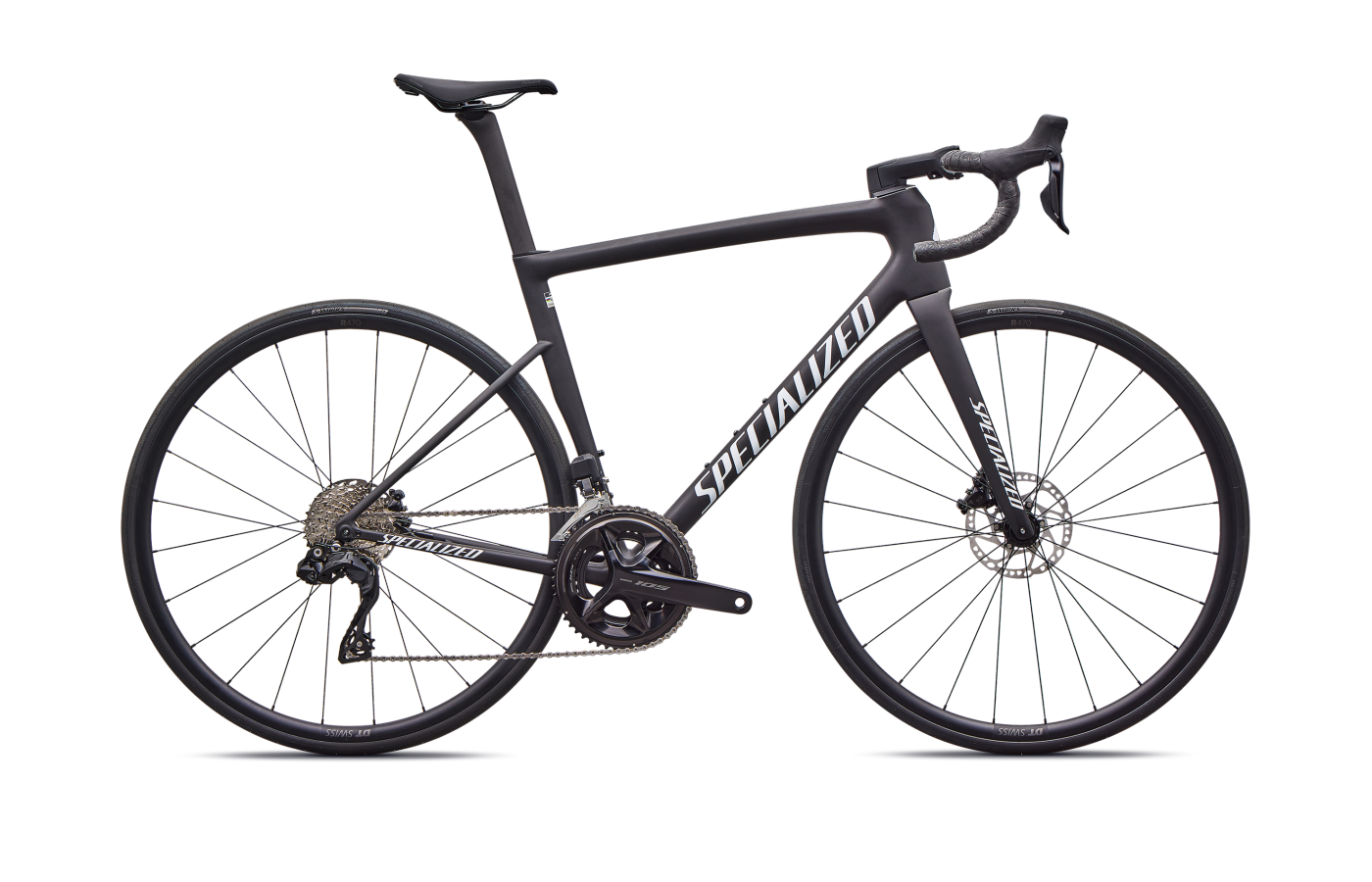
The benchmark all-rounder — lighter than either of these, with 32 mm tire clearance and the broadest build range of any superbike platform. If you want one race bike that climbs as well as it sprints, this is still it.
Compare →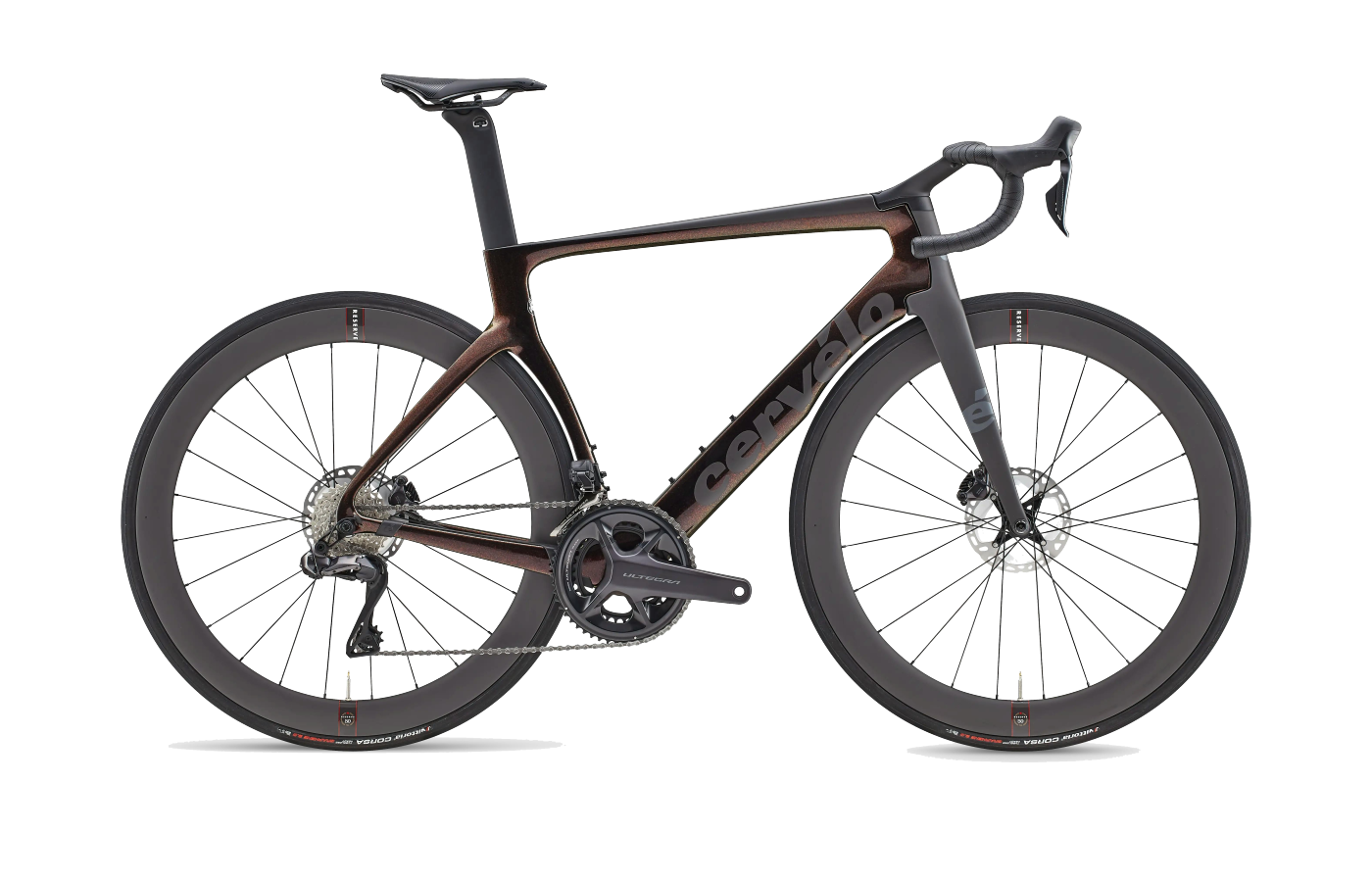
S5
Pure aero, taken further than the Aeroad. 34 mm clearance, the most integrated cockpit in the segment, and a steeper front end built for the rider who lives at 35 km/h and up. The opposite of the Dogma F's all-around brief.
Compare →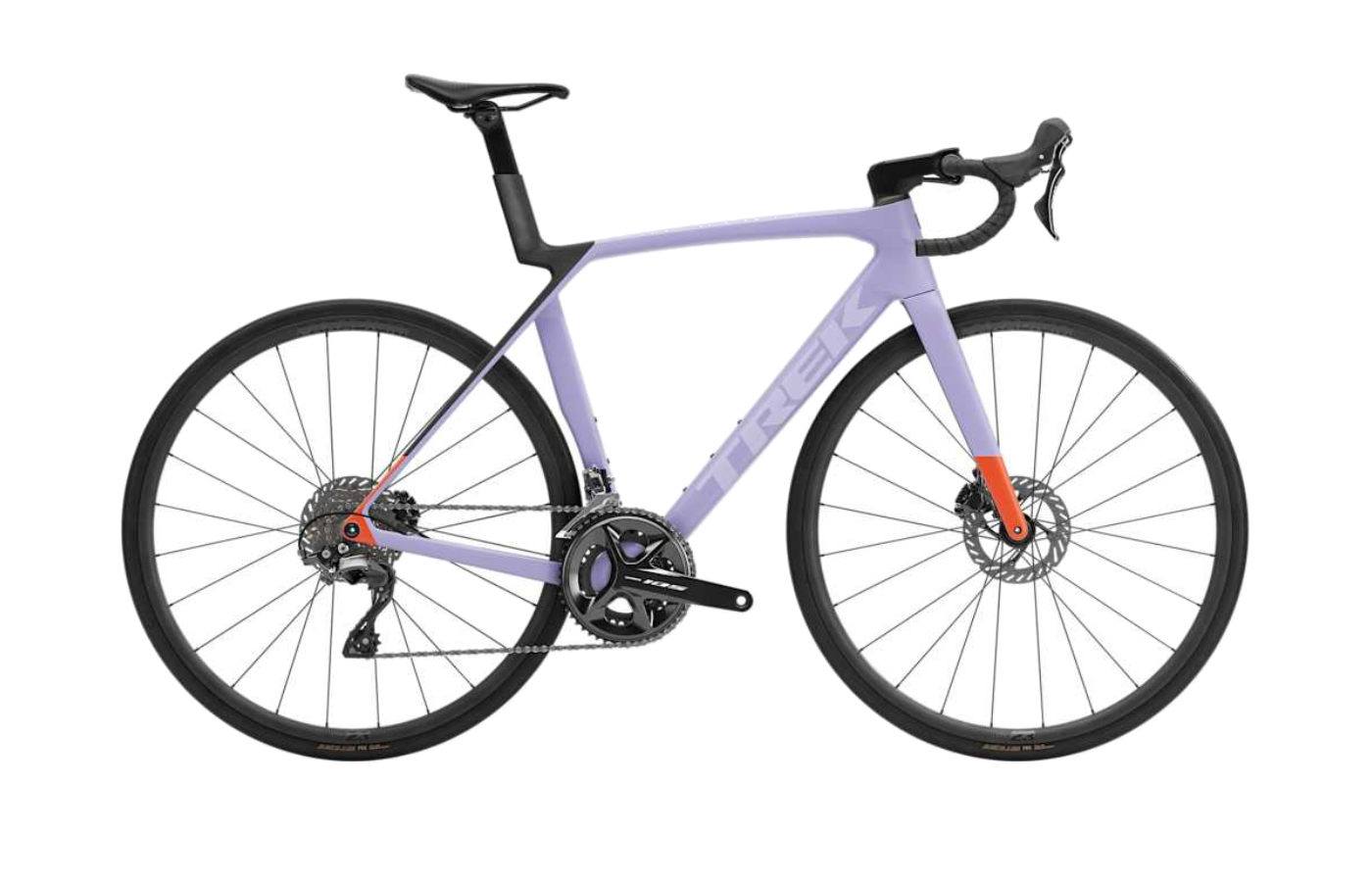
Madone
Trek's aero-meets-comfort answer — the IsoFlow seatpost cutout softens broken pavement in a way neither of these bikes attempts. A reasonable middle ground if the Dogma F feels too firm and the Aeroad too direct-to-consumer.
Compare →