Krypton
vsSum
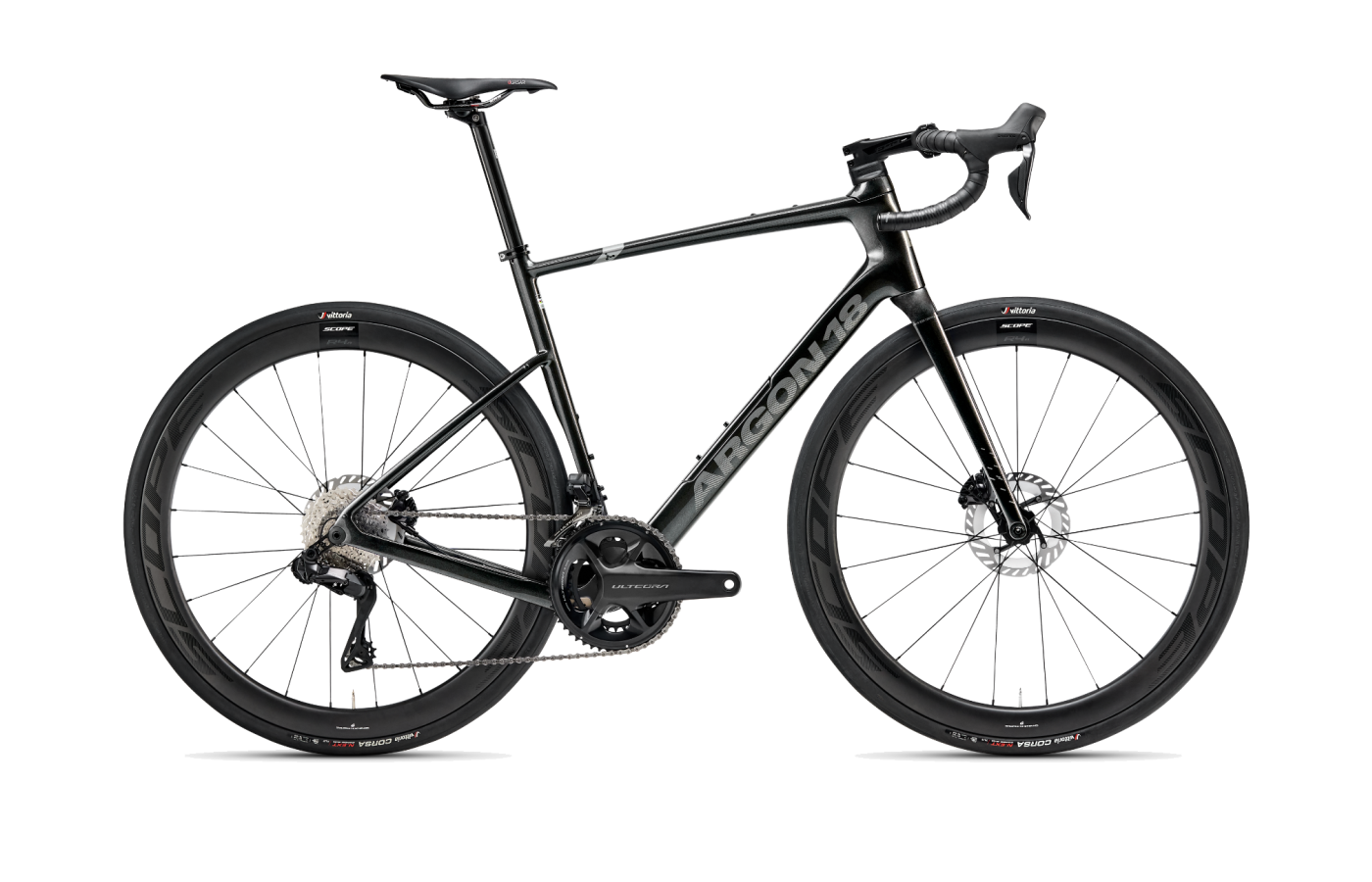
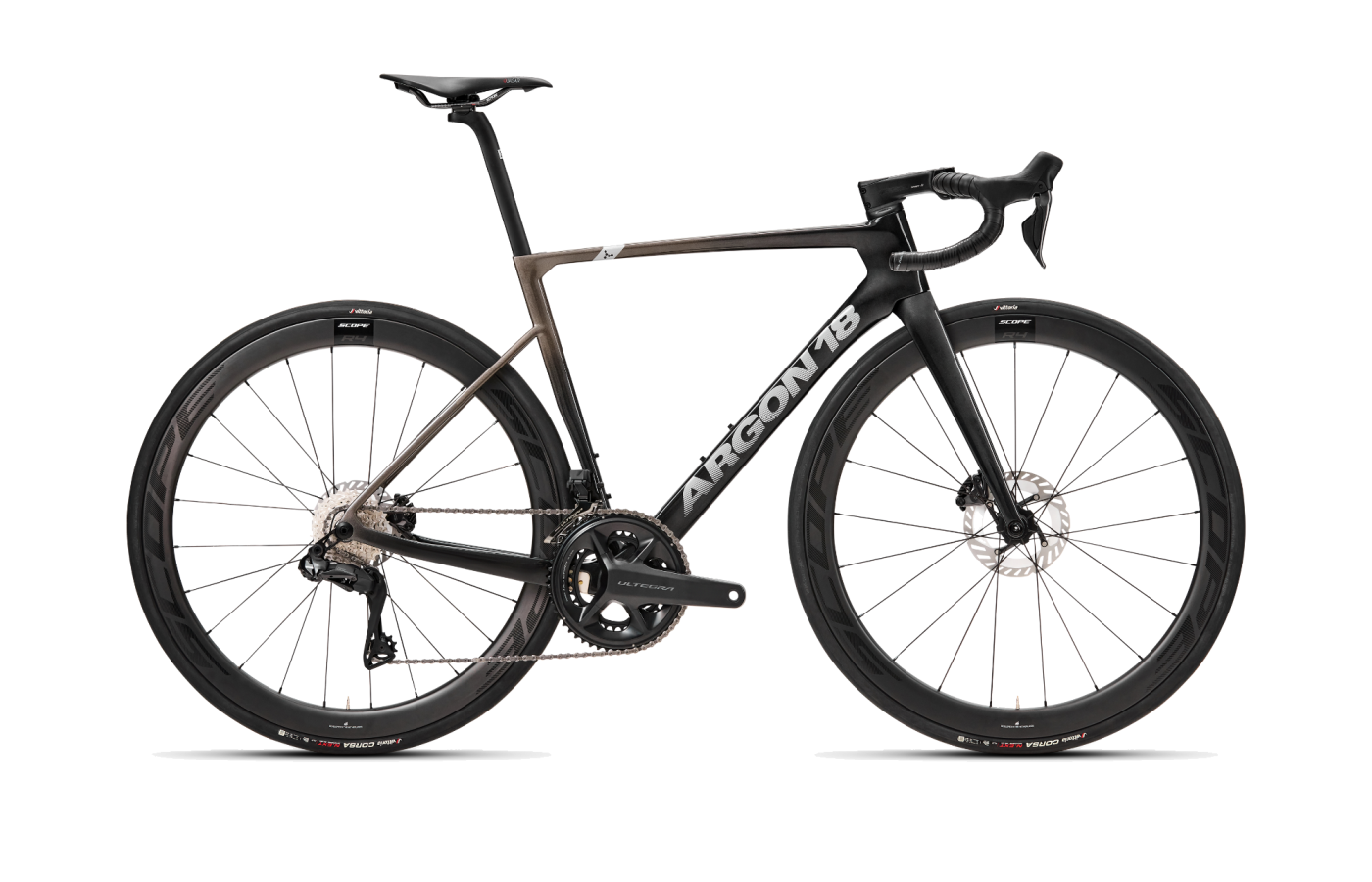
Same brand, two different jobs.
The Krypton is Argon 18's all-road explorer with 38 mm of clearance and integrated storage. The Sum is the race bike — lighter, lower, sharper.
Krypton
- 38 mm tire clearance — enough headroom for hardpack gravel, with 35 mm officially on Shimano 2x and up to 40 mm on 1x.
- Integrated downtube storage — a tool/tube compartment that reviewers confirm doesn't rattle on rough surfaces.
- Service-friendly frame — round 27.2 mm seatpost and T47 threaded bottom bracket, both easy to live with long-term.
- Reviewers flagged the standard Krypton as feeling 'sluggish on the climbs' at its 8.56 kg test weight — the Pro frame fixes this, but isn't sold here.
- Stock spec drew 'less-than-premium' value criticism in group tests at this price point.
Sum
- Sharper front end — 72.7° head angle and 410 mm chainstays make it quick to turn-in and lively under accelerations.
- High-speed composure — stable enough that test riders reported 80 km/h descents with no speed wobble.
- Lower price floor — Rival AXS build starts at $4,250, undercutting the Krypton's entry by $400.
- 32 mm clearance caps it as a road-only platform — no gravel detours.
- Press-fit BB86 bottom bracket and FSA two-piece alloy cockpit are functional but drew the most consistent complaints in reviews.
Editor’s analysis
Argon 18 split the all-rounder into two — and the choice between them is really a choice about what kind of road you actually ride.
Both bikes share the brand's 3D+ headset and a noticeable knack for taming road buzz, but the geometry tells you immediately they're built for different riders. The Argon 18 Krypton runs a 72.3-degree head angle, 415 mm chainstays, and a generous 38 mm tire clearance — Argon's pitch is one bike for tarmac, broken pavement, and the occasional gravel detour. The Argon 18 Sum tightens everything: 72.7-degree head angle, 410 mm chainstays, 32 mm clearance. It's the dedicated race chassis.
The Krypton's character comes through in the details Argon kept practical. A round 27.2 mm seatpost (Cycling Magazine called the choice deliberate — 'simplicity, reliability and versatility'), a T47 threaded bottom bracket that's easier to service than a press-fit, an integrated downtube storage compartment, and mounts for racks, fenders, and a third bottle cage. Reviewers consistently described it as 'superbly balanced' and a 'joy to push through the bends' — composed rather than razor-sharp, with a relaxed-but-not-sluggish front end.
The Sum is the opposite philosophy on the same canvas. Dropped seatstays, a D-shaped seatpost, and a BB86 press-fit BB all chase low weight and aero efficiency — the claimed frame is around 890 g for the standard Sum. Reviewers praised its high-speed composure (Mark Beaumont reported 80 km/h descents 'without any speed wobble') and its sharp, quick-to-input steering, while still calling out 'surprising' compliance for a race bike. Tire clearance tops out at 32 mm — fine for fast tarmac, not a gravel platform.
Put another way: the Krypton is the bike if you might point it down a fire road on the way home. The Sum is the bike if 'home' is a Tuesday-night crit.
Where the builds differ.
Comparing our editor's-pick builds side-by-side. Winners highlighted row-by-row — lower price and weight, and the better-spec component, each mark a point.
Build variants & pricing
Both ranges span four electronic builds — Rival AXS, 105 Di2, Ultegra Di2, Force AXS. The Sum starts $400 lower but tops out $550 below the Krypton.
Prices are current US MSRP. Both platforms run two-piece FSA alloy cockpits across the lineup, so component upgrades over time are straightforward on either bike.
How they fit, how they steer.
Different size labels, same fit-picked rider — the Krypton runs taller in every nominal size, so a size S Krypton matches the stack and reach of a size M Sum more closely than the labels suggest. The Sum still sits 23 mm lower and reaches 20 mm further.
Which size should I buy?
Size recommendations based on stack, reach, and effective top tube. Both ranges run XXS through XL; the Krypton skews taller per size, the Sum lower and longer.
→These are starting points. Flexibility, riding style, and preferred position all shift the answer — if you’re between sizes, a professional fit beats a chart.
What the magazines said.
Published reviews from trusted cycling outlets. Click through for the full write-up.
Which one should you buy?
If you want one bike for road, broken pavement, and the occasional gravel shortcut, get the Krypton. If you want a focused road-race chassis, get the Sum.
Krypton
If you log centuries on mixed surfaces, run fenders half the year, or like the option of a hardpack detour, the Krypton's 38 mm clearance, integrated storage, and rack mounts make it the more versatile platform. The price you pay is a slightly relaxed character compared to the Sum.
Sum
If most of your riding is fast tarmac — group rides, crits, KOM hunts — the Sum's lower stack, longer reach, and quicker steering reward an aggressive position. Reviewers called it composed at speed and surprisingly comfortable for a race bike.
Questions buyers actually ask.
Short answers to the things we get emailed about most often.
01Which has more tire clearance?
The Argon 18 Krypton, by a wide margin. Officially it accepts up to 38 mm with SRAM AXS 2x drivetrains, 35 mm with Shimano 2x road groups, and up to 40 mm with 1x setups (per road.cc). The Argon 18 Sum caps out at 32 mm — enough room to upsize from a stock 28 mm tire for comfort, but not a gravel platform.
If you ever want to leave the tarmac, the Krypton is the only one of the two that's actually designed for it.
02Which is the better climber?
On paper, the Sum. It's a dedicated race chassis with a lower stack, longer reach, dropped seatstays, and a frame in the ~890 g claimed range — closer to the geometry and weight of bikes built to go up.
The Krypton in standard trim was tested at 8.56 kg by Granfondo and described as 'too sluggish on the climbs to pass as a mountain goat.' Argon's lighter Krypton Pro fixes this, but the Pro frame isn't sold in the build range here. If climbing is the priority, the Sum is the right tool.
03Are these the same frame with different stickers?
No. They share the brand's 3D+ adjustable-stack headset and the family resemblance, but the frames are built to different briefs. The Krypton runs a 27.2 mm round seatpost, a T47 threaded bottom bracket, and integrated downtube storage. The Sum runs a proprietary D-shaped carbon seatpost, a BB86 press-fit bottom bracket, and no storage compartment.
Geometry differs too: the Sum is ~0.4° steeper at the head tube and 5 mm shorter in the chainstay on equivalent sizes.
04What about integrated cabling and serviceability?
Both use semi-integrated cable routing through FSA's ACR system rather than a fully proprietary one-piece cockpit. That means a two-piece alloy bar and stem out of the box on every build, with the upside that stem length and bar width can be swapped without a full hose bleed.
Reviewers consistently called this out as a point in Argon's favor — less integrated bling than rivals, but materially easier to live with.
05Which represents better value at the same price tier?
Component-for-component the two are close — at the Ultegra Di2 tier, the Krypton is $6,499 and the Sum is $6,374, both running Scope R4-series carbon wheels and FSA alloy cockpits.
Reviewer assessments differ by frame, though. Group tests have repeatedly described the standard Krypton's spec as 'mid-range' for the price. The Sum's value perception has improved since launch as Argon adjusted prices downward, with road.cc rating the Ultegra Di2 build the most competitive in the lineup.
06Does either come with a power meter?
Not by default at this build tier. The Force AXS builds (Krypton $7,299, Sum $6,749) include a SRAM Force AXS spider on the Sum but not the Krypton — Krypton's Force build runs the standard Force DUB crank without a power spider.
For power on either bike, expect to add an aftermarket option (4iiii, Stages, Quarq) or pedal-based meter.
07Which fits a wider range of riders?
Both run the same XXS-through-XL size range, so coverage is identical. The character of the fit is what differs.
The Krypton sits taller per size — a size S has 563 mm of stack and 377 mm of reach, with a head angle that slackens to 70.6° on the XXS. The Sum runs lower and longer at every size — a size M has 540 mm stack and 397 mm reach. Riders who want an aggressive aero position will find the Sum more naturally suited; riders who want their bars at or above their saddle will find the Krypton easier to set up without a stack of spacers.
08Can I run mudguards or a rack on either?
On the Krypton, yes — it has dedicated mounts for mudguards, racks, and even a third bottle cage on the underside of the downtube. Argon explicitly designed it for year-round commuting and bikepacking.
The Sum has no rack mounts and no mudguard eyelets. It's a pure performance bike. Clip-on guards exist for race bikes, but if winter riding or commuting is part of the plan, the Krypton is the obvious choice.
Similar bikes
If your priorities don’t map cleanly onto either of these, one of these adjacent bikes probably fits better.
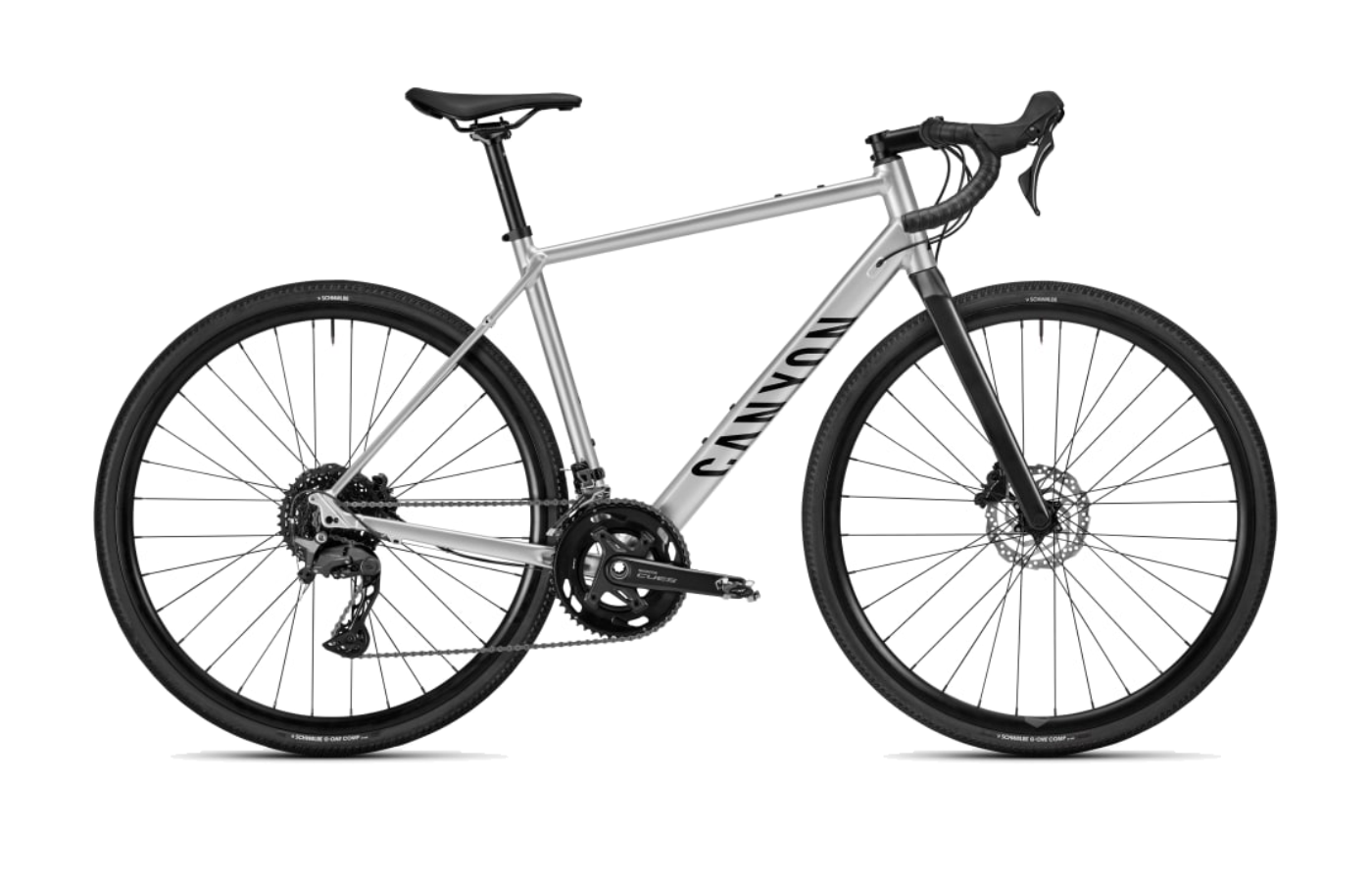
Endurace
Canyon's endurance flagship — same comfort-first brief as the Krypton but bought direct, which usually means more carbon and more groupset for the dollar. The catch is no local dealer for fit help.
Compare →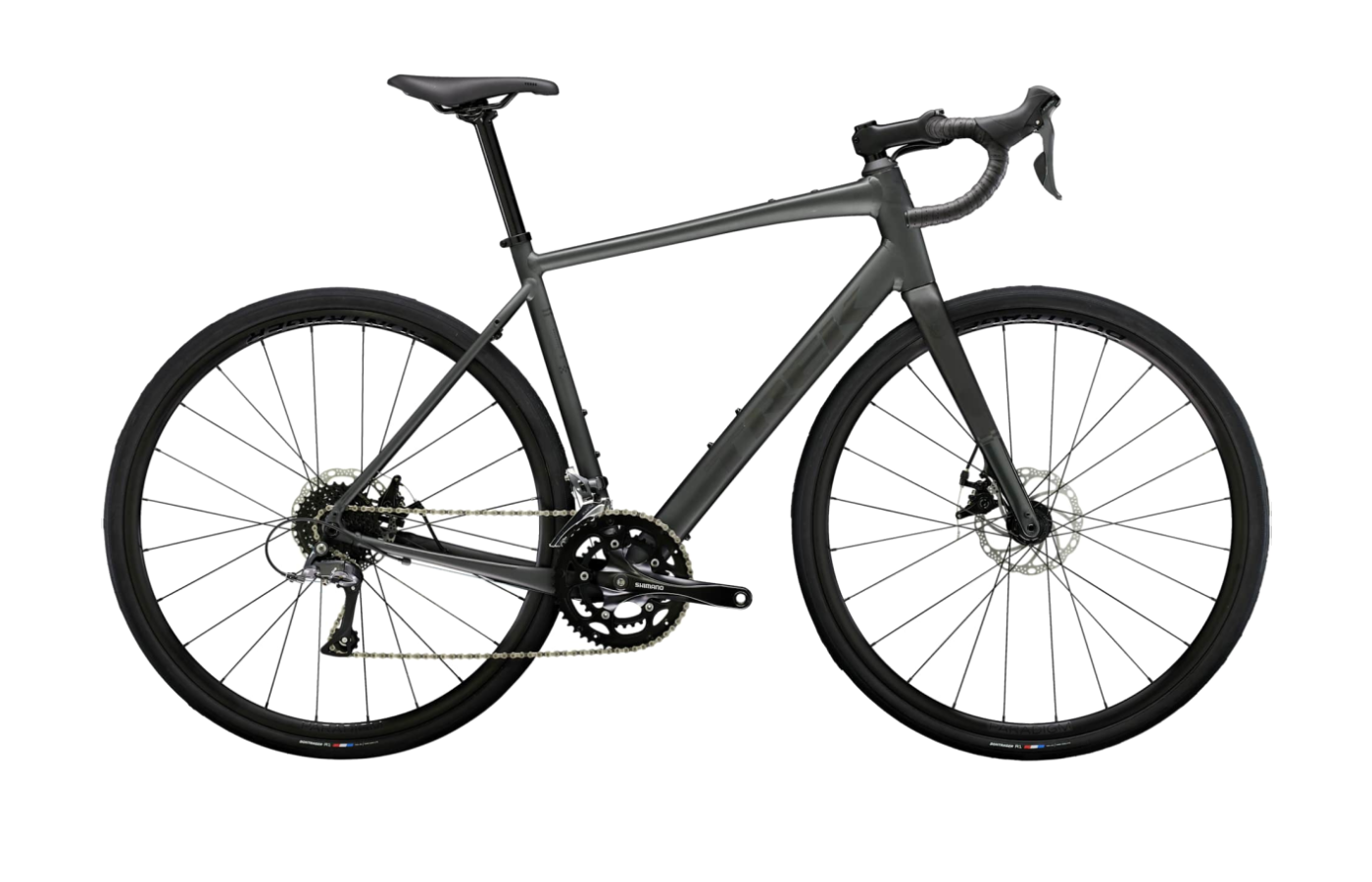
Domane
Trek's endurance bike with the IsoSpeed decoupler and downtube storage — the closest direct analog to the Krypton's mix of compliance, integrated storage, and all-day fit.
Compare →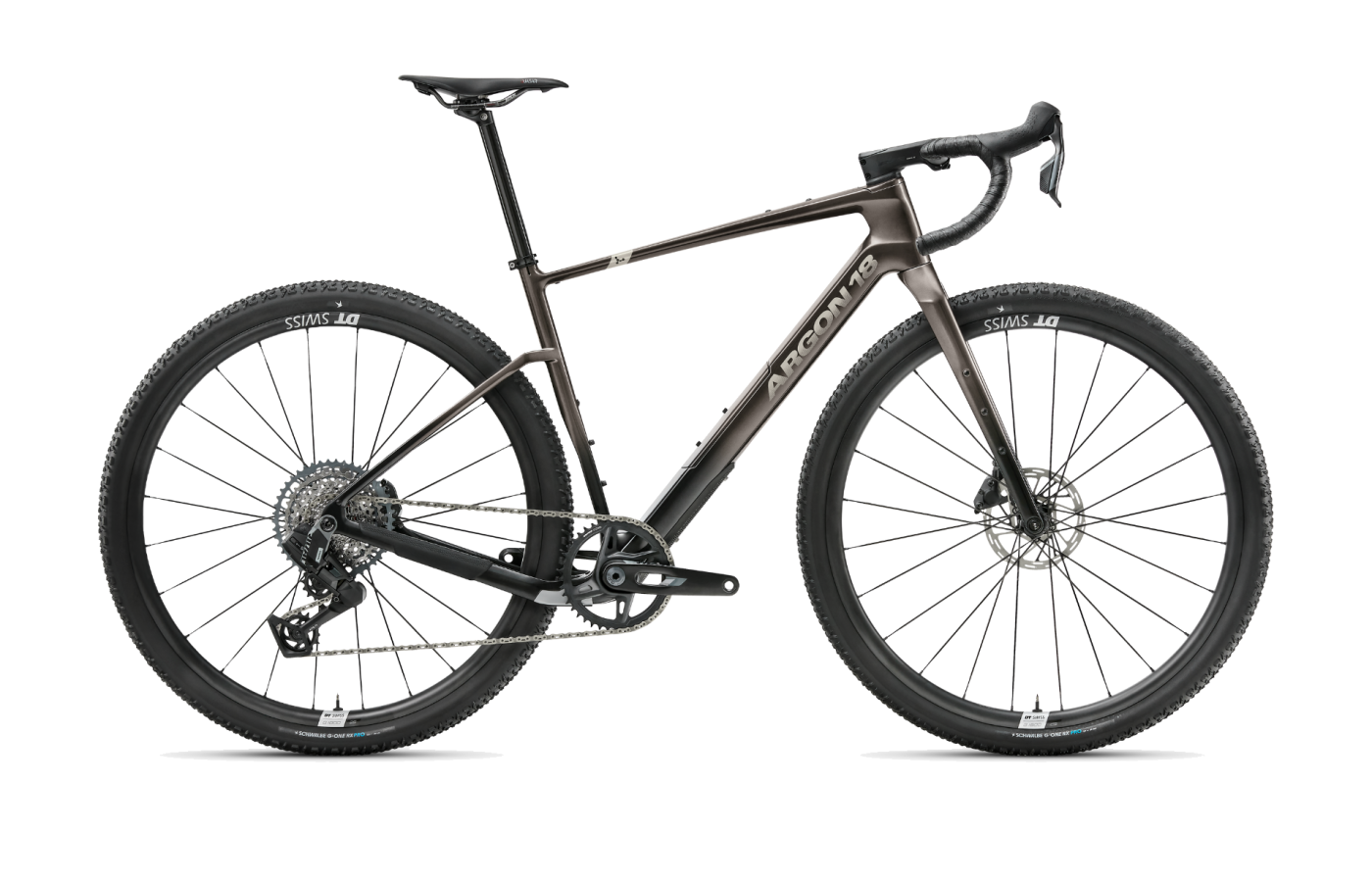
Dark Matter
If 38 mm of tire isn't enough, Argon's own Dark Matter is the dedicated gravel platform — full off-road geometry and clearance for the riders who want a sister bike to the Sum, not a compromise.
Compare →