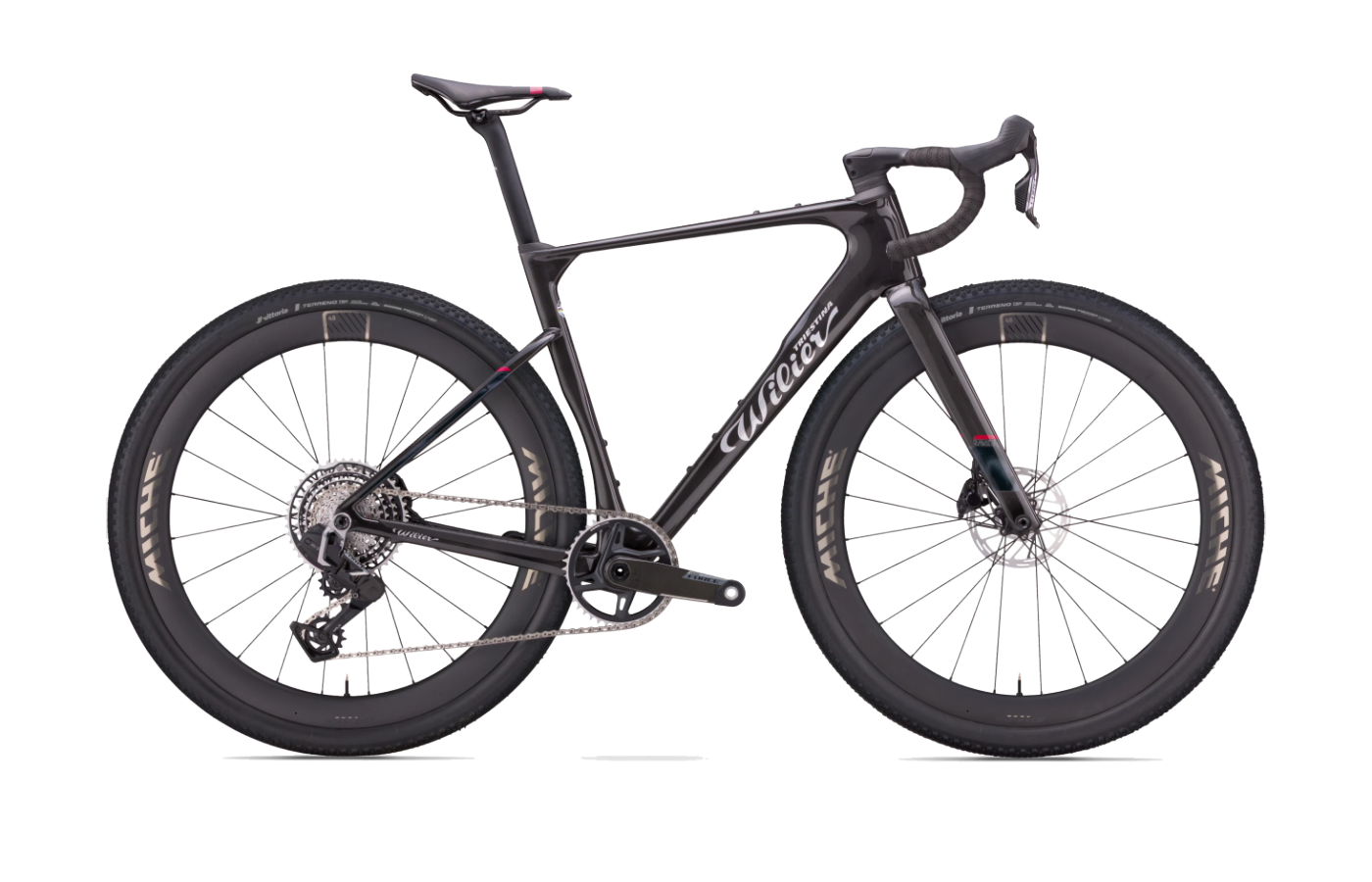
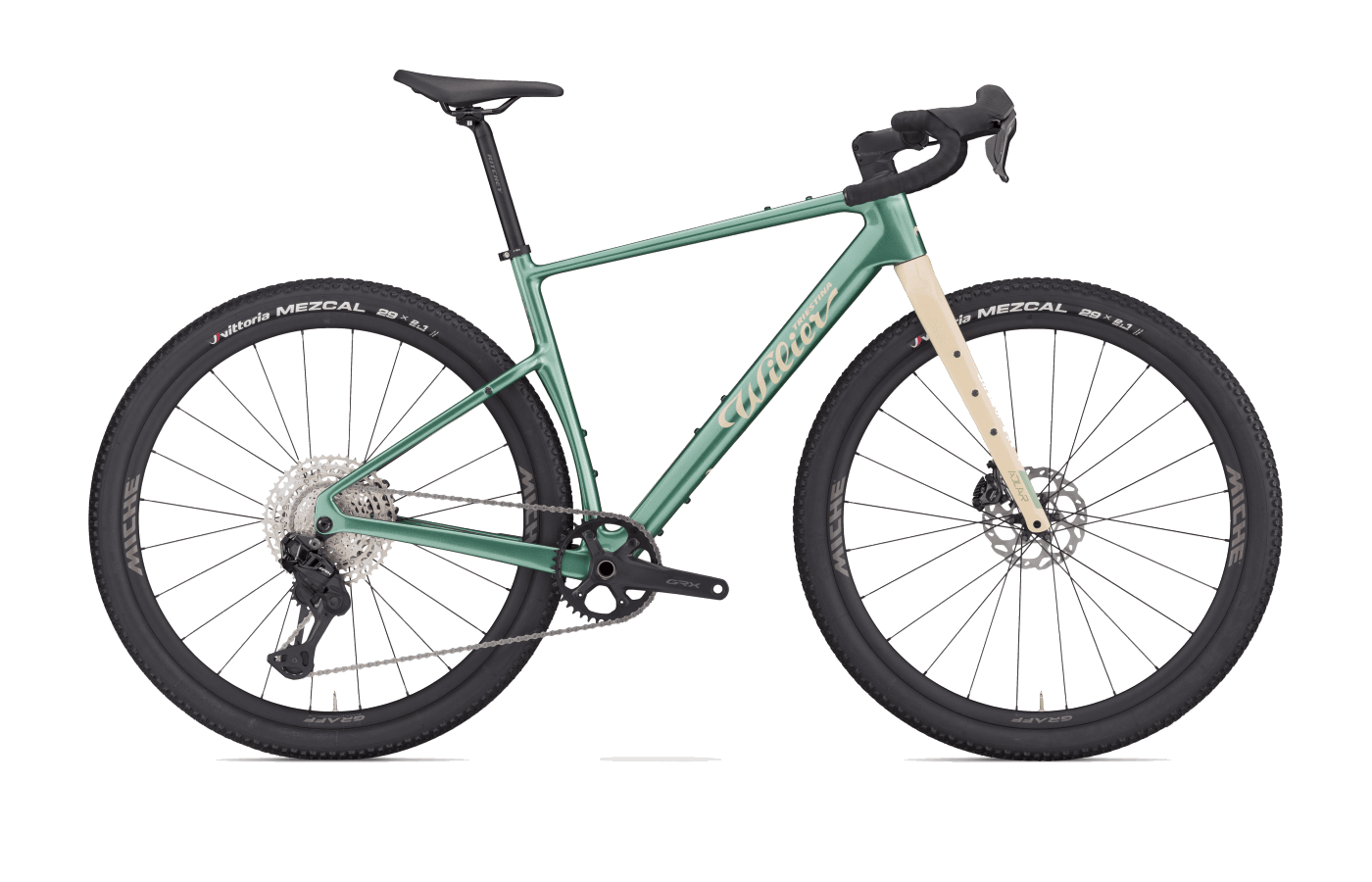
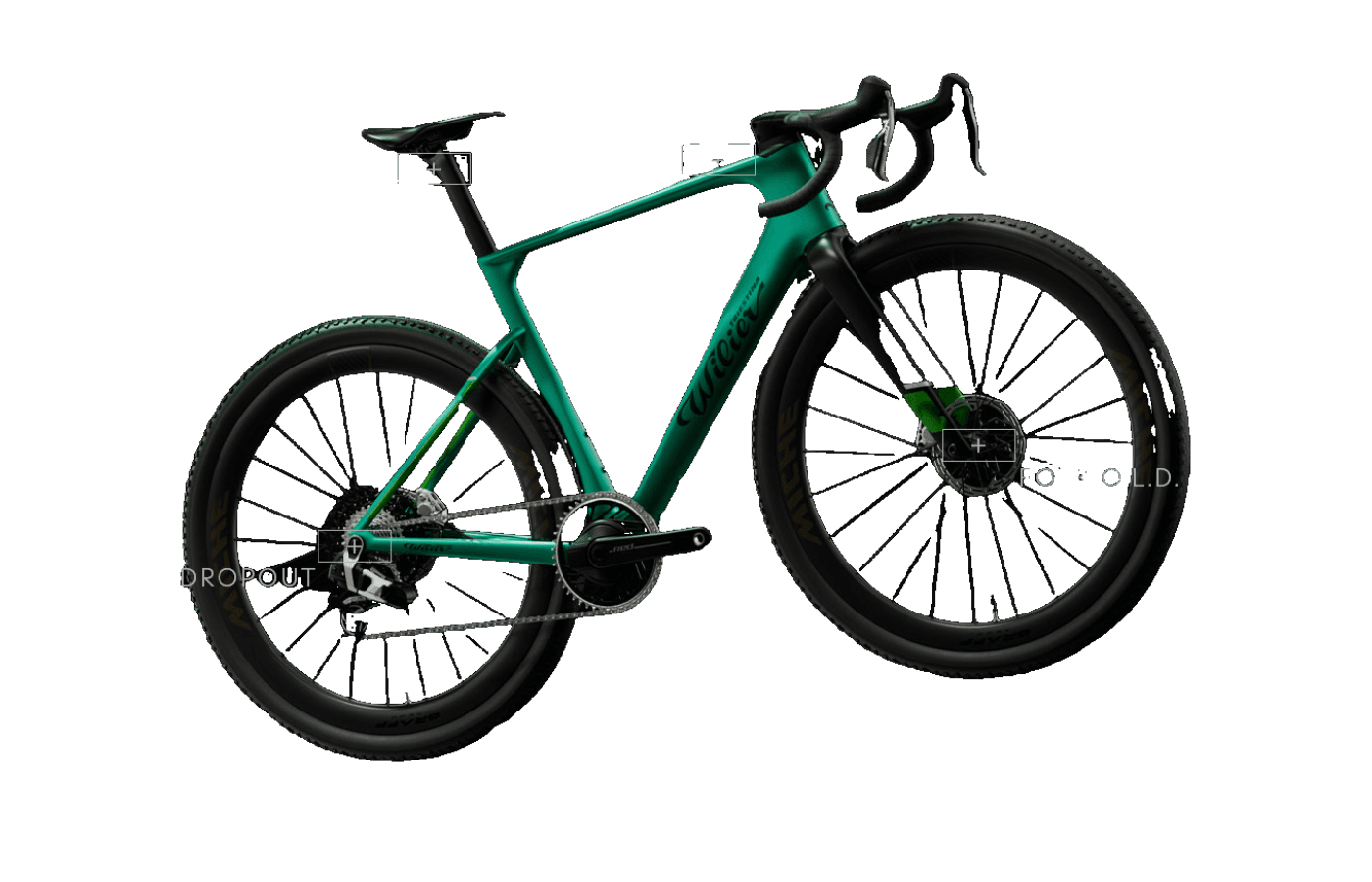
The Wilier Rave SLR ID2 marks a clear repositioning of the Rave platform from broad all-road versatility toward a dedicated race-gravel role. Rather than trying to split duties between road, mixed-surface endurance, and gravel adventure, this generation is built around outright speed in competitive gravel settings. Wilier’s redesign emphasizes aerodynamic efficiency, with NACA-style tube shaping, a widened downtube intended to shield bottles, and a wide-profile fork derived in concept from the brand’s time trial work. The claimed 5.3-watt saving at 35km/h underlines the bike’s intent: this is a gravel bike designed to preserve speed, not a do-everything utility platform.
The rest of the package supports that same race-first brief. Tire clearance grows to 52mm, bringing the bike in line with current high-performance gravel expectations, while the switch to a UDH dropout and 1x-only compatibility simplifies the frame around modern gravel drivetrains, particularly SRAM’s latest direct-mount systems. Wilier also highlights a compact wheelbase and short rear triangle as part of its "Gravel Racing Geometry," aiming for sharper acceleration and more precise handling off-road. Just as important is what the bike omits: there is little emphasis on luggage, mudguards, or integrated storage. In the current market, the Rave SLR ID2 sits firmly at the aggressive end of gravel, closer to pure race bikes than to adventure-oriented or all-road hybrids.
Where to get it.
1 retailer · size S.
Spec sheet.
Every component shipped with this build.
Geometry & fit.
6 sizes published.
The Rave SLR ID2’s geometry reflects its race-oriented intent, combining moderate reach figures with a relatively compact rear end. In size M, the bike pairs a 561mm stack with a 387mm reach, a 70.8-degree head tube angle, 421mm chainstays, and a 1,022mm wheelbase. That points to a fit that is performance-oriented without being radically low or stretched, while the short rear triangle and restrained wheelbase should help the bike feel quick to accelerate and responsive in direction changes. Across the size range, chainstay length stays very short at 419-423mm, which is notably aggressive for a gravel bike with clearance up to 52mm.
Front-end geometry varies sensibly by size, with the XS using a much slacker 69.2-degree head angle, while larger sizes steepen progressively to 72 degrees on the XXL. That kind of size-specific approach is typically used to keep handling more consistent across the range despite wheel and frame proportion changes. Seat tube angles also steepen on smaller sizes, from 73 degrees on XL and XXL to 75.5 degrees on XS, helping preserve rider position over the bottom bracket. Overall, the numbers suggest a bike that should feel sharper and more road-like than many adventure-focused gravel bikes, while still accommodating modern high-volume tires.
Where the handlebar sits relative to the bottom bracket — the single most important fit pair.
01Fit geometry5 values
02Component geometry1 values
03Handling geometry4 values
Which size should I buy?
Slide your height to see the recommended size. GearWise's fit algorithm works from the published stack, reach, and ETT — the brand's own recommendation may differ.
→Calculated from GearWise's own stack / reach / ETT algorithm — the brand's size chart may recommend a different size, and a proper bike fit beats any calculator.
The lineup.
12 builds, ranging $5,200 – $12,500.
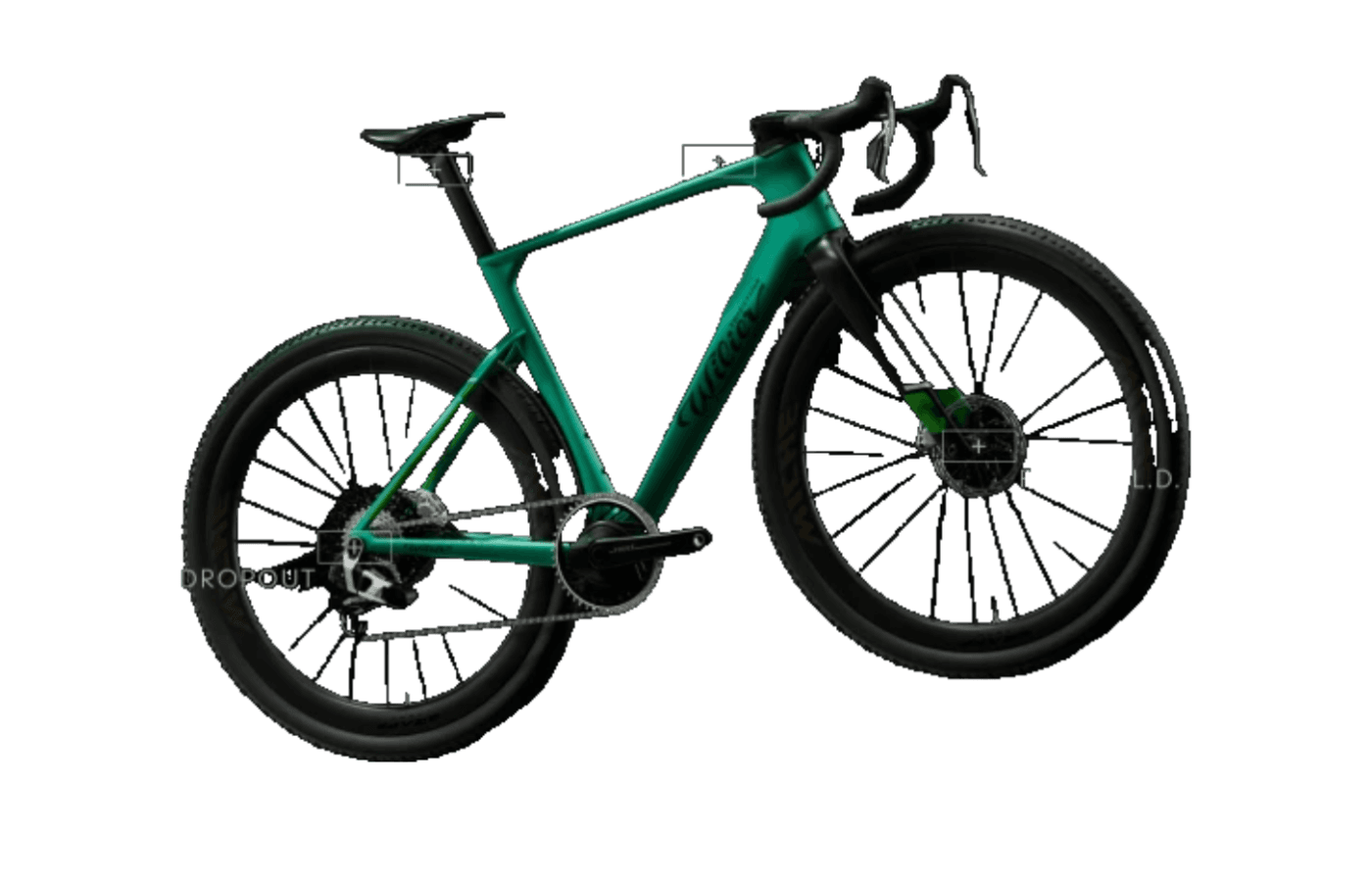
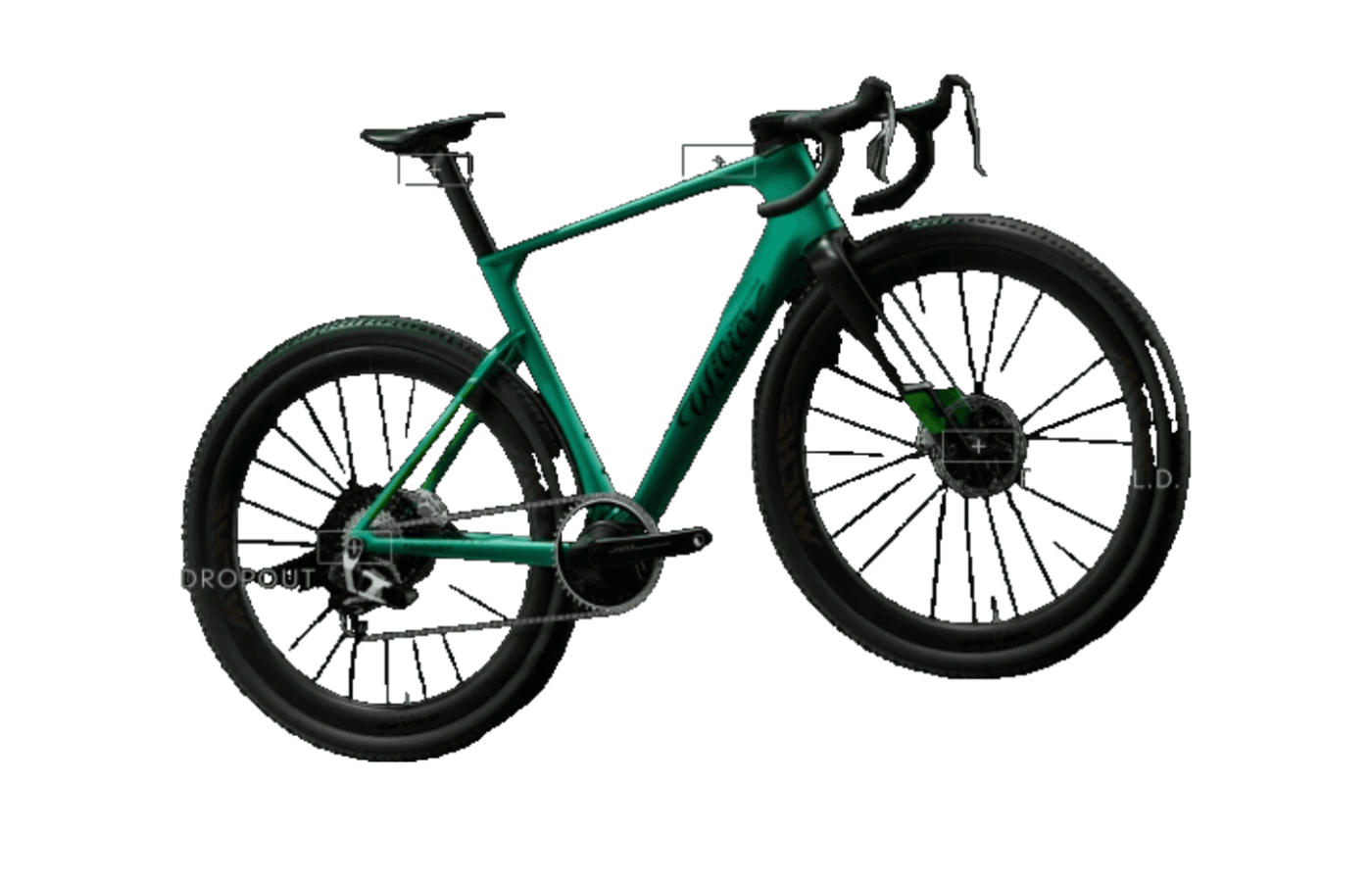
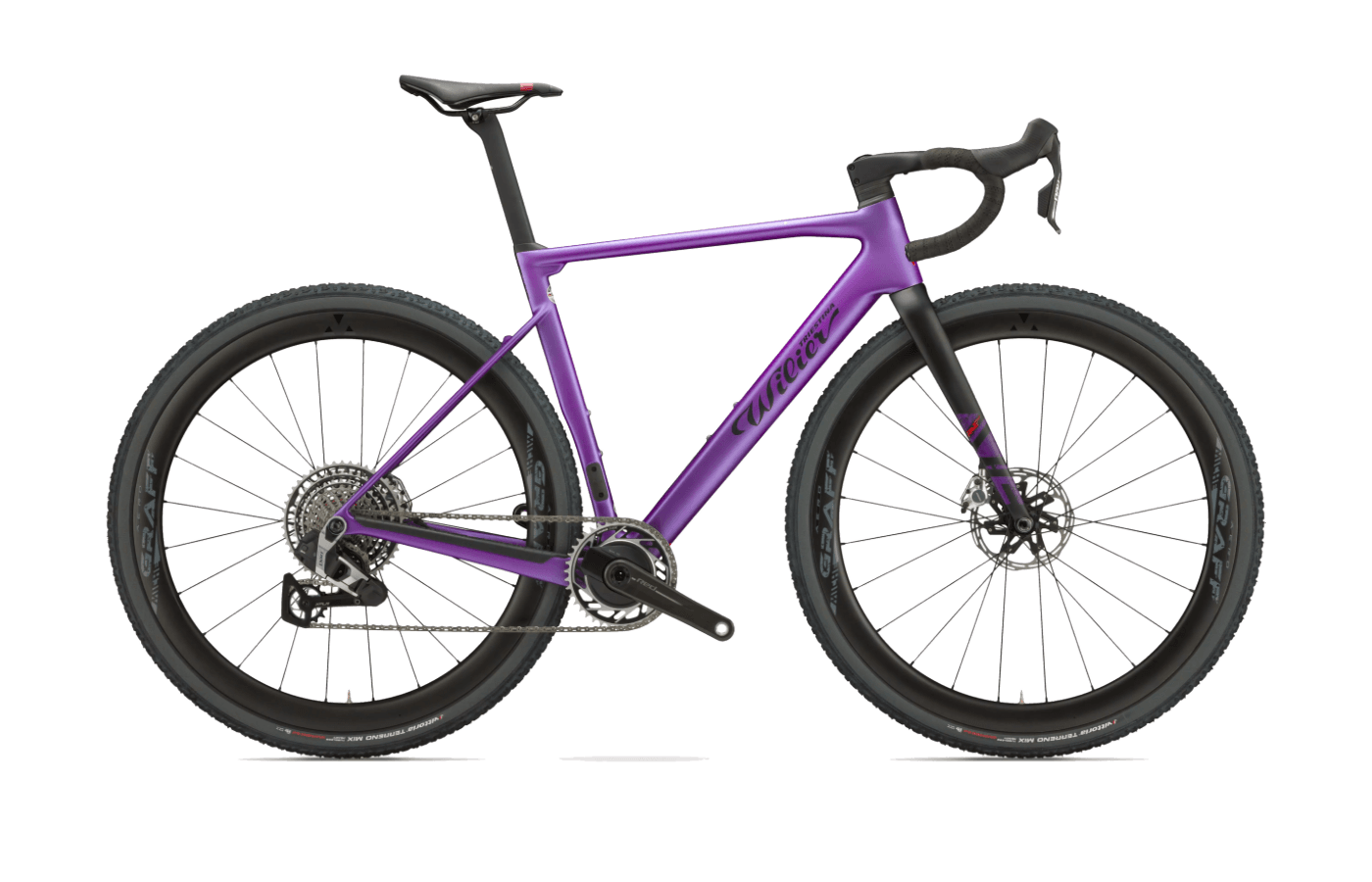
The Rave SLR ID2 is offered in a wide spread of race-oriented 1x builds, with options from Shimano, SRAM, and Campagnolo. Shimano choices center on mechanical GRX 1x12 and GRX Di2 1x12, while SRAM covers Rival, Force, and Red XPLR AXS E1 1x13. Campagnolo is represented by Super Record X WRL 1x13, including one version with a power meter. Across the range, Wilier keeps the spec strategy tightly aligned with the frame’s purpose: every listed build is 1x, reinforcing the bike’s focus on simplicity, chain security, and modern gravel racing drivetrain standards.
A major differentiator between builds is cockpit specification. Some lower and mid-tier models use the alloy Stemma S2 stem/bar arrangement, while higher-end versions move to Wilier’s carbon F Bar cockpit. That split gives buyers a clear choice between a more conventional alloy front end and a lighter, more integrated carbon setup. The breadth of drivetrain options is also notable: riders can choose between the familiarity of Shimano GRX, the latest wireless SRAM XPLR AXS ecosystem, or Campagnolo’s premium 13-speed gravel group. Even without pricing data, the hierarchy is clear, with Rival and mechanical GRX builds serving as entry points and Red XPLR AXS E1 or Super Record X WRL builds occupying the halo end of the range.





From the press.
Cycling press coverage.
Review coverage has largely reinforced Wilier’s positioning of the Rave SLR ID2 as a highly specialized gravel race bike. BikeRadar, in particular, noted how clearly the frame prioritizes speed and race utility over versatility, pointing to the aerodynamic tube profiles and stripped-back feature set as evidence that this is not intended to be a bikepacking or everyday gravel-allrounder. The absence of down-tube storage and the lack of meaningful provision for mudguards or bags were highlighted as deliberate trade-offs rather than oversights.
That focused approach is likely to appeal to riders who want a fast, modern gravel race machine with current standards such as large tire clearance and a UDH rear end. At the same time, reviewers also make clear that the bike’s narrow brief limits its appeal. Riders looking for a more adaptable gravel bike—something equally suited to commuting, long mixed-surface touring, or utility use—may find the ID2 too single-purpose. The consensus is that Wilier has produced a more coherent and contemporary race-gravel package, but one that gives up practical versatility in exchange for that sharper performance focus.