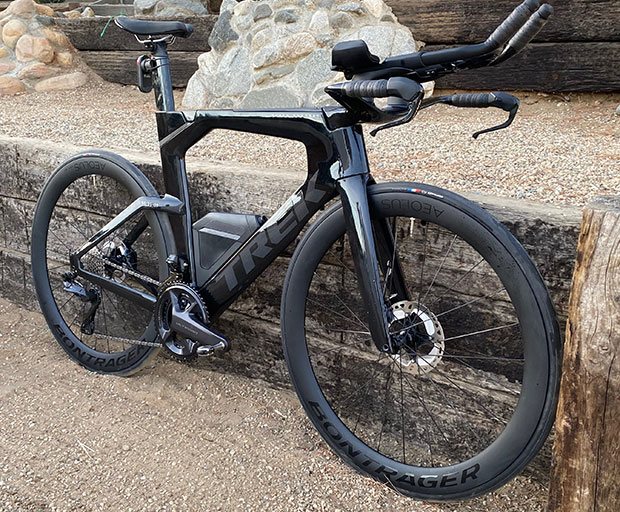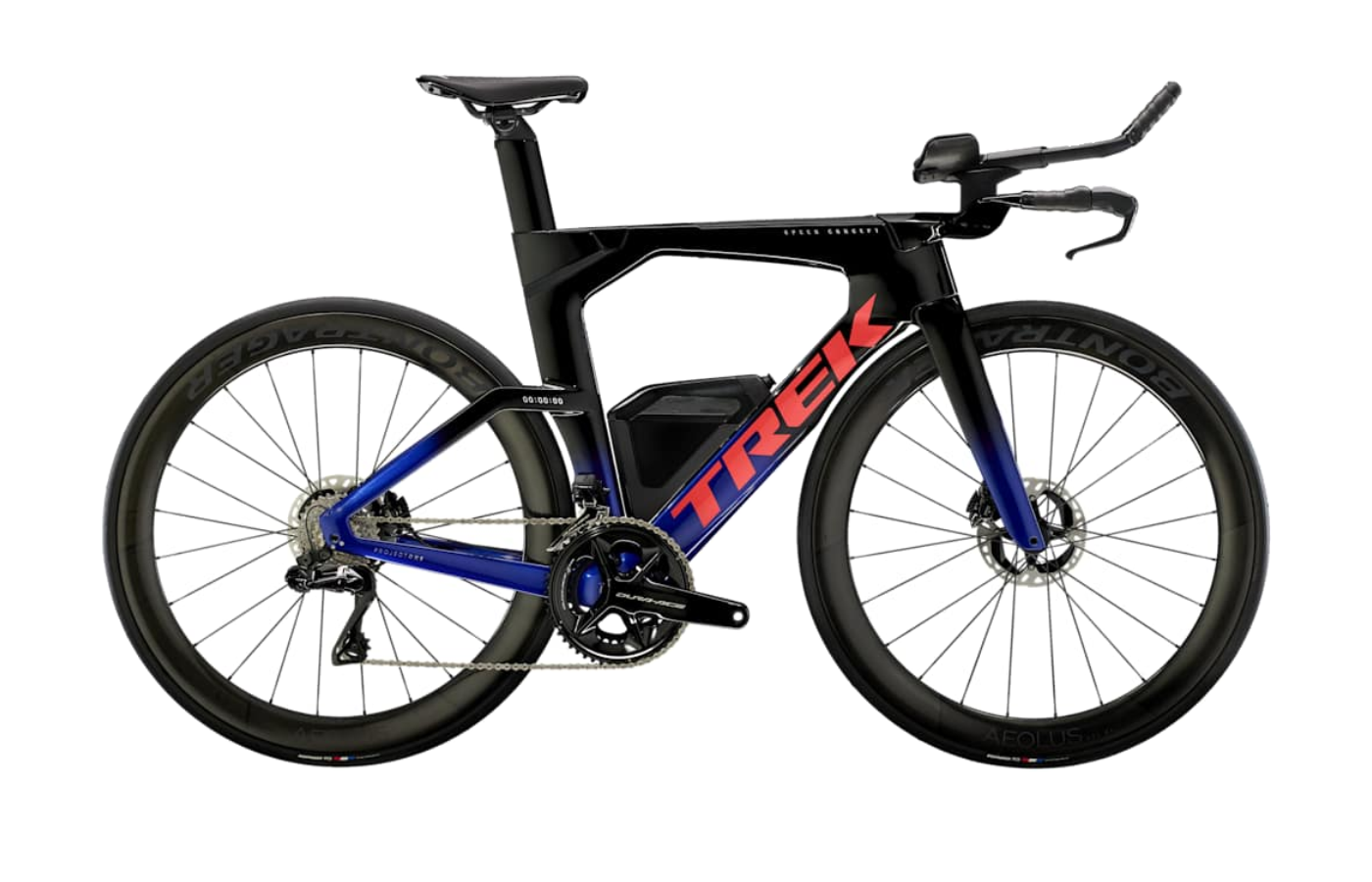
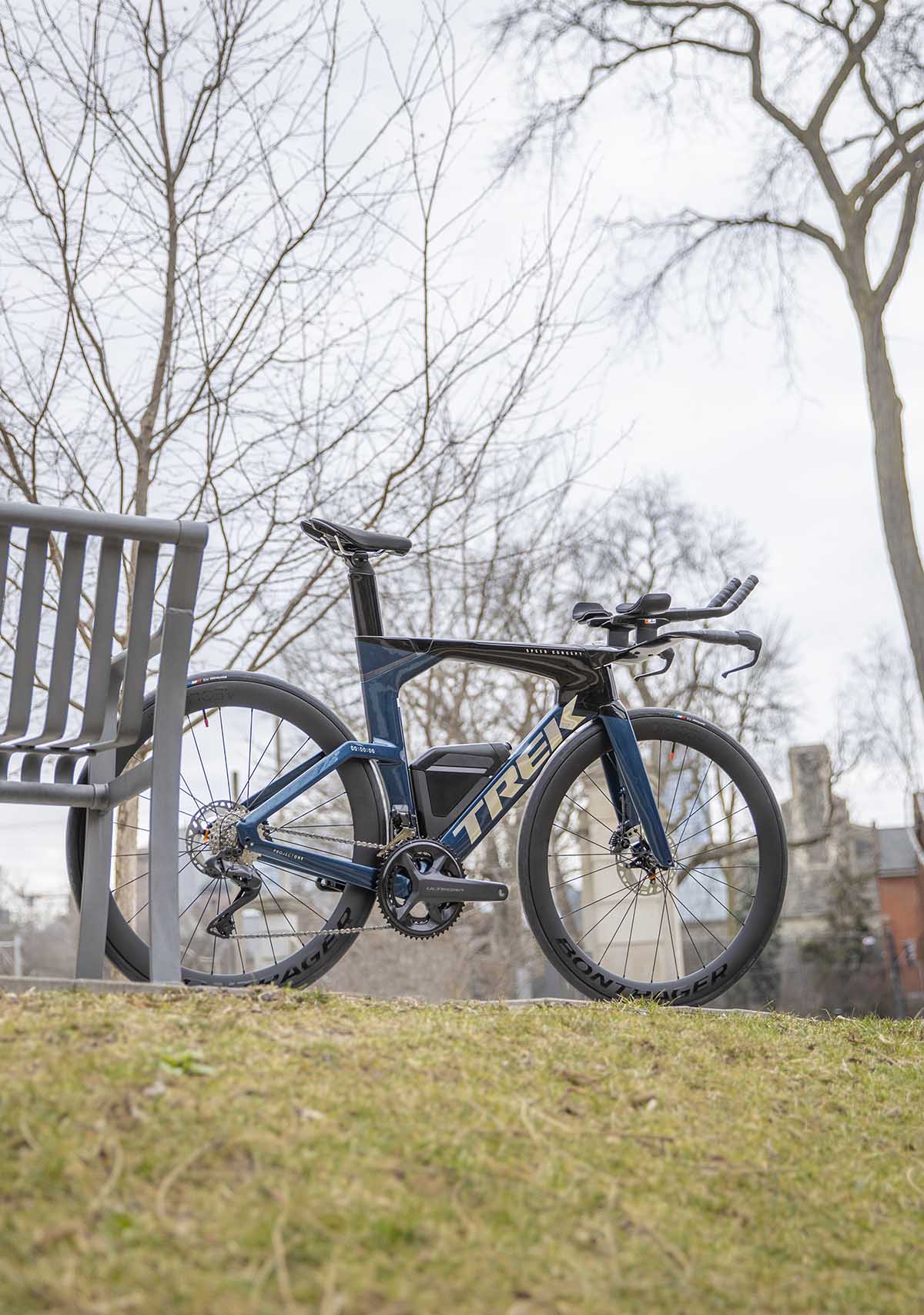
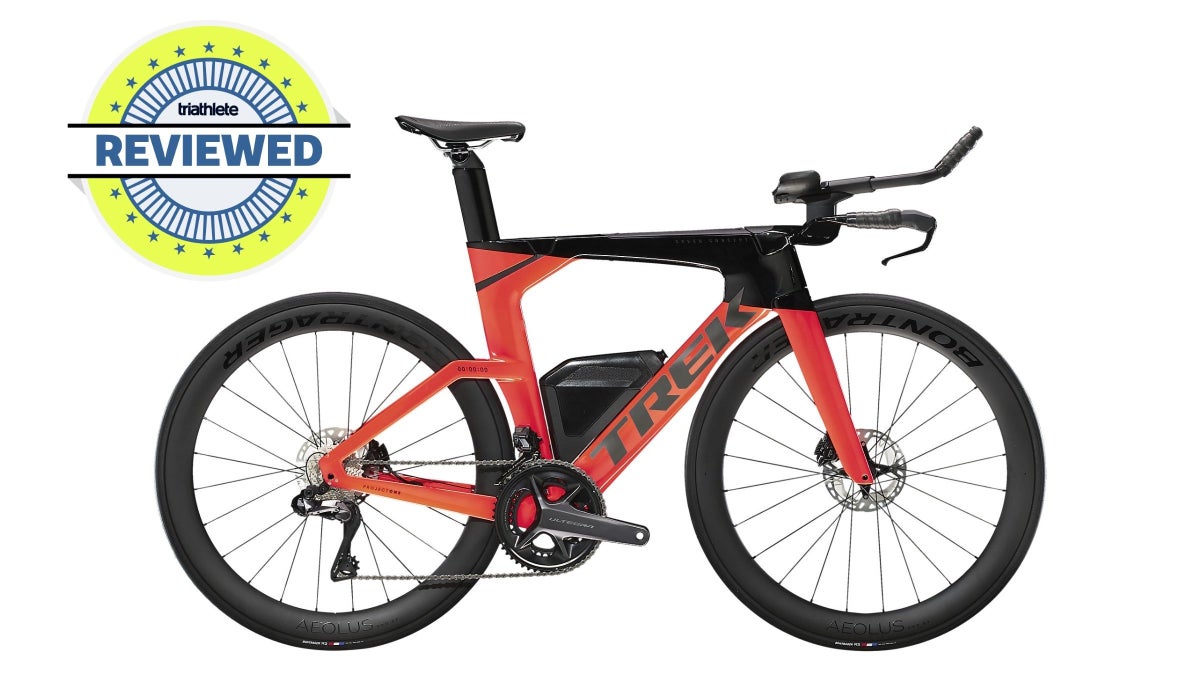
The third-generation Trek Speed Concept is a full-platform redesign of Trek’s flagship aero race bike, not a light update to the previous frame. Introduced for 2022, it brought the Speed Concept into the disc-brake era and reorganized the concept around two distinct applications: a UCI-oriented time trial version and a triathlon-specific configuration. Trek kept the bike within a conventional double-diamond layout rather than chasing beam-bike novelty, but paired that with substantially revised aero tube shaping, lowered stays, deep integration, and a much more practical front end. The result is a bike aimed squarely at athletes who want top-tier aerodynamic performance without the fit and service headaches that often come with triathlon superbikes.
What distinguishes this generation is how deliberately it balances speed, fit range, and race practicality. Trek emphasized a simpler, more travel-friendly cockpit with broad adjustment, and added triathlon-specific comfort through an IsoSpeed decoupler on the tri setup. Integrated storage is central to the platform rather than an afterthought: the system includes between-the-arms hydration, a top-tube bento box, a 750 ml aero downtube bottle, and internal flat-kit storage. In the market, the Gen 3 Speed Concept sits firmly at the premium end as a no-compromise superbike for serious triathletes and TT riders, but one that is notably more livable than many highly integrated rivals.
Where to get it.
1 retailer · size M.
Spec sheet.
Every component shipped with this build.
Geometry & fit.
4 sizes published.
The geometry points to a stable, long-course-focused triathlon bike rather than an ultra-nervous short-course specialist. In size L, the frame measures 541 mm stack and 426 mm reach; the M is 517/416. Those numbers, combined with a steep 78-degree seat tube angle across the range, put the rider in a forward, efficient tri position without pushing the front end into an extreme low-stack fit window. Trek’s emphasis on cockpit adjustability matters here, because the base geometry is aggressive enough for serious racing but not so radical that only highly flexible riders can make it work.
Handling numbers reinforce the reviewers’ comments about confidence and stability. The 72.5-degree head tube angle on most sizes, 60 mm trail on M, L, and XL, 410 mm chainstays, and a 995 mm wheelbase in M growing to 1020 mm in L all suggest steady tracking at speed rather than razor-sharp steering. The 80 mm bottom-bracket drop also helps keep the rider planted through corners. In practice, that should translate to predictable high-speed behavior and less nervousness in the aero bars, while still retaining enough responsiveness for technical courses and rolling terrain.
Where the handlebar sits relative to the bottom bracket — the single most important fit pair.
01Fit geometry6 values
02Component geometry1 values
03Handling geometry7 values
Which size should I buy?
Slide your height to see the recommended size. GearWise's fit algorithm works from the published stack, reach, and ETT — the brand's own recommendation may differ.
→Calculated from GearWise's own stack / reach / ETT algorithm — the brand's size chart may recommend a different size, and a proper bike fit beats any calculator.
The lineup.
4 builds, ranging $9,500 – $14,500.
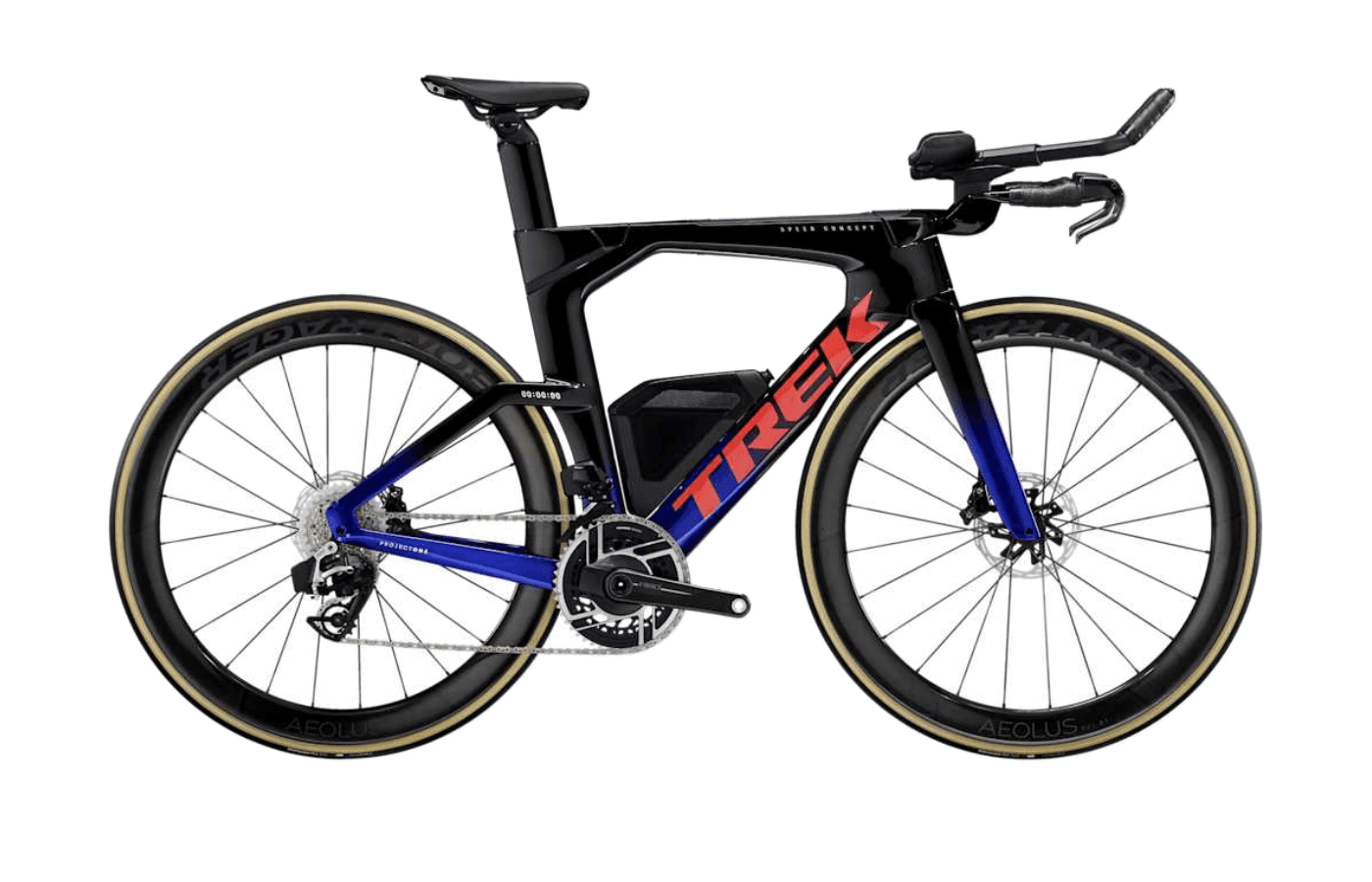
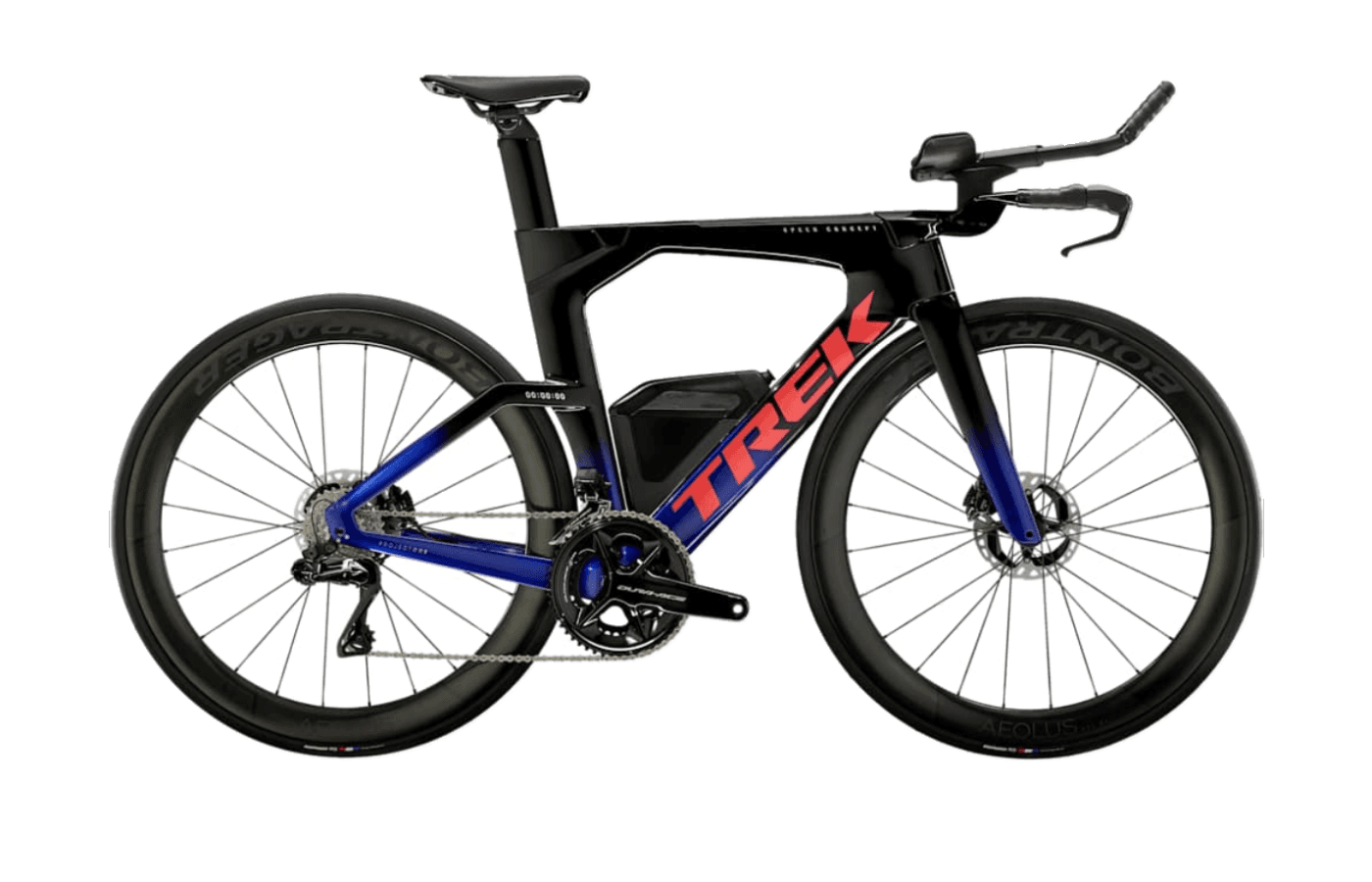
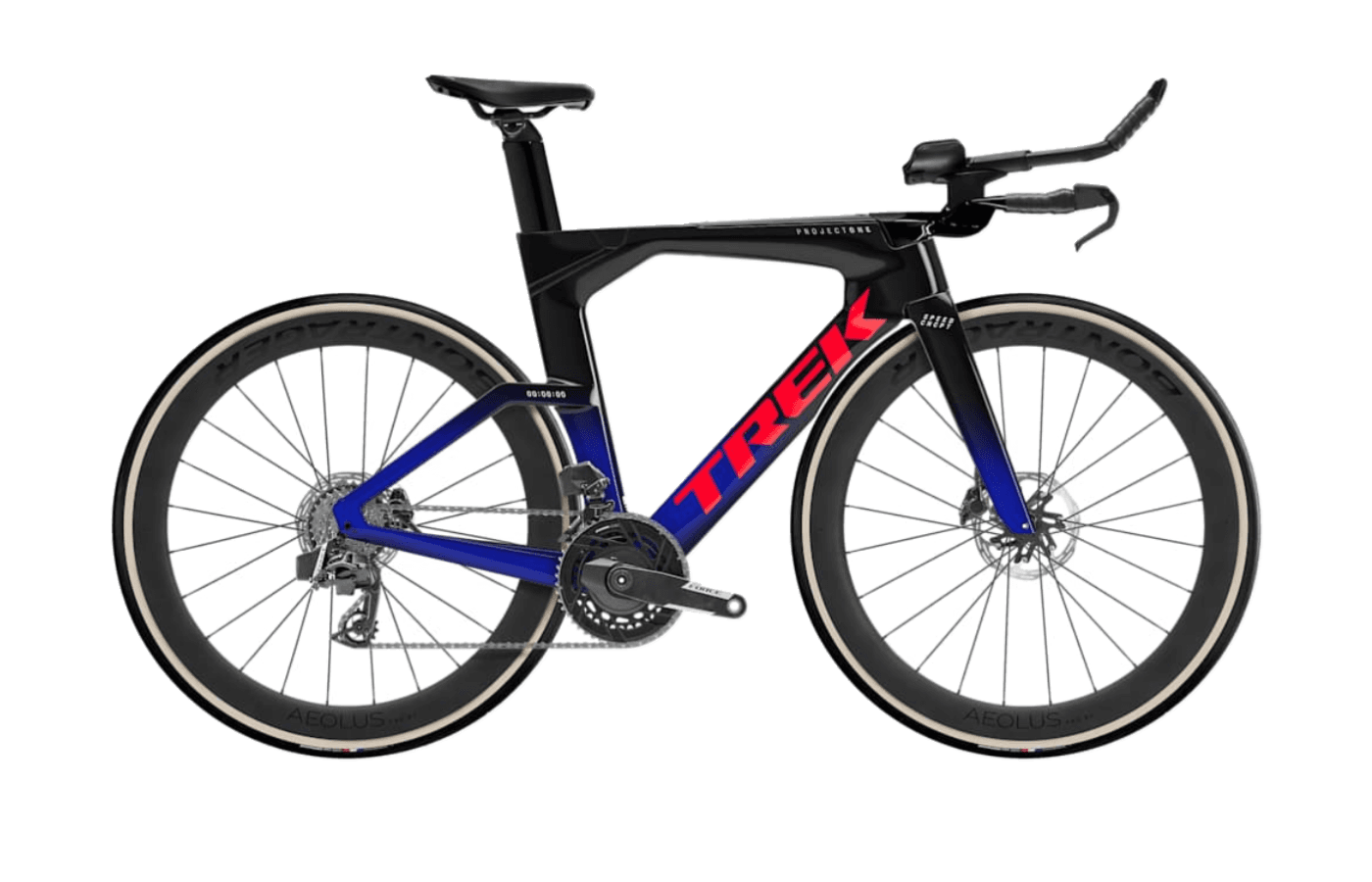
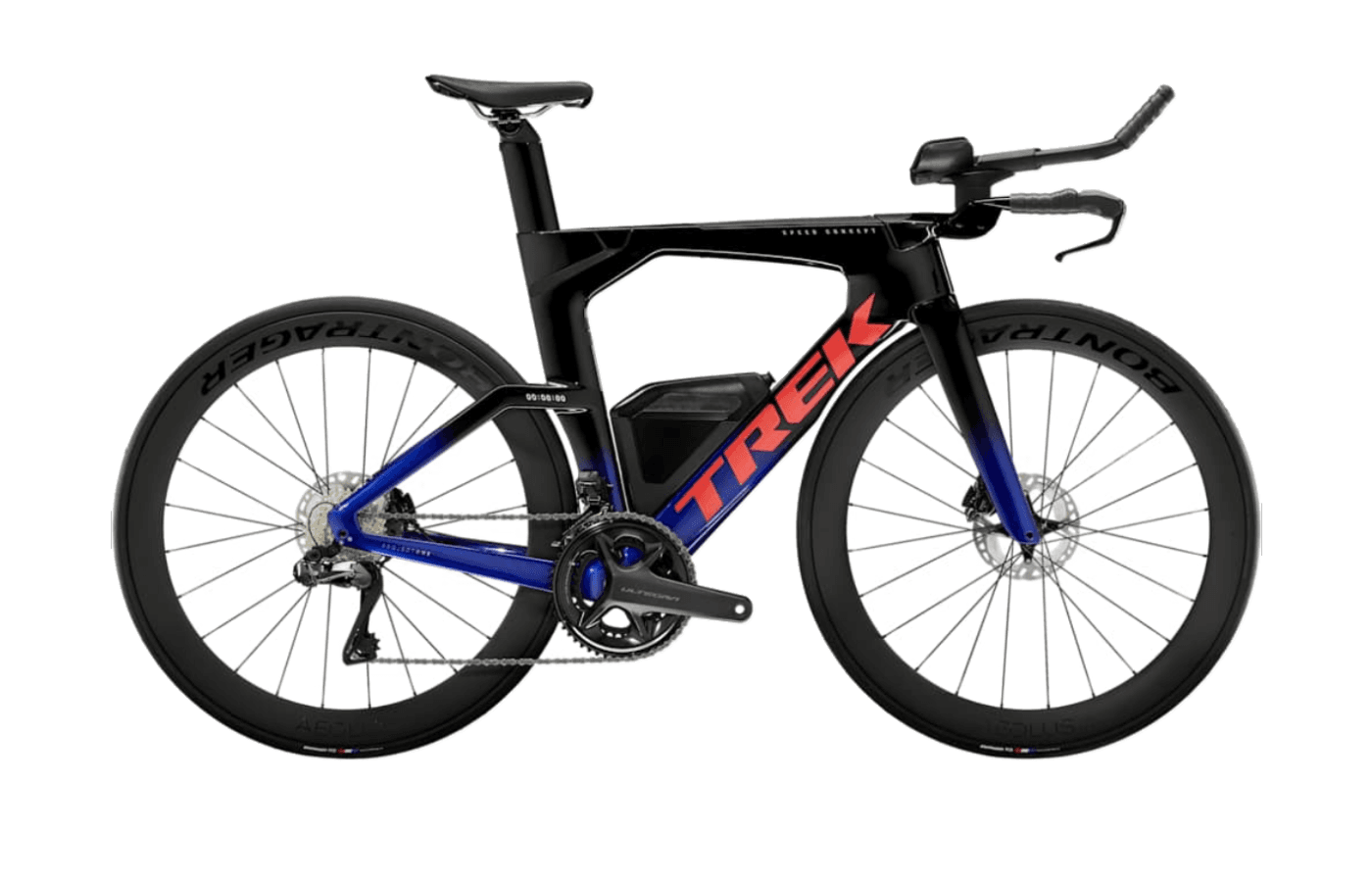
The available range is concentrated at the premium end, with four complete builds: SLR 7 at $9,499.99, SLR 7 AXS at $9,999.99, SLR 9 at $13,999.99, and SLR 9 AXS at $14,499.99. That pricing makes clear that Trek is not chasing entry-level tri buyers with this generation; every build sits in superbike territory. Review commentary consistently suggests the lower two builds are the more rational buys, because the frame, integration, and fit hardware are the real story here, while the jump to top-tier groups largely buys lighter parts rather than a dramatically different riding experience.
The key spec split is drivetrain level rather than a different chassis. Review sources note that Shimano and SRAM’s tri-specific electronic shifting hardware delivers very similar functional performance across the range, which weakens the case for the much more expensive SLR 9 and SLR 9 AXS unless weight and flagship status matter. Reviewers were also somewhat critical of the stock Bontrager Aeolus RSL 51 wheels, arguing that 51 mm depth is conservative for a dedicated triathlon bike at this price. Even so, the builds benefit from the same core platform features: disc brakes, integrated storage, the revised adjustable cockpit, and Trek’s premium carbon frame.
From the press.
6 reviews from the cycling press.
Reviewers were broadly impressed by how much more complete the Gen 3 Speed Concept feels than the previous bike. Across outlets including 220 Triathlon, Triathlon Magazine Canada, Bicycling Australia, and Triathlete, the recurring themes were stability, fit usability, and an unusually comfortable ride for a dedicated triathlon machine. Triathlon Magazine Canada called it "one of the most comfortable rides we’ve ever had on a tri bike," while 220 Triathlon highlighted how naturally it handled and how easy it was to stay in the extensions. Several testers also noted that the bike climbs and accelerates better than expected for a fully integrated aero platform, with Triathlete and 220 Triathlon both describing it as lively and responsive when standing on the pedals.
The strongest praise centered on handling and day-to-day usability. Reviewers repeatedly said the bike felt secure rather than twitchy, with excellent descending confidence helped by the move to hydraulic disc brakes. Slowtwitch also emphasized the much-improved two-post cockpit and easier fit adjustment compared with the previous generation. That said, criticism was not absent. Triathlete found the IsoSpeed system less transformative over bigger hits, describing the ride as a mixed bag on larger bumps despite good chatter reduction. Reviewers also questioned some spec decisions at this price, especially the stock 51 mm wheels being shallow for a tri superbike, and some found the integrated flat-kit storage awkward to access. Value was another consistent caveat: the bike was widely seen as excellent, but expensive enough that the lower-tier builds made more sense than the flagship models for most buyers.
Trek Speed Concept SLR 9 review

Trek Speed Concept Review | Bike Rebel Without a Cause
Road Tested: Trek Speed Concept SLR9
Bike Review: Trek Speed Concept SLR7 - Triathlon Magazine Canada
Reviewed: The Gen 3 2022 Trek Speed Concept SLR 7