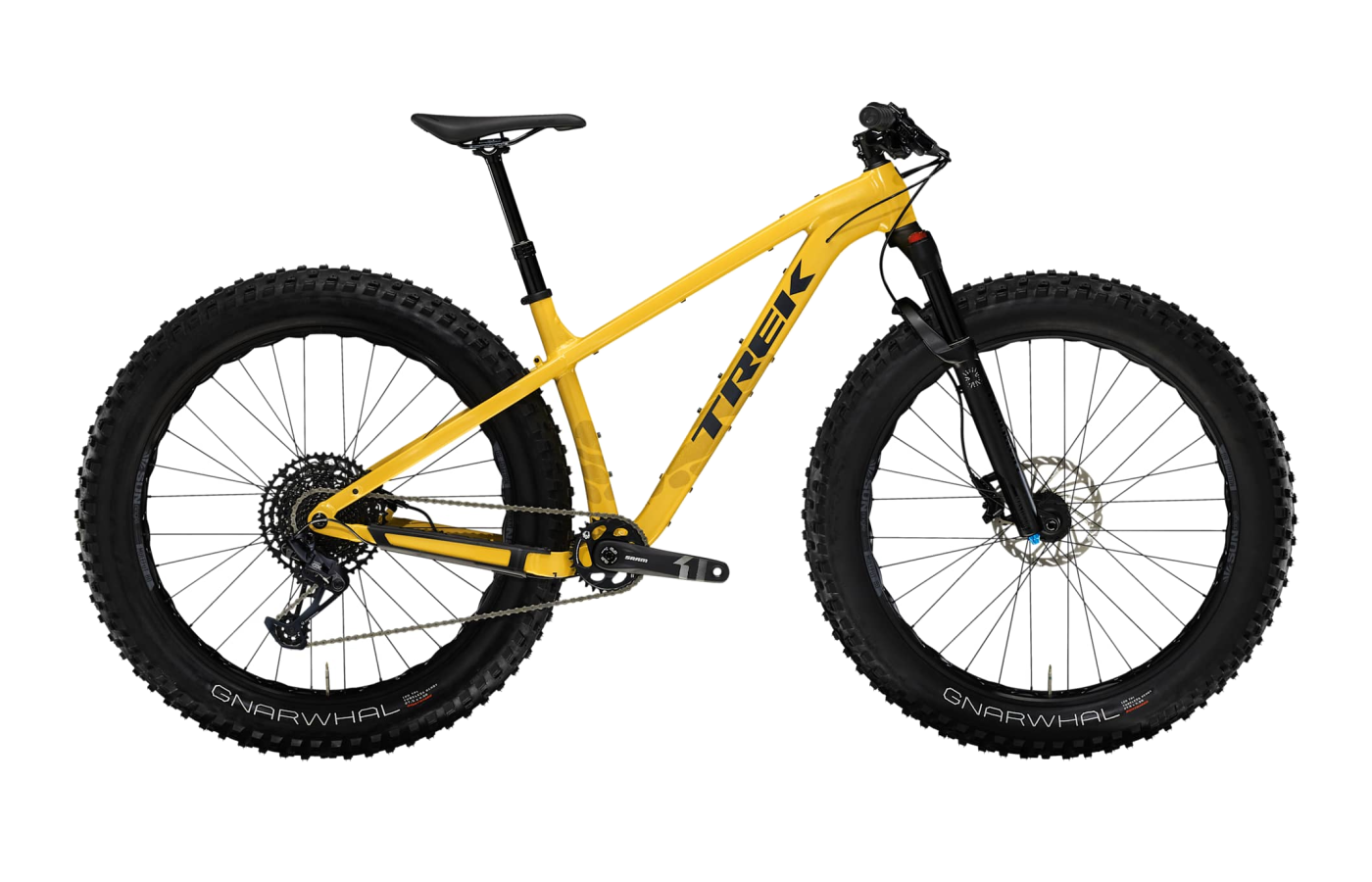
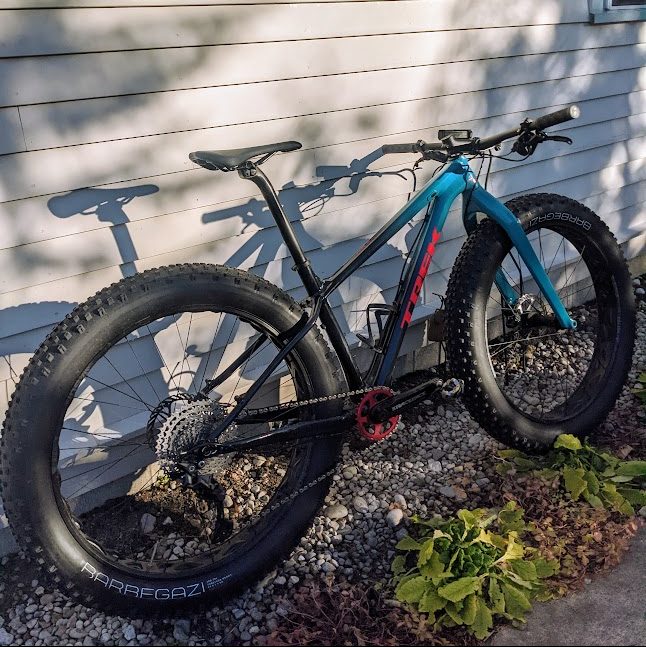
The Trek Farley is a dedicated fat bike that leans heavily into modern trail-riding sensibilities without abandoning its winter exploration roots. Updated for 2023, the platform effectively splits into two distinct frame designs. The carbon models carry over their previous cross-country-oriented chassis, while the aluminum models receive a substantial overhaul aimed at adventure riding and bikepacking. This updated alloy frame adopts current standards like a Universal Derailleur Hanger and a threaded bottom bracket, alongside a massive expansion of accessory mounts for frame bags and racks. Trek positions the Farley for riders who want to maintain their trail-riding habits year-round, prioritizing descending stability and suspension compatibility over pure weight savings. It suits aggressive winter riders, bikepackers, and anyone looking to navigate deep snow, sand, or frozen singletrack with a more athletic, mountain-bike-like posture.
Where to get it.
2 retailers · size M.
Spec sheet.
Every component shipped with this build.
Geometry & fit.
4 sizes published.
The Farley’s geometry reflects Trek’s push to modernize fat bike handling, though the exact numbers depend on the frame material and fork. On the updated aluminum frames, Trek slackened the head tube angle to roughly 67.7 degrees and increased the reach, creating a longer front center that stabilizes the bike at higher speeds. To keep the handling from feeling sluggish, the chainstays were shortened to a fixed 450mm, replacing the adjustable sliding dropouts found on older models and the current carbon frame.
This combination of a slacker front end and shorter rear center puts the rider in a comfortable, upright pedaling position with a 73.2-degree effective seat tube angle. The posture places the rider's weight distinctly over the rear tire, which maximizes traction in soft snow but requires an active, forward weight shift to keep the steering precise on steep climbs. A shorter 42mm fork offset further quickens the steering response, ensuring the large 27.5-inch wheels remain manageable in tight, wooded singletrack. Most builds also include a dropper post, allowing riders to lower their center of gravity for technical descents.
Where the handlebar sits relative to the bottom bracket — the single most important fit pair.
01Fit geometry6 values
02Component geometry4 values
03Handling geometry8 values
Which size should I buy?
Slide your height to see the recommended size. GearWise's fit algorithm works from the published stack, reach, and ETT — the brand's own recommendation may differ.
→Calculated from GearWise's own stack / reach / ETT algorithm — the brand's size chart may recommend a different size, and a proper bike fit beats any calculator.
The lineup.
4 builds, ranging $1,500 – $3,700.
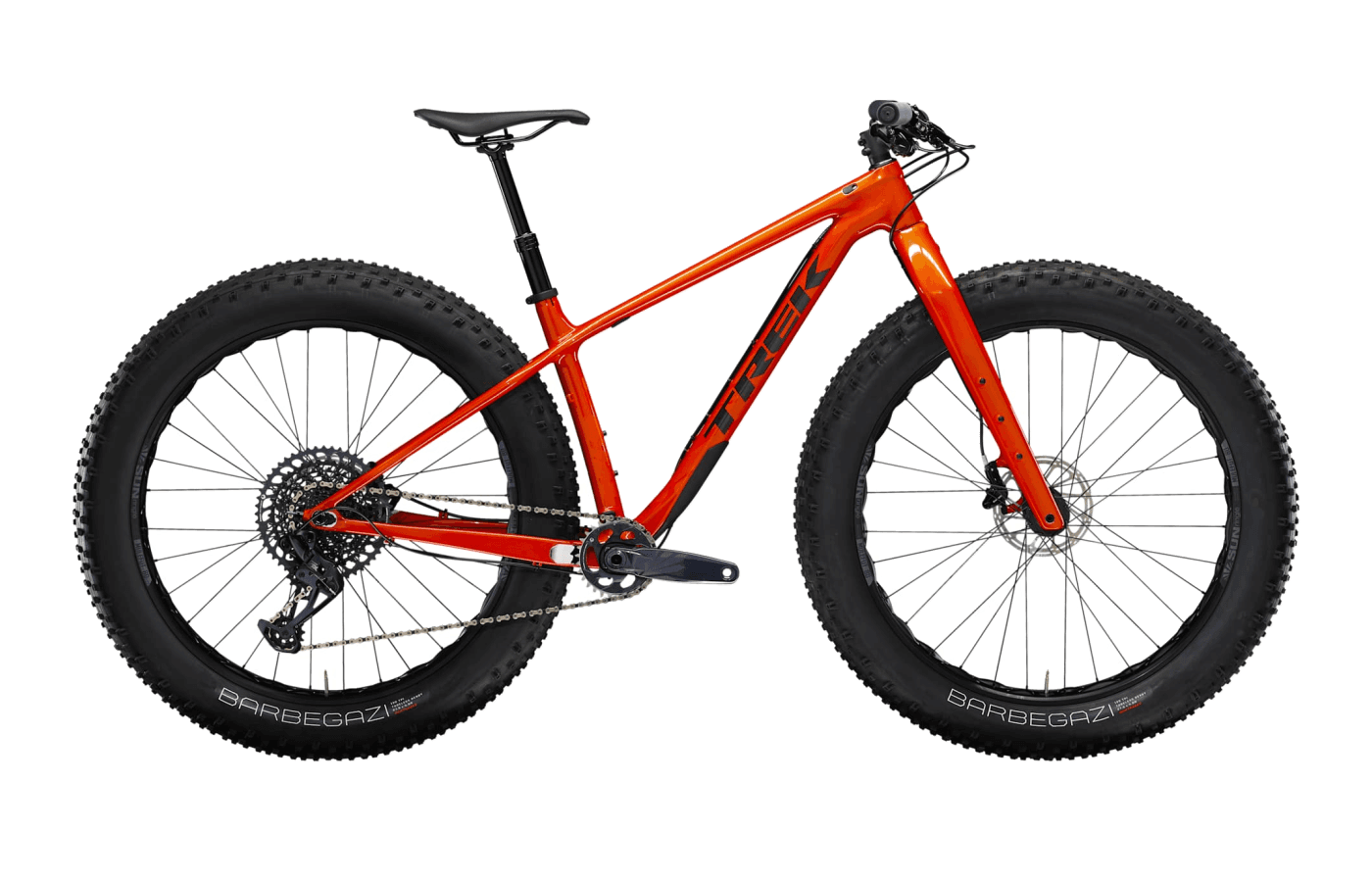
The Farley lineup spans four primary builds, split between the carried-over carbon frame and the updated aluminum chassis. The entry-level Farley 5 serves as the value-oriented foundation, utilizing a rigid fork and a 10-speed Shimano Deore drivetrain that keeps replacement costs low for winter commuters.
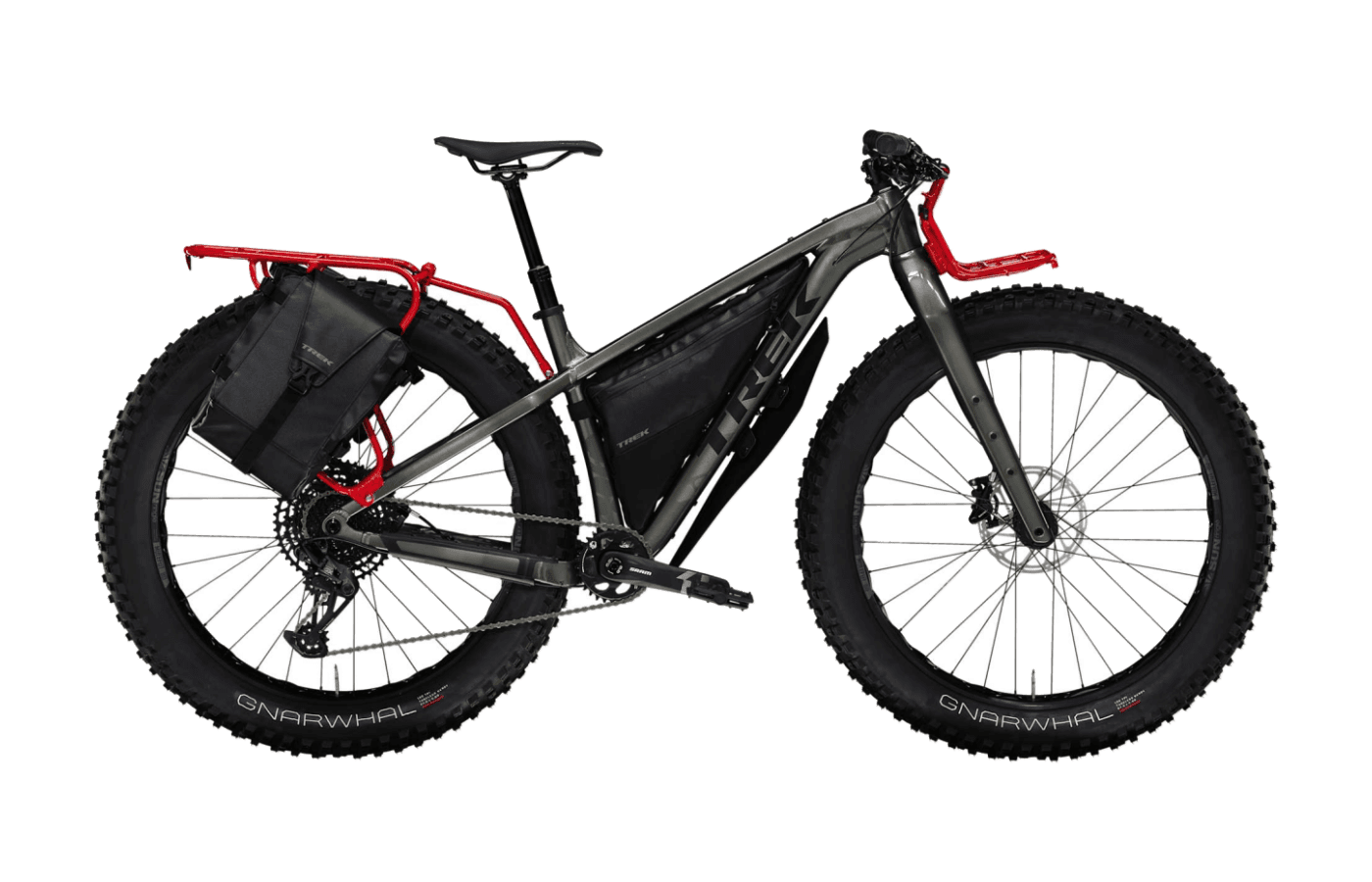
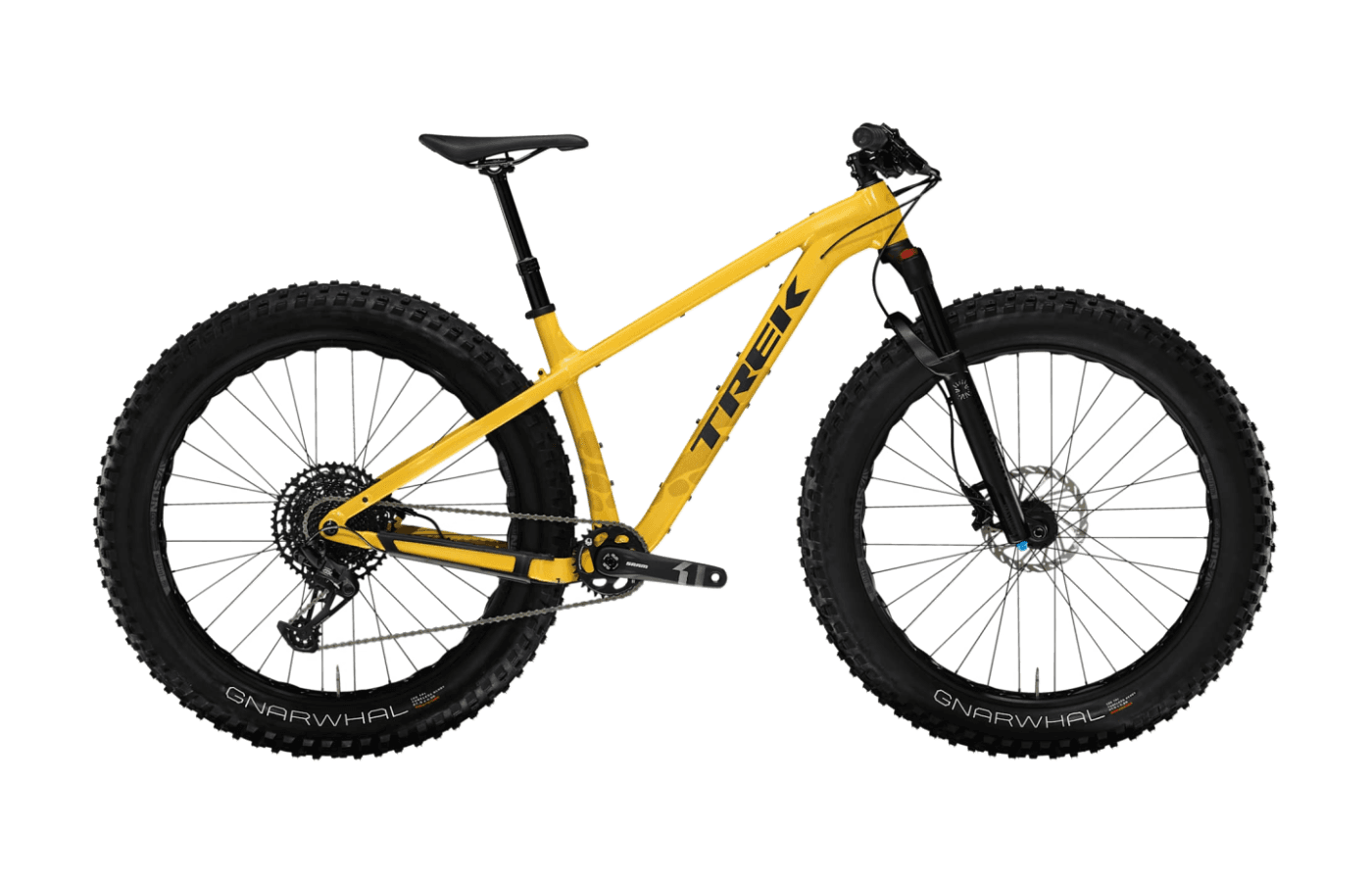
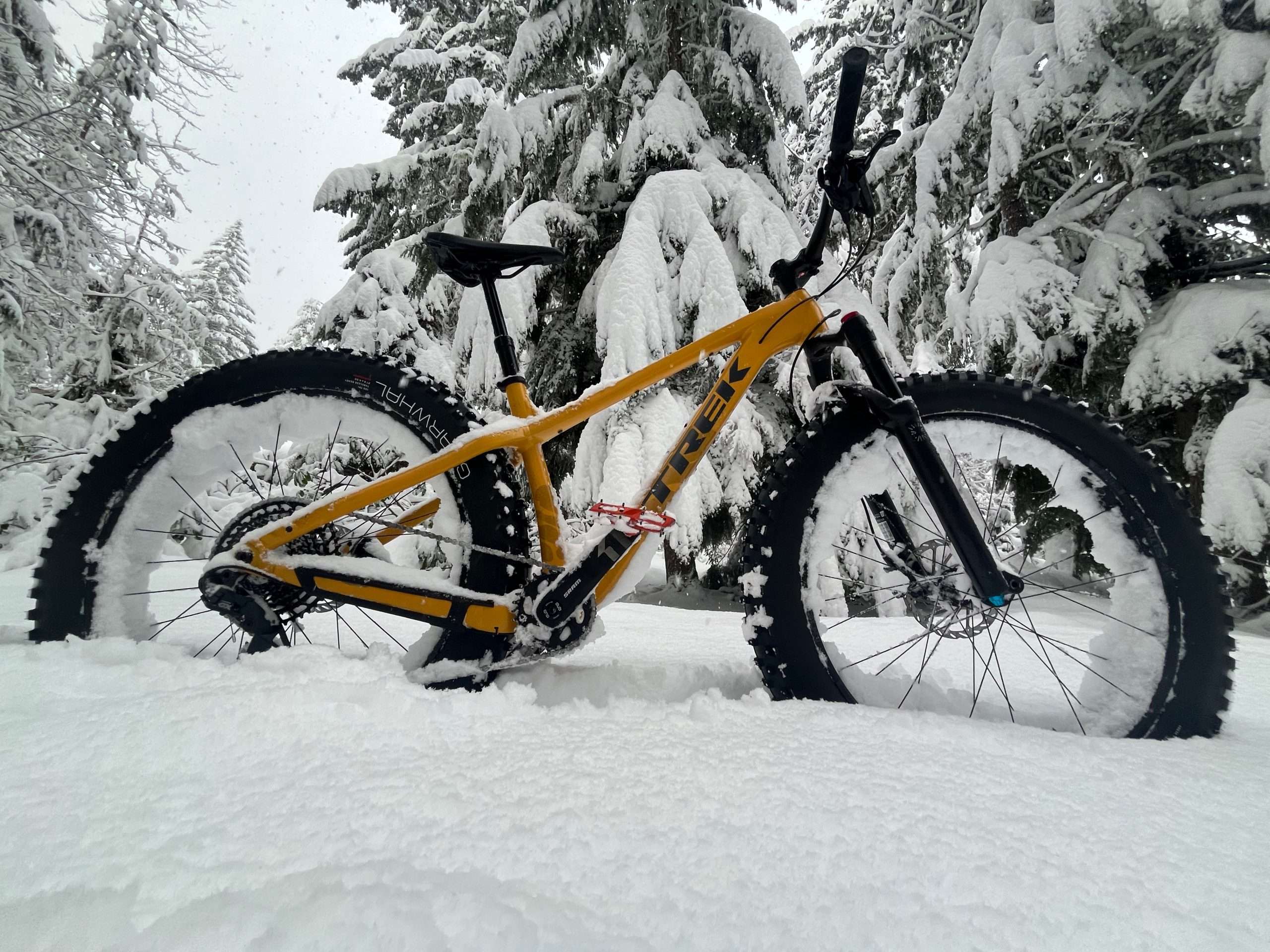
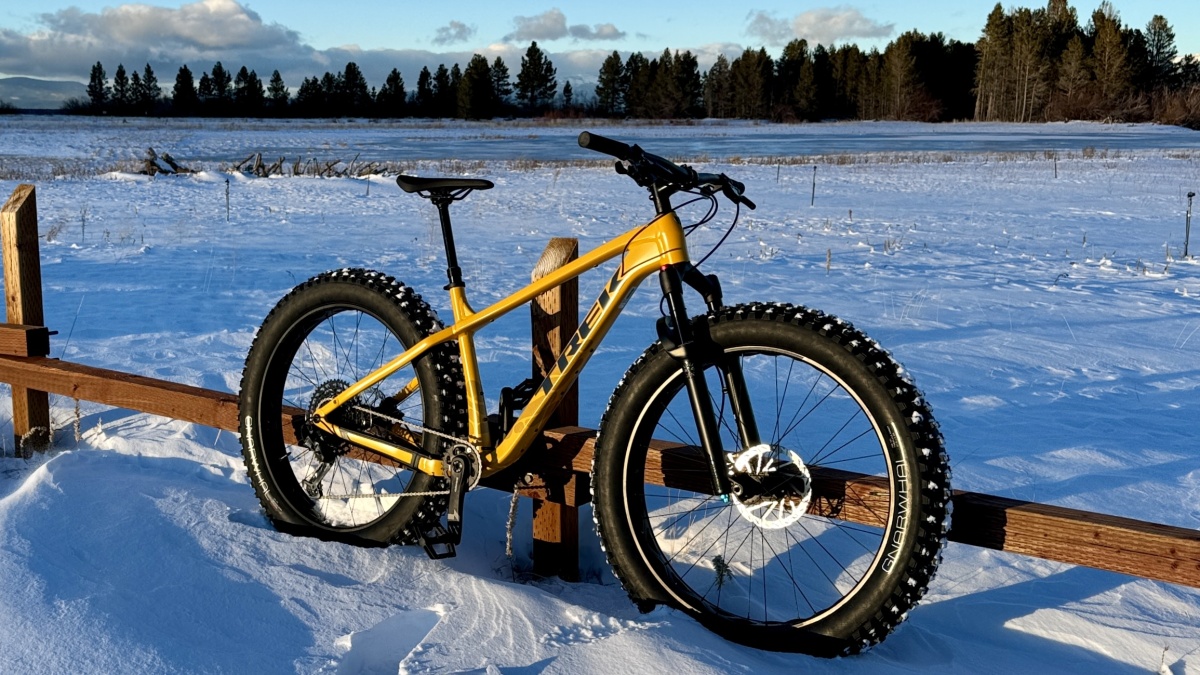
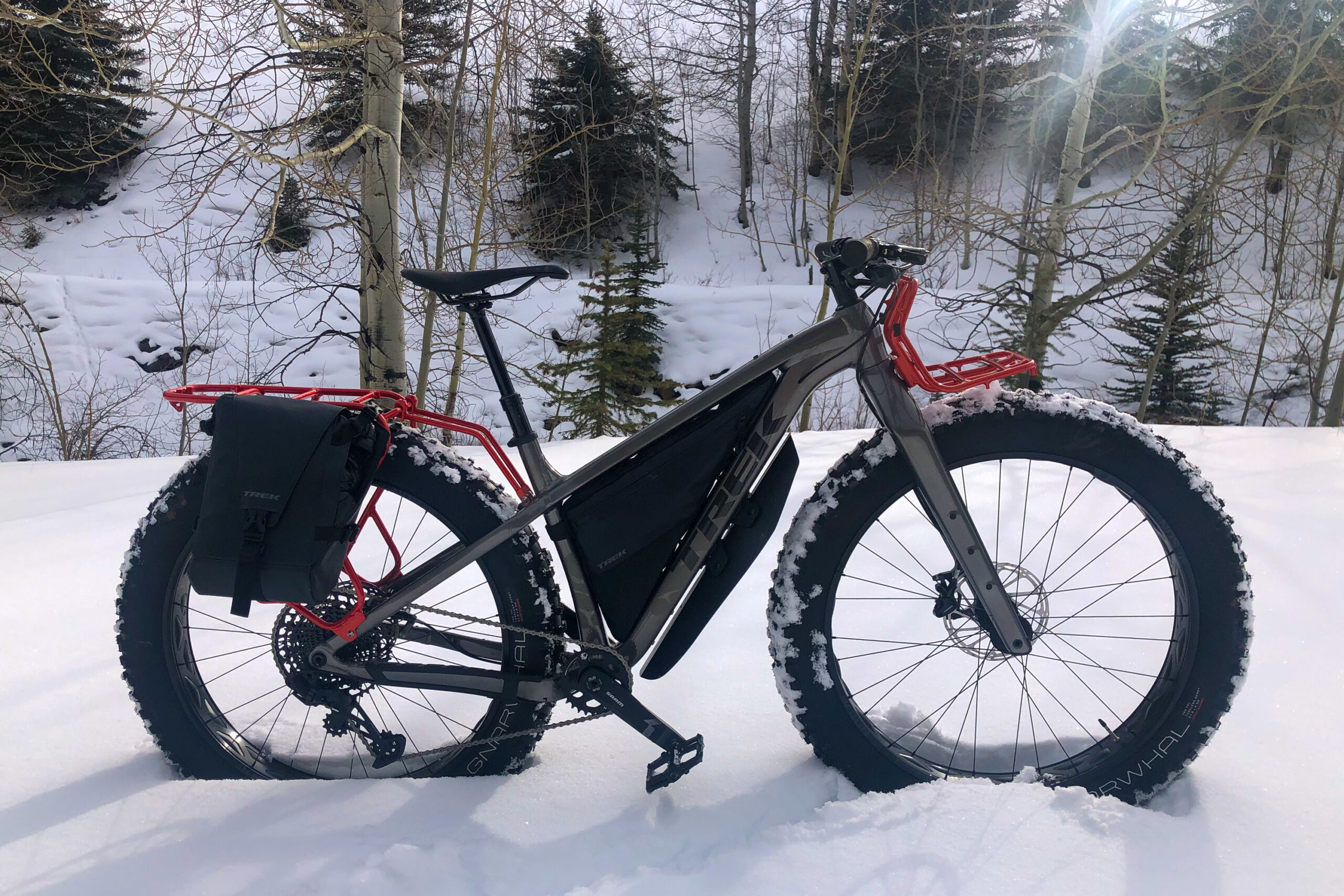
Moving up to the Farley 7 introduces significant trail-focused upgrades. It pairs the alloy frame with an 80mm Manitou Mastodon suspension fork, a 12-speed SRAM Eagle drivetrain, and a Bontrager Rapid Drive 108 rear hub that provides near-instant engagement—a crucial feature for ratcheting through deep snow. The Farley 9 uses the same alloy frame but swaps the suspension for a rigid carbon fork, focusing instead on bikepacking utility with included custom racks and bags.
At the top of the range, the Farley 9.6 utilizes the older OCLV Mountain Carbon frame with adjustable sliding dropouts. It features a rigid carbon fork, SRAM GX Eagle shifting, and upgraded 4-piston SRAM Level Bronze brakes. Across the board, Trek specs massive 27.5-inch wheels, with most models rolling on studdable 4.5-inch Bontrager tires that dictate the bike's immense footprint and floatation.

From the press.
5 reviews from the cycling press.
Reviewers consistently note that the Farley behaves more like a standard mountain bike than a traditional, lumbering fat bike. Despite the aluminum models weighing in near 38 to 40 pounds, testers found the bike surprisingly agile once in motion. The massive 27.5 by 4.5-inch tires provide immense traction and damping, allowing riders to easily "crush chopped-up snow, deep footprints, and ski tracks" (Outdoorgearlab).
When pointed downhill, the Farley earns high praise for its stability and cornering grip. Models equipped with the 80mm Manitou Mastodon suspension fork are particularly favored for aggressive riding, as the short travel effectively "takes the edge off rough sections" (Feedthehabit) and prevents the front end from deflecting off frozen ruts. Even the rigid models are celebrated for their "precision on snow, where line choice is often the difference between riding and walking" (Kolotc).
The primary tradeoff for this descending prowess is low-speed climbing performance. The bike’s rearward weight bias generates excellent rear-wheel traction, but multiple reviewers reported that the front wheel tends to wander on exceptionally steep pitches. Additionally, while the drivetrain and suspension components are well-regarded, some testers felt the stock SRAM Level T brakes on mid-tier builds felt "unrefined" (Feedthehabit) for the price.
The 4 Best Fat Bikes
2024 Trek Farley 7 Fat Bike Review - FeedTheHabit.com
Trek Farley 7 Review
Trek Farley 9 Winter Fat Bike Snuffs Out the Winter Blues ...
2023 Trek Farley 5 Review
Compared to.
Most-viewed comparisons.