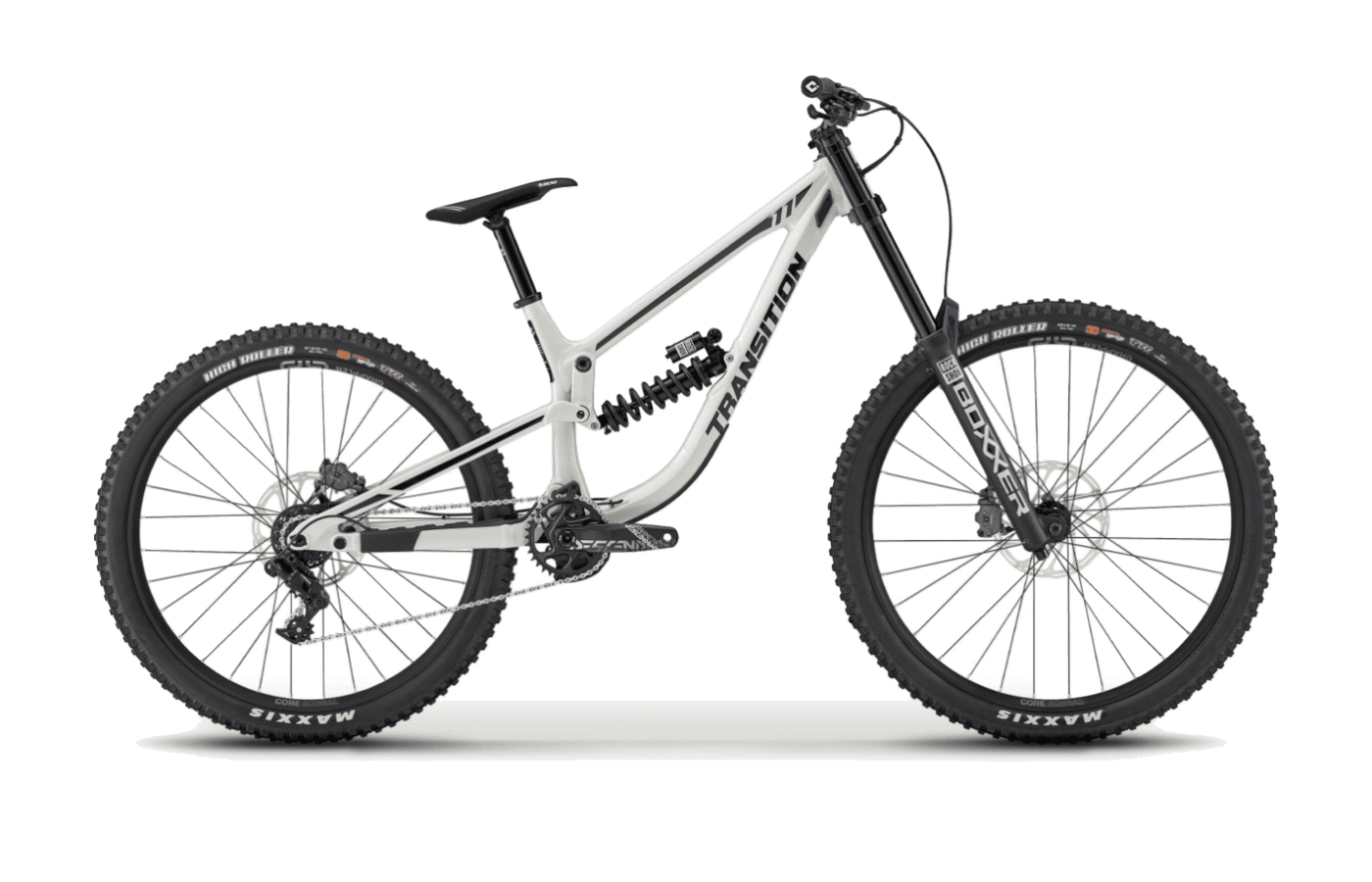
The current Transition TR11 is a dedicated downhill race bike built around an alloy mixed-wheel chassis with 200mm of rear travel. This generation does not reinvent the platform so much as refine it: Transition kept the core modern TR11 formula—29-inch front wheel, 27.5-inch rear, Boost 148 rear spacing, 250x75mm shock, and multiple fit and handling adjustments—but revised the geometry and kinematics to produce a more centered, race-ready position. The stated changes are practical ones rather than headline-grabbing: a slightly steeper head angle, taller stack, and shorter wheelbase aimed at improving rider balance and front-wheel traction at speed.
Where to get it.
No retailers stocking size MD.
No retailers carrying size MD right now.
Spec sheet.
Every component shipped with this build.
Geometry & fit.
4 sizes published.
The TR11’s numbers point to a contemporary downhill setup that prioritizes stability without pushing into the longest-wheelbase extreme. Across the size range, the head tube angle is 63 degrees and the seat tube angle is 76 degrees, while reach runs from 410mm (SM) to 510mm (XL). In size Large, the 475mm reach and 639mm stack suggest a roomy but relatively upright front end for a DH bike, aligning with Transition’s goal of putting the rider in a more balanced position over the bike rather than excessively stretched out. Wheelbase figures—1222mm in Small, 1252mm in Medium, 1297mm in Large, and 1332mm in XL—are substantial, but the brand’s move to shorten the bike relative to the previous version indicates a deliberate effort to make line changes and front-end weighting more intuitive.
Where the handlebar sits relative to the bottom bracket — the single most important fit pair.
01Fit geometry5 values
02Component geometry4 values
03Handling geometry5 values
Which size should I buy?
Slide your height to see the recommended size. GearWise's fit algorithm works from the published stack, reach, and ETT — the brand's own recommendation may differ.
→Calculated from GearWise's own stack / reach / ETT algorithm — the brand's size chart may recommend a different size, and a proper bike fit beats any calculator.
The lineup.
2 builds, ranging $4,999 – $6,499.
The TR11 range is straightforward, with two alloy complete builds: the Alloy GX at $4,999 and the Alloy XO at $6,499. That keeps the lineup focused on riders shopping for a purpose-built downhill bike rather than a broad spread of carbon and budget variants. The $1,500 gap between the two builds suggests a classic value-versus-upgrade split, with the GX model positioned as the more accessible entry into the same 200mm alloy platform and the XO build aimed at riders willing to pay more for a higher-end parts package.
Because the provided build data only includes model names and prices, there is not enough information here to break down exact component differences. What is clear is that both builds share the same frame concept and adjustment features, so the buying decision is primarily about budget and parts level rather than choosing between different frame materials or travel configurations.