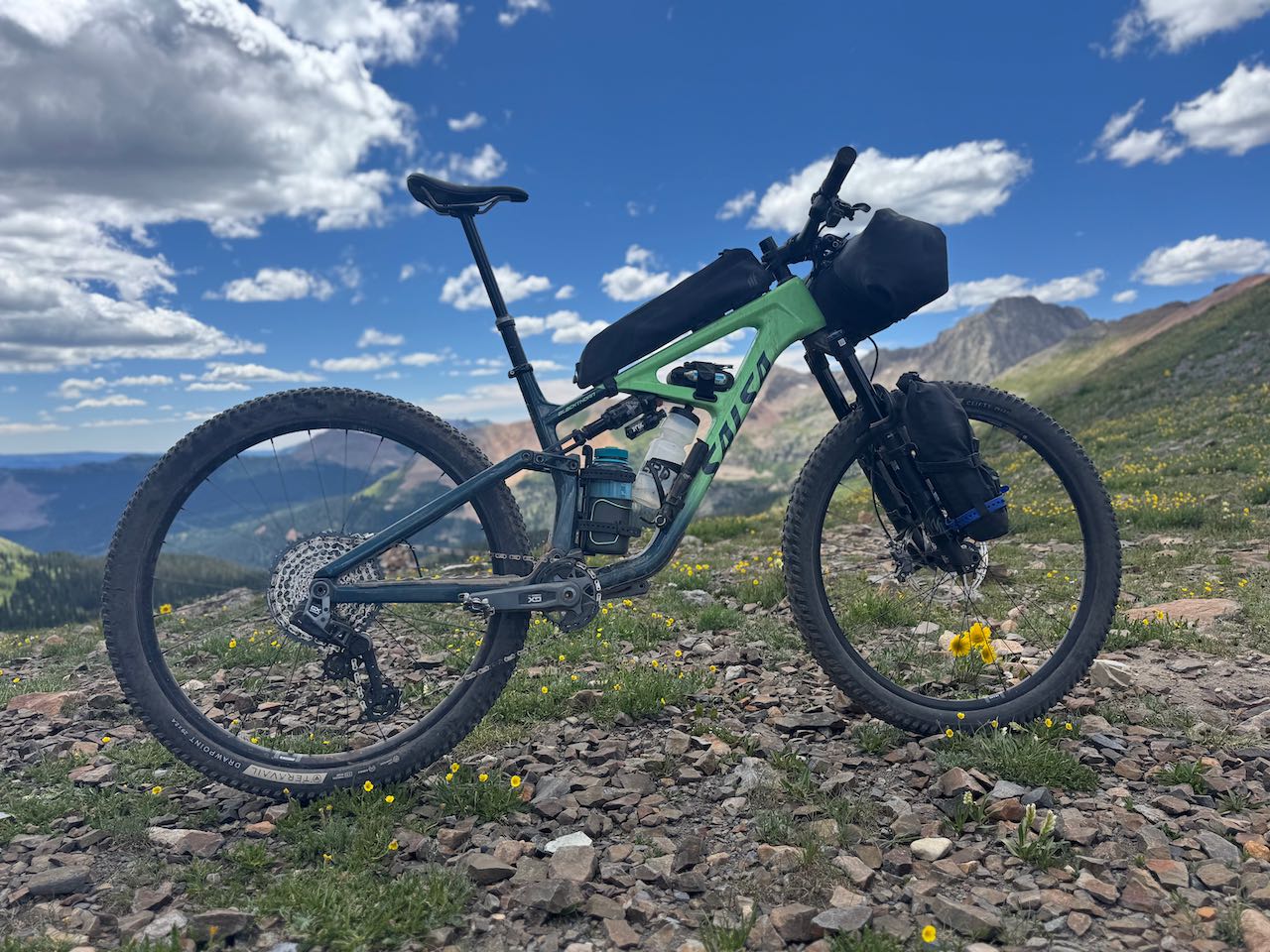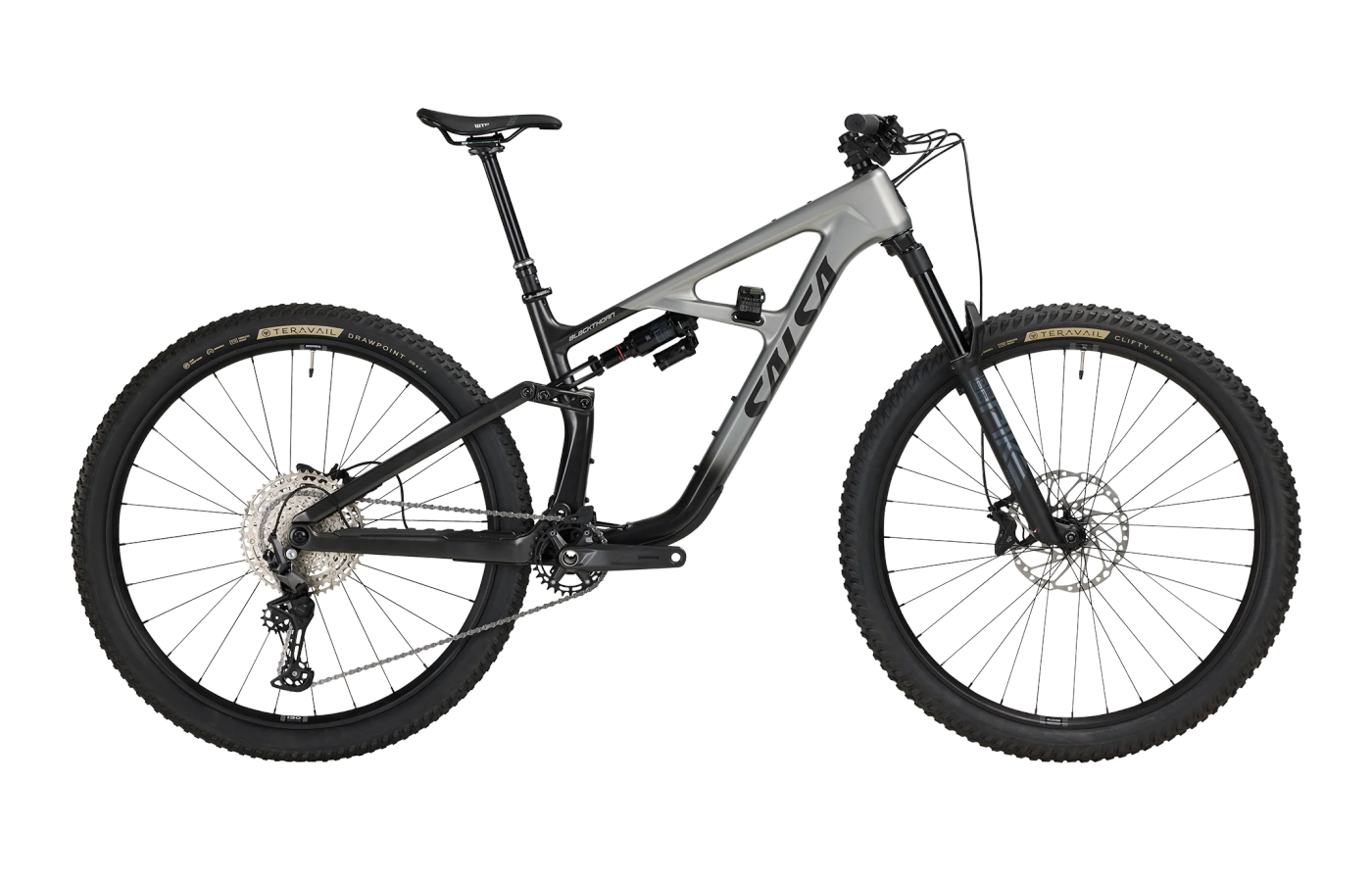
The second-generation Salsa Blackthorn 125 is a carbon 29er that blends modern trail geometry with deep backcountry utility. Positioned as the shorter-travel sibling to the Blackthorn 145, it uses 125mm of Split Pivot rear suspension paired with a 140mm fork to create an adaptable platform for riders who split their time between aggressive day rides and multi-day bikepacking trips. A defining feature of the 2.0 chassis is its modularity: the frame can be converted to 145mm of rear travel by swapping the shock and linkage. Salsa also updated the frame to current standards, moving to 12x148mm Boost rear spacing and a SRAM UDH. The design heavily prioritizes self-sufficiency, integrating top-tube mounts, an internal repair kit slot, and room for two water bottles inside the front triangle. It suits mountain bikers seeking a single, highly adaptable chassis rather than a garage full of specialized machines.
Where to get it.
No retailers stocking size Small.
No retailers carrying size Small right now.
Spec sheet.
Every component shipped with this build.
Geometry & fit.
4 sizes published.
The Blackthorn 125 utilizes a long and slack geometry package that prioritizes high-speed stability over low-speed agility. A flip chip allows riders to adjust the head tube angle between 64.7 and 64.4 degrees, keeping the front wheel far ahead of the rider for control on steep descents. To prevent the bike from feeling entirely unmanageable in tight corners, Salsa pairs this slack front end with relatively short 432mm chainstays, helping tuck the rear wheel under the rider's center of gravity.
Seated pedaling posture is dictated by a steep 76.5-degree seat tube angle across all sizes. This places the rider in an upright, forward-biased position that is highly effective for grinding up long, steep climbs, particularly when the bike is weighed down with cargo. Reach numbers are generous, stretching from 448mm on the Small to 510mm on the X-Large, providing a roomy cockpit that pairs with short 40mm or 50mm stems. While this length aids stability, it requires deliberate line choices and active weight shifts to navigate tight, technical switchbacks at climbing speeds.
Where the handlebar sits relative to the bottom bracket — the single most important fit pair.
01Fit geometry6 values
02Component geometry3 values
03Handling geometry6 values
Which size should I buy?
Slide your height to see the recommended size. GearWise's fit algorithm works from the published stack, reach, and ETT — the brand's own recommendation may differ.
→Calculated from GearWise's own stack / reach / ETT algorithm — the brand's size chart may recommend a different size, and a proper bike fit beats any calculator.
The lineup.
3 builds, ranging $3,199 – $6,499.
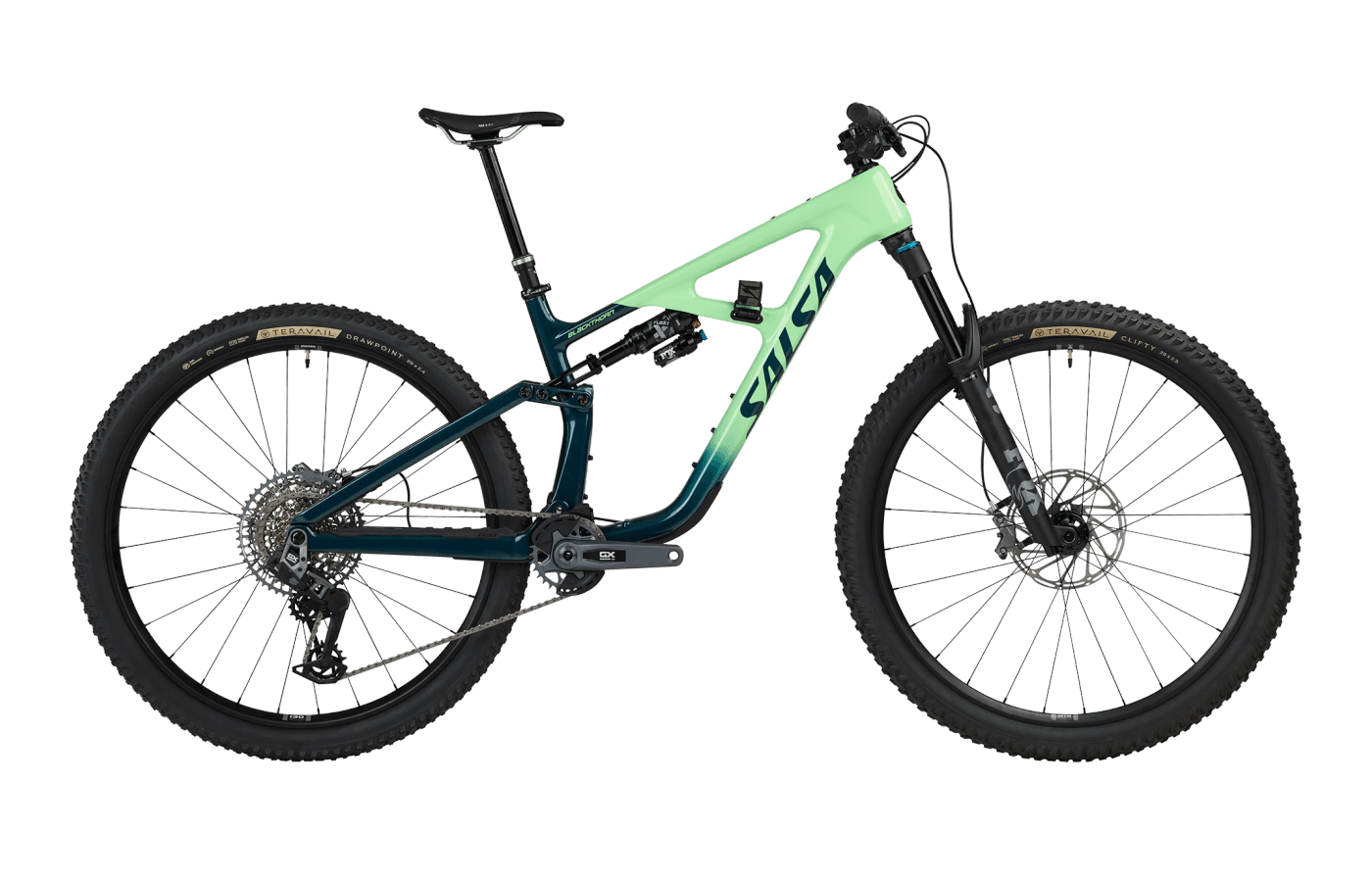
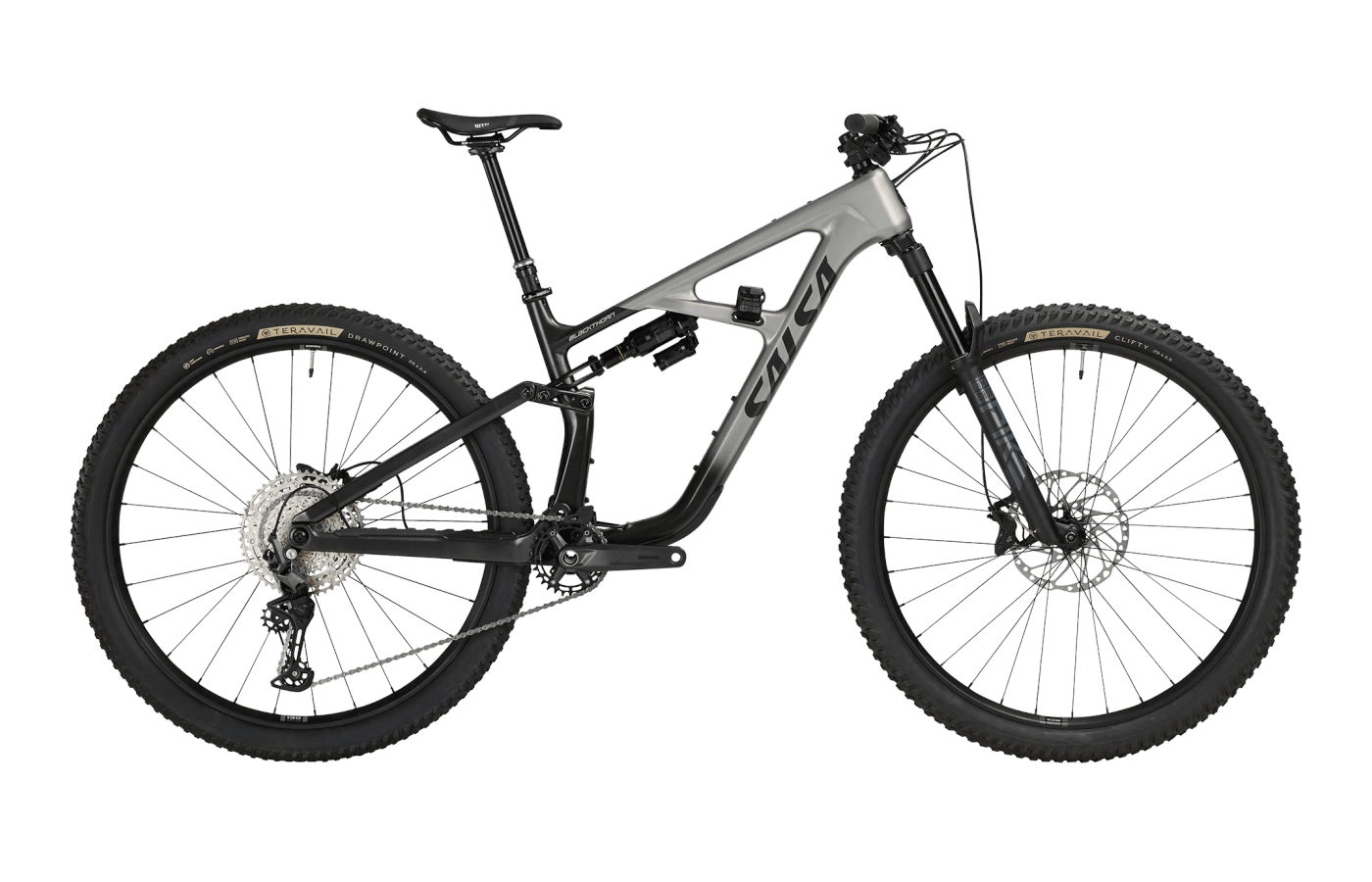
The current Blackthorn 125 lineup centers on two carbon builds for the 2.0 generation, alongside a carryover alloy V1 model at the entry level. The premium 125 C GX Transmission build sits at the top of the range, featuring highly adjustable Fox Performance Elite suspension and SRAM's electronic GX Eagle Transmission. This build also includes powerful SRAM Code Bronze Stealth four-piston brakes, which testers praised for managing the bike's weight during loaded descents.
The mid-tier 125 C Deore 12 utilizes the exact same carbon frame and cargo features but drops the price significantly by switching to a mechanical Shimano Deore 12-speed drivetrain and RockShox suspension (a Pike fork and Super Deluxe shock). It retains four-piston braking via Shimano Deore calipers.
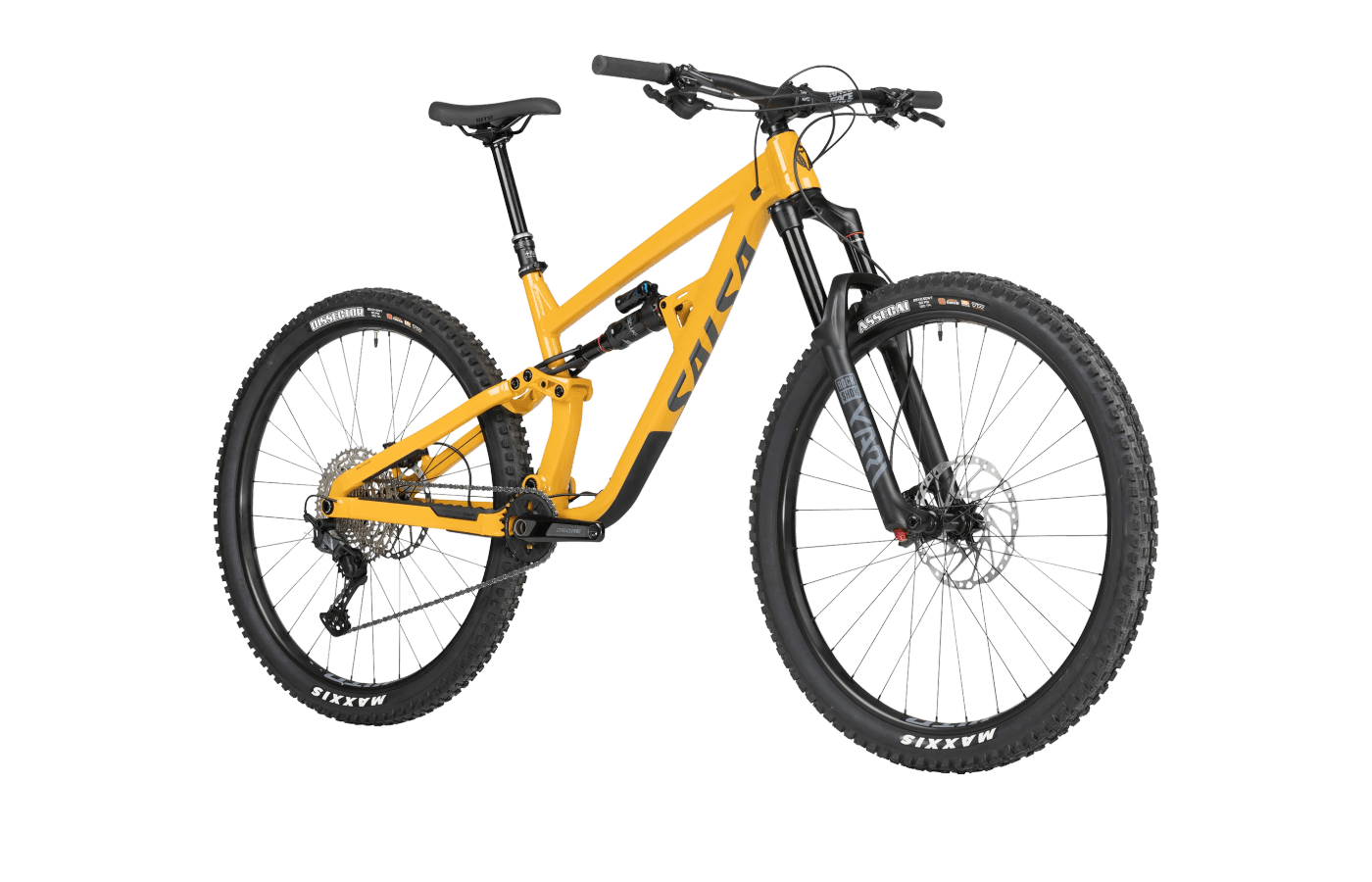
At the base level, the SLX build utilizes the older V1 alloy frame. This legacy build differs materially from the 2.0 carbon models, featuring 12x157mm Super Boost rear spacing, a longer 160mm RockShox Yari fork, and Maxxis tires instead of the Teravail rubber found on the newer bikes. Across the carbon models, the inclusion of dropper posts ranging from 150mm to 210mm ensures riders can get the saddle completely out of the way on descents.
From the press.
1 review from the cycling press.
On the trail, the Blackthorn 125 earns a reputation as a highly capable, long-distance machine, though its aggressive geometry occasionally writes checks its suspension travel cannot cash. Reviewers note that the bike is "well balanced for uphill grinds and downhill fun" (GearJunkie), offering a firm pedaling platform that remains efficient during long days in the saddle. When loaded with camping gear, it settles into a steady climbing rhythm without feeling overly sluggish.
Descending reveals the limits of the 125mm rear travel. While the slack front end provides stability on steep terrain, testers found it "easy to burn through" the suspension when pushing hard into rock gardens or bike park features (GearJunkie). On moderate singletrack, however, the chassis rewards an active riding style, encouraging the rider to "pump and generate speed rather than just mash over everything" (GearJunkie).
The most significant tradeoff identified during testing is the stock tire specification. The Teravail Drawpoint rear tire was heavily criticized for its low-profile tread, which testers found "awful" for technical or loose terrain (GearJunkie). The lack of traction frequently resulted in unwanted skidding, undermining the otherwise excellent braking power and capable frame geometry. Riders pushing the bike on challenging trails will likely need an immediate tire upgrade.