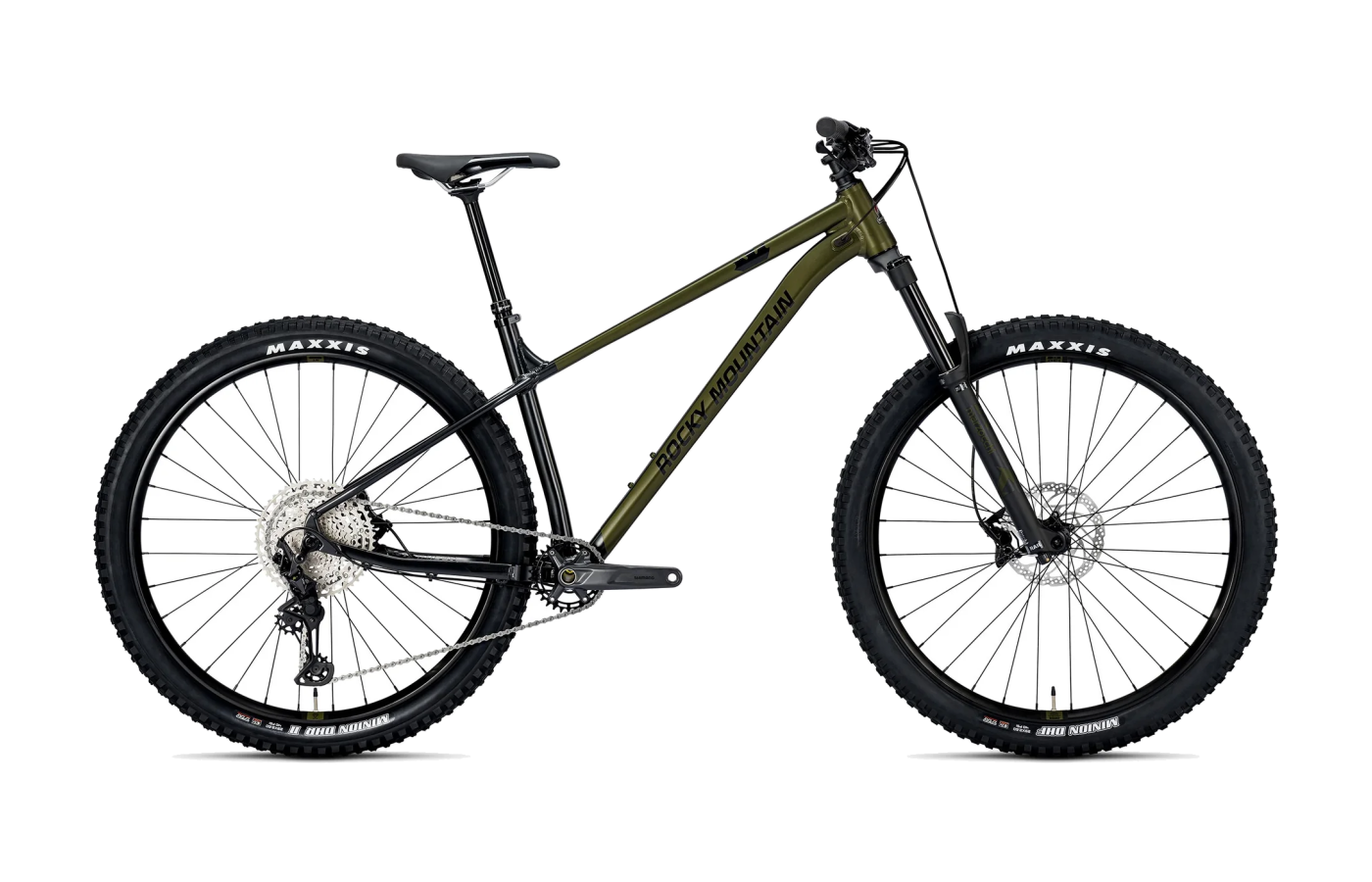
Vertex
The Rocky Mountain Vertex is a dedicated 100mm-travel cross-country race hardtail built for outright speed and efficiency. Introduced for the 2018 model year and running through 2021, this iteration represents the final generation of the Vertex platform before it quietly exited the brand's adult lineup. Rocky Mountain designed this frame to bridge the gap between traditional race-day rigidity and modern trail capability.
Compared to its predecessor, this generation adopts a slightly slacker front end and longer reach, aligning with contemporary cross-country trends without losing its sharp, race-focused identity. While optimized as a fast-rolling 29er, the frame also accommodates 27.5+ wheel setups for riders willing to trade maximum race pace for increased traction and float. It is aimed squarely at competitive racers and endurance riders who want a lightweight, responsive platform for long, demanding days in the saddle.
Geometry & fit.
4 sizes published.
The Vertex geometry balances traditional cross-country efficiency with subtle nods to modern trail handling. A 69.5-degree head tube angle and a 73.5-degree effective seat tube angle keep the rider centered and the steering reactive. The reach is stretched compared to older iterations, paired with compact 430mm chainstays that keep the rear wheel tucked in for immediate acceleration and tight cornering.
Rider posture leans toward an aggressive, forward-biased stance, though the stack height is slightly taller than some purebred race bikes. This taller front end often prompts racers to drop their stems completely to achieve a lower attack position. The stock cockpit features a wide 760mm flat bar paired with relatively short stems—60mm on small and medium frames, and 80mm on large and extra-large sizes—providing a wider, more stable steering platform than older narrow-bar setups. The frame utilizes a 27.2mm seatpost, which enhances seated compliance but restricts the availability of compatible aftermarket dropper posts.
Where the handlebar sits relative to the bottom bracket — the single most important fit pair.
01Fit geometry6 values
03Handling geometry5 values
Which size should I buy?
Slide your height to see the recommended size. GearWise's fit algorithm works from the published stack, reach, and ETT — the brand's own recommendation may differ.
→Calculated from GearWise's own stack / reach / ETT algorithm — the brand's size chart may recommend a different size, and a proper bike fit beats any calculator.
The lineup.
2 builds, ranging $2,929 – $3,449.
The Vertex lineup is anchored by two carbon models that share the exact same Smoothwall carbon frame, complete with Boost 148 rear spacing, internal cable routing, and a press-fit bottom bracket. The primary differences between the tiers lie in the suspension and drivetrain specifications.
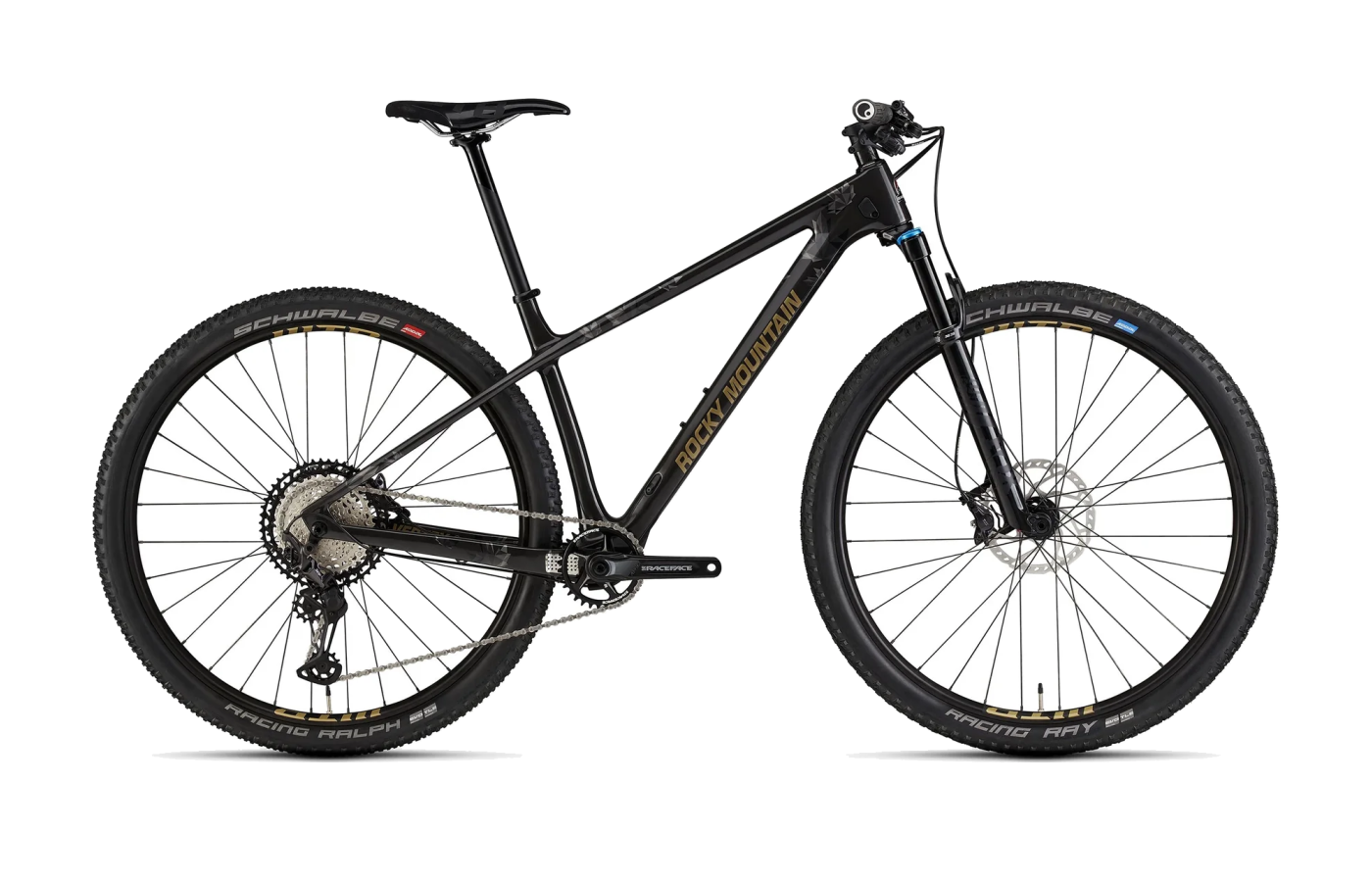
The Carbon 70 sits at the top of this pairing, featuring a lightweight Fox 32 Step Cast Performance fork and a near-complete Shimano XT 12-speed groupset, including XT two-piston brakes. This build is ready for the start line straight out of the box, prioritizing low weight and crisp shifting.
The Carbon 50 offers a more accessible entry point by stepping down to a RockShox Reba RL fork. The drivetrain mixes a Shimano SLX cassette with an XT rear derailleur, while braking is handled by Shimano's MT4100 two-piston hydraulic discs. Both builds roll on the same wheel and tire package: WTB ST Light i25 tubeless-ready rims laced to DT Swiss spokes, wrapped in fast-rolling Schwalbe Racing Ray and Racing Ralph tires. The price gap between the two models strictly reflects component refinement rather than any compromise in frame quality.


From the press.
1 review from the cycling press.
Reviewers consistently highlight the Vertex as a highly efficient pedaler that manages to mute trail chatter better than a traditional race hardtail. The frame’s oversized downtube and stiff bottom bracket junction deliver immediate power transfer, making the bike "eager to get to the top of every mountain" (Mountain Bike Action) during hard, out-of-the-saddle efforts.
Despite this rigidity under power, the ride remains surprisingly forgiving when seated. Testers noted that the slimmed-down seatstays and 27.2mm seatpost work together to provide a "smooth ride" (Mountain Bike Action), effectively absorbing minor trail imperfections and reducing fatigue on longer rides.
When pointed downhill, the Vertex defies some of the nervous stereotypes associated with steep-angled hardtails. While it remains a sharp-handling cross-country machine, reviewers found it stable at speed and "easy to whip through turns and tight sections of trail" (Mountain Bike Action). The short wheelbase and responsive rear triangle make it highly maneuverable in tight switchbacks, though testers noted that the suspension fork often requires careful tuning with volume spacers and compression adjustments to provide adequate support during aggressive race-pace descending.
Compared to.
Most-viewed comparisons.