Rocky Mountain
Fusion10 (2024)
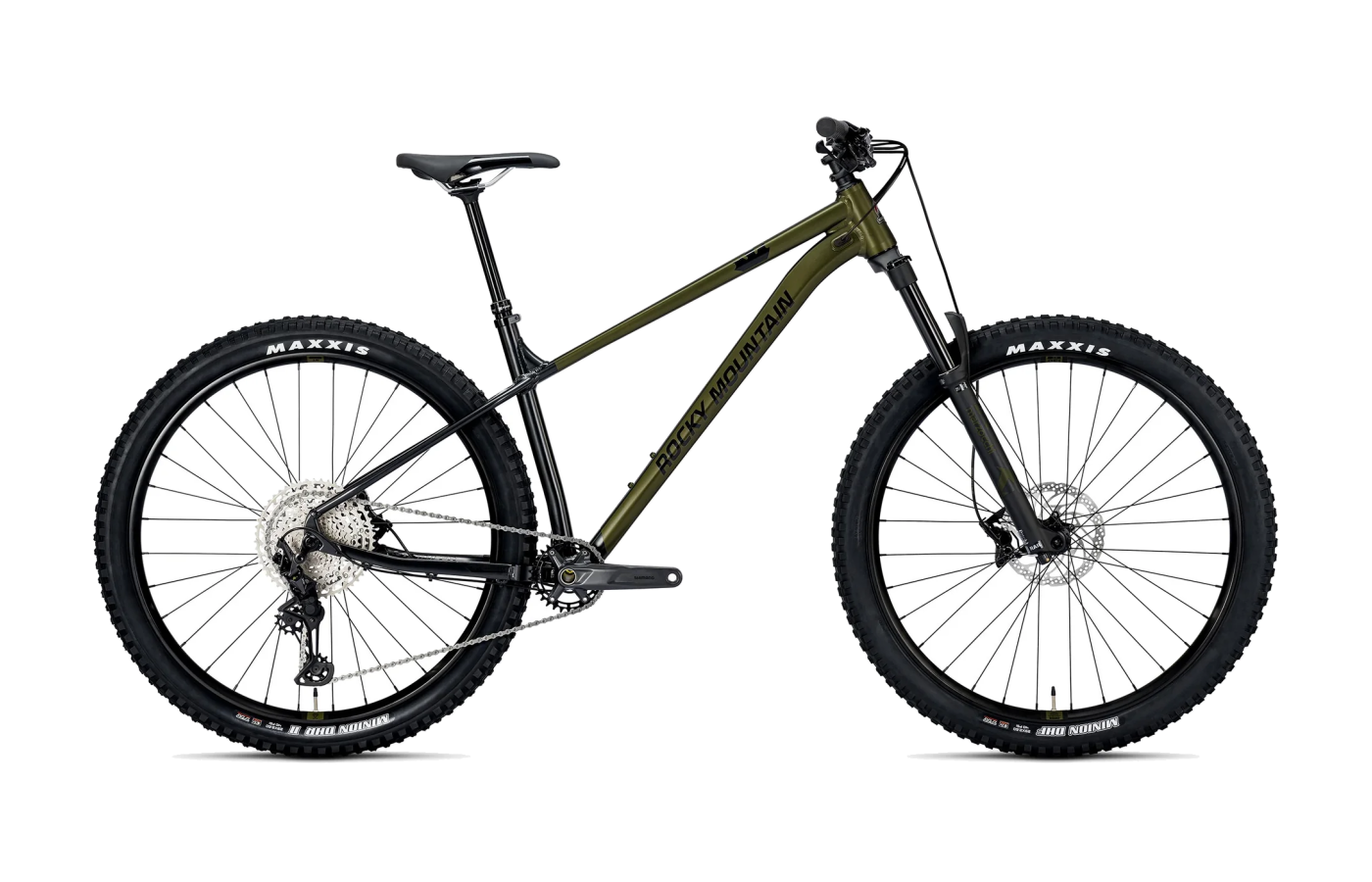
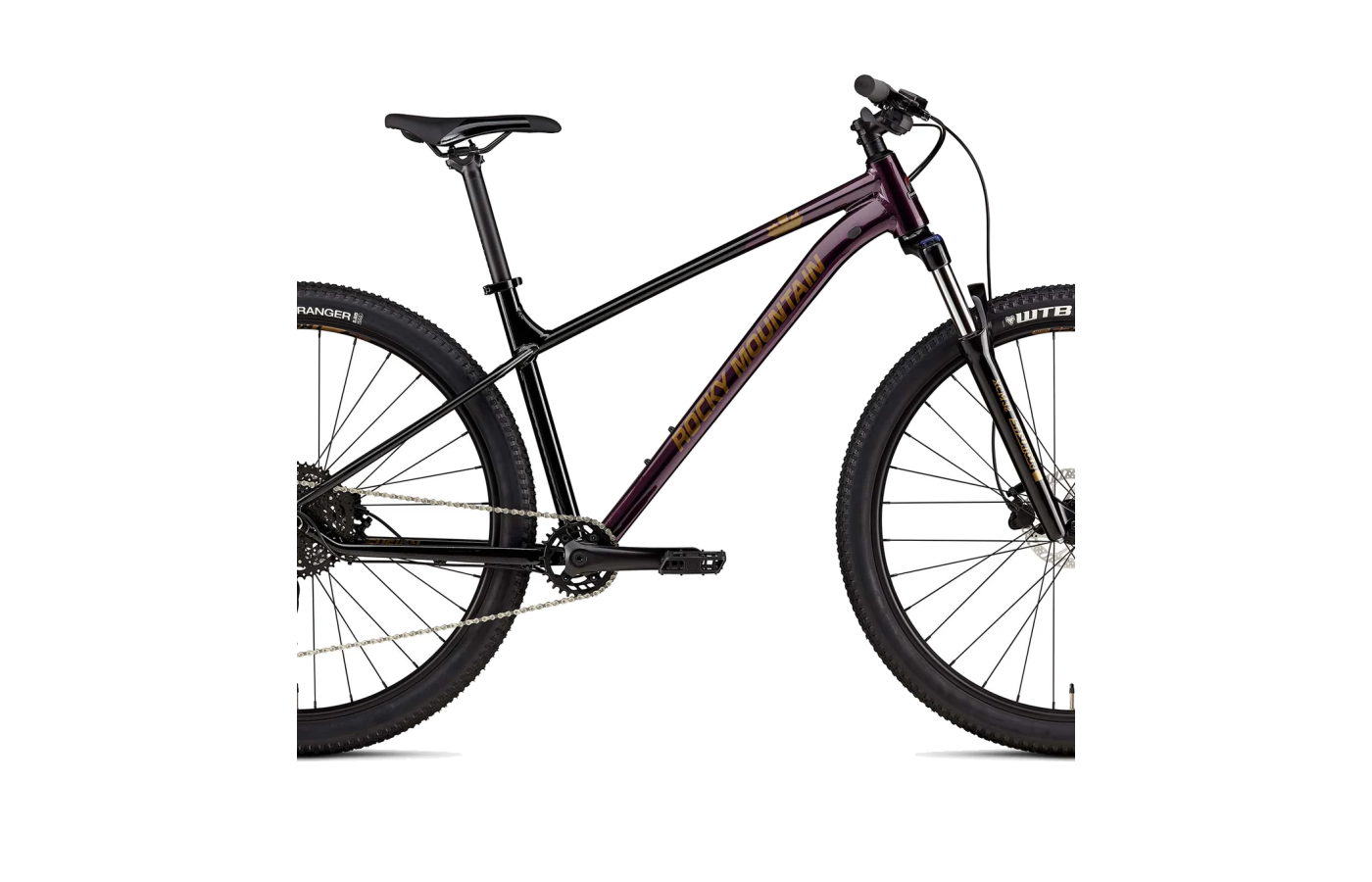
The Rocky Mountain Fusion represents a deliberate shift from traditional cross-country design toward a more versatile trail hardtail. Redesigned in 2021 and continuing through current model years, the Fusion is positioned as an adventure-ready platform rather than a pure race bike. It serves riders looking for an accessible, capable entry point into mountain biking that will not feel outmatched as their skills progress on proper singletrack. By updating the frame to accommodate modern standards and trail-oriented geometry, Rocky Mountain created a robust aluminum foundation that balances everyday utility with off-road stability. It suits beginners and budget-conscious riders who want a reliable chassis that prioritizes predictable handling and long-term durability over absolute weight savings.
Spec sheet.
Every component shipped with this build.
Geometry & fit.
4 sizes published.
The Fusion’s geometry marks a significant departure from its older, steeper predecessors, adopting a shape that heavily favors trail stability. The head tube angle is slackened to 66.5 degrees across all sizes, pushing the front wheel further out to calm the steering on descents and rough terrain. To maintain pedaling efficiency, the effective seat tube angle sits at a steeper 74.5 degrees, keeping the rider’s weight centered over the bottom bracket during seated climbs.
Reach figures are thoroughly modernized, providing a spacious front center that pairs with a short 40mm stem and wide 780mm handlebars. This cockpit setup encourages an upright, commanding posture rather than a stretched-out, aggressive cross-country stance. Out back, the 445mm chainstays are relatively long, which prioritizes predictable tracking and climbing traction over ultra-quick cornering. Additionally, the frame features a lowered standover height and utilizes a 30.9mm seatpost diameter, making it straightforward for riders to install a dropper post to further improve descending clearance.
Where the handlebar sits relative to the bottom bracket — the single most important fit pair.
01Fit geometry6 values
02Component geometry4 values
03Handling geometry5 values
Which size should I buy?
Slide your height to see the recommended size. GearWise's fit algorithm works from the published stack, reach, and ETT — the brand's own recommendation may differ.
→Calculated from GearWise's own stack / reach / ETT algorithm — the brand's size chart may recommend a different size, and a proper bike fit beats any calculator.
The lineup.
1 build, ranging $909.
The Fusion lineup is structured to keep the barrier to entry low while providing dependable, name-brand components. The frame utilizes a standard threaded bottom bracket for easy maintenance and features a modern seatpost diameter to accommodate future upgrades.
The Fusion 10 serves as the foundation of the range, built around a 120mm-travel SR Suntour coil fork that handles basic trail impacts. The drivetrain relies on Shimano’s durable CUES 9-speed system, pairing a 30-tooth front chainring with a wide-range 11-46T cassette to offer plenty of low-end gearing for steep, sustained climbs. Braking is managed by Shimano’s MT200 hydraulic two-piston calipers, a proven standard for reliable stopping power in this price bracket.
Rolling stock consists of Rocky Mountain’s own alloy rims laced to Shimano hubs. Crucially, the bike is specified with high-volume 2.4-inch Maxxis Rekon tires front and rear. These wide tires provide a significant boost to traction and offer valuable pneumatic damping, helping to mute trail chatter on a rigid aluminum frame.

From the press.
1 review from the cycling press.
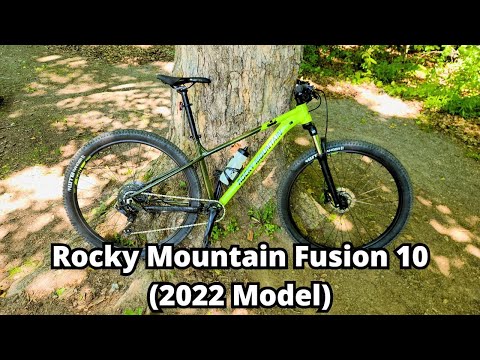
Because the Fusion is positioned at the accessible end of the market, critical feedback focuses heavily on its value and suitability for newer riders rather than nuanced suspension kinematics. Reviewers generally agree that the bike delivers a reliable foundation for learning trail fundamentals. It is characterized as a "good quality entry-level XC bike" (YouTube) that provides a safe, predictable ride for those just getting into the sport.
The consensus points to the Fusion as a smart initial investment that avoids the pitfalls of cheaper, less capable alternatives. For riders navigating the budget hardtail market, the sentiment is that "you can't go wrong with" (YouTube) this platform as a starting point. However, reviewers also acknowledge the inherent tradeoffs of an entry-level specification. The stock components are functional but basic, leading to the suggestion that the frame itself is a strong enough canvas to warrant "worthy upgrades" (YouTube) as components wear out or the rider's skill level demands more performance. This frames the Fusion not as a definitive, finished trail machine, but as a highly capable starter bike that can evolve alongside its owner.
Compared to.
Most-viewed comparisons.