Ridley
Raft TrailSram T-X0
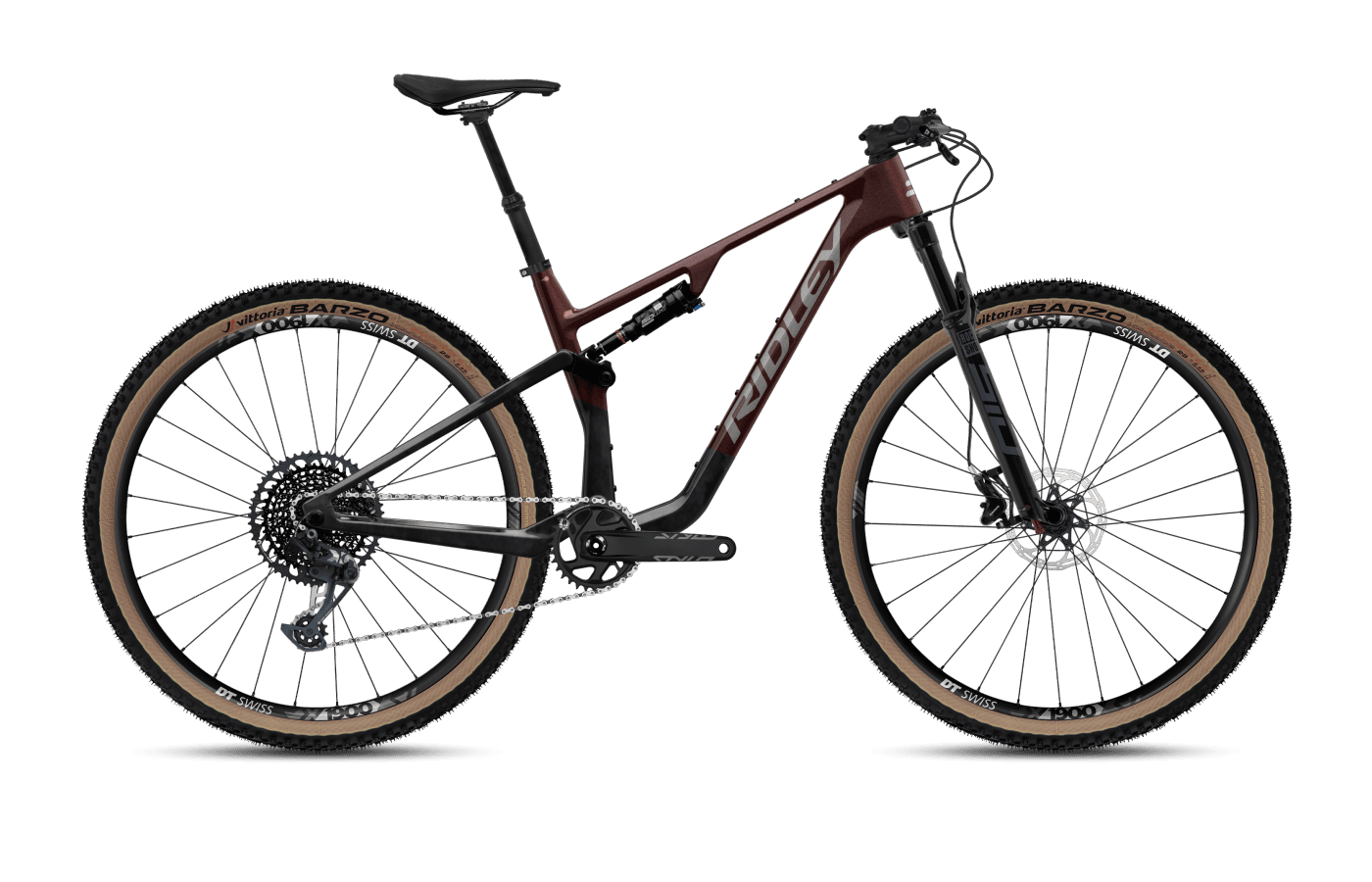
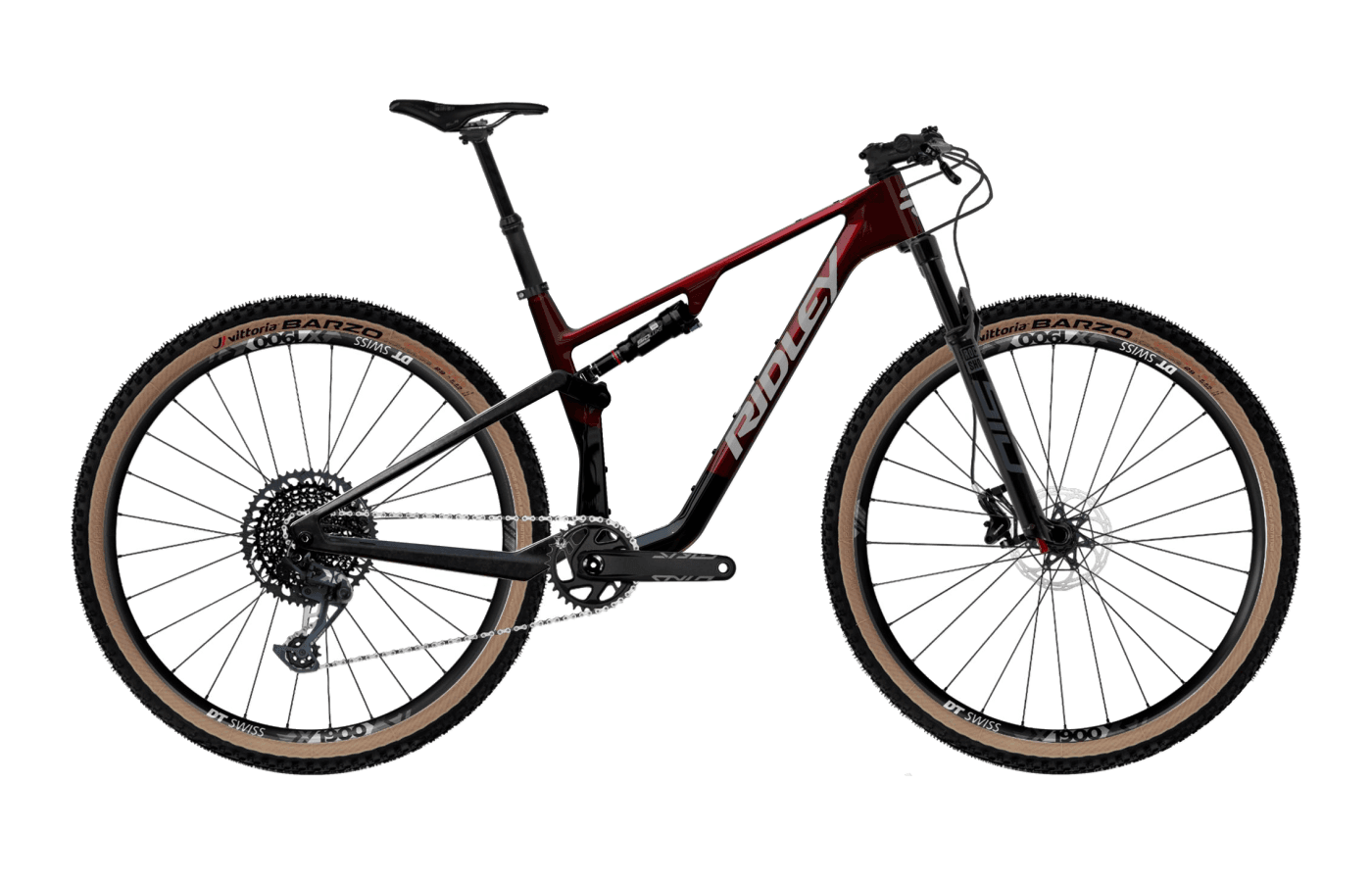
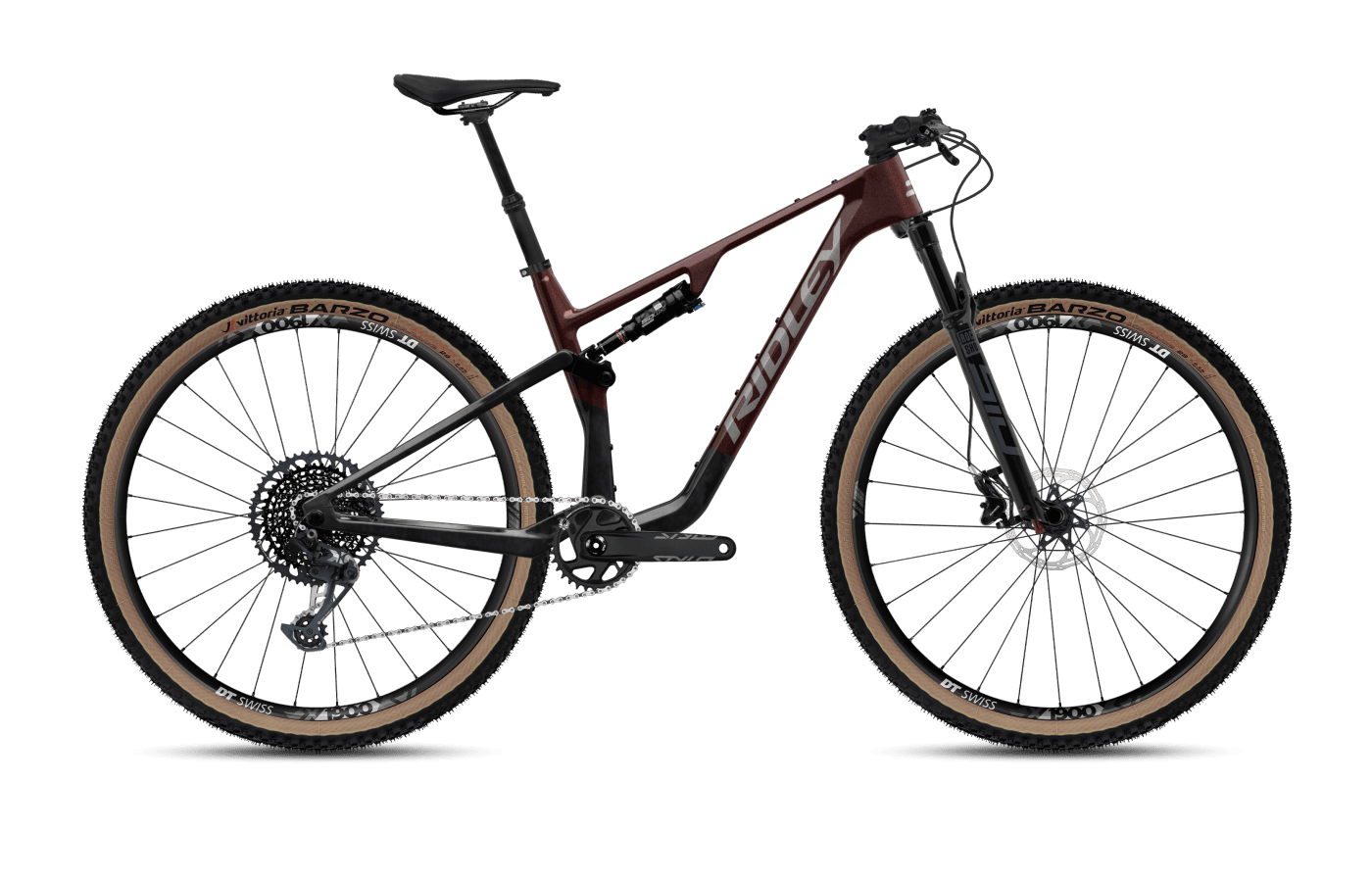
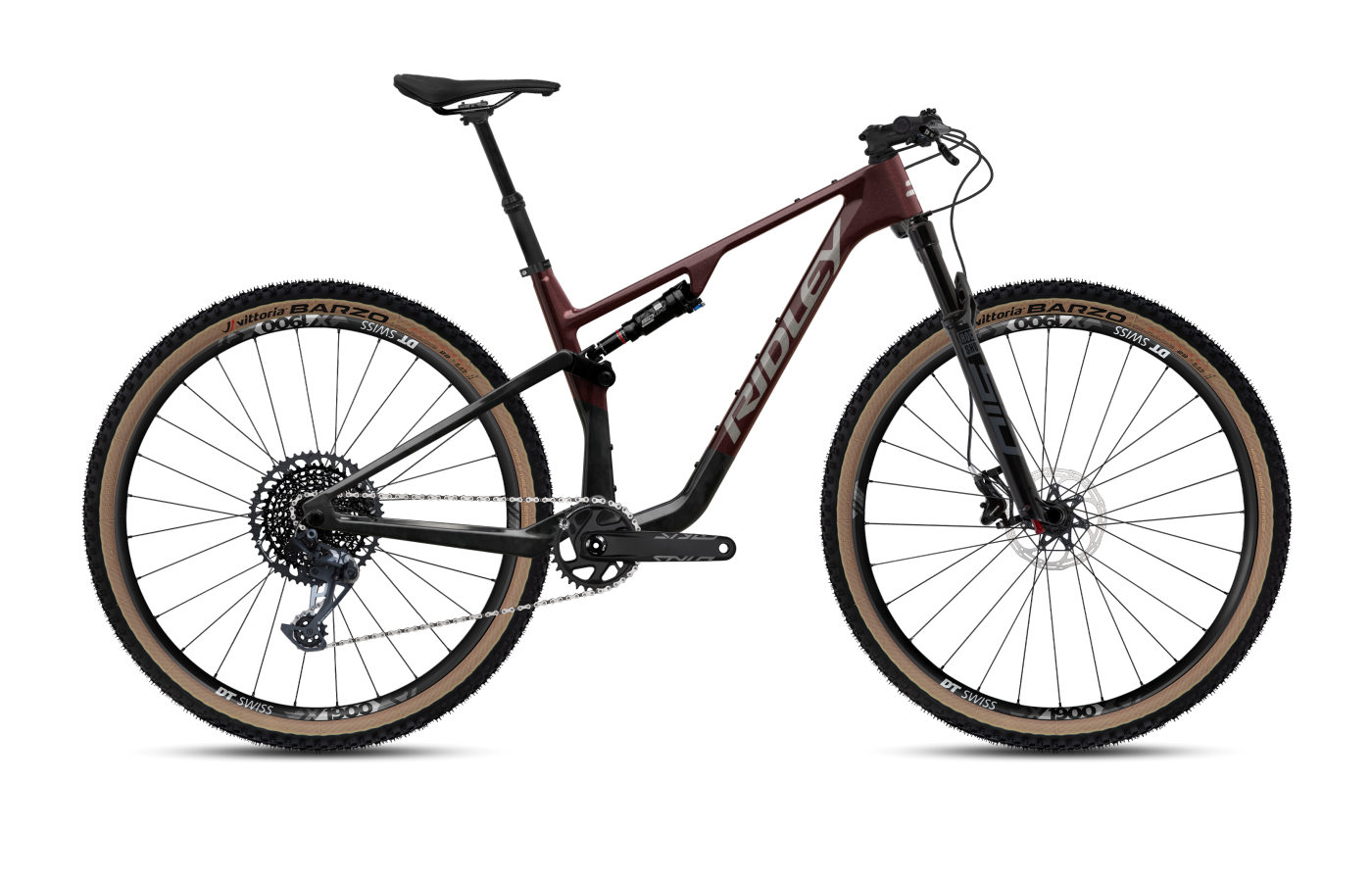
The Ridley Raft Trail is the more capable, short-travel interpretation of the Raft carbon full-suspension platform. Rather than building a completely separate frame for XC and trail use, Ridley uses the same chassis and alters the bike’s character through suspension configuration: the Trail version gets a 190x45 mm rear shock for 120 mm of rear travel and a matching 120 mm fork, compared with the shorter-stroke 100 mm XC setup. That makes the Raft Trail a clear downcountry bike: lighter-duty and more efficient than a conventional trail bike, but notably more composed on technical descents than a pure race-oriented XC machine.
What distinguishes it is how Ridley combines that intent with practical frame details and geometry that leans progressive for the category. A 66.6° head angle is notably slack for a 120 mm bike aimed at efficiency, and Ridley’s APG positioning suggests a fit meant to balance climbing posture with descending confidence. The carbon Elite Series frame uses current standards including SRAM UDH compatibility, Boost 12x148 spacing, internal routing with remote-lockout provision, and unusually generous mounting options for bottles, tools, and light bikepacking use. In the market, the Raft Trail sits among modern downcountry 29ers that try to cover marathon riding, fast trail loops, and technical singletrack without moving into heavier, longer-travel territory.
Spec sheet.
Every component shipped with this build.
Geometry & fit.
4 sizes published.
The Raft Trail’s geometry reflects its downcountry brief. Across the size range, the head tube angle is 66.6°, paired with a 75.1-75.3° seat tube angle, 435 mm chainstays, and a 40 mm bottom-bracket drop. In size L, the bike has a 459 mm reach, 608 mm stack, and 1189 mm wheelbase; the size M comes in at 436 mm reach and 1160 mm wheelbase. Those numbers point to a bike that is longer and slacker than a traditional XC bike, giving it more front-end stability and composure on steeper descents while keeping the rear center short enough to preserve responsiveness.
The consistent 435 mm chainstay length across all sizes should help maintain a familiar handling balance regardless of frame size, while the moderate seat angle keeps the rider centered for seated climbing without pushing the position as aggressively forward as some newer trail bikes. The result should be a fit that feels efficient for long rides but not cramped, with handling that favors stability and confidence over razor-sharp XC steering. For riders coming from race-focused 100 mm bikes, the Raft Trail’s longer wheelbase and slacker front end will likely feel calmer and more forgiving on rougher terrain.
Where the handlebar sits relative to the bottom bracket — the single most important fit pair.
01Fit geometry5 values
02Component geometry4 values
03Handling geometry5 values
Which size should I buy?
Slide your height to see the recommended size. GearWise's fit algorithm works from the published stack, reach, and ETT — the brand's own recommendation may differ.
→Calculated from GearWise's own stack / reach / ETT algorithm — the brand's size chart may recommend a different size, and a proper bike fit beats any calculator.
The lineup.
5 builds.
Ridley lists the Raft Trail in several SRAM-based builds, including a top-end Trail version 120 mm - Sram X01 1x12sp, a Sram X01 mix 1x12sp, Sram T-X0, Sram GX-X0 EAGLE Trail, and Sram Transmission GX option. That spread suggests a range from premium mechanical Eagle-style builds through mixed-spec configurations and into SRAM Transmission-equipped versions, giving buyers a choice between lighter, higher-end conventional drivetrains and newer direct-mount transmission hardware.
Because no prices or full component lists are provided here, the clearest distinction is the drivetrain tiering. The X01-based builds are the likely choice for riders prioritizing lower weight and higher-end spec, while the GX/X0 and GX Transmission options should appeal to riders looking for a more cost-conscious package or the durability and shifting consistency associated with SRAM’s Transmission ecosystem. Across the range, the common thread is that Ridley positions the Raft Trail as a carbon short-travel platform with modern SRAM-oriented build options rather than a budget-focused entry model.