Ridley
Noah Fast DiscShimano Dura-Ace Di2 - 2x12
The third-generation Ridley Noah Fast Disc is a full aero-road redesign rather than a mild update. Developed for the 2025 model year around the UCI’s revised tube-shape rules, it adopts visibly deeper and longer tube profiles, especially around the head tube and front triangle, giving the bike a more extreme aero silhouette than the previous Noah Fast. Ridley’s stated focus is outright speed, and the platform is clearly aimed at flat to rolling racing, high-speed breakaways and sprint-oriented road use rather than all-round lightweight climbing duties.
What distinguishes this generation is how closely its aerodynamic goals are tied to rider position and system integration. The bike is built around a fully integrated aero cockpit, and Ridley has paired that with fit changes intended to support a more aggressive posture on the bike. The design also shows some practical evolution for modern racing and fast training, including claimed tire clearance up to 34mm. In the market, the Noah Fast Disc sits squarely among premium superbikes that prioritize aerodynamic efficiency and front-end integration, but with a geometry philosophy that appears more assertive than many mainstream aero-road rivals.
Spec sheet.
Every component shipped with this build.
Geometry & fit.
6 sizes published.
The Noah Fast Disc’s geometry points to a low, long, race-first fit with some unusual details. In size M, the bike combines a 565mm stack with a 393mm reach, while size L moves to 591mm stack and 401mm reach. Those numbers are in line with a performance road fit, but the more notable figure is the stated seat tube angle: 74.5° in XXS, 74° in XS, 73.5° in S and 73° in M before dropping to 72.5° in L and XL. That steeper effective rider position in the smaller and mid sizes supports the model’s stated goal of encouraging a more aggressive aero posture, likely shifting the rider forward relative to the bottom bracket.
Handling numbers suggest a fast, responsive race bike rather than a particularly conservative one. Chainstays are short at 405mm in XXS through S and 408mm in L and XL, helping keep the rear end compact, while wheelbase remains tight at 987mm in M and 1007mm in L. Head tube angle ranges from 71.5° in XXS to 74° in XL, with 73.5° in M and L, which should give the larger sizes sharp, stable high-speed steering while the smaller sizes avoid becoming overly twitchy. BB drop varies from 68mm in the smallest sizes to 63mm in the largest, a size-specific approach that should help preserve handling balance across the range.
Where the handlebar sits relative to the bottom bracket — the single most important fit pair.
01Fit geometry6 values
03Handling geometry5 values
Which size should I buy?
Slide your height to see the recommended size. GearWise's fit algorithm works from the published stack, reach, and ETT — the brand's own recommendation may differ.
→Calculated from GearWise's own stack / reach / ETT algorithm — the brand's size chart may recommend a different size, and a proper bike fit beats any calculator.
The lineup.
6 builds.
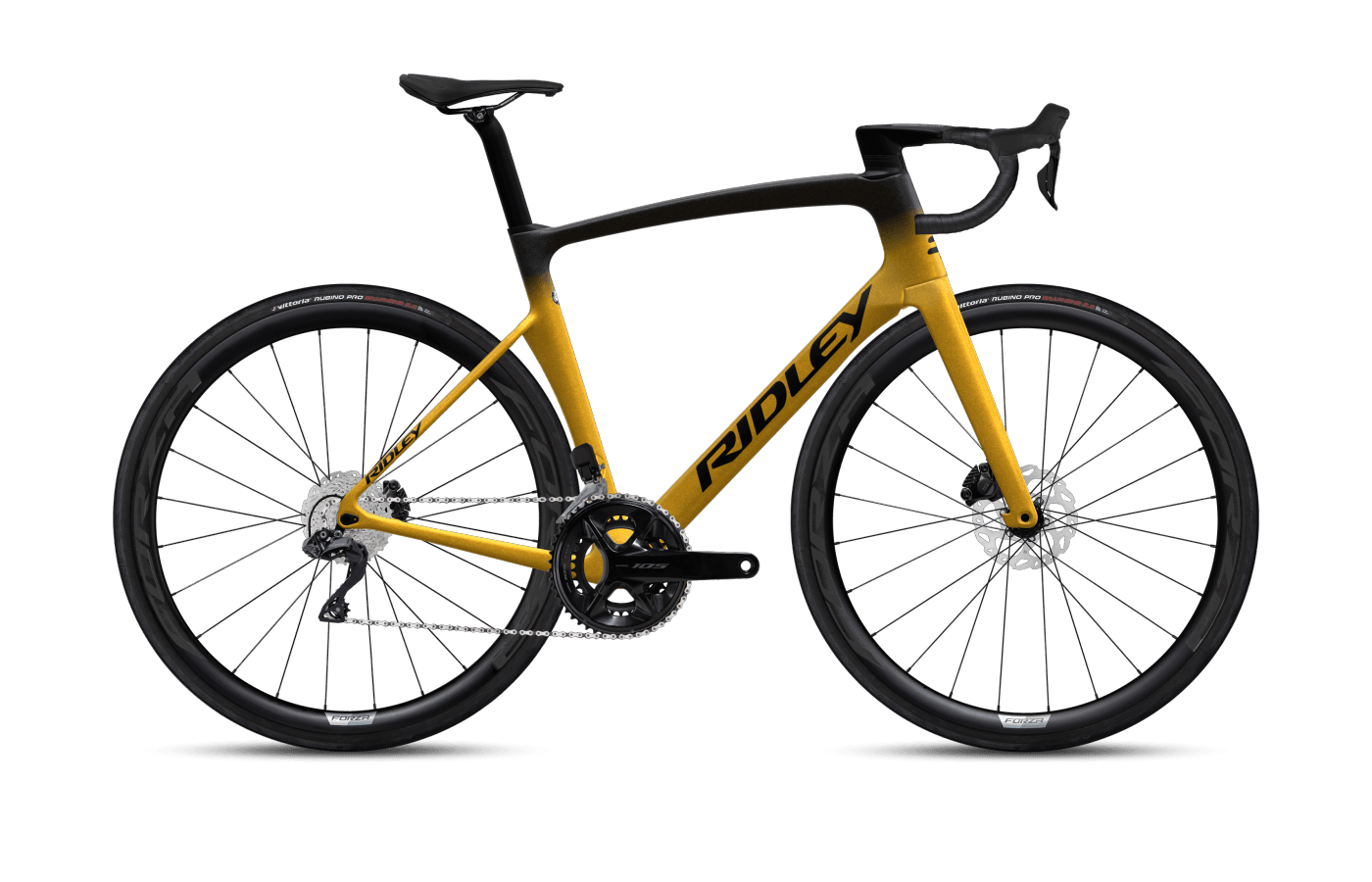
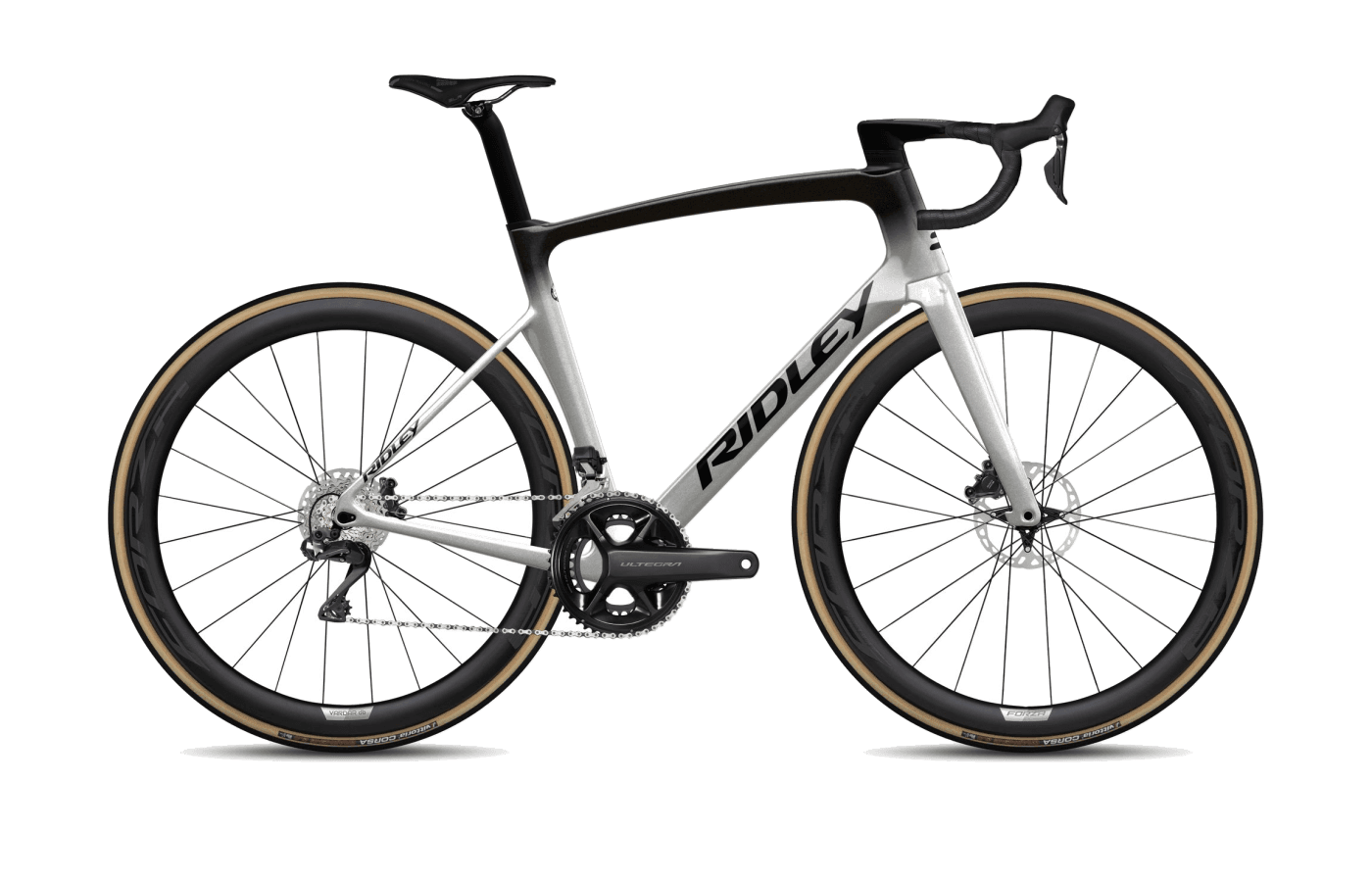
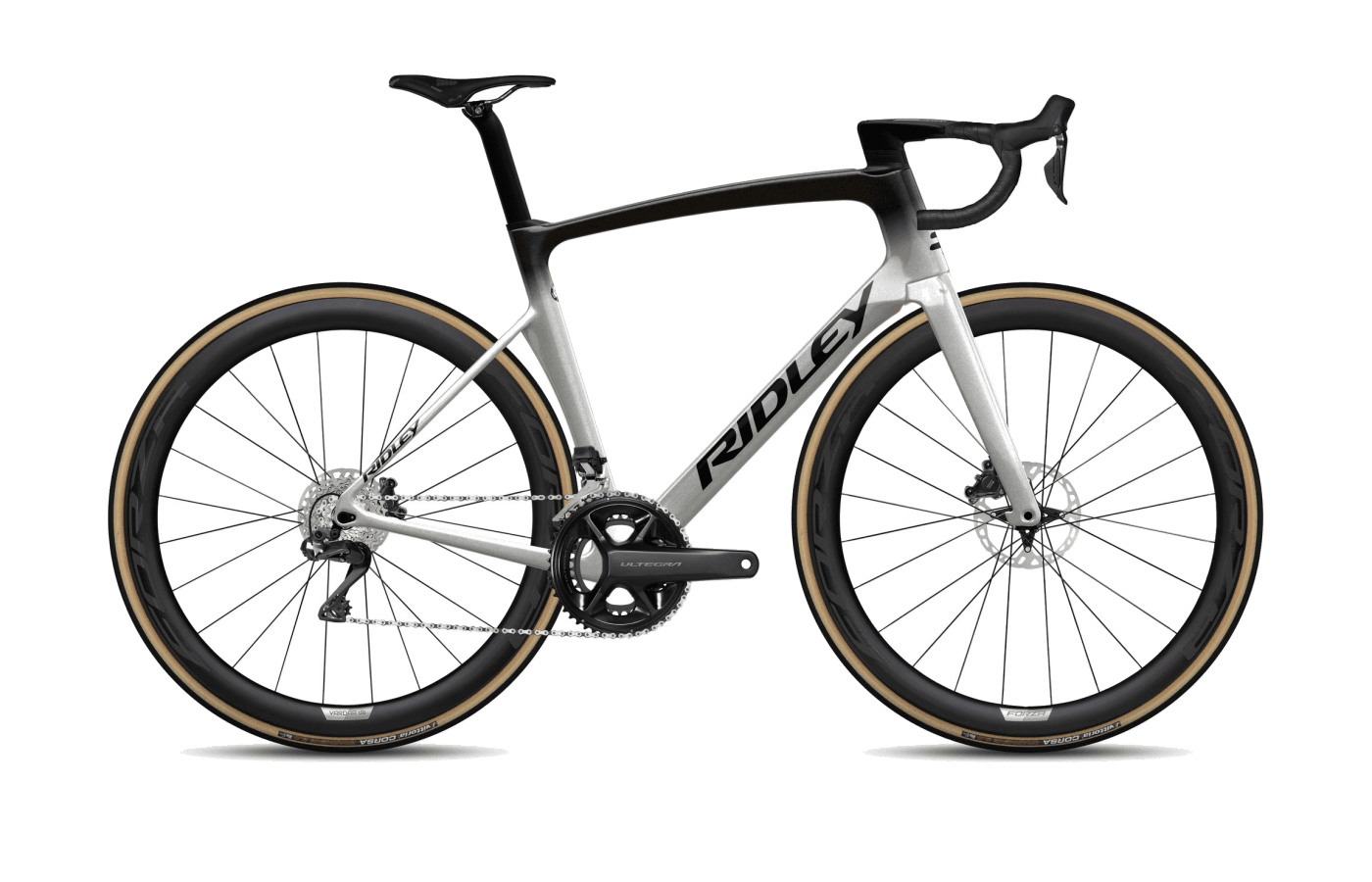
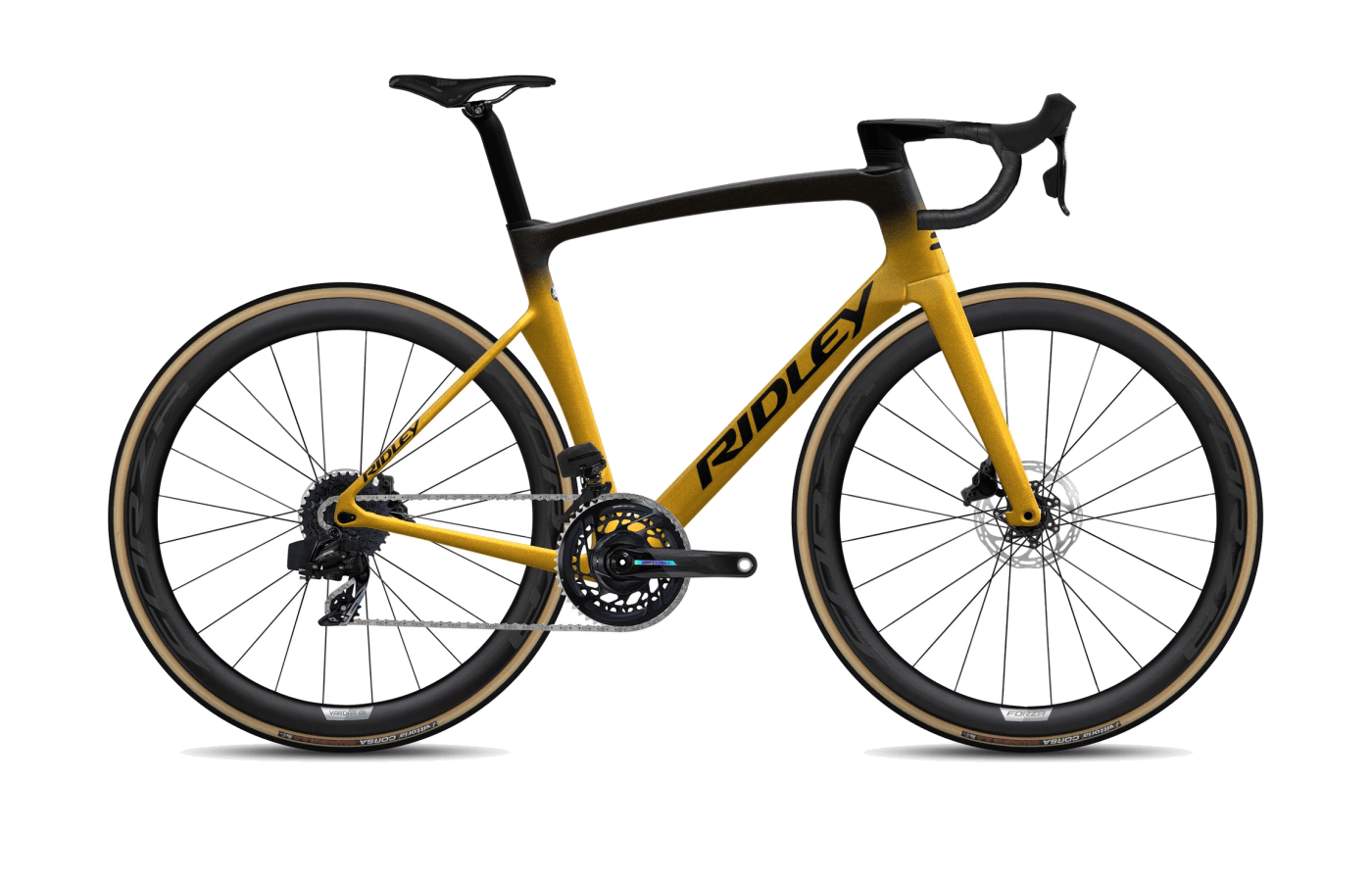
Ridley offers the Noah Fast Disc across a broad spread of electronic builds, from Shimano 105 Di2 2x12 at the more accessible end to Shimano Dura-Ace Di2 2x12 at the top. Between those are Shimano Ultegra Di2 2x12 and SRAM Force AXS 2x12 options, giving buyers the expected choice between premium wireless SRAM and Shimano’s established Di2 ecosystem. On paper, that makes the range wide enough to cover riders chasing the frame’s aero performance without necessarily stepping straight to flagship-level drivetrain pricing.
The most distinctive option in the lineup is the Classified SRAM Force AXS 1x12 Powershift build, which stands apart from the conventional 2x race-bike setups. That build will appeal to riders interested in a cleaner drivetrain concept and the specific gearing approach enabled by Classified’s hub-based system, while the Shimano and standard SRAM 2x builds are the more conventional choices for road racing and general high-speed road use. No pricing or deeper component details are provided here, so the clearest takeaway is that Ridley has positioned the frame as a high-end aero platform available with a wide range of electronic transmission configurations rather than a single narrowly defined race build.