Ridley
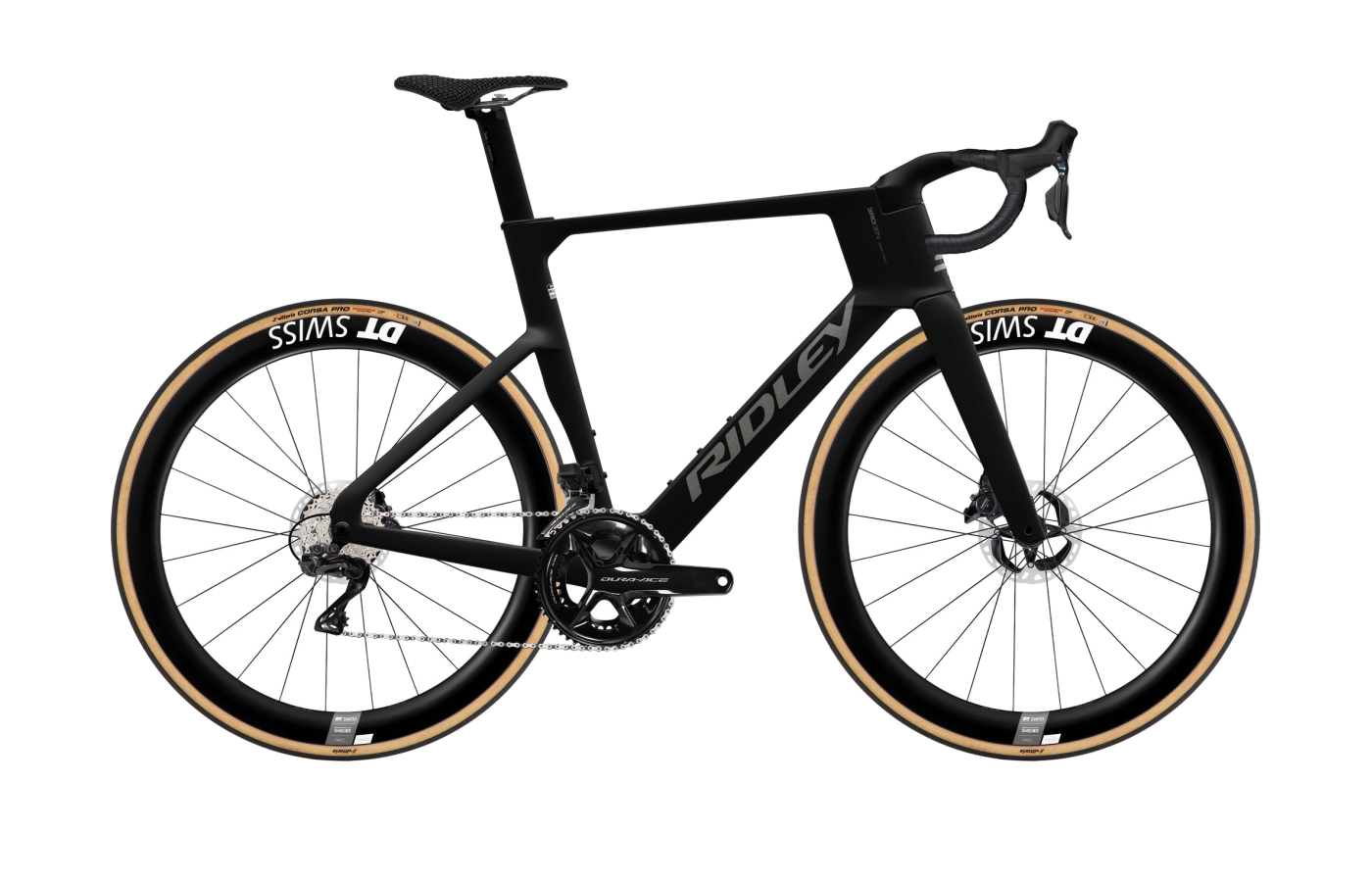
Noah Fast 3.0Shimano Dura Ace DI2 2x12
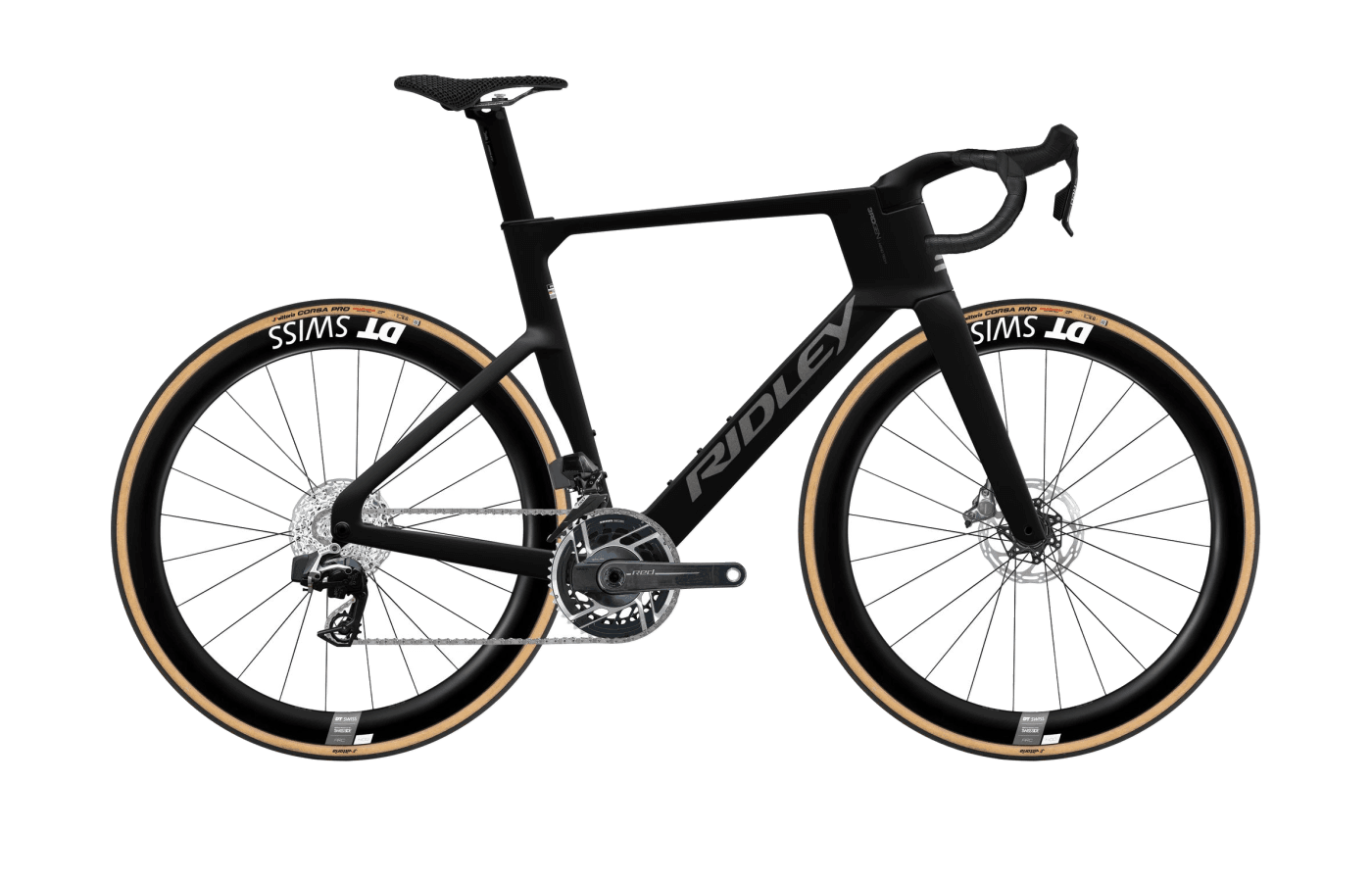
The Ridley Noah Fast 3.0 is Ridley’s third-generation aero road race bike, introduced for 2025 as a clean-sheet redesign built to exploit the latest UCI tube-shape regulations. Rather than softening into an all-round race bike, this generation doubles down on the Noah’s original brief: maximum aerodynamic efficiency at race speeds. Ridley frames it as a complete aero system, not just a frame, with the design developed around the integrated Nimbus Aero cockpit and real-world accessories such as bottles and a computer mount. The headline claim is an 8.5-watt saving at 50 km/h versus the previous Noah Fast, and the visual design reflects that focus with a very deep, heavily shaped front end and long, slender aero tube profiles elsewhere.
What separates the Noah Fast 3.0 from bikes like Ridley’s own Falcn RS is how deliberately specialized it is. The geometry is part of that specialization, with a notably steep seat tube angle and a longer, lower fit intended to place the rider in a sustained forward aero position. At the same time, Ridley has updated the platform to current race-bike expectations with clearance for 34 mm tires, a BB86 press-fit bottom bracket, SRAM UDH compatibility, and full cockpit integration. In the market, this puts the Noah Fast 3.0 squarely among the pure aero flagship road bikes: less concerned with broad versatility than with delivering a highly optimized platform for fast road racing, breakaways, and high-speed solo efforts.
Spec sheet.
Every component shipped with this build.
Geometry & fit.
5 sizes published.
The Noah Fast 3.0’s geometry is clearly aimed at an aggressive aero race position. In size M, the bike combines a 541 mm stack with a 420 mm reach, which is long and low by mainstream road-bike standards and aligns with Ridley’s stated goal of helping riders hold a forward, aerodynamic posture. The seat tube angle is especially telling: 75 degrees in M, steepening to 76 degrees in XS and 76.5 degrees in XXS, while even the L remains at 74.5 degrees. That steeper seat angle shifts the rider forward over the bottom bracket and supports the kind of torso position expected on a pure aero bike rather than an all-round race bike.
Handling numbers suggest stability over sharpness. Chainstays are short at 407 mm across the size range, but wheelbases are not especially compact for an aero road bike, at 1007 mm in M and 1023 mm in L, which points toward composed high-speed behavior rather than flickable low-speed handling. Head tube angles range from 73.5 degrees in M and L down to 71.5 degrees in XXS, while BB drop sits at 70 mm on larger sizes and 72 mm on smaller ones. In practice, that combination should give the bike a planted, confidence-oriented feel at speed, especially when paired with the stretched fit, while reinforcing the impression that the Noah Fast 3.0 is designed to hold an aero line efficiently rather than feel especially lively in technical or low-speed riding.
Where the handlebar sits relative to the bottom bracket — the single most important fit pair.
01Fit geometry6 values
03Handling geometry5 values
Which size should I buy?
Slide your height to see the recommended size. GearWise's fit algorithm works from the published stack, reach, and ETT — the brand's own recommendation may differ.
→Calculated from GearWise's own stack / reach / ETT algorithm — the brand's size chart may recommend a different size, and a proper bike fit beats any calculator.
The lineup.
4 builds.
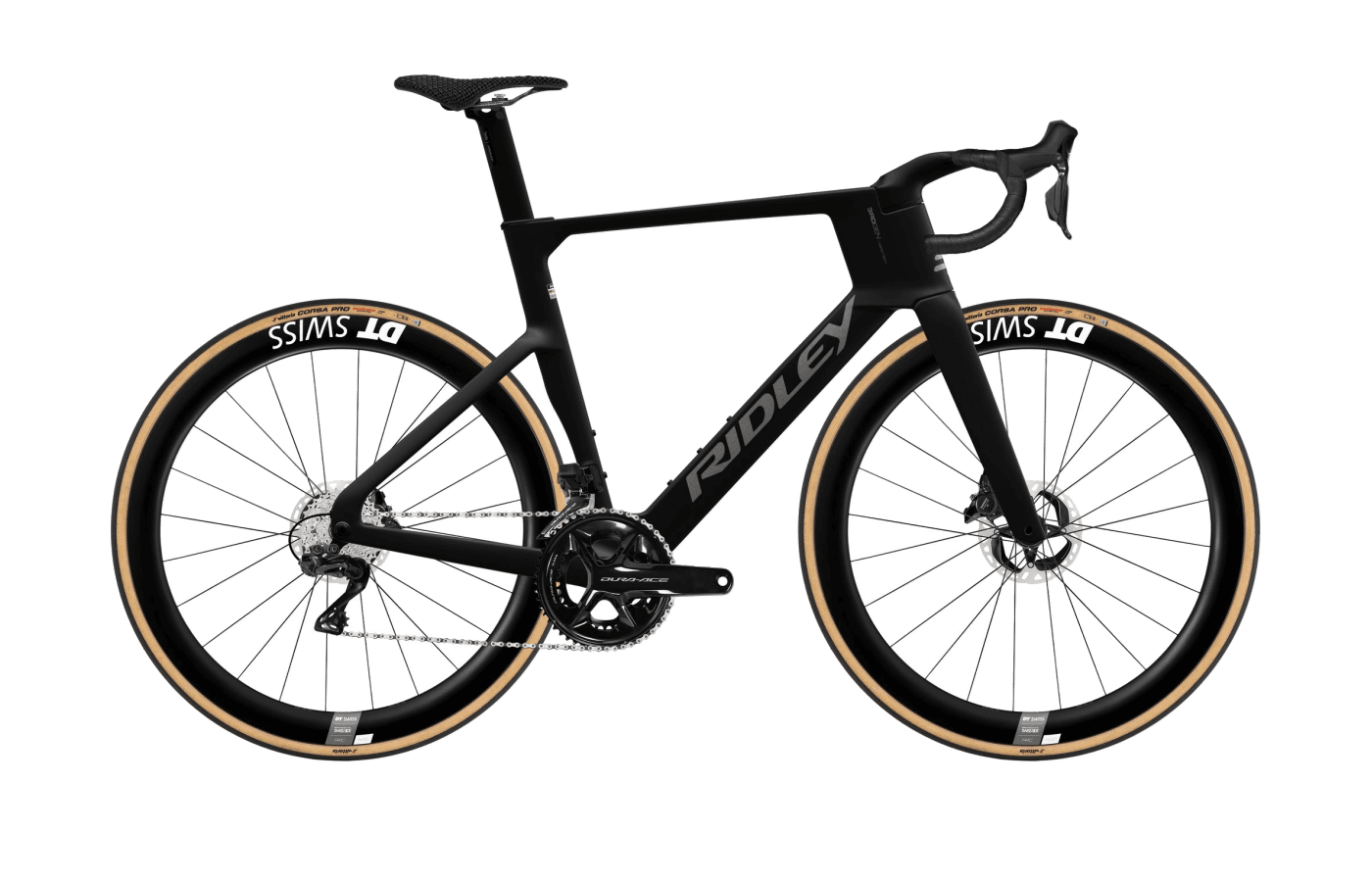
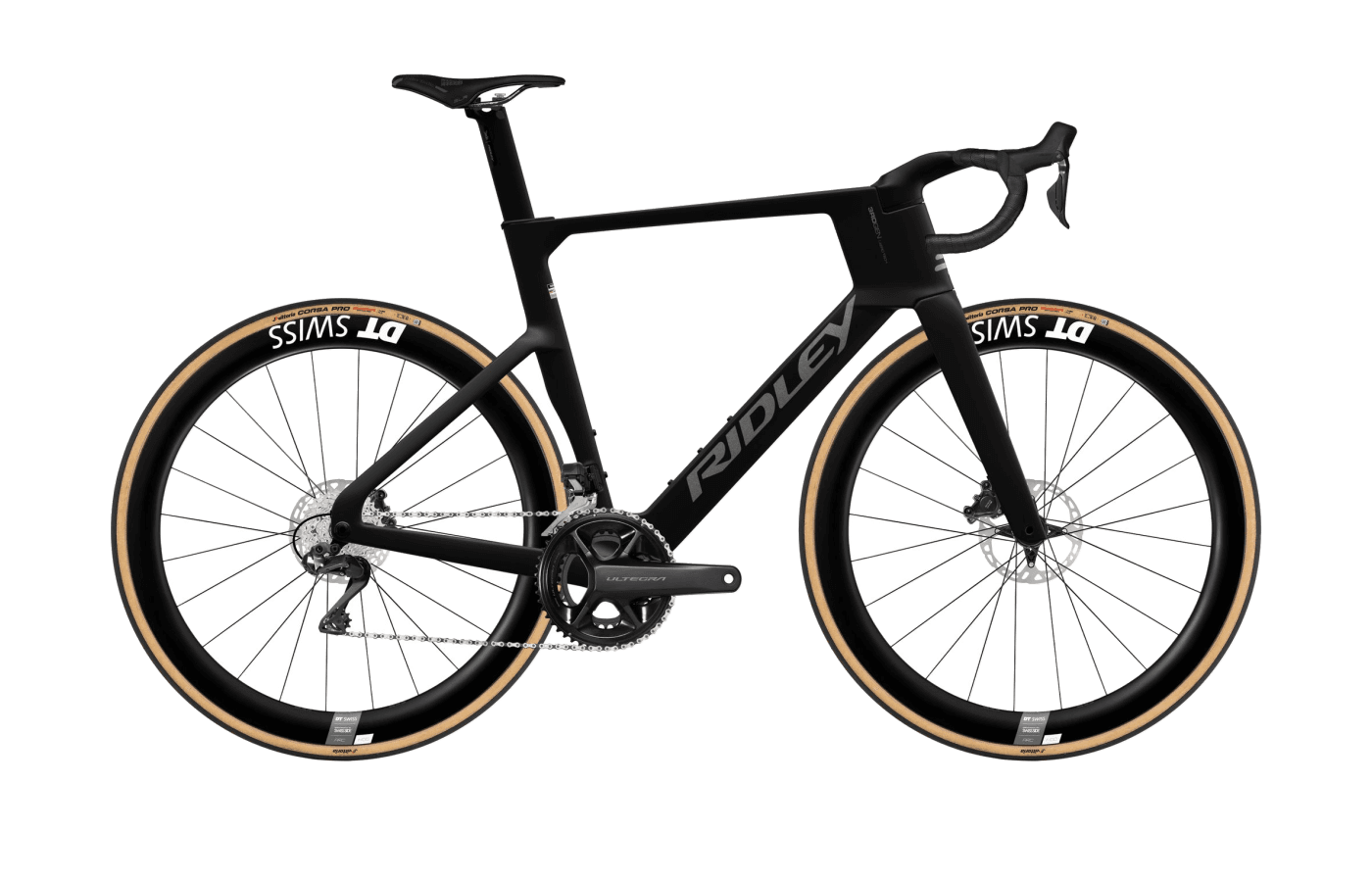
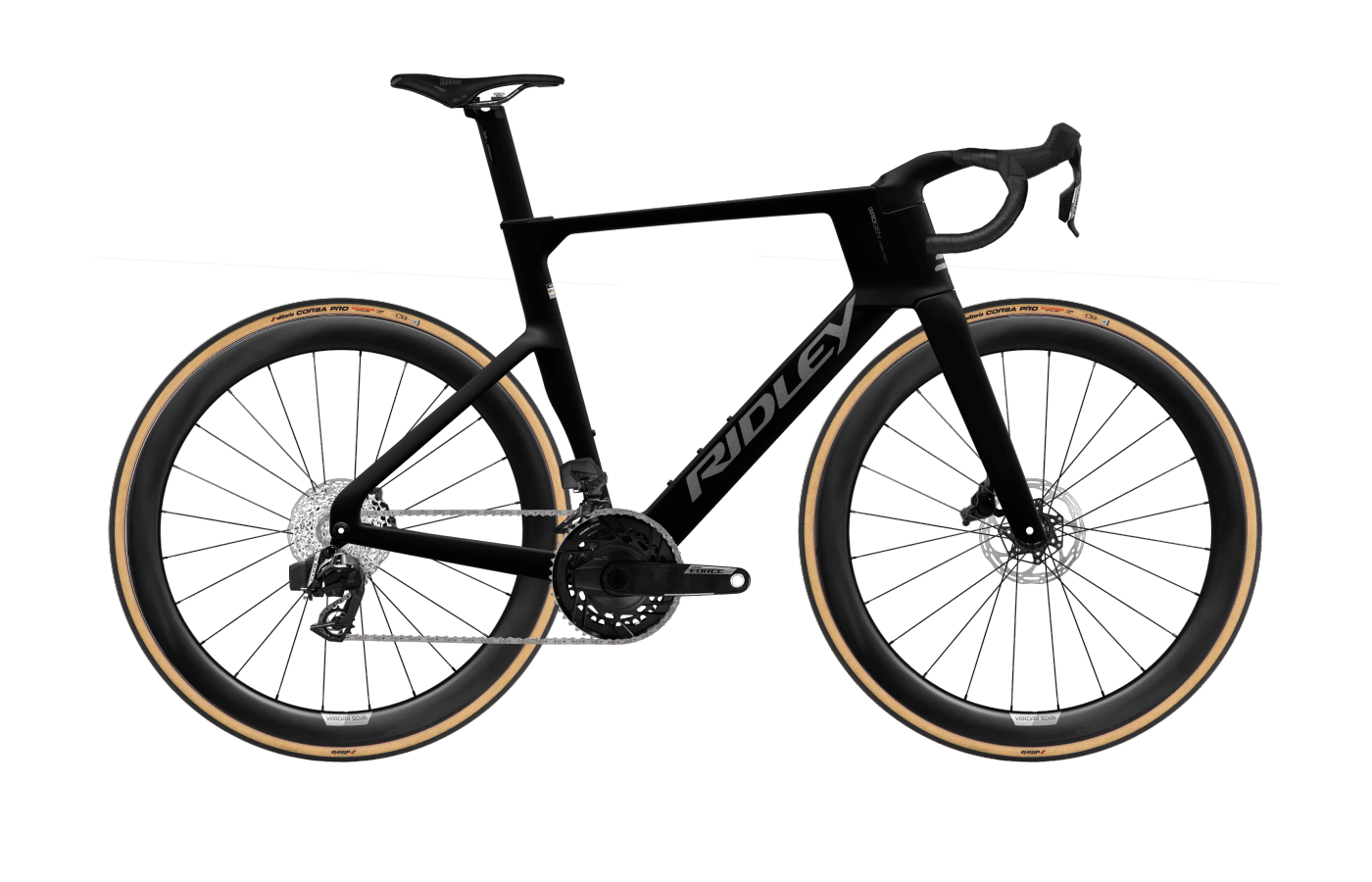
The Noah Fast 3.0 is offered in four high-end drivetrain configurations: SRAM Red AXS, SRAM Force AXS, Shimano Ultegra Di2, and Shimano Dura-Ace Di2. That spread gives the frame a broad price ladder from premium race-ready builds up to flagship superbike territory, with the new-for-2025 Force AXS option likely serving as the key entry point into the full Noah Fast platform. Even without full pricing details, the range makes clear that Ridley is positioning this as a top-tier race chassis rather than an accessible aero bike.
The available build structure suggests Ridley is emphasizing drivetrain preference and tier rather than changing the bike’s underlying purpose. Arthur’s test bike used Ultegra Di2 with deep-section DT Swiss wheels, Vittoria Corsa tires in a 28 mm front / 30 mm rear combination, an SLR saddle, and Ridley’s own integrated cockpit, which gives a good sense of the intended spec direction: deep wheels, electronic shifting, and fully integrated aero packaging. The main practical distinction between builds will therefore be how much buyers want to spend for lighter weight and higher-end drivetrain hardware, rather than a change in the Noah Fast 3.0’s fundamentally race-specific character.
From the press.
1 review from the cycling press.
Reviewer David Arthur of Just Ride Bikes describes the Noah Fast 3.0 as a bike with a very narrow but very clear area of excellence. His main takeaway is that it comes alive at high speed, especially once the rider is in a deep aero position above roughly 45 km/h. In that context, he found it “quick, rapid, efficient, and comfy as well,” and notably said it was a position he could hold for hours. He was also surprised by how smooth the bike felt over rough roads given its extreme aero shaping, crediting some of that ride quality to the 28 mm front and 30 mm rear Vittoria Corsa tire setup run at lower pressures. He also notes that it posted the fastest lap time on his test track, reinforcing the impression that the bike does what it is designed to do.
The downside, in Arthur’s view, is that the Noah Fast 3.0 is much less appealing outside that race-speed envelope. He repeatedly characterizes the steering as very slow and says the bike feels dull, heavy, and unresponsive at more typical riding speeds around 25–30 km/h. The quoted 8.2 kg weight of the Ultegra Di2 test bike was a recurring criticism, particularly on climbs and twistier roads where he felt it lacked the agility and liveliness of more rounded performance bikes. He also questioned the value of the £8,000 Ultegra Di2 build, noting the absence of a power meter and only minor refinement issues such as a less-than-ideal computer mount. Overall, the review paints the Noah Fast 3.0 as a highly effective but highly specialized aero race tool: excellent for riders who genuinely ride fast, less convincing for those wanting an all-purpose superbike.
