Noah
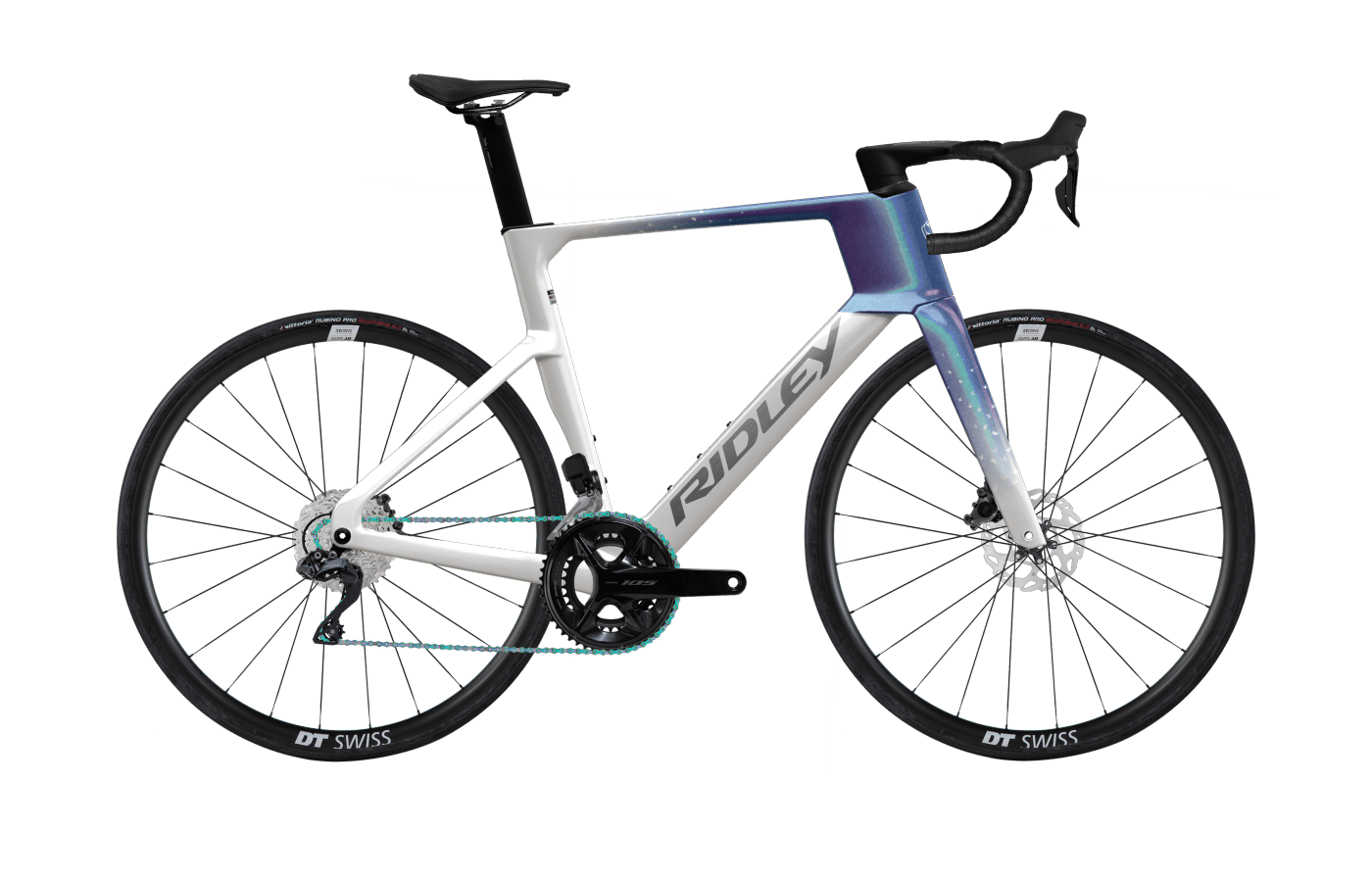
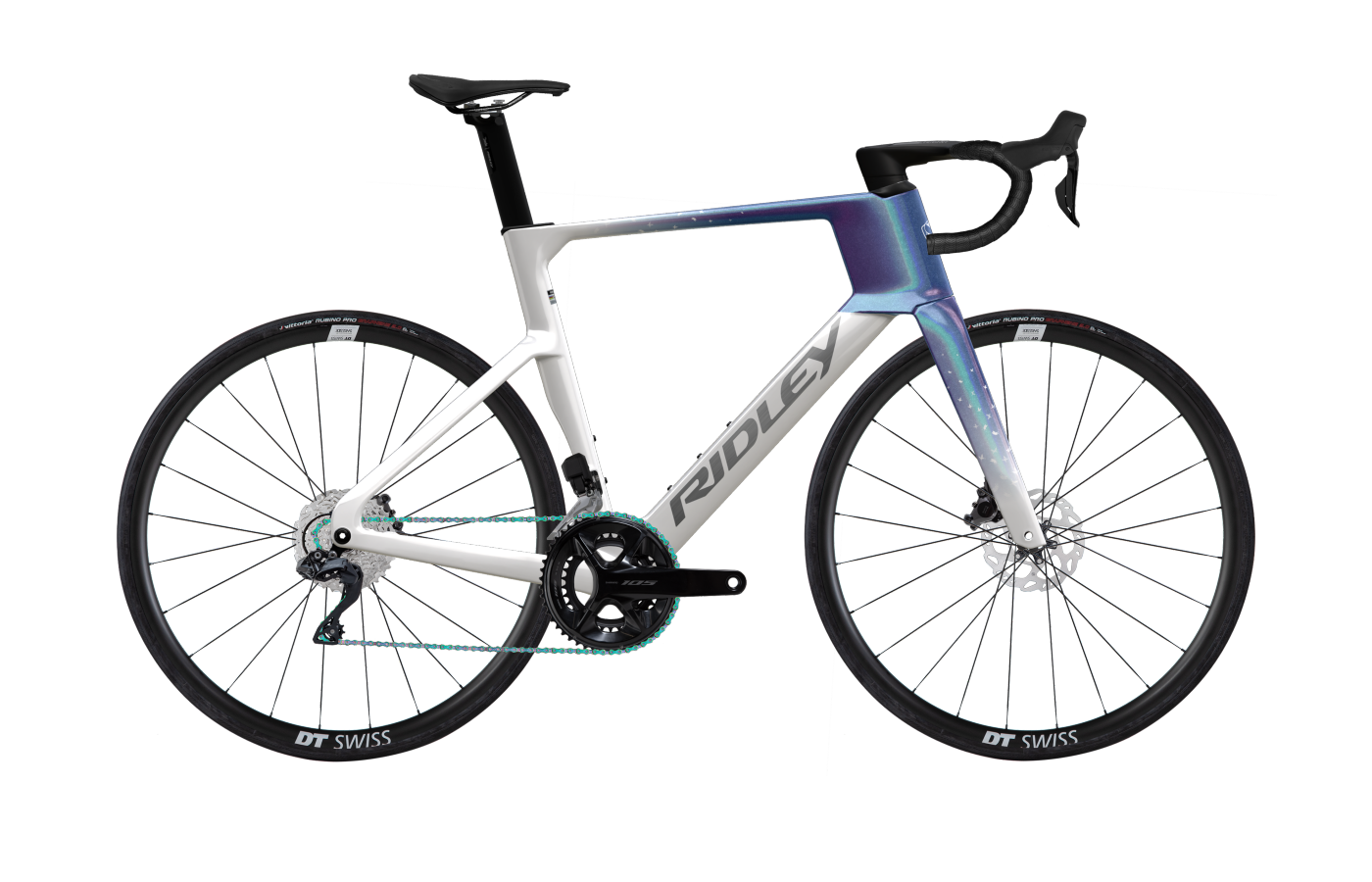
The 2025-on Ridley Noah 3.0 is the more accessible version of Ridley’s latest aero road platform, sharing the same geometry and overall design intent as the flagship Noah Fast but using a different carbon lay-up and offering less-mandatory cockpit integration. This generation was developed around the latest UCI aero rules, and Ridley has leaned heavily into that freedom: the bike is defined by very deep tube sections, a notably oversized front end, and a system-based aero philosophy that considers the frame alongside cockpit, wheels, bottles, and accessories. In practical terms, it is a pure aero road bike aimed at fast road racing, breakaway riding, and high-speed solo efforts rather than all-round lightweight climbing duties.
What distinguishes the Noah 3.0 in the market is that it brings the same aggressive fit and core handling concept as the top-tier Noah Fast into a more attainable package. Ridley positions it as a bike for riders who want the current Noah’s race-oriented position and aerodynamic emphasis without being locked into the most expensive fully integrated build format. Tire clearance and the broader real-world racing brief also matter here: while it is unapologetically an aero bike, this generation is intended to work with modern tire sizes and rougher race surfaces as well, making it relevant not just for flat criteriums and sprint stages but also for harder, faster road riding where aerodynamic efficiency still dominates.
Geometry & fit.
4 sizes published.
The Noah 3.0’s geometry is firmly modern aero-race. Reach figures are long for category expectations—392mm in XS, 403mm in S, 412mm in M, and 420mm in L—while stack stays relatively controlled at 532mm to 594mm across the range. That points to a low, stretched riding position suited to riders prioritizing frontal-area reduction and sustained speed. The seat tube angles are especially steep, running from 76.0 degrees in XS to 74.5 degrees in L, which helps keep the rider centered over the pedals in an aggressive position and supports the forward-biased fit commonly seen on contemporary aero race bikes.
Handling numbers suggest a stable but still race-ready front end. Head tube angle moves from 72.0 degrees in XS to 73.5 degrees in M and L, a typical progression to keep smaller sizes from becoming too twitchy while preserving sharper steering on larger frames. Chainstays are short and consistent at 407mm across all sizes, which should help the bike feel direct under power, while wheelbase remains compact but not extreme at 995mm in XS to 1023mm in L. A 70mm BB drop on most sizes, with 72mm on XS, indicates a planted feel through fast corners without pushing the bike into unusually low-slung territory. Overall, the numbers support Ridley’s claim that this is an aggressive, speed-first platform with fit and handling tuned for committed road racing.
Where the handlebar sits relative to the bottom bracket — the single most important fit pair.
01Fit geometry6 values
03Handling geometry5 values
Which size should I buy?
Slide your height to see the recommended size. GearWise's fit algorithm works from the published stack, reach, and ETT — the brand's own recommendation may differ.
→Calculated from GearWise's own stack / reach / ETT algorithm — the brand's size chart may recommend a different size, and a proper bike fit beats any calculator.
The lineup.
1 build.
Available build information is limited, but the listed complete bike uses Shimano 105 Di2 in a 2x12-speed configuration. That places the Noah 3.0 in the increasingly common space where an aero race frame is paired with a dependable electronic drivetrain rather than a flagship-level groupset, which makes sense given this model’s role as the more attainable counterpart to the Noah Fast.
The key story is less about multiple build tiers and more about platform accessibility. With the same geometry and core concept as the higher-end Noah Fast, the Noah 3.0 appears aimed at riders who want the new-generation Ridley aero chassis and electronic shifting without stepping into the most premium carbon lay-up and fully integrated race-bike specification.