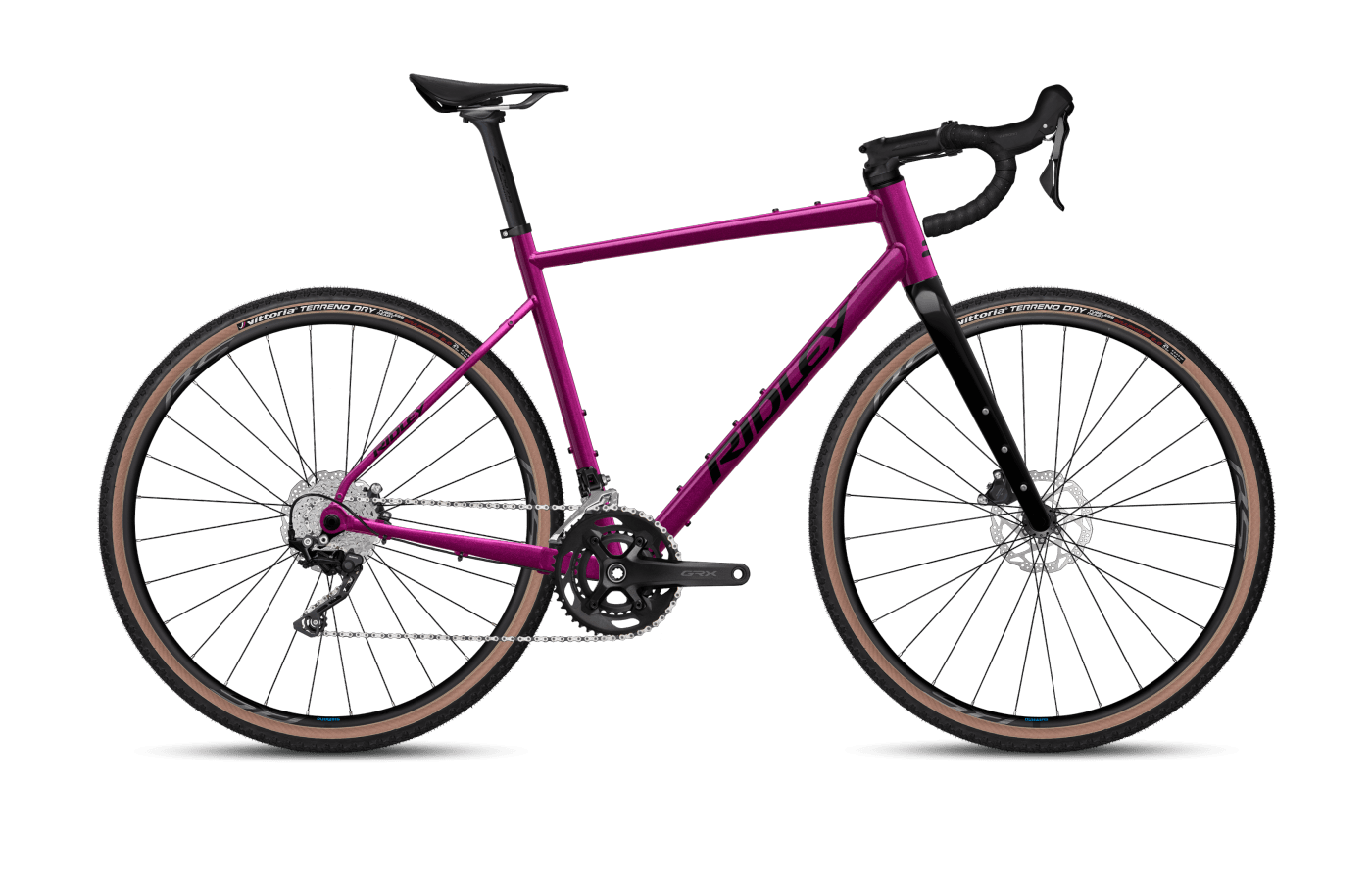
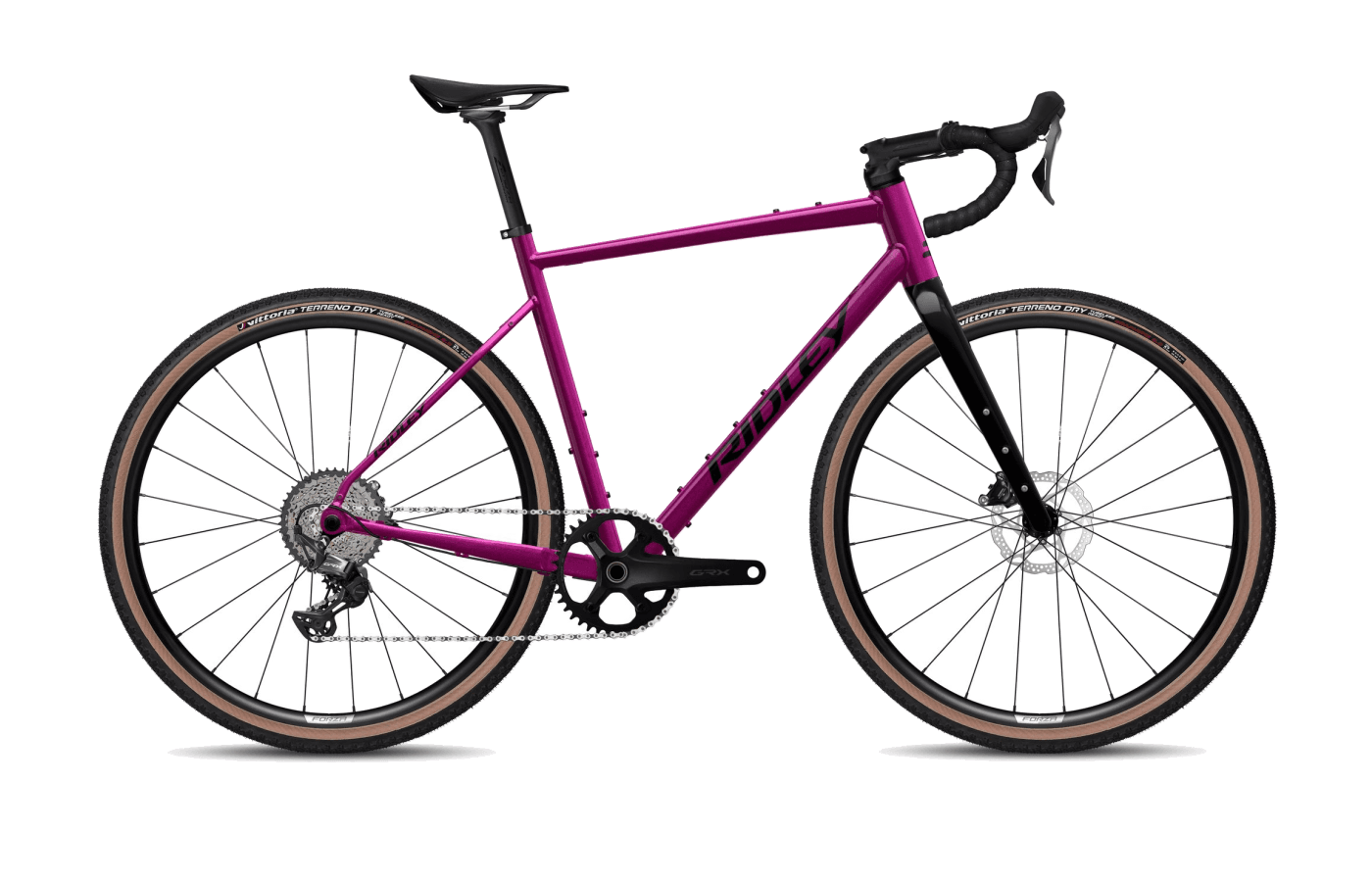
Kanzo Adventure Alu
The Ridley Kanzo Adventure Alu is the aluminum entry point into Ridley’s adventure-gravel platform, carrying over the same core brief as the carbon Kanzo Adventure but in a more affordable and harder-use frame material. This generation, introduced in October 2024 and continuing unchanged into later model years, is built around rough-surface stability, load-carrying utility, and long-range bikepacking rather than fast, race-oriented gravel riding. It is explicitly a 700c platform, with generous tire clearance of 52 mm in a 1x setup or 47 mm with 2x, which places it at the more off-road-capable end of the gravel category.
What distinguishes the Kanzo Adventure Alu is how thoroughly it is configured for self-supported riding. Ridley gives it 18 total mounting points, including 12 on the frame and 6 on the fork, plus routing provisions intended to support dynamo lighting and cleaner bag integration. UDH compatibility is another practical choice, making the bike easier to service and more future-proof for drivetrain replacement. In market terms, this is not a lightweight all-road gravel bike; it is a utility-focused adventure machine aimed at riders who prioritize durability, cargo capacity, and composed handling on broken roads, tracks, and extended mixed-terrain trips.
Geometry & fit.
6 sizes published.
The geometry is clearly biased toward stability and control over quick steering. Across the size range, the head tube angle stays at 70.75 degrees, which is notably slack for a drop-bar gravel bike, while the 435 mm chainstays are longer than those found on many race-focused gravel models. Combined with wheelbases ranging from 1003 mm in XXS to 1106 mm in XL, those numbers point to a bike that should feel planted at speed, calm on descents, and less nervous when loaded with bags. The 75 mm bottom bracket drop also helps keep the rider centered lower in the bike for a more settled feel on rough surfaces.
Fit is relatively upright and endurance-oriented rather than aggressively stretched. Medium has a 582 mm stack and 403 mm reach, while Large moves to 608 mm stack and 418 mm reach, reinforcing the bike’s long-distance, control-first intent. The effective top tube grows from 510 mm in XXS to 615 mm in XL, and seat tube angle varies slightly from 74.5 degrees in the smallest sizes to 73.5 degrees in XL, a typical adjustment to preserve rider balance across the range. Overall, the numbers suggest a bike designed to keep handling predictable with big tires and cargo, not one optimized for sharp accelerations or tight, twitchy steering.
Where the handlebar sits relative to the bottom bracket — the single most important fit pair.
01Fit geometry6 values
03Handling geometry6 values
Which size should I buy?
Slide your height to see the recommended size. GearWise's fit algorithm works from the published stack, reach, and ETT — the brand's own recommendation may differ.
→Calculated from GearWise's own stack / reach / ETT algorithm — the brand's size chart may recommend a different size, and a proper bike fit beats any calculator.
The lineup.
4 builds.
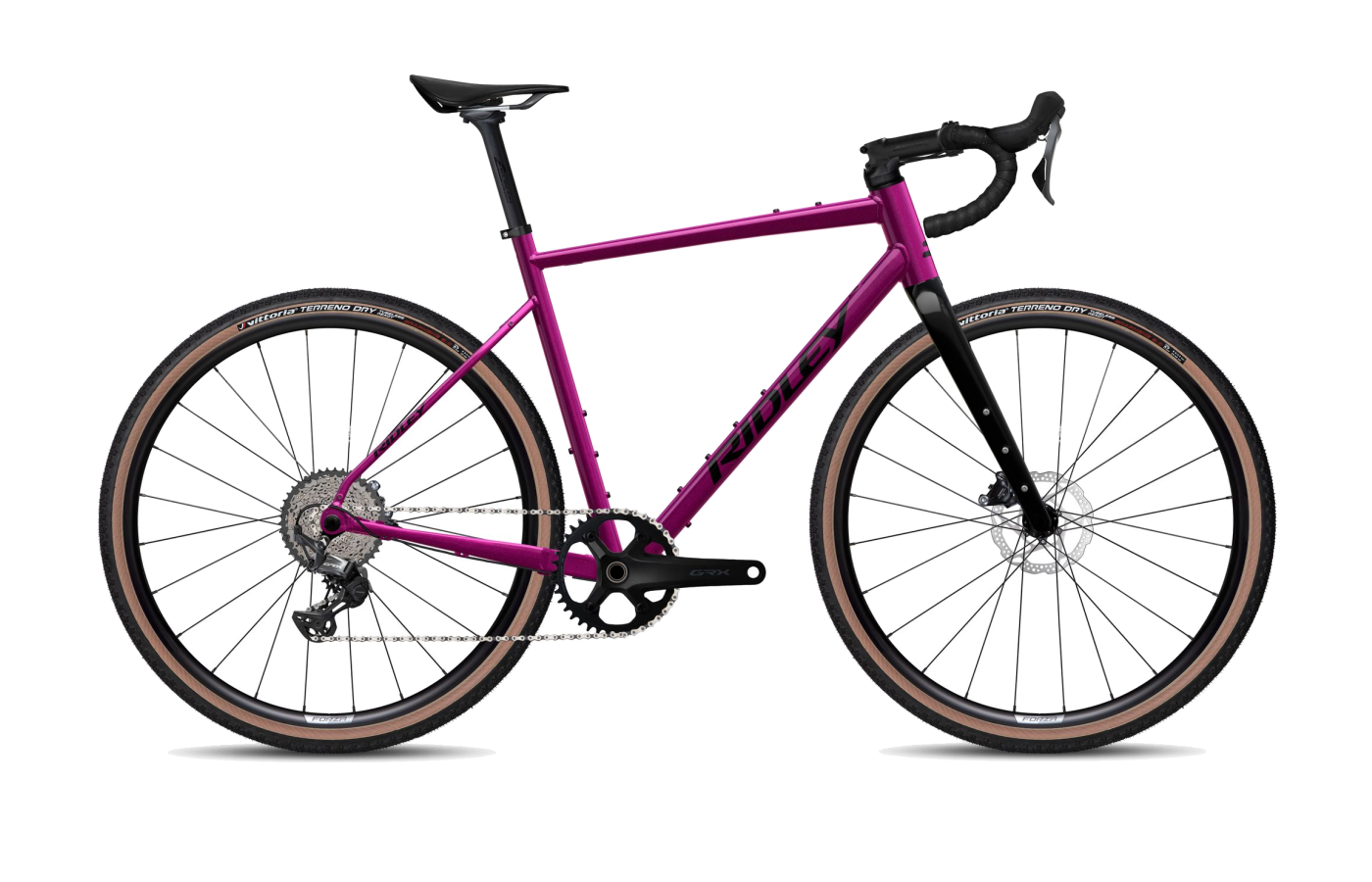
Ridley offers the Kanzo Adventure Alu in four drivetrain configurations that cover a broad range of use cases, from simpler adventure-focused 1x setups to a more traditional 2x option. The range includes a SRAM Apex XPLR AXS 1x12 build, Shimano GRX800 1x12, Shimano GRX600 1x12, and Shimano GRX400 2x10. That spread gives buyers a choice between wireless shifting at the Apex XPLR AXS level, higher-end mechanical Shimano with GRX800, more value-oriented 12-speed GRX600, and an accessible GRX400 build for riders who want lower entry cost and the gear range flexibility of 2x.
The lineup is sensibly matched to the frame’s purpose. The 1x builds align with the bike’s off-road and bikepacking emphasis, simplifying shifting and maximizing tire clearance to the claimed 52 mm. The GRX400 2x10 build is the more traditional option, trading some maximum tire room for closer gearing steps and broader road-to-gravel versatility under Ridley’s stated 47 mm 2x clearance limit. Without published pricing or full component lists here, the clearest distinction is drivetrain tier and configuration rather than a deeper wheel or finishing-kit comparison.