Orbea
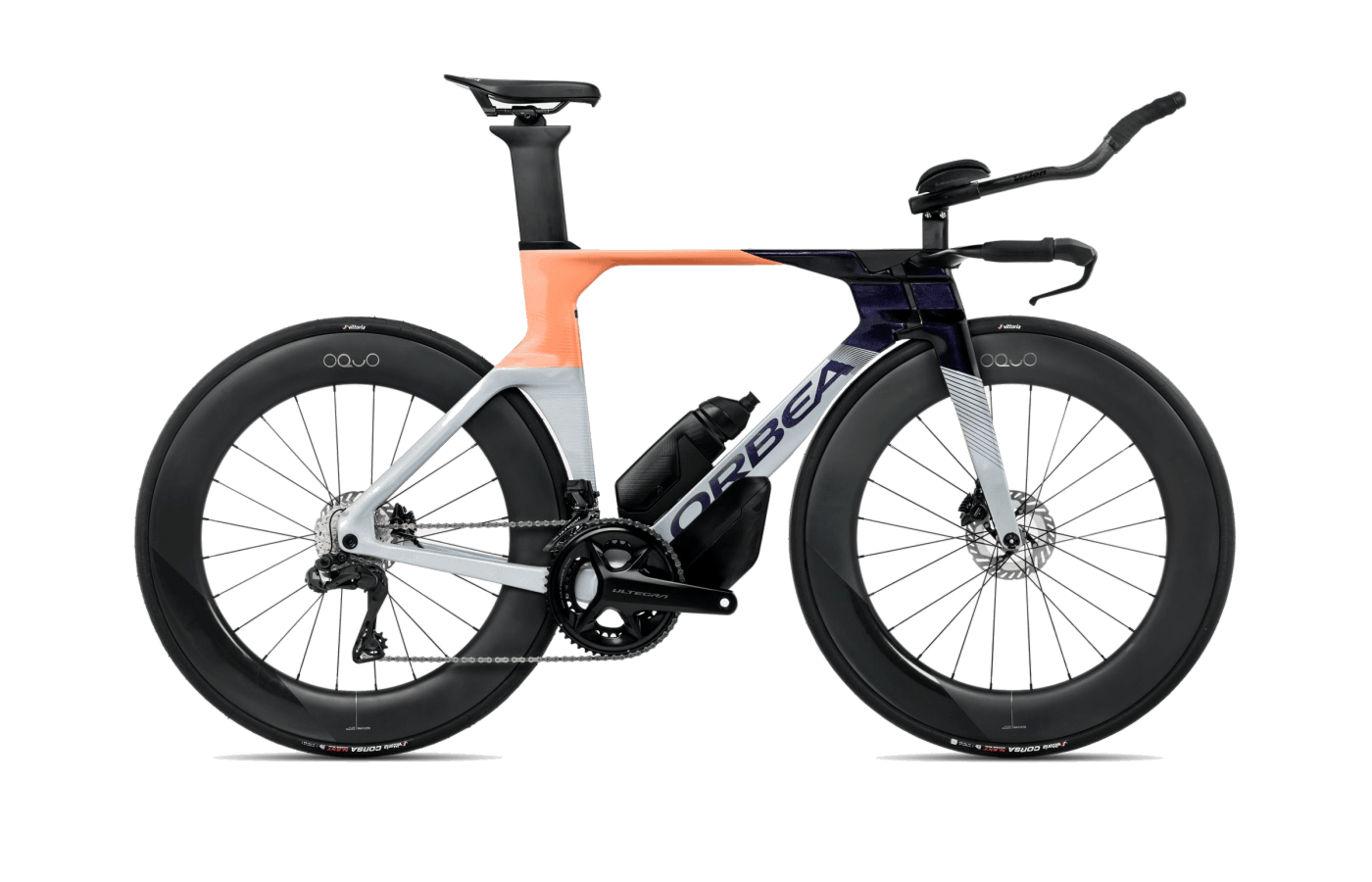
OrduM20iLTD
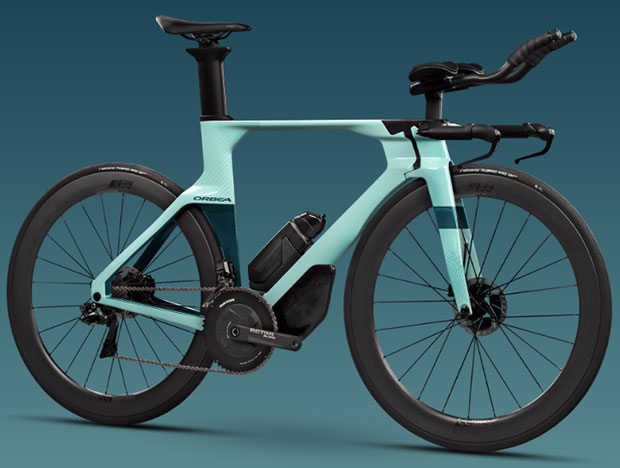
The current Orbea Ordu represents a comprehensive modernization of the Spanish brand’s time trial and triathlon platform. Introduced for the 2021 model year, this generation moves exclusively to disc brakes, fully internal routing, and a highly adjustable mono-riser cockpit. Orbea designed the Ordu to balance aerodynamic efficiency with a surprisingly low overall weight, resulting in a chassis that climbs and accelerates with more urgency than many traditional heavyweight superbikes. Positioned as a premium racing tool, it caters to competitive triathletes and time trial specialists who prioritize a reactive, road-like ride character over maximum integrated hydration. While it lacks the built-in bladders and top-tube bento boxes common in the dedicated triathlon space, the Ordu compensates with a streamlined, UCI-legal foundation that riders can customize with aftermarket accessories. The result is a lean, pro-tier machine focused on power transfer, precise fit tuning, and high-speed stability.
Spec sheet.
Every component shipped with this build.
Geometry & fit.
4 sizes published.
The Ordu’s geometry is built around a lengthened reach and a relaxed 72.25-degree head tube angle on most sizes to foster high-speed stability. Orbea offers the frame in four sizes, though the S/M and M/L share the exact same reach and stack measurements, differing primarily in the length of the seatpost and monopost to accommodate taller riders.
Fit tuning relies heavily on the OMX mono-riser cockpit and a highly adjustable seatpost. The seatpost clamp provides 100mm of setback adjustment, allowing riders to achieve effective seat tube angles between 74 and 78 degrees. Up front, the monopost system allows the entire aerobar assembly to slide up and down easily without complex spacer stacks. The base bar can also be flipped to adjust height by 30mm, though this requires disconnecting the hydraulic brake lines.
Riders should note the strict parameters of the front end. The pursuit bars measure a narrow 38cm center-to-center, and the arm pads max out at 20cm wide. This forces a tight, aerodynamic posture that suits broad-shouldered athletes less than it does those comfortable in a constricted, pro-style tuck.
Where the handlebar sits relative to the bottom bracket — the single most important fit pair.
01Fit geometry6 values
02Component geometry4 values
03Handling geometry8 values
Which size should I buy?
Slide your height to see the recommended size. GearWise's fit algorithm works from the published stack, reach, and ETT — the brand's own recommendation may differ.
→Calculated from GearWise's own stack / reach / ETT algorithm — the brand's size chart may recommend a different size, and a proper bike fit beats any calculator.
The lineup.
4 builds, ranging $6,999 – $13,599.
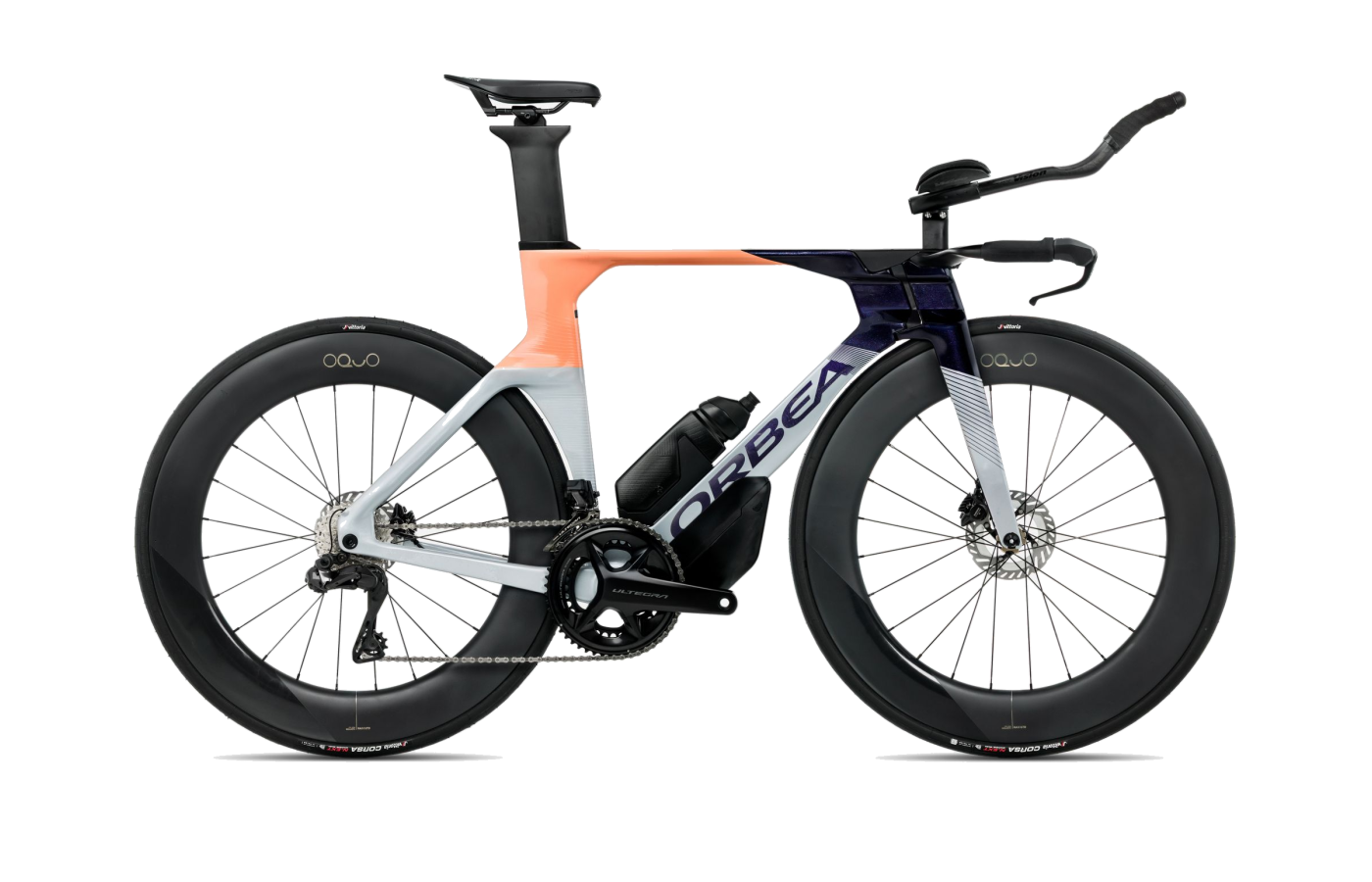
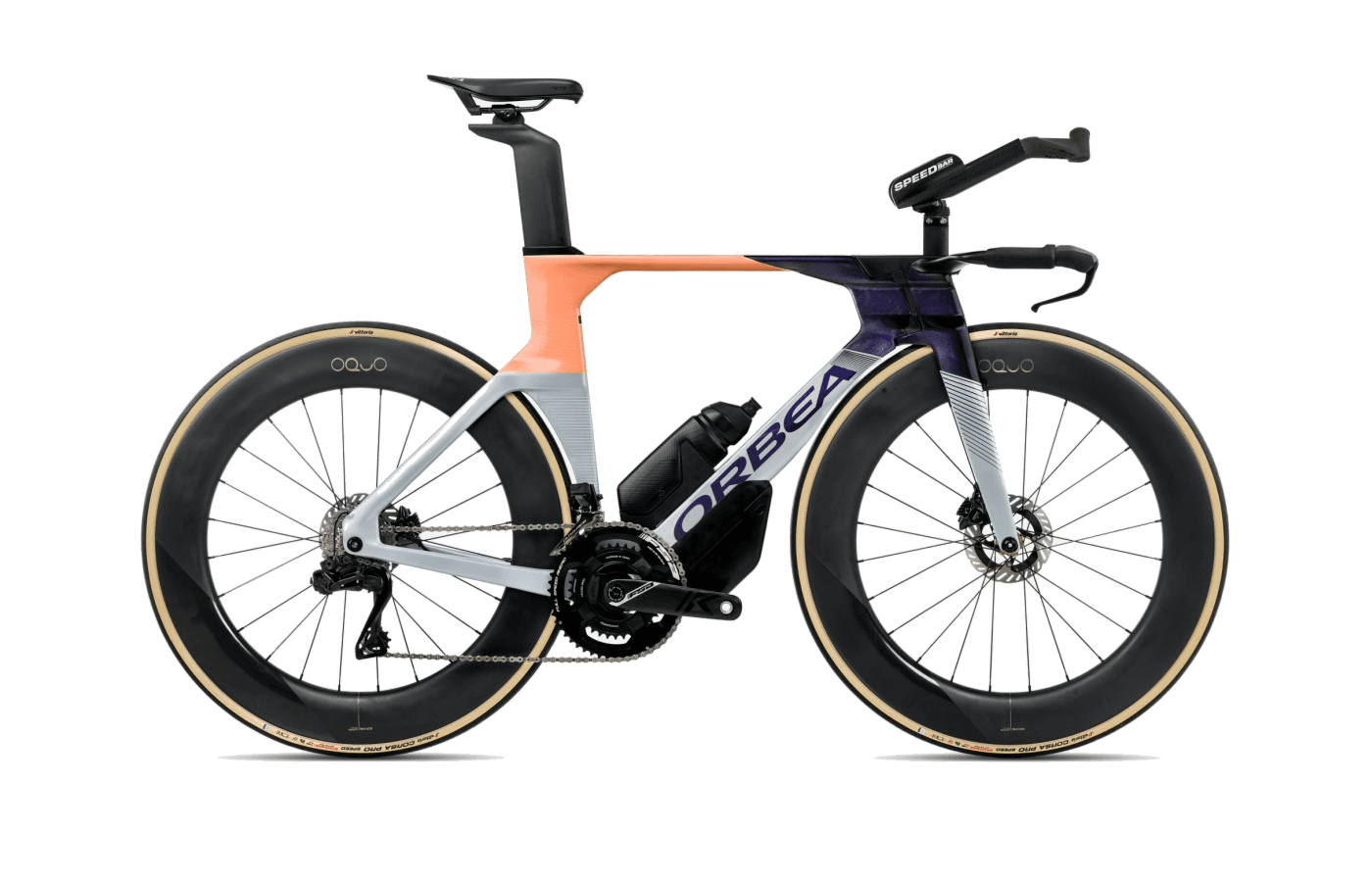
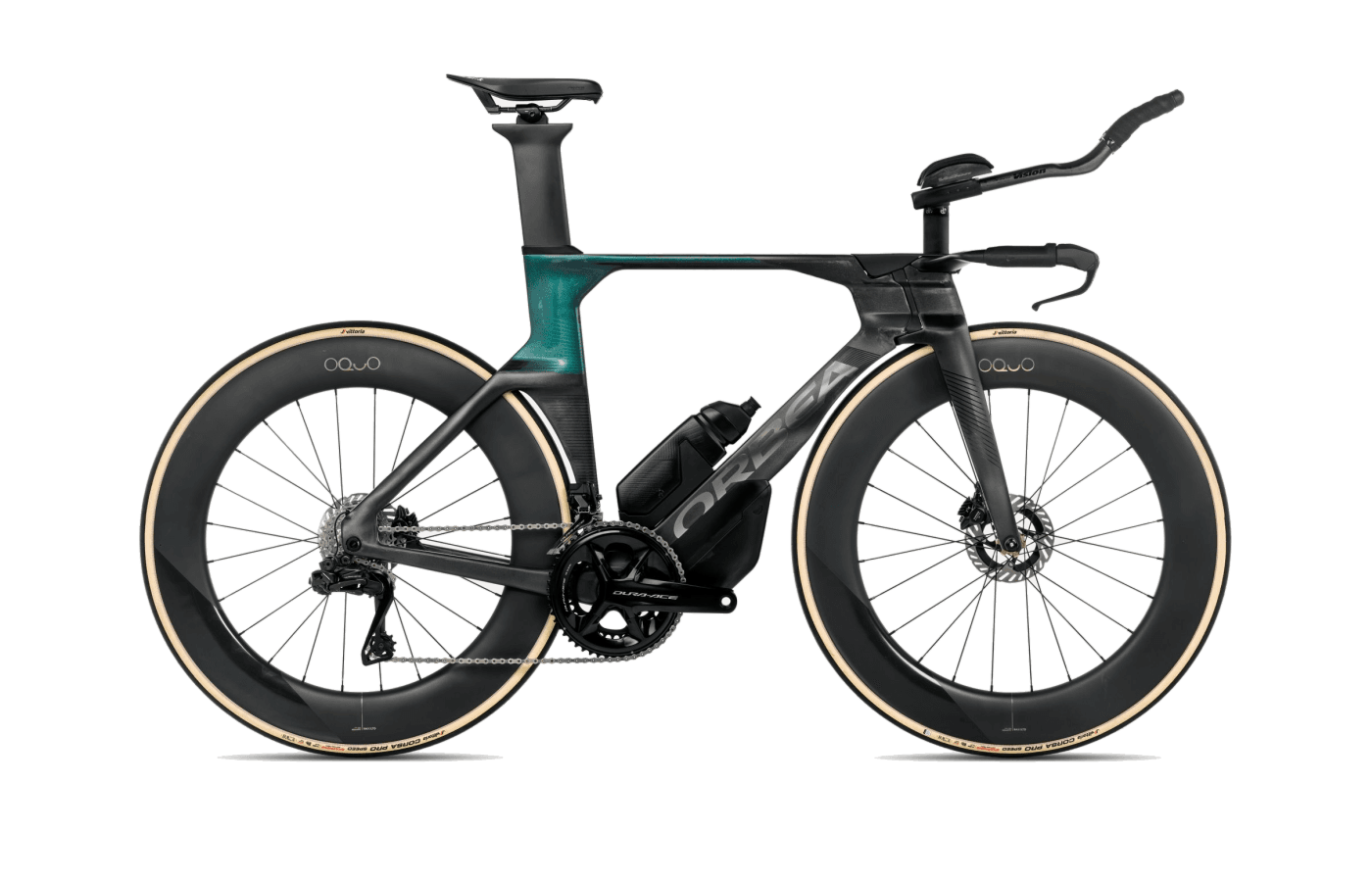
The Ordu lineup consists of four builds, all utilizing the same premium OMX carbon frameset, integrated fork, and mono-riser cockpit. This shared foundation means the entry point delivers the exact same aerodynamic profile and structural stiffness as the flagship model.
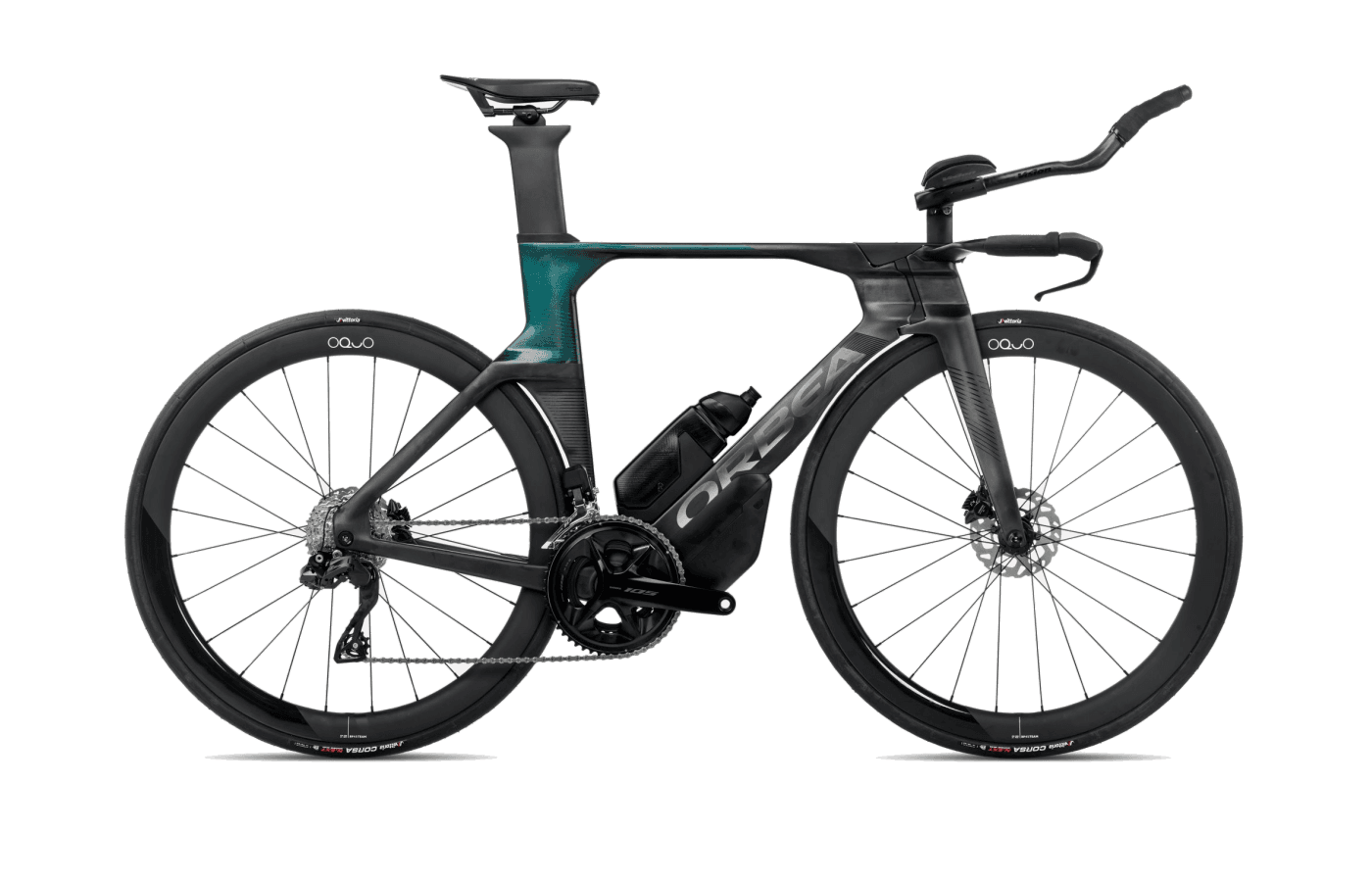
The range begins with the M30iLTD, equipped with a Shimano 105 Di2 12-speed groupset and Oquo Road Performance RP45TEAM carbon wheels. Stepping up to the M20iLTD brings Shimano Ultegra Di2 and deeper Oquo RA80LTD aero wheels, hitting a sweet spot for privateer racers balancing cost and high-end performance.
The top tier splits into two Dura-Ace Di2 options. The standard M10iLTD features the Dura-Ace drivetrain and Oquo RA80LTD wheels. The flagship M10iLTD UCI adds an FSA Powerbox power meter crankset and adheres strictly to UCI regulations, omitting the integrated down tube storage nacelle that comes standard on the triathlon-focused builds. All models feature 140mm hydraulic disc rotors and 28mm Vittoria tires, though the top Dura-Ace builds upgrade to the faster-rolling Corsa Pro Speed compound. Because the frame lacks integrated hydration, riders across all builds will need to source their own aftermarket between-the-arms or rear-saddle bottle systems.
From the press.
6 reviews from the cycling press.
Reviewers consistently praise the Ordu for its low weight and reactive handling, noting that it climbs and accelerates with an agility rare for the category. Testers found that the bike feels remarkably nimble on ascents and through technical sections, with one noting it feels more like a "quality road bike" (220triathlon) than a cumbersome time trial machine. At cruising speeds, the handling leans toward predictable stability. The geometry ensures the bike "sweeps more than it cuts" (Triathlete), allowing riders to hold a steady line through fast corners and crosswinds without constant micro-corrections.
However, the ride quality prioritizes power transfer over absolute plushness. While the frame dampens standard road chatter adequately, it delivers a "slightly bouncier ride than you’d expect from a high-end superbike" (Triathlete) on rougher pavement. The front end also requires a brief adaptation period; testers observed that the steering can feel sensitive when the monopost is set to a high stack position.
The cockpit ergonomics drew specific attention. The narrow 38cm base bars and restricted arm pad width are aerodynamically efficient but demand a disciplined posture. This setup is characterized as "advanced thinking for advanced riders" (Slowtwitch), offering less leverage for out-of-the-saddle climbing or emergency braking. Despite these ergonomic constraints, reviewers found the aero tuck highly sustainable, allowing athletes to maintain their optimal position deep into long race legs.
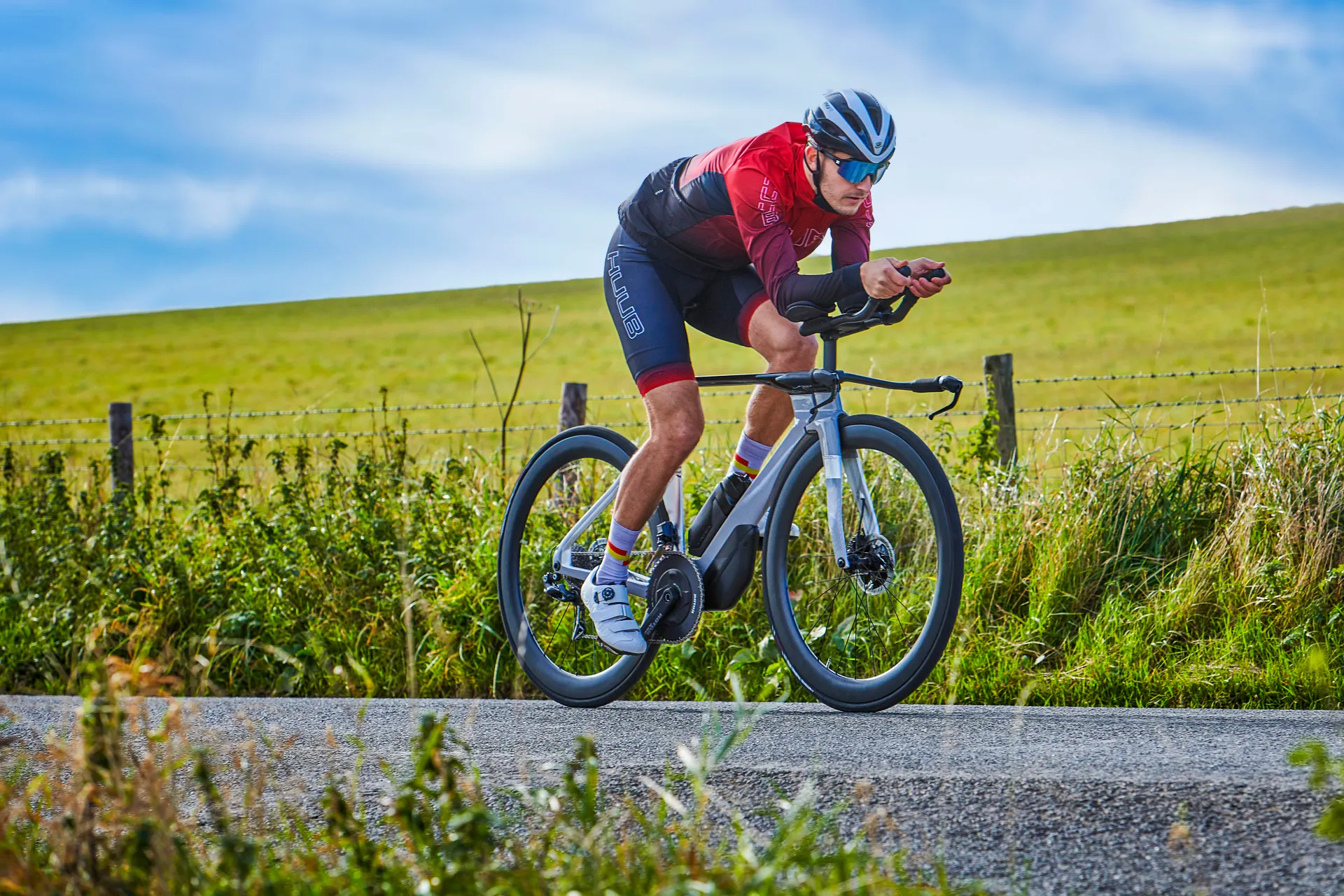
Orbea Ordu M10iLtd tri bike review
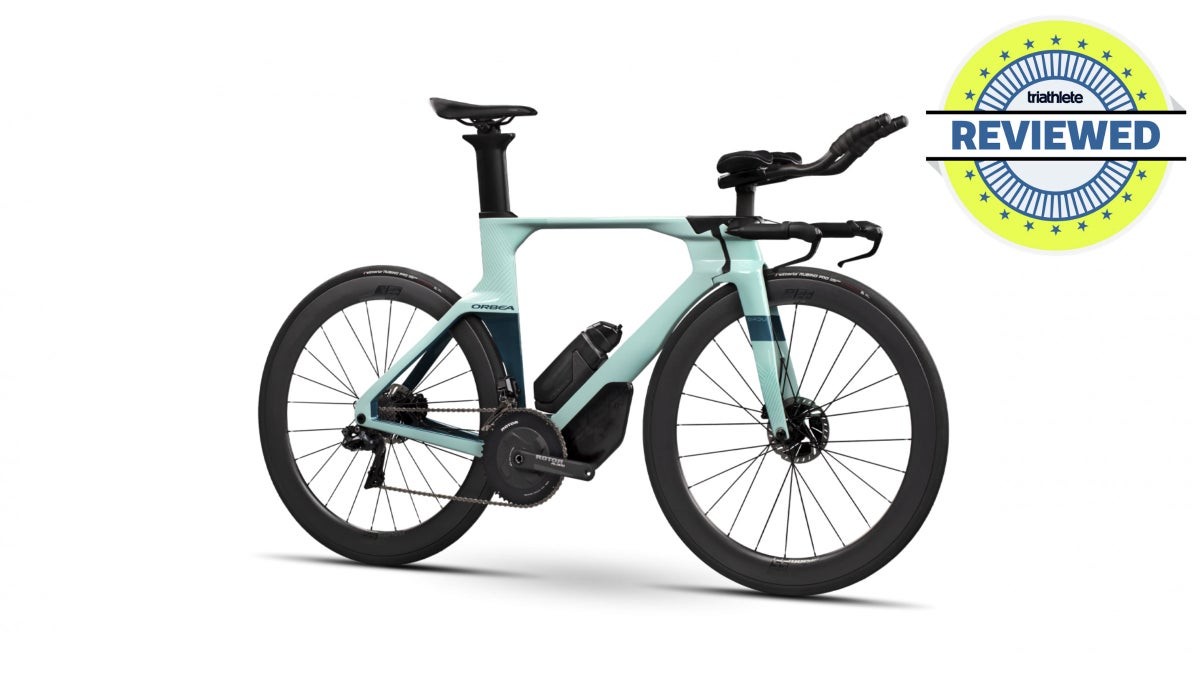
Deep Dive: Orbea Ordu M10iLTD Triathlon Bike
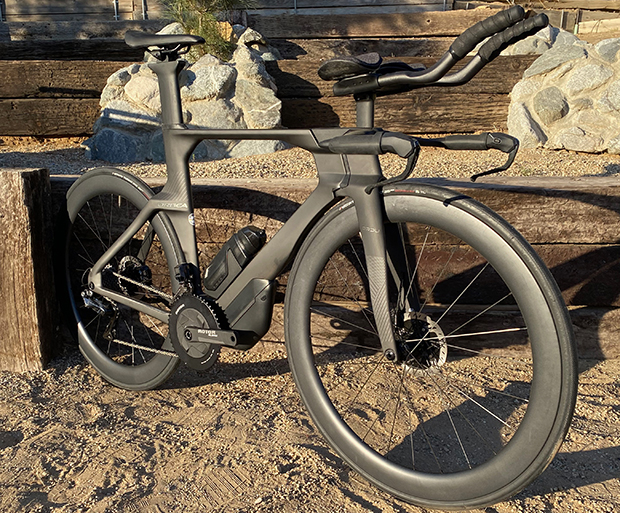
Over the Winter With Orbea’s New Ordu - Slowtwitch News
Deep Dive: Orbea Ordu M10iLTD Triathlon Bike
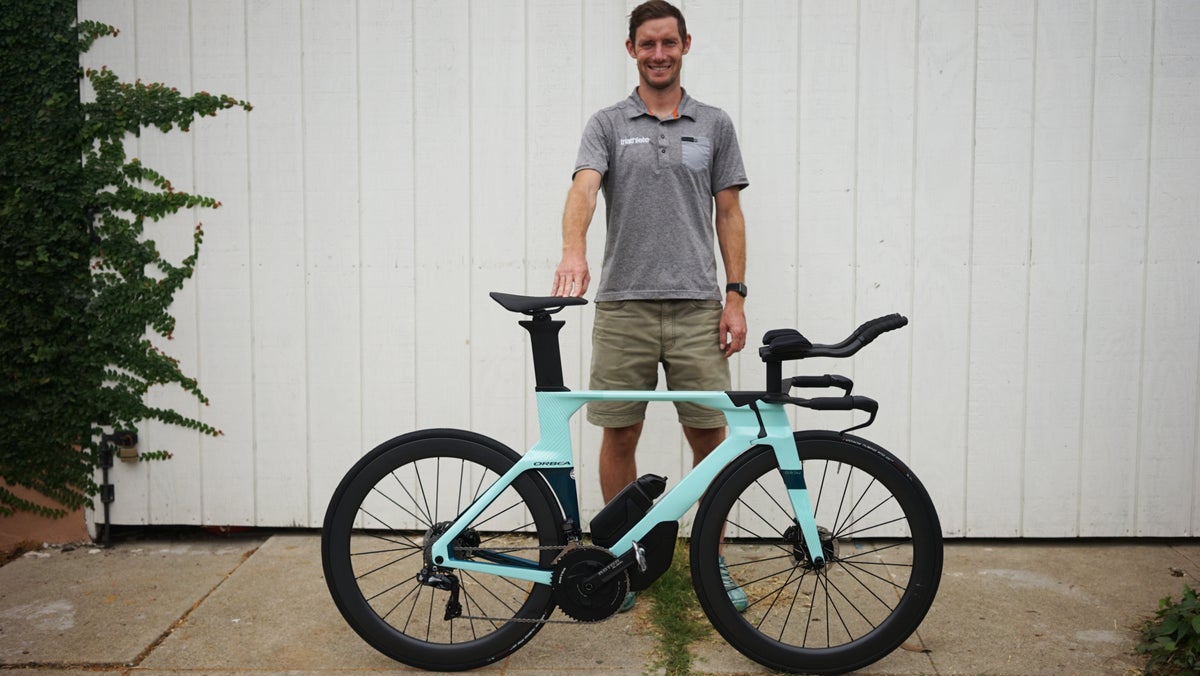
Unboxed: Orbea Ordu Tri Bike