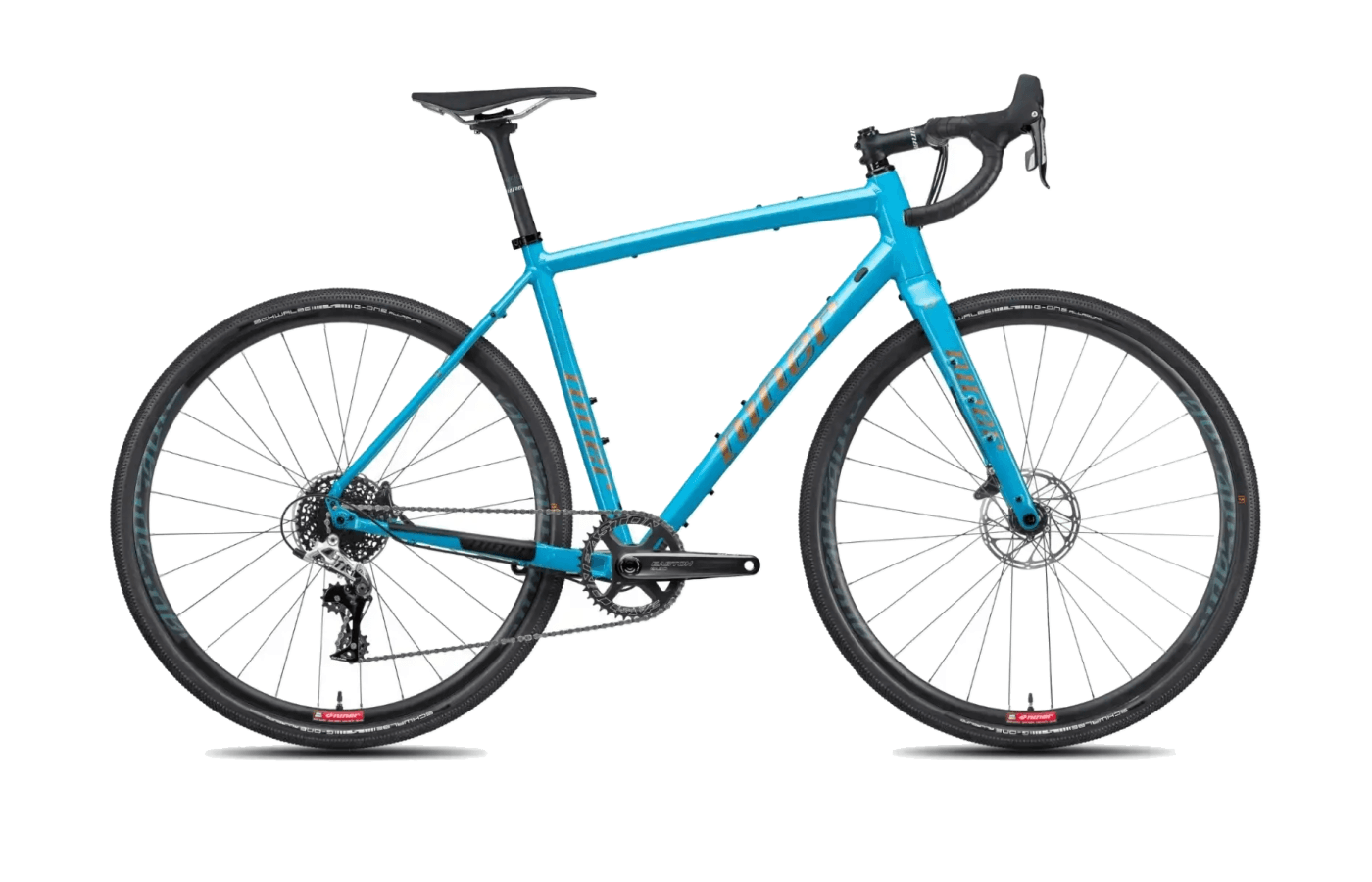
RLT 9 Steel
The current Niner RLT 9 Steel marks a clear shift from an all-road leaning gravel bike to a more capable adventure platform. Introduced for the 2020 model year, this redesigned frame emphasizes load-carrying utility and rough-surface clearance, with tire room up to 700c x 50mm or 650b x 2.0 and a notably extensive mounting layout often cited at 26 total mounts across the platform. That puts it squarely in the segment of gravel bikes built not just for fast mixed-surface rides, but for bikepacking, long backcountry routes, and riders who want one steel bike that can be configured in many different ways.
The design choices reflect that broader remit. Niner standardized the frame around current gravel norms with flat-mount disc brakes, thru-axles, and compatibility with both 1x and 2x drivetrains, while also keeping the PFBB30 shell compatible with the brand's BioCentric eccentric system for singlespeed use. The carbon RDO fork is a major part of the package, adding three-pack cargo mounts on each leg, rack and fender mounts, and internal dynamo routing. On the steel frame, Niner also retained external cable routing, a practical choice for serviceability on travel and off-road use. In the market, the RLT 9 Steel sits as a modern steel gravel/adventure bike for riders who prioritize versatility, cargo options, and off-pavement range over minimalist race-bike simplicity.
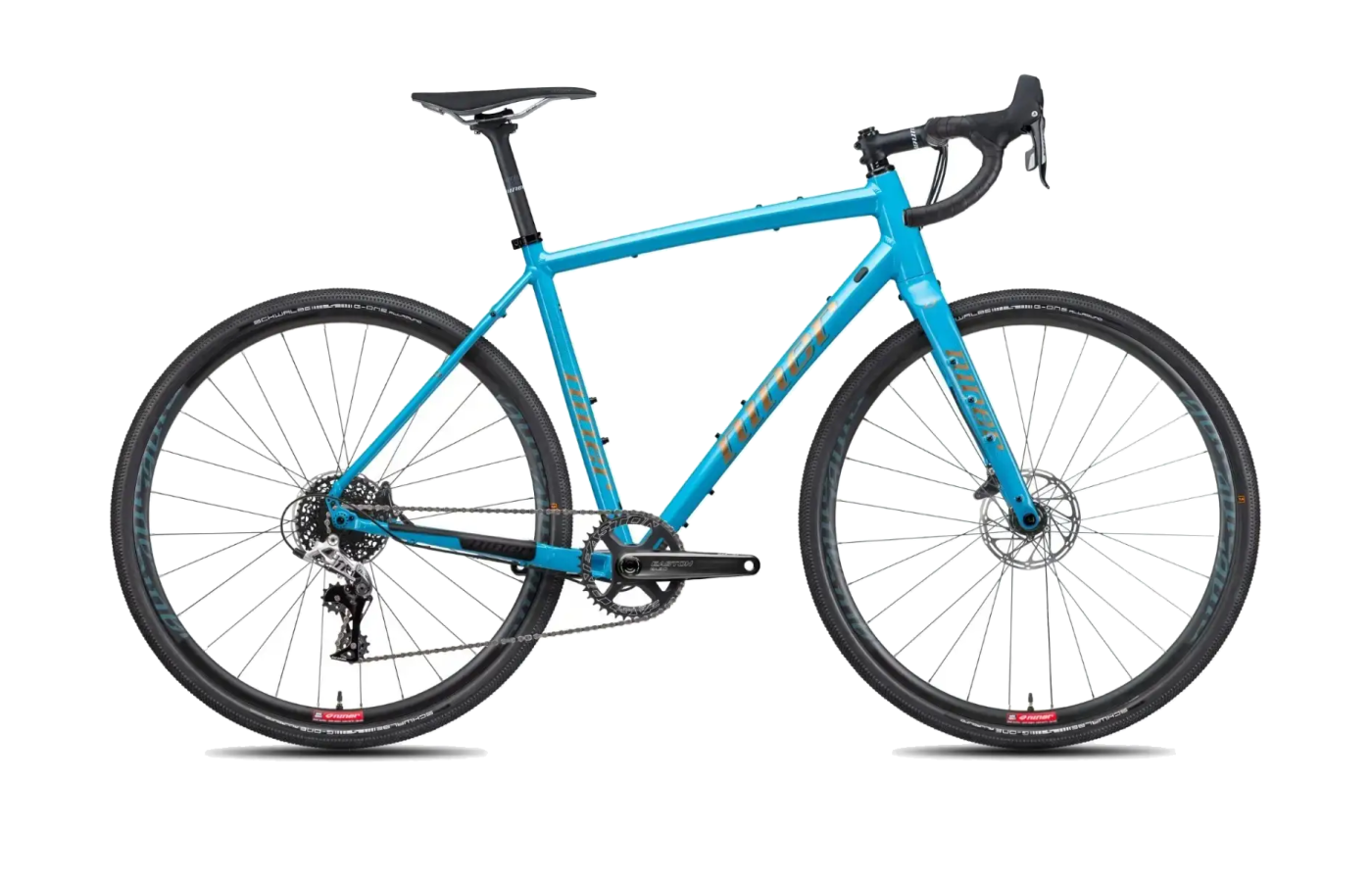
Geometry & fit.
6 sizes published.
The geometry shows a stable, adventure-oriented interpretation of gravel fit rather than an aggressively racy one. Across the size range, the head tube angle runs from 70 degrees in the 47cm to 72.5 degrees in the 62cm, while chainstays stay fixed at 435mm. That combination points to predictable steering and solid composure on loose surfaces, especially when the bike is loaded. Wheelbase numbers from 1008mm to 1062mm further reinforce that this is a bike designed for stability and tracking rather than quick, nervous handling. The bottom bracket drop is also relatively generous at 75mm on the smaller sizes and 70mm on the larger ones, helping keep the rider centered low in the bike.
Fit numbers are fairly conservative and upright by modern gravel standards. Reach grows from 365mm to 406mm, while stack ranges from 543mm to 636mm, giving the bike a taller front end that should suit long-distance comfort and reduce the need for an excessive spacer stack. Effective top tube lengths from 510mm to 605mm and seat tube angles that relax from 74.5 degrees to 72.5 degrees as sizes increase suggest Niner aimed for proportional fit across the range rather than forcing all riders into the same posture. Overall, the numbers support the bike's intended use: comfortable for long days, steady on rough roads, and well suited to bags and larger tires.
Where the handlebar sits relative to the bottom bracket — the single most important fit pair.
01Fit geometry6 values
03Handling geometry7 values
Which size should I buy?
Slide your height to see the recommended size. GearWise's fit algorithm works from the published stack, reach, and ETT — the brand's own recommendation may differ.
→Calculated from GearWise's own stack / reach / ETT algorithm — the brand's size chart may recommend a different size, and a proper bike fit beats any calculator.
The lineup.
1 build, ranging $4,300.
The listed complete build is the 3-Star SRAM Rival 1 XPLR AXS at $4,299.99. With only one build identified here, the emphasis is less on tiered comparison and more on what that specification says about the bike's positioning: Niner paired its steel adventure frame with a modern wireless 1x gravel drivetrain rather than an entry-level mechanical setup, signaling that this is a premium complete bike rather than a budget steel option.
The Rival 1 XPLR AXS specification should appeal to riders who want the clean setup and wide-range gravel focus of SRAM's XPLR ecosystem on a frame built for bigger tires, cargo mounts, and mixed-use versatility. Given the frame's support for 1x or 2x drivetrains and its adventure-oriented fork and mounting features, the complete bike appears aimed at riders who want a ready-to-ride gravel and bikepacking package without sacrificing current drivetrain technology.