Stinson E
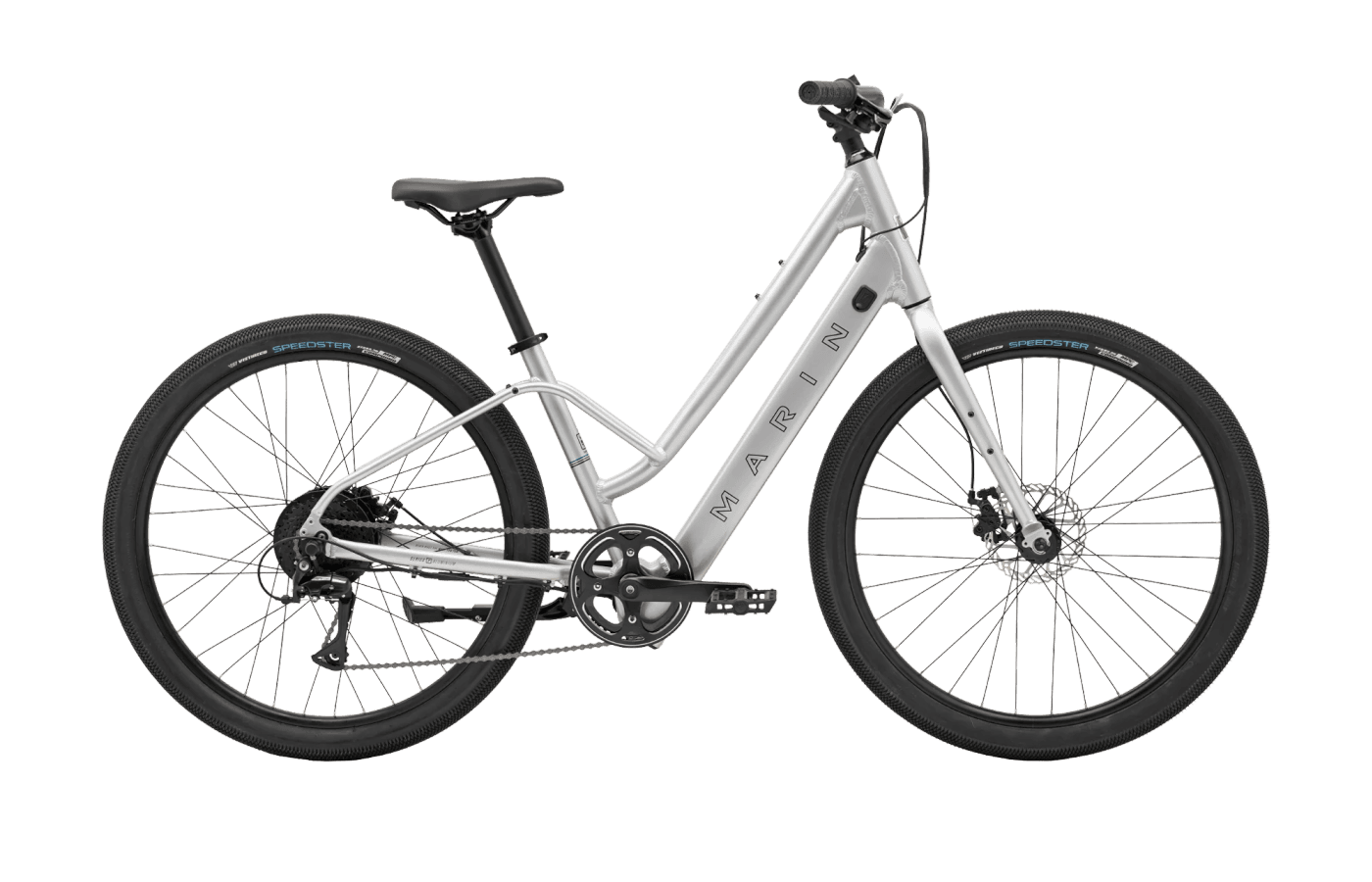
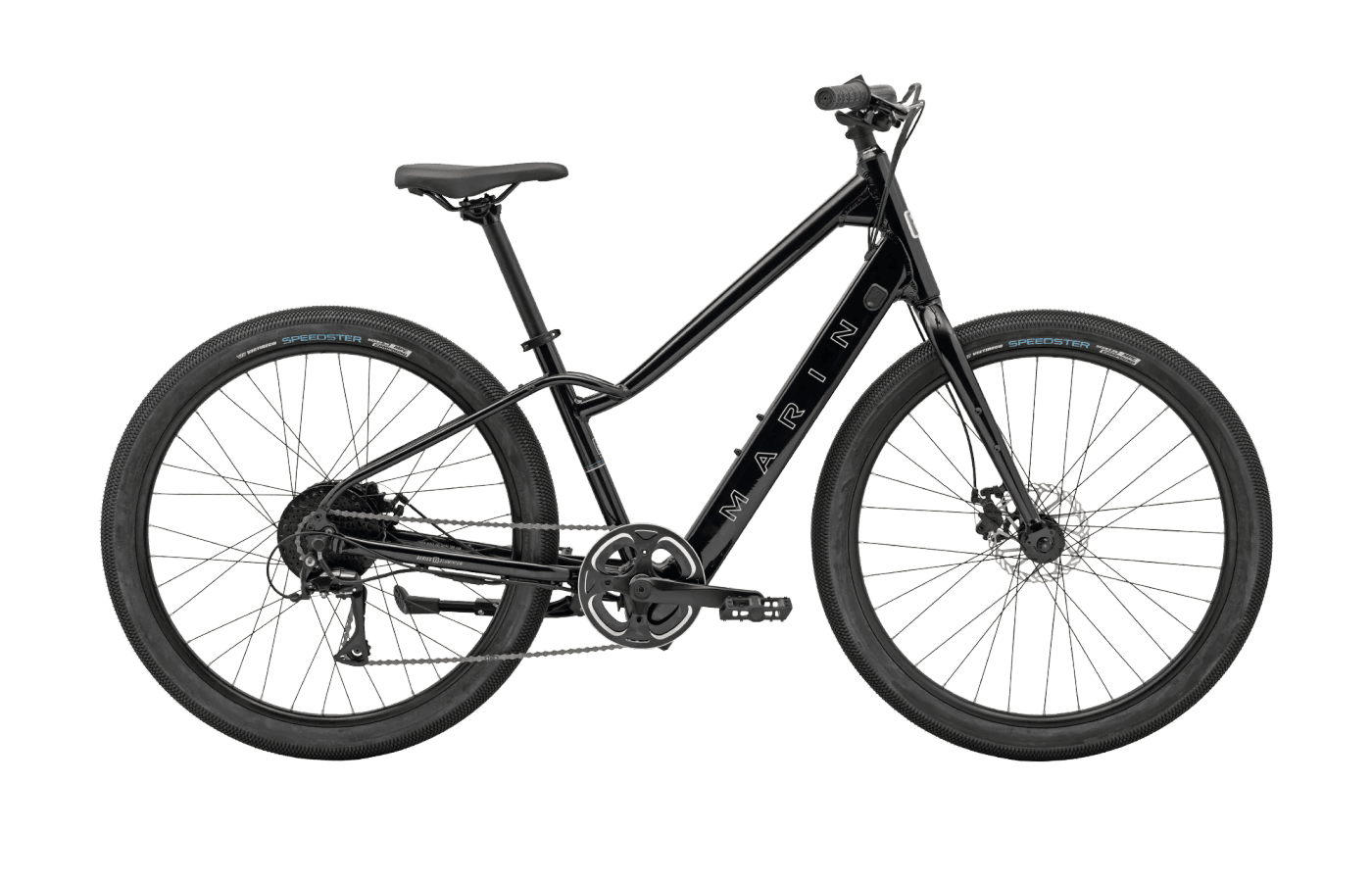
The 2025 Marin Stinson E marks a meaningful update to Marin’s comfort-focused urban e-bike rather than a wholesale redesign. The key change is structural: the battery moves from the rear carrier into the downtube of the new Series 1 6061 aluminum frame, giving the bike a cleaner layout and better weight distribution while preserving the same broad Comfort Control geometry concept. It remains a rigid-fork, rear-hub-motor commuter and leisure bike built around 27.5 x 2.35 in tires, with rack and fender mounts and disc brakes, so its purpose is still practical everyday riding rather than sporty urban performance.
What distinguishes this generation is that integration and system update. Marin pairs the new frame execution with a Bafang rear-hub setup, a 340Wh in-tube battery, Bafang Go app support, an 8-speed drivetrain, and Tektro mechanical disc brakes. The geometry figures cited for 2025 stay essentially in line with the previous platform direction, so this bike’s identity is still centered on stability, easy access, and upright comfort. In the market, the Stinson E sits as a straightforward comfort/urban e-bike for riders who prioritize relaxed fit, utility mounts, and simple component choices over high-power motors, suspension, or premium commuter tech.

Geometry & fit.
3 sizes published.
The Stinson E’s geometry is clearly biased toward comfort and stability. Across sizes S to L, the head tube angle stays at 68.5 degrees, the seat tube angle at 67 degrees, and the chainstay length at 485 mm, with a 68 mm bottom bracket drop. Those numbers point to calm, predictable handling rather than quick steering: the front end is relatively relaxed, while the long rear center helps keep the bike planted and composed at lower urban speeds and on mixed paved surfaces. The long wheelbases of 1084 mm in S, 1106 mm in M, and 1129 mm in L reinforce that steady, easygoing character.
Fit is equally conservative. Reach figures of 340 mm, 355 mm, and 370 mm are short by performance-bike standards, while stack heights of 628.2 mm to 652.5 mm are notably tall, producing a more upright riding position with less weight on the hands. That suits the bike’s comfort and utility brief, especially when paired with high-volume 27.5 x 2.35 in tires. Riders looking for responsive, aggressive urban handling will likely find it sedate, but for casual city riding, bike paths, and everyday errands, the numbers are aligned with confidence and ease of use.
Where the handlebar sits relative to the bottom bracket — the single most important fit pair.
01Fit geometry6 values
03Handling geometry7 values
Which size should I buy?
Slide your height to see the recommended size. GearWise's fit algorithm works from the published stack, reach, and ETT — the brand's own recommendation may differ.
→Calculated from GearWise's own stack / reach / ETT algorithm — the brand's size chart may recommend a different size, and a proper bike fit beats any calculator.
The lineup.
2 builds, ranging $1,599.
The 2025 Stinson E range is offered in two frame formats rather than clearly differentiated component tiers: a standard frame and an ST version. Based on the provided model information, both are built around the same updated platform with the new Series 1 6061 aluminum frame, integrated 340Wh downtube battery, Bafang rear-hub drive system with app support, rigid fork, 27.5 x 2.35 in tires, rack and fender mounts, 8-speed drivetrain, and Tektro mechanical disc brakes.
With no pricing or detailed build split provided, the main distinction appears to be frame style and rider access rather than spec level. That makes the choice more about fit, mounting ease, and preference for the standard or step-through layout than about component hierarchy. In both cases, the specification reads as practical and cost-conscious, favoring straightforward serviceability and urban utility over premium parts.