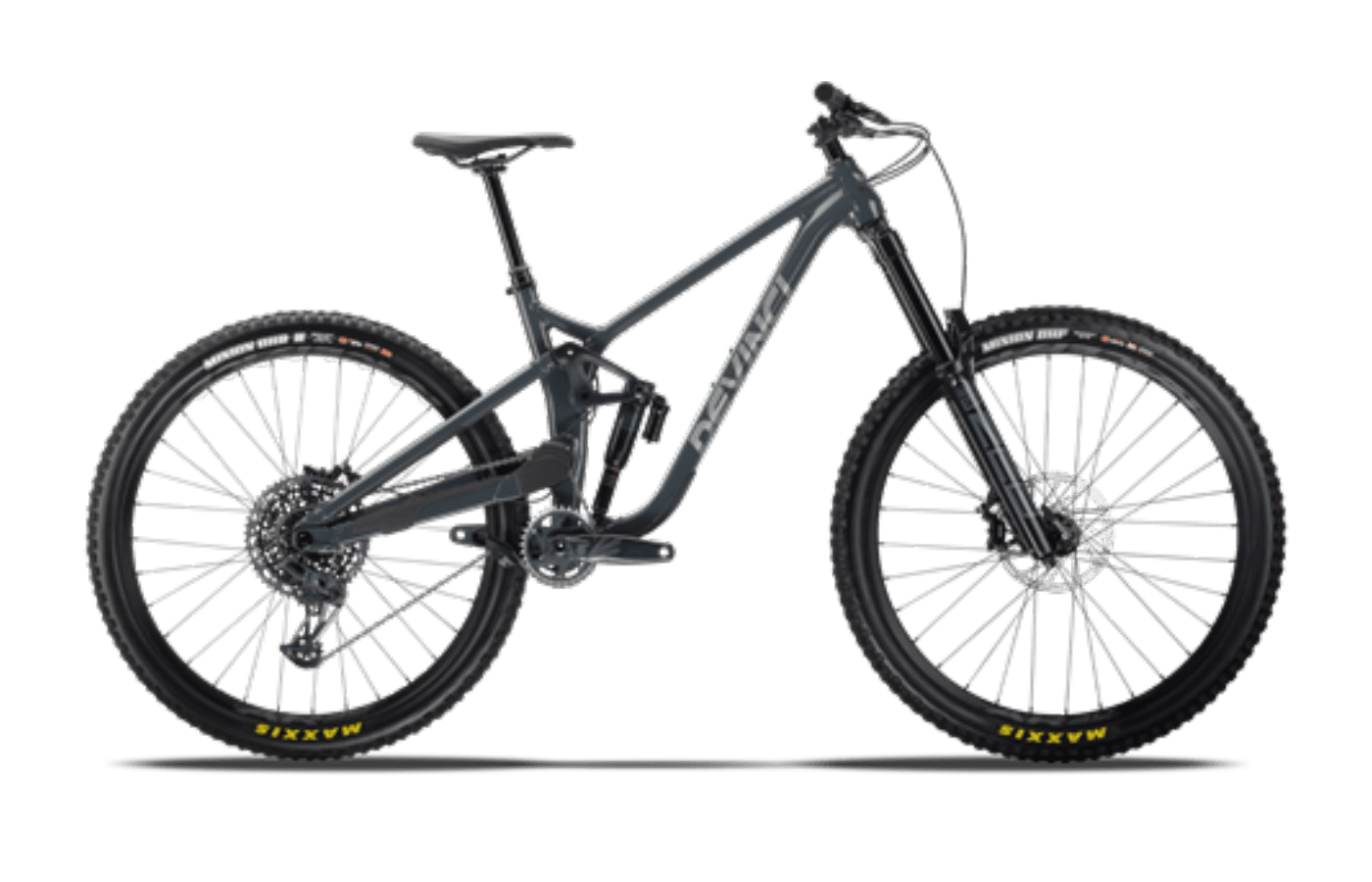
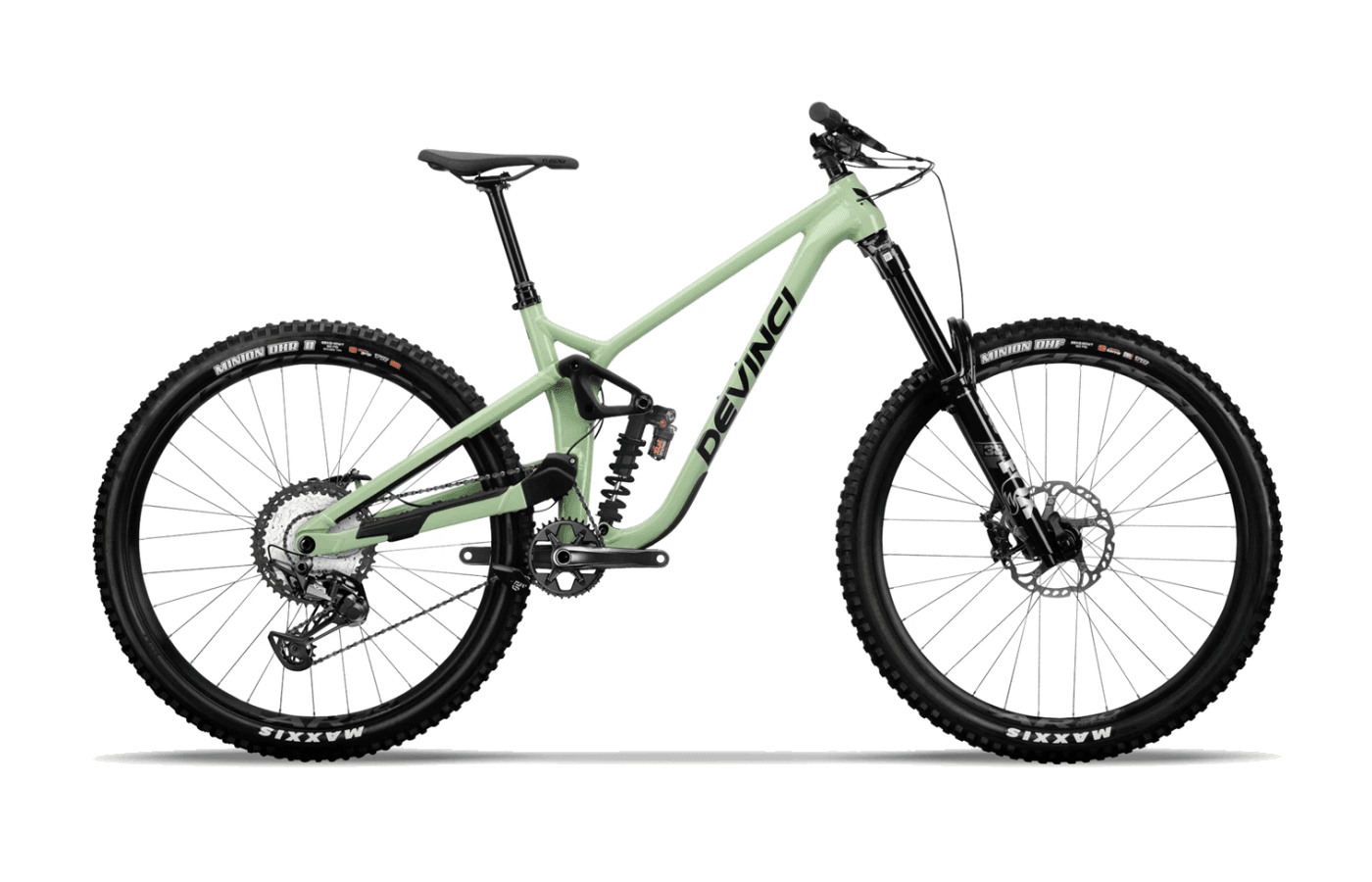
Chainsaw
The current Devinci Chainsaw is a gravity-focused aluminum platform built around a relatively unusual suspension concept for this category: Devinci’s Split Pivot HP layout combines a high main pivot, rearward axle path, and idler pulley with the brand’s Split Pivot braking arrangement. In practice, that positions the Chainsaw as a bike aimed squarely at rough, high-speed terrain where composure, traction, and braking consistency matter more than low weight or all-round trail-bike versatility. Devinci frames it as a do-it-all gravity chassis, and the hardware backs that up: Super Boost 157 spacing, ISCG-05 tabs, a threaded bottom bracket, bottle clearance inside the front triangle, and stock 225x70 mm trunnion shock sizing with compatibility for 225x75 mm shocks to push rear travel to roughly 180 mm.
What makes this generation distinctive is that Devinci uses one core chassis to cover both enduro and downhill-adjacent use cases rather than splitting them into entirely separate platforms. The Chainsaw Enduro is typically configured around full 29-inch wheels, while the Chainsaw DH leans toward mixed-wheel setups and dual-crown compatibility for park and race use. That gives the bike a broad gravity remit: pedal-up enduro stages, bike-park laps, and DH tracks. It sits in the market as a burly, made-in-Canada alloy option for riders who want modern high-pivot ride characteristics and durable construction without moving into boutique pricing or fragile carbon-bike territory.
This generation also spans the post-launch production update tied to Devinci’s voluntary recall of 2023-2024 alloy Chainsaw and Chainsaw DH models. That change addressed the front-triangle weld area at the top tube, down tube, and head tube junction, but it did not alter the underlying geometry, suspension concept, or intended use of the platform.
Geometry & fit.
4 sizes published.
The Chainsaw’s geometry is unapologetically gravity-oriented. Across the size range, the 62.5-degree head tube angle is extremely slack, indicating a bike designed for steep descents, high speeds, and rough terrain rather than quick low-speed steering. Reach figures of 445 mm (S), 465 mm (M), 490 mm (L), and 515 mm (XL) are modern and roomy without being unusually stretched for an enduro/DH crossover bike, while the high stacks of 626-644 mm reinforce an upright, attack-position fit suited to steep tracks and technical descending. Effective top tube numbers from 559 mm to 652 mm and a consistent 720 mm standover further point to a long-front-center package intended to give riders space to move.
The rear end scales with size, with chainstays growing from 425 mm on S to 440 mm on XL. That is a notable design choice on a gravity bike because it helps keep rider weight distribution more balanced across the size range instead of giving taller riders an overly short rear center. Combined with wheelbases from 1232 mm to 1331 mm and steep effective seat tube angles of 79.5 degrees (S) to 78 degrees (XL), the result should be stable, planted handling with a centered seated position for climbing. Even so, the overall geometry clearly prioritizes descending confidence and chassis stability over agility or tight-trail responsiveness.
Where the handlebar sits relative to the bottom bracket — the single most important fit pair.
01Fit geometry6 values
03Handling geometry5 values
Which size should I buy?
Slide your height to see the recommended size. GearWise's fit algorithm works from the published stack, reach, and ETT — the brand's own recommendation may differ.
→Calculated from GearWise's own stack / reach / ETT algorithm — the brand's size chart may recommend a different size, and a proper bike fit beats any calculator.
The lineup.
2 builds, ranging $4,299.
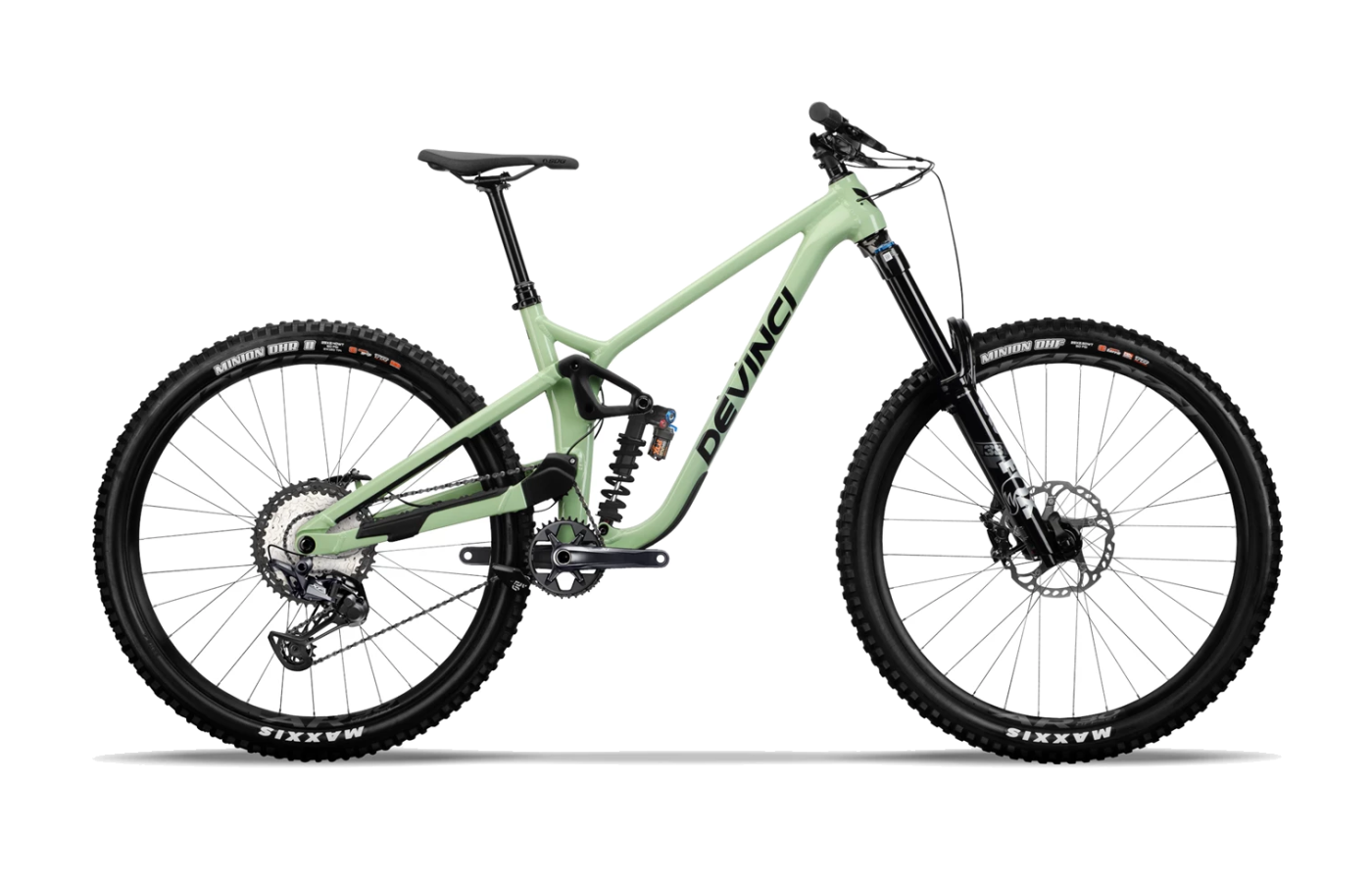
Devinci offers the Chainsaw in two listed builds: XT 12s LTD and GX 12s. With only those two options named here and no pricing or full component lists provided, the broad takeaway is that the range is centered on upper-mid to high-end drivetrain packages rather than entry-level spec. The XT 12s LTD is positioned around Shimano’s 12-speed XT ecosystem, while the GX 12s build uses SRAM GX 12-speed parts.
Given the shared chassis, the main distinction between these builds is likely to be drivetrain and associated finishing-kit choices rather than a change in the bike’s core identity. Both sit on the same high-pivot Split Pivot HP alloy frame, so buyers are choosing between component ecosystems on a platform whose defining value lies in the frame design, gravity intent, and made-in-Canada construction.