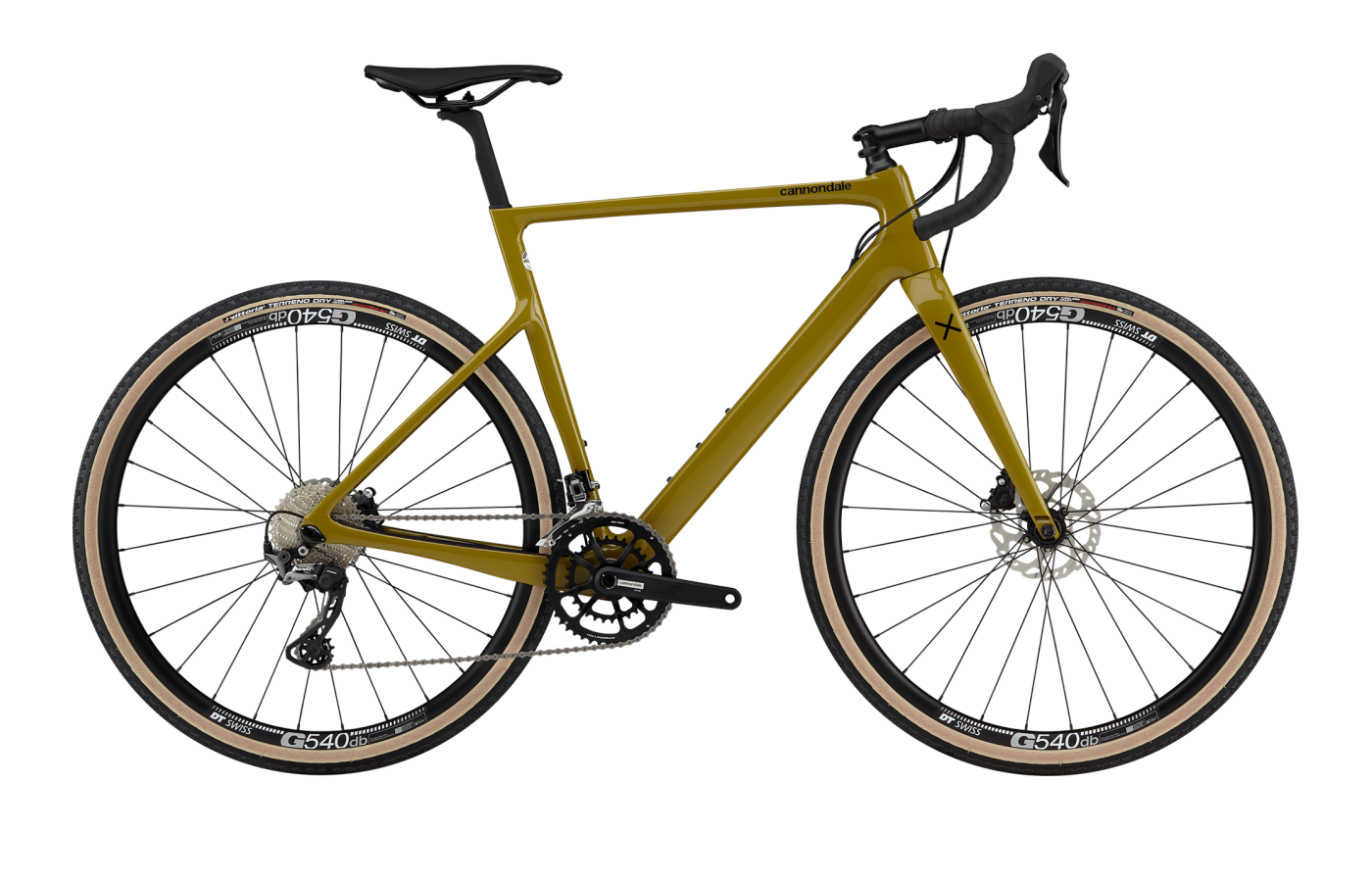
Cannondale
SuperSix EVO SE2
Cannondale’s SuperSix EVO SE is a dedicated gravel race chassis built for riders who prioritize speed and efficiency over backcountry utility. Derived directly from the brand’s cyclocross platform, it pairs the aerodynamic tube profiles of the SuperSix EVO road line with off-road-specific clearances and handling traits. The frame is stripped of cargo mounts and fender eyelets, signaling a clear intent for fast, aggressive riding on hardpack and mixed terrain rather than loaded bikepacking. Across the generation, the defining features remain consistent: clearance for up to 45mm tires, Speed Release thru-axles for rapid wheel changes, and Cannondale’s proprietary Ai-offset rear end. By blending road-like power transfer with high-volume tire capacity, the SuperSix EVO SE targets competitive gravel racers and fast-paced mixed-surface riders looking for a highly responsive, race-focused platform.
Spec sheet.
Every component shipped with this build.
Geometry & fit.
7 sizes published.
The SuperSix EVO SE inherits its geometry directly from Cannondale’s cyclocross lineage, resulting in an aggressive, forward-leaning rider posture suited for racing. The fit is distinctly performance-oriented, utilizing a relatively short head tube and a longer reach that encourages a low, aerodynamic position rather than an upright endurance stance.
Handling is dictated by Cannondale’s OutFront steering concept, which pairs a slack head tube angle—hovering around 71 degrees for most sizes—with a long 55mm fork offset. This combination reduces trail to keep the steering light and agile at low speeds, while pushing the front wheel further forward to maintain stability on fast descents. In the rear, exceptionally short 422mm chainstays keep the wheelbase compact, ensuring the bike remains eager to change direction and snap through tight corners.
The cockpit components reinforce the bike's race intentions. Both available builds feature a traditional two-piece aluminum Cannondale 2 stem and compact handlebar with zero flare, keeping the rider's hands in a narrow, road-like profile. Seating is managed by a D-shaped carbon seatpost, which uses a zero-millimeter offset on the smallest 46cm frame and a 15-millimeter setback on sizes 51cm through 58cm to help center the rider over the bottom bracket.
Where the handlebar sits relative to the bottom bracket — the single most important fit pair.
01Fit geometry6 values
03Handling geometry9 values
Which size should I buy?
Slide your height to see the recommended size. GearWise's fit algorithm works from the published stack, reach, and ETT — the brand's own recommendation may differ.
→Calculated from GearWise's own stack / reach / ETT algorithm — the brand's size chart may recommend a different size, and a proper bike fit beats any calculator.
The lineup.
2 builds, ranging $4,050 – $5,200.
The SuperSix EVO SE lineup is streamlined into two distinct builds that share the exact same carbon frameset, fork, and rolling stock. Both models roll on aluminum DT Swiss G540 wheels wrapped in 40mm Vittoria Terreno Dry tubeless-ready tires, and both utilize Cannondale’s proprietary Ai-offset rear wheel dishing and a PF30-83 bottom bracket.
The primary difference between the two tiers lies in the drivetrain and braking systems. The entry point is the "2" build, which relies on a mechanical 11-speed Shimano GRX mixed groupset. It pairs a Cannondale alloy crankset featuring 46/30 chainrings with an 11-34 tooth cassette, offering a reliable, traditional shifting experience and a slightly lower climbing gear.
The upper-tier "New SRAM Rival 2x12" build moves to fully wireless electronic shifting. This model features a complete SRAM Rival eTap AXS groupset, including a 46/33 crankset and a wider-range 10-36 tooth 12-speed cassette. While the electronic build offers the precision of wireless shifting and a tighter gear progression for fast-paced riding, reviewers note that the Rival components add noticeable weight compared to higher-end groupsets. Because the wheels and cockpit remain identical across both models, the price premium for the Rival build is entirely dedicated to the electronic drivetrain.


From the press.
8 reviews from the cycling press.
Reviewers consistently characterize the SuperSix EVO SE as a highly responsive, speed-oriented machine that behaves much like a performance road bike on dirt. The handling is frequently praised for its balance of low-speed agility and high-speed stability, with one tester describing the steering geometry as providing a "power steering" (En) feel. Out on the trail, the short rear center helps the bike "respond immediately to pedal input" (Bicycling) when accelerating out of corners.
While the frame excels at power transfer and efficiency, testers note that this comes with a tradeoff in compliance. The chassis delivers an "aggressive, stiff approach to gravel" (YouTube), meaning riders will feel more of the trail's bumps and ruts. Consequently, the bike relies heavily on tire volume and pressure to manage rougher terrain.
When pointed downhill or pushed on fast, open gravel roads, the bike maintains composure. Multiple reviewers found it highly capable at speed, calling it a "rocket both up- and downhill" (Bicycling). However, some critics pointed out that the proprietary Ai-offset rear wheel dishing complicates aftermarket wheel upgrades, and the heavier stock aluminum wheels can make the bike feel slightly sluggish to get up to speed initially. Despite these spec-related critiques, the consensus points to a highly capable, race-ready foundation.

Cannondale SuperSix EVO SE gravel bike in review

WATCH: CANNONDALE’S GRAVEL SUPERSIX EVO SE REVIEW
WATCH: CANNONDALE SUPERSIX EVO SE REVIEW

Nordic Gravel Series: Jimmy's SuperSix EVO SE

Cannondale SuperSix Evo SE - Review - Road Bike Action ...

Head-to-Head: Cannondale SuperSix Evo CX and SE

We test the Cannondale Supersix EVO SE: a rocket for gravel