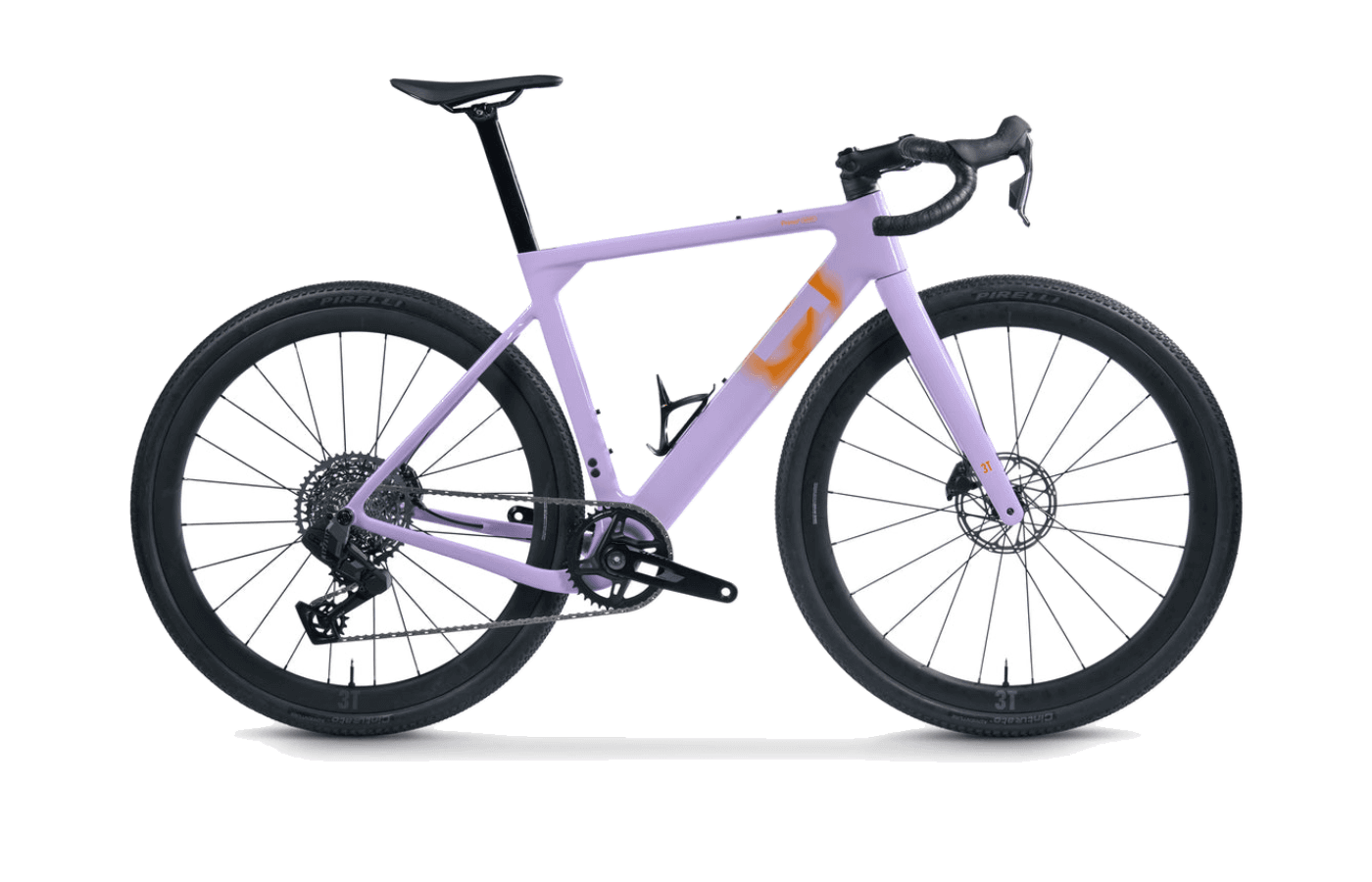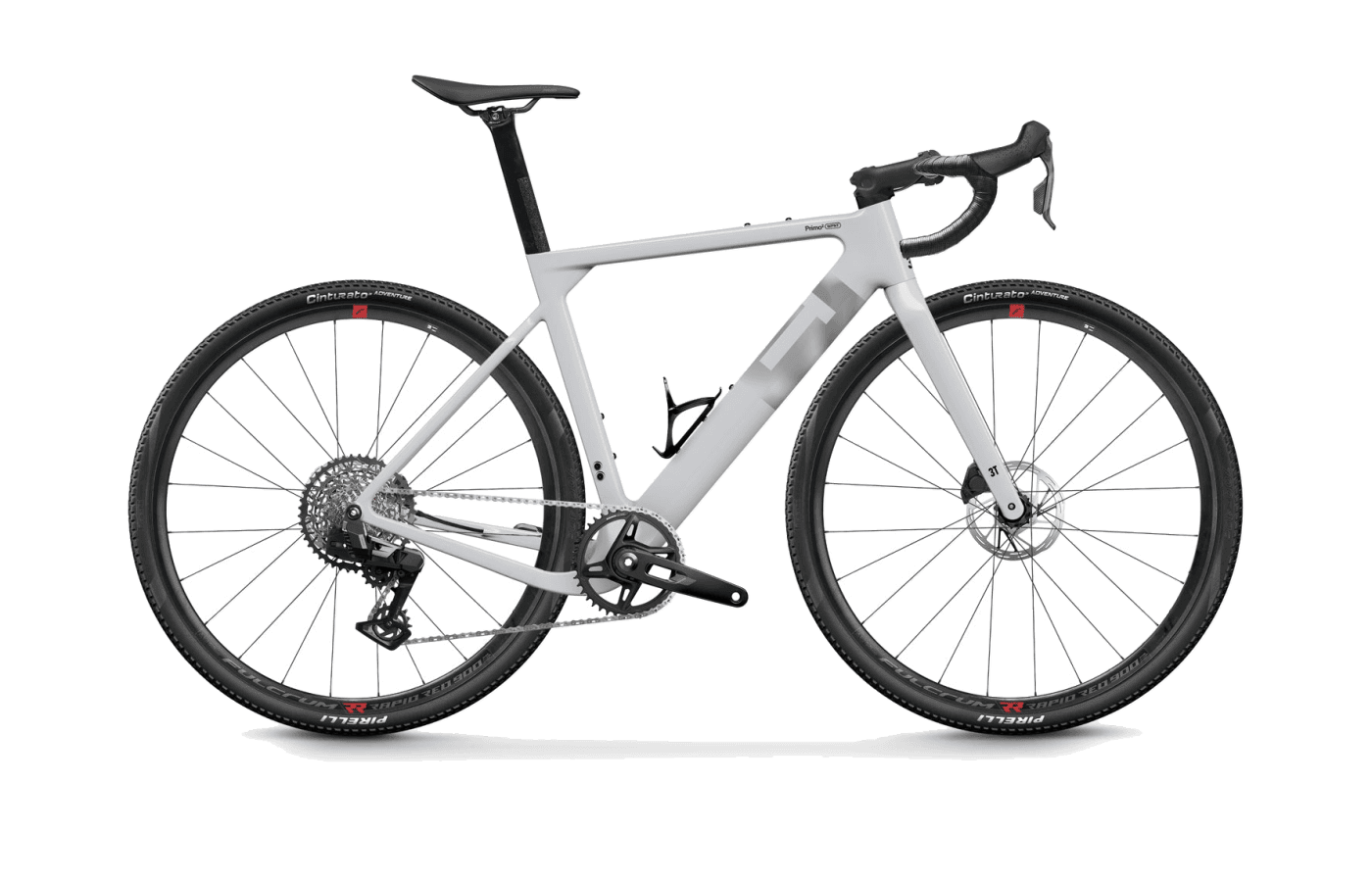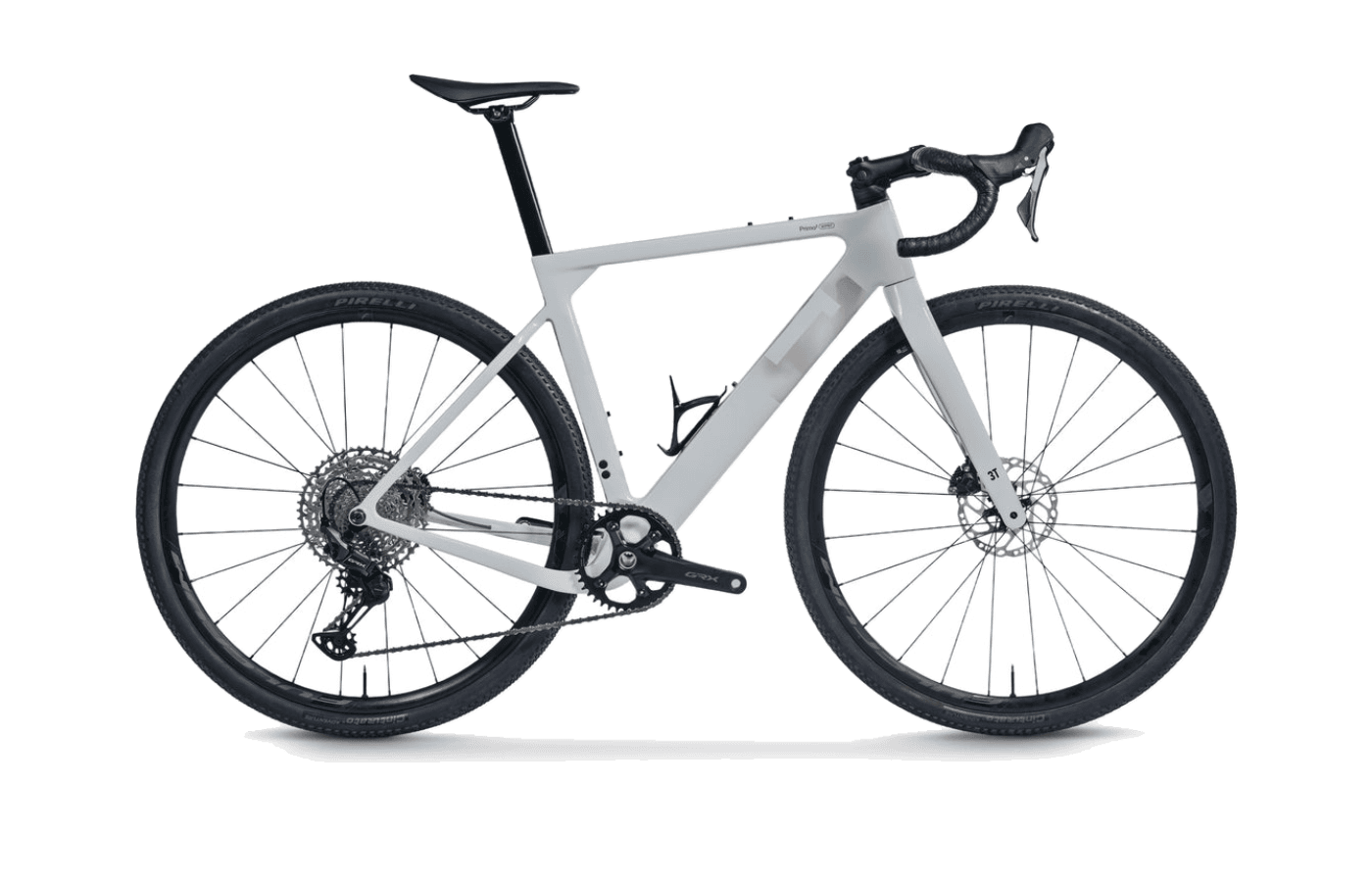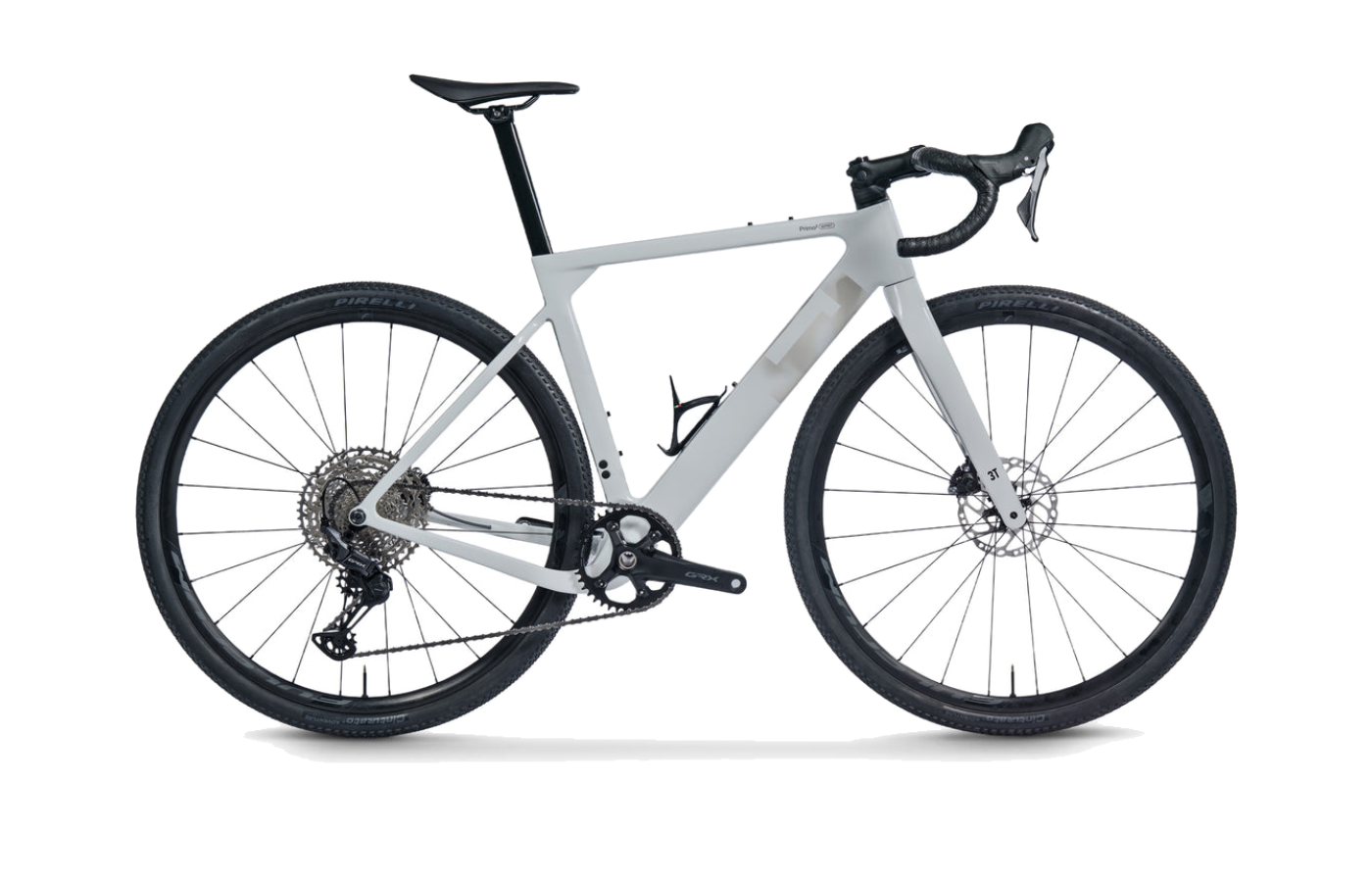
The 3T Primo2 WPNT is the latest version of 3T’s aero-gravel race platform, carrying forward the Exploro/Primo concept while updating it for current expectations around integration and drivetrain compatibility. The most visible change is the new Semi-Integrale front end, which hides the cables without going to a fully closed, hard-to-service setup. That makes the bike cleaner in appearance and more in step with the premium gravel market, while preserving one of 3T’s long-running priorities: combining aerodynamic shaping with practical all-road and gravel use.
Underneath that update, 3T has deliberately left the bike’s core character intact. Geometry is unchanged from the previous platform, and tire clearance remains capped at 700c x 45mm WAM, with the frame optimized around roughly 35-45mm tires. The addition of SRAM UDH is an important functional revision, opening the door to newer drivetrain options including SRAM Full Mount XPLR systems. In the market, the Primo2 sits squarely in the fast gravel segment: it is not trying to be a high-clearance adventure bike or a progressive, rough-terrain gravel machine, but rather a performance-oriented design aimed at riders who prioritize speed, efficiency, and a road-influenced ride feel on mixed surfaces.
Where to get it.
2 retailers · size M.
Spec sheet.
Every component shipped with this build.
Geometry & fit.
4 sizes published.
The Primo2’s geometry reflects its race-oriented gravel intent. Reach figures of 366mm in S, 378mm in M, 390mm in L, and 402mm in XL are paired with relatively moderate stack numbers from 517mm to 604mm, producing a fit that is more performance-focused than upright. 3T says the frame geometry itself is unchanged from the previous generation, but the new cable-routing arrangement effectively raises handlebar height by about 15mm, slightly softening the front-end drop and making the fit a bit less aggressive than before.
Handling numbers point to a bike that stays close to road-derived gravel behavior rather than pushing into long, ultra-stable geometry. The 415mm chainstays are short by gravel standards and help keep the rear end compact and responsive. Head tube angles range from 69.5 degrees in S to 72.5 degrees in L and XL, with wheelbases from 996mm to 1032mm, suggesting size-specific front-end behavior while maintaining a quick, efficient overall chassis. A consistent 70mm bottom bracket drop keeps the rider reasonably planted without making the bike especially low-slung. Taken together, the numbers support a bike built for speed, sharp acceleration, and precise steering on smoother gravel and mixed-terrain routes.
Where the handlebar sits relative to the bottom bracket — the single most important fit pair.
01Fit geometry5 values
02Component geometry6 values
03Handling geometry7 values
Which size should I buy?
Slide your height to see the recommended size. GearWise's fit algorithm works from the published stack, reach, and ETT — the brand's own recommendation may differ.
→Calculated from GearWise's own stack / reach / ETT algorithm — the brand's size chart may recommend a different size, and a proper bike fit beats any calculator.
The lineup.
3 builds, ranging $4,899 – $7,599.
The Primo2 WPNT range starts with the GRX 1x12 build at $4,899, then moves to a Rival XPLR AXS 1x13 build at $6,399, with the top Rival XPLR AXS 1x13 Discus 40|30 model priced at $7,599. Even from the build names alone, the lineup is clearly structured around a mechanical entry point and two progressively more premium SRAM electronic options, with the upper tiers centered on the newer 1x13 XPLR format.
The most notable jump is from the base GRX build to Rival XPLR AXS, where buyers are paying for wireless electronic shifting and the updated drivetrain ecosystem enabled by the frame’s UDH compatibility. The top Discus 40|30 version appears positioned as the more performance-focused package, adding a premium wheelset designation on top of the same Rival XPLR AXS 1x13 foundation. Based on the listed builds, the range is tightly focused: there is no broad touring or budget spread here, just a clear progression for riders choosing between a lower-cost mechanical setup and increasingly race-oriented electronic builds.